Home Blog Page 1183

New Guardian-class patrol boat: a welcome asset to tackle illegal fishing in Solomon Islands

Tackling illegal, unreported, and unregulated (IUU) fishing is often a challenge for countries in the Pacific due to many reasons. Unavailability of maritime assets is one.

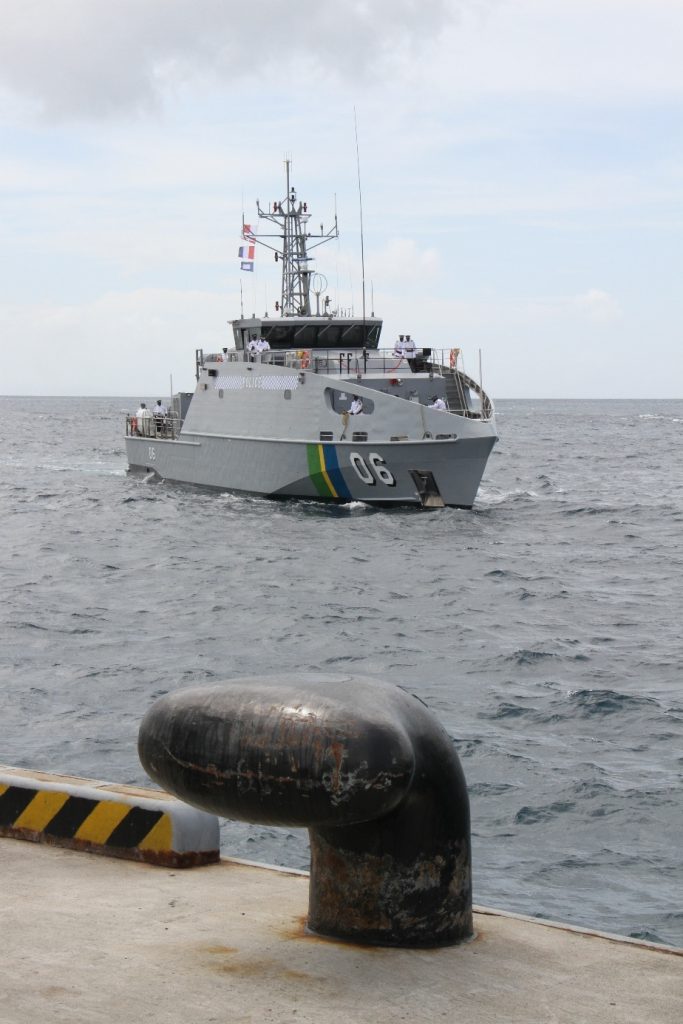
On Monday, 28 June 2021, Solomon Islands officially took ownership of a new Guardian-class patrol boat, RSIPV Taro 06, thanks to the government of Australia. The new asset is the second to be handed to the Melanesian island nation following the delivery of the first RSIPV Gizo 05 in 2019.

This was made possible under an existing Defence Cooperation Arrangement, which saw continuous support by Australia to Solomon Islands for more than 30 years.

According to the Solomon Islands Prime Minister Manasseh Sogavare, the new Guardian-class patrol boat was an additional asset to assist the country in its fight against IUU fishing – which is a major threat to the security and long-term sustainability of Solomon Island tuna fisheries.

He said as a country that depends largely on its marine resources to boost its economy, it is important that its exclusive economic zone (EEZ) is protected.

“Protecting our marine jurisdiction, whose threats are multifaceted, is a government responsibility.

“Maritime security is important to Solomon Islands as it links to our economic development and livelihood. Also, much of the trading, either internationally or locally, happens via the marine water. Thus, supporting international order, in making sure of open sea lanes and keeping it from dispute, is crucial,” Sogavare said.

He added that much of the ocean was still waiting to be explored, but human activities such as illegal fishing, oil spills, ocean pollution, deep-sea mining and fossil-fuel burning were already changing it.

Solomon Island’s EEZ is 1.6 million square kilometres and there are huge challenges with monitoring such a huge maritime boundary. Given the limited resources available, effective control over the country’s maritime boundaries and resources is only achieved through a concerted regional effort.

Sogavare also gave credit to the Pacific Islands Forum Fisheries Agency (FFA) and its monitoring, control and surveillance as a key programme that is supporting the country’s effort in protecting its resources from illegal harvesting.

That said, the Solomon Islands Prime Minister said his country would continue to work collaboratively with international and regional partners, and organisations such as the Pacific Islands Forum, FFA and the Pacific Maritime Security Program to support the country’s maritime domain.

With the inclusion of the new Guardian-class patrol boat, it is anticipated that the Royal Solomon Islands Police Force (RSIPF) will step up its maritime security.

Sogavare highlighted that the RSIPF maritime division plays a critical role in the country’s maritime security, as it is responsible for territorial surveillance, border patrolling and reconnaissance, monitoring our vast EEZ and protection against illegal entry into our waters.

The RSIPF also undertakes emergency and relief work required by the National Disaster Management Office during disaster situations such as avoiding the spread of COVID-19.

Therefore, the donation by Australia of the new Guardian-class patrol boat RSIPV Taro is indeed a boost to the country’s maritime security.

RSIPF Commissioner Mostyn Mangau, in his remarks at the commissioning ceremony, said: “The people of the Solomon Islands will greatly benefit from the new Guardian-class patrol boat (RSIPV Taro 06) gifted by the Australian government.

“The new Guardian-class Pacific patrol boat has a length of 39.5 metres and a complement of 19 crew members. The vessel can travel 3,000 nautical miles at minimal speed. This new patrol boat is purposely to conduct maritime surveillance and enforcement operations like fighting illegal fishing, search and rescue for distress boats, transitional crimes, very important person (VIP) escorts and other border operations.

“On behalf of the RSIPF, I would like to thank the government and people of Australia for the gift of the new patrol boat. I would also like to thank the Australian Defence programme and Australian High Commission in Solomon Islands for making possible arrangements to receive the new Guardian-class patrol boat Taro,” Mangau added.

To ensure the RSIPF is capable of handing the country’s maritime security, the Australian government through its High Commissioner’s office in Honiara has announced that under the Australian Defence Cooperation Programme, the two Guardian-class patrol boats, Gizo and Taro, would be rearmed.

Australian High Commissioner to Solomon Islands Dr Lachlan Strahan thanked both the Australian and Solomon Islands governments – working in partnership under the Australian Defence programme – for recognising our maritime security needs and the importance of enhancing our maritime security.

Dr Strahan said Australia has decided to make a contribution to strengthen law enforcement and the national security capability of Solomon Islands.

“In response to a request from the Solomon Islands, Australia has agreed to arm two Guardian-class patrol boats Gizo and Taro. We have also accepted a similar request from the Papua New Guinea Government,” he said.

“The two new Guardian-class patrol boats Gizo and Taro will soon be armed as part of the RSIPF rearmament capabilities to ensure our waters remain safe and secure from security threats.”

He said Australia and Solomon Islands governments would conduct a joint capability assessment to determine which weapon is most appropriate for the boats.

Meanwhile, Prime Minister Sogavare has thanked the Australian Government for responding to his government’s request on the rearming the two patrol boats.

“I am glad to note the Australian Government has agreed to arm our patrol boats. It marks another significant milestone in our deep and enduring partnership, founded on our shared values and commitment to a sovereign, safe and prosperous Pacific.

“It marks the beginning of a new chapter in our maritime security, capability and capacity that is bigger and more classic for the Royal Solomon Islands Police Force than before.”

Dr Strahan had also revealed that the patrol boats are the fulcrum of Australia’s 30-year $2 billion (US$1.4 billion) Pacific Maritime Security Programme.

This programme is a core pillar of Australia’s Pacific Step-up, which aims at enhancing the maritime surveillance and law enforcement capabilities of its Pacific friends and neighbours.

SOURCE: TUNA PACIFIC/PACNEWS
 

Noro Port: first e-port in the Pacific introduces digital catch documents and tracing

0

By Ronald Toito’ona

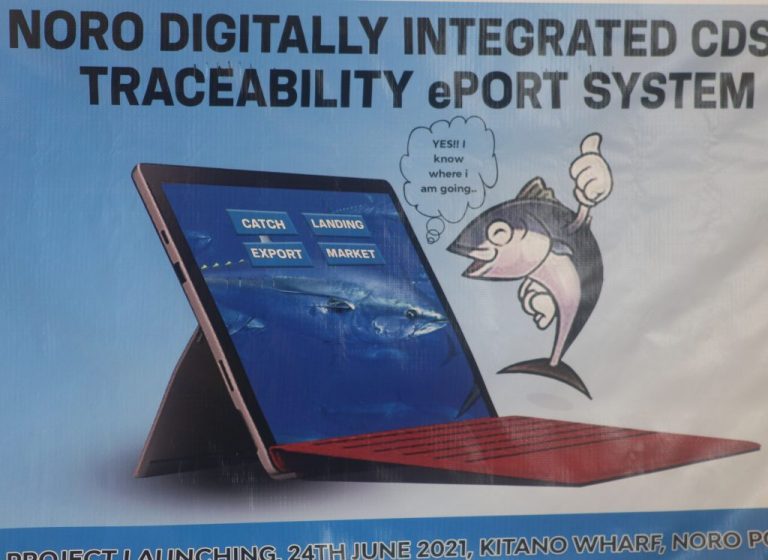
The Noro Port in the Western province of Solomon Islands has become the first e-port in the Pacific region, after launching a digitally integrated catch documentation and traceability scheme on 24 June.

The launch was a landmark for the Ministry of Fisheries and Marine Resources (MFMR), the local tuna industry, customs and health departments – it is the very first fishing port in the region to operate the Catch Documentation System (CDS).

For the Solomon Islands ministry, this is a new chapter in its effort to modernise how it processes data. The formal launch of Noro e-port programme no longer requires paper to record and store data.

Speaking at the launch event of the state-of-the-art system that will make fish accountancy more efficient, Nestor Giro, Solomon Islands’ minister of fisheries and marine resources described the Noro e-port project as a milestone achievement.

He said the project was a concept, which came about from the many challenges faced by the Ministry’s Noro-based compliance team in carrying out their duties. Their duties included the implementation of national inspection and CDS requirements, which are important to support the tuna industry at Noro.

“You would recall that, in 2015, Solomon Islands was ‘yellow carded’ by the European Union for not complying with the market requirements, which implies elements of Illegal Unregulated Unreported (IUU) fishing,” said Minister Giro.

The Ministry of Fisheries and its stakeholders, which included the National Fisheries Development, Soltuna and relevant government line ministries, responded by stepping up their effort to conform to the requirements of the European Union. This saw the lifting of the yellow card in 2016.

Minister Giro said it was the compliance team at Noro that worked tirelessly to ensure all requirements were met. This involved manual collection of data and information from landing to export (CDS and traceability) from paper to excel spreadsheets, which was time consuming and required more effort.

This gave rise to the need for a system that catered to the process of CDS and traceability.

The early development of the CDS scheme

In 2018, discussions were under way between the ministry and Dr Transform Aqorau, who was the brainchild of the new digitised system to integrate with Soltuna, National Fisheries Development and other line ministries involved in the process of CDS and traceability at Noro Port.

Funding for the phase 1 of the project was sourced from the Western and Central Pacific Fisheries Commission in 2019, and in 2020 the ministry engaged iTuna Intel to deliver phase 1 of the project under the guidance of the Noro e-port committee.

According to Dr Aqorau, iTuna Intel’s CEO, the development of the system has been a truly collaborative effort between officials of the MFMR, government IT services, the tuna industry, customs, health and iTuna Intel.

He said the energy put together in getting the project to where it was today, under the leadership of MFMR’s Permanent Secretary Dr Christain Ramofafia, has been commendable despite a few criticisms made towards the development of the system.

“There were also detractors who questioned the systems development but these made me even more determined to show that we are capable of developing a system to transform the fisheries operations at Noro,” Dr Aqorau said.

“These have all been important factors in shaping the success of the work that we are here to witness today. Perhaps we may have taken a leaf out of the book from the people from here who – in spite of the land disputes that have characterised the history of this region – have been able to arrive safely to this landmark development.”

The iTuna Intel CEO told the launch event that he was a proud man.

“I am so proud to be associated with the project through iTuna Intel, but it was colleagues in the MFMR, government IT services, the tuna industry, customs and health who made it happen to be the first. It is just the beginning and we look forward to more strategic partnerships to build on what has been developed using local resources. We want to have smart ports, and to do that we must invest in our people to embrace emerging technologies to better manage our fisheries.”

Dr Aqorau said the Solomon Islands tuna industry is fortunate that its partners appreciate the importance of having a comprehensive digital traceability system to monitor the legality of their products ‘from catch to plate’. They, more than anyone, appreciate the value of being able to demonstrate that they fish sustainably and legally – this is what the global tuna market demands.

“The Solomon Islands Government also has coastal and port state responsibilities to ensure the fisheries are sustainable and that fish landed at Noro is not caught illegally. Thus, there is a mutual interest that the government and the industry share in making Noro a smart port – the ‘Port of Tomorrow’ –that has a transparent fit-for-purpose traceability system which would allow for full accounting of the fish landed, processed and transshipped through Noro,” added Dr Aqorau.

New CDS is a home-grown system, developed locally

During the ceremony, Minister Giro acknowledged the new CDS as a home-grown initiative which was developed without any outside technical assistance.

Dr Aqorau also revealed in his speech that the origins of the project might be traced to a discussion on the floor of the first fisheries office at the Noro Town Council premises between key stakeholders about how they could improve and streamline the processes at Noro.

“The investments in the e-Port have taught us many things, but the most important is that it is ‘our system’, entirely developed as a home-grown system that we have built on our own – and for that, Minister, we can all be proud and deserve to celebrate the occasion,” he said.

“No one else, to the best of my knowledge, has built an integrated digital traceability system for a fishing port, and therefore I fervently believe that the time we have spent on building the system makes us just as competitive as any other developers in the world.”

Dr Aqorau says COVID-19 has therefore been a blessing in disguise, in a sense, “because it has made us reach deep within the means that we have to build a fit-for-purpose system which transforms Noro into a smart fishing port, a fishing port that sets the benchmark for the application of the best international [standards] that can withstand any independent audit.”

According to Minister Giro, the launch marked the completion of phase 1 of the project, which “includes the administrative work between government’s [IT services] and MFMR to identify a developer, develop a system, and test and trial the e-port system.”

“Trials of the system have been done and now we will witness how data is being transferred from the port into the system using this cutting-edge technology,” the Minister said.

Minister Giro had also revealed that phase 2 talks are currently underway with the Forum Fisheries Agency (FFA) to secure their assistance towards the project.

Speaking on behalf of the FFA Director General, Director of Fisheries Operations at FFA, Allan Rahari congratulated the MFMR and stakeholders for the home-grown initiative.

“The positive progress made so far has demonstrated your collective commitment to embrace technology through this paperless, interconnected and integrated e-port system capturing both port state measures and CDS activities. So, well done to the ministry and stakeholders for progressing this project to achieve the milestone we are celebrating,” Rahari said.

He said he was pleased to note that the development of the project was championed by local expertise without external advisors.

“This is a significant point worth highlighting. We must recognise, acknowledge and use the expertise we have locally to our advantage. So this is one of the hallmarks of this project – the use of local expertise,” said Rahari.

He also highlighted that the success of the project as a model could be replicated in other ports in Solomon Islands or the region.

“This project is a ‘model project’, as its objectives are in line with the Regional CDS Framework recently adopted by the Forum Fisheries Committee in May 2021.”

He has stated that the FFA stands ready to work with the ministry to progress the next phase of the project.

SOURCE: TUNA PACIFIC/PACNEWS

Fiji records 918 new cases of COVID-19 and 15 deaths reported

-Fiji has recorded 918 new cases of COVID-19 and 15 deaths reported.

Permanent secretary for Health, Dr James Fong said that out of the 15 deaths, 12, or 80 per cent were those that were not vaccinated whereas the remaining three had been partially vaccinated. Seven additional deaths during the same period were attributed to non-COVID illnesses.

“The first COVID-19 death to report is a 75-year-old woman from Suva who died at home on 21/07/2021. She was not vaccinated.

“The second COVID-19 death to report is a 49-year-old man for Nadera who died at home on 20/07/2021. He was not vaccinated.

“The third COVID-19 death to report is a 83-year-old man from Tovata who died at home on 20/07/2021. He was not vaccinated.

“The fourth COVID-19 death to report is a 44-year-old man from Cunningham. He presented to the CWM Hospital in severe respiratory distress. He died on the same day in hospital (22/07/2021). He was not vaccinated.

“The fifth COVID-19 death to report is a 60-year-old man from Narere who died at home on 21/07/2021. He received the 1st dose of the vaccine in early-July. He did not receive the 2nd dose of the vaccine. This means he was not fully vaccinated.

“The sixth COVID-19 death to report is a 63-year-old man from Nabua who died at home on 20/07/2021. He received the 1st dose of the vaccine in mid-June. He did not receive the 2nd dose of the vaccine. This means he was not fully vaccinated.

“The seventh COVID-19 death to report is a 68- year old man from Nadera who died at home on 19/07/2021. He received the 1st dose of the vaccine in late June. He did not receive the 2nd dose of the vaccine. This means he was not fully vaccinated.

“The eighth COVID-19 death to report is a 63-year-old man from Waimanu Road who died at home on 20/07/2021. He was not vaccinated.

“The ninth COVID-19 death to report is a 84-year-old man from Kalekana who died at home on 20/07/2021. He was not vaccinated.

“The tenth COVID-19 death to report is a 53-year-old man from Toorak who died at home on 20/07/2021. He was not vaccinated.

“The eleventh COVID-19 death to report is a 63-year-old woman from Vatuwaqa who died at home on 20/07/2021. She was not vaccinated.

“The twelfth COVID-19 death to report is a 56-year-old man from Makoi who died at home on 20/07/2021. He was not vaccinated.

“The thirteenth COVID-19 death to report is a 72-year-old woman from Narere. She presented to the FEMAT field hospital in severe respiratory distress. She died on the same day at the hospital (21/07/2021). She was not vaccinated.

The fourteenth COVID-19 death to report is a 102-year-old woman from Cunningham who died at home on 20/07/2021. She was not vaccinated.

“The fifteenth COVID-19 death to report is a 80 -year old man from Cautata Village who died at home on 21/07/2021. He was not vaccinated,” said Dr Fong.

He said there have been seven more deaths of COVID-19 positive patients.

“Their deaths have been classified as non-COVID deaths by their doctors. Doctors have determined that these deaths were caused by serious pre-existing medical conditions and not COVID-19.

“There is one more death currently under investigation. This will be discussed once investigations (including test results) and classifications are complete.

“There have now been 161 deaths due to COVID-19 in Fiji, with 159 of these deaths during the outbreak that started in April this year. We also have recorded 68 COVID-19 positive patients who died from the serious medical conditions that they had before they contracted COVID-19; these are not classified as COVID-19 deaths.

“There have been 179 new recoveries reported since the last update, which means that there are now 16,403 active cases. There have been 21,291 cases during the outbreak that started in April 2021. We have recorded a total of 21, 361 cases in Fiji since the first case was reported in March 2020, with 4,729 recoveries,” he said.

As of the 21st July, 419,673 adults in Fiji have received their first dose of the vaccine and 86,505 have received their second doses. This means that 71.5% of the target population have received at least one dose and 14.7% are now fully vaccinated nationwide.

Dr Fong said the 7-day average of new cases per day is 1068 cases per day or 1207 cases per million population per day.

“With the high numbers of new daily cases we are also seeing increasing cases of severe disease and deaths,” he said.

Dr Fong said people who are symptomatic will no longer be tested for COVID-19, and should stay at home and strictly self isolate for 14 days.

“Most people infected with COVID-19 will have only mild symptoms like cough, runny nose, sore throat, fever, loss of taste or smell, body ache, headache, and can fully recover at home.

“For lower-risk individuals with COVID symptoms, we ask you to please stay at home for 14 days, isolate yourself from other family members, and continue to monitor your symptoms for severe COVID-19,” Dr Fong said.

SOURCE: PACNEWS

COVID-19: No easy ways around this pandemic – Fijian PM

Fijian Prime Minister Voreqe Bainimarama says there are no easy ways around this COVID-19 pandemic.

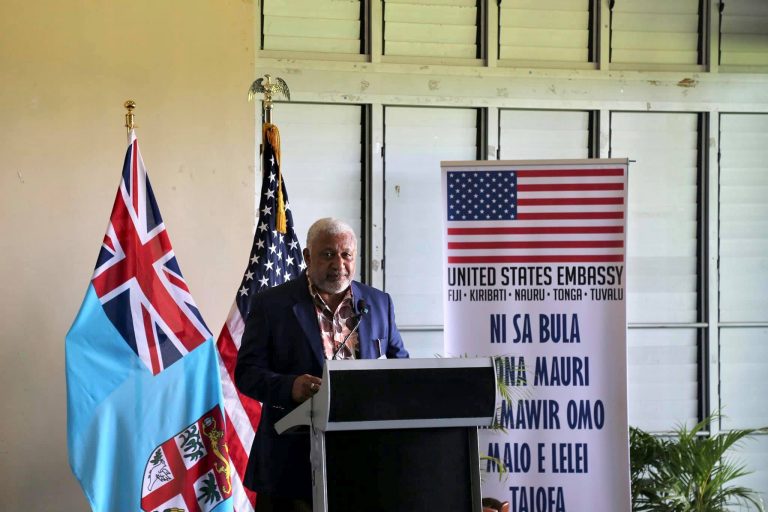
“We have to meet it head-on, and we are,” Bainimarama said in Suva while receiving more than 150,000 doses of the Moderna COVID-19 vaccine from the U.S Government.

He said Fijian frontline workers had been working tirelessly and selflessly in hospitals, homes, offices and informal settlements around the country to eradicate COVID-19, and “doctors, nurses and medical administrators are providing critical leadership.”

“Government has devoted all the resources at our disposal to support individuals and businesses who are suffering economically because of this pandemic,” the PM said.

“But we need to get to the permanent solution.

“Once we do, this virus will be like the many other diseases we have defeated through vaccines—like smallpox, polio, measles and leprosy.

“Vaccines are the permanent solution—the proven solution.”

Bainimarama said most Fijians were doing their part but more Fijians still needed to step up.

He said the Moderna vaccine has been approved specifically in the U.S and by the WHO for use by pregnant women, which should put some minds at ease.

Bainimarama said anyone who had had doubts about the vaccine because they or a family member was pregnant “should take heart and make arrangements for vaccination.”

He said beginning this week, women who had completed their first trimester of pregnancy would be able to receive the Moderna vaccine.

“Individuals above 60 years of age are also encouraged to get the Moderna vaccine for protection,” Bainimarama said.

The Moderna vaccine requires two doses to be fully effective.

SOURCE: FIJI TIMES/PACNEWS

Vaccine critical to recovery: Seselja

-Vaccine rollout in Solomon Islands and across the Pacific is critical to economic recovery.

And Australia is leading efforts to vaccinate countries in the region with its vaccine dose supply expected to reach one million by the end of next week.

Australia’s Minister for International Development and the Pacific, Zed Seselja told Pacific journalists this week that his government is committed to supply up to 15 million doses to the Pacific and Timor-Leste by mid-2022.

He emphasised that getting vaccines into people’s arms is vital to re-starting Pacific economies.

“Getting vaccines, getting populations vaccinated, of course, in the short term will be one of the best ways to …start economies up.”

Seslja acknowledged the debt crisis many Pacific nations are facing.

“The best way to see budgets coming back will be when we see activity coming back, that will happen when there are more vaccinations.

“That would mean that people are able to run their businesses and trade is able to be more easily facilitated and in time, travel in the region will come back.

“And, of course, that is so important to so many economies in the Pacific.”

Continued economic reforms would also be important to making sure that economies recover strongly from the pandemic, the Minister said.

So far, around 750,000 Australian doses of AstraZeneca vaccines have been delivered to the Pacific and Timor-Leste.

Seselja said that amount is expected reach the million mark by the end of next week.

“The health security of our neighbours is critical to Australia’s health security and vaccines are critical to the region’s recovery,” he adds.

The Solomon Islands government has recently announced that the option of opening up national borders will be discussed if up to 80 per cent of the population is vaccinated.

To date, just under 30,000 people have been vaccinated in the country.

Prime Minister, Manasseh Sogavare on Monday said the target population for the nationwide vaccination strategy is 414,500, and these are citizens above the age of 18.

“If the whole 414,500 adults in our country are vaccinated, this constitutes about 64 per cent of our population which would offer some level of protection to the other 36 per cent of our population that cannot be vaccinated,” he said.

Prime Minister Sogavare said citizens that cannot be vaccinated rely on those that can be vaccinated for their protection and for their lives.

SOURCE: ISLAND SUN/PACNEWS

Samoa Law Society vice president rises above Tuilaepa’s comments

The Samoa Law Society (SLS) Vice President has responded to comments made by caretaker Prime Minister Tuilaepa Sailele Malielegaoi, who has called for younger members of the Society to be reprimanded for dishonoring the Head of State by questioning his powers.

During an interview with TV3, Tuilaepa said office bearers of SLS were young and naive ‘faafiapoko and the professional body should call a special meeting where older members should put the younger members into place.

Tuilaepa was referring to the Society’s formal submissions on issues such as the constitutional powers of the Head of State, which came under scrutiny during Court of Appeal proceedings last week.

As Vice President of the self-regulating professional association of lawyers in Samoa, Su’a Hellene led SLS submissions in the most recent Court of Appeal case of Samoa’s political crisis, and SLS had also spoken out on the impacts of three controversial bills passed into law last November.

In response to the Prime Minister’s comments, the Vice President took the high ground and said she would not respond out of respect for Tuilaepa.

“I have a lot of respect for le afioga ia Tuilaepa for the many years of service he has provided Samoa and his leadership in developing our country over the years.

“I also know some of his children, including two of his daughters who are lawyers. They are very humble and respectful,” said Su’a.

“So even though Tuilaepa’s comments may have been made in relation to my role in representing the Samoa Law Society in these very important constitutional cases for Samoa, I do not want to respond to them.

“These comments are obviously made in the context of the current environment and I appreciate he may be still trying to come to terms with the outcome of the elections in April which is not what he had expected.

“The caretaker Prime Minister may consider me to be a young female but I know where I stand. I have been a lawyer for 23 years and a matai for 13 years. I carry these duties seriously and with pride.”

Tuilaepa called on SLS to reprimand female lawyers whom he said have disrespected the Courts with their dress code, by wearing miniskirts, and appearing before the Judiciary with untidy hair (ulu veuveua).

In response Samoa Law Society Vice President Su’a Hellene Wallwork-Lamb said the caretaker Prime Minister’s comments about young female lawyers were unfortunate and unnecessary.

Regarding professionalism in attire, Su’a said the Samoa Law Society acknowledged the importance of dress code for all lawyers in court, but would not want such comments from Tuilaepa to discourage Samoa’s young female lawyers.

“We note this from time to time and I know the Attorney General takes a strong position on this too,” said Su’a Hellene on the dress code.

“The majority of lawyers in Samoa now are females and a lot of them are young.

“From what I have observed, they all carry themselves professionally when they come to court,” said Su’a.

“We wouldn’t want such comments to discourage our young female lawyers,” she added.

Outside court, female lawyers brushed off Tuilaepa’s comments and said they were far too busy with electoral petitions and legal debates in court on the interpretation of constitutional articles to comment.

SOURCE: SAMOA GLOBAL NEWS/PACNEWS

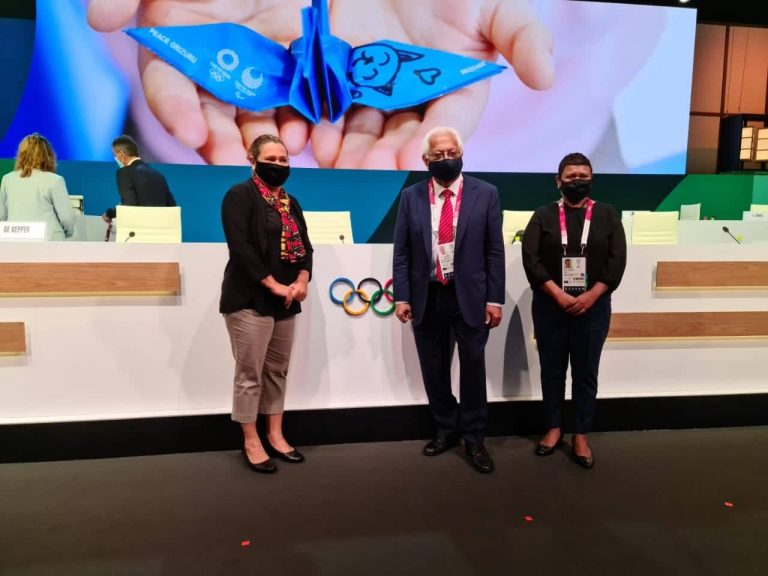
ONOC President Dr Robin Mitchell re-elected to IOC Executive Board

The Oceania National Olympic Committees (ONOC) has announced the re-election of its President, Dr Robin Mitchell of Fiji into the Executive Board of the International Olympic Committee (IOC) for another four-year term.

His new term is from 2021 to 2024.

The election was part of the second day of the IOC Meeting in Tokyo that concluded Wednesday, ahead of the opening of the XXXII Olympiad, the 32nd Summer Olympics.

TOKYO 2020 is being presented by the IOC and the TOKYO 2020 Organising Committee in a format responsive to the ongoing COVID-19 pandemic which led to the postponement of the Games last year.

Dr Mitchell is also the Acting President of the Association of National Olympic Committees (ANOC), the umbrella organisation responsible for protecting and advancing the interests of the world’s National Olympic Committees (NOCs), and for supporting their mission to promote the Olympic Values worldwide. Over the last 35 years, the number of NOCs recognised by the International Olympic Committee (IOC) and represented by ANOC has risen to 206.

Among other positions of note, Dr Mitchell is Chair of the Olympic Solidarity Commission and oversees the Olympic Solidarity Programme which is responsible for the disbursement of revenue generated by the sales of broadcasting rights of Summer and Winter Olympic Games which are channelled back into 206 NOCs throughout the world, with a focus on those from developing countries.

He is also a Life Member of the Fiji Association of Sport and National Olympic Committee (FASANOC) and represented his country Fiji in Athletics (400m hurdles) and Hockey. He is a medical doctor by profession and served in Team Fiji’s outings in this capacity before moving to undertake sport administration duties.

He is married to Dr Rosemary Mitchell and they have four children, Letila, Johanna, Sylvia and Robin Jnr.

SOURCE: ONOC MEDIA

Reaching herd immunity ‘is no guarantee’

New variants of the Covid-19 virus will make it hard for countries like Cook Islands to achieve herd immunity, says a leading Pacific health expert.

Herd immunity is no guarantee, says Doctor Collin Tukuitonga from the University of Auckland.

“The problem with herd immunity, it’s not like you get to this per cent and everybody is sweet,” said Dr Tukuitonga.

“Herd immunity is not a per cent, it’s not trying to get to 80 or 90 per cent or whatever, it’s a bit more complicated than that.”

In the Cook Islands, both Aitutaki and Rarotonga has just over 90 per cent of its total eligible population fully vaccinated by Pfizer against the virus.

The rollout has reached the northern group islands as the country hopes to achieve herd immunity when the vaccination programme ends next month.

But Dr Tukuitonga said new variants of the Covid-19 virus are constantly emerging which makes it hard to know if a country has achieved herd immunity.

“People have latched on to this idea once we get to this per cent, we will all be sweet and no need to worry about anything. It’s not as straightforward as that,” he said.

Niue was celebrated in the media a week ago after they reached “herd immunity”.

But Dr Tukuitonga, while commending Niue for its vaccination effort, said this was not necessarily the case.

He said Niue may have herd immunity against “boring old original coronavirus” but maybe not against new strains like Delta variant.

Dr Tukuitonga said there’s not going to be a situation in the foreseeable future where countries can relax if they reach a certain vaccine percentage.

Cook Islands News reached out to Te Marae Ora Ministry of Health for the percentage of the eligible population fully vaccinated but have got no response.

But from previous information provided by TMO, Cook Islands News estimates more than 90 per cent of the eligible population will be fully vaccinated when the rollout is completed.

According to One World in Data, Cook Islands had given a total of 18,942 doses and 9187 people are fully vaccinated, representing only 52.6 per cent of the country’s total population.

The Pa Enua is more than 90 per cent vaccinated for its first dose, with many islands getting the whole eligible population vaccinated.

Some of the outer islands have also begun receiving their second dose.

Despite the high vaccine uptake, Prime Minister Mark Brown said the country will still take a cautious approach to its borders.

“We are taking a cautious step by step approach,” Brown said. “That has been our approach, that has allowed us to be open to New Zealand for just on two months now.

“Let’s see how that pans out.”

Brown said the country’s next step is to look at including Australia in the travel bubble.

“As we can see in New South Wales and Victoria the situation can change very quickly. We will keep a close eye on the results of the response to their outbreaks first before progressing things,” he said.

“So for now, let’s see how things develop in the rest of the world in the next few months.”

Dr Tukuitonga believes Cook Islands could open to more nations if 90 per cent of the eligible population were fully vaccinated.

However, he said if Cook Islands opened its borders to other nations, people would need to remain vigilant.

“I imagine for the Cooks and Niue, there’s no reason why they can’t open up, they can open up now,” he said.

“The point is it’s not a guarantee they won’t get the virus when they operate in a quarantine free two-way travel.”

The United Kingdom celebrated “freedom day” on July 19, which marked the end of Covid-19 restrictions despite more than 45,000 new cases and 96 deaths reported Tuesday.

The easing of restrictions included face masks no longer being compulsory in most places and the government is no longer instructing people to work from home.

On a similar vein but less extreme, the Australian government have put in a four-phase plan to return to normal.

A total of 191 million cases and 4.1 million Covid-19 deaths have been recorded worldwide since the outbreak in China in late 2019.

SOURCE: COOK ISLANDS NEWS/PACNEWS

Bougainville President Toroama: People must accept change

The people of Bougainville must be ready to embrace the sweeping political changes the Autonomous Bougainville Government has undertaken as it prepares for political independence.

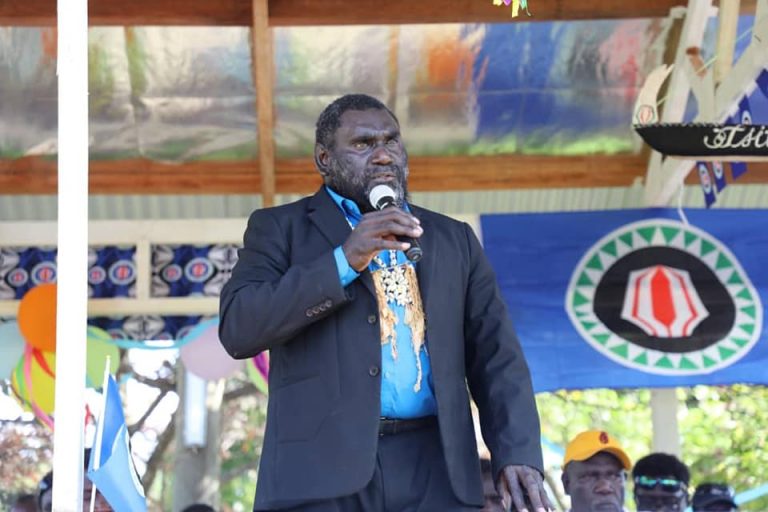
President Ishmael Toroama made this statement during the launching of the Bougainville Independence Ready Mission Implementation initiative in the Tsitalato Constituency.

“Change is imminent on Bougainville. The government has set a course for reform and change in our system of government and society and this will have a direct impact on our people,” President Toroama said.

“This change is the change desired by our people when they rejected autonomy and opted for independence during the Referendum in 2019 so you must be ready to support your government,” President Toroama said.

“I want to remind Bougainvilleans that the fight for independence is not over. We have simply traded one battlefield for another when we signed the Bougainville Peace Agreement,” President Toroama said.

“This battle is one where we do not need weapons but it is a fight where we use our intellect and our ability to unite and progress development on Bougainville to prove that we are ready to be independent,” President Toroama added.

Progress on Bougainville’s independence aspirations will require the support of the people through their participation in development and adopting social responsibility standards.

“Our position has also given way to the timeline (not earlier than 2025 and no later than 2027) for our final political settlement. All of these things culminate in our desire and our right to be independent,” President Toroama said.

“I must remind our people once again that this journey to independence is an all-inclusive activity that requires every Bougainvillean to support the government to meet the felt needs and aspirations of the 97.7% vote for independence,” President Toroama said.

Meanwhile, the timeline for Bougainville’s independence has given momentum to the region’s independence preparations for political sovereignty through the constituency independence readiness initiative.

This follows the Autonomous Bougainville Government presenting Independence as its position during the first Joint Consultations with the National Government in May this year.

The timeline was agreed to by the two governments during the second consultations in Enga Province earlier this month.

This outlined 2025 – 2027 as the agreed upon timeline for a final political settlement for Bougainville.

So far the ABG has neared the completion of all its Independence Readiness Mission Implementation for the thirty three constituencies on Bougainville.

With Tsitalato Constituency launching its programme this week this now leaves the Peit Constituency the final constituency to launch its programme on Friday.

The Suir Constituency launched its programme this week and the Selau Constituency did theirs last week.

The regional launches for the Women’s and Ex-combatant’s seats for North Bougainville will be the two final seats to be launched to complete the programme throughout Bougainville.

The launches signify each constituency’s commitment to mobilising its resources to improve its socio-economic development faculties as Bougainville prepares for independence.

Apart from the constituency independence readiness initiative, the ABG’s government departments and agencies are also expected to follow suit with their independence ready initiatives.

SOURCE: ABG GOVT/PACNEWS

Bougainville Health Minister and Nissan MP missing at sea

Autonomous Bougainville Government (ABG) Member for Nissan Constituency Charry Napto is among seven other passengers reported missing out in the sea since Saturday.

Napto was recently sworn in as the new ABG Health Minister after the death of ABG Atolls MP late Raymond Masono.

ABG Disaster and Emergency director John Imaka reported a missing boat since last week Saturday with seven passengers onboard destined for Nissan Island from Buka Island.

On board was Napto, his wife and son, a Digicel technician, a primary school teacher and the two boat operators.

One of the passengers managed to swim ashore at Pinepel Island, a smaller island 15km northwest of Nissan and was rescued by locals.

He was unconscious when rescued.

According to the report from the ABG Disaster office, the boat departed Buka Island at 11am for Nissan on Saturday, 17 July , 2021 between 2pm and 3pm.

The boat encountered a mishap approximately 150 metres from Nissan Island as revealed by the rescued passenger.

ABG Disaster office alerted the Nissan district administration at 12pm which organised four local boats to conduct a search within the Nissan-Pinepel island waters.

Imaka said at 1pm his office sent a broadcast message to PNGMRCC to advise ships travelling within the Solomon and Bismarck seas for possible sighting and rescue.

He said search and rescue efforts are still continuing day and night.

The Bougainville Disaster office will fly the lone survivor over the weekend.

Imaka said the survivor was be brought in from Nissan Wednesdday, flown in from the helicopter for treatment and for further interview.

He told the Post-Courier that this problem has existed for so many years.

“The ABG must address this issue seriously.”

Imaka further gave the assurance that they will do everything to complete the search and rescue operation. He said a search plane from Australia has been engaged to head to the location to do a body search and early Wednesday, a helicopter was dispatched to carry out the search.

At the local level, ABG has sent four boats out to conduct the Search & Rescue out of Buka, where a combined search and rescue will be conducted thereafter.

He added that four boats are expected to conduct Search & Rescue out of Buka, an aircraft is expected to travel out from Cairns for Nissan whilst a helicopter is expected to depart Rabaul by first light and join in the search.

A combined search and rescue will be conducted thereafter, Imaka revealed adding that his office will continue to monitor search and rescue out from Nissan Pinepel.

“To date no further sighting by the 4 local boats that were engaged by Nissan District Administration.”

“We are also coordinating closely with the PNGMRCC, local health authority and police on the ground to monitor and coordinate using their networks, whilst keeping disaster office abreast of possible sightings,” Imaka said.

Every year the people of Nissan/Atolls have fallen victim and lost lives whilst undertaking the dangerous sea journey to and from their island homes because of no genuine or proper availability of sea transport from the leadership and governments of the day.

SOURCE: POST COURIER/PACNEWS