Home Blog Page 1169

Maritime boundaries and Covid in the Pacific Forum spotlight

Leaders of Pacific regional countries and territories have agreed that the region’s maritime boundaries need to be recognised globally in perpetuity.

They met in a Pacific Islands Forum virtual summit on Friday marking the regional body’s 50th anniversary.

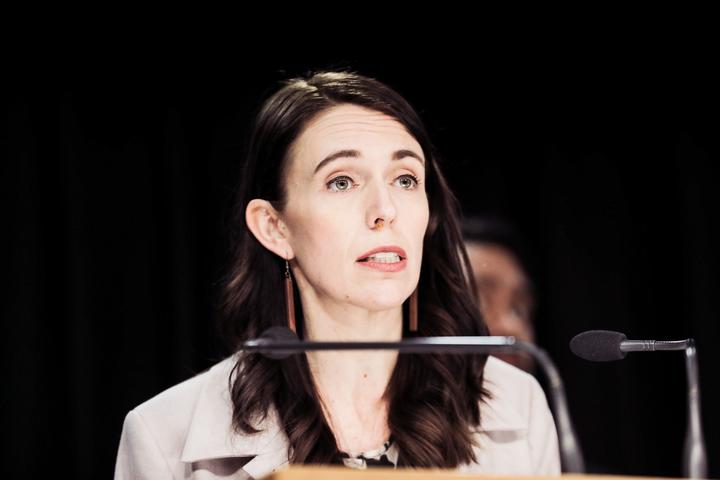
New Zealand’s Prime Minister Jacinda Ardern emerged from the summit saying they had “endorsed a declaration on maritime zones: to protect the ocean jurisdiction of Pacific countries against sea-level rise.

Maritime boundaries are taken from points on land, and Pacific countries are seeking to assure their ocean dominion if shorelines diminish.

Ardern said the declaration will be presented to the United Nations, adding that the declaration will be part included at COP26.

“Some of Pacific Island neighbours, if sea level rises continue, will lose their territory. This is a way of, as Pacific Island leaders, demonstrating our interpretation of the United Nations Convention on the Laws of the Sea

Ardern confirmed that Covid-19 was also on the agenda.

“As you can absolutely understand, given the impact that Covid is having on the region as we speak whether it’s the economic impacts through the loss of tourism or those who are facing directly the devastating health impacts,” she said.

What was clear, Ardern said, was that across the region, Forum members were at varying stages of immunisation across the region, with the Pacific having gone from a period of the beginning of the year when there was an issue of supply of vaccines to a situation now where it was a matter of co-ordinating vaccine distribution.

She praised the bi-lateral work between Pacific Island neighbours to ensure that everyone had the supply they need.

The summit found leaders pledging to support one another as vaccination programmes continue.

SOURCE: RNZ PACIFIC/PACNEWS

World’s climate scientists to issue stark warning over global heating threat

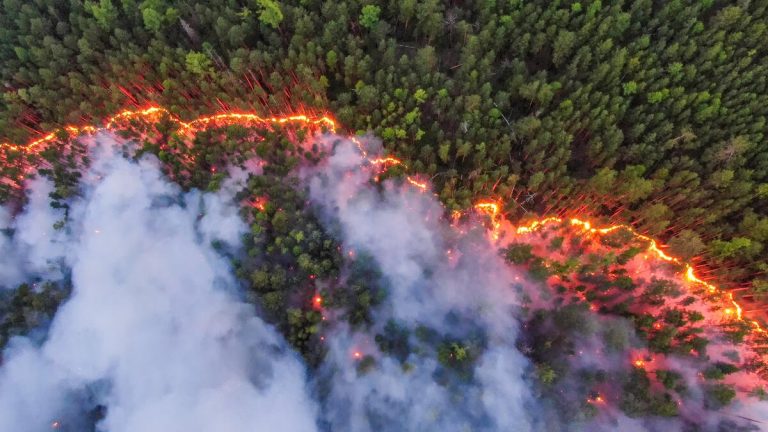
The fires, floods and extreme weather seen around the world in recent months are just a foretaste of what can be expected if global heating takes hold, scientists say, as the world’s leading authority on climate change prepares to warn of an imminent and dire risk to the global climate system.

The Intergovernmental Panel on Climate Change (IPCC) will on Monday publish a landmark report, the most comprehensive assessment yet, less than three months before vital UN talks that will determine the future course of life on Earth.

Policymakers have already previewed the findings, finalised on Saturday night, which have been the subject of an intense two weeks of online discussion by experts around the world, and represent eight years of work by leading scientists.

Doug Parr, policy director at Greenpeace UK, said governments must take heed of the warnings. “Practical, funded and deliverable plans [by governments] to keep us below the supposedly safe limits [of heating] are almost non-existent. Urgent climate action was needed decades ago – now we’re almost out of time. The UK government has a huge responsibility as host of the UN climate talks to ensure world leaders sign up to policies that not just put the brakes on the climate crisis, but slam it into reverse.”

The IPCC, made up of hundreds of the world’s foremost climate scientists, publishes comprehensive assessments about every seven years, with this report the sixth since 1988. This one will be different, however: previous work has shown that the 2020s are a crucial decade, in which greenhouse gas emissions must be halved in order to limit heating to 1.5C above pre-industrial levels, established by previous IPCC reports as the threshold of safety, and the lower of two goals in the 2015 Paris agreement.

Michael Mann, distinguished professor of atmospheric science at Pennsylvania State University, said this would be the last IPCC assessment that can make a real difference in policy terms, before we exceed 1.5C and the ambitions of the Paris agreement.

“Climate change is now causing amplified weather extremes of the sort we’ve been witnessing this summer – droughts, heatwaves, wildfires, floods, superstorms,” he said. “The impacts of climate change are no longer subtle. We see them playing out in real time in the form of these unprecedented extreme weather disasters.”

In recent months there have been fires in the US, heatwaves in northern latitudes, and devastating floods in China and Europe. Scientists warn that this may become the norm unless climate breakdown can be stopped.

Simon Lewis, professor of global change science at University College London, said: “The observations this summer show that some impacts [predicted in previous IPCC assessments of the climate] seem to be underestimated, but we can’t know if the devastation of summer 2021 is the new normal without a few more years’ data. But what we do know is if emissions continue to rise, then increasingly severe climate impacts will occur.”

He warned that the consequences would be severe. “What we need to keep in mind is that we all live in places that have built up over decades and centuries to cope well with a given climate. The really, really scary thing about the climate crisis is that every single achievement of every human society on Earth occurred under a climate that no longer exists,” he said. “The pressure is on for world leaders to agree both detailed and achievable plans to cut emissions now, and plans to adapt to climate impacts, when they meet in Glasgow in November.”

This year’s weather observations are not included in the IPCC report, which draws on science published in peer-review journals before this year, and since its last comprehensive report in 2013. Mann said: “This is also a limitation. The IPCC reports always seem to be playing catch-up with what we’re witnessing on the ground. Our own work suggests that the models upon which [most IPCC projections] are made still aren’t quite capturing some of the mechanisms that are important here.”

Extreme weather this year has also shown how vital it is that countries and communities around the world take steps to cope with the impacts, said Richard Betts, professor of climate impacts at Exeter University, and head of climate impacts research at the Met Office. “We now need to live with the consequences of what we have already done to the climate. We are hopelessly unprepared to deal with increasingly severe extreme weather events, even though these have been predicted by science for decades.”

Alongside this effort, we should be cutting emissions much faster, he added. “We need to take urgent action on reducing emissions if we want to stop this getting much worse,” said Betts. “The longer it takes to bring this increase [in the buildup of CO2 in the atmosphere], the greater the severity of climate change we will be stuck with.”

Alok Sharma, the UK minister who will preside over the UN’s Cop26 climate talks, to be held in Glasgow this November, said on Saturday: “This is going to be the starkest warning yet that human behaviour is alarmingly accelerating global warming and this is why Cop26 has to be the moment we get this right. We can’t afford to wait two years, five years, 10 years – this is the moment. [The consequences of failure would be] catastrophic – I don’t think there’s any other word for it.”

Rachel Kennerley, international climate campaigner at Friends of the Earth, said: “The world’s climate scientists are set to issue a stark warning that cannot be ignored. The international community must rapidly deliver the speed and scale of the action required to avoid catastrophic climate change. It’s time to end our reliance on dirty gas, coal and oil, and invest in green jobs and building the zero-carbon future we so urgently need.”.

SOURCE: THE GUARDIAN/PACNEWS

ADB, UNICEF support rollout of vaccines for children in Samoa, Tonga, Tuvalu against infectious diseases,

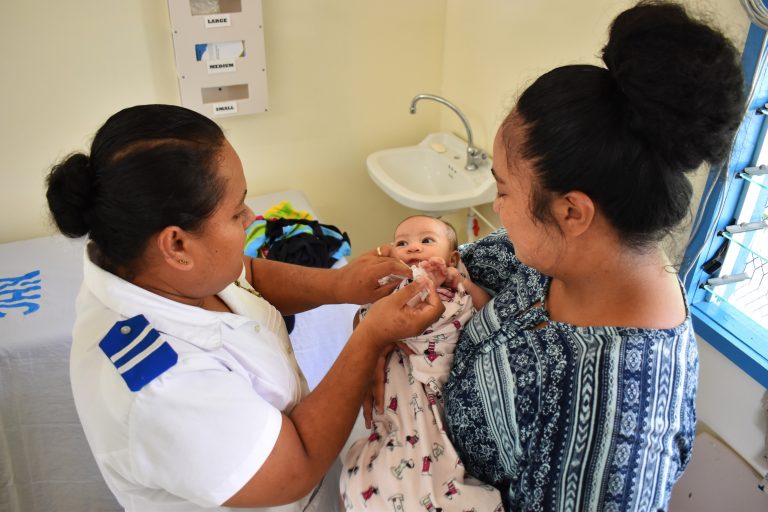
The rollout of vaccines to protect children against cervical cancer, pneumonia, and rotavirus has begun in Samoa, Tonga, and Tuvalu.

The deployment of these three vaccines is part of the US$29.7 million System Strengthening for Effective Coverage of New Vaccines in the Pacific Project, which is supporting the introduction of these vaccines in Samoa, Tonga, Tuvalu, and Vanuatu. Financed by the Asian Development Bank (ADB), the vaccine project was originally established to support the procurement of rotavirus, pneumococcal conjugate, and human papilloma virus (HPV) vaccines through the United Nations Children’s Fund (UNICEF).

The project is supporting the health ministries in immunising 90,700 children against pneumonia, 71,600 children against rotavirus, and 84,200 adolescent girls against HPV infections across the four countries. The project is also helping update national immunization and cold chain policies, upgrade cold chain equipment and supply chain logistics, improve immunization reporting systems, and undertake other health system strengthening activities essential to reducing pneumonia, rotavirus, and HPV infections.

“This established vaccines project continues to make good progress, improving overall immunization coverage rates, supporting greater efficiency of primary health services, and raising community awareness at a time which is critical when much of the globe is being adversely affected by the coronavirus disease (COVID-19),” said Regional Director of ADB’s Pacific Subregional Office in Fiji Masayuki Tachiiri. “It will also help to strengthen the region’s resilience against other infectious diseases in consideration to reopening of borders and economies.”

“While the focus of the world is understandably on boosting immunisation against COVID-19, we can’t afford to trade one health crisis for another,” said UNICEF Pacific Representative Sheldon Yett. “We thank ADB for its continued and strengthened partnership in the Pacific and working with UNICEF to protect children and young people from these vaccine-preventable diseases.”

In the Pacific, pneumonia and diarrhea are two of the top three causes for mortality in children under 5 years of age, and about one-third of all pneumonia deaths are due to the pneumococcus bacteria, which is usually transmitted through contact with infected children. Rotaviruses are the leading cause of severe diarrhea in children aged less than 5 years.

Cervical cancer has also been reported as one of the top three regional priorities by Pacific leaders, with over a thousand cervical cancer cases each year.

The project also recently received additional financing to support the four countries in the introduction of COVID-19 vaccines. The project provides an established platform to safely introduce COVID-19 vaccines in the countries, strengthen health systems, and raise community awareness.

SOURCE: ADB/PACNEWS

PNG PM joins call for solidarity

Papua New Guinea Prime Minister James Marape has joined leaders of the Pacific to call for stronger Pacific solidarity, renewed efforts to COVID-19 pandemic response, and tougher action on climate change.

The Prime Minister joined 12 other leaders of the Pacific Islands Forum (PIF), including its secretariat, during a virtual retreat Friday to mark its efforts over the last 50 years since its establishment in 1971 in Wellington, New Zealand.

Papua New Guinea, Fiji, Nauru, Samoa, Cook Islands, French Polynesia, Vanuatu, Niue, Tuvalu, New Caledonia, New Zealand and Australia sat in the usual “Pacific Way” roundtable talk that underpinned Pacific brotherhood, though with the exception of the majority of Micronesian states.

Micronesian states have been threatening to break away from PIF, an issue that featured prominently in Friday’s meeting. The issue of contention has been Micronesia’s view that over the last 50 years of PIF’s existence, no Micronesian member has been appointed to the PIF Secretariat as Secretary-General.

All Pacific leaders including Prime Minister Marape reiterated the Forum’s stand on a “united Pacific” and strongly urged Micronesia to remain while PIF review the mechanisms that can allow for more inclusive appointments to the Secretariat.

COVID-19, as usual among international discussions these days, made the first agenda item. Many small Pacific Island countries reported COVID-free populations and the scaling-up on their vaccination coverage. PNG and Fiji are the countries who have reported the highest COVID-19 infections – besides Australia and New Zealand. All countries pledged to work together.

The retreat ended with the declaration to preserve coastal areas experiencing the impact of climate change such as sea-level rise.

PNG is continuing its efforts on the Coalition of Rainforest of Nations as the current chair and Prime Minister Marape said he was looking forward to engage in the high-level talks with developed nations in the Conference of the Parties, the UN climate change conference, later in the year.

PM Marape is looking at arrangements with these countries for the preservation of specific portions of PNG’s rainforest in exchange for financing and development opportunities.

SOURCE: PNG GOVT/PACNEWS

Kiribati extends border closure to December

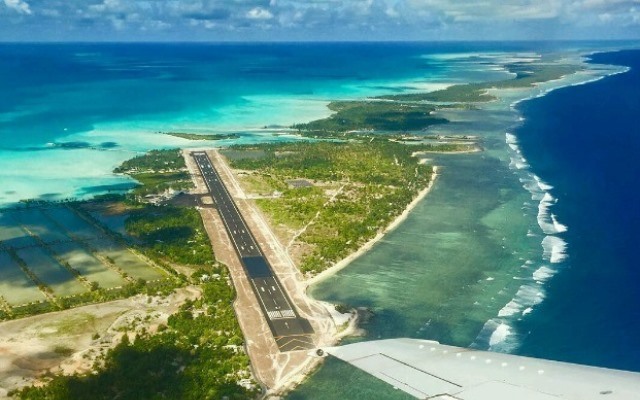
Kiribati has extended its border closure to 31 December 2021.

A statement from the Office of the President said the decision was made after thoroughly assessing the current status of the pandemic.

The extension will remain in force until a new advisory has been issued to lift it when the situation improves.

Special approvals will be obtained for humanitarian flights for medical supplies and essential supplies and medivac operations.

SOURCE: RADIO KIRIBATI/PACNEWS

Pacific at peril under current climate policies, new commitments still inadequate: report

Current climate policies mean the world is on course for up to 3.9 degrees of heating, which would see a number of Pacific Island countries go under the ocean due to sea level rise, according to a new report released today by Greenpeace Australia Pacific.

Te Mana,o te Moana 2021 analyses each country’s climate commitments as part of the Paris Agreement, and reveals that while stronger climate targets from some of the world’s biggest emitters go some way to reducing the chances of catastrophic climate change, others such as Australia’s will lock in almost three degrees of heating, a level incompatible with life in the Pacific.

The report’s key findings include:

*Current climate policies mean the world is on course for up to 3.9 degrees of heating

*National emissions reduction pledges like Australia’s would lock in between 2 and 3 degrees of global heating

*Fortunately, countries with climate pledges which would lock in over 4 degrees of heating have fallen from 19.09% of global emissions in 2020 to just 5.37%

“The Pacific is reeling from the compounding impacts of the climate crisis and COVID-19 pandemic with communities facing deepening poverty, loss of livelihoods and irreversible damage to land and marine ecosystems,” Greenpeace Australia Pacific Non-Executive Director Kavita Naidu said.

“Pacific communities are deeply connected to their ancestral lands that have shaped their cultural heritage and ways of sustainable living for generations. Climate change, driven by coal, oil and gas is increasing displacement of these coastal communities from their homes, villages and communities, threatening their identities, cultural practices and relationships with land, nature and their social environment.

“By refusing to support reparations for historic climate damage in the Pacific, Australia is shirking responsibility and not doing its fair share. It’s made worse by the Morrison Government’s persistent support of the expansion of the fossil fuel industry, which sentences people in Australia and the Pacific to intense heatwaves, longer droughts, bushfires, cyclones, a warming ocean and the devastating loss of biodiversity.”

Greenpeace Australia Pacific Head of Research and Investigations, Dr Nikola Casule said that since the election of US President Joe Biden, some of the world’s biggest polluters had significantly improved their 2030 emissions reduction targets with the UK, US and EU leading the way, however, Australia is lagging behind.

“Comparing the performance of the UK or U.S with Australia’s is like comparing a Ferrari with a go-kart. They’re not in the same category,” he said.

“The Morrison Government’s climate failure is so bad that it places Australia in the company of countries like Saudi Arabia and Russia. Prime Minister Scott Morrison has rightly been called out on the world stage and with Australian policies completely at odds with the Paris Agreement those calls will only grow louder in the lead up to COP26 in Glasgow,” said Dr Casule

Contact: Greenpeace Australia Pacific Communications Campaigner, Martin Zavan
+61 424 295 422 .Emailmartin.zavan@greenpeace.org

SOURCE: GREENPEACE/PACNEWS

Micronesian leaders boycott PIF session, standing firm on plan to leave the bloc

Four Micronesian leaders skipped the Pacific Island Forum’s 51st virtual session last Friday, in a continuing protest over the organisation’s refusal to assign the leadership post to the subregion.

Fijian Prime Minister Frank Bainimarama’s official apology proved not convincing enough to break the impasse and appease the Micronesian leaders.

The Micronesian nations– Palau, Marshall Islands, Federated States of Micronesia, Kiribati and Nauru– declined to reconsider their collective decision to exit from the regional body if the gentleman’s agreement is not honoured.

Nauru President Lionel Aingimea, chair of the Micronesian Presidents’ Summit (MPS), was the only leader from the breakaway group who attended today’s meeting, where PIF discussed a planned in-person leaders’ retreat scheduled for 2022.

In a statement issued after the meeting, Aingimea said Micronesian leaders, “are standing on the principles of the Mekreos Communique,” and “are not attending the retreat.”

“The Mekreos Communique articulates that if the long-standing Gentlemen’s Agreement is not honoured, then the Micronesian Presidents see no benefit in remaining with PIF,” Angimea said.

The Mekreos Communique is a declaration signed by Palau, FSM, Marshall Islands, Nauru and Kiribati in 2020.

The Micronesian leaders maintain that their candidate, Ambassador Gerald Zackios, must assume the secretary-general position in line with the gentlemen’s agreement’ for sub-regional rotation.

“Presidents agreed that the solidarity and integrity of the PIF are strengthened by the gentlemen’s agreement, that this issue is one of respect and Pacific Unity, and that it is non-negotiable for the Member States. Presidents agreed that in the ‘Pacific Way’, a ‘gentlemen’s agreement is an agreement, and if this agreement is not honoured, then the presidents would see no benefit to remaining in the PIF,” the Mekreos Communique stated.

Nauru, FSM, RMI and Palau commenced the process for withdrawal from the PIF in February 2021 and will take effect by February 2022.

The 51st Pacific Islands Forum Leaders virtual meeting also coincided with the 50th Anniversary of the Pacific Islands Forum. Nauru is a founding member of the Forum, along with six others – Australia, Cook Islands, Fiji, New Zealand, Tonga and Western Samoa – now Samoa.

Tuvalu Prime Minister Kausea Natano handed over the role of Forum Chair to host leader of the 51st Pacific Islands Forum, Fiji Prime Minister Frank Bainimarama.

Bainimarama in Friday’s opening of the Forum welcomed Secretary-General Henry Puna and said they are looking forward to working with him.

Bainimarama also welcomed the Samoa’s new Prime minister Fiame Naomi Mata’afa to the meeting.

While the forum celebrates 50 years of milestones, it is also facing a crisis with the looming fracture of the regional body.

Bainimarama apologised anew to the Micronesian head of states over the PIF secretariat leadership row.

“To our Micronesian brothers, I offer my deepest apology, we could have handled the situation better, but I remain confident that we will find a way forward together,”

“I hope this meeting provides an avenue for frank dialogue,” Bainimarama said.

He said he doesn’t expect a resolution of the rift but he said the Forum will continue dialogue with the Micronesian leaders.

“None of us can do this alone,” he said and urged for solidarity and retain Pacific regionalism especially on the issue of climate change and Covid-19 related economic crisis.

Puna in his statement said the region is in the midst of “unprecedented challenges” of Covid pandemic, climate change, and geopolitical interests.
He also cited the challenges the forum is facing among the members.

“Our bond as one forum family is being put to the extreme test,” Puna said.

But he is hopeful that the members will stay together with continued dialogue.

SOURCE: PACIFIC ISLAND TIMES/PACNEWS

Fiji records 657 new cases of COVID-19, Three new deaths reported

Fiji has recorded 657 new cases of COVID-19 and three new deaths Sunday, increasing the total number of cases in the Pacific nation to 36,909 since the outbreak in April.

Permanent secretary for Health, Dr James Fong said 256 cases are from the Western division and 401 cases are from the Central division in Vitilevu, Fiji’s main island.

On Saturday, Fiji recorded 682 new cases and six deaths, On Friday the island nation recorded 752 new cases of COVID-19 and seven deaths.

Dr Fong said there have been 586 new recoveries reported since the last update, which means that there are now 24,138 active cases.

“19,005 active cases are in the Central Division and 5,133 in the West.There have been 36,909 cases during the outbreak that started in April 2021.

“We have recorded a total of 36,979 cases in Fiji since the first case was reported in March 2020, with 12,384 recoveries,” said Dr Fong.

He said the three new COVID-19 deaths reported for the period of 06 – 07 August. All three deaths were reported from the Central Division.

“The first COVID-19 death to report is an 86-year-old woman from Newtown who died at home on the 06/08/2021. She was not vaccinated.

“The second COVID-19 death to report is a 73-year-old woman from Kinoya who died at home on the 06/08/2021. She was not vaccinated.

“The third COVID-19 death to report is a 71-year-old man from Cunningham who died at home on the 07/08/2021. He was not vaccinated,” said Dr Fong.

Fiji’s death toll almost reaches the 300 mark.

“There have now been 299 deaths due to COVID-19 in Fiji, with 297 of these deaths during the outbreak that started in April this year. The 7-day rolling average of COVID-19 deaths per day is 6.

“We also have recorded 158 COVID-19 positive patients who died from the serious medical conditions that they had before they contracted COVID-19; these are not classified as COVID-19 deaths,” he said.

Dr Fong said there are currently 240 COVID-19 patients admitted to hospitals in Fiji.

“69 patients are admitted at the FEMAT field hospital, and 171 admitted at CWM hospital, St Giles, and Makoi. 50 patients are considered to be in severe condition, and 5 are in critical condition,” said Dr Fong.

He said based on available data the national 7-day daily test average is 3010 tests per day or 3.4 tests per 1,000 population. The national 7-day average daily test positivity is 31.3 percent.

As of 07 August 512,282 adults in Fiji have received their first dose of the vaccine and 178,606 have received their second doses. This means that 87.3% of the target population have received at least one dose and 30.4% are now fully vaccinated nationwide.

SOURCE: PACNEWS

Tokelau stands by its mandatory vaccination programme

Tokelau will roll-out the second dose of its Pfizer COVID-19 vaccination programme on Tuesday.

It follows the successful administration of the first inoculations on 20 July 2021.

“Tokelau has vaccinated 99% of her population against COVID-19 in the first round of vaccinations and the leadership are very proud of that achievement,” stated the Ulu o Tokelau, Kelihiano Kalolo.

The programme is mandatory for all eligible members of the population, while individuals with medical contraindications are exempted.

The mandatory status of the programme and self-isolation imposed on the few individuals that refused vaccination has created a small social media storm by a few people criticising and spreading misinformation about Tokelau’s vaccination programme.

“We are surprised and saddened at the small group of people spreading misinformation about the effectiveness of COVID-19 vaccinations. This has become a world-wide trend that we would encourage people not to be part of,” said Kalolo.

“In addition, we are disappointed with the unsubstantiated statements made against some of our Tokelauan leaders, and Administrator Ross Ardern, who collectively have been working tirelessly to ensure the safety and security of all of those that live in Tokelau during these difficult times.”

Kalolo added that mandatory vaccination is already in place in various countries around the world and it is gathering more support. He referred to Tonga’s parliament passing a mandatory vaccination bill through its first reading 17 to nil last week. When passed into law, vaccination refusal in Tonga will be a crime; with parents held responsible if their children refuse.

“Tonga, like Tokelau, is one of only eight countries in the world that is COVID-19 free. COVID-19 has not landed or arrived at our borders. But we believe that COVID will arrive. Our only hope is to make sure everyone is vaccinated. It is a matter of life and death for our 1500 people. That is why vaccination is mandatory for Tokelau.”

Ahead of the second roll-out, the Ulu o Tokelau will address the nation this weekend. He will provide an update on the general success of the first round of vaccinations; reconfirm details of the second roll-out expected to take place on 10 August 2021; and summarise the journey for a solution that started in March 2020.

The Ulu will also acknowledge the tireless work of health professionals and partners in the delivery of the vaccination programme across the atolls of Tokelau

SOURCE: PACIFIC GUARDIAN/PACNEWS

Tonga fully vaccinates over 23,600 people

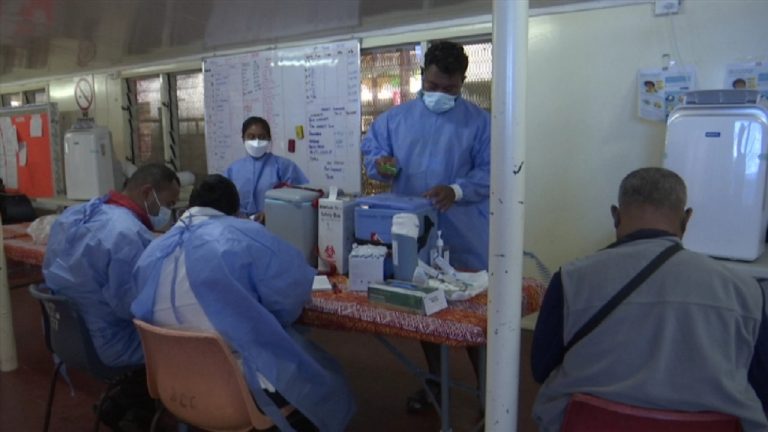
Over 23,641 people have received the second dose of the COVID-19 Astra-Zeneca vaccine in Tonga, since the second roll out programme started on 24 June in Nuku’alofa.

CEO for the Ministry of Health, Dr Siale Akau’ola confirmed that 23,641 people had now been fully vaccinated.

This is around 82% of the 28,841 people who had received their first dose of the vaccine.

The second roll out in the communities runs until 31 August.

The Ministry of Health is hoping to receive more COVID-19 vaccines for the remainder of the target population this year. They aim to achieve a 70 per cent vaccination rate for the whole population.

Dr Akau’ola said a consignment of 10,000 doses of AstraZeneca COVID-19 vaccines is scheduled to arrive in Tonga on Tuesday.

These doses are funded by the Australian Government and will be sent to Ha’apai.

Another batch of COVID-19 vaccines are also expected to arrive around middle to late August, funded by Japan through COVAX.

“Date and quantity will be confirmed soon. These vaccines will be utilized to vaccinate people living at Tongatapu, Eua and the Niuas,” said Dr Akau’ola.

Another shipment of COVID-19 vaccines, including Pfizer doses, funded by New Zealand, is also planned for Tonga at the end of August or towards the last quarter of the year.

“These vaccines will be used to vaccinate anyone else in Tonga who may have missed out on the above vaccination drives.”

The Pfizer COVID-19 vaccines from New Zealand will be for youth aged 12 to 17-years-old and pregnant women who want to be inoculated against the virus.

Dr Akau’ola said there were pregnant mothers who wished to be vaccinated with AstraZeneca vaccines now, “and we will not with-hold the vaccines from them”.

“Data on the safety of COVID-19 vaccine to pregnancy is still being continuously collected and analysed – results so far has not shown any significant short term adverse effects,” he said.

However, WHO is advising countries that are choosing to give vaccines to pregnant women, to first consider if the risk of getting COVID-19 is greater than the risk of adverse events from getting the vaccine, which has so far been shown to be extremely low.

“We have looked at these risks from Tonga’s context and concluded that the risk of the COVID-19 Delta variant entering Tonga from Fiji is increasing. At the same time, vulnerability of Tonga to impacts of COVID-19 infection in terms of NCD risk factors remains quite high.”

Combining these two risks, make the risk for an unvaccinated pregnant woman, extremely high, he said.

“In fact, if a COVID-19 Delta variant outbreak happens in Tonga, it will be too late to vaccinate pregnant mothers to protect them. Their only chance is to get them vaccinated now while Tonga is still COVID-19 free.”

Pregnant women who want a COVID-19 vaccine will be provided information on the risks involved prior to inoculation.

SOURCE: TONGA WIRES/PACNEWS

Stay connected

529FansLike
172FollowersFollow
156SubscribersSubscribe
- Advertisement -