Home Blog Page 1149

Fiji, Samoa 7s to miss start of the World Series

0

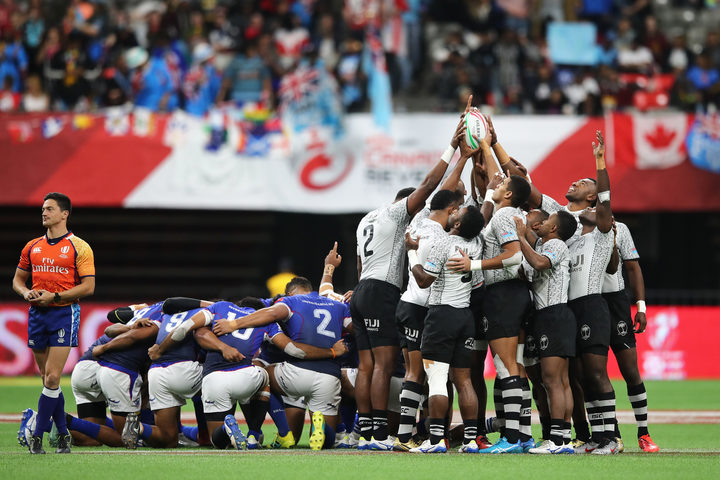
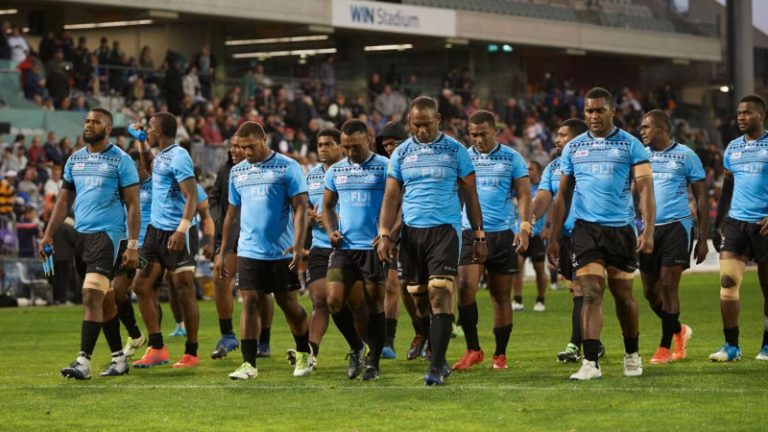
The Fiji and Samoa sevens teams will be missing when the men’s World Sevens Series gets underway in Canada this month.

The new season kicks off in Vancouver on September 18, with another tournament in Edmonton the following weekend.

But Fiji’s Olympic gold medal winning team and Pacific neighbours Samoa have joined New Zealand, Australia and Argentina in opting to skip the Canadian wing because of the ongoing effects of Covid-19.

Fiji’s players went more than four months without seeing their friends and families in order to achieve their Olympic dream in Japan.

The team is halfway through a six-week break, after completing two weeks in managed isolation following their triumph in Tokyo, while coach Gareth Baber is in Wales.

Fiji Rugby CEO John O’Connor told RNZ Pacific the team would only be allowed to train in bubbles because of the country’s Covid-19 crisis and putting a squad together to compete at short notice was not feasible.

“After six months of bubbles leading to Olympics, we are very mindful of player safety and welfare. Quarantine is also an obstacle since it’s unions who have to meet the cost.”

Samoa’s national team is continuing to train in Apia under the guidance of Muliagatele Brian Lima.

But Lakapi Samoa’s General Manager of High Performance, Seumanu Douglas Ngau Chun, said the country’s strict Covid-19 measures mean they will also miss the first World Series tournaments in 18 months.

“Because we can’t go to Edmonton and Vancouver and then return home, we have to find a base somewhere in Dubai,” he said.

“We’re still in negotiations at the moment and unfortunately the cut-off dates for Vancouver/Edmonton was last week, Monday, which we had to declare that we can’t travel to that tournament.”

Samoa is keen to compete in Singapore at the end of October but will have to cover the costs of an extra month in Dubai before the next tournament in December, Seumanu said.

“It will be a massive commitment from them because once they’re out of the country there’s no way of returning home after the tournament.

“Dubai’s our preferred location and we’re still in talks with a few of our sponsors if they are willing to cover the costs of us being based there.”

The Manu Samoa and Mansuina 7s teams have already experienced an extended stay in Dubai, after their return home from the Olympic qualifying tournament in Monaco turned into a two week pit-stop.

With Samoa joining the three Tokyo 2020 medallists, Fiji, New Zealand and Argentina, in skipping the opening two legs, Seumanu said organisers might want to ponder if they should go ahead at all.

“Unfortunately they’ve only confirmed ten teams, so they were still waiting for another couple of teams to make the teams 12, but I think the best option for them is to really reconsider hosting those tournaments. It’s not worth it with the current situation with Covid.” he said.

SOURCE: RNZ PACIFIC/PACNEWS

Fijian Drua to be based in Australia

0

The Fijian Drua will be based in Australia in the next 2022 Super Rugby season.

The team will march into quarantine in Australia in the middle of October and plan to start base camp in early November.

This has been confirmed by Fiji Rugby Union Chair, Fijian Drua to be based in Australia

In a press conference this morning, Begg says they will start making an announcement on players in the coming weeks as well as the head coach that has been selected.

Meanwhile, the good news keeps on coming for women’s rugby in the country with confirmation there’s a possibility of having a Fijiana Drua side in Australia’s Super W competition next season.

Super W is a women’s competition that started in 2018 for the five Australian Super Rugby sides which include the Waratahs, Reds, Rebels, Brumbies, and Western Force.

Next year is a huge one for women’s rugby with the Rugby World Cup and Commonwealth Games.

Fiji Rugby Union Chief Executive John O’Connor says as part of its World Cup preparations, they’re working behind the scene with relevant stakeholders to have our women’s team in Super W.

“I think more importantly it’s going to be another historic year for women’s rugby because we are currently in discussions with the Australian Rugby Union to include our Fijiana Drua to play in the Super W women’s competition in Australia’.

The FRU is also planning to host Test matches for the Fijiana next year and Fiji Sports Commission Chair Peter Mazey says they’ve set aside funds for it.

“We are going to do that next year and in June hopefully, Fiji Rugby will be sorting out who they going to play against, I haven’t been advised yet but the funding is available for that”.

O’Connor revealed to FBC Sports that discussions are ongoing with teams that have qualified for the World Cup in New Zealand to come over and play the Fijiana in Fiji.

SOURCE: FBC SPORTS/PACNEWS

Micronesia’s President says he mandated vaccines to protect

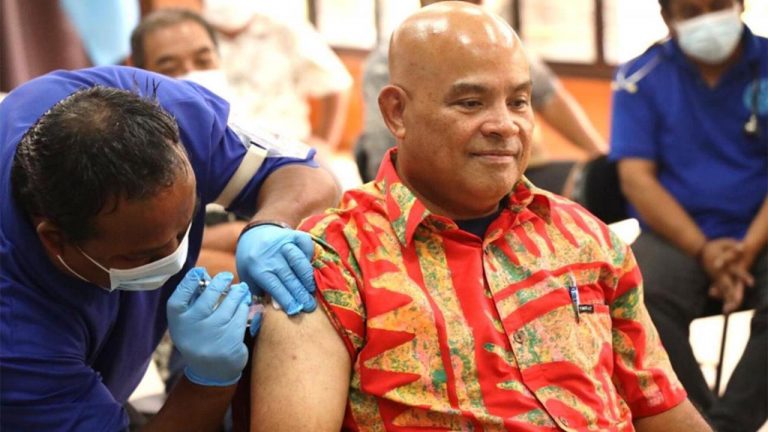
Federated States of Micronesia(FSM) President David Panuelo said Wednesday he’ll continue to walk around his island nation without fear, despite an alleged death threat against him over his government’s vaccine mandate.

A month ago, Micronesia became one of the few countries in the world to impose a broad rule requiring that all eligible citizens get vaccinated against the coronavirus.

Soon after, Panuelo signed a decree requiring anybody receiving federal funds to prove they’ve been vaccinated or risk foregoing their checks. It’s a broad net that captures most of the adult population — everyone from business owners getting pandemic stimulus payments to government workers and pensioners getting social security benefits.

Some islanders have strongly objected to the measure. Last week, a man was charged with making threats and other related offenses, which carry a maximum prison sentence of 10 years if he’s found guilty.
In court documents, prosecutors said the man wrote a Facebook post which read: “President—My decision, My body … You gona need an army to protect you from now on…You will be assassinated for sure…Mark my word President.”

In an interview with The Associated Press, Panuelo said that since the Facebook post was made, authorities had increased the security around his home and office.

“We’re such a friendly country,” Panuelo said. “To see this coming from within our country, from our population, is quite a surprising element that I’ve discovered for the first time.”

He said he’d promised his administration would remain approachable and transparent while in office and he intended to continue with that.

“I tell my people I will still walk out in the open field,” Panuelo said. “Anybody threatens me, I’m not worried about it.”

Micronesia, which is east of the Philippines and is home to about 100,000 people, has gone without any local cases of COVID-19 since the pandemic began, thanks in part to strict border controls.

“You don’t have to wear a mask. Our children are still going to school,” Panuelo said. “There is no virus right now. We’re enjoying the daily freedoms like we’ve been enjoying prior to the COVID breakout. And so we want to keep it this way.”

He said when the nation’s Congress first discussed making vaccines mandatory he raised concerns but later came to embrace the idea.

“We love our citizens, and this is the action that we take to protect our citizens,” Panuelo said. “I’m behaving like a father, like I would to my kids.”

Panuelo said he believed that personal freedoms and liberties are sacrosanct, but also that the nation’s Constitution grants the power to limit certain liberties in situations such as a pandemic.

He said people on the islands tend to live in very close-knit family and community groups, sharing utensils and sleeping on the floor together, and that any outbreak would spread like wildfire.

“I guess freedoms these days are important,” Panuelo said. “But how can freedoms be important if you die from them?”

He said that since the mandate was imposed, vaccination rates had leaped from about 43 percent of eligible Micronesians being fully vaccinated and 52 percent at least partially vaccinated to about 60 percent and 70 percent, respectively.

He said he’d seen some of the backlash to the mandate on social media from people opposed to the vaccines.

James Movick, a restaurant owner, said he was pro-vaccine but had concerns about the mandate. He said it would help islanders maintain their virus-free lifestyles, but many Micronesians worried that any penalties could unfairly target vulnerable groups like pensioners.

Movick said he also wondered if the man who had posted on Facebook actually intended to do anything and if charging him was an overreaction.

Authorities are sensitive to such threats after American lawyer Rachelle Bergeron, 33, was shot and killed outside her home while serving as a prosecutor in Micronesia in 2019.

Two people were later charged in connection with her murder. Panuelo said he’s been involved with that case, which has been delayed because of the pandemic.

As with the Bergeron case, the FBI has been helping investigate the alleged Facebook threat. Micronesia enjoys close relations with the U.S. under a compact of free association.

Panuelo said he doesn’t necessarily think the charges in the Facebook case are an overreaction after the investigation revealed the suspect had a history of making threats and had been involved in other crimes.

He also pointed out that two presidents on the nearby island nation of Palau were assassinated in the 1980s.

In court documents, prosecutors said that Benneth Edmund, a retail store owner and assistant clerk, wrote the threatening post under the fictitious Facebook profile “Jaylo David.”

A police report said that when interviewed, Edmund said he was friends on Facebook with Jaylo David but didn’t know who was behind the profile.

Public defender Nixon Alten, who is representing Edmund, told AP that Edmund had been released from custody after his arrest and intended to plead not guilty at a hearing later this month. Alten said he couldn’t comment further.

Panuelo said he would continue reinforcing the message to his people that getting vaccinated was the right decision. He hoped about 95 percent of the eligible population would be fully vaccinated by December.

“You only have to look elsewhere to understand why we’re doing this, because people die,” Panuelo said. “And if we don’t do it this way, then we could be next,” he said.

SOURCE: AP/PACNEWS

OCO 21st Annual Meeting – Transnational crimes require regional collaboration

0

Despite border closures and reduced air and sea travel because of COVID-19, Customs administrations in the region say threats in the Pacific remain high from illegal, unreported and unregulated fishing fleets – as well as threats from illegal movements of people, drugs and weapons, which are often facilitated by trusted insiders.

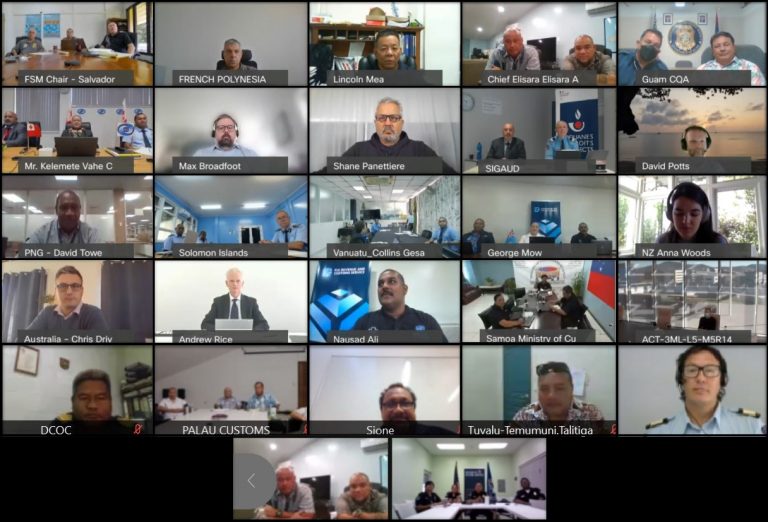
The issue was discussed at the Oceania Heads of Customs annual meeting last Thursday (26 August), held virtually with 21 of the 23 Oceania Customs Organisation (OCO) members attending.

Members agreed there is a critical link between national security and traditional customs functions and that the region is more secure if all parties work together through engagements with organisations such as the OCO and the Joint Heads of Pacific Security (JHoPS).

“We all know that not all of us have ample resources to effectively carry out roles but if we share our resources and we work together, we will become more effective,” OCO outgoing Chair and head of Customs of the Federated States of Micronesia, Salvador Jacob said.

“A good example of regional collaboration is the Australian-developed Pacific Small Craft Application, which was launched last year to increase information sharing and enhance border security practices. This mobile app used by Customs administrations in the region will support secure movements in the Pacific in the future as it also includes a COVID-19 quarantine tracking feature.”

OCO members also discussed the impact of COVID-19 on their respective countries and their national responses, including border measures to protect their citizens.

Members also noted the priorities placed on ensuring the facilitation of essential goods by Customs administrations were consistent with the health protocols in place. To support vaccine supply chain in the Pacific, members also welcomed the Australian and New Zealand-drafted World Customs Organisation Operational Guidelines for the Facilitation of Situationally Critical Medicines and Vaccines that would greatly support Customs administrations.

Meanwhile, as Pacific Island nations respond to the impacts of COVID-19, Customs administrations also acknowledged OCO’s capacity building efforts focus on COVID-19 recovery, and the implementation of PACER Plus last year provided a useful tool to support economic recovery through greater trade.

Fiji based OCO carried out capacity building activities in the Pacific, which included training in valuation, tariffs, vessel searches, border security assessments, small craft targeting, cargo search, e-commerce, disrupting criminal business activities, risk assessment, document examination, investigations and intelligence to bolster Pacific border security.

“There is a silver lining to COVID-19, because of the border closures we have had to hold most of our training virtually,” OCO Head of Secretariat, Richard Brennan said.

“While it has been challenging, the positive is that we have been able to include more participants from the region. We need to continue building the capacity of our members so that we can be effective in our roles as we face and address the impacts of COVID-19 and the ongoing threats to our borders.”

The meeting welcomed the incoming Chair Xavier Mitchell Head of Customs, Cook Islands. Dependent on the re-opening of borders, Cook Islands will host the 2022 annual conference and the Federated States of Micronesia in 2023. Both countries were unable to host the respective events in the last two years with travel restrictions in place.

OCO is a grouping of 23 customs administrations in the Pacific region. It facilitates regional cooperation, information sharing and capacity building of its members with the overall target of supporting economic growth and improved border security in the Pacific.

For more information, queries or interview requests, please email MediaOCO@ocosec.org

SOURCE: OCO SECRETARIAT/PACNEWS


Parties to the Convention for the Protection of the Pacific’s Natural Resources and Environment convene the 16th COP

The 16th meeting of the Conference of the Parties to the Convention for the Protection of Natural Resources and Environment in the South Pacific Region, also known as the Noumea Convention, officially convened today, with Parties and Observers joining virtually due to the ongoing COVID-19 pandemics and subsequent border closures across the Pacific.

The Noumea Convention, which entered into force in 1990, is a comprehensive umbrella agreement for the protection, management and development of the marine and coastal environment of the Pacific region. It is the legal framework to ensure that environmental management and sustainable development of natural resources are implemented throughout the Pacific. The Secretariat of the Pacific Regional Environment Programme (SPREP) is the Secretariat for the Convention.

SPREP Director General, Kosi Latu, in his opening remarks stated that while we are currently living in unprecedented times, the Secretariat, since the last COP in 2019 has managed to carry out some of the key activities to support Parties’ capacity to implement their obligations under the Noumea Convention.

These activities included the full commencement of the programme on capacity building related to the Multilateral Environmental Agreements (MEAs) in the African, Caribbean and Pacific (ACP) Countries with the recruitment of personnel to coordinate the implementation of activities under the programme, as well as the establishment of an oil spill response agreement with the Oil Spill Response Limited for all Pacific island countries and territories, which will allow for better protection of the marine environment from impacts of oil spills.

Latu also stated that there has been a significant focus on the implementation of the Sustainable Development Goals, emphasising the support to address marine litter and plastic pollution through the implementation of the Pacific Regional Marine Litter Action Plan 2018-2025.

He added that the ‘Strengthening Environmental Impact Assessment: Guidelines for Pacific Countries and Territories’ guidelines continue to be highly valued and formally recognised and referenced by the World Band and Asia Development Bank as good practices, and work to complete National Environment Management Strategies continues with Parties such as Papua New Guinea and Solomon Islands.

“Those are just a few of the plethora of activities that your Secretariat has undertaken to assist our Parties in the implementation of obligations under the Noumea Convention,” he concluded by saying.

The virtual COP began with the election of Samoa as the new Chair of the Convention, with Nauru as Vice Chair. Assistant Chief Executive Officer of the Ministry of Natural Resources and Environment of Samoa, Seumalo Afele Fa’iilagi, assumed Chairmanship of the meeting, expressing his gratitude and appreciation to his predecessor, Pawa Limu of Papua New Guinea, for his leadership over the last two years.

Jope Davetanivalu, Acting Director of SPREP’s Environmental Monitoring and Governance programme, presented the full report from the Secretariat on work and activities conducted under the Convention over the last two years, to assist Parties with the implementation of their obligations under the Convention. These activities were carried out under the areas of Marine Pollution, Marine and Coastal Conservation Work, and Environmental Impact Assessments.

The twelve parties to the Noumea Convention are Australia, Cook Islands, Federated States of Micronesia, Fiji, France, Marshall Islands, Nauru, New Zealand, Papua New Guinea, Samoa, Solomon Islands, and the United States of America. 11 of the 12 parties were able to join the 16th COP.

The 16th Noumea Convention COP is being held prior to the 30th SPREP Meeting of Officials, which will convene from 7 – 10 September 2021.

For more information, please contact Anastacia Amoa-Stowers, at anastacias@sprep.org

SOURCE: SPREP/PACNEWS

Samoa Parliament to meet on 14 September: PM Fiame Mata’afa

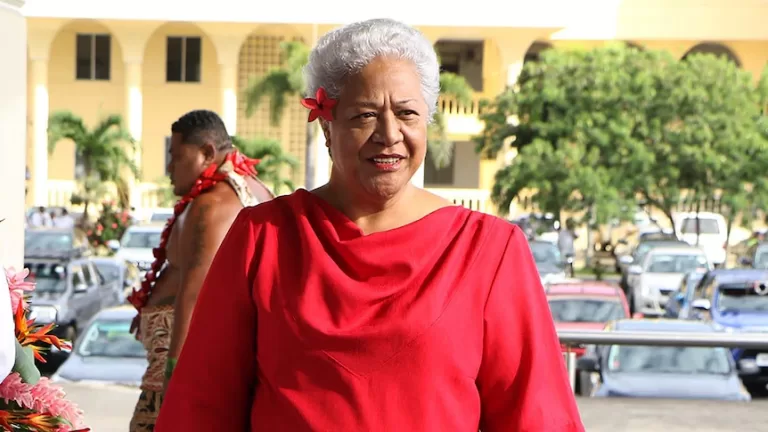
The XVII Legislative Assembly will convene in two weeks time on 14 September 2021, says Samoan Prime Minister Fiame Naomi Mata’afa.

Speaking to the media in a press conference on Wednesday, the Prime Minister said they have seen the 2021/2022 Fiscal Year Budget which will be tabled in the sitting of the Parliament.

“We saw firsthand what the budget looks like on Tuesday and the Speaker of the House has been informed,” said Mata’afa.

The Fa’atuatua i le Atua Samoa ua Tasi (FAST) Government’s confirming of a date for the convening of the Parliament also raises questions about the status of the 18 Human Rights Protection Party (HRPP) Members-elect, including the party leader and former Prime Minister Tuilaepa Sa’ilele Malielegaoi.

Tuilaepa and his 18 Members-elect are yet to be officially sworn-in as legislatures, after the Court of Appeal ruled in July that the impromptu swearing-in ceremony that the FAST party held for its Members on the lawn of the Parliament on 24 May 2021 was legally binding.

The Speaker of Parliament, Papalii Lio Masipau, when asked by this newspaper recently to comment on the dilemma facing the HRPP Members-elect said he is prepared to swear-in them in but he is yet to hear from them.

“It is my duty to take their oath and it’s not a bad thing it’s the law,” Papalii said recently.

“And I’m prepared to have them sworn-in by myself if it’s appropriate [by law to be sworn in after 45 days] but I am still waiting for the Court report [on petitions and by-elections] then I will consider all of it.”

The FAST party swearing-in, which was held on the 45th day after the conducting of a general election, was deemed to be legal as it was in line with the deadline set by the Constitution.

However, that ceremony was boycotted by HRPP members and was not attended by the Head of State, His Highness Tuimaleali’ifano Vaaletoa Sualauvi II despite a Supreme Court order for the Parliament to convene.

The ceremony was held outside the Legislative Assembly building after the former Speaker of the XVI Parliament, Leaupepe Toleafoa Faafisi ordered that it be locked.

SOURCE: SAMOA OBSERVER/PACNEWS

COVID-19: New Mu variant could be more vaccine-resistant

A new coronavirus “variant of interest” named Mu – also known by its scientific name as B.1.621 – is being closely monitored by the World Health Organisation (WHO), the agency has said.

In its weekly epidemiological update, published on Tuesday, WHO warned it was becoming increasingly prevalent in Colombia and Ecuador, and showed signs of possible resistance to vaccines.

Mu was first identified in Colombia in January 2021, and since then, there have been “sporadic reports” of cases and outbreaks in South America and Europe, WHO said.

While the global prevalence of Mu among sequenced COVID-19 cases is below 0.1%, its prevalence has “consistently increased” in Colombia and Ecuador, where it is now responsible for around 39% and 13% of infections, respectively.

Reports on the variant’s prevalence should be “interpreted with due consideration” given the low sequencing capacity of most countries, the agency said.

Mu is the fifth variant of interest to be monitored by the WHO since March. It has a number of mutations that suggest it could be more resistant to vaccines, the health agency warned, but stressed that further research would be needed to confirm this.

Preliminary data show a reduced effectiveness of vaccines “similar to that seen for the Beta variant”. The WHO said it would be monitoring “the epidemiology of the Mu variant in South America, particularly with the co-circulation of the Delta variant…for changes”

As of 29 August, over 4,500 sequences (3,794 B.1.621 sequences and 856 B.1.621.1 sequences), genome sequences, analysed samples of the virus taken from patients, have been designated as Mu in the past four weeks. The sequences are used to track how it moves through the population, on an open-source genome repository, known as GISAID.

Most of these have been reported in the U.S (2,065) and Colombia (852), Mexico (357) and Spain (473).

Although this figure will be affected by both sequencing capacity, surveillance and the total number of cases in an area.

The novel coronavirus pandemic has killed at least 124,811 people in Colombia, according to a WHO report on Wednesday.

More than 4,905,258 confirmed cases have been officially diagnosed across the country since the start of the epidemic. As of August 27, a total of 34,247,170 doses of vaccine had been administered.

South African scientists are closely monitoring the development of another new variant there, according to news reports in the country.

However, C.1.2, is not yet a variant to follow, nor a variant of concern, according to the classification of the World Health Organisation.

“It does not appear that its circulation is increasing”, said Dr Margaret Harris, a spokesperson for the WHO, during a UN press briefing in Geneva on Tuesday.

SOURCE: UN NEWS CENTRE/PACNEWS

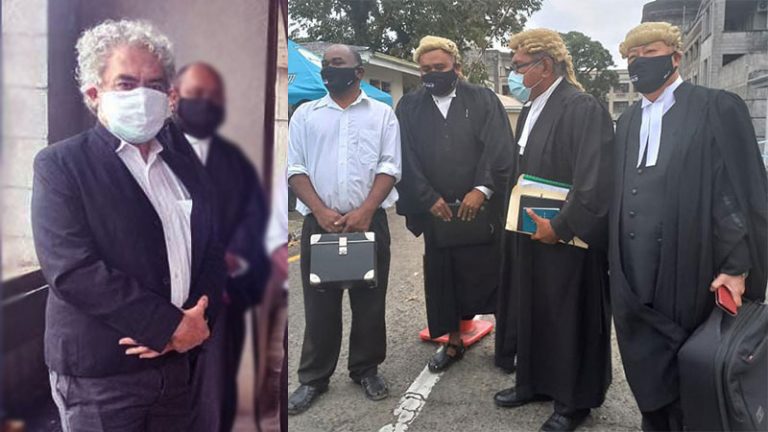
Was it ‘free, fair’ –Fiji Elections issue raised over Nawaikula case

Were the 2014 and 2018 Fiji elections free and fair?

This was one of the questions posed by prominent local lawyer and former Supervisor of Elections, Jon Apted said as he labelled Attorney-General Aiyaz Sayed-Khaiyum’s criticism of counsel who represented politician Niko Nawaikula – and the Supervisor of Elections and the Attorney-General – “baseless and unfair”.

He said voters in Fiji, the Commonwealth, and the United States, have always been allowed to register and vote under their everyday names, instead of the names on their birth certificates.

“Is the A-G suggesting that elections have never been free and fair in England, Australia, New Zealand, the USA – and in Fiji, including in 2014 and 2018?” he asked.

“How could the A-G’s counsel argue that allowing voters to use a name that was not on their birth certificate would breach the Constitution when that would imply that the elections in 2014 and 2018 which the A-G and his party won were not free and fair?”

He said Nawaikula’s case before the Court of Disputed Returns had nothing to do with him “registering twice or because he was dead or used a dead man’s name”.

“That was not the issue in his case.

“The FEO removed his name because they said the law requires you to use your birth certificate name, when that is not the law at all, as the Court of Disputed Returns ruled.”

“We did address the issue of double registration and dead voters’ names in our oral submissions to the court,” he said.

“We acknowledged that the use of common names on the register may make it hard for the Fijian Elections Office to remove the names of all dead voters based on information from the Births, Deaths and Marriages Registry.

“However, we submitted that the FEO should still allow people to use their common or married names but take additional information about voter’s birth certificate names. I believe I suggested that they could take their birth registration numbers like they are currently doing with vaccination.

“In that way, the people’s legal right to use the common or married name that they identify with would be respected and the needs of the administration would also be met.

“How can you say that an election in which you are forced to use a long-abandoned name, free or fair? A free and fair election is one where voters and candidates are free to use the names by which everyone knows them. How can voters exercise their right to vote freely and fairly, if candidates are forced to use a name that no one knows them by?”

Apted was the lead Counsel on the team that defended Nawaikula, who was deemed to have vacated his seat in Parliament in July after Supervisor of Elections Mohammed Saneem removed his name from the National Register of Voters.

Saneem had based his decision on the fact that Nawaikula had applied to be registered on the National Register of Voters in 2013 under the name “Niko Nawaikula” when that was not the name on his birth certificate.

The Court of Disputed Returns and Chief Justice Kamal Kumar later ruled that Saneem’s decision was unlawful, and therefore, “null and void”.

Sayed-Khaiyum told a press conference last Sunday the ruling could have serious implications on the fairness of general elections.

He said counsel for both sides failed to point out to the court that allowing voters to use their everyday names would breach the constitutional right to free and fair elections, because it could allow people to register twice or in the name of dead voters.

Questions sent to Sayed-Khaiyum on the comments made by Apted remain unanswered.

SOURCE: FIJI TIMES/PACNEWS

Climate and weather related disasters surge five-fold over 50 years, but early warnings save lives – WMO report

Climate change and increasingly extreme weather events, have caused a surge in natural disasters over the past 50 years disproportionately impacting poorer countries, the World Meteorological Organisation (WMO) and UN Office for Disaster Risk Reduction (UNDRR) said on Wednesday.

According to the agencies’ Atlas of Mortality and Economic Losses from Weather, Climate and Water Extremes, from 1970 to 2019, these natural hazards accounted for 50 percent of all disasters, 45 percent of all reported deaths and 74 percent of all reported economic losses.

There were more than 11,000 reported disasters attributed to these hazards globally, with just over two million deaths and US$3.64 trillion in losses. More than 91 percent of the deaths occurred in developing countries.

But the news is far from all bad. Thanks to improved early warning systems and disaster management, the number of deaths decreased almost threefold between 1970 and 2019 – falling from 50,000 in the 1970s to less than 20,000 in the 2010s. the report explains.

“Economic losses are mounting as exposure increases. But, behind the stark statistics, lies a message of hope. Improved multi-hazard early warning systems have led to a significant reduction in mortality. Quite simply, we are better than ever before at saving lives”, said WMO Secretary-General Petteri Taalas.

Of the top 10 disasters, droughts proved to be the deadliest hazard during the period, causing 650,000 deaths, followed by storms that led to 577,232 deaths; floods, which took 58.700 lives; and extreme temperature events, during which 55,736 died.

Meanwhile, economic losses have increased sevenfold from the 1970s to the 2010s, going from an average of US$49 million, to a whopping US$383 million per day globally.

Storms, the most prevalent cause of damage, resulted in the largest economic losses around the globe.

Three of the costliest 10 disasters, all hurricanes that occurred in 2017, accounted for 35 percent of total economic disaster losses around the world from 1970 to 2019.

In the United States, Hurricane Harvey caused US$96.9 billion in damage, Maria in the Caribbean US$69.4 billion, and Irma $58.2 billion in Cape Verde.

“The number of weather, climate and water extremes are increasing and will become more frequent and severe in many parts of the world as a result of climate change”, said Taalas. “That means more heatwaves, drought and forest fires such as those we have observed recently in Europe and North America”.

More water vapor in the atmosphere has exacerbated extreme rainfall and flooding, and the warming oceans have affected the frequency and extent of the most intense tropical storms, the WMO chief explained.

WMO cited peer-reviewed studies in the Bulletin of the American Meteorological Society, showing that over the period 2015 to 2017, 62 of the 77 events reported, revealed a major human influence at play. Moreover, the probability of heatwaves has been significantly increased due to human activity, according to several studies done since 2015.

The Atlas clarifies that the attribution of drought events to anthropogenic, or human, factors, is not as clear as for heatwaves because of natural variability caused by large oceanic and atmospheric oscillations, such as El Niño climate pattern. However, the 2016-2017 East African drought was strongly influenced by warm sea-surface temperatures in the western Indian Ocean to which human influence contributed.

Climate change has also increased extreme sea level events associated with some tropical cyclones, which have increased the intensity of other extreme events such as flooding and associated impacts. This has augmented the vulnerability of low-lying megacities, deltas, coasts and islands in many parts of the world.

Moreover, an increasing number of studies are also finding human influence exacerbating extreme rainfall events, sometimes in conjunction with other major climate influences. Examples include the extreme rainfall in eastern China in June and July 2016 and Hurricane Harvey, which hit Houston in 2017.

Only half of WMO’s 193 member countries have multi-hazard early warning systems and severe gaps in weather and hydrological observing networks exist in Africa, some parts of Latin America and in Pacific and Caribbean island States, the report warns.

“More lives are being saved thanks to early warning systems, but it is also true that the number of people exposed to disaster risk is increasing due to population growth in hazard-exposed areas and the growing intensity and frequency of weather events. More international cooperation is needed to tackle the chronic problem of huge numbers of people being displaced each year by floods, storms and drought”, said Mami Mizutori, UN Special Representative and head of the Office for Disaster Risk Reduction (UNDRR).

Mizutori called for a greater investment in comprehensive disaster risk management to ensure that climate change adaptation is integrated in national and local disaster risk reduction strategies.

The UNDRR chief warned that the failure to reduce disasters losses as set out in the 2015 Sendai Framework is putting at risk the ability of developing countries to eradicate poverty and to achieve other important Sustainable Development Goals (SDGs).

The Atlas further recommends countries to review hazard exposure and vulnerability considering a changing climate to reflect that tropical cyclones may have different tracks, intensity and speed than in the past.

It also calls for the development of integrated and proactive policies on slow-onset disasters such as drought.

The Atlas by region from 1970 to 2019 for South West Pacific:

*The region recorded 1,407 disasters, 65,391 deaths, and US$163.7 billion in economic losses.

*45 percent of these disasters were associated with storms and 39 per cent with floods.

* Storms accounted for 71 percent of disaster-related deaths.

*Disasters resulting from weather, climate and water hazards in Australia accounted for 54 percent or US$88.2 billion in economic losses in the entire region.

SOURCE: UN NEWS CENTRE/PACNEWS
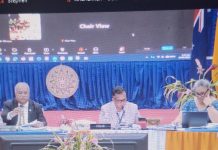
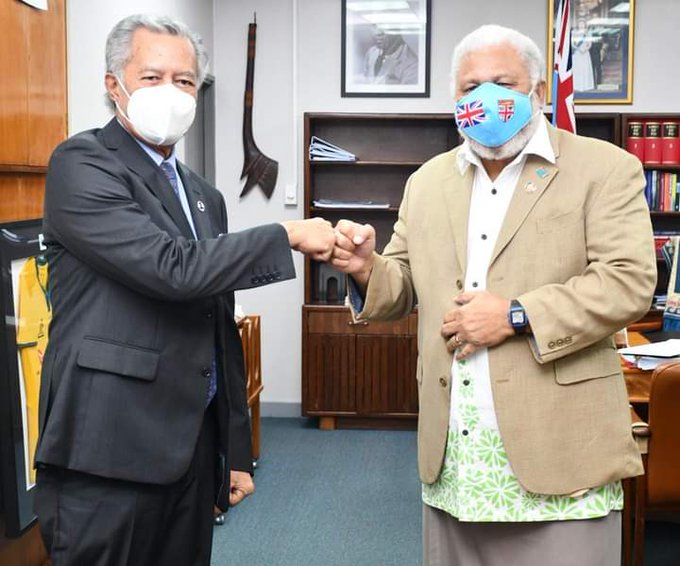
Fijian PM Bainimarama receives a courtesy call from Forum SG Henry Puna

The Pacific Islands Forum Chair and Fijian Prime Minister, Voreqe Bainimarama Wednesday received a courtesy call from the new Secretary-General of the Pacific Islands Forum PIF, Henry Puna.

In his opening remarks, Prime Minister Frank Bainimarama acknowledged Secretary-General Puna for his exemplary leadership and assistance rendered by the Secretariat during the 51st Pacific Islands Forum Leaders Meeting.

Reflecting on the successful outcomes of the PIF leaders’ meeting, Prime Minister Bainimarama affirmed the commitment of the Forum family to work in unity for the advancement of regional priorities and interests.

On regional priorities, Prime Minister Bainimarama spoke on the need for ensuring accessibility to COVID-19 vaccines for the region and ultimately enabling the resumption of regional travel and revival of economies and livelihood of pacific families.

He extended his appreciation to Secretary-General Puna for his swift action in supporting member countries through the Pacific Humanitarian Pathway for COVID-19 (PHP-C) and for coordinating the approach of the region to mitigate the impacts of the pandemic.

Prime Minister Bainimarama said through continued utilisation of these existing regional mechanisms and innovative solutions, the region will aspire to achieve sustainable and resilient recovery.

The Forum Chair also reaffirmed his commitment to building regional solidarity and restoring trust and confidence among the Forum family.

Prime Minister Bainimarama said he understands the sensitive issues faced by the Pacific Vuvale and he is fully committed to working towards resolving the issues through the Political Dialogue Mechanism.

In response, Secretary-General Puna reaffirmed his unwavering support to Prime Minister Bainimarama and the Forum family to collectively advance the Forum Pacific’s vision for a region of peace, harmony, security, social inclusion and prosperity, so that all Pacific people can lead free, healthy, and productive lives.

Henry Puna is the 10th Secretary-General of the Pacific Islands Forum. Before taking up the regional role on 24 May 2021, Secretary-General Puna was the Prime Minister of Cook Islands, from November 2010 until October 2020.

SOURCE: FIJI GOVT/PACNEWS

Stay connected

529FansLike
172FollowersFollow
156SubscribersSubscribe
- Advertisement -