Home Blog Page 1098

Parkop: No lockdown in Port Moresby

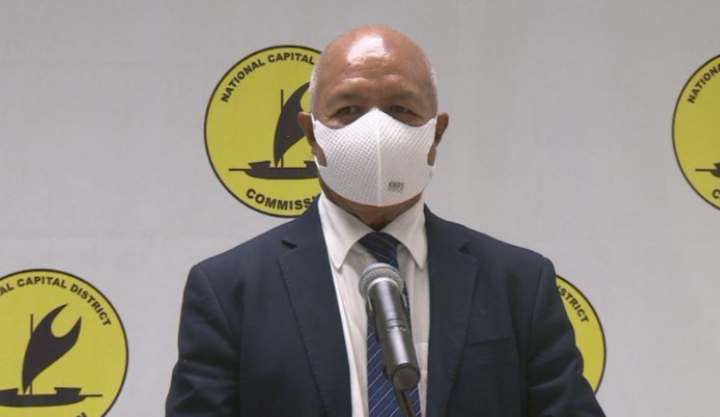
No lockdown yet for Port Moresby, as health and city authorities plan to address the increase in Covid-19 cases and deaths through an effective medical response and vaccination drive, an official says.

They will also be pushing hard to have people observe the public health safety rules (Niupla Pasin).

National Capital District Governor Powes Parkop, who had been consulting senior doctors, police and business leaders since the weekend on the grim Covid-19 situation, said there would be no lockdown, as envisaged.

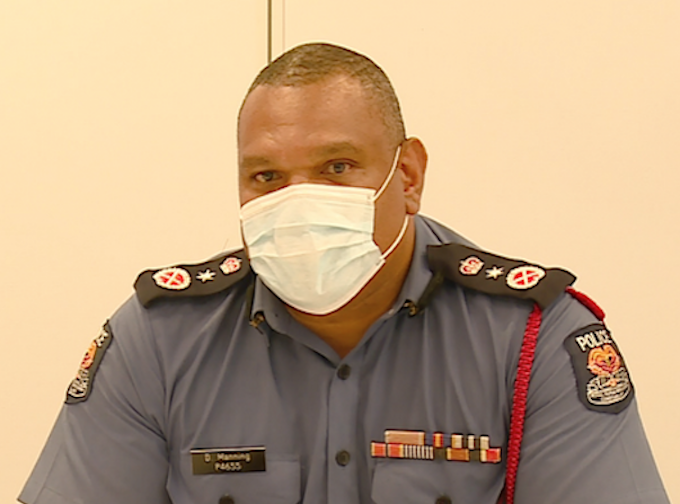
However, Deputy National Pandemic Response Controller Dr Daoni Esorom said Controller David Manning could still order a lockdown if the Covid-19 situation got worse.

“After consultation with stakeholders, including the police, we have decided not to have a lockdown, after taking into consideration the impact (on) businesses, transport and schools,” Parkop said.
He said a lockdown would be hard to enforce anyway.

“It’s not possible to enforce the lockdown in full,” he said.

Parkop added that a lockdown would have “serious repercussions on those who relied on day-to-day sales to sustain themselves”.

“Our social and economic situation is very fragile and delicate. Equally fragile and delicate is the health system,” he said.

“The economy has slowed down, unemployment is high, businesses are fragile and teetering on collapsing.” He made the announcement flanked by city manager Bernard Kipit, Dr Esorom, and NCD Provincial Health Authority (NCD PHA) chief executive officer Dr Steven Yennie.

Parkop said they would give the Port Moresby General Hospital a two-month budget of K2.6 million(US$740,000).

“We have also asked the St John Ambulance to give us a budget for two months (to increase beds to 100),” he said.

“The NCD PHA will submit a budget for vaccination, testing and surveillance (to us) for funding.”

There will be a ban on public gatherings of more than 20 people for the next two months. And more vaccination and testing sites will be opened up in Port Moresby.

Dr Esorom said the most important thing was to stop the transmission. “It is a must. We need to cut the transmission,” he said.

“As long as you have people moving, and we have a lot of people moving in NCD, the virus will continue to spread.

“So it you don’t have work in the city, please stay home.

“The PMGH is overflowing with sick and dead people. We need to stop people getting sick. We need to stop filling up the morgue.”

“We need to vaccinate ourselves.

“There is no other way – there is no treatment for the Covid-19,” he said.

Meanwhile, PNG Opposition leader Belden Namah says Papua New Guinea will not be able to achieve herd immunity within a short time-frame.

“Most people will not get the Coronavirus (Covid-19) vaccine given the (limited) resources available, capacity and terrain of PNG,” he said in a statement.

“The Government must establish evidence-based and science-based responses to this pandemic.

“The Government must not lead our people down an impossible road.

“I strongly maintain the vaccination must be voluntary and not compulsory.

“Our peoples’ rights and freedoms must be respected at all cost.

“The right to life is an absolute right. We are born with it.

“The Prime Minister (James Marape) says his policy is voluntary but gives in to work place safety pressures from the private sector.

“What does he support?

“If the Government wants a ‘no jab, no job’ policy then I call upon all Government and private sector work places to shut down for a month so that the policy is carried out properly.

“I make this call fully aware that the Government has done next to nothing to assist or prepare our people in two years into this pandemic and with more than K6.7 billion(US$1.9 million) borrowings.

Namah urged the public to strictly adhere to the Niupla Pasin.

SOURCE: THE NATIONAL/PACNEWS

Regional health leaders convene in Japan and online in “hybrid” meeting to agree actions on COVID-19 and other key issues

0

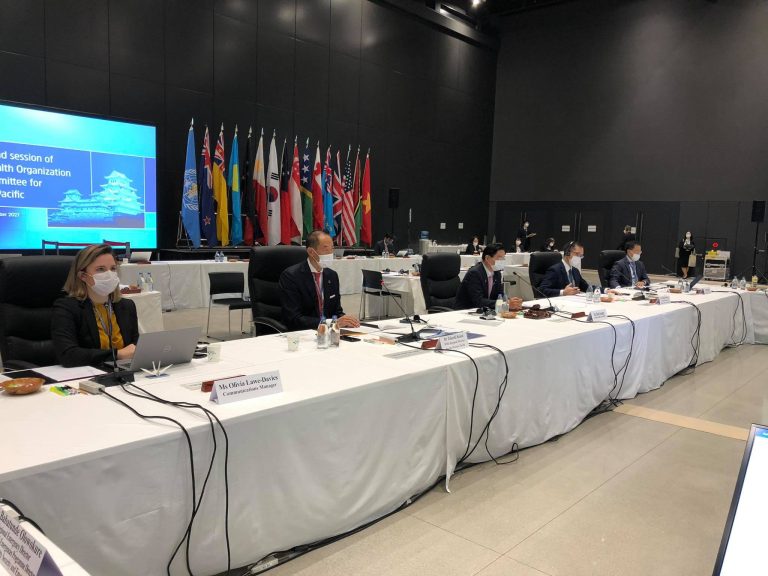
Health ministers and senior officials from countries and areas across the World Health Organisation (WHO) Western Pacific Region are gathering this week to agree on actions to address COVID-19 and other key health issues.

The seventy-second session of the WHO Regional Committee for the Western Pacific is being held as a “hybrid” meeting on 25–29 October, with over 50 senior country representatives, including some ministers of health, and WHO staff participating in Himeji and more than 220 others joining the meeting virtually.

In his remarks to the region’s health leaders, the WHO Regional Director for the Western Pacific Dr Takeshi Kasai said, “While 2021 has been very challenging, there are many things that give me hope. When I became Regional Director almost three years ago, I said then that I was optimistic, because our Region is home to extremely dedicated staff, committed Member States, caring health care workers, and very capable partners. COVID-19 has shown all these things to be true.”

“And while many things in the world have changed dramatically in the past two years, some have not, including this Region’s unifying belief in health for a sustainable future – and the importance of thinking about our own actions and how they affect the health and wellbeing of others. I look forward, with hope and confidence, to continuing our work together towards making the Western Pacific the healthiest and safest region in the world,” Dr Kasai added.

In his address to delegates, Japan’s Minister of Health, Labour and Welfare, Shigeyuki Goto, said “Among the G7 nations, Japan has the lowest number of COVID-19 deaths, and we were able to safely host the Tokyo 2020 Olympic and Paralympic Games thanks to all the preventative measures taken, including a focus on the “3 C’s” – avoiding closed spaces, crowded places and close-contact settings. Japan will continue to move forward to achieve a balance between infection control and a resumption of daily life—gradually easing restrictions while keeping people safe from the spread of the virus. As Minister of Health, I know that facing health challenges in the Region and working together with WHO and our neighbouring countries is an important part of this.”

In a video address to the Regional Committee, WHO Director-General Dr Tedros Adhanom Ghebreyesus, said, “WHO remains committed to supporting each of your countries to respond to the pandemic, and to build forward better, in line with the General Programme of Work, and the Region’s For the Future vision. I would like to leave you with three specific requests: First, we seek your commitment to stay the course with the proven public health and social measures that we know work, in combination with equitable vaccination. Second, we seek your support for the idea of an international agreement on pandemic preparedness and response. And third, we seek your support for building a stronger WHO that is empowered and financed sustainably.”

On the first day of the meeting, delegates discussed COVID-19 in the Western Pacific Region, with WHO briefing them on the situation and joint work by its Regional and country offices, alongside partners, to support their response. Delegates shared updates on their countries’ situations and needs.

Since January 2020, WHO has provided tailored support to Member States as they tackled COVID-19. The response in the Western Pacific has been guided by the Asia Pacific Strategy for Emerging Diseases and Public Health Emergencies (APSED III), leveraging strong cooperation and capacity built up over the past 15 years. Member States have been adjusting their pandemic response based on continuous learning from experience and the latest evidence, as well as expert recommendations from the WHO APSED Technical Advisory Group meetings convened in July 2020 and July 2021.

WHO has provided technical support and evidence-based guidance on critical topics, deployed over 360 experts to 14 countries, procured and shipped supplies and equipment such as masks, testing kits and vaccines, and supported communication to help people protect themselves and others from the virus.

Later this week, regional health ministers and senior officials are expected to adopt resolutions:
• To achieve goals to reduce tuberculosis infections and deaths in the Western Pacific;
• To promote the development and health of children and adolescents in school settings, as a means of entrenching lifelong healthy habits; and
• To harness the role of traditional and complementary medicine for health and well-being.

Delegates will also consider the Region’s progress in areas, including:
• Strengthening health security, including tackling antimicrobial resistance;
• reducing the burden of noncommunicable diseases and enabling healthy ageing; and
• implementing the vision for WHO’s work, For the Future: Towards the Healthiest and Safest Region.

State Minister of Health, Labor and Welfare of Japan, Hiroshi Yamamoto was elected Chair of this year’s Regional Committee, and Minister of Health, Social Welfare and Gender Affairs of Tuvalu, Isaisa Taape was elected Vice Chair.

SOURCE: WHO/PACNEWS

U.S rep Katie Porter presses Biden team on Marshall Islands nuclear waste, gets few answers

For months, U.S refusal to accept responsibility for a leaking dome of radioactive waste in the Marshall Islands has complicated negotiations with the Marshallese government on an international compact viewed as crucial for blunting Chinese influence in the central Pacific.

On Thursday, members of a congressional oversight committee scolded representatives of the Biden administration for not making more progress on negotiations and taking the Marshallese position more seriously. During the hearing, administration officials offered conflicting statements on U.S obligations to the Marshall Islands, making it unclear where the White House stands on America’s history in the region. In addition, the U.S State Department declined to participate.

“The point of the hearing today was to examine why the United States is not willing to discuss the nuclear legacy with the Marshallese,” said Rep. Katie Porter (D-Irvine), who along with a bipartisan panel of lawmakers stressed the critical role the Republic of the Marshall Islands plays in U.S national security and safety.

Porter, who heads the Natural Resources Subcommittee on Oversight and Investigations, said negotiations will be difficult “unless we act on the moral and national security imperative that we have to address the nuclear legacy.”

The hearing was timed for the 35th anniversary of the signing of the agreement between the two nations, which is set to expire in 2023. It also comes as China develops friendly relations with nations of the central and South Pacific, part of a broader strategy to stem U.S. influence off its shores and worldwide.

The Marshall Islands’ Kwajalein Atoll is home to the Ronald Reagan Ballistic Missile Defence Test Site — where the U.S tests its long- and mid-range missile defense system. Its location halfway across the Pacific allows the U.S military to monitor hostile foreign forces, and it is also an important hub for the American space program.

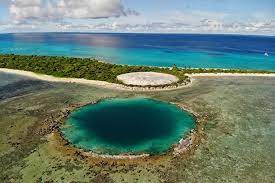
Realising its leverage, the Marshallese government is increasingly pressing U.S officials to take ownership for cleaning up Runit Dome. The leaking nuclear repository holds 3.1 million cubic feet of radioactive waste, a byproduct of U.S weapons testing during the Cold War, and a focus of a Times investigation in 2019.

For decades, the U.S government has deflected. Instead, it insists the Marshall Islands is solely responsible for the waste site, even though Congress has required the Department of Energy, with funding from the Department of the Interior, to monitor it indefinitely.

In his testimony, Matthew Moury, the Department of Energy’s associate undersecretary for environment, health, safety and security, stated that although his department intends to carry out promised testing near the site, the people of the Marshall Islands “bear full responsibility for maintaining and monitoring Runit Dome.”

Porter asked Nikolao Pula, director of the Office of Insular Affairs for the Department of the Interior, whether he agreed with that statement.

“Nope. I don’t,” he said, noting what he saw as a difference between the Marshall Islands’ ownership of the site and the United States’ responsibility to monitor and maintain the waste pit.

Between 1946 and 1958, the United States detonated 67 nuclear bombs on, in and above the Marshall Islands — vaporising whole islands, carving craters into its shallow lagoons and exiling hundreds of people from their homes.

During the late 1970s, U.S soldiers removed contaminated topsoil and debris from the islands of Enewetak Atoll, where 43 of the devices were detonated. The soldiers, who were not protected from radiological exposure, then dumped 3.1 million cubic feet — or 35 Olympic-size swimming pools — of waste into an unlined bomb crater on the atoll’s Runit Island.

In 1986, the United States and the Marshall Islands signed a Compact of Free Association that provided the Marshallese government with funding, allowed its citizens to work and travel in the United States without visas and provided the U.S. government with a strategic military base on Kwajalein Atoll — the centre for U.S. intercontinental ballistic missile testing, as well as a crucial node in its space program.

Negotiations for renewal began during 2020 but have since stalled, noted Rep. Paul Gosar (R-Ariz.), the ranking member of the Natural Resources Oversight Subcommittee, who blamed “fumbling” by the Biden administration.

“If he fails to renew our compact with the Marshall Islands he could be handing China another win,” Gosar said of President Biden.

According to documents reviewed by The Times, as well as testimony at the hearing, U.S officials have signaled to the Marshallese that the nuclear legacy is not up for discussion.

It’s a thorny point for the Marshallese, who are worried about the lingering effects of the nuclear waste left in their nation, decades of persistent health concerns, and a fear that United States officials have not been forthright or transparent about the risks the nuclear waste poses to their health and environmental well-being.

In 2012, Congress ordered the Department of Energy to periodically conduct groundwater testing at Runit Dome, with no more than four years to span between tests.

The Department of Energy has so far only collected preliminary samples; agency officials have cited a lack of funding and the pandemic as hindrances.

According to a U.S government presentation delivered in 2019, Runit Dome is vulnerable to leakage caused by storm surge and sea level rise, and its groundwater, which is leaking into the lagoon and ocean, is severely contaminated with radioactive isotopes. Testing of sea creatures in the surrounding lagoon, including giant clams, shows high levels of radioactivity.

“It’s unusual to see two federal agencies publicly disagree before Congress like this,” said Michael Gerrard, a legal scholar at Columbia University’s law school, commenting on Pula’s remarks.

“The U.S government unquestionably has moral responsibility here — they made the nuclear bombs, detonated them over the Marshall Islands, did a slipshod job of cleanup, and tried to stick the local population with the lethal residue,” he said. “Perhaps at least some in the government are edging toward acknowledging our legal responsibility.”

Others at the hearing underscored the importance of the negotiations and expressed frustration that the U.S negotiating team — which does not include any politically appointed representatives from the State Department — has little progress to show.

“I have to admit I am startled at the lack of negotiations that other witnesses have pointed to,” said Dean Cheng, the Heritage Foundation’s expert on Chinese military and space capabilities, who provided testimony at the hearing.

“I can only say that given the looming threat posed by the People’s Republic of China, it is my hope that both the executive and the legislative branch will work together to basically get these talks moving because time is running out,” he said. “There are others out there who are watching and waiting to step up and exploit the opportunity that we will be presenting them on a silver platter.”

For Rhea Moss-Christian, the chair of the Marshall Islands National Nuclear Commission, the issue was more personal. Her mother was exposed to the testing, she said, and she and now her children live with that legacy.

In an interview before the hearings, she noted the U.S’ lack of concern for the Marshallese, pointing to the time the meeting was held — 10 a.m. Washington, D.C., time.

Moss-Christian, who lives in Pohnpei in Micronesia, had to log in at 1 a.m. her time Friday morning to be present for the teleconference. For her colleagues in Majuro, the Marshall Islands’ capital, it was 2 a.m.

“We’re just island peoples living in the middle of the Pacific, so far away as not to even be considered,” she said. “That’s what they thought when they used us as a testing site, and it still hasn’t changed.”.


SOURCE: LA TIMES/PACNEWS
Bomb blast kills father and son, others seriously injured in Solomon Islands

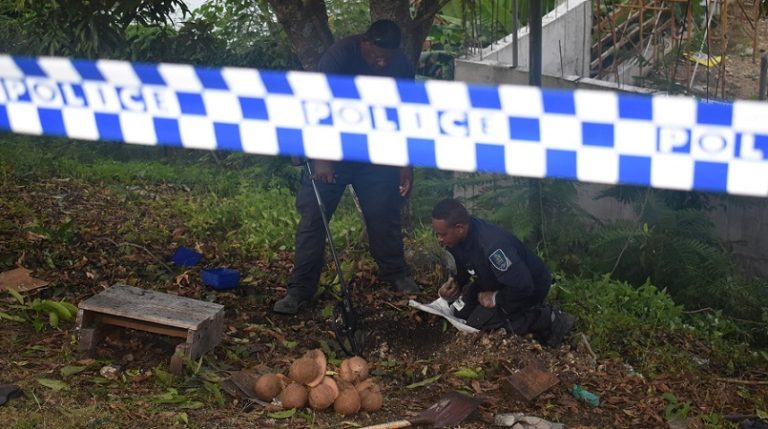
A deadly bomb blast at LDA area, Upper Betikama in east Honiara in Solomon Islands has killed two people, a father and his son who is a grade five student.

The father died during the blast at around 7pm last night and his son two hours later at the National Referral Hospital in Honiara.

The wife of the deceased and another son, a form 3 student also sustained serious injuries from the blast and are fighting for their lives at the hospital.

The blast has also caused total deafness on two other men who are also currently seeking medical attention at the hospital, SIBC News was reliably informed by a resident at the blast site who is also at the Hospital’s Emergency department.

The family members were sitting by a fire beside their house, telling stories when the bomb suddenly exploded from beneath the fire and killed the father on the spot.

The others managed to crawl out with the little strength they have, after the blast, our source said.

“We were returning from town and were some distance away from the blast site when suddenly the bomb exploded. It shook the ground heavily and we were trembling with fear.

“We could hear nothing as the blast was so loud, although we were some distance far away,” the LDA resident told SIBC News.

He said Police were rushed to the scene and cordoned off the blast site. The father was transported to the hospital by St John Ambulance while the deceased child was rushed in by a car.

The family is from Guadalcanal Province.

The bombs were remnants of the World War II which remained in Guadalcanal after the war more than 70 years ago.

SOURCE: SIBC/PACNEWS

‘No time to lose’ curbing greenhouse gases: WMO

Last year, heat-trapping greenhouse gases reached a new record, surging above the planet’s 2011-2020 average, and has continued in 2021, according to a new report published on Monday by the UN weather agency.

The World Meteorological Organisation (WMO) Greenhouse Gas Bulletin contains a “stark, scientific message” for climate change negotiations at the upcoming UN climate conference, known as COP26, in Glasgow, said Petteri Taalas, head of the UN agency.

“At the current rate of increase in greenhouse gas concentrations, we will see a temperature increase by the end of this century far in excess of the Paris Agreement targets of 1.5 to 2 degrees Celsius above pre-industrial levels”, he explained. “We are way off track.”

Concentration of carbon dioxide (CO2) in 2020 was 149 per cent above the pre-industrial level; methane, 262 per cent; and nitrous oxide, 123 per cent, compared to the point when human activitity began to be a destabilising factor.

And although the coronavirus-driven economic slowdown sparked a temporary decline in new emissions, it has had no discernible impact on the atmospheric levels of greenhouse gases or their growth rates.

As emissions continue, so too will rising global temperatures, the report maintained.

Moreover, given the long life of CO2, the current temperature level will persist for decades, even if emissions are rapidly reduced to net zero.

From intense heat and rainfall to sea-level rise and ocean acidification, rising temperatures will be accompanied by more weather extremes – all with far-reaching socioeconomic impacts.

“The last time the Earth experienced a comparable concentration of CO2 was three to five million years ago, when the temperature was 2-3°C warmer and sea level was 10-20 meters higher than now”, stated the WMO chief. “But there weren’t 7.8 billion people then”, he reminded.

Roughly half of today’s human-emitted CO2 remains in the atmosphere and the other half is absorbed by oceans and land ecosystems, the Bulletin flagged.

At the same time, the capacity of land ecosystems and oceans to absorb emissions may become a less effective buffer against temperature increases in the future.

Meanwhile, many countries are currently setting carbon neutral targets amidst the hope that COP26 will see a dramatic increase in commitments.

“We need to transform our commitment into action that will have an impact of the gases that drive climate change. We need to revisit our industrial, energy and transport systems and whole way of life”, said the WMO official.

“The needed changes are economically affordable and technically possible”, he assured. “There is no time to lose”.

CO2 is the single most important greenhouse gas and has “major negative repercussions for our daily lives and well-being, for the state of our planet and for the future of our children and grandchildren”, argued the WMO chief.

Carbon sinks are vital regulators of climate change because they remove one-quarter of the CO2 that humans release into the atmosphere.

Nitrous Oxide is both a powerful greenhouse gas and ozone depleting chemical that is emitted into the atmosphere from both natural and anthropogenic sources, including oceans, soils, biomass burning, fertilizer use and various industrial processes.

Multiple co-benefits of reducing methane, whose gas remains in the atmosphere for about a decade, could support the Paris Agreement and help to reach many Sustainable Development Goals (SDGs), said the Bulletin.

SOURCE: UN NEWS CENTRE/PACNEWS

Mass burial approved in PNG

Papua New Guinea Pandemic Response Controller David Manning has authorised the mass burial of 200 bodies in the Port Moresby General Hospital mortuary.

The mortuary is now filled beyond capacity with more than 300 bodies stacked on top of one another, as more Coronavirus (Covid-19) bodies continue to be brought in from the hospital wards and homes.

Hospital chief executive officer Dr Paki Molumi said the city manager Bernard Kipit had assured his office of their assistance.

“Normally we bury 60 bodies and that would cost about K30,000 (US$8,550),” he said. “This time, it will cost us between K90,000 (US$25,650) and K100,000 (US$28,500).

“We will be releasing the list today via advertisements with the newspapers and relatives have 72 hours to claim the bodies.

“The burial is scheduled for Thursday or Friday.”

Hospital medical services director Dr Kone Sobi said on Wednesday that the hospital conducted four mass burials a year at a cost of about K90,000, US$25,650) with each burial costing between K25,000 (US$7,125) and K35,000 (US$9,975) depending on the number of bodies.

Sobi said the main mortuary building was sponsored by the Japan International Cooperation Agency about 30 years ago to cater for 60 bodies.

National Capital District (NCD) Governor Powes Parkop said the mortuary was simply full with more than 300 bodies.

“Three more (freezer) containers have been installed to store the bodies and a mass burial is being planned this week,” he added.

“People are dying on arrival (at the hospital) and those who died despite being under the care of the hospital’s isolation centre.”

Kipit said the city commission would help the hospital in ensuring that the logistical support was there when a mass burial was carried out.

“We will also step in to ensure space was given for the burial.”

Meanwhile, Prime Minister James Marape has warned provincial health authorities (PHAs) to buck up in the fight against (Covid-19 or they will be replaced.

“Papua New Guinea is now a red zone with many lives lost,” Marape said.

In another development, an emergency medical team from the United Kingdom arrived in the country on Sunday to help in the COVID-19 pandemic response as requested by the PNG Government.

The team comprises 10 members with six arriving Sunday while the other four will be arriving during the week.

The team were debriefed by the National Control Centre EMT lead Dr Gary Nou and his deputy Dr Kapua Kapua at the National Control Centre, Morauta Haus, Port Moresby.

The team will be deployed towards end of this week.

Dr Nou thanked the team for coming, saying the shortage of manpower in the health facilities was worsened by the COVID-19 pandemic. Currently, there are two provinces being considered where the UK EMT team may be sent to, but the final decision has yet to be made.

The UK EMT consists of Intensive Care Unit specialists, Emergency Department specialists, paramedics and nurses.

The UK EMT was brought into the country by the UK government in response to the PNG government’s request with no financial support from the PNG government.

SOURCE: THE NATIONAL/PACNEWS

Urgent action needed as COVID-19 overwhelms PNG health system

The International Federation of Red Cross Red Crescent Societies (IFRC) calls for concerted international action to support Papua New Guinea (PNG) as a surge in COVID-19 cases overwhelms the country’s health system.

The latest surge has seen the highest number of daily COVID-19 cases recorded since the beginning of the pandemic.

Uvenama Rova, PNG Red Cross Secretary General, said:

“Hospitals are full, and patients are being turned away in Port Moresby and provincial areas. Urgent efforts and further support are needed in healthcare to prevent a massive loss of life in the coming days and weeks.”

“In all areas of PNG, we are deeply concerned that the risks of hospitalization and death from COVID-19 are skyrocketing due to limited health infrastructure, high rates of illness, all compounded by poor access to safe water, hygiene and sanitation facilities.”

The vaccine rollout, that has helped to contain the virus in other countries, remains extremely low in Papua New Guinea due to a range of issues, including misinformation, public apprehension, and logistical challenges with the rollout. Only 1.5 per cent of the population has received at least one dose of the vaccine, with 0.67 per cent fully vaccinated, according to Oxford University’s Our World in Data.

PNG Red Cross is supporting efforts by the government and health authorities to contain the spread of the virus, distributing personal protective equipment such as face masks and providing targeted support to some of most vulnerable in the community who have been confined to their homes by the virus.

John Fleming, IFRC’s Asia Pacific Head of Health, said:

“If this COVID surge continues at such an alarming speed, PNG’s fragile health system is at risk of collapse. It is vital that emergency healthcare services are increased to prevent greater suffering and loss of life.”

“We need to respond to the pandemic of misinformation that is spreading alongside the virus. We need to urgently inform people about the benefits of the vaccine, while speeding up the challenging rollout of vaccinations in all areas of PNG, from the highlands to coastal villages,” he said.

Meanwhile, the head of the Australian medical assistance team (AUSMAT) in Papua New Guinea says the COVID-19 situation is the worst he has seen on his three deployments to the country since the pandemic began last year.

Dr Mark Little is heading the AUSMAT team that was deployed to PNG last week and told Pacific Beat that hospitals across the country are running over capacity to care for a surge in COVID-19 patients.

“The latest World Health Organisation numbers talk about 2868 active cases but my sense is that it is much higher than that…often we’re not getting accurate numbers away from the provincial centres,” he said.

The AUSMAT team was deployed after a call out by the PNG government for help from international medical teams.

Dr Little said low levels of vaccinations, including among health workers, has seen hospitals overwhelmed.

He is pleading with people to get vaccinated to bring the country’s COVID-19 outbreak under control.

“The people of PNG we really need to get vaccinated…the only long-term way out of this crisis is vaccination,” he said.

COVID-19 infections are spiralling out of control in Papua New Guinea and one of the hardest-hit hospitals is in Goroka, the capital of Eastern Highlands Province.

Emergency oxygen supplies and extra health workers were helicoptered into the town two weeks ago, as beds ran short and patients slept on the floor.

PNG woman Margaret Vangana lives in Sydney but was motivated to launch a fundraising campaign for the Goroka Hospital after seeing local media reports of the unfolding crisis.

She has a background in biomedical science, her parents are both health workers and her mother is based in the PNG capital Port Moresby.

“I sat around thinking what can I do, I’m living in Sydney and like we have all these resources here, I could do something,” she told Pacific Beat.

She aims to use funds raised to buy and send masks, personal protection equipment (PPE) and other supplies including beds, for patients and frontline workers.

They have already raised more than AUD$4,500 (US$3,368) and received support from the indigenous and wider Pacific community in western Sydney, as well as well-known New York-based anthropologist Paige West.

Vangana said they hope to send a shipment to Goroka by the end of the month.

Dr Joseph Apa, who heads the Eastern Highlands Provincial health service said other donations of money, oxygen tanks, medicine and PPE have also been flowing from large businesses in PNG and the expatriate community in New Zealand.

He welcomed the donations but said that it is difficult to stop the virus from spreading into the remote districts, especially with only about three per cent of the population vaccinated.

“We have experienced a lot of deaths in the communities,” he said.

Dr Apa said he hopes infection rates will peak within two weeks.

SOURCE: IFRC/ABC/PACNEWS

COP26: Commit to Action, Not Words

By Sivendra Michael

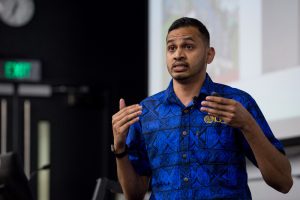
As leaders prepare for the 26th Climate Change Conference in Glasgow next week, tensions mount up on the inadequate representation of Pacific governments and civil society due to travel challenges posed by COVID-19. As part of the Pacific Cooperation Foundation’s Pacific Voices series, Fijian climate activist Sivendra Michael says the Pacific’s presence has been crucial at every COP, and the reduced physical presence translates into a diminished Pacific voice within the COP space. But now more than ever, that voice needs to be heard.

Growing up in Ba province, Fjii, I witnessed how natural disasters devastated the homes of people in my community, of my own family, claimed innocent lives, and left thousands in a helpless state. At COP21, Paris, I witnessed how thousands of delegates from small island states fought for the inclusion of loss and damage as a stand-alone chapter in the Paris Agreement. In the negotiation rooms, Pacific governments applied pressure to big carbon polluting countries to ensure that the text was not watered-down. Attending as a research student for the University of Auckland, I can attest to the pressure outside the negotiation rooms as well. I witnessed the momentum created by young climate advocates and civil society organisation (CSO) representatives in sharing frontline truths to demonstrate urgency, as the futures of our children and the existence of our homes were being negotiated.

Sivendra Michael

Personally, this experience demonstrated how crucial it is to have our frontline stories championed in the negotiation room, and it highlighted the weight that a unified voice has in sharing these stories.

Even years after COP21, and despite all the challenges posed by COVID-19, Pacific advocates – both at the government and at the CSO level, have continued to demonstrate what climate leadership looks like. Our commitments are reflected in our nationally determined contributions (NDCs), our demands are clear, and our call to action is louder than ever.

Unfortunately, the richer countries who have caused this problem cannot do the same. Instead of cutting their emissions, they are still approving the opening of coal mines and putting profits before people. If our stories and our losses at the frontline aren’t enough, what would it take for big polluters to take responsibility instead of shamelessly contradicting their pledged commitments? The narrative is no different during the global stocktake session at COP where these same countries are refuting Pacific demands.

What needs to happen?

Sonam Wangdi, Chair of the Least Developed Countries Group at COP26 in his Pre-COP message said that “COP26 needs to be a summit where we commit to action, not words. We have enough plans, what we need is for major economies to start delivering on their promises.

“Our economies are suffering in the face of increased climate impacts and budgetary strains – either we invest our way out of this mess, or we face a brutal decade of loss and damage.”

Change is not going to take place through the empty rhetoric promises made at COP. The recent IPCC report specifically mentions that the 1.5-degree target is no longer achievable and with millions of lives at stake, there is an urgent need for action.

We are fighting against time and against the fossil fuel industry. It is the 26th year of climate negotiation and leaders are still failing to agree on many of the sought-after outcomes, including rules to set up a global carbon market, steps to mobilise dedicated funding for loss and damage (L&D) and mobilisation of long-term finance (LTF) commensurate to the need for the most vulnerable to recover from the climate impacts they are already facing.

This week saw the New Zealand Government committing $1.3 billion to climate finance over the next four years. While this is a great first step, as Pacific Islanders, we would also like to see an equally bold commitment to cutting emissions.

Currently, targets of big polluting countries do not signal the deep and urgent decarbonisation required to get us back on a trajectory to the 2-degree warming limit, or the below 1.5-degree goal that the most vulnerable countries, like ours, rightly argue for. Put simply, the current commitments are still not enough to say with any confidence that the Pacific will survive.

Our best hope as small island states, CSOs, and young climate activists is to keep applying the pressure. That under the leadership of the progressive UK, COP26 goes beyond the process of “active inaction”, unlike the COPs of the recent past.

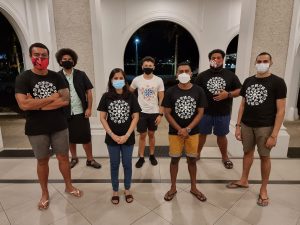
Youth4Pacific Pre-COP Gathering Fiji Team. PHOTO Youth4Pacific

Our governments need to keep pushing and we need to continue sharing our truths from the frontlines. Last month over 600 young Pacific people from across 32 different countries came together to formulate and endorse the ‘Youth4Pacific Declaration on Climate Change’ reflecting the needs and aspirations of young Pacific people united in a vision of a just, inclusive, and sustainable response to the threat of climate change. This unified voice is what we need because if we don’t speak up, who will?

Sivendra Michael is a representative of the Pacific Climate Warriors. He has over a decade of experience working in the development sector and has participated in various capacities at COP21, COP23, and COP24. He is currently based in Suva, Fiji currently pursuing a PhD in Development Studies at the University of Auckland, and is well-known in the region for leading grassroot projects on climate adaptation.

Note to Editors: This is the opinion of Sivendra Michael and not that of his employers, past or present.

SOURCE:PCF/PACNEWS

Pacific Leaders must put Australia on notice, AUKUS “highly problematic” for the region

Australia needs to be put on notice by Pacific Islands Forum (PIF) leaders for abandoning its commitments under the South Pacific’s nuclear free accord, the Treaty of Rarotonga, by signing up to the controversial security pact, AUKUS.

The deal by the Australian, the United Kingdom, and the United States Governments is “highly problematic” and “heightens risks for nuclear proliferation” in the region, Pacific Network on Globalisation (PANG) Coordinator, Maureen Penjueli says.

“Security and defence pacts today are about the Pacific Ocean – which is our home – but it has never been with Pacific people, let alone our governments,” Penjueli said.

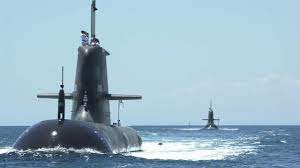
AUKUS is promoted as a trilateral partnership between the three allies to enable Australia to boost its military capacity by acquiring nuclear-powered submarines for its navy.

Australia, however, is a key part of PIF and also a party to the Rarotonga Treaty, the region’s principal nuclear non-proliferation and disarmament agreement. The accord legally binds member states “not to manufacture, possess, acquire or have control of nuclear weapons (Article 3)”, as well as “to prevent nuclear testing in their territories (Article 6)”. The treaty further places an emphasis on keeping the region free from radioactive wastes.

Penjueli said that Pacific people have had first-hand experience of the threats of nuclear weapons testing, and continue to live with the side-effects of historical nuclear catastrophes to this day.

“We see AUKUS as just one in a long list of nuclear threats and issues that the region as a whole has been confronted with,” she said.

“We see Australia playing a key, often unilateral role, taking decisions around peace and security which is not aligned with Pacific peoples’ immediate priorities around security, in particular human security. AUKUS raises serious concerns over Australia’s intentions for its island neighbours.”

Pacific Island governments and civil society have been at the forefront in advocating for a nuclear free and independent Pacific. They have expressed strong opposition to AUKUS since it was announced in September, which experts say undermines regional solidarity on the issue of a nuclear free Pacific.

Dr Greg Fry, Australia Foreign Policy expert, said that the more immediate threat to the South Pacific nuclear-free zone lies not in the nuclear submarines, which are not due until 2040 and beyond, “but in the fundamental shift in Australian-U.S defence arrangements which were announced alongside AUKUS.”

According to Dr Fry, these arrangements include the possible home-basing of American submarines, surface vessels, and bombers, in Australia, as well stockpiling of munitions.

“Home basing would require the presence of nuclear weapons in Australia. This raises questions for article 5 of the Rarotonga Treaty which bans the stationing of nuclear weapons in the treaty zone. It would, therefore, require Australia to notify the Secretary-General of the PIFS under article 9 of the Treaty.”

Dr Fry said Australia’s assurances that the nuclear reactors powering the submarines would not be in danger of accidently releasing radioactive material into the Pacific Ocean needs to be examined against the history of accidents involving nuclear submarines.

“There has already been a serious accident in the Pacific. In 2005, U.S nuclear attack submarine, USS San Francisco, ran into a sea mount near the Caroline islands in the Federated States of Micronesia. Although the nuclear reactor was undamaged, it was reported as ‘remarkable’ that it was not given the extensive damage to the submarine.

Aside from the obvious nuclear concerns, the partnership is also widely noted to be an effort by the Australia-UK-U.S governments to counter the growing influence of China in the Pacific.

“It [AUKUS] also means Australia is even more fully integrated with U.S forces in a new cold war with China right now,” said Dr Fry, adding “this is a major shift in policy from one where we pretended we were friends to both China and U.S.”

But several Pacific countries have had long diplomatic relations with China and the Asian superpower is not considered as a problem, according to Penjueli.

“Our countries have taken much more nuanced policies with China. It is time that Australia is put on notice at the Forum. It is clearly part of our neighbourhood but it is acting outside of the norms of Pacific Islands Forum.”

She further highlighted that while AUKUS has taken the limelight, it was not the only cause for nuclear anxiety for the region.

The revelation by a Japanese utility company about plans to release nuclear waste from the Fukushima nuclear power plant – one of the world’s worst atomic disasters – into the Pacific Ocean has also set the alarm bells ringing.

“Japan is also a partner to the Forum and the announcement has infuriated regional governments and activist groups,” Penjueli said.

“Our governments have opposed nuclear testing, they have opposed the movement of nuclear shipments of radioactive waste and they have strongly opposed the announcement by Japan to dump radioactive water into the Pacific Ocean,”

“The Pacific Ocean is not a dumping ground for nuclear materials nor is it a highway for nuclear submarines,” Penjueli said.

SOURCE: PANG/PACNEWS


No Vanuatu Government delegates traveling to COP26

The Vanuatu Government will not be sending delegates to this year’s UN Climate Change Conference (COP26) starting soon in Scotland, due to COVID-19.

The National Advisory Board (NAB) on Climate Change and Disaster Risk Reduction has decided that delegates refrain from travel abroad to attend the global climate summit, Acting Manager of the NAB Secretariat, Florence Iautu, said.

The Vanuatu Government will be physically represented by its Ambassador in Geneva, Sumbe Antas and a representative from the Vanuatu Embassy in Brussels, she conveyed.

Despite that the delegates will not be present in-person to attend the meetings and negotiations, the NAB Secretariat’s Acting Manager said. Preparations are being done for Vanuatu to join discussions virtually.

COP meetings are held every year and attended by representatives from almost all nations around the world to discuss the Paris Agreement Implementation, which is to halt global warming at 1.5 degree Celsius.

Vanuatu has been sending delegates to COP events every year, to participate in high-level meetings and side events on topics that matter to Vanuatu in relation to climate change and its impacts.

Climate change mitigation, adaptation which include loss and damage, climate finance, gender and transparency are key topics of discussion and negotiations that Vanuatu participates at COP events.

This year’s COP, which will be held from November 1 to 12, will not be the same. Vanuatu is not the only country facing difficulty to attend COVID-19. Some countries would be reducing their number of delegates.

Usually, COP events are preceded by a preparatory meeting before the actual meeting at the international level. Nationally, Vanuatu will be hosting a Pre-COP High Level Session on Monday next week.

Iautu said the event will be an opportunity for the delegates shape negotiations ahead of the COP26. Vanuatu’s position will be made clear at this meeting.

Prime Minister, Bob Loughman, and the Minister for Climate Change, Bruno Leingkon will both be delivering statements, as part of the high-level ministerial segment.

Secretary General for the Commonwealth, Baroness Patricia Scotland, will also make a statement and the British High Commissioner to Vanuatu, Karen Bell, will speak on the expectations for outcomes of the COP26.

Invitations have been sent to government officials to attend the event..

SOURCE: VANUATU DAILY POST/PACNEWS

Stay connected

529FansLike
172FollowersFollow
156SubscribersSubscribe
- Advertisement -