Home Blog Page 1302

Tuna transshipment in Majuro shows first sign of rebound

0

In the wake of the Marshall Islands government dropping its 14-day quarantine period for fishing boats to enter Majuro lagoon, tuna transshipment activity leaped during May, doubling the totals of the previous four months.

Transshipment data from the Marshall Islands Marine Resources Authority (MIMRA) shows there were 24 transshipments in May, which included 22 involving transfer of tuna from purse seiners to carrier vessel and two “unloadings” into freezer containers at the main commercial dock.

May’s total is the highest in one month since December 2019, when Majuro saw 33 transshipments. The 24 is also higher than the monthly totals for all of 2020, indicating the slump the Majuro has been in as a result of Covid-19.

From 2014 to 2019, Majuro developed into the world’s busiest tuna transshipment port, averaging well over 400 transshipments per year and 315,000 tons of tuna moving through its port to off-shore canneries.

But the arrival of Covid-19 and the border closure in the Marshall Islands from March 2020 caused the collapse of transshipment operations, as purse seine vessels and the carrier ships that collect the tuna moved to ports with fewer entry restrictions.

“The increase is mostly due to the 14-day isolation requirement amendment for last month’s travel advisory,” said MIMRA’s Chief Fisheries Officer, Beau Bigler.

He added that “a small uptick in purse seiner (fishing) activities at the southern border inside our exclusive economic zone early-to-mid-May could have also played a role” in the increased transshipment level.

Last year saw a 60 percent decline in transshipment activity here because of Covid port entry controls imposed as part of keeping the country Covid-free.

The policy helped to keep Covid out of Marshall Islands, but the transshipment business collapsed, dropping to only 180 in 2020 compared to over 400 per year the previous five years.

Transshipment was off to an even worse start the first four months of this year, with an average of only 11 per month, January through April. This has had multiple negative economic impacts on the fuel sales and local businesses that have developed around servicing the fishing industry in Majuro.

The 24 transshipments in May isn’t a trend yet, but it is a welcome sign for an industry that has largely been in the doldrums for the past 14 months.

SOURCE: MARSHALL ISLANDS JOURNAL/PACNEWS
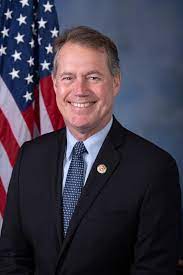
U.S Congress’s push to re-engage with Pacific

A United States Congressman, Ed Case, from Hawaii, says Washington needs to change its view of the Pacific.

He said this is the driving force behind his championing of the Blue Pacific Act, which has been before the House for the past year.

The legislation, which has significant support, is aiming to establish a broad and co-ordinated U.S policy towards the Pacific.

Case wants Washington realise it has a key role to play in a part of the world that, in area, is bigger than China and Russia combined.

“From my perspective, although this is where I come from – this is where I work, this is where I live – when I go to Washington DC I don’t always feel the understanding and sensitivity of our country to the Pacific Islands and believe we need to re-engage right across the board,” Case said.

Upping U.S support to combat climate change in the Pacific is a key element in the legislation..

Case said among the wealth of challenges facing the Pacific, climate change is paramount, and he said the U.S needs to step up.

Case said the reversals on climate change from the Trump administration are being turned back and now in Congress there is a greater focus on the issue, “this bill, the Blue Pacific Act, specifically calls out climate change as one of the key areas that the Pacific Island believe we need to partner on more and that they need assistance from, however, they can obtain that assistance. So this bill tries to respond to that.”

The bill includes authorisations of nearly a US$1 billion in U.S assistance to the region over the next five years.

Case said this is much more than the US is currently providing in aid.

SOURCE: RNZ PACIFIC/PACNEWS

Japanese nuclear wastewater to be treated before discharge into Pacific

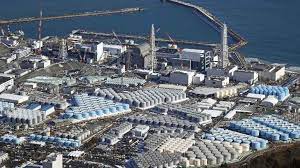
Japan’s Government says nuclear wastewater it plans to dump into the Pacific Ocean will be treated.

Earlier this year it announced plans indicating that 1.25 million tons of wastewater from the wrecked Fukushima Daiichi Nuclear Power Plant would be discharged into the Pacific.

Last month, the outgoing Secretary-General of the Pacific Islands Forum, Dame Meg Taylor, expressed concern over a lack of consultation by Japan with islands countries over the plans.

Echoing this, the Forum’s new Secretary-General Henry Puna demanded clarity over the plans.

Given the toxic legacy of nuclear testing in the Pacific, he said the threat of more nuclear contamination was of significant concern to the health and security of the Blue Pacific continent.

However, the Deputy Head of Mission at Japan’s Embassy in New Zealand, Tatushi Nishioka, said contaminated wastewater would not be released without any treatment.

“This is because the water to be released is what we call ALPS (Advanced Liquid Processing System) treated water, which will be treated to remove nuclides,” he said.

“The water will be purified/re-purified and diluted to meet regulatory standards, and safety of the discharge will be ensured.”

Japan said its policy for treatment of the water to be discharged was based on six years of comprehensive study by experts, and reviews by the International Atomic Energy Agency.

After the Agency recently said Japan’s dumping plan was technically feasible, Puna called for a frank discussion ahead of a meeting with the head of the organisation.

The plans have already been approved by Japan’s Cabinet, due to start within two years.

SOURCE: RNZ PACIFIC/PACNEWS

Parliament closed, quarantine facilities overrun as Delta COVID-19 strain rips through Fiji

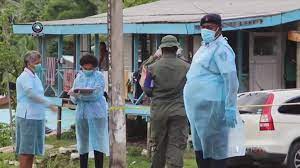
Fiji’s parliament has been forced to close as Covid-19 cases surge in the South Pacific country, overwhelming quarantine facilities and prompting calls for a nationwide lockdown.

After a staffer was found to be a close contact of a positive case, speaker Epeli Nailatikau said the legislative buildings in the capital Suva were shut.

“As a precautionary measure and out of an abundance of caution, the parliamentary precincts and offices will be closed with immediate effect,” he said in a statement .

Fiji went a full year without recording any community cases until April, when a second wave of infections hit. New cases have hit daily records, and an outbreak of the quick-spreading Delta variant, first identified in India, detected.

Health authorities announced 94 new cases Tuesday and 35 new cases on Wednesday, bringing the total to 624 active infections.

Permanent Secretary for Health James Fong said the rising numbers were swamping quarantine facilities, forcing patients to isolate at home.

“New positive cases are being entered into home isolation, where feasible,” he said.

“Specific guidance has been provided for these individuals to ensure they do not have contact with other members of their households.”

Fiji’s largest hospitals in Suva have been converted into dedicated Covid-19 facilities, with field hospitals set up to treat non-virus patients.

Fiji successfully quashed community transmission of the virus last year with a series of tough border and movement restrictions.

But the government has resisted imposing a nationwide lockdown during the latest outbreak, concerned it will exacerbate poverty rates already elevated by the closure of international tourism.

Instead, it has relied on localised stay-at-home orders and ramped up vaccination efforts.

But the leader of the opposition NFP Party Biman Prasad said a nationwide lockdown was inevitable to contain the spread of infections.

“The longer we wait and numbers rise, the longer and more painful the lockdown will be,” he said. “This is not rocket science. This is common sense.”

Prasad said it was time for health professionals, not politicians, to lead the Covid-19 response. He also urged the government to set aside its pride and ask for help from Australia and New Zealand.

“Lives, health and incomes are at stake,” he said.

“This is a time to accept that we are not coping with the problem and to request help to bring the crisis under control.”

Senior government figures have said little as the crisis escalates but in an address over the weekend, Prime Minister Frank Bainimarama urged the country’s 930,000 residents to keep faith with his containment strategy.

“Covid-19’s hold over Fiji will dissipate. It will weaken and the light at the end of the tunnel will glow brighter and brighter,” he said.

Meru Sheel, an epidemiologist from the Australian National University, said the higher infection rate of the Delta strain may test Fiji’s health system.

“Health resources can be limited in some of the Pacific Island countries, which can make it a little bit more challenging to control the outbreak,” Dr Sheel said.

Dr Sheel said the closure of Fiji’s quarantine facilities was worrying, but that at-home isolation was possible.

“Most of it revolves around essentially allowing and creating a space for anybody who’s infected to be able to safely isolate,” Dr Sheel said.

“What we really want to do is protect the health system and … prevent people from getting hospitalised and dying from the disease.”

Sheel said case numbers fluctuate and the best way to determine a decline in infections is through a rolling average over seven or 14 days.

“There is no room for complacency. However as quickly as possible people need to be vaccinated especially public health workers,” she said.

Dr Sheel said it is imperative that health workers are protected and hospitals, that have been closed because of COVID-19 infections, are re-opened.

Many people caught within the government’s targeted containment zones said their food and other essentials are running out.

Muanikoso settlement on the outskirts of Suva has been under lockdown for three weeks, and its residents have staged protests to plead the government for extra support.

“If this current trend continues, we will be needing more than just food rations,” Milika Naulumatua, a Muanikoso resident said.

SOURCE: AFP/ABC/PACNEWS

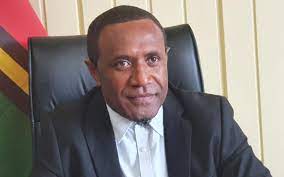
Vanuatu PM appeals for calm

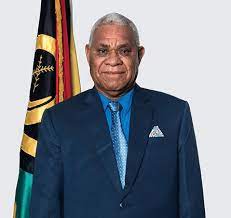
–Vanuatu Prime Minister Bob Loughman has called on the people of Vanuatu to remain calm as relevant agencies deal with the issue had at in the political arena.

The PM made the call during a media conference Wednesday after the Supreme Court granted an application to stay the decision of the Speaker, who had announced that 19 Members of Parliament (MPs) on the government side had vacated their seats.

Loughman repeated what he said after the parliament session on Tuesday that the Court alone can remove a sitting member of parliament from their chair but the Speaker of Parliament cannot do that alone in his capacity.

“We want to see democracy prevail in our country.

“We must not take the law into our own hands and we have to remain calm and listen to what the Court says.

“I am glad that the government still remains; the ministers that are with me, (Deputy) Speakers still remain in their positions until the Court reconvenes,” Loughman appealed to the public.

When responding to claims that the Opposition had numbers to topple the government he leads through a motion of no trust, the prime minister says his government still commands the majority.

“At the First Extraordinary and First Ordinary Sitting (sic), the government still commands the majority of members of Parliament.

“I want the people in our country to understand that their duly elected government still remains.

“We look forward to the outcome of the Court.
“If the Court reinstates us (fully) to Parliament, we will defeat the motion of no trust against the prime minister.

“Majority inside the House determines the way forward, not one person, not minority, but majority rule.

“It is the view of the government to respect and rely on majority rule.

“That is the principle of democracy, not only in Vanuatu but throughout the whole world,” the Prime Minister concluded.

Meanwhile, deputy Prime Minister and Minister of Internal Affairs, Ishmael Kalsakau, said while the matter is still in Court, not much detail will be revealed in regards to the case that is being dealt with by the Court, as only the Court will make the final decision on it.

Minister Kalsakau expressed the government’s gratitude about the intervention of the Court to grant the government’s application to stay the ruling of the Speaker.

He also expressed concern about an alleged custom ceremony reportedly taking place in the Parliament compound last evening, which he says police are investigating.

Kalsakau says the government wants to complete and exhaust all processes to ensure that justice is seen to be done.

SOURCE: VANUATU DAILY POST/PACNEWS

Historical Covid test leads to further scrutiny of travellers in Cook Islands

Health officials will now question the honesty of health declaration forms from overseas travellers because of the positive historical Covid-19 case, says Prime Minister Mark Brown.

The man who has the historical case is a Cook Islander who works for an Australian company based in Egypt.

He has been charged with making a false declaration on a Cook Islands travel document after failing to declare the historical case.

Two weeks after the man’s arrival it became known the man previously had the virus from a positive Te Marae Ora Covid test on Friday.

The man was arrested on Saturday after being referred to by Te Marae Ora Ministry of Health. He is expected to appear in Court tomorrow.

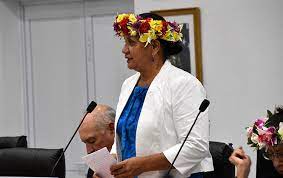
During Parliament’s question time, both the Titikaveka Member of Parliament, Selina Napa and the Leader of the Opposition, Tina Browne asked the government how the problem was being addressed.

Browne asked if there was a way for the country not to rely solely on the information from the declaration forms.

In his reply, Prime Minister Brown said: “It’s very difficult to tell a person not to lie, we don’t control a person’s mind but we can control the consequences of lying.

“As we’ve read in the newspaper, this matter is now before the courts and this man will be charged.”

“One additional step that will now take place is that those people will now be questioned by health professionals whether their declaration is true and honest.”

Brown later told Cook Islands News: “Now they (travellers) will be asked the question, have they filled out their forms correctly and honestly, is that their name on the form.”

He said the consequences of making false declarations on travel documents are already in law.

“It’s in the hands of the authorities and the courts now to see what appropriate action should be taken,” said Brown.

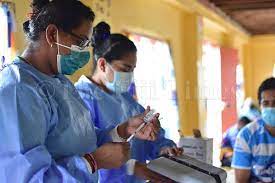
Meanwhile, as of Tuesday evening, 618 Rarotonga residents had received their second dose of the Pfizer vaccine at Rarotonga hospital

The second round of the Covid-19 Pfizer vaccine roll-out for Rarotonga began Tuesday with a steady number of residents showing up to the Nikao Social Centre before being transported up to Rarotonga Hospital.

During the phase one roll-out, residents were welcomed and encouraged to show up at any time to receive their first dose of the vaccine. This time, vaccinations will be done strictly by appointment as there is a set period of time between the first dose and the second dose that must be abided by.

People are required to bring with them their vaccination card proving they were receiving their second dose of the vaccine on the correct date.

Rarotonga resident Ross Warrick was amongst the first to receive his second dose of the vaccine on Tuesday. He was glad to have both doses done and over with.

“The second dose definitely felt better than the first. This time I hardly felt the needle at all and it was just as quick and efficient as the first time,” Warrick said upon arriving back from the hospital to continue on with his day.

A husband and wife, who wished not to be named, were amongst the first of the country’s eligible population to receive the first dose of the vaccine last month.

They admitted they were feeling somewhat apprehensive about the side effects they may get from their second dose, but were basing their confidence in the good work done by Te Marae Ora to provide the public with as much information as possible.

Oirua Tini from Te Marae Ora said: “We are very much looking forward to the second and final roll-out of the vaccine in the next few weeks. We don’t want 50 per cent, we want 100 per cent. Those who are eligible to come back and complete their vaccination process, we encourage you to do so.”

Rouruina Tararo, one of the four mini bus drivers transporting people to and from the social centre and the hospital, says he has enjoyed the opportunity to serve his country this way.

“During the first roll-out we would do four trips an hour, starting at 6:30am and finishing at 7pm. With this round being strictly appointment only, hopefully the work day will be a little less hectic as this time you cannot just show up whenever you like.

Still, at the end of the day we are just wanting to get everyone their second dose safely and securely,” Tararo shared.

Those who have already received their first dose of the vaccine are encouraged to keep their vaccination cards safe and to keep a note of their appointment for their second dose of the vaccine.

SOURCE: COOK ISLANDS NEWS/PACNEWS

COVID worry – Fiji Nurses’ union concerned with members’ family

0

The Fiji Nursing Association says it is concerned about the welfare of members who are taking care of COVID-19 patients in hospitals.

President Alisi Vudiniabola said with the increasing number of cases across the country and the added burden on health resources, she wanted to ensure nurses were well taken care of.

“We just want to ensure our members are being taken care of in terms of being provided food, adequate facilities for rest and privacy and have access to all the personal protective equipment they needed,” she said.

Health Ministry permanent secretary Dr James Fong said he was aware of a situation at the Colonial War Memorial Hospital and it was being addressed.

“This has been a concern as soon as the case broke out in CWM,” he said. “Unfortunately, CWM had high occupancy.

“We are currently rectifying that by moving some positive cases to isolation units inside and outside the hospital.”

In terms of the association’s concerns about nurses having enough PPEs, Dr Fong said there was no issue with stock.

“We have enough PPEs but having some issues with distributing PPEs because of restrictions on movement and the need to change some of our distribution standard operating procedures.

“We have been better over the last two days with more decentralised storage areas,” he said.

Meanwhile, as of Tuesday 08 June 2021, a total of 220,437 people in Fiji have received the first dose of COVID-19 vaccine.

This is 38 percent of the Ministry of Health and Medical Services’ target population of 587,651. A total of 4,773 people across the country have received their second dose.

The Ministry of Health’s target population for the COVID-19 vaccination is now 587,651 and not 650,000. This target population was identified by the Ministry of Health using the Zone system whereby the target population was identified and counted by existing zones.

The target population includes the actual number of the Permit Holders in the country as provided by the Department of Immigration.

The previous target population of 650,000 was calculated based on COVAX’s estimate on Fiji’s population.

The Ministry of Health will continue to conduct COVID-19 community vaccination drive as more vaccines arrive into the country. People are urged to register online for the COVID-19 vaccine.

SOURCE: FIJI TIMES/PACNEWS

Australia’s Olympics lifeline to Pacific nations

The Morrison Government and the Australian Olympic Committee (AOC) are working in partnership to support over 170 Olympic and Paralympic athletes from eleven Pacific nations to prepare for the Tokyo 2020 Olympic and Paralympic Games.

Due to the impact of COVID-19, many Pacific athletes face significant challenges in completing final training programs and critical qualifying events.

With support from the Australian Government’s PacificAus Sports programme, Pacific teams and athletes will be able to train and compete in qualification events, giving them the greatest opportunity to realise their Olympic and Paralympic dreams.

Australia’s Minister for Foreign Affairs and Minister for Women, Senator the Marise Payne said sport sits close to the heart of Australia’s special bond with the Blue Pacific.

“Sport provides a powerful linkage between countries in our region and it is important our talented sportspeople have the opportunity to compete at an elite level to do themselves and their nations proud,” said Minister Payne.

“The Australia-Pacific Olympic and Paralympic Partnership is helping to unlock the potential of a whole new generation of champions.

“I am also pleased to note the balanced representation of female and male athletes in this cohort.”

Minister for International Development and the Pacific, Senator Zed Seselja, said he was proud to join the announcement today.

“The Pacific is absolutely bursting with exceptional athletes. Our support for this programme will bolster Australia’s already strong bond with our Pacific family, and open greater opportunities for these athletes in the months leading up to the Games,” said Minister Seselja.

An estimated 150 Olympic athletes from the Pacific Island nations of Fiji, Federated States of Micronesia, Kiribati, Nauru, Palau, Papua New Guinea, Samoa, Solomon Islands, Tonga, Tuvalu, and Vanuatu are looking to secure a spot on their respective Olympic Games’teams. An additional twenty Paralympic athletes will represent Vanuatu, Fiji, Solomon Islands, PNG, Kiribati, Samoa and Tonga at the Tokyo Paralympic Games.

The AOC, working with the respective Pacific Olympic committees and their representative body, the Oceania National Olympic Committees, is helping coordinate efforts to identify and support athlete’s training and qualification plans.

AOC CEO Matt Carroll spoke about the opportunity to unite the Pacific through sport and the significance of developing the partnership.

“The Olympic and Paralympic Games creates opportunity and inspiration for nations across the world. This partnership is not just about backing high performance programs across the Pacific. It also sends a message of resilience to communities throughout the region.”

The President of the Oceania National Olympic Committees(ONOC), Dr Robin Mitchell, also participated in the launch.

“We’re excited to be part of this historic effort, and to have the opportunity to work with the Australian Government to support our athletes through final preparations on their journey to the Games,” Dr Mitchell said.

Oceania Paralympic President Paul Bird thanked the Australian Government for its support of Paralympians across the region on their journey to Tokyo.

“This funding is vital to assist our Pacific Island Paralympians to reach their goals and achieve their best in Tokyo. Like all athletes, they have been impacted by the pandemic and this support will ensure they are able to train and prepare for the Games.”.

SOURCE: DFAT/PACNEWS

Legal challenge looms after Vanuatu speaker declares most government seats vacant

The speaker of the Vanuatu parliament has declared the seats of the Prime Minister, the Deputy prime minister and 16 other government MPs vacant.

The government had filed a motion to have the Speaker, Gracia Shadrack, removed; a feud which saw the MPs and prime minister Bob Loughman boycott Parliament for three days last week.

This morning, Shadrack said their three days’ absence meant their seats were now vacant, announcing the suspended MPs one-by-one during a dramatic session of parliament.

But MPs, including prime minister Bob Loughman, refused to leave their seats, with security guards called onto the floor of parliament as a shouting match developed.

“This is not proper. It does not honor the rights of a person who has allegations against them, the right to respond,” said PM Loughman, referring to a motion of no confidence in the government that was also due to be heard.

“And I hope Speaker what the chair has done here this morning represents the democratic way not just here in Vanuatu but around the world,” he said

RNZ Pacific understands a Supreme Court challenge is already being prepared.

Parliament has now been adjourned until Friday, with neither of the motions having been debated.

Speaking to RNZ Pacific after he adjourned parliament, Shadrack said he expected a challenge.

“They have their constitutional right to go to the Supreme Court to determine over my announcement this morning,” he said, adding that his actions amounted to restoring “the integrity of the parliament.”

“If they win they will come back, otherwise there will be by-elections in 18 seats throughout Vanuatu.”

A law lecturer at Australia’s Griffith University, Tess Newton Cain, who is a ni-Vanuatu citizen, said the government likely has a strong challenge against the speaker.

“I am not sure how strong a case the speaker is going to have,” she said.

“I did have a look at the Vacation of Seats Act over the weekend and you know my sense is that missing three days is not the same as missing three sittings.”

“And also it is not completely clear, why the speaker only chose to vacate those 18 seats and not everyone who was absent. So you know I think that undermines his claim to be acting impartially.”

The same provision cited by Shadrack this morning was used last June to suspend 22 members of the opposition, which was challenged in the Supreme Court.

The government withdrew the suspension before it could be heard, but the Supreme Court ruled in the opposition’s favour.

An opposition motion of no confidence in the government was also due to be heard Tuesday morning.

SOURCE: RNZ PACIFIC/PACNEWS

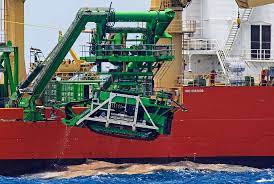
Doco highlights calls for halt to deep sea mining

Last week’s launch of a film documentary, Setting the Boundaries – Voices from the Last Frontier is part of a regional series focusing on calls for a halt to deep sea mining.

Reporting concerns from Fiji over deep sea mining (DSM) explorations, shared widely across the Pacific, Voices from the Last Frontier calls for a complete halt to DSM in the Pacific.

Highlighting the need by authorities to incorporate sufficient and stringent environmental protections, the documentary emphasises “free, prior, and informed consent” (FPIC) as the norm for Pacific peoples to ensure safeguarding the Pacific for today’s needs and future generations.

Backed by PANG, the Pacific Network on Globalisation, the doco was released as part of it’s June programme focusing on oceans.

Bua Urban Youth leader Alisi Rabukawaqa-Nacewa said there was little public understanding around the process of deep sea mining and its potential environmental impacts, underlining the need for FPIC process.

“If we don’t understand the connectivity with our inshore, with the land and everything else, how can we confidently say it’s not going to affect anything?”

Vani Catanasiga from Fiji Council of Social Services (FCOSS) spoke out about the deep sea mining agenda being set by foreign interests operating without community input or approval.

“Deep sea mining is a way for people to make profit. Who are these companies? Where do they come from? They do not come from our region. They are here to make profit from our resources, as they have done for other regions.”

Pacific writer Jacki Leota Mua criticised the industry’s track record.

“Nothing good comes from these types of industries, nothing good has ever been gained. The impacts can be felt immediately…these sorts of development options cannot be transplanted into smaller nations like ours. The impacts will be felt immediately”.

They and other regional leaders are featured in this week’s launch of the documentary, following recent news about a private company, the Korean Institute of Ocean Science and Technology (KIOST) Minerals (South Pacific) Limited.

Announcing exploration interests in Fiji waters,and claiming $30+ million(US$15 million) in investment so far, KIOST has identified five exploration sites, despite the Fiji government’s 2019 announcement of a 10 year mining moratorium.

Speaking on behalf of the Pacific Blue Line campaign, Joey Tau from the Pacific Network on Globalisation (PANG), said “the documentary shows the range of voices calling for an end to this industry yet Pacific sponsoring states and mining companies are still charging ahead with developments”.

The Pacific Blue Line campaign also launched a petition drive calling for a global ban on deep sea mining.

The petition has been sponsored by PANG, PCC, PIANGO, TuCAN, WWF Pacific, and DAWN with the endorsements of over 390 NGOs internationally.

SOURCE: PANG/PACNEWS