

Home Blog Page 1178

Fiji records 1,301 new cases of COVID-19, 9 deaths reported

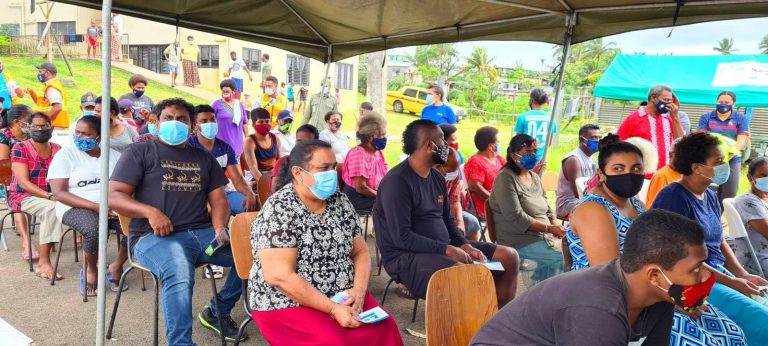
Fiji has recorded 1,301 new cases of COVID-19 and 9 death Thursday.

Permanent Secretary for Health, Dr James Fong said 293 cases are from the Western division and 1008 cases are from the Central division in Vitilevu, Fiji’s main island.

He said there have been 245 new recoveries reported since the last update, which means that there are now 20,200 active cases. 17,774 active cases are in the Central Division and 2,426 in the Western division.

Dr Fong said all cases that were recorded in the Northern and Eastern Divisions (cases that were imported from Viti Levu) have recovered and there are no active cases currently in those divisions.

“There have been 27,427 cases during the outbreak that started in April 2021. We have recorded a total of 27,497 cases in Fiji since the first case was reported in March 2020, with 6,951 recoveries,” he said.

Dr Fong said the nine new COVID-19 deaths for the period of 26 – 27 July.

“The first COVID-19 death to report is an 83-year-old man from Lautoka. He presented to the Lautoka Hospital in respiratory distress. He reported having a cough and shortness of breath for five days. His condition worsened at the hospital and he died 3 days after admission (27/07/2021). He was not vaccinated.

“The second COVID-19 death to report is a 72-year-old woman from Samabula who died at home on the 26/07/2021. She was not vaccinated.

“The third COVID-19 death to report is a 69 year old man from Valelevu. He presented to the CWM Hospital emergency department in severe respiratory distress. His condition worsened at the hospital and he died on the same day (25/07/2021). He was not vaccinated.

“The fourth COVID-19 death to report is a 64-year-old man from Suva who died at home on the 27/07/2021. He was not vaccinated.

“The fifth COVID-19 death to report is a 84-year-old man from Nabua who died at home on 27/07/2021. He was not vaccinated.

“The sixth COVID-19 death to report is a 59-year-old man from Nakasi who died at home on the 27/07/2021. He was not vaccinated.

“The seventh COVID-19 death to report is a 91-year-old woman from Suva who died at home on the 27/07/2021. She was not vaccinated.

“The eighth COVID-19 death to report is a 68-year-old woman from Wailoku who died at home on the 27/07/2021.She was not vaccinated.

The ninth COVID-19 death to report is a 75 year old man from Raiwaqa who died at home on the 26/07/2021. He was not vaccinated,” Dr Fong said.

He said there have been 15 more deaths of COVID-19 positive patients.

“However, their deaths have been classified as non-COVID deaths by their doctors. Doctors have determined that their deaths were caused by serious pre-existing medical conditions and not COVID-19.

“There have now been 227 deaths due to COVID-19 in Fiji, with 225 of these deaths during the outbreak that started in April this year. The 7 day rolling average of COVID-19 deaths per day is 8.

“We also have recorded 119 COVID-19 positive patients who died from the serious medical conditions that they had before they contracted COVID-19; these are not classified as COVID-19 deaths,” he said.

Dr Fong said there are currently 304 COVID-19 patients admitted to hospitals in Fiji.

“29 patients are admitted at Lautoka hospital. In Suva, 77 patients are admitted at the FEMAT field hospital, and 198 admitted at CWM hospital, St Giles, and Makoi. 53 patients are considered to be in severe condition, and 16 are in critical condition.

“Based on available data the national 7-day daily test average is 3302 tests per day or 3.7 tests per 1,000 population. The national 7-day average daily test positivity is 25.6 %.

“The 7-day average of new cases per day is 877 cases per day or 991 cases per million population per day,” Dr Fong said.

He said daily cases numbers remain high, and daily test positivity remains high, indicating ongoing widespread community transmission in the Suva-Nausori containment zone. Cases are also increasing in the Western division.

As of the 28 July 465,110 adults in Fiji have received their first dose of the vaccine and 120,451 have received their second doses.

SOURCE: PACNEWS
COVID-19 crisis in Fiji is not going to end in October, says Prof Biman

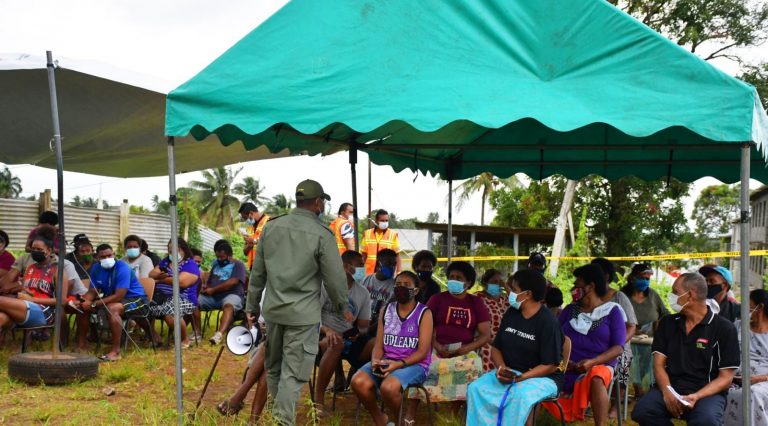
The COVID-19 crisis is not going to end in October even if Fiji achieves its vaccination target, says National Federation Party(NFP) leader Professor Biman Prasad.

During a debate on the 2021-2022 Appropriation Bill in Parliament on Monday, he said people would continue to fall ill and lives would continue to be lost even if inoculation targets were met.

He also said it was likely more than 50,000 people would be infected by COVID-19.

“First point, the assumption that the crisis will end in October, the crisis is not going to end in October,” the NFP leader said.

“It will continue at least to the end of the year.

“Even if we reach vaccination targets, we will still have people sick and dying.

“The second point, it is likely that more than 50,000 people will be infected with this virus.

“In fact, some say that we may already have reached that number, why?

“Because the Ministry of Health is no longer testing people showing symptoms.

“People are told, ‘Just stay at home and look after yourselves’.

“What does this mean? It means that the Ministry of Health is too busy treating people to get information on the virus.

“They know that the virus is completely out of control.

“No one knows how many cases are out there.

“So, we are now in fact powerless against the virus,” he said.

Meanwhile,the reality of COVID-19 in Fiji is that major hospitals are full, the conditions of temporary field hospitals need to improve, test results are misplaced, telephones are not answered, front liners are getting sick and tired, mortuaries are full, reports of bodies misplaced or missing, and deaths are left unattended at hospitals for hours.

This, according to Opposition MP Filipe Tuisawau.

He told Parliament the Opposition maintained that Attorney-General and Minister for Economy Aiyaz Sayed-Khaiyum failed to carry out a comparative analysis with countries such as India, the United States, and others.

“Because the result will surely show that the spread of the virus in Fiji is now uncontrollable and our infection rate per capita has exceeded India’s infection rate, at the height of their recent second wave of the pandemic,” he said.

He said the question was how do we hold leaders accountable for leadership negligence which has resulted in this situation.

“We on this side of the House will hold a commission of enquiry in the government’s management of COVID-19 as was done in Australia and the United Kingdom.

“There was a lack of contingency planning when COVID appeared and lapses of judgment in our border protocols.”

Tuisawau said this must be thoroughly analysed and lessons learned taken up for better management in the future and for the sake of our people who died and have suffered from COVID-19.

“We continue to thank all frontliners from the Ministry of Health, the disciplined forces, civil societies, NGOs and volunteers for the dedicated and selfless service despite the challenges,” he said.

SOURCE: FIJI TIMES/PACNEWS

Shifting tuna populations could trigger ‘climate justice issue’: study

By Kiley Price

Despite their small size, Pacific Island nations and territories are a powerhouse in the fishing industry, contributing more than a third of the global tuna catch.

However, the tide could soon turn for these islands — and not for the better.

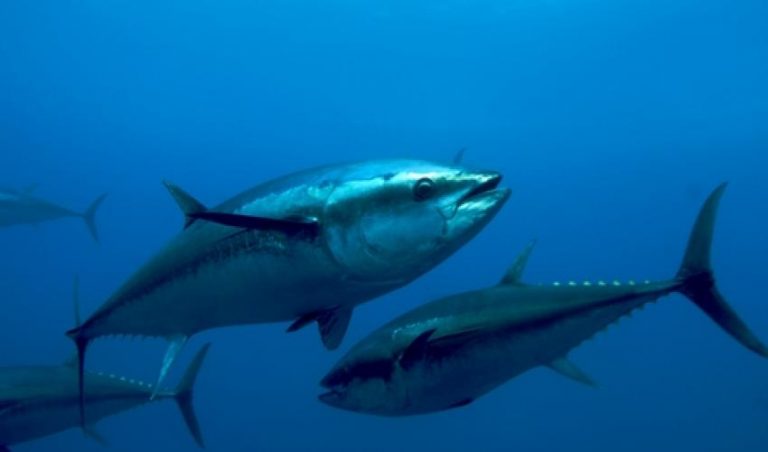
Fueled by greenhouse gas emissions, ocean warming will alter the habitats of tuna, causing these fish to move outside the jurisdictions — or Exclusive Economic Zones (EEZs) — of many Pacific Islands. Using modelling to predict how tuna stocks could move by 2050, a team of experts — led by Conservation International’s Johann Bell — found that an exodus of tuna could cut the average catch by a staggering 20 percent in 10 Pacific Island states, from Palau in the west to Kiribati in the east.

According to the study published today in Nature Sustainability, catch reductions of this magnitude could result in a collective loss of US$140 million per year by 2050 and cost some of these island nations and territories up to 17 percent of their annual government revenue.

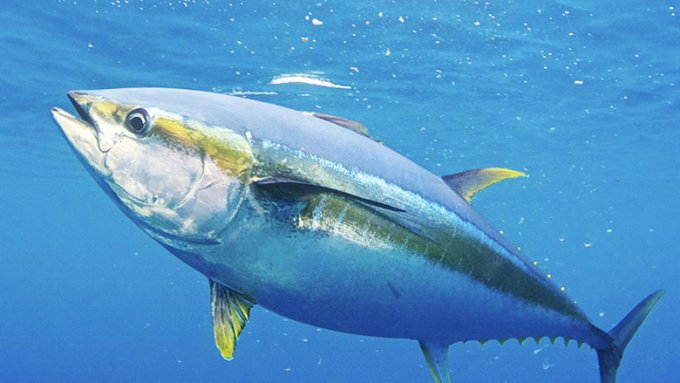
“Currently, many of the tropical areas with warm waters preferred by skipjack, yellowfin and bigeye tuna are within the EEZs of Pacific Island states,” says Bell, who leads the tuna fisheries program at Conservation International.

“But as the ocean continues to warm, the conditions preferred by tuna will be located further to the east, including in the high seas, which are not governed by any one country.”

‘This is a climate justice issue’

Pacific Island territories are responsible for only a tiny fraction of global greenhouse gas emissions, yet they are already facing some of the most severe impacts of climate change.

“This is a climate justice issue,” says Bell. “Pacific Island states charge access fees to other countries that catch tuna in their jurisdictions. But as the tuna move progressively to high-seas areas the revenues will decline because less fishing will occur in their waters — and tuna-dependent economies will suffer.”

In contrast, large countries responsible for the majority of global emissions driving ocean warming will benefit from the migration of tuna, according to Bell.

“When the tuna are caught in high-seas areas, fishing fleets from wealthier countries can make more money from their catches because they do not currently have to pay fees to fish there,” he says.

Tuna fishing in the high seas of the Western and Central Pacific Ocean and in the Eastern Pacific Ocean is regulated by two regional fisheries management organisations. With insight from international lawyers, the study offers recommendations for a more equitable outcome: Pacific Island states could negotiate within these regional fisheries management organisations to retain the rights to the historical levels of catches made within their EEZs, regardless of the movement of fish to the high seas due to climate change. This would mean that although some tuna would no longer live within the EEZs of Pacific Islands states, their economic value would still belong to those nations and territories.

However, the best way to avoid this climate justice issue is to make sure that tuna habitats don’t shift in the first place, Bell says.

Cut carbon, save tuna-dependent economies

Under the Paris Climate Agreement, countries around the world have committed to drastically reducing their emissions to limit global temperature rise to 1.5 degrees Celsius (2.7 degrees Fahrenheit).

If countries are able to meet this goal, the average tuna catch in these 10 Pacific Island nations and territories will decrease by only 3 percent, the study’s authors estimate.

And with world leaders set to meet soon at a series of global climate negotiations, the onus is on large countries to commit to more ambitious emissions reduction targets and avoid climate injustice, says Bell.

“The climate-driven redistribution of tuna has the potential to severely disrupt the economies of developing island states and undermine the sustainable management of tuna resources,” Bell says. “Although we need more robust modeling to reduce uncertainty in the timing and extent of tuna redistribution, we are sounding the alarm on this potential economic disaster while there is still time to avoid it.”.

The late Sue Taei, former Executive Director of Conservation International’s programmes in the Pacific Island region and a co-author on the paper, was the first person to call for an investigation into the climate justice implications of tuna redistribution. To honour Taei’s contributions to the region, Conservation International and Nia Tero have established the Sue Taei Ocean Fellowship for Indigenous Women of the Pacific. The contribution made to the multi-disciplinary study by Johann Bell was supported by the Moccasin Lake Foundation.

SOURCE: CONSERVATION INTERNATIONAL/PACNEWS

Fiji gold medal Olympians sevens leave their mark and legacy at Tokyo 2020 as they head home

By Makereta Komai, PACNEWS Editor in Tokyo

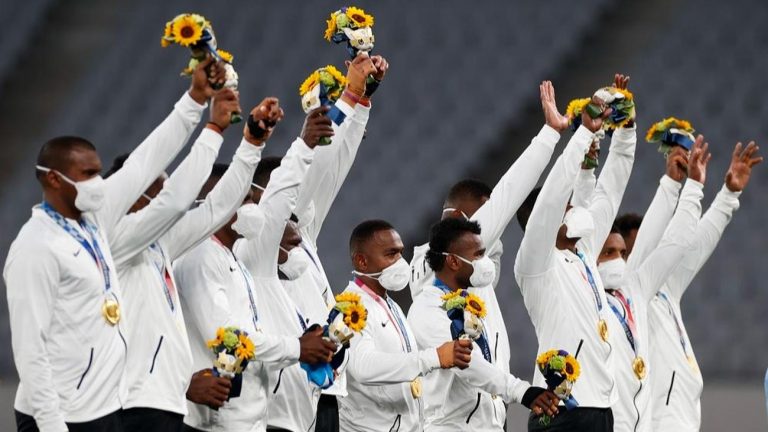
While Fiji’s gold medallist Olympian sevens team get on the long nine hours’ flight back home, hours after their historic win in Tokyo against rival New Zealand, the international media at Tokyo 2020 are still abuzz with the spectacular finish, the emotion and humility of the players after the final whistle at Tokyo Stadium Wednesday night.

Major international news outlets speak of the ‘gentle giants on the field bowed in prayers dedicating their win to lifting the spirit of their people who are suffering from COVID19 pandemic.’
Journalists scrambled to find personal angles to stories of players and the challenged they were up against coming to Tokyo.

Reuters featured Asaeli Tuivuka, who scored Fiji’s last try in the final.

“We’ve been away five months,” said Asaeli Tuivuaka. “My father just passed away last year, he was the man who encouraged me to play rugby, and this gold medal is for him, and for my baby boy. He is one-year-old now, and I haven’t seen him for five months. I didn’t even get to kiss him goodbye when I left, it is tough for me…” Tuivuaka stopped speaking, and started crying.

This is the kind of personal sacrifices each player and team management have had to endure in their preparations for Tokyo.

Gold medal winning coach Gareth Baber in his reflections immediately after the game saluted his sevens gladiators and the team management for putting the interest of the nation ahead of their own, to win gold.

“The players and the management staff have been linked together as a community and their families back home made massive sacrifices and we thank them from the bottom of our hearts.

“The boys have honoured that and you can see it in the emotions at the end of the game. They are looking forward to going back to their loved ones. They’ve made huge sacrifices. After quarantine, they will go back to their families, said Baber, who will not be accompanying the team back to Fiji.

He is going back to the U.K to see his family who he hasn’t seen in seven months.

“It’s time I went back as a father and husband to my family. I always feel a little bit guilty when I go around the world to do the things that I do and I don’t have them with me. I couldn’t do this if it wasn’t for them. I am looking forward to just reconnecting with them, may be a quite beer with my family will be lovely, said Baber.
On his game plan to take NZ down in the final match, Baber said he relied on the boys to execute the plan on the field, and they delivered after the final whistle.

“I was quite relaxed during the final generally because the boys made a huge effort to get there in the first place and I know generally in the finals we tend to perform. A little bit of nervousness around the quality of what NZ put together in the semi-final match but we also knew as a coaching staff that we had a game plan that could beat NZ. We needed to be aggressive and forthright with them.

He said it was a joy to see that your plan worked when you see the final score – 27-12.

“What was nice right at the end there before the end of the game that we realised that game plan worked. All the players contributed to that, not just for the final but throughout the three days.

“I know things have been in tough in Fiji and it was the foundation of what we did in the past six months and that was to lift the gold here in Tokyo and make everyone back home smile and celebrate, even though those celebrations might be muted, said Baber.

The win and the sacrifices were acknowledged by the highest ranking International Olympic Committee (IOC) executive in Oceania, Dr Robin Mitchell, also from Fiji.

Dr Mitchell who did the honours to present the gold medal to the Fiji men’s sevens team said the win inspired other athletes from Oceania.

“It was really good to have this moment of joy that we can all celebrate. The team worked really hard before the lockdown, they kept training as best they could and it showed today that they were one of the fittest teams on the ground. This win has lifted the spirits of every Fijian, especially what we have gone through in the last 18 months.

“We are doing this for all Oceania family because they know Fiji can do it, and we are doing it for the Pacific. It could have been Tonga or Samoa – so it’s the same inspiration for all the teams that we can make it if we out our effort into it. I think all our Oceania family are proud of Fiji’s sevens team. They were all here today to show their support for our boys, said Dr Mitchell.

He said Fiji’s influence in rugby sevens at the world stage has inspired other countries to introduce the sport in their countries.

“This win shows what we can do and also to other countries around the world. I was talking to some sports administrators from San Marino earlier and they are planning to introduce rugby there.

“Rugby 7 s was such a big hit in 2016. The next year the front page of the Olympic Solidarity news was the Fiji Team. The fact that we are a small island country and this is our second gold medal, this is a huge achievement. Even at the IOC, it’s all about rugby sevens for Fiji. A lot of the IOC staff were here today to cheer on Fiji because they really appreciate what we have achieved, said Dr Mitchell.

Tokyo is the only second Olympic Games where sevens rugby has been featured as an Olympic sport. Rugby sevens was added to the Olympics following the decision of the 121st IOC Session in Copenhagen in October 2009. The champions for the inaugural rugby sevens tournament in 2016 were Fiji for the men and Australia for the women.

SOURCE: PACNEWS

EU and Cook Islands agree to continue their sustainable fisheries partnership

0

Today, the European Union and the Cook Islands agreed to continue their successful fisheries partnership as part of the sustainable fisheries partnership agreement (SFPA), for a duration of three years.

The agreement allows EU fishing vessels operating in the Western and Central Pacific Ocean to continue fishing in the Cook Islands fishing grounds.

Virginijus Sinkevičius, Commissioner for Environment, Oceans and Fisheries, said:

With the renewal of this Fisheries Protocol, European Union vessels will be able to continue fishing one of the healthiest tropical tuna stocks. We are particularly proud to contribute, through our sectoral support, to the development of the Cook Islands’ fisheries sector – a Small Island Developing State that has been often praised for its effective and responsible fisheries management policies. This is how the EU’s sustainable fisheries partnership agreements work in practice.

In the framework of the new protocol, the EU and ship owners will contribute with a total up to approximately EUR 4 million (NZD$6.8 million) for the next three years, of which EUR 1 million (NZD$1.7 million) to support the Cook Islands’ initiatives within the sectoral fisheries and maritime policy. Overall, next to improvements in the fishing sector, the revenue obtained from this SFPA has previously allowed the Cook Islands government to improve its social welfare system.

The Cook Islands, a remote archipelagic state comprising 15 volcanic islands and atolls located in the Western and Central Pacific Ocean (WCPO), have an exclusive economic zone of 1.8 million km2, the fifth largest in the South Pacific region. Since 2021, the tropical tuna purse seine fishery within the Cook Islands fishing grounds has seen a rapid increase and became a strategic area for the operations of the Union purse seine fleet in the WCPO.

Tropical tuna species management such as skipjack tuna, yellowfin tuna and bigeye tuna in the WCPO falls under the responsibility of the Western and Central Pacific Tuna Commission (WCPFC). The new protocol will allow the four Union purse seiners operating in this vast ocean to fish up to 100 fishing days annually within the Cook Islands waters, with the possibility for the ship-owners to buy additional 110 days.

The amount of fishing effort to be exerted by the Union fleet within the Cook Islands has been negotiated according to the conservation management measures adopted by the WCPFC, underpinned by the work of the fisheries scientists of the Pacific Community (SPC), the organisation which provides scientific advice to WCPFC. Each year, purse seiners in the WCPO fish for more than 50,000 days, providing for more than half of the global tuna catch. In the Cook Islands itself, the maximum number of days is of 1,250, therefore the EU fishing effort, even if maximised, will be far below this limit.

Once the Fisheries Protocol is operational, the parties are committed to monitor the fishing activities of the Union vessels in the Cook Islands on a regular basis. The authorities of the Cook Islands in particular will ensure that the fishing days made available to the Union vessels are strictly monitored, to ensure that the Cook Island’s effort limits declared under the WCPFC are duly respected. Fisheries monitoring, control and surveillance capabilities of the Cook Islands have been greatly enhanced with the opening in 2018 of a new Ocean Monitoring Centre at the Ministry of Marine Resources in Avarua, capital of the Cook Islands, funded under the sectoral fisheries support component of the former Fisheries Protocol with the EU.

As mentioned above, the Fisheries Protocol includes a specific envelope of annual EUR350,000(US$141,000) for the development of the Cook Islands fisheries and maritime sector. Interventions to be funded under this component are discussed and agreed by both parties within the Joint Committee, which has been set up to monitor the application of both the SFPA and its protocol. The implementation of the sectoral support programme has been so far a success, allowing the Cook Islands during the last four years to reinforce the capacity of the their Ministry of Marine Resources to implement sustainable fisheries policies, specifically to enhance the livelihoods of artisanal fishermen, and to reinforce the monitoring, control and surveillance capabilities. It has also allowed improving food safety standards for local seafood consumption and for exports.

SOURCE: EU PACIFIC/PACNEWS

Climate change remains the Pacific’s biggest threat – Forum Foreign Ministers declare

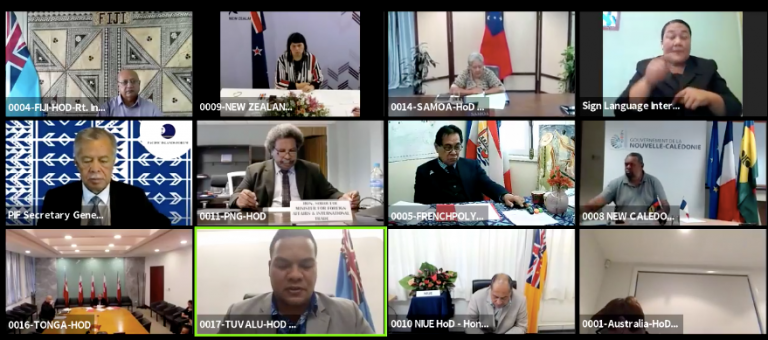
Pacific Foreign Affairs Ministers have concluded their virtual meeting this week reiterating the call that climate change remains the greatest threat facing the region right now.

And while urging for global climate action to speed up not delayed as the world prepares for the United Nations COP26 meeting on Climate Change in Scotland later this year, the Forum ministers also noted with grave concern the impact of the Delta variant of COVID-19 in the region.

The three-day meeting was the final one to be held under the chairmanship of Tuvalu, which had to hold the job longer than the one year tenureship, due to the cancellation of last year’s Pacific Islands Forum meeting because of travel restrictions caused by the pandemic.

Foreign Minister Simon Kofe of Tuvalu handed over the reign to Fiji this week as host of this year’s Forum Leaders’ summit. To be held virtually, Fijian Prime Minister Frank Bainimarama will chair the Leaders’ meeting on Friday next week, 06 August.

Another leaders’ summit is planned for January 2022 to specifically discuss the COVID-19 pandemic.

The Forum Foreign Ministers Meeting’s 9-page outcome statement released to the news media today showed that climate change and the COVID-19 pandemic as leading the concerns of Pacific leaders.

Both Minister Kofe and former Prime Minister of the Cook Islands but new Forum Secretary General Henry Puna declined to specify where Australia stands in the call by foreign ministers for emitters to accelerate efforts to cut green-house gas emissions to keep to the 1.5 degree Celsius goal of the Paris Climate Change Agreement.

Puna is currently undergoing the mandatory isolation requirements at the residence of the Secretary General in Suva, where he has arrived from New Zealand to take up his job.

The Foreign Ministers also took the decision to nominate Rhea Moss Christian of Marshall Islands to be the Forum’s nominee to the International Atomic Energy Authority Taskforce to handle the matter involving Japan’s plans to release treated nuclear waste water to the Pacific Ocean.

The Ministers also agreed that a draft declaration on the work done on the matter of preserving maritime zones in the face of climate change related sea-level rise, together with its Aide-Memoire be submitted to Pacific Islands Forum leaders meeting next week.

SOURCE: PACNEWS

Cocaine worth $2.3m washes up on Vava’u beaches

Cocaine packages with a street value of around $2.3 million pa’anga(US$1 million) have washed up on beaches at Höleva and Ha’alaufuli in Vava’u, triggering a major search for further drugs by Tonga Police and HMAF navy today.

Matangi Tonga Online reports the first packages found by locals were handed over to police last weekend

Vava’uans are being urged to hand over to police any further packages that may wash up in the northern island group of Tonga.

Acting Deputy Commissioner Halatoa Taufa, National Crime and Investigations, Tonga Police, said today that samples had tested positive for cocaine, using tests by law enforcement in Nuku’alofa.

He said that Police, who were still investigating exactly when the first packages were found, were working closely with the Tongan navy, utilising the patrol boat VOEA Ngahau Koula to scour areas of interest in the Vava‘u waters.

“There is possibility that more packages may turn up on the beach and we ask any members of the public to immediately contact Police if they found or knew anyone to have found further drugs,” said Acting deputy Commissioner Taufa.

Tonga Police photos show at least five bricks of cocaine, with another black rubber bag containing a quantity of white powder wrapped in plastic. Taufa said that the weight of the haul was still being measured by police.

“The packages look similar to those that were found in Vava’u before,” he said, referring to the wreck of the JeReVe in 2012.

Taufa strongly reminded that “anyone who has in their possession any of the washed-up drugs and failing to hand over to Police is a serious offence.

SOURCE: TONGA WIRES/PACNEWS

“No rush for Parliament to meet” – Samoa Prime Minister Mata’afa

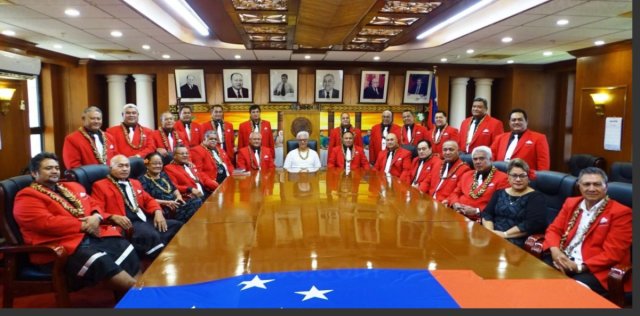
Samoan Prime Minister, Fiame Naomi Mata’afa has announced that there is no rush for Parliament to meet as Cabinet needs more time to screen and review the financial arrangements in place by the caretaker government using an Emergency Budget.

Fiame said last Saturday evening that Parliament was to meet in the first opportunity sometime this week to pass a budget.

When she and Cabinet met the Ministry of Finance last Saturday, she instructed to prepare a budget using article 95 that allows 25 percent of the previous budget to operate until a full budget is prepared for parliament to pass.

However, after Cabinet screened the budget and considered the options over the last two days in office, the Prime Minister said there is no need to rush parliament to meet as Cabinet can pass the budget under article 95.

What she is asking for is a quarter of the previous budget which comes to about $220 million (US$85.3 million) and will be incorporated in the new (full) budget.

“With 25%, there is a figure, but there’s a lack of supporting details even though the processes seemed to be followed for payments under the Emergency Budget,” according to Mata’afa.

As the 2020/2021 budget ended 30 June, government has been operating on an emergency budget for the past two weeks and the Minister of Finance need to sign for this week’s payments that come to about $13 million (US$5 million) operation costs.

Mata’afa explained that Treasury wanted Cabinet to use the budget they have prepared and announced by the caretaker prime minister last month.

“We still want our own Budget to deliver what the FAST Party has in place in its manifesto,” said Mata’afa.

It is why she instructed Treasury to prepare a budget to cover three months while they review the country’s economic and financial position in preparing a full budget.

Mata’afa explained that there are also differences of interpretation as Treasury believes the 25 percent she is asking is of a new full budget. Hence the need for her government to adopt and pass the budget they have prepared.

However, Cabinet is of the view that 25 percent under article 95 is from the previous budget.

Cabinet further screen the budget today, its third day in office.

But Parliament will certainly not meet this week.

“Possibly around September, at the end of the quarter,” said Mata’afa.

She also reminded that 17th Parliament has already convened in the swearing-in ceremony of 24 May that has been declared lawful by the Court of Appeal.

SOURCE: TALAMUA ONLINE/PACNEWS

Report finds COVID-19 impacts unrelenting on the Pacific private sector

0

AUSTRALIA)—The fifteenth Pacific Trade Invest (PTI) Pacific Business Monitor reports that sentiments among the Pacific business decision-makers remain critical and expected timelines for economic recovery are shifting back further.

COVID-19 impacts on Pacific businesses have remained at severe levels since tracking began in May 2020, with between 79 to 92 percent of respondents consistently reporting a negative impact. The recent July survey reinforced this ongoing severity with 84 percent of respondents reporting a negative impact. Of Pacific respondents 33 percent were from the tourism industry, 21 percent were from the agricultural, forestry and fishing industry and 10 percent were from the manufacturing industry.

Compounding the consistent pressures of COVID-19’s impact on Pacific businesses, the expected road to recovery has continued to lengthen. The July survey found that 26 percent of Pacific businesses do not expect a return to business as usual until 2023 or later. This comes in stark contrast to responses from a year ago, where over 42 percent of respondents expected a return to pre-COVID levels by the end of 2021.

Despite ongoing adverse impacts and delayed recovery expectations, the July survey showed stability in optimism among the majority of respondents with 70 percent of Pacific businesses confident their business will survive the COVID-19 crisis, compared to 69 percent last wave.

In line with this resilient outlook, the negative toll on mental health amongst Pacific business decision-makers has decreased significantly, from 65 percent last wave to 53 percent, the lowest level reported since tracking began.

Caleb Jarvis, PTI Australia’s Trade and Investment Commissioner noted that despite the continued impact of COVID-19 on the Pacific business owners, considerable resilience continues to be demonstrated.

“The prolonged duration of the pandemic coupled with the resurgence of COVID cases in both Australia and several Pacific countries has taken an overwhelming toll on the business community. As we fast approach the 18-month mark since borders first began to close, we look to the global community to provide the respite and response needed to ensure the survival of so many Pacific enterprises. The purpose of this data is highlight quantifiable feedback on where assistance is most needed, such as access to finance, new markets, e-business opportunities and cheaper freight options, and to encourage collaborative solution-based innovation.”

To support Pacific exporters in the wake of COVID-19, PTI Australia launched the COVID-19 Freight Assistance Package in late 2020 as an extension of work being done by the Pacific Islands Forum Secretariat to provide tangible relief to businesses during the unprecedented pressures the COVID-19 economic crisis has presented. The Package has now seen over 40 successful applicants receive the monetary grant.

Recipient of the Freight Assistance Package, Fomiza Bano, Pleass Global General Manager says COVID-19 has brought about several challenges, with delays in shipment and increased freight costs impacting the business severely.

“It is very difficult time for our business as sales have dropped in both our local and export markets. Due to port congestion and vessels being fully booked, there are delays in shipment. The cost of importing raw materials and freight costs themselves have increased a lot in the past 6-8 months. This is a cost that we are unable to pass onto our customers”.

Another recipient of the Freight Assistance Package, Sumukh Malankar, Foods Pacific Senior General Manager, believes that whilst the continued impact of COVID-19 is taking a toll on Pacific business, optimism lies ahead.

“Due to the COVID-19 crisis, the situation is not as encouraging as it used to be. Curfew restrictions are affecting business hours for manufacturers. However, we are quite optimistic that things will get better”.

This is the fifteenth wave of PTI’s Pacific Business Monitor survey, a regular report that tracks the impact of COVID-19 across the 16 Pacific Island countries to provide governments, donors and stakeholders with valuable data on the state of businesses in the Pacific in the wake of COVID-19.

As an agency of the Pacific Islands Forum, the role of the PTI Network is to improve the livelihoods of Pacific peoples by facilitating trade and investment into the Blue Pacific

SOURCE: PTI AUSTRALIA/PACNEWS

Hard lockdown would cost Fiji $1billion

0

A hard lockdown for 14 days would cost Fiji $1billion (US$500 million).

Minister for Economy Aiyaz Sayed-Khaiyum said this is based on an estimated loss of $300 million (US$150 million) in Gross Domestic Product and about $600 million (US$300 million) in income support for Fijians.

Sayed-Khaiyum said this is the estimate for the entire country, adding that it does not take into account peoples’ other financial obligations.

“People have rent to pay, they may have mortgage repayments, they may have a Bill of Sale on a vehicle and various other repayments. How will you factor in the cost for the individual?”

Sayed-Khaiyum said it does not make sense to compare lockdowns in Australia and New Zealand because they are a higher-income countries.

“We don’t a society that’s built on a culture of savings. We have people that can sometimes only buy food on a weekly basis or as and when they get paid. It’s okay to sit in the upper-middle class and say I can buy my food for one month and I’m okay. What about the low-income people?”

Sayed-Khaiyum also said that hard lockdowns have not worked in many developed nations and that in most instances, those countries have continued to have supermarkets open and essential services operational.

SOURCE: FBC NEWS/PACNEWS

Stay connected

529FansLike
172FollowersFollow
156SubscribersSubscribe
- Advertisement -