



The World Bank Group is stepping up efforts to mobilise private investment and expand job creation, warning that about 1.2 billion young people will enter the labour market over the next 10 to 15 years when only 400 million jobs are projected to be available.
World Bank Group President Ajay Banga said the projected shortfall of about 800 million jobs required a new approach to development financing, combining public funds, private investment, philanthropy and technology to help countries create jobs at scale.
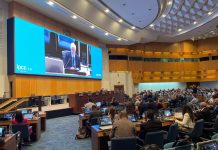
“The challenges were great. Resources were limited. And the World Bank Group needed to face the wind,” Banga said in his address to the 2026 Annual Meetings Plenary in Bangkok, Thailand.
He said conflicts, rising debt burdens, tighter government budgets and high costs for essentials such as energy and fertiliser had made the development challenge more difficult.
“The choices we make today will help determine how” the next generation shapes the future, he said.
Banga said the World Bank Group had reformed its operations to increase financing capacity and improve the delivery of development projects.
Project preparation time had been reduced from 19 months to nine, while changes to its balance sheet had created more than US$100 billion in additional lending capacity for the International Bank for Reconstruction and Development over a decade.
The institution had also increased financing linked to results and strengthened cooperation among its public and private sector teams.
Banga said the reforms were beginning to deliver results in mobilising private capital.
The World Bank Group mobilised about US$35 billion in private capital in the 2022 financial year, before its reform programme began. That figure increased to US$112 billion last year, while total financing, including its own funding, exceeded US$230 billion.
However, he said attracting commercial investment remained difficult in low-income countries, where small and medium-sized businesses were critical to employment and economic growth.
“Our challenge is that in low-income countries, where attracting commercial capital remains hardest, mobilisation held flat,” he said.
The World Bank Group’s new strategy for micro, small and medium enterprises aims to improve access to finance, connect smaller businesses with larger buyers and markets, and simplify regulations to help firms grow.
Banga said job creation depended on three key areas: physical and human infrastructure, predictable regulations and policies, and measures to reduce investment risks.
Businesses needed reliable electricity, water, transport and digital connections, while workers required access to healthcare, education and skills training.
He said the World Bank Group committed US$40 billion last year to infrastructure and human development foundations, representing nearly one-third of its financing.
The institution was also using guarantees, equity and local currency financing to address barriers that discourage private investment.
Banga said technology, including artificial intelligence, could support development if countries had the electricity, connectivity, devices and safeguards needed to use it.
While advanced AI systems required substantial computing power, energy, specialised skills and capital, he said practical AI tools could help farmers improve yields, teachers tailor lessons, health workers make informed decisions and entrepreneurs reach new customers.
He also outlined progress across key development sectors.
Through Mission 300, the World Bank Group and the African Development Bank aim to provide electricity access to 300 million people in Africa by 2030. Banga said 59 million people had gained access so far.
The World Bank Group is also working towards improving water security for up to one billion people by 2030, supporting 200 million smallholder farmers through agricultural initiatives, and expanding access to quality, affordable health services to help reach 1.5 billion people through HealthWorks.
Banga said the institution was working with development partners to expand investment in critical minerals and economic corridors, helping countries develop local industries and retain more jobs and economic value.
He said six multilateral development banks were also developing common approaches to assess, package and transfer investments, allowing projects initially financed by development banks to attract other long-term investors.
The approach would free up development finance for new projects while encouraging greater participation by pension funds, insurers and sovereign wealth funds.
Banga said development was not simply about providing financial assistance but about creating opportunities for countries to become more economically self-sufficient.
“A job is not a statistic. A job is dignity,” he said.
He warned that failing to create opportunities for young people could have consequences beyond national borders, while investment in jobs would benefit countries across the world.
“The jobs gap is a projection. It does not have to be our future.
“We have begun to show what this model can deliver. Now we must give it the scale and pace the next generation demands,” Banga said.