


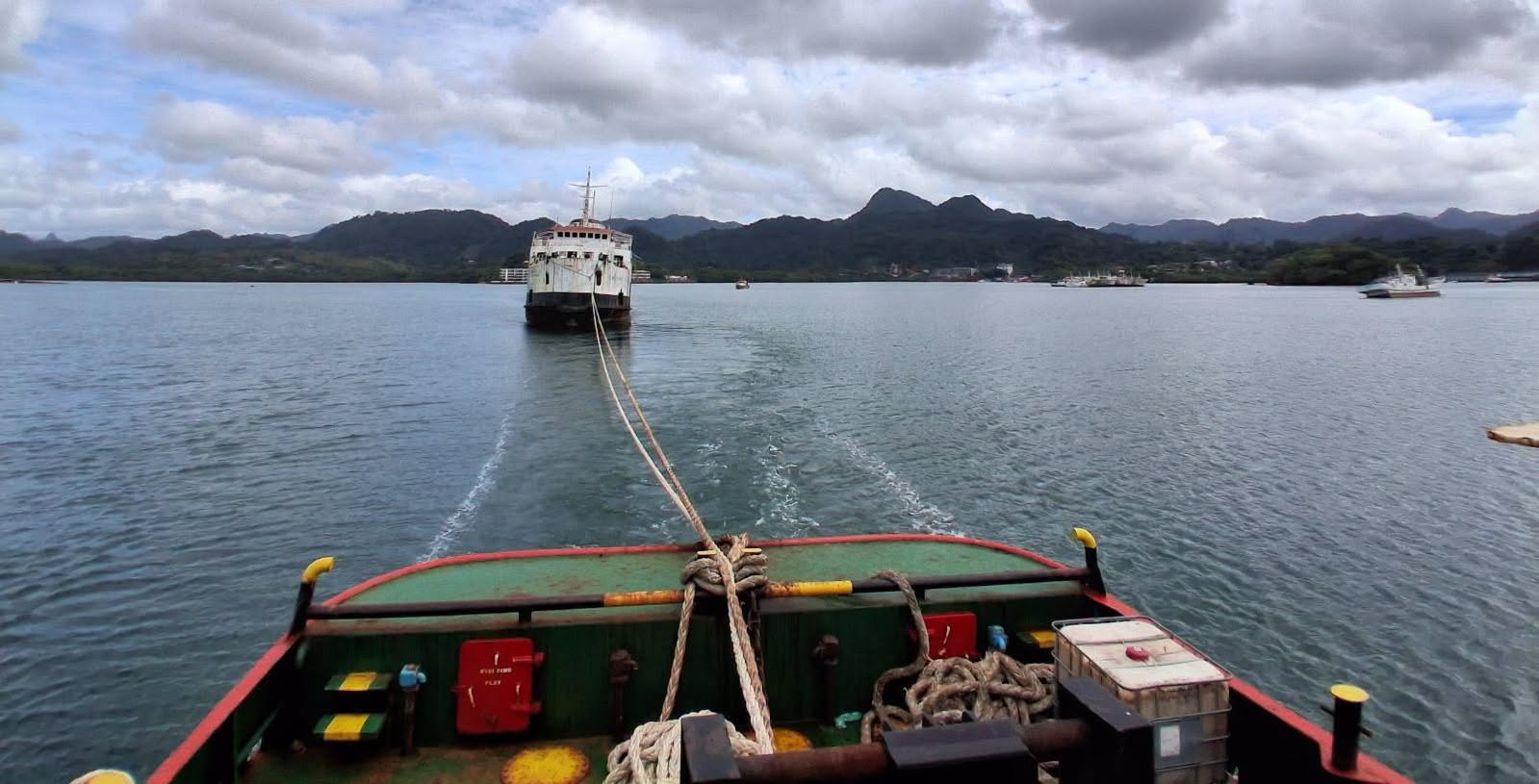
Fiji is advancing plans to establish a shipbuilding and ship repair facility in Lautoka, with a feasibility study estimating capital costs at FJD$792 million (US$396 million).
Cabinet has endorsed the findings of the feasibility study, which identified Lautoka as the preferred location because of its proximity to existing port infrastructure and the availability of land.
The study projects the facility could generate FJD$2.7 billion (US$1.35 billion) in revenue against operating costs of FJD$2.4 billion (US$1.2 billion) over 30 years.
It recommends a public-private partnership (PPP) model to attract private sector financing and expertise, reduce the Government’s financial exposure and support the project’s long-term sustainability.
A phased approach prioritising ship repairs before expanding into shipbuilding is also recommended. This would allow operations to become established while developing the skills and capacity of the local workforce.
The Australian Government has indicated support for the next phase of the project through technical, legal and financial assistance for the procurement process.
Further engagement with the Australian Infrastructure Financing Facility for the Pacific (AIFFP) is expected to help facilitate the transaction and identify a suitable private sector partner.
The proposed facility is expected to attract foreign investment, create jobs, strengthen local industries and supply chains, and support the transfer of skills and technology to Fijian workers and businesses.
In the longer term, the project aims to strengthen Fiji’s maritime capabilities and position the country as a regional centre for shipbuilding, vessel repairs and maritime services across the Pacific.
Meanwhile, Fiji will strengthen protection of its maritime domain under a new national strategy aimed at improving coordination, addressing emerging security threats and safeguarding critical infrastructure.
Cabinet has endorsed the Fiji Maritime Security Strategy 2026–2035, which establishes a framework for an integrated national maritime security system.
The strategy recognises the importance of maritime security to Fiji’s economy, with more than 96 percent of the country’s trade moving by sea.
It identifies key threats and vulnerabilities, including transnational crime, illegal fishing, sovereignty challenges, climate and environmental risks, cyber threats and weaknesses in critical maritime infrastructure and institutional coordination.
The strategy is built around seven strategic pillars covering maritime governance, intelligence sharing, coordinated operations, infrastructure resilience, environmental security, cyber resilience and regional cooperation.
It also proposes establishing a Maritime Senior Officials Committee to oversee implementation, coordinate government-wide policy and monitor progress.
Implementation will take place in three phases, beginning with governance arrangements and foundational reforms, followed by capability development and operational integration, before moving towards long-term maritime resilience.
Delivery will use existing Government structures and remain subject to annual planning, budgeting and appropriation processes.
The strategy is expected to strengthen the protection of Fiji’s maritime resources and critical infrastructure, support resource-owning communities and improve regional and international cooperation.
It also aims to reinforce Fiji’s role as a maritime security partner in the Blue Pacific.