
National Competent Authorities play an important role in ensuring that fishery products meet the food safety and quality requirements of export markets.
A two-week training programme underway in Suva is helping officers from six Pacific countries strengthen their understanding of these requirements and how they apply in practice.
The National Competent Authority (CA) Officer Training Programme covers European Union (EU) requirements for fishery products, including EU and National standards and regulations, inspection and auditing, traceability, certification, and the responsibilities of national Competent Authorities.
For Pacific countries exporting, or looking to export, fishery products to the EU, meeting these requirements is an important part of ensuring products meet the necessary health and safety standards.
Under the EU regulatory framework, Competent Authorities are responsible for ensuring that the required systems are in place and working effectively across the seafood supply chain (from vessel to export).
This is to ensure that the fish and fishery products caught and or produced, processed, heat-treated, frozen, packaged, stored and transported in accordance with the applicable EU/National requirements; originate from an approved establishment; have been handled hygienically under appropriate HACCP-based procedures and official controls; and comply with the applicable public health, microbiological and other relevant food safety requirements for entry into the European Union or any Non EU markets like the PRC.
Pacific Islands Forum Fisheries Agency (FFA) Market Access Specialist Ratu Jope Tamani who is leading the training said officers need to understand the requirements and how to apply them in their day-to-day work.
“Competent Authority officers have an important responsibility in that the right effective systems are in place, from fishing vessels and processing facilities through to traceability and certification. The training gives participants an opportunity to strengthen their knowledge and better understand what is required of them,” said Tamani.
“Compliance for an NCA officer means ensuring that the right systems are in place, requirements are met, and every official control is supported by verified evidence,” he adds.
Understanding the fish behind the regulations
Thursday’s session, led by Tamani, focused on the fish itself and why this knowledge is important in inspection work.
Through practical examples and group exercises, participants learned about commercially important tuna species found in the Pacific, including skipjack, yellowfin, bigeye and albacore. They also looked at fish anatomy and the signs that can help inspectors assess freshness and quality, including the eyes, gills, skin and flesh.
The session covered how handling, temperature control, processing and storage can affect fish quality and safety, as well as the importance of managing histamine risks in tuna.
“As fish inspectors, you need to understand the fish we are dealing with, not just the regulations. Being able to identify different species and recognise signs of freshness and quality helps you make better-informed decisions during inspection,” said Tamani.
“You cannot effectively regulate what you do not understand. NCA officers must understand the fish, the fishing operations, handling, processing, and supply chain before they can effectively verify compliance and enforce the regulations.”
The session highlighted how the condition of fish can be affected at different stages, from capture and handling on board vessels through to processing and export. This practical knowledge complements the regulatory understanding officers need to carry out their responsibilities.
For FFA Members, having officers who understand these requirements and can carry out effective inspections is important for protecting consumers and maintaining confidence in Pacific fishery products. It also supports countries working to meet the requirements of international markets.
For Iasep Tui, a Fisheries Officer with the Tuvalu Fisheries Authority, the training has provided useful knowledge for his work at home.
“This training has given me the knowledge and skills I need to do my job better in Tuvalu, particularly in identifying non-compliance during vessel inspections and desktop audits, and understanding EU requirements,” he said.
Connie Tuvui, an Audit Certification Officer with the National Fisheries Authority in Papua New Guinea, said the sessions had also helped her reflect on the challenges she faces in her work and how to address them.
“The training has helped me better understand what inspections and audits really involve, and the responsibilities that come with them. It has also highlighted some of the challenges I face in my country and what I need to do, with the support of my team, to improve the way we carry out our work,” she said.
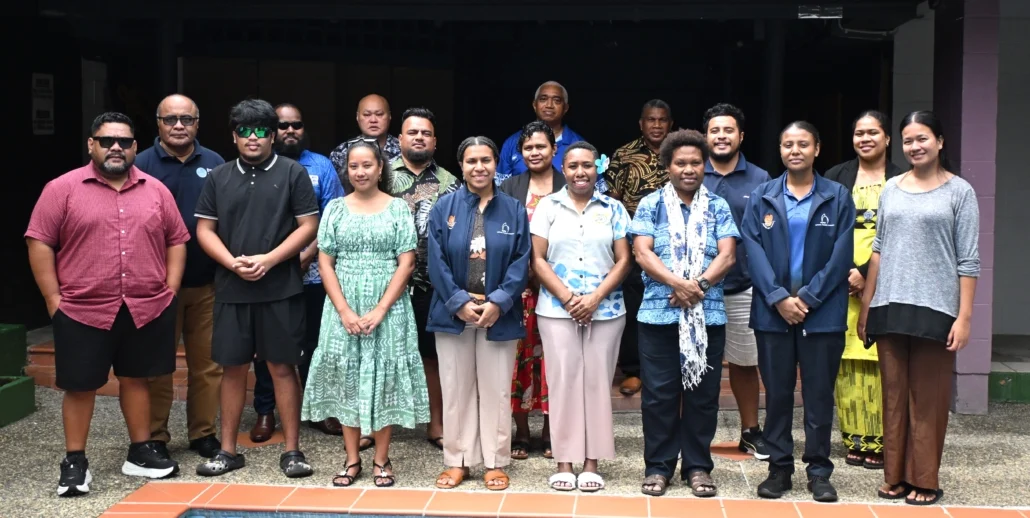
Around 15 officers – nine women and six men – are participating in the first week of training. They represent Papua New Guinea, Kiribati, the Marshall Islands, Tuvalu, Vanuatu and Fiji.
Other parts of the training cover the roles and responsibilities of Competent Authorities, the ethics and competencies expected of officers, EU regulations, auditing procedures, microbiology, food-borne illness, Hazard Analysis and Critical Control Points (HACCP), traceability and certification.
Participants will also visit fresh and frozen fish processing facilities and landing sites to see how the requirements covered in the classroom apply in practice.
The programme also covers the different purposes of health and catch certification. Health certification addresses applicable food safety and public health requirements, while catch certification relates to the legality of catches and efforts to prevent illegal, unreported and unregulated (IUU) fishing.
The training is organised by the Pacific Islands Forum Fisheries Agency (FFA) through the EU-funded Pacific-European Union Marine Partnership Programme (PEUMP II).