



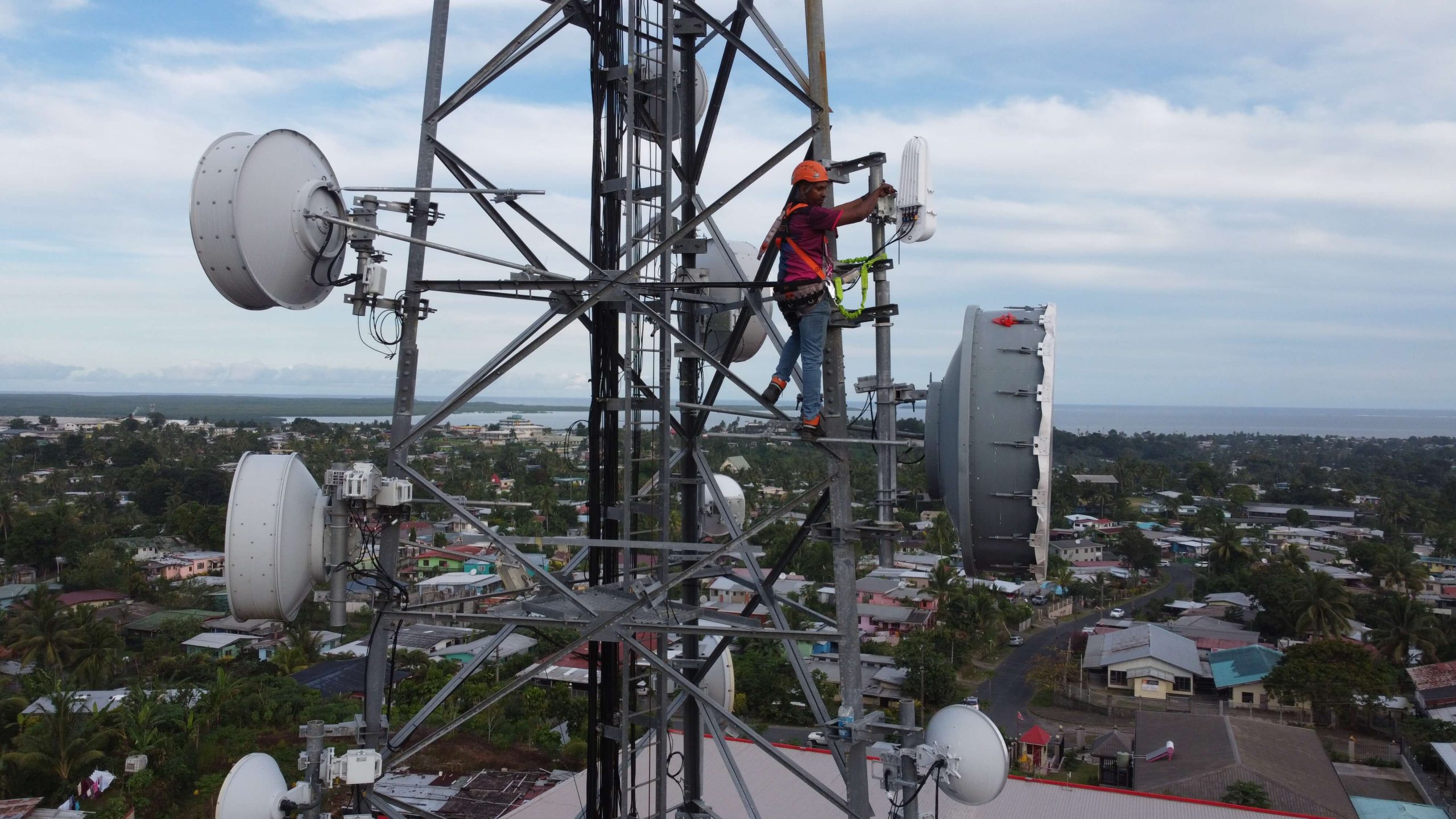
Nearly two-thirds of people in the Pacific Islands remain without mobile internet access despite expanding network coverage, highlighting affordability and digital skills as major barriers to connectivity.
A new report by GSMA Intelligence, commissioned by the Asian Development Bank (ADB), estimates mobile internet usage in the Pacific Islands at just 36 percent, compared with 93 percent in East Asia.
The report, Closing the Mobile Connectivity Gap in Developing Asia Pacific, says 1.2 billion of the 4.3 billion people living across developing Asia and the Pacific remain offline, accounting for 46 percent of the world’s unconnected population.
Although 98 percent of the region’s population lives within reach of a 4G network, about 1.1 billion people who have access to broadband coverage are not using mobile internet.
The report identifies device affordability, limited digital skills, safety and security concerns, and a lack of relevant online content as key barriers preventing people from connecting.
The Pacific Islands face additional challenges in network coverage, with a coverage gap of 16 percent. The region also has a significant technology divide, with 59 percent of mobile internet users relying on 2G feature phones or 3G smartphones rather than 4G or 5G devices.
The report found that women across developing Asia and the Pacific are 12 percent less likely than men to use mobile internet, while people in rural areas are 25 percent less likely to connect than those in urban areas.
The gender gap is particularly pronounced in the Pacific Islands and South Asia, where women are more than 25 percent less likely to use mobile internet than men.
GSMA Chief Regulatory Officer and GSMA Foundation President John Giusti said closing the mobile internet usage gap was essential to development, with demonstrated benefits for poverty reduction, education, healthcare and economic growth.
He said progress would require policies that encouraged investment, alongside coordinated efforts to address the barriers preventing people from getting online.
The report warns that developing Asia and the Pacific could fall 18 percentage points short of the International Telecommunication Union’s 2030 universal connectivity target without additional investment.
It estimates that US$316 billion in investment will be needed across the region to meet the target. Of this, US$132 billion is expected to come from the private sector and consumers, leaving a funding gap of US$184 billion.
Governments and regulators will need to introduce investment-friendly policies and explore additional financing to improve device affordability, strengthen digital skills and expand network capacity.
Closing the 4G connectivity gap by 2030 could generate an estimated US$230 billion increase in gross domestic product across developing Asia and the Pacific, the report says.
Universal connectivity could also improve access to education and healthcare, reduce poverty, strengthen humanitarian assistance and lower carbon emissions.
The report calls for coordinated action by governments, regulators and private-sector operators to expand network infrastructure, make devices more affordable and improve digital skills to ensure more people can benefit from mobile internet access.