By Pita Ligaiula in Koror, Palau
The Pacific Resilience Facility (PRF) is taking 14 community projects to the global climate stage as it prepares for Pacific pre-COP meetings in Fiji and COP31 in Turkiye, seeking to show investors that the Pacific-owned climate finance facility is no longer just a concept.
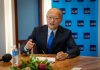
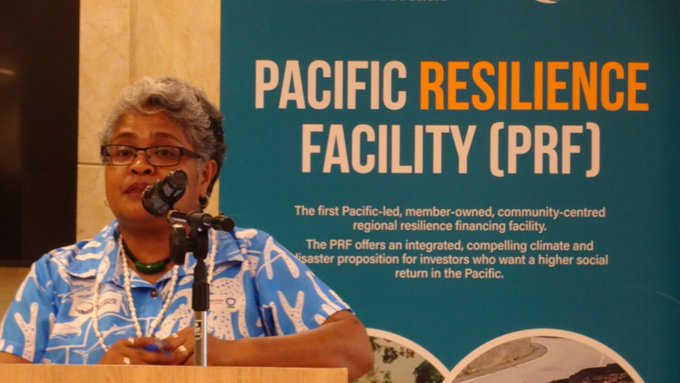
Finau Soqo, General Manager of the Pacific Resilience Facility (PRF), told the Pacific Media in Palau that the projects were part of an effort to demonstrate how the facility can deliver funding directly to communities.
Each participating member has been allocated up to US$20,000 for Community Impact Demonstration Projects.
“So now the PRF is not just a concept or an idea or a vision.
“It is actually a reality,” Soqo said.
The projects will be showcased during the Pacific Islands Forum Leaders’ Meeting, at Pacific pre-COP events and at COP31.
Soqo said 14 Community Impact Demonstration Projects had so far been nominated by PRF members.
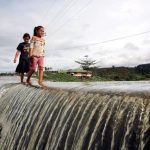
The projects cover water security, food production, coastal restoration, sanitation, renewable energy and community resilience.
In Palau, two projects have been selected, including a water project implemented by the Coral Youth Council and the revival of traditional planting practices.
Tuvalu has nominated a women-led water resilience project in Funafuti.
Fiji is supporting rainwater harvesting, including 22 water tanks for a community vulnerable to drought and climate-related disasters.
The Marshall Islands is supporting water storage and water quality monitoring on two remote islands affected by recurring drought.
Nauru’s projects combine household rainwater harvesting with solar lighting to improve safety for women accessing water at night.
In Kiribati, water projects will support two schools, including a disability school.
Tonga is supporting community-led restoration of native coastal trees, including endangered mangrove species.
Niue is supporting household gardens and the revival of traditional crops that are more resilient to climate change and disasters.
In Solomon Islands, projects include community sanitation, waste management and climate resilience activities.
Other projects are also being developed in countries including the Federated States of Micronesia, Cook Islands and Papua New Guinea.
The PRF manager said member governments had shown increasing confidence in the pilot approach.
“As we have continued with our implementations, we’ve gained confidence from members too.
“They saw that the projects are not wrong, and they have also expressed their willingness to be part of the pilot project.”,” she said.
Soqo said the Community Impact Demonstration Projects were also testing how the PRF would operate before scaling up.
The facility is developing three grant packages during its pilot phase.
The first is the COP31 Community Impact Demonstration Projects.
The second is a disaster community resilience pilot window, currently planned to operate from 01 November to 30 April, although some members have suggested it should remain open throughout the year.
The third package will support larger pilot projects through a call for proposals.
Soqo said the pilot phase would test the PRF’s ability to move money quickly while maintaining proper safeguards and reporting.
“We’re piloting the approach, the engagement approach, the interface with our members, how money flows, how money flows to partners, how we onboard partners, how quickly we can get the money out and how quickly we can implement,” she said.
The facility is also developing policies for community engagement, grants, partner onboarding and disability inclusion.
Soqo said Pacific climate ministers had asked whether the PRF could support renewable energy and the climate-ocean nexus.
“Absolutely,”she said.
The PRF’s core business is providing small grants, but Soqo said these could support renewable energy projects, coastal communities and fisheries-related livelihoods where there was an unmet financing need.
She said consultations across 13 Pacific members had shown that communities were often ready to move faster on renewable energy because the need was immediate.
Projects could include solar-powered water pumps, solar equipment for fishers and solar-powered refrigerators to protect vaccines in remote communities.
But Soqo said financing equipment alone was not enough.
Communities also needed access to training and after-sales support so equipment could be maintained and repaired.
On ocean finance, Soqo said the PRF could potentially play a wider role as an international financial institution.
“The PRF can actually be the first.
“We can actually issue the first regional blue bond in the region,” she said
The Government of Palau has offered US$1 million from its Green Climate Fund(GCF) readiness allocation to support the preparation of community project pipelines for the PRF.
Soqo said discussions were continuing with the Green Climate Fund, the Pacific Community and other partners on how the funding could be used.
The funding is not intended for capitalising the PRF itself.
Instead, it would help prepare a pipeline of community projects.
Soqo acknowledged that the proposed arrangement was unusual.
“We’re in discussion with GCF. “It is definitely not for capitalisation,” she said.
He said the focus was on ensuring that any use of GCF readiness funding complied with the rules governing the facility.
Soqo said the PRF did not intend to seek accreditation as a Green Climate Fund entity in the short to medium term.
She said the decision was based on a clear mandate from Pacific leaders.
“The mandate from leaders is very clear that we have to focus on getting grants to communities.
“That is the instruction — get the grants to communities,” she said.
Soqo said Pacific regional agencies had already invested years and significant resources in obtaining accreditation from global climate funds.
The PRF should instead concentrate on what it was specifically established to do.
“We really want to just be focused on that, which is deliver small grants to communities, do it well, do it fast, do it properly,” she said.
The PRF has received US$10 million in deposits so far, despite having secured US$173 million in pledges.
Soqo acknowledged that collecting pledged money was now one of the facility’s major challenges.
Japan, Canada, Ireland and Nauru are among those that have already paid into the facility.
Australia, New Zealand, France, the Marshall Islands and Solomon Islands are among governments processing contributions or preparing to make payments.
Soqo said the United States had appropriated US$20 million and discussions were continuing on its contribution.
The PRF is also working to secure payment of the pledge from Saudi Arabia.
“We have US$10 million in the bank.
“I know it doesn’t seem like a lot, but between now and December, we’ll see maybe half of that being collected,” Soqo said
The PRF has set a target of collecting 100 percent of pledged funds.
“Our target is to collect 100 percent,” Soqo said.
Soqo said the PRF had learned from the pattern of earlier pledges that relying on many small contributions could slow the capitalisation process.
The facility is now seeking fewer investors but larger contributions.
A new capitalisation effort is being strengthened with additional expertise, including the involvement of former Fiji Ambassador to the UN, Dr Satendra Prasad.
Soqo said the PRF was now legally established and fundraising efforts were moving into a more serious phase.
“The focus now is to focus on fewer investors, but larger pledges,” she said.
She said the Community Impact Demonstration Projects were important not only for communities but also for building investor confidence.
The PRF needs to show potential investors where their money will go and how it will be used.
“The most important thing is that they need to see where the money is going,” Soqo said.
She was also questioned about the operational cost of running the PRF and how the facility would sustain itself while its capital base was still growing.
She said the PRF’s latest projection for its annual operating budget was about US$5 million.
The operating model would include an access-to-finance fee paid by members, which would cover part of the operational expenses.
The facility would also generate income from investments.
Soqo clarified that the management fee would be charged against investment income rather than the PRF’s capital.
She said the facility’s financial model was designed to ensure it could eventually sustain its own operations while protecting its capital base.
The PRF is also developing a lending sub-fund that could allow it to work with public and private capital, philanthropic organisations, multinational institutions and global climate funds.
Soqo said the model could create opportunities for co-financing beyond the PRF’s core community grant programme.
For Soqo, the immediate priority is to prove that the PRF can move money to Pacific communities quickly without compromising financial safeguards.
The 14 projects now underway will provide the first major test.
The projects will also be used to demonstrate the PRF’s purpose to Pacific leaders and international investors ahead of COP31.
The facility was created to fill a gap between large international climate funds and communities that often struggle to access them.
The challenge now is to show that a Pacific-owned institution can deliver.
“We have to do it well, do it fast, do it properly.
“Not just push the money out and not do the reporting properly,” Soqo said.