
By Pita Ligaiula in Koror, Palau
Pacific Islands Forum Leaders will next week consider major decisions on regional architecture, political leadership, security, partnerships and regional response mechanisms as the Forum moves towards the next phase of reforms.
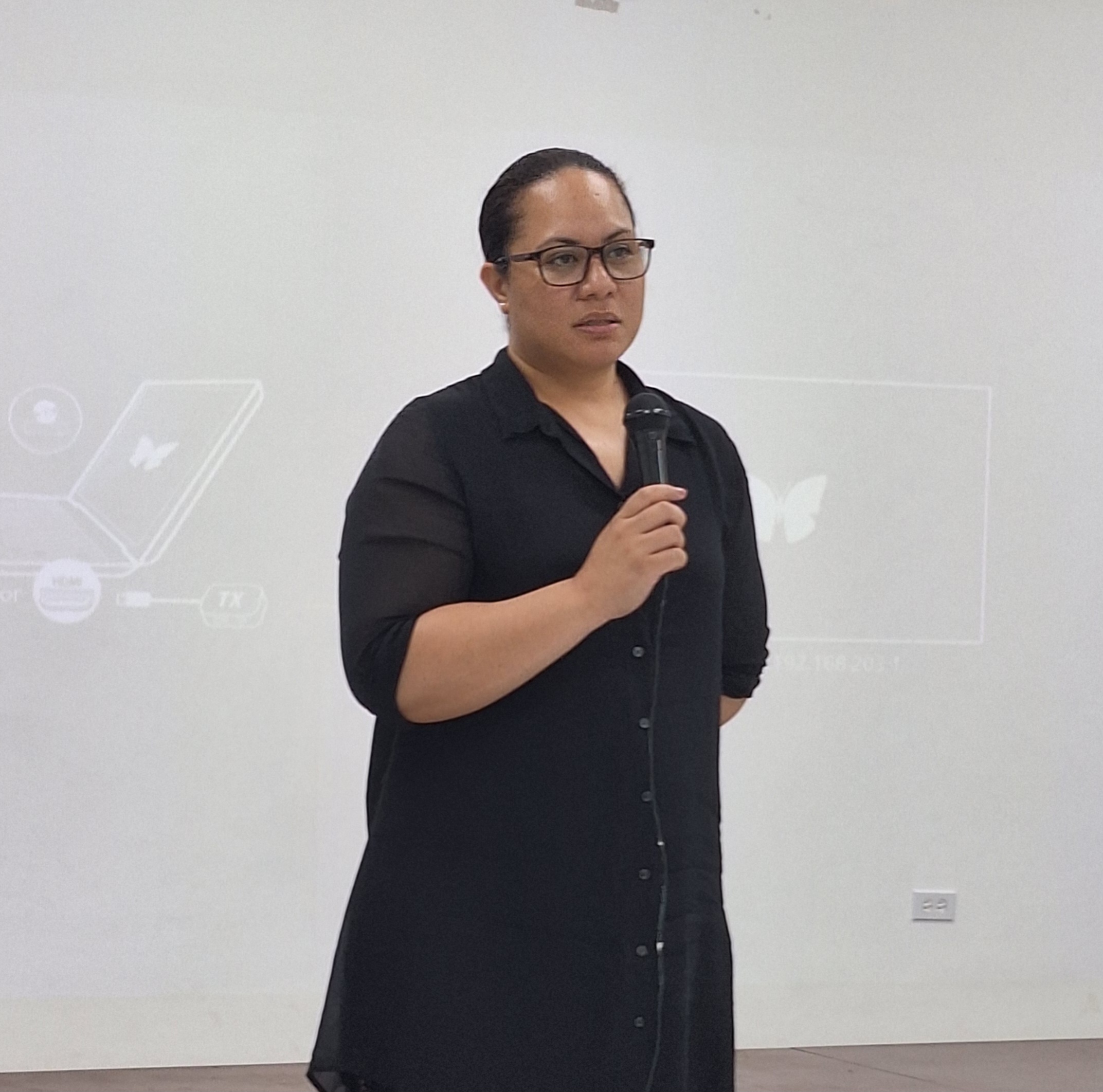
Pacific Islands Forum Secretariat Director for Governance and Engagement, Dr Salome Taufa, outlined the key issues during a presentation to Pacific journalists attending the regional media workshop in Palau ahead of the 55th Pacific Islands Forum Leaders’ Meeting.
Dr Taufa said the leaders’ agenda was the result of a long process involving Forum committees, subcommittees, sectoral ministerial meetings and the Forum Foreign Ministers’ Meeting.
“We’ve been working on the agenda for years. A lot of the issues are not new issues,” Dr Taufa said.
She said the Forum’s governance system ensured that major regional priorities were considered at different levels before reaching leaders.
Dr Taufa said issues were first considered by Forum subcommittees and senior officials before moving through ministerial meetings.
Economic and financial issues are considered by Economic Ministers, while trade matters move through Trade Ministers before converging at the Forum Foreign Ministers’ Meeting.
The Foreign Ministers’ Meeting is the final political stage before major issues are presented to Forum Leaders.
“The point of convergence on the way to leaders is the Foreign Ministers, and now those issues will be presented to leaders for consideration next week,” Dr Taufa said.
The leaders’ agenda is structured around the seven thematic areas of the 2050 Strategy for the Blue Pacific Continent.
Dr Taufa said this framework allowed leaders to consider a wide range of regional priorities under a common strategy.
One of the major agenda items will be the Review of Regional Architecture (RRA), which has been under discussion for several years.
Dr Taufa said the review is being carried out in four phases and is now approaching the end of its third phase.
“We’re at the tail end of phase three, and phase four will be the implementation phase.
“We’re hoping that all of the reviews will be done and the outcomes of those reviews will be considered by leaders,” she said.
The outcomes of the third phase are expected to be presented to leaders, paving the way for implementation under phase four.
A key issue under the regional architecture review will be the Forum’s partnership mechanism.
Taufa said senior officials had been assessing the Forum’s partnerships and working with development and dialogue partners to gather information that would guide the implementation of the Leaders’ Policy on Partnerships endorsed last year.
“The senior officials have been conducting this assessment of partners and they’ve been working with partners.
“Thanks to our partners, they’ve been very collaborative. They’ve been cooperating with us and our members in providing all the information that we asked for to undertake the exercise.,” Dr Taufa said.
The outcome of the assessment will be presented to leaders during their retreat.
Dr Taufa said the work would help determine how the Forum implements the policy endorsed by leaders.
Leaders will also consider recommendations related to the Forum’s regional response mechanisms.
Dr Taufa said consultations had continued following a report by a high-level political group which carried out consultations last year.
Some recommendations required further discussions among Forum members.
The Forum Troika was tasked with overseeing the process and established a review committee to conduct the additional consultations.
“This year, at the retreat, the outcome of that report will be presented to leaders for their final consideration,” Dr Taufa said.
Regional security will also be a major item for Forum Leaders.
Dr Taufa said leaders would consider the Peace and Security Action Plan, which aims to bring together the Forum’s various regional security policies under a single framework.
The action plan is linked to the implementation of the Boe Declaration and its broader regional security agenda.
“The action plan consolidates all the security policies into a single action plan, and that is something that leaders will consider this year,” she said.
Renewable energy is also expected to receive significant attention following concerns over the Pacific’s dependence on imported fuel.
Dr Taufa said the issue gained greater urgency following the energy crisis earlier this year, when regional response mechanisms were activated to help countries monitor and respond to the impact of fuel disruptions.
The crisis highlighted the vulnerability of Pacific economies to external shocks.
“That crisis has brought to the fore our high dependency on imported fuel and how unsustainable it is for us,” Dr Taufa said.
She said the crisis had reinforced the need for Pacific countries to accelerate the transition to renewable and alternative energy sources.
A proposal from a joint meeting of Pacific Energy and Transport Ministers on the terms of reference for a Renewable Energy Commissioner will also be presented to Forum Leaders.
Dr Taufa said leaders would also consider other regional priorities, including the Kava Declaration.
She said the initiative was linked to Pacific efforts to diversify economies and increase the value of key regional products.
“One of the things that we have learned from COVID is the need to diversify and not put all our eggs in one basket,” she said.
Dr Taufa said there was increasing global demand for kava and Forum members were working to protect and promote the product as an important Pacific economic resource.
Climate issues will also be high on the agenda, including a regional climate declaration which officials have endorsed for consideration by leaders.
Pacific preparations for pre-COP and COP31 will also be discussed.
Dr Taufa said the region was preparing to use the meetings to bring international leaders to the Pacific and demonstrate both the region’s vulnerability to climate change and its resilience.
“It’s a once-in-a-lifetime opportunity for us to showcase what it is that we have here in the Pacific,” Dr Taufa said.
“Not only our vulnerabilities, but also demonstrate our resilience.”
With leaders set to meet in Palau next week, Dr Taufa said the volume of work reflects the broad range of political, economic, security and development challenges facing the region.
The 55th Pacific Islands Forum Leaders’ Meeting is expected to consider decisions that will shape the next phase of regional cooperation and the implementation of the 2050 Strategy for the Blue Pacific Continent.