

By Pita Ligaiula in Koror, Palau
Palau Minister of Agriculture, Fisheries and the Environment, Steven Victor says stronger regional monitoring and surveillance is essential to protect Pacific fisheries and the economies that depend on them, warning that individual island countries cannot detect every activity taking place across their vast waters.
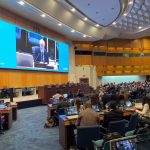
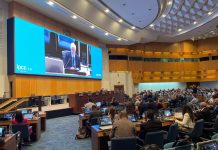
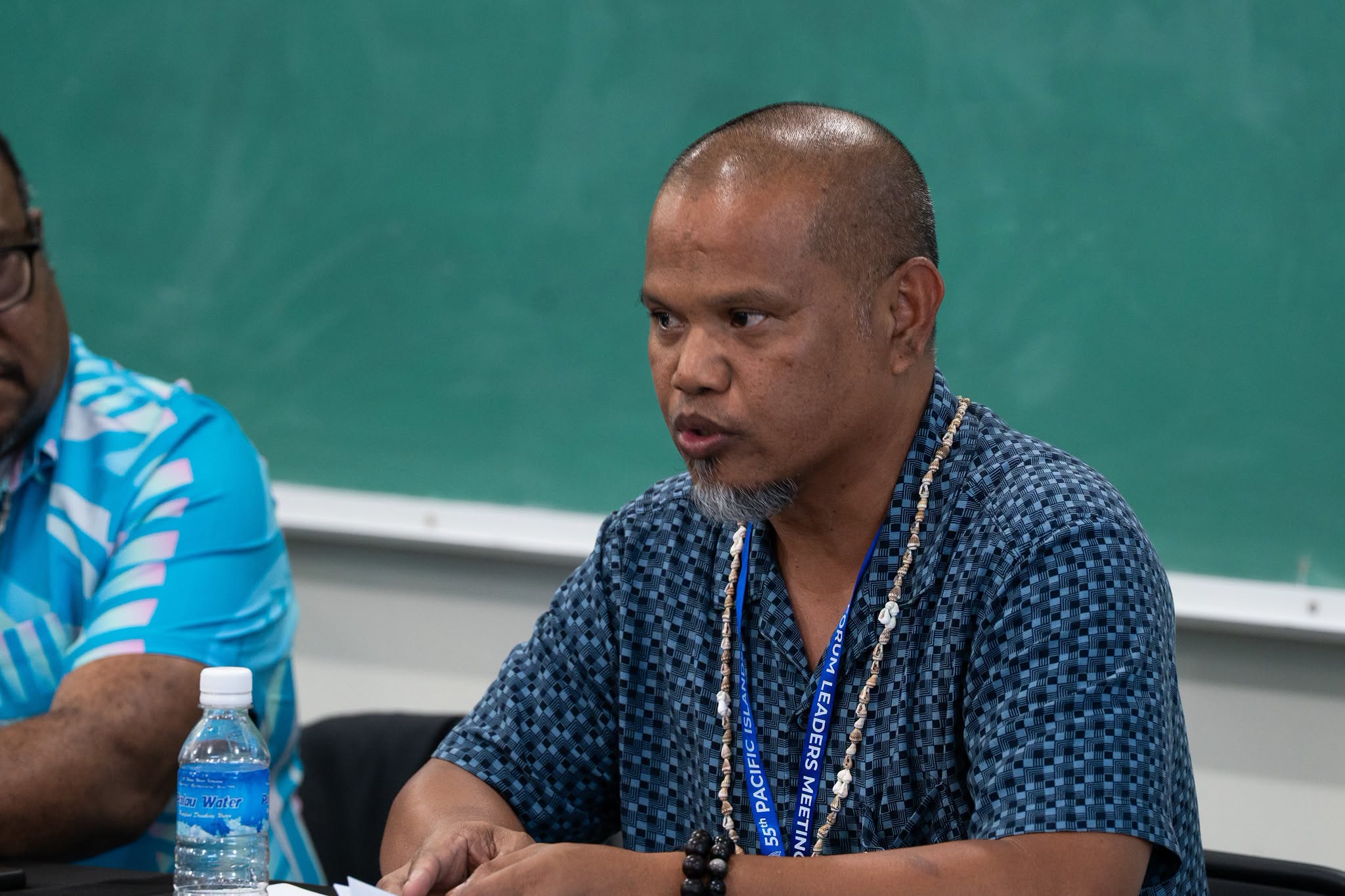
Speaking during a panel discussion at the Forum Fisheries Agency side event, Securing Our Blue Pacific: Integrated Monitoring, Control and Surveillance and the Future of the Regional Fisheries Surveillance Centre,” Victor said protecting the ocean was ultimately about protecting livelihoods and prosperity.
“Why do we care so much about securing a vast ocean when many of us don’t really get to see what’s happening within those waters,? Victor asked.
“Is it just about securing our borders, or is it just about ensuring that we know what’s going on?
“I think it is about securing our livelihoods. It is about securing our prosperity,” Victor said.
Victor said fisheries resources were central to the economies of Pacific Island countries, making effective monitoring, control and surveillance a critical responsibility.
“The very resource that we spend so much resources managing and enforcing is the basis for many of our economies,” he said.
But he warned that Pacific countries continued to face losses because of their inability to detect every activity taking place across their exclusive economic zones.
“We know there is a big loss because we cannot detect every activity that is happening in our exclusive economic zones,” Victor said.
For Palau, where 80 percent of its exclusive economic zone is closed to commercial fishing, the management and protection of its marine resources is particularly important.
“Many of you know that 80 percent of our exclusive economic zone is closed from commercial fishing,” Victor said.
Palau holds vessel days for fishing access under the regional vessel day scheme, and Victor said partnerships with other Pacific countries had helped Palau generate revenue from those arrangements.
He thanked Papua New Guinea for its partnership with Palau.
“For the last two years, Palau was able to generate some revenues because of the partnership with Papua New Guinea,” he said.
Victor said Palau had benefited from monitoring, control and surveillance partnerships with several countries and organisations.
He said Australia had provided a major maritime vessel asset and maritime advisers, while the Nippon Foundation had supported vessel capacity-building and resources.
Palau had also received maritime support from Taiwan, while cooperation with the United States, including the U.S Coast Guard, and Japan had strengthened Palau’s ability to monitor activities across its waters.
But Victor said those assets alone were not enough.
“They’re not enough because the threat is evolving.
“They’re not there every day,” he said.
The challenge, Victor said, was to integrate different forms of surveillance rather than relying on a single asset.
Victor said Pacific countries needed to combine on-water, aerial and technology-based surveillance systems.
“An integrated approach” was needed, using “on-water assets such as vessels, aerial assets such as airplanes, drones and technology, satellites,” he said.
The FFA’s regional fisheries monitoring systems also provided information on fishing vessels and other large vessels operating across Pacific waters.
But Victor warned that some vessels deliberately attempted to avoid detection.
“We know there are bad actors out there.
“Some of them turn off their AIS so we don’t know where they are,” he said.
He said vessels deliberately switching off their Automatic Identification System(AIS) signals raised serious concerns.
“This is important because they’re the ones who are doing illicit activities,” Victor said. “That’s the only reason why they turn off their AIS.”
Victor said advanced satellite technology could help Pacific countries identify suspicious activity, but it remained expensive and required specialist skills.
“Satellite technology can be very expensive. It requires upskilling of capacity,” he said.
He said this was where the Regional Fisheries Surveillance Centre could provide critical support to smaller Pacific Island countries.
“The Regional Fisheries Surveillance Centre comes into play by providing some of that capacity,” Victor said.
The Centre, he said, could help countries such as Palau overcome limitations in personnel, technology and financial resources.
“It enables a small island like Palau, with limited capacity and resources, to be able to augment what we’re doing,” he said.
Victor’s remarks reinforced calls made during the Forum side event for greater investment in a modern, integrated and technologically advanced Regional Fisheries Surveillance Centre to strengthen Pacific countries’ ability to protect their fisheries and sovereign waters.
For Palau and other small island states, he said, the issue went beyond borders and surveillance.
“It is about securing our livelihoods,” Victor said. “It is about securing our prosperity,” he said.