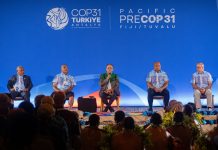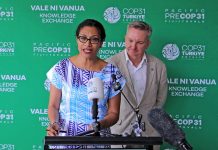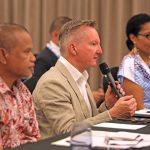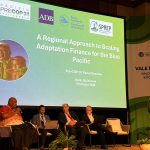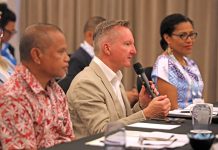
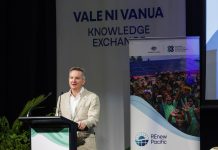
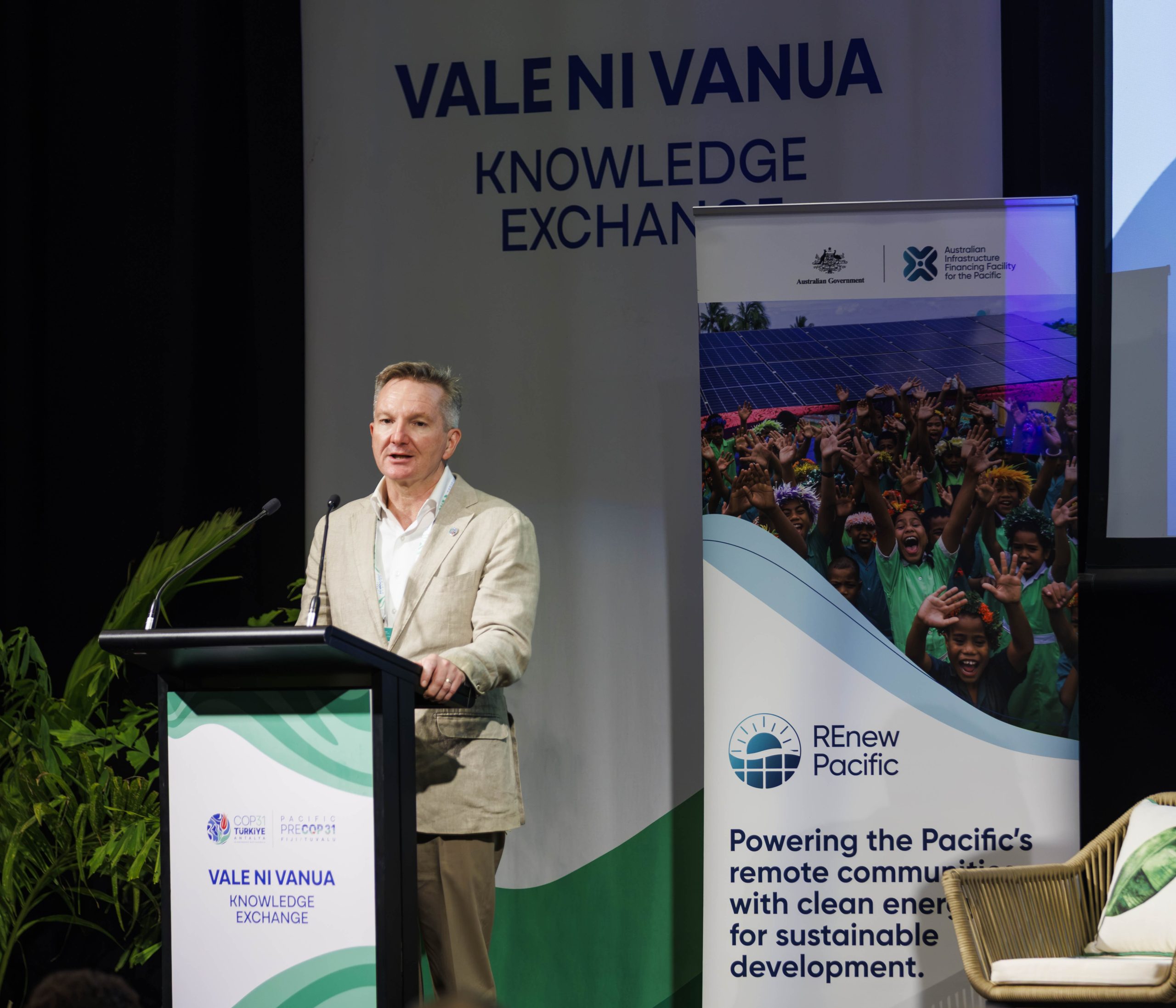
Energy Minister Chris Bowen says an estimated $20 million(US$13.93 million) taxpayer price for the pre-COP climate summit in Fiji is the cost of diplomacy in the region, despite only two non-Pacific leaders confirming they would show up for the event’s key meeting in neighbouring Tuvalu.
The four-day summit, which kicked off on Monday, is expected to be attended by around 4000 climate bureaucrats and advocates, but the government has struggled to lock in heads of state for a concurrent leaders event on Tuesday in the atoll state.
Turkey’s President and Environment, Urbanisation and Climate Change Minister Murat Kurum meets with Australia’s Minister for Climate Change Chris Bowen. Turkey will host its own leaders event before the main COP summit in November.
Prime Minister Anthony Albanese will attend the Tuvalu event alongside 14 heads of government or state, the majority of whom represent Pacific Island nations, as well as journalists and officials from international bodies such as the Asian Development Bank (ADB) and Green Climate Fund (GCF).
Bowen on Monday confirmed that only two non-Pacific leaders would attend the Tuvalu event – the prime minister of Mauritius and the president of Timor-Leste. Around 50 countries had sent representatives to the summit in Nadi, a city on Fiji’s main island.
“I’d make this point that world leaders don’t generally come to pre-COPs. This is the first pre-COP where world leaders have been invited at all. As the president of Palau said, if you get one prime minister, you’re doing well,” he said.
The summit is the curtain-raiser event to the United Nations’ annual COP climate summit, which will be held in Turkey in November. Bowen is presiding over the summit’s negotiations as part of a compromise deal for conceding hosting rights to the main event.
The cost of the pre-COP event for Australian taxpayers would be taken from the government’s $147 million(US$102 million) Pacific climate package. When pressed on Monday, Bowen accepted that the event would likely cost around $20 million(US$13.93 million).
Bowen on Monday said all diplomacy came at a cost, and the summit would improve Australia’s credentials in the region at a time of geostrategic competition.
“It is a good spend of Australia’s taxpayer money. This is our most important diplomatic engagement in the Pacific, certainly this term [and] probably for longer than this term,” he said.
“Diplomacy does come at a cost … You can choose to lecture the region that climate change isn’t an important priority, or you can work with the region on the important issue of climate change.
“That does come at a cost, but it improves Australia’s, frankly, standing in the region, which is so important in this difficult geopolitical time.”
The Albanese government had declared its intention to draw global attention to the Pacific’s climate plight by hosting a concurrent leaders event in Tuvalu, but has since struggled to secure high-profile RSVPs amid a packed international conference calendar.
Speakers at the summit include former prime minister Julia Gillard and former New Zealand prime minister Jacinda Ardern, according to the event’s programme.
Current New Zealand Prime Minister Chris Luxon is not expected to travel to the pre-COP, with the government in caretaker mode before national elections in November.
Pacific leaders have expressed disappointment with the low turnout of world leaders, as well as a decision last week by the NSW government to approve a 19-year extension of Yancoal Australia and Glencore’s huge HVO coal mine in the Hunter Valley.
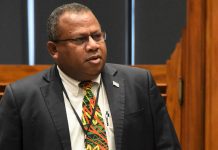
Vanuatu Climate Minister Ralph Regenvanu called the decision “deeply disappointing”, while Fiji’s Climate Change Minister Lynda Tabuya said Bowen had been part of a “very frank discussion” on the issue at a meeting of Pacific ministers on Monday.
Bowen said that the Pacific criticism was legitimate, but needed to be viewed in the context of Australia’s broader efforts to transition away from fossil fuels and replace them with renewable energy.
“We’re a family, and families express views to each other,” he told the ABC. “The Vanuatu minister said to me not long ago [that] we are Pacific brothers, and brothers hold each other to high standards, and that’s perfectly fine.”
Regenvanu said on Friday that Pacific leaders had been hoping more leaders would attend.
“We were hoping for more,” he told Reuters. “It just reflects the lack of attention and priority given to what Pacific nations consider the greatest threat to their future.”
Bowen on Monday unveiled a $7 million (US$ 4.87 million) grant to fund renewable energy projects in the Pacific, as well as a new agreement with Vanuatu to boost local technical capacity for solar energy and other clean energy infrastructure.
The grant is part of a $50 million(US$30 million) fund, known as the Australia-Pacific Partnership for Energy Transition.
Coalition opposition energy spokesman Dan Tehan said the event had “become a farce”.
“We’ve got the prime minister leaving the country in a cost-of-living crisis to attend a leaders’ event, and we think there might be seven or eight leaders there – we don’t know,” he said.
“It’s very hard to see how this, in any way, is getting value for money for the Australian taxpayer, and the reason we know that is because the government won’t come clean with the costs.”