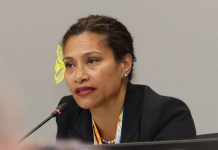
Commonwealth Secretary-General Shirley Botchwey has called for increased concessional climate finance, a fully operational Loss and Damage Fund and faster investment in renewable energy to help vulnerable countries, particularly small island states, respond to climate change.
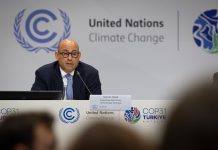
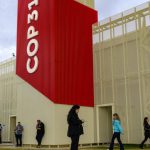
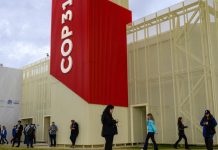
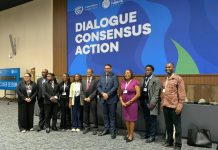
Addressing the high-level segment of COP31 in Antalya, Türkiye, Botchwey said climate commitments must be matched by practical action, finance and technology to deliver results for countries facing the greatest climate risks.
“COP31 must therefore both take stock of the commitments which Parties have made in their NDCs and assess whether cooperation on finance and technology is helping to turn those commitments into tangible results,” she said.
Speaking on behalf of the Commonwealth’s 56 member countries and 2.7 billion people, Botchwey said the conference was taking place at a critical time for international climate cooperation.
She said the Commonwealth was calling for climate finance to be allocated according to countries’ vulnerability as well as income, with greater concessional funding from multilateral development banks.
“This will require much greater concessional finance from multilateral development banks, allocated according to vulnerability as well as income,” she said.
Botchwey also called for a fully operational Fund for responding to Loss and Damage and more climate-linked debt instruments that protect countries’ fiscal space when disasters strike.
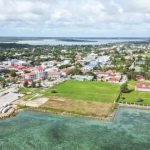
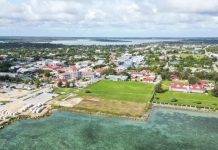
She highlighted the particular vulnerability of small island developing states and the importance of oceans in the global climate response.
Nearly 50 Commonwealth members are coastal states, including its 11 Pacific members, she said.
Botchwey said Pacific leaders had helped shape international discussions on ocean governance and sustainable ocean development, including through the Apia Ocean Declaration adopted at the Commonwealth Heads of Government Meeting in Samoa.
The declaration affirmed that maritime zones established under the United Nations Convention on the Law of the Sea should remain in place despite climate-related sea-level rise.
She said Commonwealth countries had helped bring the issue into the UN climate negotiations.
Botchwey also pointed to the Taku Pakasoa Declaration, adopted at the pre-COP meeting jointly hosted by Fiji and Tuvalu, which highlighted shared threats facing small island developing states across the Pacific, Indian and Atlantic oceans and the Caribbean.
She said the Commonwealth was supporting members to access climate finance, particularly for adaptation in Pacific Island countries.
Since 2016, Commonwealth climate finance advisers have helped build national and regional capacity to secure funding for climate projects.
The organisation also supports countries through programmes covering oceans, land, energy and gender-responsive climate action, while helping prepare investment-ready projects and connect them with potential investors.
Botchwey said the Commonwealth was also working to strengthen disaster resilience through satellite observation, data analytics and artificial intelligence.
She cited recent climate financing initiatives announced at the Commonwealth Heads of Government Meeting in Antigua and Barbuda, including a US$202.2 million pledge towards the Commonwealth Nature Initiative’s 30×30 target.
The Green Climate Fund also announced a US$42 million programme to strengthen coastal resilience in five Commonwealth Caribbean countries, developed with technical support from the Commonwealth Climate Finance Access Hub.
Botchwey said Commonwealth leaders had called for faster deployment of renewable energy, electrification and resilient infrastructure, including electricity grids and energy storage.
“These investments are essential to energy security,” she said.
She said COP31 had an opportunity to deliver fair and ambitious outcomes that translate international commitments into practical results for vulnerable countries and communities.
“A COP’s success depends on the action it brings about,” Botchwey said.