
Australia has pledged further support for the Pacific’s transition to renewable energy, while facing concerns from some Pacific countries over its role as a fossil fuel producer and exporter.
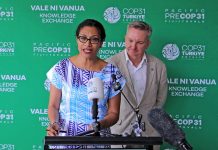
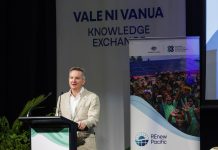
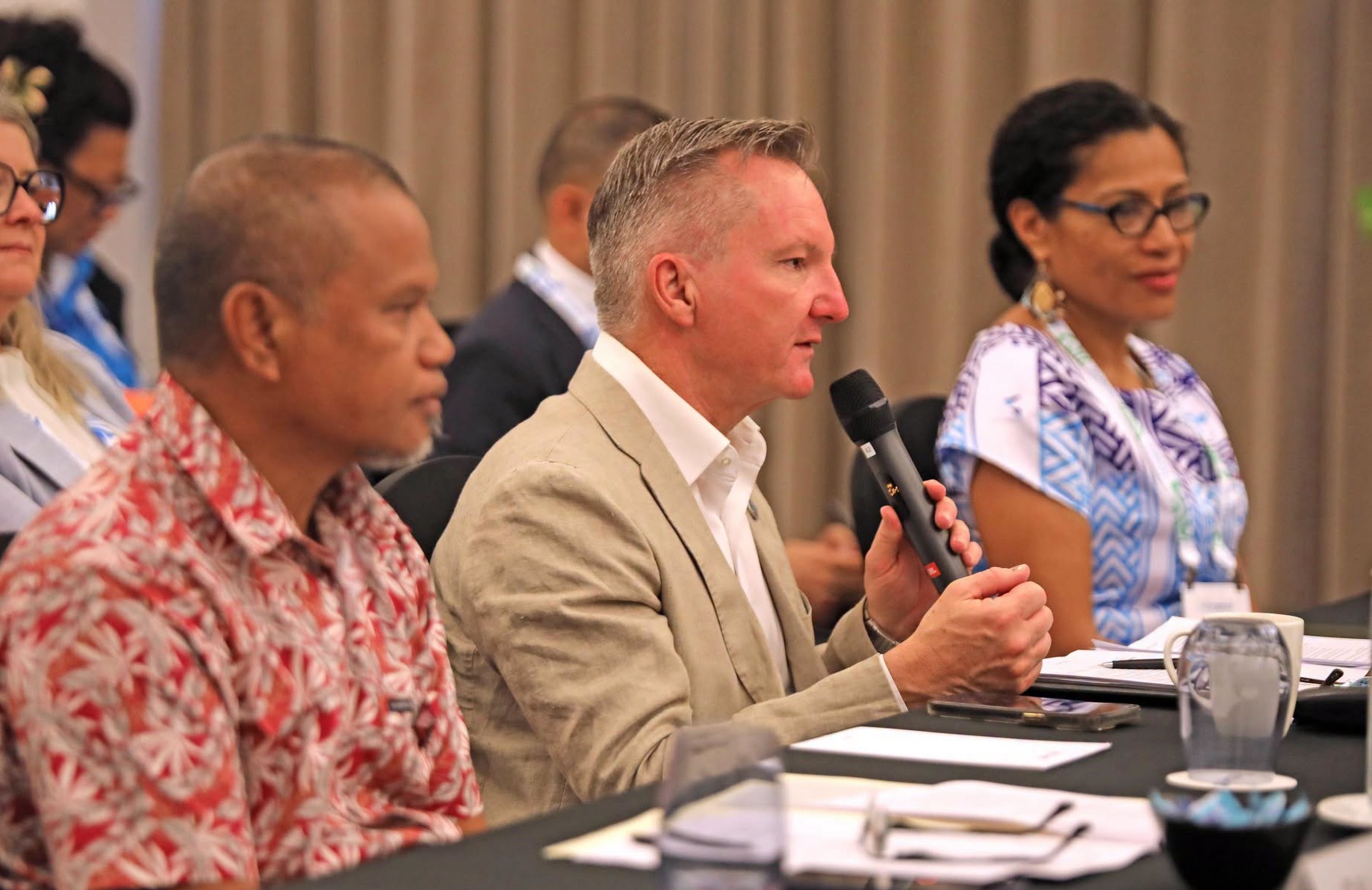
Speaking at a press conference in Nadi, Australia’s Climate Change and Energy Minister Chris Bowen said Australia’s approach was to reduce the need for fossil fuels by accelerating renewable energy, battery storage and electrification.
“My position remains publicly and privately. The way to transition away from fossil fuels is to build more renewable energy, to replace the need for fossil fuels,” Bowen said.
But the issue of Australia’s continued coal and gas development remained a point of tension at the meeting.
Asked about calls from some Pacific leaders for Australia to stop expanding coal and gas projects, Fiji’s Minister for Environment and Climate Change Lynda Tabuya acknowledged that the issue had been raised during a meeting of Pacific climate ministers.
“We had sentiments expressed from certain countries,” Tabuya said.
She said the focus at Pre-COP should be on finding common ground, while stressing the opportunity for Pacific countries to move directly to renewable energy.
“There’s a huge part of the Pacific that aren’t on the grid, that don’t rely on fossil fuels, and so we can go straight to renewable energy,” she said.
Bowen defended Australia’s transition efforts, pointing to the installation of 550,000 home batteries over the past 18 months and saying Australia now had its “lowest gas use in our energy system in 26 years.”
He also announced $1 million (US$696,799) for solar schools in Fiji, $2.2 million (US$1.53 million) to expand renewable energy access to 19 communities in Papua New Guinea’s Oro Province and $2.5 million (US$1.74 million) for reliable clean energy in the Autonomous Region of Bougainville.
“This is the sort of practical action that Australia takes to help the Pacific transition away from fossil fuels,” Bowen said.
The announcements come as Pacific leaders push for stronger climate action, including keeping the 1.5°C temperature goal within reach, greater access to climate finance and a faster transition away from fossil fuels.
For Pacific countries, the issue is also closely linked to energy security. Bowen said some Pacific countries spend as much as 25 percent of their GDP on diesel.
“That’s terrible for emissions. It’s terrible for respiratory health and it’s terrible for the economy, and it’s terrible for supply chain certainty,” he said.
Tabuya said the Pacific was seeking a “just transition” away from fossil fuels, supported by greater climate finance.
“It’s certainly the same as we’ve always stated in terms of commitments from our developed countries in terms of reduction in greenhouse gas emissions, transitioning away from fossil fuels, but not just transitioning but a just transition,” she said.
As Australia takes on the presidency of the COP31 negotiations, Bowen also assured Pacific countries that they would have a greater role in the negotiating process.
“I’ve seen Pacific ministers called in to meet with the COP president at 2 o’clock in the morning after the agreement’s reached with no say. That won’t happen in this COP,” Bowen said.
He said Pacific climate ministers would meet with him every day during COP31 to receive updates on negotiations and discuss challenges and the way forward.
“The Pacific will be more at the table than they ever have been at a COP before. That is the guarantee I make,” he said.
Bowen said keeping the 1.5°C goal alive meant “hope” for vulnerable Pacific nations.
“It does mean working to increase renewables, and also electrification,” he said, describing electrification and moving away from direct fossil fuel use as part of the effort to keep 1.5°C within reach.