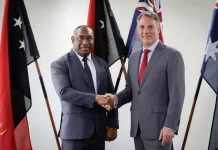
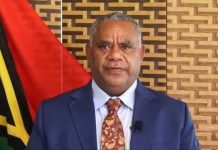
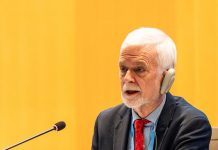
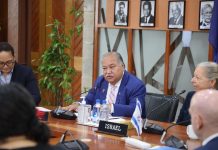
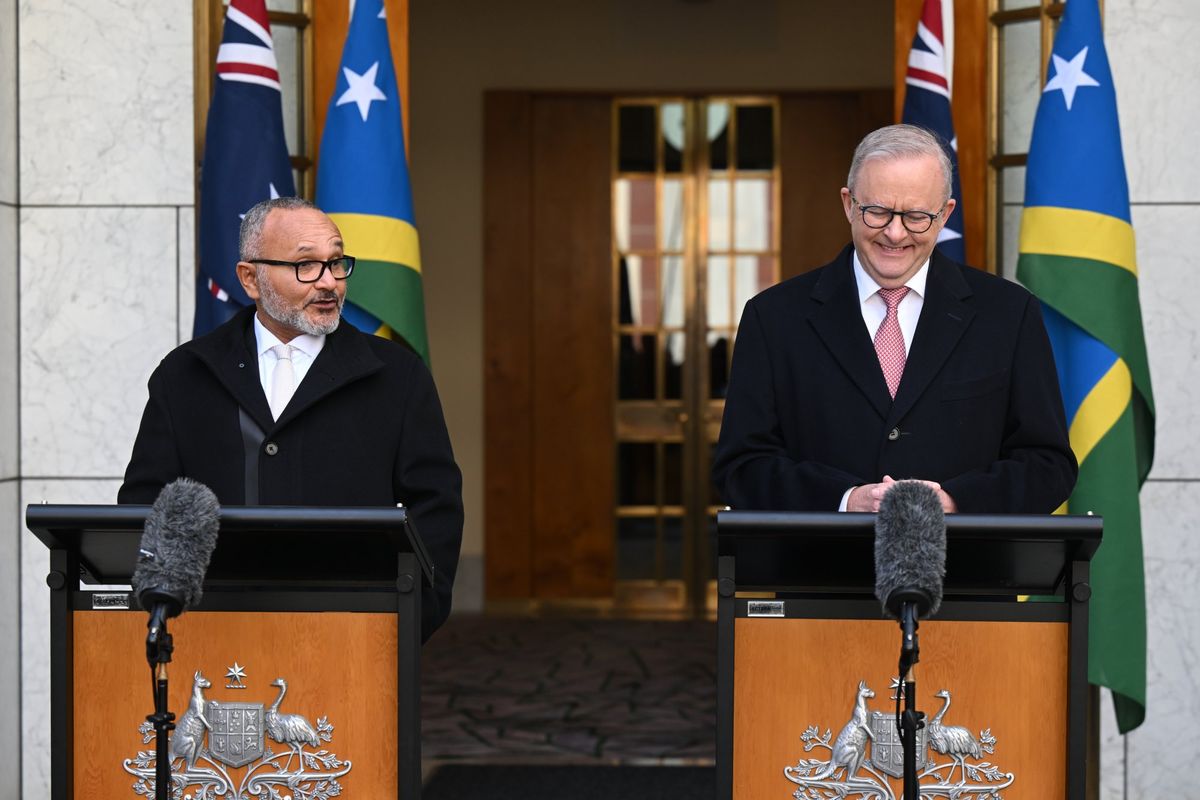
Australia and Solomon Islands have agreed to elevate their relationship through a new comprehensive strategic treaty, with both leaders signalling a reset in ties and a stronger focus on regional security, economic cooperation and development priorities.
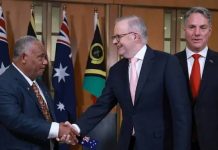
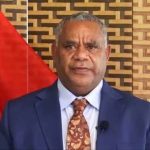
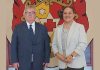
Speaking at a joint press conference in Canberra Wednesday following bilateral talks, Australian Prime Minister Anthony Albanese welcomed Solomon Islands Prime Minister Matthew Wale on his first overseas visit since taking office, describing the visit as a reflection of the close relationship between the two countries.
“Well, it’s an absolute pleasure to welcome Prime Minister Wale and his delegation to Canberra for his first overseas visit.
“The Prime Minister’s decision to choose Australia for his first overseas visit reflects the closeness of our relationship and I congratulate him on the energy and vision he has brought to his first days in office,” PM Albanese said.
He said Australia and Solomon Islands shared deep ties as members of the Pacific family and faced common challenges in an increasingly uncertain global environment.
“I was in the Solomons in September last year for the Pacific Islands Forum meeting and the visit highlighted to me the extraordinary depth and breadth of the Australian Solomon Islands relationship and our shared commitment to the region as members of the Pacific family.”
“That visit also reaffirmed that we’re not immune from current geopolitical events. In times of global uncertainty, we look to each other because we’re stronger when we work together,” Albanese said.
The Australian PM also announced that both governments had agreed to begin work on a new treaty after a request from Solomon Islands.
“We’ve committed to elevate our bilateral relationship, at the request of the Solomon Islands. This will be agreed in a new comprehensive treaty underpinned by mutual trust, respect and open dialogue.”
“This treaty will allow Australia and the Solomon Islands to confront global and regional challenges as partners,” said Albanese.
Albanese said the two countries had tasked their foreign ministers with leading negotiations on the agreement and confirmed enhanced cooperation between the Royal Solomon Islands Police Force and the Australian Federal Police.
“We’ve also agreed to move to the next phase of the Royal Solomon Islands Police Force, Australian Federal Police Policing Partnership Program, building capability and strengthening policing cooperation.”
“This builds on the Pacific Policing Initiative that we launched at the Pacific Islands Forum just a couple of years ago.”
The agreement comes as Australia continues to push its position that Pacific nations should work together to address regional security challenges.
“We have said very clearly we want Australia to be the security partner of choice in our region and we want the Pacific family to look after our security in this region,” said Albanese.
Prime Minister Wale welcomed the renewed engagement and acknowledged that relations had experienced difficulties in recent years.
“Solomon Islands is Australia’s friend, has always been and always will be.”
“Of course there are, I’m sure you’ll be popping questions about the last few years and we have had some issues and all relationships go through issues, bumps here and there.”
“But the resilience of our relationship I think is self evident,” he said.
Wale said the strength of the relationship rested on decades of people-to-people ties and institutional cooperation.
“It lies in our people, to people contacts and of course in our institutional relations over so many years, perhaps even more than a century.”
“And it is not easy to break that kind of the depth and the strength of such a relationship,” said Wale.
The Solomon Islands Prime Minister said his government had deliberately sought to reset ties with Australia.
“We have sought a reset in this relationship.”
“We acknowledge that there’s been problems over the last few years, I’ll be honest, and we thank the Prime Minister that we’re able to elevate our relationship to a comprehensive strategic one where both sides will benefit by having trust in each other’s decision making.’
“And that will be good also for the region,” PM Wale stressed.
Asked whether Australia would seek provisions in the treaty restricting Solomon Islands’ engagement with other countries, Albanese said negotiations were only beginning and would respect the sovereignty of both nations.
“Today is, of course, day one and we’ve agreed to develop the comprehensive strategic treaty between us and we’ll work through the issues, but it will be one which identifies our mutual trust, our respect for each other, the sovereignty of both of our nations as we go forward,” Albanese said.
Wale said regional partners should remain the first point of contact on security matters.
“It will be important in such a treaty, both at the bilateral level, but perhaps also at some stage at the regional level, that the first reference point in these matters is within the region.”
“That I think is very important going forward. So, that’s the direction we want to take,” said Wale.
The Solomon Islands leader was also questioned about the controversial security agreement signed between Honiara and Beijing.
Wale revealed that he had only recently obtained a copy of the agreement.
“I have had to remove certain people from key positions. I haven’t been afforded a copy even of that agreement until a day before I left.”
“So, I haven’t had a good look at it. I’ve had a look at it, I’ll be honest with you, but I haven’t had a good look at it,” said PM Wale in Canberra.
He said the agreement would be reviewed by his government alongside other security arrangements.
“There is a nondisclosure clause in it, so I couldn’t show it to you right away, but we are going to be reviewing as we are reviewing other security agreements that we have with many other countries.”
Albanese responded by reiterating Australia’s position on Pacific sovereignty.
“Australia respects the sovereignty of nations in the Pacific and we respect the decisions that will be made by the Prime Minister,” he said
Economic development and infrastructure financing also featured prominently during the discussions.
Asked whether Solomon Islands would seek alternative financing partners beyond China for major infrastructure projects, Wale said his government was actively exploring options.
“We have a core economic platform, part of our vision to create jobs in the solvents, to bring more foreign receipts into our economy.”
“And so, we will be looking to Australia in those discussions, perhaps give us some good rates so we can build critical infrastructure and have sovereign control over them,” said Wale.
He said Solomon Islands would also engage with the United States and international financing institutions.
“Of course, we’ve just recently signed the DFC agreement with the U.S and so we will be looking to the U.S as well.”
“We’re hoping. In my conversations with the Deputy Secretary of State, we’re hoping that they would bring forward our accession into the compact arrangement for MCC.”
“There’s, you know, sources of financing that we would be looking for, for critical infrastructure.”
“Yes, ports. Everybody’s interested in ports. We like it,” PM Wale said.
The two leaders also discussed support for Solomon Islands following Tropical Cyclone Maila and ongoing energy challenges.
Albanese announced Australian assistance valued at SBD$200 million (AUD$35 million).
“We’ll be providing SBD$200 million (AUD$35 million) for the cost of recovering from tropical cyclone Maila and also to deal with these current energy issues.”
The funding will support recovery efforts and help address rising fuel costs that continue to place pressure on the Solomon Islands economy.
Wale said fuel prices remained a major concern.
‘Unfortunately, the price of diesel especially continues to rise.”
“I checked this morning in Honiara, and it’s risen a few more dollars. Solomon dollars.”
“So, that’s going to be part of an ongoing discussion as well,” said PM Wale.
The visit marks the first major international engagement by Wale since becoming Prime Minister and signals a renewed effort by both governments to strengthen political, economic and security ties at a time of heightened strategic competition across the Pacific.