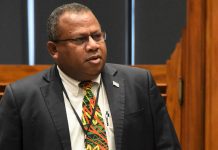

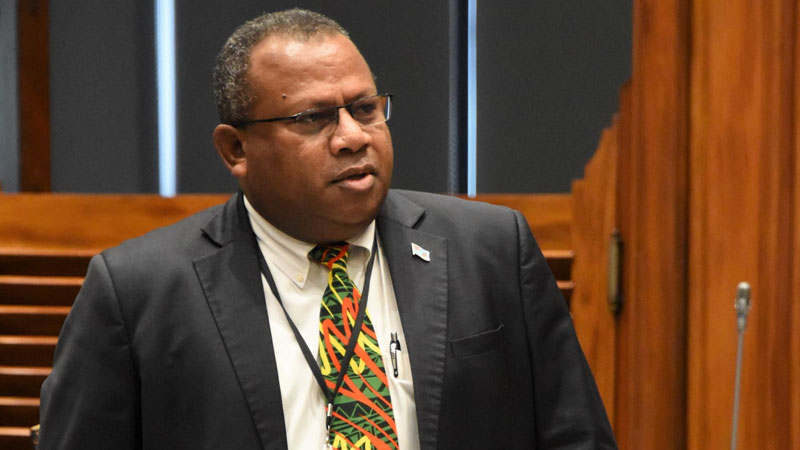
Fiji Opposition Leader Inia Seruiratu has questioned the Government’s decision to set 09 December 2026 as the date for a constitutional referendum, saying Parliament has yet to complete consideration of the Constitution Amendment Bill.
The Bill passed its second reading on 02 October and has been referred to an 11-member Special Parliamentary Committee for public consultation before it returns to Parliament for its third reading.
Seruiratu said announcing a referendum date before Parliament had completed the legislative process was premature.
“The Prime Minister’s announcement that a national referendum will be held on 09 December 2026 is premature and amounts to putting the cart before the horse when Parliament itself has not completed consideration of the Constitution Amendment Bill,” he said.
He said the Special Select Committee must be allowed to hear public submissions, consider them and recommend amendments where necessary before Parliament makes its final decision.
“What then is the basis for announcing 9 December as the referendum date when Parliament has not even determined the final form of the Constitution Amendment Bill?” Seruiratu asked.
Under Fiji’s constitutional amendment process, the Bill must complete its parliamentary stages before it can proceed to a referendum. Parliament’s information on referendums states that the Bill must receive the required parliamentary support before it is referred for a vote by registered voters.
The Opposition Leader also criticised Prime Minister Sitiveni Rabuka’s request to the Electoral Commission to suspend general election campaigning until after the referendum.
Rabuka has confirmed he has written to the Supervisor of Elections seeking the suspension of general election campaigning until the referendum process is completed.
Seruiratu said political parties and candidates should be able to continue engaging with voters ahead of the General Election.
“The general election campaign period is already underway. Fiji is only months away from a General Election and political parties and candidates have a legitimate democratic role in engaging with voters.
“To seek the suspension of political campaigning at this stage amounts to a strangulation of the legitimate activities of political parties at precisely the time when they should be engaging most actively with the people,” he said.
He questioned why political parties should be prevented from campaigning on issues including the cost of living, health, education, employment, infrastructure and governance.
“Why is the Prime Minister seeking to suppress political campaigning?
“Why should political parties be prevented from speaking to voters about the cost of living, health services, education, employment, infrastructure, governance and the many other issues upon which the Government must be held accountable simply because the Government has decided to pursue a referendum,?” Seruiratu asked.
The Electoral Commission is required to consider whether general election campaigning should be suspended during the referendum campaign period under the National Referendum Act.
Seruiratu said the Commission must make its decision independently and in accordance with the Constitution and the law.
“The Opposition therefore expects the Commission to independently consider the Prime Minister’s request and to make its decision strictly in accordance with the Constitution and the law, without political pressure or interference,” he said.
He also called on the Government to explain the legal basis for suspending election campaigning and the implications for political parties, candidates and voters.
Seruiratu said the referendum and General Election were separate democratic processes and should not be allowed to interfere with each other.
“A referendum on constitutional reform and a General Election are separate democratic processes. One should not be used as justification to silence, restrict or place on hold the other,” he said.
“The Opposition supports the right of the people to participate meaningfully in decisions concerning their Constitution.”
He said that participation required Parliament to complete its constitutional process while allowing the public and political parties to engage freely in the democratic process.