


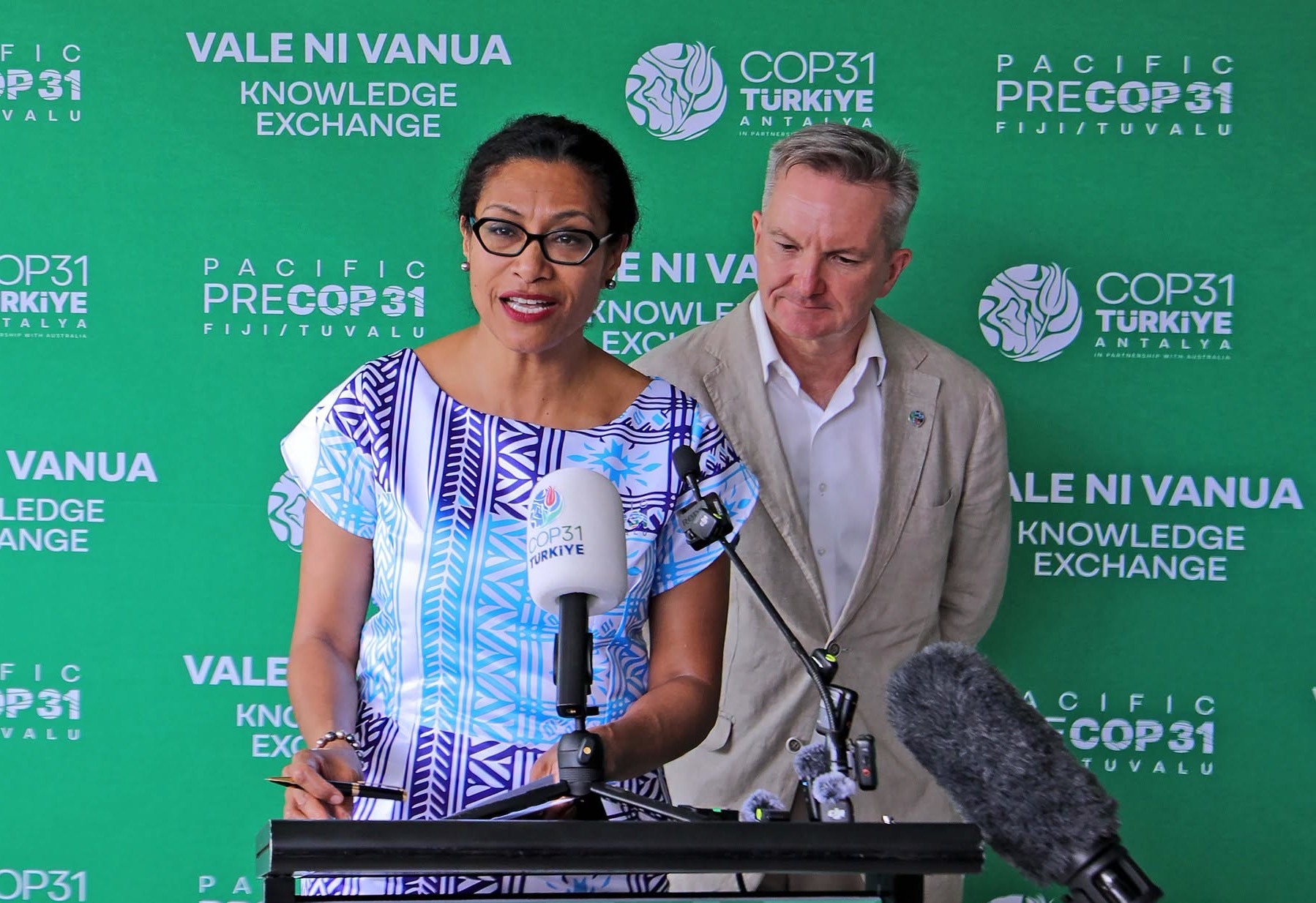
Fiji has returned to the global climate stage nine years after making history as the first small island developing state to preside over a UN climate conference, with Pacific priorities taking centre stage at the pre-COP31 in Nadi.
Speaking at a press conference on Monday, Fiji’s Minister for Climate Change, Lynda Tabuya, said Fiji’s return to the global climate process was an opportunity to strengthen Pacific leadership ahead of COP31 in Antalya, Türkiye.
“In 2017, Fiji made history as the first small island developing state to preside over a COP and host its pre-COP right here in Nadi,” Tabuya said. “Nine years later, we return to the global stage to send a clear message: the Pacific is no longer just raising the alarm. We are leading the global fight against climate change.”
Fiji is co-hosting the pre-COP31 with Australia, which holds the COP31 presidency of negotiations, and Tuvalu. The meeting brings together climate ministers, negotiators, development partners, civil society representatives and regional and international media to build consensus ahead of the formal negotiations in Türkiye.
Tabuya said Fiji and the wider Pacific would focus on four key priorities: keeping the 1.5-degree Celsius temperature goal within reach, improving access to climate finance, placing oceans at the centre of climate action, and strengthening Pacific leadership.
For Pacific island countries, she said, climate finance must reach communities on the frontline of climate impacts. Fiji is also promoting the Pacific Resilience Facility as a Pacific-led mechanism to support climate resilience.
The ocean is another central priority for the region, with Tabuya stressing its importance to Pacific identity, food security and economic development.
“You cannot solve the climate crisis without protecting the oceans,” she said.
Australian Climate Change and Energy Minister Chris Bowen said holding the pre-COP in the Pacific was intended to elevate the region’s concerns in the international climate negotiations.
“The road to Antalya begins here in Fiji, and there’s no better place to begin it,” Bowen said.
He said the pre-COP had attracted around 2,000 stakeholders, 133 stakeholder events and 120 accredited journalists, making it significantly larger than a typical pre-COP meeting.
The Pacific’s concerns will also be brought directly to Tuvalu, where a delegation including 14 heads of state or government is travelling today to highlight the impacts of sea-level rise.
Bowen said Tuvalu’s capital is already under serious threat from rising seas, with sea levels having risen by about 15 centimetres.
The regional focus comes as Pacific countries continue to push for greater climate finance, faster renewable energy development and a transition away from fossil fuels.
While acknowledging that Pacific countries and Australia may not agree on every issue, Tabuya said the focus of the pre-COP was to find common ground and develop practical action ahead of COP31.
Bowen also pledged closer consultation with Pacific climate ministers during the COP31 negotiations, saying the Pacific would have a greater role in the process than at previous COPs.
“I’m not here to promise you the COP decision will be everything that the Pacific ministers would write, because that’s not what a COP is,” he said. “But it means the Pacific being more at the table than they ever have been at a COP before.”
For Fiji, the pre-COP marks a return to the global climate stage nine years after its historic COP presidency, while placing Pacific priorities at the centre of discussions ahead of COP31.