
For a coastal village in Fiji waiting to move to higher ground, the question is not how many billions are pledged at global talks, but how long does that money take to arrive.
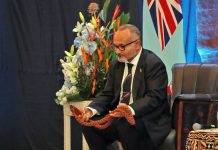
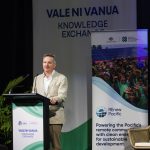
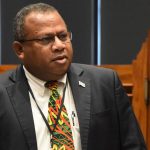
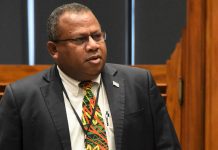
That was the key question Fiji’s Permanent Secretary for Environment and Climate Change, Dr Sivendra Michael, in his opening address to development partners at a high-level Climate Finance session on Scaling Adaptation Finance for the Blue Pacific.
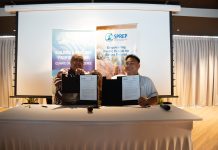
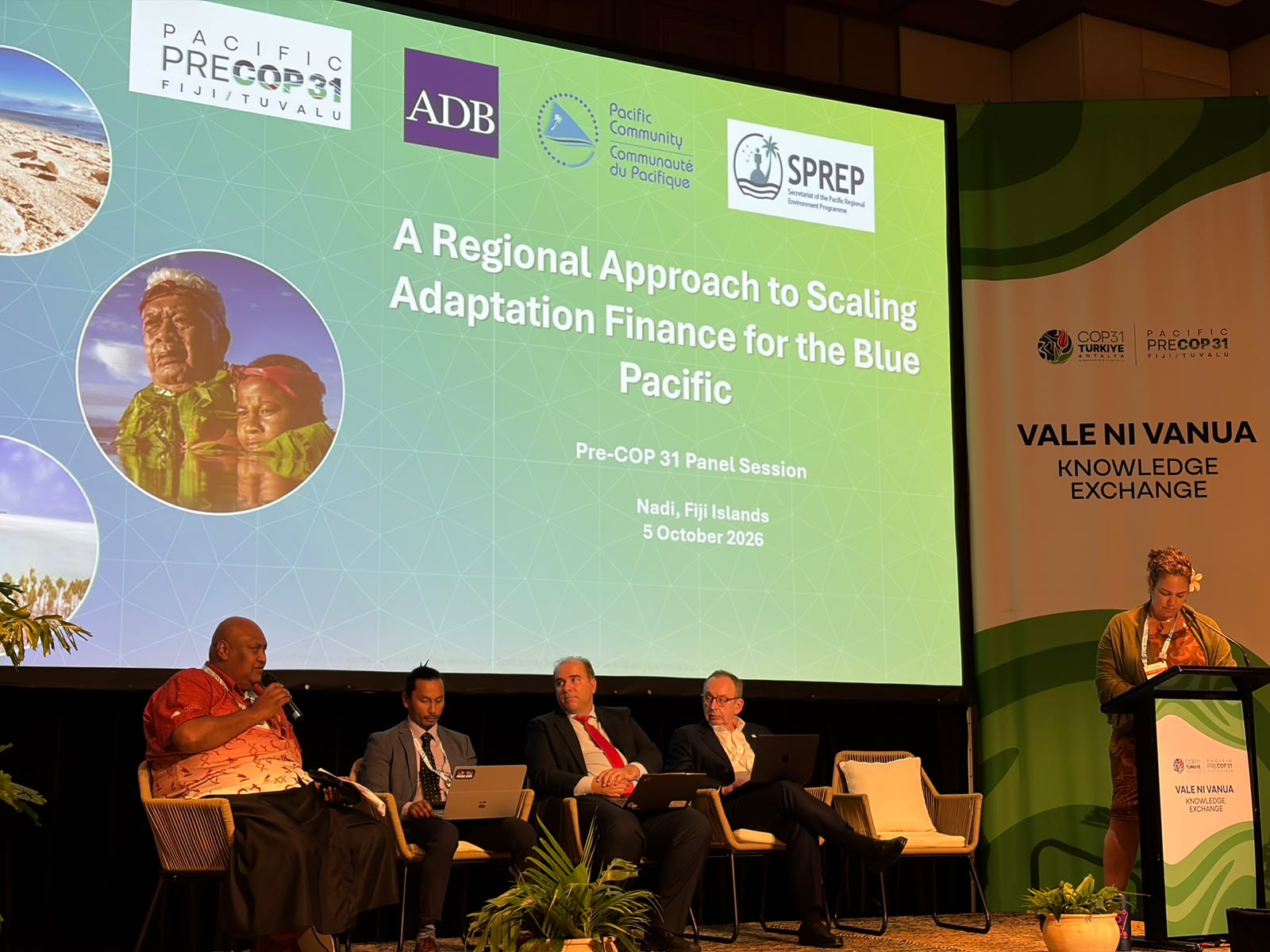
The Pre-COP side event was co-hosted by the Asian Development Bank (ADB), the Pacific Community (SPC) and the Secretariat of the Pacific Environment Programme (SPREP); who are also partner Accredited Entities to the Green Climate Fund (GCF) under the Regional Programmatic Approach to Climate Action or RPACA – co-chaired by the Governments of the Cook Islands and Palau.
Dr Michael encouraged partners and stakeholders to move beyond approved projects as a measure of access to climate finance; and actually monitor “time to community” or “time to impact”.
‘How long did it take for a particular financing arrangement to go from inception to result on the ground? This is how we differentiate between finance that works and finance that drains.”
Pacific Islands produce less than 0.03 per cent of global greenhouse gas emissions. However, they face some of the world’s highest climate risks and receive only a small share of global adaptation finance.
UNEP’s latest Adaptation Gap Report puts developing countries’ adaptation needs at roughly twelve times the international public finance now flowing. Permanent Secretary Michael said dozens of Fijian communities have been identified for planned relocation, with each move costing millions and taking years.
“That is the nature of adaptation: enormous social and economic value, but little conventional financial return. So the financing architecture must be built to fit adaptation, not expect adaptation to fit the architecture.”
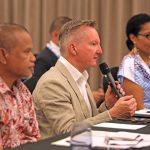
Dr Michael’s remarks set the tone for a panel discussion moderated by SPC’s Director Climate Change and Sustainability, Coral Pasisi; with interventions from ADB’s Director General Climate Change and Sustainable Development, Eugenue Zhukov, the GCF’s Director of Governance Affairs and Secretary to the Board, Artur Cardoso de Lacerda, and Palau’s National Climate Change Coordinator and Head of Office of Climate Change under the President’s Office, Xavier Matsutaro.
Both multilateral funding partners agreed on the need to address fragmented financing and shared examples of reforms within their organisations; and enabling activities to strengthen predictable and simplified access to climate finance through upstream, midstream and downstream measures.
As co-chair of RPACA, Matsutaro emphasised RPACA as a programmatic approach that was already challenging the way in which climate finance could be accessed by the region at scale; and called for its timely approval.
Matsutaro shared, “fragmented short-term projects limit the effectiveness of adaptation. Programmatic approaches provide continuity and enable efforts that require time to address, such as community relocation and climate resilience development.”
Closing the session, Secretariat of the Pacific Regional Environment Programme (SPREP) Director General, Mr Sefanaia Nawadra said the problem was “not commitment – it is how finance reaches us.” He welcomed signs of change from the ADB and the Green Climate Fund. But he warned that regional priorities endorsed by Pacific Leaders were falling through the gaps.
Weather Ready Pacific, a programmatic initiative endorsed by leaders in 2021 and led by SPREP; builds the early warning, weather and climate services every Pacific country relies on, yet still faces a financing gap of around US$160 million.
“The region’s meteorological directors and ministers stopped waiting”, he said. “Basically, they got fed up of chasing money, so they decided to come up with a costed strategy.”
Nawadra urged climate funds to stop “asking the same countries to prove themselves twice”, in relation to repetitive needs to meet accreditation standards; including fiduciary standards vetted simultaneously across different multilateral funds. He reiterated Dr Michael’s opening address, saying the test of reform before COP31 should come down to one question – ‘Is finance reaching our communities faster?”
“The Pacific is not asking for special treatment. We are asking for a system that fits our realities.”
The discussions and outcomes from Pre-COP will shape the Pacific’s agenda for COP31.
From 05-08 October, Fiji, Tuvalu and Australia are partnering to deliver the official COP31 pre-COP ministerial meeting and Leaders’ event. Attendance at Pre-COP is expected to include leaders, ministers, senior representatives and officials from invited countries, Türkiye, UN representatives and selected observers.
Stakeholder programming is also expected to include civil society, private sector, academia, First Nations, youth and community organisations.