Home Blog Page 991

Wallaroos embracing Test, Queensland return with Japan, Fijiana tri-series

0

The Wallaroos could barely hide their excitement after fixtures against Fijiana and Japan were announced for next month.

The tri-series ends a two-year drought without Tests, with COVID derailing preparations ahead of this year’s World Cup, with Wallaroos captain Grace Hamilton eager to get off to a strong start.

“The more effort and time you put into getting a team together, the better they get and that’s going to be huge for us leading into a World Cup program,” Hamilton told Rugby.com.au last week.

“It has been a long time between games and it’s very important to hit the ground running with a huge year ahead.

“The more chance we can get and the more girls we can get into the program and get that test experience because it is a big step up, getting girls used to that will be a big step up for this team.”

For new coach Jay Tregonning, it will mark his first game in charge after taking over at the end of last year.

Tregonning and the coaching staff have got a first-hand account of the threat Fijiana can possess, with the Drua steamrolling through Super W.

“They’re looking to play a Fijian style of game and they’ve been outstanding to watch,” he noted.

“They’ve been great for the competition, the spirit of the game has been excellent. Being able to see them play against the girls we’ll have at the Wallaroos, it’s been beneficial and as coaches, we’re already looking at how we would go about playing them tactically.

“Having the opportunity to play Japan, two different styles of Rugby, it’s going to aid in our preparations heading into the PacFour and the World Cup.”

It will mark the first Wallaroos games in Queensland since 1997, something which excited Sevens gold medalist and Reds captain Shannon Parry.

“It’s going to be a really special moment for the Wallaroos playing Fijian and Japan,” Parry said.

“It’s been difficult, no doubt, not being able to play in that jersey. We’re playing catch up this year, so it’s a good opportunity to get the squad together and it’s a fresh start (under a new coach).

“I’ve been in the game for a long time and haven’t been able to play at home (for Australia) very much so if the opportunity comes about, it’s going to be very exciting. There’s nothing more passionate and exciting about playing for Australia than playing in front of a home crowd. The emotion and roar in the game, it’s something all Aussies look forward to.”.

SOURCE: RUGBY.COM.AU/PACNEWS

Moana Pasifika’s ‘overwhelming’ fundraising drive sends $75,000 worth of medical supplies and equipment to Tonga

0

A container packed full of medical supplies and equipment is on its way to Tonga thanks to Moana Pasifika’s fundraising efforts.

Moana Pasifika’s fundraiser ‘Ofa Atu Tonga – With Love Tonga’ kicked off on February 4 at the new Super Rugby Pacific club’s pre-season game against the Chiefs.

Up until the container left for Tonga on Monday, the fundraising drive had raised more than $75,000 (US$52,000) for the people of the Kingdom of Tonga which was hit hard by the devastating volcanic eruption and tsunami in January followed by a Covid-19 outbreak.

Moana Pasifika Trust chair Savae Sir Michael Jones said reaching such a significant total has been humbling.

“The generosity of support has been overwhelming,” Jones said.

“Moana Pasifika would like to express our heartfelt thanks to everyone who showed the spirit of compassion and who donated generously,” the All Blacks great said.

Donations to its fundraising drive were received from 10,227 people from across Aotearoa and all around the globe.

The money raised has gone towards a container full of medical supplies that will be received in Tonga by a team from Pasifika Medical Association (PMA) who were deployed in late March to provide on the ground medical assistance and primarily mental health support through a team of specialists.

The PMA team engages directly with those traumatised by the recent natural disasters as well as the current Covid-19 outbreak.

In partnership with the respective governments of Tonga and New Zealand, the PMA team are working together to ensure that the medical supplies purchased through the donations from Moana Pasifika’s fundraising efforts are received by the local hospitals to be used by the affected communities.

Chief surgeon specialist at Ministry of Health in Tonga and PMA Patron Lord Tangi o Vaonukonuka said the Kingdom of Tonga was extremely grateful for the container of donated medical supplies and the “wonderful contribution” made by the Moana Pasifika through their fundraising campaign.

“The money raised has been able to secure vital medical equipment and medicines which will be distributed to hospitals across Tonga including the main hospital on Nuku’alofa, Vaiola Hospital, and Ha’apai’s hospital, the Princess Fusipala Hospital,” Lord Tangi said.

The shipping costs of getting the container to Tonga were donated by Matson Shipping to enable the full fundraising total to be spent on medical supplies and equipment.

SOURCE: STUFF NZ/PACNEWS

U.S admiral lashes ‘concerning’ Solomon Islands security pact with China

A top American admiral has criticised a potential security pact between China and Solomon Islands, describing it as a “secret” arrangement worrying the U.S and its partners.

Australia has warned that a Chinese naval base in the Pacific nation, less than 2,000 kilometres from the Queensland coast, would “change the calculus” for the Australian Defence Force.

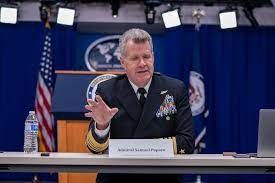
Those sentiments have now been backed by the Commander of the U.S Pacific Fleet, Admiral Samuel Paparo, who said he was “undoubtedly concerned” about the situation.

“There is still a path ahead. But anytime that a secret security arrangement makes its way into the light of day, it is a concern,” he told the ABC in Washington DC, during an event with foreign journalists.

“And it’s a concern for all of our partners throughout the western Pacific and notably, Australia, New Zealand.

Last week Solomon Islands Prime Minister Manasseh Sogavare lashed out at critics of the draft Chinese security saying their comments were “insulting”.

Sogavare said the deal was “ready to be signed2 but insisted existing security arrangements with Australia would be maintained and there were no plans to allow a Chinese military base.

Papua New Guinea’s Prime Minister James Marape has also weighed into the controversy over the security agreement.

Australia has been trying to rally Pacific Island states to press Solomon Islands over the pact, with Scott Morrison ringing regional heavyweights including Marape and Fiji’s Prime Minister Frank Bainimarama to express concern.

Marape told the ABC that PNG and other Pacific states were “conscious of what’s taking place” in Solomon Islands, and he had had 2conversations” with his Solomon Islands counterpart.

He said Sogavare assured him there were no plans for China to establish a military base in the country, and that the agreement was focused on offering police support.

But Marape also suggested that Papua New Guinea and other Pacific countries were in the best position to provide police support, saying “we stand ready to work side by side in upskilling and training police [and] having more police engagements … into Solomon Islands if they require help”.

Admiral Paparo backed warnings from Defence Minister Peter Dutton of a growing potential for armed conflict in the Indo-Pacific region that Australians needed to be” realistic” about.

“I always operate under the notion that there’s the potential of conflict within our region within a couple of years because of the incredible unpredictability of events,” Admiral Paparo said.

“And who last year could have predicted where Eastern Europe would be right now. In fact, that is our mission, is to always be ready as militaries.”

Admiral Paparo described the AUKUS arrangement, under which Australia will obtain nuclear-powered submarines through a deal with the US and the UK, as a “tangible sign” of rising tensions in the region.

He also warned that China would be watching Russia’s invasion of Ukraine in the context of its own claims over Taiwan.

“Undoubtedly, the PRC (People’s Republic of China) is watching what’s happened in Ukraine and taking notes and learning from it,” he said.

“And there will be learning and there will be adjustments to the extent that they’re able to learn from it.

“And they will improve their capabilities based on what they learn at this time.”

In Sydney, Defence Minister Peter Dutton has again emphasised growing military risks in the region, while announcing details of a new multi-billion-dollar missiles package.

“And when we look at what has happened in Ukraine, there is the prospect of Russia going into Poland or somewhere else in Europe, and that would be a repeat of the 1930s, and that’s not something that we should allow to happen.”

Dutton confirmed the federal government would fast track the purchase of U.S-made joint air-to-surface standoff missiles for Australia’s Super Hornets, and Norwegian Naval Strike Missiles for warships.

U. S Defence giants Raytheon and Lockheed Martin have also been announced as leading the US$1 billion sovereign guided weapons programme, with the aim of eventually producing missiles domestically.

SOURCE: ABC/PACNEWS

Pacific climate warriors react to UN IPCC climate report

The 350.org Pacific Climate Warriors put forward strong reactions to Monday’s release of the UN IPCC Climate report entitled; Climate Change 2022: Mitigation of Climate Change.

For 30 years the UN IPCC reports have proven beyond doubt that Climate impacts are increasingly frequent and devastating. Frontline communities, who have contributed the least to the climate crisis, are experiencing the worst impacts. We have a decreasing window of time to prevent the worst of all possible futures, but we are hopeful that by taking action we can create the change needed to solve the crisis.

Joseph Sikulu, 350.org Pacific Managing Director says,”We are in a critical stage and it is clear that current mitigation measures are not enough. What we in the Pacific know is that our very survival depends on drastically reducing carbon emissions – and the fastest way to bring us back on track for our goal of 1.5 degrees celsius is by keeping all fossil fuels in the ground. How do we end the reign of fossil fuels? Turn off their money tap. We are asking that global leaders and financial institutions stop financing fossil fuels, and start funding just, community-led solutions to this crisis.”

Alisi Rabukawaqa, Pacific Climate Warrior says,“This recent mitigation report tells us that we have a small window to act, but it’s still a chance. The report stresses that decarbonisation relies mainly on quitting our use of fossil fuels. Our homes, our cultures, our descendants are all depending on this. While the world debates over scientific reports, the Pacific continues to live through devastating climate impacts. But we can shape what the future looks like for the Pacific if those most responsible for the climate crisis step up, phase down and phase out fossil fuels immediately.”….PACNEWS

SOURCE: 350.ORG/PACNEWS

Tuvalu Foreign Minister urges countries to take greater responsibility for climate change to save island nations

Countries should cut down on their greenhouse gas emission and take greater responsibility for problems created by climate change to save island nations like Tuvalu from extinction, said the country’s senior official.

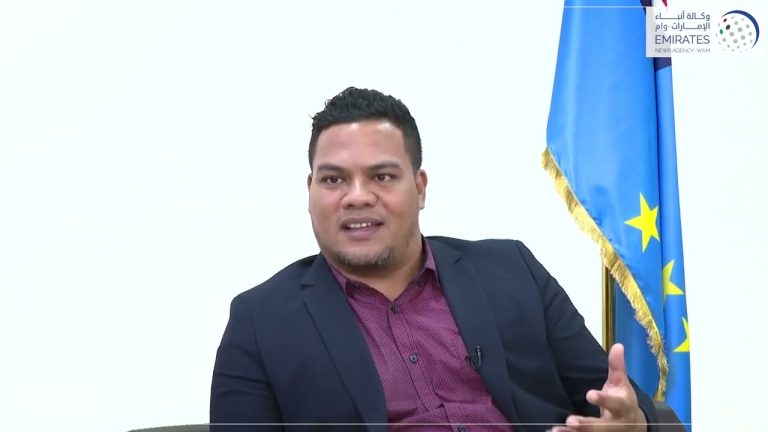
In an interview with the Emirates News Agency (WAM), Simon Kofe, Tuvalu’s Minister of Justice, Communication and Foreign Affairs, who is also a Nobel Peace Prize nominee for 2022 for his efforts in confronting climate change, said that Tuvalu is probably one of the first countries to go underwater if sea level continues to rise.

“The solution to our problem is that countries need to cut down on their greenhouse gas emissions. They need to take greater responsibility for the problem and the challenges that we are facing right now,” stressed Kofe.

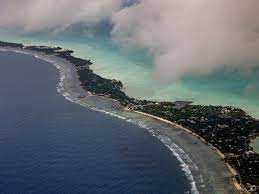
Located in the Central Pacific Ocean, about 600 kilometres north of Fiji, Tuvalu is the fourth smallest country in the world, with a population of around 11,000 people. It comprises six coral atolls and three islands, covering an area of about 27 square kilometres.

“Tuvalu is facing the full brunt of climate change although we are the least contributor to the problem. Yet we are the ones that are facing extinction as a nation and as a people,” said Kofe, adding that countries should take action now to save not only island nations, but other countries too.

“If it doesn’t affect the big countries today, it will certainly affect them tomorrow. As a nation, we want to draw the line here and say if you save Tuvalu, you are saving the world.”

Among the effects of climate change in Tuvalu are coastal erosion, coral bleaching that affects the ecosystem of fisheries and saltwater intrusion into agricultural lands.

“Sometimes it’s difficult for people living in big cities and big countries to understand climate change, thinking that climate change is something that is far off. We want to bring the message that climate change is going to affect everyone,” Kofe said, adding that the world is already experiencing its effects with strong cyclones, earthquakes, and bushfires that are hitting different parts of the world.
Tuvalu, which may face extinction in the next 50 to 100 years from now if climate change continues to affect its existence, is looking for alternative solutions to preserve its identity.

The Future Now Project, which combines a series of activities developed and overseen through the Ministry of Justice, Communication and Foreign Affairs, will future proof Tuvalu against the most severe impacts of sea-level rise and climate change.

“We’re looking at saving our islands, reclaiming our land, building sea walls… But we are also preparing for a worst-case scenario, which is that maybe 50-100 years on the track, it will be very difficult to live in Tuvalu. Its population might have to relocate.

“So, the question is what do we do in that situation? Can we continue as a state without a physical land territory? Can we have voting rights? Can we have rights to our sovereign assets like DotTV and our oceans?” asked Kofe, who emphasised that one of the objectives of the Future Now Project is to have countries that establish relations with Tuvalu recognise that their state is permanent regardless of its physical territory.

For a small country like Tuvalu, whose main revenues come from selling fishing licenses and their country’s top-level domain name, DotTV, to international buyers, this is a legitimate concern.

“One of the approaches is looking at the legal avenues to be under international law to be able to safeguard that, to be able to say that once you are a state, you are a state forever regardless of the impacts of climate change.”

Tuvalu is pioneering in this appeal, according to Kofe, who said that when international laws and treaties were developed in the 70s and 80s, climate change was not an issue.

“Many of the international treaties are currently silent on climate change. That’s why there’s nothing in place to protect or accommodate the situation that Tuvalu is in right now. We’re hoping to do one step at a time by establishing bilateral relations and hopefully more countries come on board to recognise these principles.”

Indeed, Tuvalu is expanding its diplomatic presence to support its cause. Last week, it opened its latest embassy in Abu Dhabi, as a result of its participation in Expo 2020 Dubai.

“It is a big thing to have a mission here in the UAE,” said Kofe, whose country only has five embassies around the world.

2Our vision was to establish the relations here in the UAE, in this part of the world, given that the UAE is leading in innovation and technology,” said Kofe, stressing that his country is interested in the UAE’s expertise in building artificial islands and safeguarding them.

The Minister also hailed the UAE’s hosting of COP28, which he described as a perfect time to come up with solutions to the climate change problem.

During his visit to the UAE, Tuvalu’s Minister also signed a licensing agreement with GoDaddy, an American publicly traded Internet domain registrar and web hosting company, by which the latter will be able to manage the DotTV domain name for commercial purposes.

SOURCE: WAM/PACNEWS

UN chief attacks Australia climate approach

The United Nations secretary-general says Australia and other countries intent on increasing fossil fuel production are dangerous radicals.

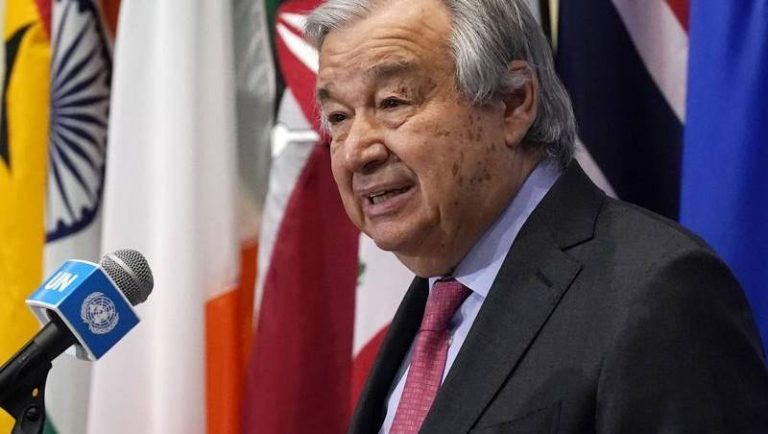
Antonio Guterres made the comment while launching a new global climate change report urging the world to hit the accelerator on the transition to renewable energy.

The Intergovernmental Panel on Climate Change (IPCC) report, released on Tuesday, says it’s still possible to meet the objectives of the Paris climate pact to limit global warming to well below 2C, preferably to 1.5C.

It sets out viable, financially sound options to keep the 1.5C goal alive, with Guterres saying the pace of transition to renewables needs to triple.

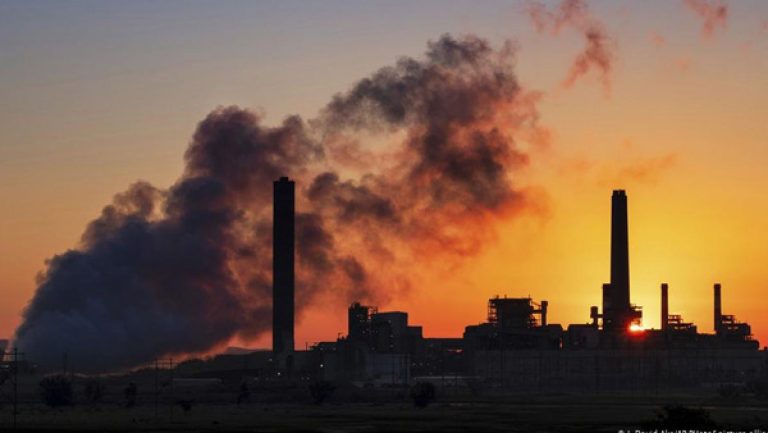
“We are on a pathway to global warming of more than double the 1.5-degree limit agreed in Paris. Some government and business leaders are saying one thing – but doing another. Simply put, they are lying,” he said.

He said climate activists were sometimes depicted as dangerous radicals “but the truly dangerous radicals are the countries that are increasing the production of fossil fuels”.

Frank Jotzo is a professor of climate change economics at the Australian National University (ANU) and a lead author on the report, which focuses on what must be done globally to avert the worst consequences of climate change.

He said Australia had a patchwork of climate policies that only covered a small part of the economy – nothing like the wholistic approach the report said was needed to be effective.

“In addition, the level of ambition in the few climate policy instruments that are in operation is very weak, compared to what is needed to be on a trajectory compatible with a 2C outcome,” he said.

He said there was little in place to encourage the transport sector to move away from fossil fuels, building codes were lax on energy efficiency, and the federal government’s safeguard mechanism, meant to apply enforceable emissions baselines for heavy emitters, was ineffective.

“There is no effective incentive to reduce emissions because baselines are set so high that most companies are below them anyway, without having to do anything.”

Peter Newman is a professor of sustainability from Curtin University and a co-author of the IPCC report, with a focus on transport.

He said Australia and other countries intent on supporting fossil fuel industries were trying to subvert the market-led transition to renewables.

“And that is really silly. Even in countries that politically are considered hold-outs or laggards we are seeing this kind of market-led transformation,” he said.

The report details the dramatic drop in the affordability of renewable power since 2010: solar is down 87 per cent, wind, 55 percent, and batteries 85 per cent.

“We now have a cost effective set of solutions that can provide dramatic reductions. An exponential decline in fossil fuels is now on the cards because they are market ready, they are cost effective,” he said.

“We can make the changes now, working with the economy, and not against it. That’s a dramatic shift in what we are seeing in this IPCC report.”

Prime Minister Scott Morrison went to a major climate summit in Glasgow last year without the two big things countries were asked for: stronger 2030 emissions reduction targets, and a rapid phase out of coal.

Morrison’s plan to achieve net zero emissions by 2050 relies on a technology-led economic evolution to cut emissions, capture and store them, or offset them, while allowing coal and gas exports to continue as long as there is demand.

New coal mining projects continue to be approved, along with gas developments.

SOURCE: AAP/PACNEWS

UN climate report: It’s ‘now or never’ to limit global warming to 1.5 degrees

A new flagship UN report on climate change out Monday indicating that harmful carbon emissions from 2010-2019 have never been higher in human history, is proof that the world is on a “fast track” to disaster, António Guterres has warned, with scientists arguing that it’s ‘now or never’ to limit global warming to 1.5 degrees.

Reacting to the latest findings of the Intergovernmental Panel on Climate Change (IPCC), the UN Secretary-General insisted that unless governments everywhere reassess their energy policies, the world will be uninhabitable.

His comments reflected the IPCC’s insistence that all countries must reduce their fossil fuel use substantially, extend access to electricity, improve energy efficiency and increase the use of alternative fuels, such as hydrogen.

Unless action is taken soon, some major cities will be under water, Guterres said in a video message, which also forecast “unprecedented heatwaves, terrifying storms, widespread water shortages and the extinction of a million species of plants and animals”.

The UN chief added: “This is not fiction or exaggeration. It is what science tells us will result from our current energy policies. We are on a pathway to global warming of more than double the 1.5-degree (Celsius, or 2.7-degrees Fahreinheit) limit” that was agreed in Paris in 2015.

Providing the scientific proof to back up that damning assessment, the IPCC report – written by hundreds of leading scientists and agreed by 195 countries – noted that greenhouse gas emissions generated by human activity, have increased since 2010 “across all major sectors globally”.

An increasing share of emissions can be attributed to towns and cities, the report’s authors continued, adding just as worryingly, that emissions reductions clawed back in the last decade or so “have been less than emissions increases, from rising global activity levels in industry, energy supply, transport, agriculture and buildings”.

Striking a more positive note – and insisting that it is still possible to halve emissions by 2030 – the IPCC urged governments to ramp up action to curb emissions.

The UN body also welcomed the significant decrease in the cost of renewable energy sources since 2010, by as much as 85 per cent for solar and wind energy, and batteries.

“We are at a crossroads. The decisions we make now can secure a liveable future,” said IPCC Chair Hoesung Lee. “I am encouraged by climate action being taken in many countries. There are policies, regulations and market instruments that are proving effective. If these are scaled up and applied more widely and equitably, they can support deep emissions reductions and stimulate innovation.”

To limit global warming to around 1.5C (2.7°F), the IPCC report insisted that global greenhouse gas emissions would have to peak “before 2025 at the latest, and be reduced by 43 percent by 2030”.

Methane would also need to be reduced by about a third, the report’s authors continued, adding that even if this was achieved, it was “almost inevitable that we will temporarily exceed this temperature threshold”, although the world “could return to below it by the end of the century”.

“It’s now or never, if we want to limit global warming to 1.5°C (2.7°F); without immediate and deep emissions reductions across all sectors, it will be impossible,” said Jim Skea, Co-Chair of IPCC Working Group III, which released the latest report.

Global temperatures will stabilise when carbon dioxide emissions reach net zero. For 1.5C (2.7F), this means achieving net zero carbon dioxide emissions globally in the early 2050s; for 2C (3.6°F), it is in the early 2070s, the IPCC report states.

“This assessment shows that limiting warming to around 2C (3.6F) still requires global greenhouse gas emissions to peak before 2025 at the latest, and be reduced by a quarter by 2030.”

A great deal of importance is attached to IPCC assessments because they provide governments with scientific information that they can use to develop climate policies.

They also play a key role in international negotiations to tackle climate change.

Among the sustainable and emissions-busting solutions that are available to governments, the IPCC report emphasised that rethinking how cities and other urban areas function in future could help significantly in mitigating the worst effects of climate change.

“These (reductions) can be achieved through lower energy consumption (such as by creating compact, walkable cities), electrification of transport in combination with low-emission energy sources, and enhanced carbon uptake and storage using nature,” the report suggested. “There are options for established, rapidly growing and new cities,” it said.

Echoing that message, IPCC Working Group III Co-Chair, Priyadarshi Shukla, insisted that “the right policies, infrastructure and technology…to enable changes to our lifestyles and behaviour, can result in a 40 to 70 per cent reduction in greenhouse gas emissions by 2050. “The evidence also shows that these lifestyle changes can improve our health and wellbeing.” .

SOURCE: UN NEWS CENTRE/PACNEWS

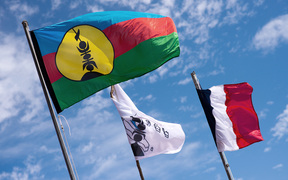
New Caledonian Union adamant on complete decolonisation

0

New Caledonia’s largest pro-independence party said it will not give up on the gains made in terms of decolonisation from France under the 1998 Noumea Accord.

The party president Daniel Goa made the statement in an address at the party congress in the north of the main island at the weekend, outlining its key points ahead of negotiations with Paris about the territory’s institutional future.

Last December, just over 96 percent voted against independence from France in the third and last referendum provided under the Noumea Accord.

However, the plebiscite was boycotted by the pro-independence side after it had unsuccessfully asked Paris to postpone the vote because of the impact of the Covid-19 pandemic on mainly the indigenous Kanak population.

The pro-independence parties said they would not recognise the result, describing it as illegitimate and one not reflecting the will of the people to be decolonised.

Anti-independence parties as well as the French government welcomed the result, with President Emmanuel Macron saying France was more beautiful because New Caledonia decided to remain part of it.

Right after the vote, the French overseas minister Sebastien Lecornu said Paris planned to hold another referendum in June next year about a new statute for a New Caledonia within France.

However, Goa reiterated at the weekend the pro-independence camp’s stance that it wouldn’t join discussions about re-integrating New Caledonia into France.

He told delegates that ‘the Caledonian Union had nothing to negotiate except to listen and discuss the process of emancipation that will irreversibly lead to sovereignty’.

Pro-independence parties, united under the umbrella of the FLNKS, said after the December referendum that they would have no negotiations with France until after this year’s election.

Last month, at the Congress of another pro-independence party, Palika, its spokesperson Charles Washetine suggested holding another independence referendum by 2024 to complete the decolonisation process, but this time with the participation of the Kanak people.

Washetine added that the vote should be run by the United Nations, and not by France any longer.

Goa accused France of having failed to be neutral at the last referendum, which was meant to conclude the Noumea Accord process with the Kanak people’s emancipation.

However, he said it turned out that France tried to hide behind a ‘neo-colonial putsch’.

Under the Noumea Accord, there has been a gradual transfer of power, which is enshrined in the French constitution and which Goa insisted was an irreversible achievement.

He was firm that there could be no consideration to open the electoral rolls which restrict voting rights to indigenous people and long-term residents in provincial elections and in referendums.

About 41,000 French residents are excluded from such voting.

Goa said freezing the electoral body with the Noumea Accord put an end to the French settlement policy, which the French prime minister Pierre Messmer still encouraged in 1972.

He said the signatories of the Accord wanted to lay the foundation for a citizenship of New Caledonia, allowing the indigenous people to be joined by long term settlers to forge their common destiny.

Goa said since the December referendum, the French state intended to bring these 41,000 French people back into the electoral body, which he said would destabilise the still very fragile political balances.

He likened attempts to change the rolls to re-colonisation.

He wondered why France would question the achievement of the Noumea Accord for the sake of ‘a handful of French people’ who left their country to settle in New Caledonia.

Goa said France was ready to sacrifice a political process and its word given in front of the international community for what he described as a ‘handful of adventurers’.

Anti-independence parties, however, expressed support for the push to have the restrictions abolished.

A local interest group, One Heart One Vote, said it would lobby the French Supreme Court, the European Human Rights Court and the United Nations to quash the existing provisions, describing them as discriminatory.

With the French presidential election due on 12 April, the Republicans’ candidate Valerie Pecresse said the eligibility question must be readdressed as to give a full place to those who had been building New Caledonia for years while having no right to vote.

In his address, Goa also alluded to the war in Ukraine and what he called France’s ‘omnipresent imperialism’ in part because of its continued occupation of Mayotte in the Indian Ocean.

The Comoros, which is between Mozambique and Madagascar, was partitioned after independence in 1975 because France refused to let Mayotte go as its residents had voted to stay with France.

The United Nations asked France to return Mayotte, but Paris integrated the island to become a French department in 2011 and part of the Eurozone three years later.

France will have presidential elections this month, followed by National Assembly elections in June.

Proper discussions on how the December referendum outcome will be implemented will have to wait.

SOURCE: RNZ PACIFIC/PACNEWS

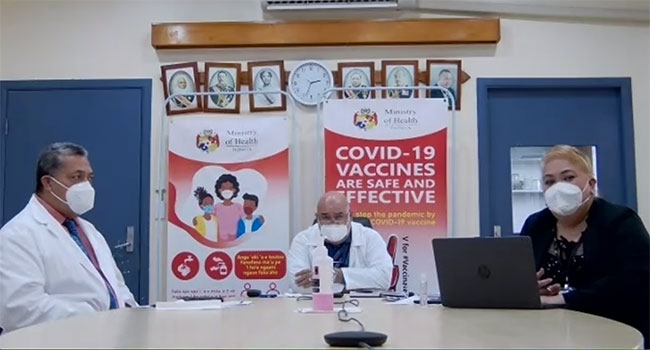
18 COVID-19 cases in Ha’apai community

Ha’apai has 18 positive COVID-19 cases in the community, recorded on Saturday, Tongan Minister for Health, Dr Saia Piukala said Monday.

He said according to reports, there did not seem to be any connection to the positive cases in quarantine in Ha’apai at this stage, but more information on the situation would be confirmed later.

Around 126 people travelled to Ha’apai from Tongatapu last month and while staying in quarantine some tested positive to COVID-19 during routine testing.

Dr Piukala said health would be releasing these passengers from quarantine in accordance with COVID-19 protocols.

There are now a total of 76 cumulative cases in Ha’apai.

In Vava’u, 33 new COVID-19 cases were reported yesterday bringing the total active cases to 139, while 107 had recovered.

New daily COVID-19 cases in Tonga have reduced over the past week with 295 new cases reported last Thursday, 155 last Friday, 131 last Saturday, and 107 Sunday.

So far, a total of 7,234 cumulative COVID-19 cases had been recorded in Tonga, with 4,915 recovered, 2,303 active cases, and nine deaths due to COVID-19. Another seven deaths of those who had COVID-19 were not due to the virus.

Tonga Medical Superintendent Dr ‘Ana ‘Akau’ola ‘confirmed there are nine people with COVID-19 currently in Mu’a Health Centre at the moment.

“Some are moderately severe but none are in ICU.2

“Another nine COVID-19 positive people are in Vaiola Hospital, three in Taliai and some in Makeke. However, those in Taliai and Makeke are usually for those who don’t want to home isolate. They are mainly frontliners. There is no one in ICU.”

Meanwhile, five repatriated passengers tested positive to the virus after arriving last week. Four positive cases are staying at the Tanoa Hotel and one at the Kupesi Hotel.

Dr Piukala confirmed more specimens taken from the community in Tongatapu were sent overseas to determine the type of variant circulating in Tonga.

He said results from 39 specimens confirmed that Omicron variant (BA1) is in the community and another four specimens taken from previous repatriates were confirmed to be Omicron (BA2).

Dr ‘Ana ‘Akau’ola said that BA2 is very transmissible, much more so than BA1.

“It’s effect on people are the same mostly mild symptoms.”

Vaccination rates for COVID-19 remains at 98% of the target population for first doses, 90% for second doses and 49 percent for boosters.

On Tongatapu, the vaccination program has started with AstraZeneca available for first and second doses and the Pfizer for booster doses.

Public Health Sister Afu Tei said the vaccine roll out programme started Monday at Niutoua and would continue throughout Tongatapu.

“There are around 20,000 plus people who have not yet had their booster shots.”

Pfizer doses are also being sent to the outer islands and vaccination programs will be rolled out there.

“We will go from town to town so people don’t have to travel around.”

Sister Tei said the Niuas booster shots are due on 15 April and there is a plan for the health team to travel there closer to the due date.

Meanwhile, Pfizer vaccines for those aged 5 to 11 from the New Zealand Government, are scheduled to arrive in Tonga on 15 April.

People who test positive to COVID-19 and have medical issues can call toll free numbers 0800012 or 0800013 to speak to Dr Sione Latu and his team.

Dr ‘Ana ‘Akau’ola urged only people who have COVID-19 and feel they need medical attention should call these numbers.

“The reason is so we can focus on people who are struggling right now and who have underlying diseases,” said Dr Akau’ola.

SOURCE: TONGA WIRES/PACNEWS

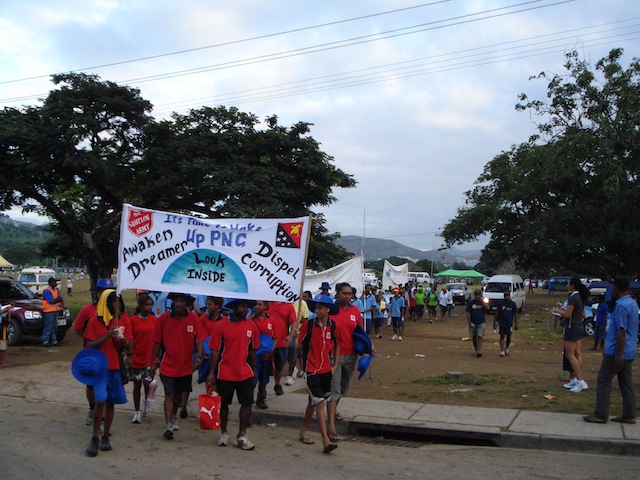
More power to tackle corruption in PNG

The Unexplained Wealth Bill will give the Commissioner of Police (COP) greater powers to prosecute public servants, complementing existing legislation to tackle corruption, Papua New Guinea Justice Minister Bryan Kramer says.

“Using his (COP) powers under the proceeds of Crime Act, there will be avenues of seeking orders from the court, like a search warrant or an unexplained wealth warrant,” he said.

Responding to questions from The National, Kramer explained that while the Ombudsman Commission (OC) only protected the office by investigating the department head, the new provisions would allow for other senior officials within the department to be held accountable.

“Leaders will still be subject to the OC, we all file our annual returns to declare our assets and then it is the onus of the OC to decide whether to verify,” he said.

“The intention of the OC is to protect the office occupied for the people, so the OC cannot carry out any prosecution of criminal offences as that jurisdiction lies solely with the police.”

Kramer said there were criminal provisions and fines being introduced for individuals under the bill and through investigations, provided by these new provisions in law, to establish that it is a proceed of crime.

“There will also be fines of up to K10,000 (US$2,840) for failing to report,” he said.

“This exercise is part of the Government to instil integrity and bring back honesty into the public service and the Government.

“Public servants, other than the department head, are not subject to the OC, so the bill will allow for more powers to those in law enforcement in their efforts to fight corruption.”

“The prime minister was committed to have these provisions re-introduced rather than introducing them into an organic law which would then be an extensive process.

“It is more practical to simply just introduce the provisions within the proceeds of crime.”

Attorney-General Dr Eric Kwa also noted that the proposed amendments gave them the opportunity to put public servants on notice, in the hope that this particular law would also prevent the need for any more Commissions of Inquiry.

SOURCE: THE NATIONAL/PACNEWS

Stay connected

529FansLike
172FollowersFollow
156SubscribersSubscribe
- Advertisement -