Home Blog Page 968

Felled by its own Failures – How Australia’s inaction to reform logging in the Solomon Islands has let China in

By William Kadi and DIrk Heinz

We have watched these past few weeks as the evolving situation surrounding the Solomon Islands/China security pact has unfolded. It appears that every journalist and political commentator is suddenly an expert in the Solomon Islands. We would be surprised if half of them even knew where the Solomon Islands was before the first rumblings of this deal made global headlines. Amongst reading about how this is Australia’s biggest foreign policy bungle since WWII, or how Australia’s refusal to take any real steps to tackle climate change has precipitated a revolt from the Solomon Islands Government, it has been interesting to read – or more accurately not read – about what level of responsibility the Solomon Islands Government bears in this turn of events. Reading the Australian commentary on the issue, you would think that Sogavare’s government is blameless in the whole affair and had no other choice but to court China because of Australia’s foreign policy shortcomings. And nowhere, amongst the numerous articles we have read on the issue, has any journalist bothered to ask local Solomon Islanders what they think of the situation – nor their take on how they think it has come about.

Australia’s Defence Minister, Peter Dutton, has dismissed claims that Sogavare’s decision to sign this deal was somehow intended as a form of payback against Australia for its inaction on climate change. Even though this is the same Minister who thought it was funny to joke about the plight of Pacific Islanders in the face of rising sea levels with his liberal party chums back in 2015, he is partly right in this instance. The signing of this deal had nothing to do with the Sogavare Government making a point to Australia regarding climate change. Make no mistake, addressing climate change is not a primary concern of the current Solomon Islands Government. If it was, not only would they not be rewarding the world’s second largest CO2 emitter with a shiny, seemingly no limits security deal, they wouldn’t continue to allow commercial logging companies (predominantly run by Chinese and Malaysian nationals) to decimate the country’s forests, rivers and communities. Unsustainable and unethical logging in the Solomon Islands has been a continual source of misery for most Solomon Islanders for the past 40 years. Commercial logging in the Solomon Islands is a disease poisoning the country. Over 90% of all round logs taken from the Solomon Islands are shipped back to China to service demand there. A report carried out by Global Witness less than 5 years ago estimated that if logging in Solomon Islands continues at current volumes, there will be no trees left to log by 2037.

And this is where Dutton is partly wrong when he says the signing of this deal isn’t linked to a failure by Australia to be more of a global champion of sustainability and responsible environmental practices. In a similar fashion to how this current security deal was most likely executed, for decades Chinese and Malaysian logging representatives have essentially been presenting local landowners with modest amounts of cash, gifts and preposterously one-sided contracts (which many landowners cannot read or understand) and asked them to sign away logging rights over their customary land. Sometimes the need for a contract is dispensed with entirely and loggers just pay landowners in bribes for access to their land. Ironically, if you need more parallels to be drawn between these longstanding murky dealings and the recent security deal, the Solomon Islands signatories are nearly always older men, about Sogavare’s age, who do not consult the wider community that will be affected and do not consider the long-term impacts of the deal on the community, electing instead to choose money and power over the longevity of their people and communities.

In acquiescing to the avaricious needs of Chinese and Malaysian loggers for fast money, Solomon Island landowners are also often signing away their children’s future right to enjoy those ‘kastom’ lands. In all our time acting for local landowners in disputes relating to agreements they made with logging companies, we have not seen one case where logging yielded positive results for the community. Usually, what transpires is the absolute decimation of local resources, pollution of vital water systems, destruction of sacred cultural sites, unfulfilled promises of schools and education benefits and, most sadly, regular complaints of sexual abuse of women and children carried out by foreign logging employees from China and Malaysia. The Solomon Islands Government knows all of this. They are the ones that issue companies with licences to log in the country. In some instances, government officials even hold logging licences for their own financial gain. Decades of allowing this sort of behaviour to occur has set a precedent for what occurred recently. It has showed China that they can muscle Solomon Islanders and buy out the greedy or most vulnerable with money. And it also showed them that legal and regulatory frameworks of the country were too weak to hold them accountable for their illegal activities. Beijing is simply capitalising on that weakness.

The lack of action by Australia and its allies to provide expertise and funding to fix the broken system which allows the rapacious, corrupt and insidious logging industry to thrive has allowed Chinese operatives to gradually seize considerable control and influence over Solomon Islands politics, culminating in this recent cosying up between the Solomon Islands Government and the PRC. Through logging, Chinese investors have been able to infiltrate just about every level of public and private sector decision making in Honiara and, as we have seen the world over, foreign investment by China through “private” companies are merely the tail of the dragon, the head usually sits in Beijing. Where Chinese investors take hold in the developing world, Chinese officials are rarely far behind.

We are fearful for the future of the Solomon Islands following the inking of this new security pact. Australia’s foreign policy in the Solomon Islands hasn’t been perfect. In many respects, it has reflected Australia’s own agenda to push the business interests of its own companies and seek to impress big brother in Washington. Perhaps the most glaringly disingenuous aspect of Australia’s foreign policy towards its Pacific neighbours in recent times has been the Coalition Government’s ambivalent approach to the issue of greenhouse gas emissions. A Pacific ‘Step-Up’ is as much a Pacific side-step as it is a path to winning the hearts and minds of Pacific Islanders if it doesn’t include a greater commitment on climate change. However, in our experience, for the most part Australian efforts to improve infrastructure and institutional frameworks such as access to justice, education and gender imbalance have been fair and transparent.

However, Australia has known about the murky path China has riven to gain influence over Solomon Islands officials through its established private logging enterprises in our country for many years. If early indicators hold true, it is likely that the same corrupt practices will soon pervade our country’s burgeoning mining industry, which is also predominantly filled with companies domiciled in China. Australia – through its DFAT officials and federal intelligence network – has watched this slow destruction of our environment and institutions unfold over the decades. And, much like it is doing now even though the seas are “lapping at our doors” as  Dutton so eloquently put it in 2015, it has chosen to sit on its hands while an environmental catastrophe has caused unforeseen collateral political relations damage.

When a tree falls in the Solomon Islands and Canberra doesn’t hear it, Beijing certainly does.

William Kadi is an environmental lawyer in the Solomon Islands. For 6 years he has represented customary landowners in the Solomon Islands in all forms of matters relating to damage caused to their lands as a result of commercial logging and mining practices across the country. Dirk Heinz assisted William in Honiara as a volunteer for 12 months. Here are their views on the long term consequences of regional inaction on climate change and how that has resulted in the Solomon Islands / China security pact.

SOURCE: PACIFIC LEGAL NETWORK/PACNEWS
Rebels ready for physical Pasifika

0

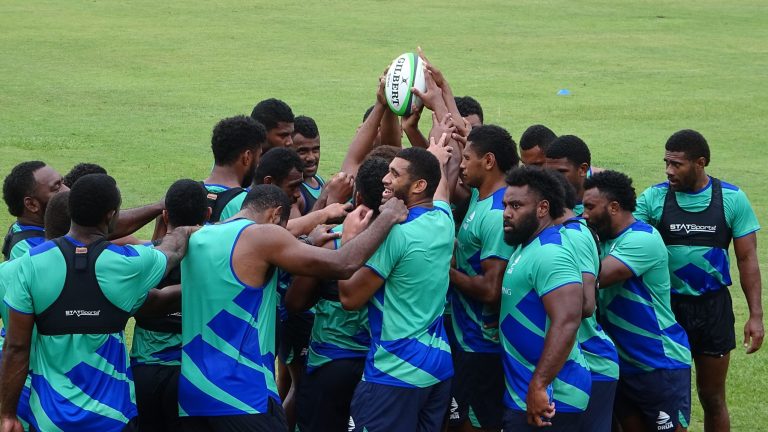
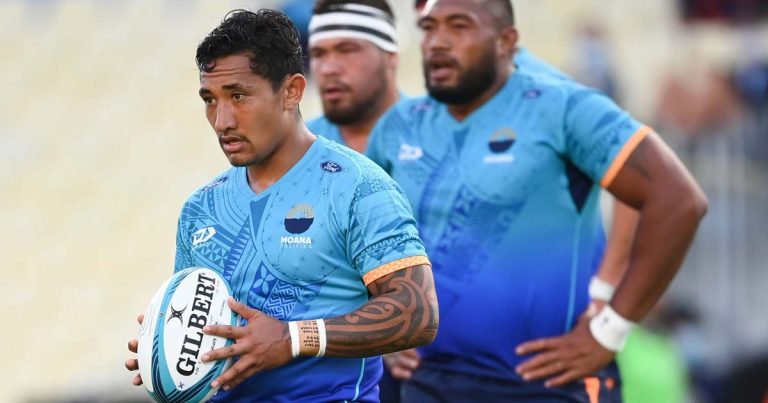
The Melbourne Rebels are preparing for a physical encounter with Moana Pasifika, looking to keep their finals dream alive.

The Rebels enter Saturday’s clash with the Super Rugby newcomers eager to avenge Sunday’s crushing defeat to the Crusaders as part of Super Round.

Catch every game of the 2022 Super Rugby Pacific season on Stan Sport. Start your Free Sport Trial Now

Whilst they were only down four at the break, Rebels assistant coach Geoff Parling concedes they gifted the wayward Aotearoa champions far too many chances throughout the game, punished in the second half.

“We’re disappointed with that result…even in the first half we gave them opportunities and they didn’t finish,” a honest Parling said.

“We went in down 7-3 in a good position so we knew we had to tighten things up, we had too many turnovers and if you keep giving a quality team like the Crusaders chances and they’re not firing, they will (eventually) take them.

“We thought we showed good fight, especially in our scramble defence, but we can’t allow that line breaks, first phase turnovers if we want to compete with these teams.”

They face a Pasifika side hungry for game time after yet another cancellation, following numerous COVID cases and injuries leaving the Western Force unable to suit up 23 players last week.

“They are a physical team so probably a big focus for us is to stick to our processes for a good length of time, not going away from what we do,” Parling believes. “Everything we do is about sticking to the processes and being disciplined in what we do.

“We can’t give them (an) opportunity because we know they have some dangerous players, they are a physical team that can hurt teams so that’s the main message.

“(They are) pretty similar to the Drua,” prop Cabous Eloff noted.

“They are very unpredictable in what their next move is and you always need to be on the front foot to know what’s coming next.”

The Rebels get a timely return with Pone Fa’amausili returning from a calf injury, which has hampered him since Wallabies camp last year.

Fa’amausili is the second in of the ‘Big Three’ returning from injury, with Rob Leota coming back last week and Trevor Hosea likely a fortnight away.

“It’s great to have him back,” Parling added.

“For the team, it’s a boost just having good players come back into the squad regardless of whether they have been out for a week, a year or five years.

“We had Robbie (Leota) come back last week and that was definitely a boost, he’ll be better for the game time, same with Pone. The more we can get these good players back involved with the squad, it’s obviously only going to be good for us.”.

SOURCE:RUGBY.COM.AU/PACNEWS

Fijian Drua team named, Fiji government committed $3 million

0

Fijian Drua Head Coach Mick Byrne has announced his line-up for the historic first homecoming match at ANZ Stadium Suva, as the men from Fiji take on the Highlanders from New Zealand.

It’s the first time in six months for majority of the players to return home for a chance to play in front of family and fans in the Fijian capital.

Haereiti Hetet (1) links up with Flying Fijians Mesulame Dolokoto (2) and Manasa Saulo (3) in the front row, while Viliame Rarasea (4) and Ratu Rotuisolia (5) man the lock positions. In the backrow, Captain Meli Derenalagi (6) leads a dynamic trio with Vilive Miramira (7) and Te Ahiwaru Cirikidaveta (8) as the number 8 loose forward.

The halves pairing sees Frank Lomani (9) at halfback and Teti Tela (10) at flyhalf. The powerful centre combination of Kalaveti Ravouvou (12) and Apisalome Vota (13) reunite for this match. Vinaya Habosi (11) and Selestino Ravutaumada (14) are on the wings, while Kitione Taliga (15) is at fullback.

Providing impact off the bench this week are Tevita Ikanivere (16), Meli Tuni (17) and Samuela Tawake (18). Isoa Nasilasila (19) and Joseva Tamani (20) round out the substitute forward pack. The backline impact players off the bench are Simione Kuruvoli (21), Onisi Ratave (22) and Kitione Ratu (23).

Coach Byrne said: “It’s so exciting for us to be playing our first ever match on home soil. We’re looking forward to playing in front of our fans. The boys understand the importance of a good performance in front of their home crowd. It’s also our second hit-out against a New Zealand team so we expect it to be a fast and physical clash. We’ve geared up for that and we’re really looking forward to putting a performance out on the park that our fans will be proud of.”

 Fijian Drua

Haereiti Hetet, Mesulame Dolokoto, Manasa Saulo, Viliame Rarasea, Ratu Rotuisolia, Meli Derenalagi (c), Vilive Miramira, Te Ahiwaru Cirikidaveta, Frank Lomani, Teti Tela, Vinaya Habosi, Kalaveti Ravouvou
Apisalome Vota, Selestino Ravutaumada, Kitione Taliga, Tevita Ikanivere, Meli Tuni, Samuela Tawake
Isoa Nasilasila, Joseva Tamani, Simione Kuruvoli, Onisi Ratave, Kitione Ratu.

Meanwhile, the Fijian Government has committed $3 million (US$1.5 million) to Counter Ruck Pte Limited (CRL) which was established by the Fiji Rugby Union to own and operate the Swire Shipping Fijian Drua.

This follows the signing of the Deed of Understanding between the Attorney-General and Minister for Economy, Aiyaz Sayed-Khaiyum, the Chairman of Fiji Rugby Union, Commodore Humphrey Tawake, and CRL Board Director John O’Connor with the Chief Executive Officer of the Fijian Drua Brian Thorburn also in attendance.

The A-G highlighted that the Fijian Government is pleased to sign the Deed of Understanding (‘Deed’) which aims to establish and strengthen co-operation between the Fijian Government and CRL, allowing them to work together on the ownership of shares.

He further explained that through the Deed, the Fijian Government is now paying $3 million (US$1.5 million) to CRL for a 25.5% ownership stake in the company, with an additional $3 million (US$1.5 million) to be paid by December 2022 to achieve 51% ownership.

Additionally, CRL has been granted a 13-year income tax holiday and will be provided a waiver for customs duty on goods imported specifically for Fijian Drua-related venues and High Performance Base from 1 July 2022 to 30 June 2023.

Any sponsorship above $250,000 (US$125,000) made to the Fijian Drua will receive a 200 percent income tax deduction.

Fiji Navy Commander and Fiji Rugby Union chairman Humphrey Tawake highlighted that the Fijian Government’s financial commitment further strengthens the Fijian Drua in assessing the necessary high-performance requirements in order to succeed as a team.

Fijian Drua CEO, Brian Thorburn, thanked the Fijian Government for its support towards the Fijian Drua Super Rugby team and is confident that the Government investment in CRL will improve financial stability and ultimately boost the performances of the Fijian Drua Super Rugby team.

SOURCE: FIJI TIMES/FIJI GOVT/PACNEWS

Vaccinations vital as COVID cripples Pacific countries

The International Federation of Red Cross and Red Crescent Societies are increasingly concerned for more than 1 million people in Pacific nations as they struggle with their first major wave of COVID-19 fuelled by the Omicron variants.

Ramping up vaccinations is vital as the rapid surge in COVID infections is causing increasing death and illness in countries with low immunisation rates.

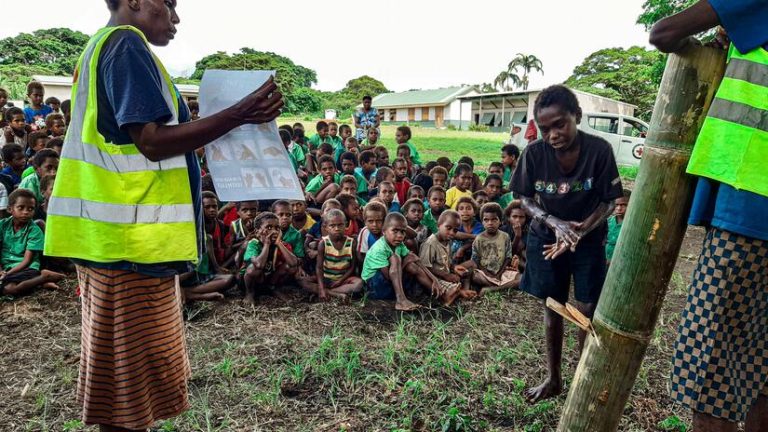
COVID-free for almost two years, Vanuatu, the Solomon Islands, Tonga, Kiribati, and Samoa have all experienced outbreaks in their capitals, and the virus is spreading to vulnerable outer island communities which lack basic treatment and vaccination facilities.

The virus is putting huge strains on fragile healthcare systems in population centres such as Honiara, Port Vila and Nuku’alofa. A rising number of healthcare workers are being struck down with COVID-19, further limiting health services and escalating the crisis.

Sainiana Rokovucago, Acting Pacific Head of Delegation, International Federation of Red Cross Red Crescent Societies (IFRC) said:

“It is critical that we reach the last mile with vaccinations in the most remote Pacific island villages. Every effort must be made by authorities to reach these communities, despite the logistical challenges of getting vaccines to these remote tropical islands.”

“Red Cross volunteers are working with communities to understand the importance of getting vaccinated and maintaining hygiene to stem the spread of this dangerous virus.”

Solomons Islands has reported more than 12,000 infections and more than 100 deaths since January, 2022. Vanuatu has reported over 6,000 cases and 12 deaths in the past two months. After the volcanic eruption and tsunami in January, Tonga is battling a triple disaster with over 9,000 cases and 11 deaths due to COVID.

In the Solomon Islands, only 20 percent of the eligible population have received two doses of a COVID-19 vaccine, according to Our World in Data. In Vanuatu, only 38 per cent have received two doses, considered the minimum initial protocol to help protect people.

“There is strong evidence that vaccinations save lives. People in the Cook Islands are experiencing their first wave of the virus, yet due to the high vaccination rate of 100 per cent, they have been able to avoid severe illness and many deaths.”

“It is critical that we do even more to counter misinformation, knowledge gaps and rumours about COVID-19 and vaccinations, by building trust and vaccine by understanding any concerns, answering questions, and fostering dialogue through trusted channels.”

“COVID is far from over in the Pacific so we need to vaccinate everyone now,” she said.

SOURCE: IRRC/PACNEWS

Freesoul Ltd fined $1 million by Fiji High Court for undertaking unauthorised developments at Malolo Island

Freesoul Real Estate Development Limited has been fined $1million (US$500,000) by Fiji’s High Court in Suva for two counts of undertaking unauthorised developments at Malolo Island in 2018.

The charges against Freesoul relate to the failure to comply with a prohibition notice issued by Fiji Department of Environment in June 2018 and carrying out of resort development activity in Malolo without an approved Environmental Impact Assessment Report.

High Court Judge, Justice Daniel Goundar has also ordered Freesoul to post a refundable environmental bond of $1.4 million(US$647,000) with the Department of Environment and rehabilitate the affected areas to the satisfaction of Department at its own expenses.

He said once the affected areas have been rehabilitated to the satisfaction of the Department of Environment, the bond may be refunded to the offender.

He further said it is the matter for the Department of Environment to lift the prohibition notice that was issued to the offender on first June 2018.

SOURCE: FIJI VILLAGE/PACNEWS

Australia doesn’t want its forces operating alongside ‘ruthless’ Chinese in Solomons

Australia will resist sending soldiers and police to Solomon Islands if they are forced to operate alongside Chinese security personnel as concern grows that Beijing will deploy brutal and repressive tactics in the Pacific island nation.

Home Affairs Minister Karen Andrews on Wednesday warned it was “very likely” China would attempt to send troops to Solomon Islands, while also claiming Beijing had politically interfered in Australia’s election without providing any evidence.

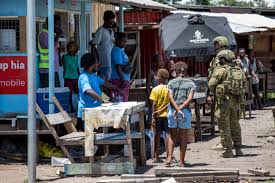
More than 100 members of the Australian Federal Police and Australian Defence Force were sent to the Solomons last November to help Prime Minister Manasseh Sogavare quell a violent uprising.

But the Australian government is now rethinking its approach in the wake of the country’s controversial security pact with China.

Australia’s top spy, Andrew Shearer, confirmed on Wednesday there would be concerns with “unity of command” on the ground if Australian and Chinese forces had to operate side by side.

“Unity of command is always desirable in any security operation, and confusion around unity of command is an issue,” the director-general of the Office of National Intelligence, the nation’s peak intelligence agency, said.

“We are also concerned that in such a fragile, volatile country, Chinese policing techniques and tactics that we have seen deployed so ruthlessly in Hong Kong, for example, are completely inconsistent with the Pacific way of resolving issues and could incite further instability and violence in the Solomon Islands.”

Shearer said the security deal “wasn’t an intelligence failure, this strategy has been unfolding for a number of years”.

He also warned China wants a region “where it has sustained military presence” so it can make it more difficult for the American and Australian military to operate in a crisis.

China currently has security advisers on the ground in Solomons, but there are fears from within the Australian government the new security pact could pave the way for Beijing to deploy a frontline police and military presence in the country.

Government sources said Australia would still look to support the Solomons in the future, but would ensure its forces wouldn’t be operating alongside Chinese personnel.

Michael Shoebridge, director of the defence program at the Australian Strategic Policy Institute, said any future deployment of Australian defence and police personnel would have to be “entirely separate” from Chinese security.

“The way the Chinese presence would operate would be brutal and repressive – just like they are at home – and we would not want to be complicit or accountable for their behaviour,” Shoebridge said.

Jonathan Pryke, director of the Lowy Institute’s Pacific Islands program, said the prospect of Australian and Chinese forces being asked to defend the same areas and assets was a “real volatile situation”.

He said the reality is, Australian police are seen as a trusted third party in the Solomons, with previous surveys showing more than 70 percent of the population were supportive of their presence under the Regional Assistance Mission to Solomon Islands operation between 2003 and 2017.

“We have been the security backstop in that country since 2003, and we should retain that commitment,” he said. “But we should also make it very clear that we would be very worried how to manage it operationally were China asked to do the same.”

The agreement to allow Chinese armed forces to protect its Solomons infrastructure, less than 2000 kilometres off Australia’s east coast, has dominated the past week of the federal election campaign. Prime Minister Scott Morrison and Foreign Minister Marise Payne have been criticised by Labor for not doing more to stop the deal from being signed.

Andrews on Wednesday suggested the timing of the announcement might have been deliberate to harm the Coalition’s chances at the election.

She said Beijing was “clearly very aware we are in a federal election campaign at the moment” and alleged it was “political interference”.

“I think the one … thing we should be at least taking notice of and paying attention to is the timing of the announcement from deals in relation to the Solomon Islands,” she told Brisbane radio station 4BC.

Labor’s home affairs spokeswoman, Kristina Keneally, said the government needed to share any proof it had of foreign interference with the opposition, considering it is in caretaker mode.

“If Karen Andrews has such intelligence, Labor should be briefed,” she said on Twitter.

“Otherwise she should listen to [Australian Security Intelligence Organisation]: using fear of foreign interference is as corrosive as foreign interference itself,” said Keneally.

SOURFCE: SMH/PACNEWS

Tuvalu candidate vying for Commonwealth SG role appeals for Pacific support

The former governor-general of Tuvalu vying to head the Commonwealth as its next secretary-general is hoping the region will get behind his campaign to become the first Pacific Islander to get the top role.

Sir Iakoba Italeli is a long-serving Tuvalu government official, who has been the Queen’s representative between 2010 to 2019; and also held the position of attorney-general from 2002 to 2006.

Sir Italeli said he made the decision to run for the Commonwealth’s number one diplomat post because he believes “it is time for a Pacific Islander to guide the organisation.”

“I only hope that Pacific islands can come together and support me so that we can be seen as a region working together,” he told RNZ Pacific.

The Commonwealth – headed by Queen Elizabeth II – is made up of 54 “independent and equal countries” representing 2.5 billion people across Africa, Asia, the Caribbean and Americas, Europe and the Pacific.

Tuvalu is one of eleven nations from the Pacific that holds membership.

The Commonwealth Secretariat is the main intergovernmental organisation responsible to drive the Commonwealth’s agenda. The organisation is led by a secretary-general, a role that is currently held by Patricia Scotland.

The secretary-general is elected at the Commonwealth Heads of Government Meeting (CHOGM).

The last CHOGM was held in 2018 but due to Covid-19, it has been postponed twice in 2020.

But in late June, Rawanda is confirmed to host the high-level meeting under the theme ‘Delivering a Common Future: Connecting, Innovating, Transforming’ where a new Commonwealth secretary-general will also be selected.

Sir Italeli said the Commonwealth Secretariat needed a “change for the better” to serve its member states.

While there are “at least two other candidates” from other regions campaigning for the top position, he believes Tuvalu and the Pacific Islands should have the chance to lead and to unite the Commonwealth.

“There are so many people who have raised their concerns and about the problems with the current Commonwealth Secretariat,” he said.

“The Secretariat could function better…to harness more funding for the Commonwealth member states and better guide the organisation.”

Climate change and protecting the Oceans will be priority issues he will be advocating to the international community.

Sir Italeli said the climate crisis is a matter of “life and death” for people from all the regions of the Commonwealth.

But even though the latest IPCC reports have confirmed the need for a global effort to fight climate change, “we are not [doing enough] to address the problem,” he said.

One of the initiatives he will be promoting as part of his campaign is what he calls the “Tuvalu Initiative”.

Sir Italeli said the initiative will be the establishment of a negotiating bloc made up of Commonwealth member states at the COP27 meeting in Egypt later this year.

He said such a negotiating group does not exist currently and it could make a significant difference at the United Nations annual climate change conference if the 54 Commonwealth nations spoke with “one voice”.

“So that we have a considered negotiating group to negotiate our concerns of climate change, and to do something for that,” he said.

“I think we have to come together and work together so that we can have a one voice,” Sir Italeli said.

SOURCE: RNZ PACIFIC/PACNEWS

Australia worried China will bring Hong Kong police techniques to Solomons

Australia’s spy chief says Canberra is concerned Chinese police deployed to the Solomon Islands under a new security pact could use “ruthless” techniques previously used to quell anti-government protests in Hong Kong.

Andrew Shearer, the director-general of the Office of National Intelligence, travelled to the Pacific islands nation last month in a failed attempt to persuade Prime Minister Manasseh Sogavare not to sign a security pact with China that has alarmed the United States and its allies.

While details of the pact have not been disclosed, Sogavare has ruled out a military base and said it covers domestic policing.

Shearer told the Raisina Dialogue conference in New Delhi that Australia responded within eight hours to Sogavare’s request in November for police assistance to quell riots.

Deployed Australian police sit under the command of the Royal Solomon Islands Police Force through a bilateral security treaty.

Australia is concerned about the impact of Chinese police on unity of command in security operations, he said.

“In such a fragile, volatile country Chinese policing techniques and tactics that we’ve seen deployed so ruthlessly in Hong Kong, for example, are completely inconsistent with the Pacific way of resolving issues and could incite further instability and violence in the Solomon Islands,” he said.

The Chinese embassy in the Solomon Islands did not immediately respond to a request for comment. China said previously the security deal was not targeted at any third party and did not contradict the cooperation the Pacific nation has with other countries. read more

The pact has dominated the Australian election campaign, amid fears it could lead to a Chinese navy presence less than 2,000km (1,200 miles) from Australia. read more

On Wednesday, Home Affairs Minister Karen Andrews told radio station 4BC it was “very likely” China would send troops to Solomons, and said the timing of the pact announcement was a form of political interference in the Australian election.

China’s foreign ministry told reporters a day earlier that “Australian politicians often seek selfish political gains by making wild remarks to smear China and clamour for war”.

Shearer denied the signing of the pact was an intelligence failure by Australia, which has invested billions of dollars in aid and security assistance to the Solomon Islands.

Intelligence agencies were concerned it could potentially lead to an increased Chinese military presence, despite Sogavare publicly ruling this out, he said.

China aimed to establish a network of dual use and military facilities from the west coast of Africa to the Pacific, he said.

SOURCE: REUTERS/PACNEWS

‘We cannot afford greenwashing’: UN Chief Guterres highlights key role of Net-Zero experts

0

As part of the UN’s climate action efforts, the Secretary-General’s Net-Zero Expert Group met for the first time on Wednesday, on a mission to develop stronger and clearer standards for net-zero emissions pledges by non-State entities — such as businesses, investors, cities and regions—and speed up their implementation.

In a video message, António Guterres thanked the group for taking up the crucial task, led by former Canadian Environmental Minister, Catherine McKenna.

“Your skills and experience can help to keep 1.5 alive. We know what we need — global emissions must decrease by 45 percent by 2030, starting now. Or rather yesterday. We cannot overstate the urgency of our task”, he said.

The UN chief denounced that fact that fossil fuel interests are now ‘cynically’ using the war in Ukraine to lock in a high carbon future, noting that financial and technical obstacles to the deployment of renewable energy are hurting many developing countries.

“The world is in a race against time. We cannot afford slow movers, fake movers or any form of greenwashing”, Guterres highlighted.

The Secretary-General reminded that he decided to establish the group due to a “deficit of credibility and a surplus of confusion” over emission reductions and net-zero targets.

“We need to ensure net-zero commitments are ambitious and credible, and that they align with the highest standards of environmental integrity and transparency.

“They must also be actionable and mindful of different circumstances”, he added, outlining the main task facing the Group.

The UN chief recognised the independence of the experts and said that the best protection against “special interests” will be the full transparency of their consultations and process.

The Expert Group, consisting of 18 members from a range of different backgrounds, will meet in-person in May— a meeting that will be attended by the Secretary-General.

Their main task is to make recommendations promoting more ambitious climate action, and environmental integrity, addressing four specific areas:

*Current standards and definitions for setting net-zero targets.
*Credibility criteria used to assess the objectives, measurement and reporting of net-zero pledges.
* Processes for verification and accounting of progress towards net-zero commitments and reported decarbonisation plans.
*A roadmap to translate standards and criteria into international and national level regulations

SOURCE: UN NEWS CENTRE/PACNEWS

International Mid-season Tests to kick start World Cup campaigns for Pacific nations

Pacific nations are set to kick start their World Cup campaigns in June when they take the field in the first Tests played in the Southern Hemisphere since 2019.

New Zealand will host Tonga in Auckland, while Samoa meet Cook Islands and Fiji face Papua New Guinea in a Pacific Test double-header at Campbelltown Stadium on 25 June.

The Tests will take place during the NRL’s stand-alone representative round, which features the women’s State of Origin in Canberra on 24 June and Game II of the men’s series between NSW and Queensland in Perth on 26 June.

Besides providing an important opportunity for the six nations to prepare for the end-of-season World Cup in England, the Tests will also have a significant bearing on player eligibility for the tournament.

While the likes of Junior Paulo, Jarome Luia and Xavier Coates will be able to play Origin and still represent their Pacific heritage at the World Cup, players are no longer able to swap between nations in the same year.

The new rule will prevent 11th hour defections, like that of Jason Taumololo, Andrew Fifita, David Fusitu’a and Siosiua Taukeiaho from New Zealand and Australia to Tonga at the 2017 World Cup.

It will mean that the likes of Sharks winger Ronaldo Mulitalo would be unable to play for New Zealand in the mid-season Test and then choose represent Samoa at the World Cup if left out of the Kiwis squad.

However, the likes of Cronulla centre Siosfifa Talakai, Brisbane’s Kotoni Staggs or Penrith’s Stephen Crichton could still represent NSW in the upcoming Origin series and play for Tonga or Samoa at the World Cup.

Similar eligibility rules have been introduced ahead of the women’s and wheelchair World Cups to be played alongside the men’s tournament in England at the end of the year.

The Kiwi Ferns will also warm-up for the World Cup with a Test against Tonga in a double-header at Mt Smart Stadium on 25 June.

The Kiwis will enter the World Cup as the No.1 ranked men’s team, while Tonga’s last Test was an historic 16-12 defeat of the Kangaroos at Eden Park in November 2019.

Tonga also defeated Great Britain in 2019, and shocked New Zealand on home soil in the 20o17 World Cup.

“We are excited about the opportunity to represent the proud nation of Tonga for the first time since the successful campaign against Australia and Great Britain back in 2019,” Tonga coach Kristian Woolf said.

“This opportunity has been a long time coming, so we can’t wait to face the Kiwis again. This will be an important match for us as we look to reunite the team, and also give some of our young players a chance to represent their country ahead of the World Cup.”

ARLC Chairman Peter V’landys said the round would celebrate the re-birth of the international game following the COVID-19 Pandemic.

“The Commission has made it clear that growing international Rugby League would be a priority and we are delivering on that promise. Representative Round will provide a return to the excitement and national pride that Test matches produce,” he said.

“The Pacific Test Matches will be vital for these nations as they prepare for the World Cup later this year and importantly, for our fans, a chance to watch their heroes live in their national colours. The passion of the Pacific Nations and their fans is something unique to rugby league.

“This is part of a long term plan to grow the international game in conjunction with International Rugby League and member countries. We’ve seen with the growth and success of Tonga in recent years and we want to capitalise on the potential depth of our Test playing nations.”

NRL Chief Executive Andrew Abdo said the Representative Round would celebrate the game’s best players.

“To have State of Origin and Test Matches across one round for the final time before we enter a new cycle from 2023 of a dedicated international window in October is exciting for the game.’’ he said.

“I’d like to thank Clubs, the IRL, RLPA and the various international bodies for working together to make the round a reality.”

International Rugby League Chairman Troy Grant said the matches would be important fixtures ahead of the World Cup later in 2022.

SOURCE: NRL/PACNEWS

Stay connected

529FansLike
172FollowersFollow
156SubscribersSubscribe
- Advertisement -