

Home Blog Page 1245

Women leaders in Oceania paving the path for the future of basketball

Pacific Women basketball leaders are leading the way in the growth of basketball in the region with fresh perspectives and innovative approaches to developing the game.

According to a Russell 1000 report, in 2018, female leaders held 20.8 percent of the board seats listed on corporate boards.

With a review of the current board members of National Federations in the Oceania region, over 34 percent of the members were female individuals including FIBA Oceania Board Members, Karo Lelai of Papua New Guinea and Jubilee Kuartei of Palau

“One of FIBA’s pillars of objective in this strategic cycle is Women in Basketball, and the continuous growth we have in the region is impressive whether on or off the court,” FIBA in Oceania Senior Manager Amanda Jenkins shared.

“With capable management and women leaders on the board of our national federations, we will continue to improve our diversity and approach in developing the game in Oceania,” she added.

Some of the highlights of Women in Basketball in the region were the first all-female technical crew that officiated a women’s basketball game in the Pacific Games in 2019 and FIBA’s office in Oceania currently has over 75 percent, full-time female employees.

FIBA reached out to the female board members to get their thoughts as leaders in their respective Federations.

Lelai serves as the Basketball Federation of Papua New Guinea’s (BFPNG) President and is also part of the FIBA Central Board and mentioned that there is still room for improvement in leadership roles in Papua New Guinea.

“It is still very much a man’s world,” shared Lelai regarding the basketball scene in Papua New Guinea.

“I have to prove myself every day in this job because there are still doubts in our capabilities as leaders. However, I must still commend the PNG, basketball family. In my personal view, we are light years ahead of many other sports in terms of gender equity,” she added.

Lelai is the first female President in the history of BFPNG, and in her term as leader, the Federation performed well in 2020 with its innovation and adaptability despite the pandemic. BFPNG revised its community programs and targeted provinces outside of Port Moresby to alleviate the lost opportunities with government-imposed lockdowns in the capital.

Lelai stressed the importance of diversity in leadership as a key factor in the growth of any organisation.

“Diversity at the decision-making level assists to ensure a much better outcome. Even more importantly, females, who are often nurturers in the home, will be more mindful of and will pay more attention to athlete welfare or protection and gender-smart decision making,” she shared.

“Given the statistics of gender-based violence in PNG, sport is a powerful platform for survivors to tell their story and empower other women to take proactive steps to protect themselves. Sport has a responsibility to facilitate women empowerment.,” she added.

Meanwhile, Palau’s Kuartei is the youngest Board Member in the Palau Basketball Federation (PBF), while also serving as a member of FIBA’s commission on the Working Group on National Federations Development.

“Despite being the youngest in the Board (PBF), I believe I was acknowledged because of my hands-on experience in basketball as a former player, a former elite referee, and my experience with the administration for 20 years,” shared Kuartei.

Kuartei shared that Palau’s matriarchal society has helped her work as the Federation’s Secretary-General that is supportive of her decisions for Palau basketball.

“With Palau Basketball, I have never felt any unequal treatment as a female leader. Being a woman, and the youngest of our board, it has been an honor to serve with a team of great leadership on the Palau Basketball Federation board,” she said.

The Palau native emphasised the importance of role models in society, especially from a leadership perspective.

“I feel it’s important to be that role model for the young girls in our sport, but also our communities. Through basketball, as female leaders, we have a greater voice and responsibility to our communities and countries,” Kuartei said.

The growing number of women playing basketball in the region was apparent in the last year. In reference to the Development Participation numbers of Pacific countries in 2020, women in basketball participation have increased to 28 percent.

The influx of female leaders in the region has certainly given avenues for women to showcase their talent and leadership in the management sector.

Whether in the form of providing a diverse opinion, role models for the youth, or professional skills to the table, their contributions are not to be understated and could be the key for basketball to take the next level in the Pacific.

SOURCE: FIBA/PACNEWS
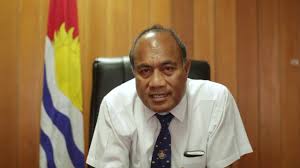
Government of Kiribati prepares charter vessel to take water to desperate families in Banaba

The Office of the President in Kiribati has today responded swiftly to desperate pleas for fresh water supplies from the people of Banaba.

PACNEWS has established that a directive has come from the President’s Office in Tarawa to send a chartered vessel to the island, as early as tomorrow, with the much needed fresh water supplies for the 300 residents on the island.

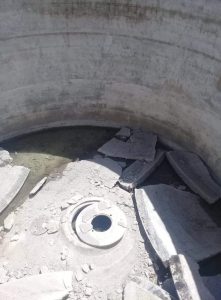
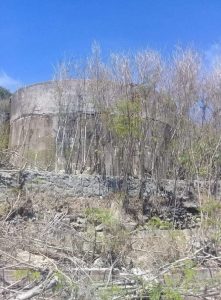
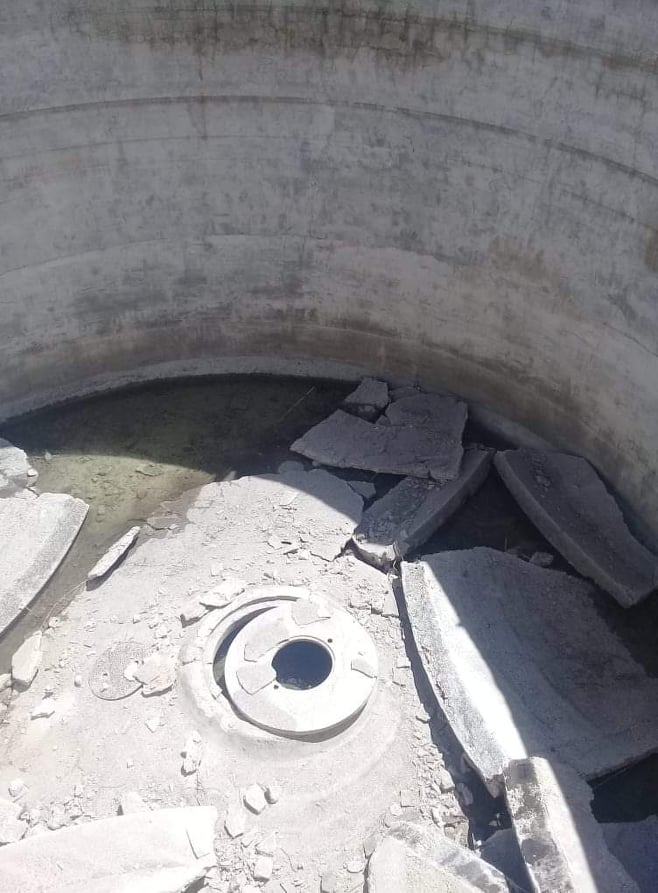
Dried up salination plant on Banaba Island.
Dried up desalination plant on Banaba Island

“The Government through the Ministry of Infrastructure and Sustainable Energy (MISE) will charter a ship to the island, loading will start at 2pm today. We deeply apologise for this short notice, but MISE just informed us that the charter has just got approved, an email to partners from a senior official in the Office of the President said.

The email sighted by PACNEWS assured the people of Banaba that a desalination plant will be shipped on the charter vessel to the island.

“We also assisted with procuring other items required for fixing the desalination plant, said the email.

The office of the President has confirmed it will work with the Australia and New Zealand high commissions in Tarawa on shipping more water supplies to the island.

“We have limited time to work on this but we hope we can get some water on this charter ship to help families on the island that have run out of drinking water, said the senior government official.

Empty desalination plant on Banaba Island
Empty desalination plant on Banaba Island. Photo Roubena Ritata

On Wednesday, community leader Roubena Ritata sent a water crisis distress call to the government calling for international help.

Ritata said the drought and water crisis in Banaba was in a ‘desperate situation’ and the 300 residents were ‘dying for clean water.’

Banaba, also known as Ocean Island has been without water supplies for a year after its two desalination plants broke down compounded by a prolonged drought

SOURCE: PACNEWS

Islands, rocks and tuna: Pacific nations draw new battle lines against rising seas

Small island states in the Pacific are opening a new front in the fight against rising seas, to secure rights to an ocean area bigger than the moon that is home to billion-dollar fish stocks.

States from Kiribati to Tuvalu are mapping their remote islands, scattered across the ocean, in a bid to claim permanent exclusive economic zones (EEZs), stretching 200 nautical miles (370 km) offshore, irrespective of future sea level rise.

As global warming pushes waters higher, Pacific nations fear their islands could be swamped, shrinking their EEZs and rights to fishing and mining within their boundaries – so they are trying to lock in existing zones now.

“There’s a sense of urgency,” said Jens Krüger, deputy director of the ocean and maritime programme at the Fiji-based Pacific Community, a development organisation run by states.

“Sea level rise and climate change are threats that can devastate our islands.”

Once islands and EEZs are mapped in line with UN rules, Pacific nations believe they cannot be “challenged or reduced as a result of sea level rise and climate change”, Krüger said.

Under the 1982 UN Convention on the Law of the Sea (UNCLOS), which was agreed before sea level rise was recognised as a global problem, states have rights in a 200-nautical mile EEZ stretching from their shores.

But higher seas, driven by melting ice in Antarctica and Greenland as the planet’s climate heats up, could force people to abandon low-lying islands.

That would downgrade them to “rocks” in UN terminology, with UNCLOS specifying that “rocks which cannot sustain human habitation or economic life of their own” do not qualify for an EEZ.

Seas could rise by up to about 1 metre (3.28 ft) this century, depending on how far global temperatures warm, the Intergovernmental Panel on Climate Change (IPCC) has warned.

Pacific states are concerned that storm surges, flooding, coastal erosion and saltwater intrusion are already harming their land, damaging homes and farms among other assets.

In addition, they have vital economic interests far offshore, especially the sale of licences to tuna fishing fleets from nations such as Japan, South Korea and the United States.

Clive Schofield, head of research for the Global Ocean Institute at the World Maritime University in Sweden, said the EEZs were “particularly critical to the small-island, large-ocean states of the Pacific”.

“I think there is growing support for the idea that these states who have contributed the least to climate change should not be penalised first,” he said.

“We are talking about rights over marine resources that are fundamental to their future development.”

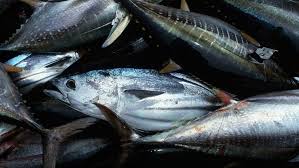
The Western and Central Pacific Fisheries Commission said the region’s tuna catch of 2.9 million tonnes in 2019 was worth US$5.8 billion and accounted for 55 percent of the global total.

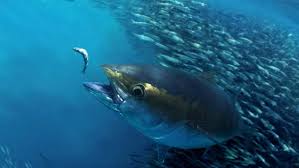
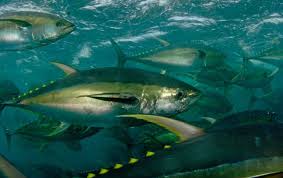
Yello fin Tuna

The fear is that, if islands disappear, foreign fishing vessels could scoop up tuna stocks, arguing the waters are no longer in a nation’s EEZ but part of the high seas, open to all.

Ten Pacific island states, including Fiji, Kiribati, Tonga and Tuvalu, have about 2 million people living on a land area of 62,000 sq km (23,938 sq miles), roughly the size of the U.S state of Florida, according to UN data.

But their combined EEZs total 40 million sq km, which is bigger than the surface of the moon at 38 million sq km, or the entire continent of Africa at 30 million sq km.

Most legal experts dismiss the idea of renegotiating UNCLOS, which was decades in the making and has not been formally ratified by the United States.

“Changing UNCLOS would be a nightmare,” said Elaine Baker, a professor at the University of Sydney and director of its Marine Studies Institute.

Countries have been quick to claim extra land, for instance after an offshore volcanic eruption created an island, but she could think of no examples of nations giving up maritime zones when islands disappeared.

“People want to celebrate land appearing but not so much land disappearing,” said Baker, who also works for the Norway-based GRID-Arendal environmental communications group.

The Pacific Community says Kiribati, the Marshall Islands, Niue, Samoa, Tuvalu, Australia and others either have changed, or are in the process of changing, legislation to allow them to use geographical coordinates to define their EEZs, rather than traditional maritime charts.

David Freestone, a professor at The George Washington University Law School, said Pacific states may face problems if they formally fix their EEZs but fail in future to update charts for navigation. Outdated charts could be misleading for ships.

“Other countries with wider maritime interests, like the United States, say it’s unsafe if (Pacific nations) don’t update their charts – it is a maritime risk,” he said.

Pacific island governments have agreed to recognise each other’s existing maritime limits – but that may not be enough.

“It’s not the mutual recognition they want, it’s the recognition of everybody else,” Freestone said.

If islands disappear, “the Japanese and the Chinese could say ‘this is no longer an exclusive economic zone’,” and try to fish or mine in the region, he added.

The International Law Association, grouping scholars around the world, has supported the vulnerable islands, saying in a 2018 resolution that any maritime zones determined under UNCLOS “should not be required to be recalculated should sea level change affect the geographical reality of the coastline”.

The Federated States of Micronesia (FSM), for instance, has submitted hundreds of pages to the United Nations to detail the outer extent of its EEZs, which could make it easier to enforce the zone in any dispute with foreign fleets.

The submission lists tens of thousands of coordinates in the Pacific Ocean, such as 3°19’49.99″ North 149°04’07.84″ East.

Micronesia wrote in a 2020 letter to the United Nations that it “intends to maintain these maritime zones … notwithstanding climate change-induced sea level rise”.

Tuvalu Foreign Minister Simon Kofe, meanwhile, told a conference last September that his nation insists, in diplomatic relations with other countries, that they recognise “the statehood of the nation as permanent and its existing maritime boundaries as set, regardless of the impacts of sea level rise”.

Pacific Small Island states may be pioneering work to secure maritime boundaries, but rising seas could redraw coasts from Bangladesh to Miami. About 680 million people live within 10 metres of sea level, according to the IPCC.

“This issue isn’t just for small island developing states, it’s an issue for the global coastal community,” said Schofield of the Global Ocean Institute.

SOURCE: REUTERS/PACNEWS

First doses of AstraZeneca COVID-19 vaccine administered to 10 Fijians frontline workers

The first doses of the AstraZeneca COVID-19 vaccine have been administered to 10 frontline workers at the Nadi International airport today.

Receiving the first ‘jab’, Dr Mara Vukivukisevu from the Lautoka hospital reiterated that having the vaccine is very important during this fight against COVID-19.

Dr Vukivukisevu is one of Fiji healthcare heroes who have treated COVID patients in the Lautoka Hospital Isolation Ward.

“I encourage everyone to get vaccinated against COVID-19. This is a fight that the whole world is up against and having this vaccine is very important. COVID-19 is just like going into a battle and if you don’t have a bullet proof vest you will surely be caught out in the crossfire. That’s what these vaccines represent, our protection from this virus.”

The same sentiments were made by RFMF head of COVID-19 security taskforce, Major Neumi Vakadewabuka who also called on all Fijians to register in order to be vaccinated.

“It will be good for you, good for Fiji. It’s safe, we have done it and so should you,” he said

The first ‘jabs’ were administered to:

*MOH – Dr Mara Vukivukisevu
*MOH nurse – Pratika Singh
*MOH Health inspector – Setareki Raiula
*RFMF’s Major Neumi Vakadewabuka
*FRCS – Sanjeep Reddy
Hotelier – Daniel Roy
*Fiji Airways Purser – Maria Vani
*ATS Assistant Manager Passenger Services – Nairah Pakeezah Mohammed
*Fiji Police Force Officer in Charge Border Police – Superintendent Aisake Kafoa
*Fiji Airports – Joe Grey

Fijian Prime Minister Voreqe Bainimarama said “Our frontline workers are being vaccinated first because they face the greatest risks. I plan to be vaccinated myself as soon as I become eligible. These vaccines are safe, they are effective, and they are the key to defeating this terrible pandemic.

Meanwhile, the Health Ministry says it will have backup systems in place to manage allergic reactions to the Oxford AstraZeneca COVID-19 vaccine which will soon be rolled out across the country.

Permanent secretary Dr James Fong made the comment in response to queries from The Fiji Times about the Austrian Government suspending vaccinations on a batch of the vaccine while it investigated the alleged death of one person and allergic reaction of another last Sunday.

Dr Fong said there had been no investigations into the incident to establish cause and effect of the death and allergic reaction.

He said it was a well-established fact that there were risks associated with any new medication.

“The current vaccine rollout in Fiji will have a back-up protocol to watch for allergic reactions and treat them early,” Dr Fong said.

He also dispelled rumours that the COVID-19 vaccine only worked on the elderly.

Dr Fong said studies had shown the rumours which began in European countries were not true. He said evidence showed that a single COVID-19 vaccine dose gave high levels of protection even in the oldest age groups.

“Fijians of all age groups will be vaccinated and all these claims are baseless rumours.”

He said a study by the United Kingdom Health Ministry on patients in two Bristol hospitals found both Pfizer BioNTech and Oxford AstraZeneca jabs prevented 80 per cent of hospital admissions among over-80s.

The study found that some European countries were refusing to vaccinate the elderly because of a lack of convincing data.

France agreed to offer the Oxford AstraZeneca vaccine, which was easier to store than the Pfizer one, to over-65s only recently, while Germany still wasn’t doing so….. PACNEWS

SOURCE: FIJI GOVT/FIJI TIMES/PACNEWS

Severe drought and water crisis in Banaba, community elder call for humanitarian intervention from Australia, New Zealand and the international community

0

The people of Banaba Island in Kiribati are calling for humanitarian intervention from Australia, New Zealand and the international community to an on-going severe drought and water crisis on the island.

Community leader, Roubena Ritata speaking to PACNEWS from Banaba said the situation is ‘desperate’ and the 300 residents on the island are ‘dying for clean water.’

Banaba, commonly known as Ocean Islands, sits on raised coral with no natural streams and no water lens, is prone to drought. It lies in the westernmost part of Kiribati, closer to Nauru.

The island hasn’t had fresh water supplies for a year and this has been compounded by a severe drought.

According to the 68 year old community leader, the water crisis worsened when the island’s two desalination plants broke down, forcing the people to resort to drinking ‘polluted and dirty water’ from the cave on the island.

“Water is essential life support for the community. We have been without fresh water supply for the last year. The last three months since the second desalination plant malfunctioned requiring spare parts has been the hardest both for our peoples’ health and our plants that sustains our livelihoods.

“Residents are drinking from salty water because both desalination plants purchased by the Kiribati government are not functional. Diarrhea and skin diseases is widespread among the Banaban children and the community.

“Right now our most urgent need is fresh water. Our people are suffering, said Ritata.

The island has declared a water crisis and shared its desperate situation on social media platform, Facebook, in the hope that the government in Tarawa will urgently send water to the island.

Ritata posted a water crisis distress message on 28 February 2021 on the Banaban Network Facebook page calling for urgent intervention for the sake of the survival of his people.

“We have been informed there are no spare parts to the desalination plants in Tarawa. These parts would have to be ordered from Japan. We are asking the government to send us fresh supply of water because of our desperate situation.

“We are thankful for the assistance provided by the Kiribati government, but it is not good enough. We are calling on Australia and New Zealand and the international community to respond to this crisis because they have the resource and capacity to do so,” Ritata explained.

He said; “If phosphate, in thousands of tonnes can be transported out to support life in other parts of the world; I can’t understand why it is hard to ship fresh water supplies to support our lives and our people. As each day passes, I think of my families and communities who are going through a lot of hardship and poor health because of this water crisis, Ritata appealed.

The extreme drought and water crisis have put Banaba in a desperate position that it has become a matter of life and death for everyone on the remote island amid the COVID19 times.

Head of Kiribati Climate Action Network, Pelenise Alofa told PACNEWS from Tarawa the situation in Banaba is dire and needs and urgent humanitarian response from the government.

“The first response in a situation like this should be to send fresh water to the island while engineers figure out how to fix the desalination plant. The desperate call from the people of Banaba should make government think of an alternative source of water for the island.

“Based on this situation, the government here should also have alternative plan in place given that the spare parts for the desalination plant are not readily available. There are affordable desalination plants available now that can be bought and used as a standby during drought and water crisis, said Alofa.

The island nation of Banaba was mined extensively by the UK, Australia and New Zealand since the 1900’s has been completely abandoned leaving a ghost island, mostly inhabitable

SOURCE: PACNEWS

Severe drought and water crisis in Banaba, community elder calls for humanitarian intervention from Australia, New Zealand and the international community

The people of Banaba Island in Kiribati are calling for humanitarian intervention from Australia, New Zealand and the international community to an on-going severe drought and water crisis on the island.

Community leader, Roubena Ritata speaking to PACNEWS from Banaba said the situation is ‘desperate’ and the 300 residents on the island are ‘dying for clean water.’

Banaba, commonly known as Ocean Islands, sits on raised coral with no natural streams and no water lens, is prone to drought. It lies in the westernmost part of Kiribati, closer to Nauru.

The island hasn’t had fresh water supplies for a year and this has been compounded by a severe drought.

According to the community leader, the water crisis worsened when the island’s two desalination plants broke down, forcing the people to resort to drinking ‘polluted and dirty water’ from the cave on the island.

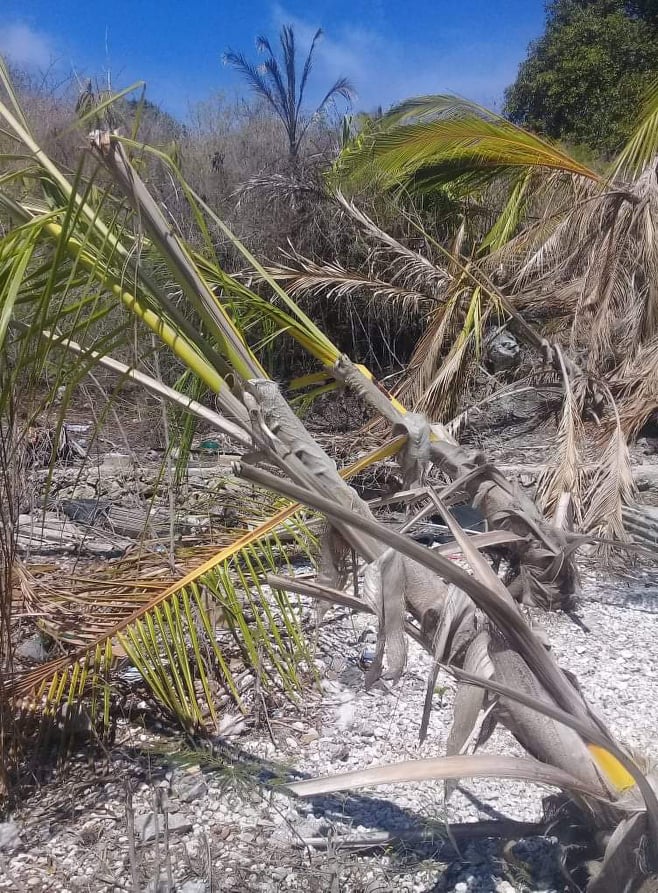
Dried up salination plant on Banaba Island.
Dried up desalination plant on Banaba Island

“Water is essential life support for the community. We have been without fresh water supply for the last year. The last three months since the second desalination plant malfunctioned requiring spare parts has been the hardest both for our peoples’ health and our plants that sustains our livelihoods.

“Residents are drinking from salty water because both desalination plants purchased by the Kiribati government are not functional. Diarrhea and skin diseases is widespread among the Banaban children and the community.

“Right now our most urgent need is fresh water. Our people are suffering, said Ritata.

The island has declared a water crisis and shared its desperate situation on social media platform, Facebook, in the hope that the government in Tarawa will urgently send water to the island.

Ritata posted a water crisis distress message on 28 February 2021 on the Banaban Network Facebook page calling for urgent intervention for the sake of the survival of his people.

“We have been informed there are no spare parts to the desalination plants in Tarawa. These parts would have to be ordered from Japan. We are asking the government to send us fresh supply of water because of our desperate situation.

“We are thankful for the assistance provided by the Kiribati government, but it is not good enough. We are calling on Australia and New Zealand and the international community to respond to this crisis because they have the resource and capacity to do so,” Ritata explained.

He said; “If phosphate, in thousands of tonnes can be transported out to support life in other parts of the world; I can’t understand why it is hard to ship fresh water supplies to support our lives and our people. As each day passes, I think of my families and communities who are going through a lot of hardship and poor health because of this water crisis, Ritata appealed.

The extreme drought and water crisis have put Banaba in a desperate position that it has become a matter of life and death for everyone on the remote island amid the COVID19 times.

Empty desalination plant on Banaba Island
Empty desalination plant on Banaba Island. Photo Roubena Ritata

Head of Kiribati Climate Action Network, Pelenise Alofa told PACNEWS from Tarawa the situation in Banaba is dire and needs and urgent humanitarian response from the government.

“The first response in a situation like this should be to send fresh water to the island while engineers figure out how to fix the desalination plant. The desperate call from the people of Banaba should make government think of an alternative source of water for the island.
“Based on this situation, the government here should also have alternative plan in place given that the spare parts for the desalination plant are not readily available. There are affordable desalination plants available now that can be bought and used as a standby during drought and water crisis, said Alofa.

The island nation of Banaba was mined extensively by the UK, Australia and New Zealand since the 1900’s has been completely abandoned leaving a ghost island, mostly inhabitable … PACNEWS

Boosting maritime capability in pacific, Cairns lands $36 million maritime job boost

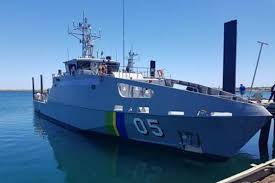
The Morrison Government has awarded TAFE Queensland a $36 million (US$27 million) contract to provide mariner training and support to the Navy crews of the Guardian-class Patrol Boats.

The funding is being delivered as part of the Morrison Government’s $2 billion (US$1.5 billion) Pacific Maritime Security Programme to strengthen maritime capability in the Pacific.

The Acting Minister for Defence, Senator Marise Payne said the Pacific Maritime Security Programme training contract was designed to adapt and adjust, to meet the needs of our Pacific partners.

“A modern and innovative training approach offered by TAFE Queensland will have significant strategic benefits in the Pacific,” Minister Payne said.

“TAFE Queensland has already established important relationships and arrangements with the Commonwealth and Pacific Island country governments, industries and communities.

“This, coupled with their established infrastructure in Australia and experience in delivering services in the Pacific, will enable TAFE Queensland to help achieve the outcomes of the Pacific Step-Up Programme and the Pacific Maritime Security Programme.

“This contract builds upon the success of the previous Pacific Patrol Boat training services contract, by providing new contemporary training for the Guardian-class Patrol Boat crew.”

Attending the contract signing in Cairns, Member for Leichhardt, Warren Entsch welcomed today’s announcement.

“I am thrilled that TAFE Queensland has been awarded this significant contract which will bring economic benefits to the region,” Entsch said.

“Cairns is ideally located to mount and sustain maritime patrol and hydrographic operations, and the base is well served by the local Cairns ship repair industry.

“This five-year contract will generate 24 new jobs in the region in addition to the more than 400 direct industry ship sustainment jobs in Cairns which are already supporting the Morrison Government’s naval shipbuilding and sustainment plan.

“Being located near the broader Cairns Maritime Precinct will allow TAFE Queensland to access and support local companies in Cairns, which comes at such an important time while the economy recovers from the impacts of COVID-19.”

Under the Pacific Maritime Security Programme, Australia is replacing the existing Pacific Patrol Boats with 21 new Guardian-class Patrol Boats to 12 Pacific Island nations and Timor-Leste to enhance regional maritime capability and capacity…..PACNEWS

SOURCE: AUST GOVT/PACNEWS

Private sector progress in women’s leadership in the Pacific

0

By Sarah Boxall

The UN theme for International Women’s Day 2021 is “Women in leadership: Achieving an equal future in a COVID-19 world” – a celebration of global progress towards women’s equal representation in leadership positions. For the Pacific, discussion of women’s leadership has focused on women’s political representation, which at just 7% is among the lowest in the world. But data collection for a new research project suggests a brighter picture for the private sector, where the region is making crucial progress towards equal representation.

Preliminary data, collected as part of an ongoing study into Pacific women’s leadership in business by the Asian Development Banks’s Pacific Private Sector Development Initiative, finds the Pacific compares favourably with global averages across many measures of leadership. The study measures women’s representation on boards and senior management positions in over 200 Pacific private sector organisations.

While varying significantly between countries and sectors, the average Pacific regional proportion of women on boards is 22%, exceeding the global average of just 17%. Some sectors are higher. In financial and ICT organisations, 24% of board members are women, and in industry associations (such as tourism associations), 31% of board members are women. The Cook Islands, Palau and Samoa all have over 30% representation of women on boards. Women hold 30% of senior management positions in the organisations studied, consistent with the global average. In the Cook Islands, Palau, Samoa, Tonga and Vanuatu, the proportion of women in senior management was over 30%.

An increasing number of Pacific businesses are developing gender and diversity policies.

Progress is particularly evident among the companies listed on the South Pacific Stock Exchange (SPX). Women’s representation on SPX-listed boards rose from 12% in 2017 to 24% in 2020, and the number of companies with no women directors fell from 63% to 11%. Four of the 19 listed companies now have gender-equal or majority women boards, including one woman board chair. These gains are strengthened by initiatives such as the updated SPX listing rules, requiring companies to report on gender diversity initiatives in their annual reports.

While the private sector remains small in many Pacific countries, these findings are significant because they suggest a growing commitment among the region’s private sector organisations to address the persistent challenges women face in reaching leadership positions. These constraints include caring responsibilities, fewer training and promotion opportunities, lack of business networks and social norms that continue to dictate women’s career paths and perceptions of their leadership capacity and commitment. Unsupportive workplaces can also contribute to women dropping out of the workforce at higher rates than men.

An increasing number of Pacific businesses are developing gender and diversity policies to overcome these challenges. In 2019, Mark One Apparel in Fiji opened an on-site childcare centre, the first in Fiji, which has attracted and retained skilled women who might not otherwise be in the workforce. Pleass Beverage in Fiji offers dedicated training and mentoring opportunities for women to build their skills and confidence to take on leadership roles. These efforts have resulted in greater retention of women and a higher proportion of women taking on management roles.

Private-sector organisations are also increasingly setting gender targets and reporting progress – both critical actions in improving gender equality. A target introduced by Tonga Power Limited to increase the number of women in their workforce by 5% each year has helped lift the proportion of women employees to 25% and supported the appointment of its first woman board member in 2020. The regional Pacific Power Association maintains a gender portal with regional benchmarking through sex-disaggregated reporting on the composition of the power sector workforce.

These results show genuine progress, but the data also confirms that women continue to be constrained when attempting to reach the highest levels of leadership. Across the sample, women held just 15% of chief executive officer positions. Notwithstanding the increases in women’s representation on boards in the Pacific, the proportion of women holding board chair positions is considerably lower, at just under 10% – consistent with the global trend.

Although the Pacific compares well with global averages for women’s leadership in business, these averages themselves reflect ongoing global inequality. The Pacific’s goal, and the global goal, must be equality in leadership in all countries and sectors.

Continued efforts towards equal representation in leadership are critical, not only for gender equality, but also for continued economic growth. A growing body of global research, including recent reports from the Bankwest Curtin Economic Centre and Women’s Gender Equality Agency, the Pipeline and the Peterson Institute for International Economics, shows that increasing the number of women on boards and in senior management improves company performance, productivity and profitability.

Throughout the private sector in the Pacific, a slow but steady rise in women’s representation in senior management and leadership is occurring as more pathways to these positions are created. Achieving equal representation of men and women in leadership will take continued effort. The private sector data shows that, with appropriate motivation and dedicated action, it is possible to accelerate change and promote women’s equal representation as leaders in the Pacific…. PACNEWS

SOURCE: THE INTERPRETER/PACNEWS

Fiji’s permanent secretary for Economy resigns

0

The most senior civil servant in Fiji’s Ministry of Economy, Makereta Konrote, has resigned from the post.

Konrote’s resignation comes at a critical time, as Fiji’s Minister of Economy remains in Singapore for medical treatment, and Fiji’s economy continues to take a battering from COVID-19 related border closures and Tropical Cyclones Yasa and Ana.

Minister Aiyaz Sayed-Khaiyum has been conducting virtual national budget consultation sessions from Singapore, with the budget due to be delivered mid-year.

The February economic update released by the Reserve Bank of Fiji this week stated labour demand remains weak, with job vacancies falling by 82.6 percent in January.

The Reserve Bank says Value Added Tax (VAT) collections plummeted by 25.2% and new lending by commercial banks for consumption purposes fell by 39.3 percent. Commercial banks’ new lending for investment declined by 47.2 percent in January.

The Bank stated declines in visitor arrivals (-98.5 percent), electricity (-13.7%) and mahogany (-98.7%), although there were production increases for cement, gold, pine, woodchips and sawn timber.

Government recorded a net deficit of $545.8 million (US$269.3 million) (or 5.5 percent of GDP) in the first six months of the 2020-21 financial year. At the end of January 2021, government debt stood at 73.2 percent of GDP. 19 percent of this was external debt.

Meanwhile, Fiji’s Public Service Commission (PSC) has accepted the resignation of the Permanent Secretary for Economy, Makereta Konrote, after 18 years of service to the Ministry of Economy, five of which she has served as the Permanent Secretary.

“Makereta joined the Ministry of Finance as a graduate trainee nearly two decades ago. She now departs the Ministry of Economy, which has transformed in more than the name under her management. As a key part of our economic team, she’s helped make history many times over, including Fiji’s historic nine-year unbroken stretch of economic growth and unprecedented expansions to our network of social safety. Among her lasting legacies are her intrinsic involvement in restructuring and reforming the civil service, mainstreaming climate action across government planning, and centralising major capital projects through the Construction Implementation Unit. She has also helped develop a team of qualified and capable experts who will inherit the Ministry’s mantle of prudent economic management and world-leading climate action. As a friend and colleague, I wish her, her husband, and her daughter all the best,” said Attorney-General Aiyaz Sayed-Khaiyum.

“Of my 18 years with the Ministry, the last five have been the most memorable and rewarding. Watching the Ministry expand its functions, pursue more sophisticated and complex policies, and improve on its deliverables has been the highlight of my career. It has been a great privilege to work on behalf of my country. I want young people, particularly young women, who are considering entering the Civil Service to know that it can be a deeply fulfilling career of service to your fellow Fijians,” said Konrote.

“I especially thank the team and my colleagues for their support as well as the Minister. We have come a long way under his leadership. I’m confident that I’m leaving the Ministry in the good hands of dedicated Fijians who are firmly focussed on our recovery from the COVID-19 pandemic.”

Konrote’s resignation will take effect from 15 March 2021. She plans to apply her economic expertise to take on new challenges in the near future.

The PSC has appointed Shiri Gounder, the Head of Fiscal Policy and former Head of Treasury, to act as the Permanent Secretary for Economy Gounder’s appointment will become effective from 16 March 2020.

“I’ve worked with PS Konrote for nine years in the Ministry of Economy. With her guidance, we’ve implemented a number of important reforms and I am proud to call her a mentor and close friend. We’re already in the midst of a seamless transition to ensure we continue with the responsible management of government finances and uphold consistency in our economic policies. We obviously have a serious challenge before us with the prolonged economic impact of the COVID-19 pandemic. As we prepare for the 2021-2022 National Budget, I look forward to working intimately with the private sector, civil society, and members of the public through our nationwide consultation process,” said Gounder.

SOURCE: ISLANDS BUSINESS/FIJI GOVT/PACNEWS

SPC optimistic about rapid regional vaccination timelines

0

The wait for island nations to vaccinate their people may only take a few months rather than years, the Pacific Community says.

The UK-based Economist Intelligence Unit had forecast that some Pacific countries may not get to vaccinate majority of their populations until at least 2025.

The group said this involved more than 60 percent of people in some countries such as Papua New Guinea, Fiji, Vanuatu and the Solomon Islands.

But the Director of Health at the Pacific Community organisation, Dr Paula Vivili, said the wait may only be a few months rather than years as initially thought.

He said projections, to some extent, have their usefulness: “it gives people an idea of possible outcomes of how the Covid-19 pandemic pans out including the vaccination programmes.”

The COVAX facility had announced it is looking at an April rollout for the Pacific.

Vivili said the vaccine production technology is changing rapidly and it was highly likely that Pacific countries would be able to roll out their Covid-19 vaccination programmes faster.

He also said the Pacific had “good friends” willing to help them get the vaccines.

“Those who have a strong link to other countries are expected to begin their vaccine processes quicker than others.

“We’ve seen the U.S-affiliated states have started their vaccine rollouts or are pretty much on their way: Guam, FSM, CNMI, American Samoa and the Marshall Islands – they have received significant numbers of the vaccine including Palau as well.

“Then there’s France of course helping New Caledonia and French Polynesia. And the rollout is soon to start in Wallis and Futuna.”

Vivili said New Zealand would help its realm countries Niue, Tokelau and the Cook Islands.

As for PNG, Solomons, Vanuatu, Fiji, Tonga, Samoa, Tuvalu and Kiribati, Vivili said Australia and New Zealand had both come strongly to commit money and technical support to help them.

Meanwhile, the World Health Organisation warned countries seeking their own Covid-19 vaccine doses were making deals with drug companies that threatened the supply for poor and middle-income countries.

WHO senior adviser Bruce Aylward told a briefing in Geneva this week that some countries were pursuing deals that could compromise the COVAX supply ‘without a doubt’.

The WHO wanted the wealthy nations to ensure vaccines were shared equitably.

Vivili agreed. He said with demand for the vaccines growing across the world, poor and middle-income countries were expected to receive the doses later than their wealthier nations.

“There’s a need for the more developed countries to be considerate,” he said.

“The issue primarily is on supply and demand and whilst there is limited supply of the vaccines, everyone will be trying to get them.”

However, Vivili warned any delay in a mass Pacific rollout would likely delay the reopening of borders.

This could have economic consequences, he said, especially for tourism-dependent countries like Vanuatu and Fiji, which usually welcomed hundreds of thousands of tourists each year, the majority from Australia and New Zealand.

Vivili said it would also be an issue because it will be difficult for travel with a limited amount of vaccinations being done.

“The impact on the economies in the region has been significant, particularly for those that rely on tourism,” he said.

“The longer in the delay in opening up of borders, the longer it will take for these economies to recover. It is the hope of all the countries to get access to the vaccines sooner than later.

“But for governments opting to begin travel between their countries, efforts must be made to ensure that all their people are vaccinated well.”

The COVAX programme aimed to supply 1.3 billion vaccine doses to poor and middle-income countries this year including the Pacific.

But so far COVAX has had a slow rollout.

“We can’t beat COVID without vaccine equity. Our world will not recover fast enough without vaccine equity, this is clear,” Bruce Aylward said.

The idea of temporarily waiving intellectual property rights for tools to fight Covid-19 is expected at next week’s meeting of the World Trade Organisation (WTO) member states.

SOURCE: RNZ PACIFIC/PACNEWS

Stay connected

529FansLike
172FollowersFollow
156SubscribersSubscribe
- Advertisement -