

Home Blog Page 1240

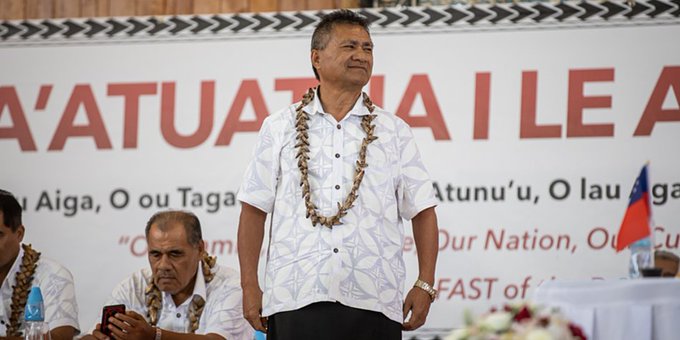
FAST candidates targeting senior Samoa ruling Human Rights Political Party MPs

Across several constituencies, FAST candidates are chipping away at the lead held by Government MPs on their seats, including senior Cabinet Ministers, early figures show.

Caretaker Minister of Finance and first term Parliamentarian Sili Epa Tuioti is 43 votes behind FAST hopeful, Matamua Vasati Pulufana in Faasaleleaga No. 1.

Matamua’s late husband Tiata Sili Pulufana was the Member of Parliament for Faasaleleaga No. 1 for two terms before he passed away in 2011, she told the Samoa Observer late last year.

Another first-term Parliamentarian and caretaker Minister is Afamasaga Rico Tupai, of the Ministry of Communications and Information Technology and Aana Alofi No. 4.

He is 23 votes behind former Tautua Samoa member now FAST candidate Toeolesulusulu Cedric Schuster.

In Vaimauga No. 3, three-term Member Papalii Niko Lee Hang and FAST candidate Veatauia Faatasi Puleiata are 50 votes apart, with Tapanuu showing a strong lead over Veatauia among Samoa’s pre-polling voters.

The youngest candidate on the books this year is 35-year-old Magele Sekati Fiaui from Faasaleleaga No. 2.

He is up against incumbent Member Gatoloaifaana Amataga Gidlow (HRPP) and pre-polling voters have them beck and neck, with seven votes between them.

In Faasaleleaga No. 2, nearly seven per cent of the 2,300 registered voters made their choice early.

Speaking to the Samoa Observer he said he has spent Thursday praying at home.

“Friday is going to be the same game plan, staying at home away from the election booth area and trying to relax.

“I am not planning on making any rounds any more, I feel like now is the time to relax and contemplate what is going on, and await the results.”

He said while he has been keeping an eye on pre-polling, he is trying to manage his expectations.

“You can imagine what is going through the mind right now,” he said.

“Winning the pre-polling thus far is certainly something to cheer about and it’s a positive thing, it’s a good indication of what might come [Friday] as well. But it’s the main event, and anything could happen but so far it’s a positive feeling to know that I am leading the pre-polling.”

As a first-time contender, Magele said the experience has been surprising and eventful.

“This is something very new, it’s a very new experience, it’s like learning a foreign language. Now, close to the final day of the Election, which is the most important day, I am a bit nervous but it’s certainly been a big surprise.

“I am grateful for the opportunity, it’s not something that comes often in somebody’s life it’s an opportunity to grow. Having no experience and no background whatsoever, you can imagine.

“It’s just exciting, anticipating the result and what’s going to happen. I am preparing for both sides of the coin, win or lose. But I am certainly going for [victory] but if the result comes not in my favour I am fine to prepare my mind for what is going to happen.”

There are 51 FAST candidates running in 42 constituencies. In eight of them there are two candidates vying for the chance to represent the people and FAST, while party leader Fiame Naomi Mata’afa has already secured her seat in Lotofaga.

They are in Sagaga No. 1, Sagaga No. 4, Falealili No. 2, Anoamaa No. 1, Faasaleleaga No. 3, Faasaleleaga No. 4, Palauli No. 2 and Palauli No. 3.

Palauli No. 2 candidate Leota Laki Lamositele, a former Director General of the National Health Service, is preparing to have a quiet Friday while he waits for the final results of the election.

After four days of pre-polling, he has 57 votes. So far 145 people have voted out of 2,345. Leota said more people in Palauli No. 2 were eligible to register for pre-polling but did not.

“The current numbers provide a guideline on how things are but it doesn’t reflect how the final will go. The majority of our senior citizens were not able to register [for pre-polling].

“We expect the lines will be a little bit longer in some of our bigger villages here, because of that.

He is not the only FAST member wanting to represent Palauli No. 2: Tiatia Mapesone Mapusua is also vying for the seat and has 52 early votes. They are up against Faumuina Liuga from HRPP, who currently has 36.

“These pre-polling results show that the majority of the voters are FAST supporters. I guess then the supporters will have the chance to pick who will be the best FAST person to represent them.”

Leota said he will be voting early on Friday then spending the rest of his day in meditation, prayer, and in conversations with his family, and not dwelling on anxieties.

“You have to control your emotions and all that. The reality is somebody has to win and somebody has to lose.

“You are more or less prepared for the worst and also prepared for the good news if it comes.

“It has been a busy hectic week but you need to balance your day with your health and with enough rest so you are not that stressed.

“I wish the people of Samoa well and that they will vote for what they feel will be the next Government of the day that will serve their needs,” said Leota

Polling in Samoa will end later today.

SOURCE: SAMOA OBSERVER/PACNEWS
PNG opposition faction of the National Alliance Party move to government

0

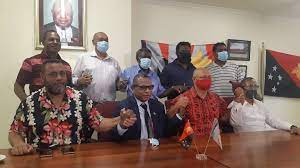
The Papua New Guinea Opposition faction of the National Alliance Party (NA) has joined the Marape-Basil Government.

Party leader, Patrick Pruaitch, in a media conference Thursday said the move is for stability to allow the Marape led Government to complete its term before the 2022 General Elections.

The National Alliance party had two factions of its members during last November’s Vote of No Confidence against Prime Minister James Marape.

Flanked by the Government faction of the National Alliance Party members, party leader Patrick Pruaitch says the party is intact after last November’s vote of no confidence.

Pruaitch along with a majority of the NA members broke away from the Marape led Government last year after disagreements over the closure of the Porgera Mine and other key policies of the Government. Last week the Government announced it will work with Barrick to reopen Porgera.

Going into the elections he says the move is about stability in the Government as the party intends to support Prime Minister James Marape in his final term in office before the general elections.

Pruaitch also withdrew his nomination as the alternate prime minister if a vote of no confidence motion was to be entertained in this month’s parliament sitting.

The total number of National Alliance Party members in Government is 11.

Opposition Leader, Belden Namah has welcomed the decision by National Alliance Party Leader, Patrick Pruaitch to withdraw his name as the Opposition’s candidate for the post of Prime Minister in a motion of Vote of No Confidence that is already before parliament.

In a statement, Namah said the Opposition will name a new candidate to replace Pruaitch.

It will then be up to the parliament to deliberate on and deal with the motion.

Namah said the motion is live and must be dealt with by members of parliament in the coming parliament sitting.

The Opposition Leader alluded the need for a Vote of No Confidence on the crippling economy and its long term effects.

He said all members of parliament have a duty to correct this trend before it is too late.

The Opposition Leader said as a responsible Opposition, they will push through the motion of Vote of No Confidence and the court case on the motion of Vote of No Confidence and Constitutionality of the 2021 budget.

Meanwhile, Wapendamanda MP and former foreign Minister Rimbink Pato said his move to join the ruling Pangu Pati was to provide unity and stability in governance during this challenging times.

Pato said the current challenges facing the country requires a greater call for unity and stability and he saw that he needed join to join Pangu Pati and work with the prime minister to address the challenges through his knowledge and experiences as a former lawyer and as a senior politician.

“I joined the Pangu Pati as the country needs unity now more than ever before as we travel difficult waters. There is far greater need for unity and stability to tackle the issues affecting the nation and our people,” he said.

“The prime minister, the Pangu Pati and the government today need all able hands to support.

“A lot of Pangu Pati’s young leaders have a lot of energy but it also need old hands with good experience like me and Haiveta and other quality leaders so we can blend in our experiences and rally the support the prime minister, the country and our people need.

“I’m humbled and blessed to join the Pangu Pati.

“I’m impressed with prime minister’s assurance that the United Party will work together with Pangu Pati into the future.

“The United Party, the Country Party, the National Party and the PPP were able to contribute their ideas to look at what the nation should be during the formulation of the Constitutional Planning Committee which put the constitution that gave birth to our nation today.

“So it’s time for this kind of merger that is needed at this time and I give my fullest support going forward and I thing we have a wonderful future ahead.”

MP for Moresby Northeast John Kaupa also echoed the same concerns that the country needed stability and his move reinforces that as well.

He said he also joins the Pangu Pati because of the government’s support for SMEs, something he has been advocating for in his electorate, where all the mothers are involved in…..PACNEWS

SOURCE: EMTV/POST COURIER/PACNEWS

Tuvalu receive 4,800 COVID19 vaccine doses

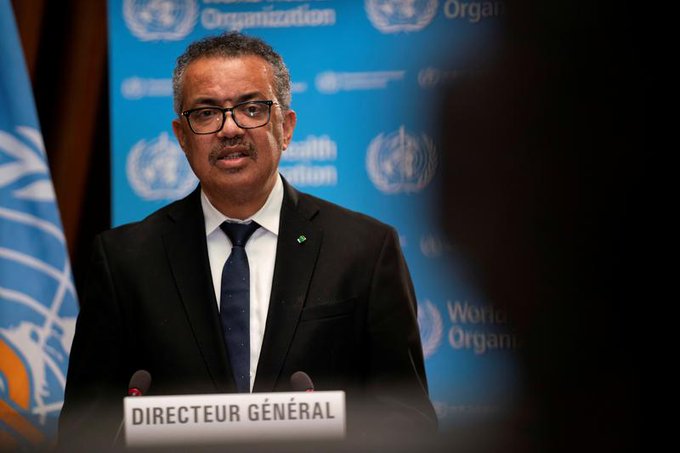
Tuvalu is the latest country in the Pacific region to receive 4,800 AstraZeneca COVID19 vaccine doses.

“Congratulations to the government and the people of Tuvalu!

Tuvalu is the second country in the Pacific region to receive full vaccines to cover 20 percent of the population under the COVAX Facility,” UNICEF Pacific said on twitter.

COVID-19 Vaccines Global Access (COVAX) facility is co-led by the Coalition for Epidemic Preparedness Innovations (CEPI), Gavi and the World Health Organisation (WHO), alongside key delivery partner, the United Nations Children’s Fund (UNICEF).

The facility offers a reliable supply of safe and efficient vaccines especially for Pacific countries like Tuvalu, who do not have direct access to manufacturers.

Tuvalu is free from COVID-19.

SOURCE: PACNEWS/UNICEF PACIFIC

120,000 voters in Samoa go to the polls today

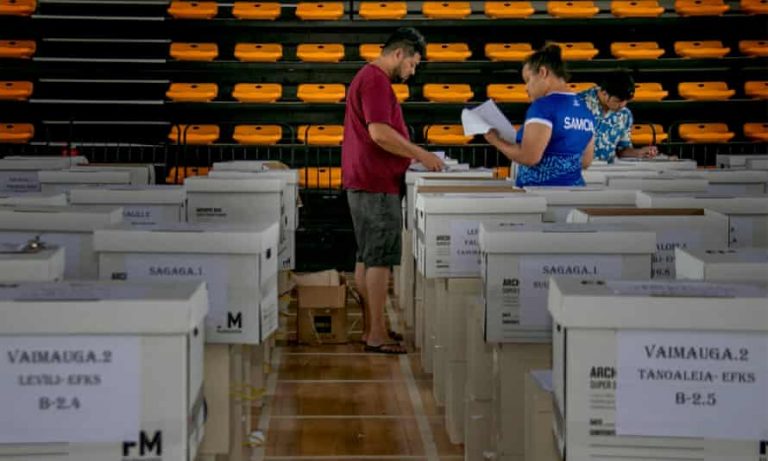
In a fine sun shiny Samoan day, 120,000 voters go to the polls today to elect a new government following months of intensive and unprecedented campaigning.

The ruling HRPP led government of 40 years is facing a real challenge by the seven month old FAST Party led by a former Deputy Prime Minister and former Speaker who left the HRPP ranks on major issues of principle.

HRPP has wooed the voters, (half of whom had known no other political alternative in forty years) on its work.

FAST on the other hand, pushed home the real need for change given the threat to the rule of law and governments failures such as the handling of the measles epidemic in 2019 where a hundred people, mainly babies, died.

Pre-polling for the last four days, posted a very close result with HRPP holding 25 seats, FAST 21, Tautua 1, Independents 1 and 1 seat is a tie between HRPP and FAST.

Of the 8,000 people registered for the pre-polling since Monday, 580 did not vote, however, they have a chance to vote in today’s general election.

After the final count of the last four days pre-polling, 7420 did cast their vote.

Like no other, there has been much hype in the lead up to this general election with political parties taking campaigns to a totally new level.

There has never been such strong feedback from voters in support of their political parties and the Samoan diaspora overseas had made their voice known by supporting FAST and donating funds in a bid to vote in a FAST led government.

Campaigning by both parties took to social media and a strong voice of the Samoans abroad, who due to the pandemic, could not travel over (for those qualified) to vote.

Polling booths open at 9am and close at 3pm today. The votes are counted and preliminary results announced in each polling booth to be released officially by the Commissioner of Elections later tonight.

The final count is on Monday next week.

Meanwhile, FAST party leader Fiame Naomi Mata’afa is declining to speculate about early election figures as she stays focused on Friday’s main contest.

While 51 seats are notionally up for grabs, Mata’afa is one of only three MPs whose passage into Parliament is already assured: no one is challenging the former Deputy Prime Minister for her Lotofaga seat.

Pre-polling has been conducted across four days this week, a first for a Samoan election, allowing for the release of very preliminary figures about candidates’ vote tallies.

The release of the early figures tallies has prompted debate about their significance (pre-poll voters in total only represent about 6.5 per cent of Samoa’s total election pool).

Mata’afa, who has been in Parliament since the age of 28 after being elected in 1985, said she is not sure yet how much weight to give the results of early votes.

“We are trying to assess how useful an indicator it might be for the main election,” she said.

“You could read all sorts of things into the numbers but I think we need to have a look at it overall and see how it might be useful as an indicator.

“We’re essentially looking at old people, people with disabilities, and those travelling so that in the vast majority of the voting population, one big group would be the youth.”

After this week’s pre-polling, for which about 8,500 voters are eligible, about 115,000 voters (from the all but three uncontested constituencies), will cast their ballots on Election Day.

“In terms of the actual candidates, I think it would be a fair comment to say most people are focusing on the main event tomorrow (Friday),” she said.

“I don’t want to make any predictions.”

Mata’afa said she was not particularly focused on any particular constituencies in the final hours before the national poll.

After her last-minute campaign drive concluded, she will join FAST party analysts at the party’s Maota Samoa headquarters on election night, where she says will monitor the performance of the party’s candidates across the board.

“I am following everyone. For us as a party, every single win will count so we are looking at all our people,” she said.

“With the elections, you are never quite sure so you take your wins where you find them.”

She said no matter what result is delivered on Friday, Samoa’s governance system will have been changed for the better.

“Our party’s particular role will be determined by how the country votes tomorrow (Friday),” she said.

“Whichever way it goes it’s going to be different going forward in terms of Government because FAST has brought in an element that has been missing for quite a long time in terms of challenging the HRPP.

“Whichever way it goes, the commitment is there to serve the country in whichever capacity, and that goes for the party as well of course.”

This is the first election in that Samoa has conducted early votes for eligible constituents. Mata’afa said it is something she would like to see repeated but without dragging it out for too long.

She said four days are too many for around 8,500 people to vote and have their votes announced before the big day.

Mata’afa said there is value in early-voting but that perhaps for a number of eligible voters so small one day would have been enough.

“It’s been quite a big outlay for the Government to have four days putting out all the personnel and infrastructure to run this for a very small number of voters,” she said.

“It’s quite a large expense. I was wondering if they did feel pre-polling was a good idea, especially for the elderly and the disabled and people who might be traveling, whether it might have been better to have one day rather than say four.”

Last month the Head of State, Tuimalealiifano Va’aletoa Sualauvi II, officially declared Mata’afa and two of her colleagues, including caretaker Prime Minister Tuilaepa Dr Sailele Malielegaoi, as having secured entry into Parliament

SOURCE: TALAMUA ONLINE/SAMOA OBSERVER/PACNEWS

COVID-19 equitable vaccine scheme reaches more than 100 countries and economies

More than 100 countries and economies have now received COVID-19 vaccines through the UN-partnered equitable coronavirus-busting scheme, COVAX.

The first delivery of lifesaving jabs arrived in Ghana on 24 February.

Announcing the news on Thursday, the World Health Organisation (WHO) said that more than 38 million doses of AstraZeneca, Pfizer-BioNTech and Serum Institute of India-produced shots (one of the AstraZeneca vaccines known as COVISHIELD) have been transported globally so far.

The development comes as WHO and other health regulators reaffirmed the overwhelming value of the AstraZeneca (or AZ) COVID-19 vaccine, amid ongoing concerns about clotting events among a very small number who’ve had the jab.

WHO listed two versions of the AstraZeneca-Oxford vaccine, after careful consideration over four weeks of analysis, for emergency use on 15 February, to be rolled out globally through COVAX.

In statements on Wednesday, the WHO’s Global Advisory Committee on Vaccine Safety, the European Medicines Agency and the UK’s regulator all concluded that the benefits of taking the AZ vaccine “outweigh the very rare potential risks”.

More than 190 million doses of AstraZeneca vaccines have been administered to date, but only 182 cases of clotting have been reported, WHO said, in its advice to countries to continue to vaccinate with the AZ vaccine, noting that it has “saved millions of lives and prevented serious illness”.

Despite reduced supply availability in March and April – the result of vaccine manufacturers optimising their production processes in the early phase of the rollout, as well as increased demand for COVID-19 vaccines in India – COVAX “expects to deliver doses to all participating economies that have requested vaccines in the first half of the year”, said the press release issued by WHO.

“COVAX has given the world the best way to ensure the fastest, most equitable rollout of safe and effective vaccines to all at-risk people in every country on the planet,” said WHO chief, Tedros Adhanom Ghebreyesus.

“If we are going to realize this great opportunity, countries, producers and the international system must come together to prioritize vaccine supply through COVAX. Our collective future, literally, depends on it.”

Henrietta Fore, UNICEF Executive Director, said that despite all that had been achieved in just a month and a half, “this is no time to celebrate; it is time to accelerate.

“With variants emerging all over the world, we need to speed up global rollout. To do this, we need governments, along with other partners, to take necessary steps to increase supply, including by simplifying barriers to intellectual property rights, eliminating direct and indirect measures that restrict exports of COVID-19 vaccines, and donating excess vaccine doses as quickly as possible.”

“It is tremendously gratifying that the roll-out of COVAX doses has already reached one hundred countries,” said Dr Seth Berkley, CEO of Gavi, the Vaccine Alliance.

“COVAX may be on track to deliver to all participating economies in the first half of the year yet we still face a daunting challenge as we seek to end the acute stage of the pandemic: we will only be safe when everybody is safe and our efforts to rapidly accelerate the volume of doses depend on the continued support of governments and vaccine manufacturers.”

According to its latest supply forecast, COVAX expects to deliver at least 2 billion doses of vaccines in 2021, which will mean having to continue adding new vaccines to its portfolio. New agreements with manufacturers are being announced “in due course”, according to WHO and partners.

Last month, it was announced that the United States would host a launch event – taking place next week – for what’s being called the Gavi COVAX AMC Investment Opportunity, referring to the COVAX Advance Market Commitment, which aims to ensure that the world’s poorest nations get access to the life-saving vaccines.

An additional US$2 billion is required in 2021 to finance and secure up to a total of 1.8 billion donor-funded doses of vaccines. The COVAX partnership is also working to secure additional sourcing of vaccines in the form of dose-sharing from higher income countries….. PACNEWS

SOURCE: UN NEWS CENTRE/PACNEWS

Samoa election 2021

By Nanai Anae Dr. Iati Iati

STANDFIRST

Can you remember the last time Samoa had a formidable political opposition? It has been a while, and it has been even longer since a different political party was in government. Nanai Anae Dr Iati Iati offered his insights to the Pacific Cooperation Foundation into the mood of the nation, the most pressing issues facing the nation, who might win, and whether the nation is ready for change.

The Human Rights Protection Party (HRPP) has been in power since 1982, apart from a brief respite in the late 1980s, when a coalition government (led by a breakaway group of HRPP members) held office.

An apparently formidable political opposition has now fomented in the form of Faatuatua i Le Atua Samoa ua Tasi (FAST), prompting talk about a possible change of government. This is uncertain; there is no indication of a seismic shift in the voting preferences of traditional institutions at the grassroots level, which has been the HRPP’s powerbase. Nevertheless, the rapid rise of FAST suggests that some form of change is on the horizon.

In a very short time, FAST has shown that it is a force to be taken seriously, although how sustainable its popularity will be in the long term is unknown.

In Fiame Naomi Mataafa and Laauli Leuatea Polataivao Schmidt, FAST have a pair of seasoned former HRPP members with an understanding of what is effective in election campaigns, and where the HRPP might be vulnerable. Importantly, both have deep political roots in traditional and modern Samoan politics, which could draw away some of the HRPP’s traditional support.
It will be difficult to topple the HRPP. After nearly 40 years in power, Samoans are unaccustomed to any other leadership group, and familiarity and loyalty are key factors in Samoan elections.

With Tuilaepa Sailele Malielegaoi at the helm, Samoa has experienced both political highs and lows. But, Fiame and Laauli were both integral to the HRPP government at one time and could rightly claim a part in its successes and failures. During its tenure, the HRPP has used a variety of means to create a strong bond with key actors in the traditional political domain. This bond appears intact, although three controversial Bills (The Constitution Amendment Bill 2020, the Judicature Bill 2020 and the Land and Titles Bill 2020), passed late last year, have strained the relationship in some quarters.

Government interference with customary land rights, and the traditional institutions of the aiga and matai is a focal point of the election. Rightly or wrongly, the HRPP is seen to have undermined customary land rights, starting with the Land Titles Registration Act (LTRA) 2008. With the introduction of the three Bills last year, Samoans both locally and abroad have questioned whether these will open up traditional institutions to unchecked government influence. Customary land rights, and the institutions of aiga (extended family) and matai (traditional leaders) are sacrosanct in Samoan society and as long as these are seen to be interfered with, FAST has potent political ammunition to play with.

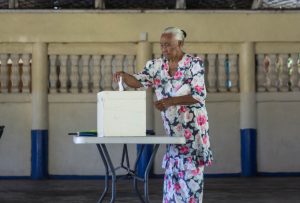
Ioana-Savaiinaea-casting-her-vote-at-Fatausi-Samoa-Observer.jpg

The role of the Samoan diaspora under the spotlight. Those eligible to vote must do it locally, so COVID restrictions have limited their direct influence. Nevertheless, the diaspora, including both Samoan citizens and non-citizens remains closely involved and influential in the election buildup. Many in the diaspora have been highly critical of government policies and politics, particularly those relating to customary land rights, aiga, and matai. Social media is replete with sentiments supporting and rejecting the diasporas involvement. The arguments from both sides are well known.

On the one hand, those living abroad are detached from the realities of life in Samoa and therefore should limit their political engagement and influence. On the other hand, the diaspora is critical to the country’s economy and therefore should have a say in political affairs.

One point that is sometimes missed is that the aiga is a transnational social, economic, and political unit, and overseas members are important to resolving issues back home, particularly involving customary and traditional institutions and rights. Aiga and matai form the foundation of Samoan politics and therefore the government should not tamper with their relations, either internally or abroad. The diaspora cannot be ignored.

For democracy to work effectively there must be political transparency, accountability, legitimacy, and respect for the rule of law. This requires an informed and engaged public, leadership that considers different viewpoints in society, and a strong political opposition.

There are encouraging signs that the Samoan people, both at home and abroad, are engaging in critical discussion about policies and demanding greater transparency and accountability. More of this is needed if Samoa is to have a healthy and vibrant democracy.
At the same time the profanity laced vitriol infusing some of these discussions departs from the customary political etiquette and norms expressed in the concept of va fealoai (rules of behaviour, etiquette).
This is not a conducive environment for polite and peaceful yet robust political dialogue and debate for which traditional Samoan democracy is known for. Someone once said, we should agree to disagree, but not be disagreeable.

Early voting has started however the official election date is Friday 9 April. Information about the Samoa 2021 Election and the results can be found on the Office of the Electoral Commission in Samoa’s website or its official Facebook page. It is expected, the final results will be known during the evening, local time, on Friday 9 April.

Nanai Anae Dr. Iati Iati

Nanai Anae Dr. Iati Iati is a Senior Lecturer in the Politics and International Relations Programme, and Pacific Security Fellow in the Centre for Strategic Studies, Victoria University of Wellington. He teaches International Relations and New Zealand Foreign Policy at the undergraduate level, and Strategic Studies at the Masters level. He recently co-edited a book on New Zealand foreign policy: New Zealand and the World, and has published on various subject-matter in relation to Pacific politics, including land reform, regionalism, geopolitics, and governance. He was a lecturer and senior lecturer at the University of Otago Politics Department for eight years, and was also co-director for the 48th and 50th Otago Foreign Policy schools. His current projects include New Zealand foreign policy in the Pacific, the geopolitics of the Pacific, and land reform in the Pacific.
Email contact – iati.iati@vuw.ac.nz

The Pacific food revolution will be televised

By Mark Peter Notaras

It was a great surprise and honour that Gordon Peake approached us to be the guinea pigs/first interviewees for Devpol’s inaugural ‘Memorandum of Understanding’ podcast. Gordon and podcast curator Julia Bergin have since encouraged us to buck the ‘literary silences’ and write about development in an engaging manner. ‘Use your zestiest voice’ was Gordon’s advice to us as we started piecing together this blog – apt advice since we wish to highlight the Pacific Island Food Revolution (PIFR).

We at the Timor-Leste Food Lab/Agora Food Studio are unabashed fans of PIFR. They have inspired us in our own work (here we focus on their work, not ours). Funded jointly by Australia’s Department of Foreign Affairs and Trade (DFAT) and New Zealand’s Ministry of Foreign Affairs and Trade (MFAT), for three years they have used the power of reality TV, radio and social media to celebrate the Pacific’s under-appreciated food heritage. PIFR showcases ‘food warriors’ from Fiji, Samoa, Tonga and Vanuatu over 12 weekly episodes as they create Pacific-inspired dishes to be tasted by regular hosts and guest judges. Birthed by a grant through DFAT’s now defunct and often maligned innovationXchange, PIFR is one example of where development and diplomacy harmonise.

PIFR’s innovation lies in employing a ‘social behavioural change communication’ approach to addressing food security and nutrition challenges in the Pacific islands. The program’s strategy is to ‘normalise’ positive behaviours such as cooking and eating traditional foods by associating them with the beauty of the Pacific islands, the glamour of professional cooking and the down-to-earthiness of relatable competitors. PIFR judges are typically respected Pacific figureheads including health ministers, chefs, athletes and even members of the Tongan Royal Family. They ‘nudge’ viewers towards healthier eating and cooking behaviours by fixing these aspirations firmly to Pacific family, church and cultural life. Viewers will notice that, in contrast to hyped-up, competitive ‘MasterChef’ and ‘My Kitchen Rules’ franchises, PIFR hosts and cooks exercise a vernacular, humour and tempo in tune with Pacific communities’ interactions.

Coconut-Crab-and-Seafood-Platter
Crab-and-Seafood-Platter

The Pacific is home to the world’s highest rates of lifestyle disease, and dependency on food imports can be higher than 80% in some islands. PIFR acknowledges these crises without exhausting viewers to the point of helplessness. There are no banners, expert panels or ‘manels’, or text-heavy brochures in a language people don’t relate to. There is instead a subtler approach to embedding ‘awareness raising’ messages, only after viewers’ attention has been secured. Each episode has a theme such as seniors’ health or breastfeeding, reflected in contestant challenges and the guest judges’ manicured commentary. When screening in the Pacific, advertisement breaks are given over to organisations such as UNICEF for public health campaigns (note this is not the case for the series’ current screening in Australia on SBS ONDEMAND). The result is a product able to highlight solutions to the Pacific’s longstanding and serious issues with food without making its people feel like they are the problem.

In 2018, we joined PIFR and LAUNCH Food partners to learn how to apply behavioural economics principles to drive improved nutrition across the Indo-Pacific. We noticed then that New Zealand chef and PIFR host Robert Oliver and his Samoan colleague Junior Ulu had institutionalised communication that ‘dials down barriers’ by focusing on local solutions rather than seemingly insurmountable challenges. How would entrenching viewers’ feelings of helplessness change anything?

Robert Oliver with co-host Voutasi Reur-Mckenzie

PIFR instead focuses heavily on ‘dialing up triggers’ by making eating local foods seem easier and sexier. The message is clear: if you are eating healthy local cuisine in the Pacific then you are cool. If you are not, then you are missing out.

Assessing long term impacts from a program like PIFR will be a challenge, especially within the constraints of time-bound funding cycles. Early results from surveys conducted by the Busara Center for Behavioural Economics are promising. 55% of study participants reported having changed their diets over the past year. A majority of respondents said they had started to incorporate new ingredients to improve the taste of their food at home. PIFR’s ambitious task, if it can continue beyond a third season, will be to link improved nutrition outcomes in the Pacific to its viewership. It will be fascinating in the longer term to plot consumption of well-marketed imported ‘food’ such as instant noodles and processed meats, in relation to newly-popularised traditional ingredients such as locally-adapted roots, shoots and fruits.

A criticism we have heard about PIFR is that it is ‘just a television show’. Yet the world class production qualities of PIFR have aroused genuine interest among television network executives. Currently 20 networks across 12 countries, with a combined reach of 5 million viewers, have televised the program (official viewer figures from those Pacific TV networks are not yet available). We noticed a torrent of comments from the PIFR Facebook page’s 63,000 fans emanating from Papua New Guinea and Solomon Islands in particular. Experiencing genuine FOMO (fear of missing out), vocal supporters are demanding their countries be included in future PIFR seasons.

Pacific Island Food Revolution

This reach and passion contrasts starkly with your average development communications outputs for much more expensive interventions. No doubt many of us have jostled, perhaps reluctantly, over which logo should be where on a banner, report or promotional video, only to see it slide rapidly into the aid media abyss. On countless occasions, I have spotted dusty gender, youth or conflict prevention training manuals propping up broken furniture in a Timor-Leste government office.

Television’s army of producers and marketers, who specialise in grabbing our attention, have much to reveal to the aid community. PIFR’s significant penetration to date into Pacific homes shows that audiences turn up when they are truly reflected in a program. For the Timor-Leste Food Lab’s emerging food leaders, PIFR exemplifies a more inspiring way to do development and one we should all take notice of.

SOURCE: DEVPOLICY

Community awareness and consultation on the Freedom of Speech and Opinion

The Office of the Ombudsman also the National Human Rights Institution of Samoa in collaboration with the Samoa Police and Prisons Service and the Office of the Regulator are spearheading efforts to raise community awareness in selected villages regarding the exercise of the freedom of speech and opinion and its limitations and to promote the safe use of technology and social media. The program is also an opportunity for the Office to consult on this matter which will inform its State of Human Rights Report 2021.

The community awareness programme is being rolled out in the six villages (Saleia, Taga, Asau, Vaiee, Lotopue, and Lalovi Mulifanua) that are part of the Village Family Safety Committee Pilot Project 2020/2022. A Pilot Project that was initiated by the Office of the Ombudsman from Recommendation 20 of its National Inquiry into Family Violence Report 2018 suggested the creation of village-based credible mechanisms to assist Village Fonos in leading family violence prevention initiatives to address family violence in their respective villages.

The community awareness program kick-starts a series of programmes and activities by the six Committees to deliever on and implement initiatives outlined in their family safety committee’s work plans that were launched last year with the assistance of the Office and its partners.

One of the contributing factors or triggers of family violence commonly identified by the six Committees was the misuse of technology particularly social media to exercise the freedom of speech and opinion negatively impacting on relationships and harmony of families and exposing young people to violent behaviors and attitudes.

The villagers identified and referred to a series of real-life scenarios of family violence matters that have been brought before their Village Fono where the underlying origin of the violence came as a result of the incorrect exercise of the freedom of speech and opinion to launch verbal insults, defaming others, threatening words amongst individuals and groups through various mediums such as Facebook and other social sites causing conflicts within families and villages.

It was important for the programme to firstly address the misunderstanding of the distinction between causes and triggers. Such distinction is not often made but it is crucial to do so as classifying triggers as causes can often shift responsibility away from the perpetrator and contribute to the continuation of violence.

Community awareness consultation of freedom of speech and opinion in Samoa

Secondly, it was important to drive home the key message that freedom of speech and opinion is not an absolute right as many have come to believe and that limitations of this freedom are set out by our national laws to promote public order and harmonious societies.

Director of Human Rights at the Office of the Ombudsman, Loukinikini Vili-Lewaravu said “it was important for people to understand that freedom of speech and opinion is freedom of an individual or a community that is utmost to our daily lives and our interaction with others, however, we all have a responsibility to each other in the way they are exercised and technology should not be used as a medium to wrongly exercise this freedom to spread misinformation with the intention to insult, threaten or defame another person”.

The Ministry of Police and Prisons represented by Detective Inspector Viiga Sio touched on important aspects of the legal limitations of such freedom including the laws relating to the misuse of such freedom and its associated penalties. The Office of the Regulator represented by Principal Legal Officer Angeline Seiuli shed light on the overall positive impacts of social media and technology, as well as its negative impacts which are determined by how people use it. Technical methods and tips were shared with participants to ensure safe online use and access for young people, as well as the role of parents to ensure that children are being monitored and protected from indecent and harmful online materials and predators online.

“This Pilot Project is a joint partnership with relevant agencies to assist these villages to deliver awareness workshops to address issues they raised that are contributing factors to violence in their homes,” said Lewaravu-Vili.

SOURCE: NHRI SAMOA

Pacific Journalists learn and share knowledge on Whistleblowing

0

The Pacific Islands News Association (PINA) in collaboration with the United Nations Pacific Regional Anti-Corruption Project (UNPRAC) and UNDP have embarked on an eight month project to build the skills and capacity of journalists to report on corruption in the Pacific.

Beginning in March, PINA and UNPRAC have jointly organised two knowledge sharing webinars on Anti-Money Laundering and Whistleblowing for Pacific journalists.

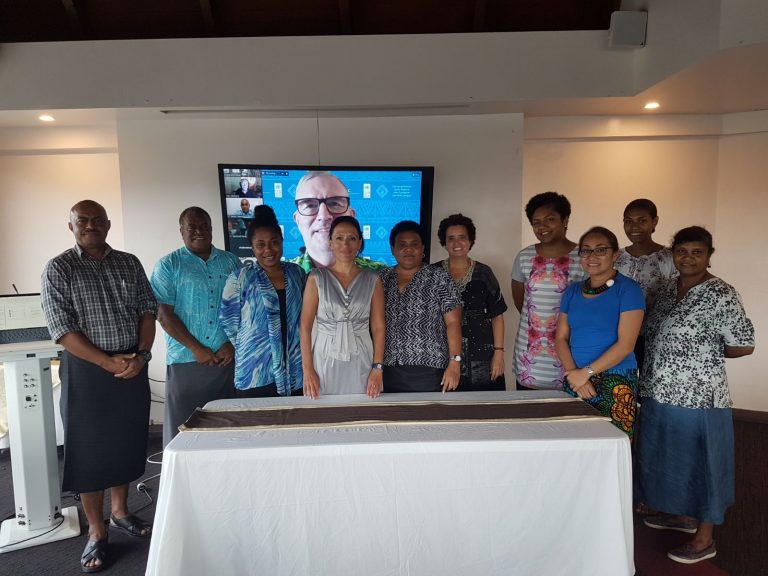
In Suva, on 31 March 2021, 13 journalists joined their colleagues from Palau, Tonga, Vanuatu and Samoa for the session on Whistleblowing, moderated by PACJN Co-ordinator, Samisoni Pareti.

Two senior Pacific journalists – Dan McGarry, the former publisher of Vanuatu Daily Post and Anish Chand, formerly of Fiji Television Limited shared their experiences on dealing with whistleblowers in their line of work.

Key messages from the webinar;

“It’s harder now than ever before to be a whistleblower…Journalists need to find a way, partnerships, working together can be the way through..”

“The overarching message of the today’s excellent knowledge session is that #whistleblowing is one of the most effective ways to detect & prevent #corruption & safeguard public interest!

Mapping digital rights in MENA: towards a safer online environment

This statement was originally published on 7amleh.org on 10 March 2021.

The Arab Center for the Advancement of Social Media in cooperation with Innovation for Change Middle East and North Africa (I4C MENA) released new research entitled “Mapping Digital Rights in the Middle East and North Africa Region”. This mapping was designed to analyze digital rights in Lebanon, Jordan, Morocco, and Tunisia and to serve as a base for joint advocacy about digital rights to governments and technology companies working in the region.

Digital rights are fundamental rights in today’s growing, media age. Already, people in the MENA region have adopted many digital technologies and spend considerable amounts of time online. However, the technological developments in the region have outpaced the development of the regulatory developments and most countries in this study do not have sufficient policies and practices in place to sufficiently protect people’s digital rights.

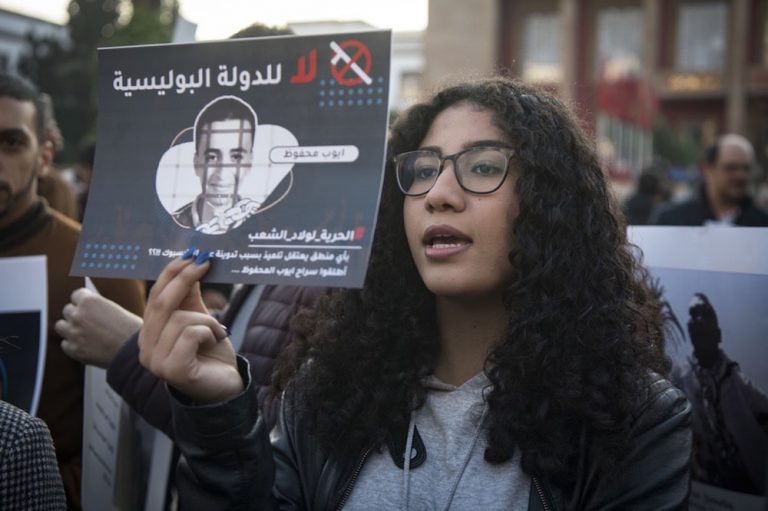
This research found that while there have been attempts to develop legislative frameworks that can protect people’s digital rights, that these policies can also be used to oppress people. As a result, the space for freedom of expression is shrinking, and activists and human rights organizations who are working to defend human rights are finding themselves increasingly under threat and attack both online and offline.

The research focuses on eight topics that were identified through extensive research; the right to access the internet, the right to privacy, the right to be forgotten, the right to access information, the right to access the digital economy, the right to freedom of expression, hate speech, discrimination and sexual harassment and fake news.

The research includes a comprehensive literature review of available local or regional studies/research on digital rights in the four countries, as well as information from interviews conducted with digital rights and media experts in each country. The research also provides a set of recommendations for governments, corporations, and civil society developed by experts, that can improve people’s access to a safer environment for exercising their digital rights and their human rights and support future research into this area.

Rajae Boujnah, Innovation for Change MENA Hub Manager, stated “Digital Rights are not different from our conventional and ratified civil rights and they should be translated on the internet as well. We believe that this report can help to initiate the first steps towards an advocacy program upholding digital rights, and the right to freedom of expression online in line with Innovation for Change MENA Hub’s mission to create free and secured online and offline civic spaces”.

Stay connected

529FansLike
172FollowersFollow
156SubscribersSubscribe
- Advertisement -