Home Blog Page 1232

Outgoing Pacific Islands Forum SG says Australia’s climate change stance is affecting its standing in the region

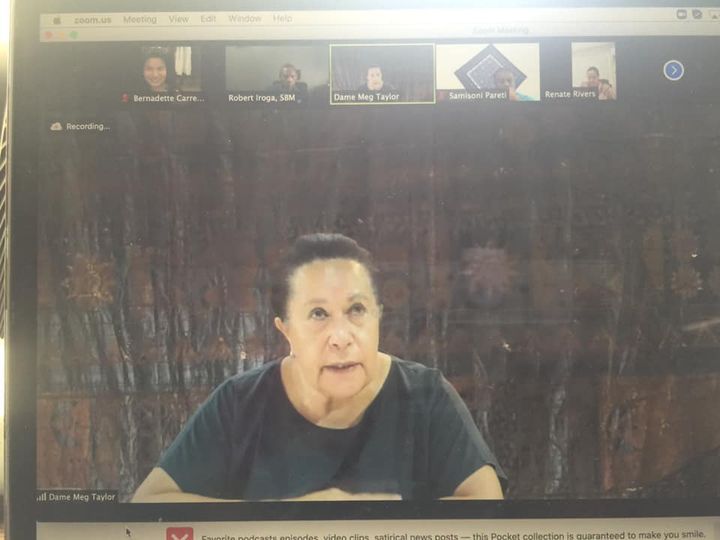
The outgoing Secretary General of the Pacific Islands Forum Dame Meg Taylor says the Australian government’s stance on climate change and its support for fossil fuels is affecting the country’s standing in the region.

“I think people who are very concerned about the climate issues and what’s happening in terms of the impact, yes, people are concerned about the government of Australia’s position,” she said.

During a farewell media conference after six year in the job Dame Meg identified climate change as the most important issue for the Pacific region.

She said Australia’s position on climate change has prevented the region from speaking with a united voice at major international forums like the UN climate talks.

“We’re not on the same page and now that I’m not secretary general, that has been one of my major concerns,” Dame Meg said.

Though she did draw a distinction between the actions of the national government and others actors in Australia.

“Where I’m positive is in the state governments and the young people and communities in Australia that really understand what’s going on,” she said.

Dame Meg is the first woman to hold the position of secretary general at the Pacific Islands Forum.

She’s been widely praised for reforming the Forum’s secretariat, increasing the participation of civil society groups, and leading initiatives like the Pacific Humanitarian Pathway on COVID-19 which helped coordinate a regional response to the pandemic.

SOURCE: ABC/PACNEWS

COVID danger has not passed, States must support pandemic treaty: WHO chief Tedros

0

-UN health agency chief Tedros Adhanom Ghebreyesus urged all countries on Monday to support a pandemic preparedness treaty, warning that it would be a “monumental error” to think the danger of COVID-19 has passed.

In closing comments to the WHO’s annual week-long high-level assembly, Tedros said that a potential international treaty will be discussed in a special session of WHO members in November.

Although COVID cases and deaths are declining globally, Tedros insisted that the “way out” was through “tailored and consistent” public health measures in combination with equitable vaccination.

The WHO Director-General urged all Member States to commit to vaccinating at least 10 percent of the global population by the end of September and at least 30 percent by the end of the year.

“One day – hopefully soon – the pandemic will be behind us, but the psychological scars will remain for those who have lost loved ones, health workers who have been stretched beyond breaking point, and the millions of people of all ages confronted with months of loneliness and isolation”, he underscored.

Tedros stressed that the UN agency needed greater funding for the technical support and guidance that the agency provided to countries.

“The training of health workers, the critical supplies, the surge deployments and much more…It all has to be funded. We cannot pay people with praise”, he said.

Member States “can only truly keep their own people safe if they are accountable to each other at the global level”, Tedros maintained, adding that the pandemic had been characterised by the “lack of sharing” of “data, information, pathogens, technologies and resources”.

He insisted that a pandemic treaty would improve early warning on potential global health threats, promote stockpiling and production of pandemic supplies, allow for equitable access to vaccines, tests and treatments and provide an emergency workforce to handle emergencies.

“An international agreement of any kind must be designed and owned by all Member States,” said Tedros. “It must be truly representative and inclusive.

It must be thorough and carefully considered, but it must also be urgent. We don’t have time.”

Globally, as of 30 May 2021, there have been 169,597,415 confirmed cases of COVID-19 reported to WHO, including 3,530,582 deaths. As of 27 May 2021, a total of 1,546,316,352 vaccine doses have been administered.

In the past week, the global leaders in the World Health Assembly adopted more than 30 resolutions and decisions on diabetes, disabilities, ending violence against children, eye care, HIV, hepatitis and sexually transmitted infections, local production of medicines, malaria, neglected tropical diseases, non-communicable diseases, nursing and midwifery, oral health, social determinants of health and strategic directions for the health and care workforce.

The World Health Organisation also announced that it has assigned new simple labels for key variants of SARS-CoV-2, the virus that causes COVID-19, using letters of the Greek alphabet.

For example, the B.1.1.7 variant of concern initially identified in the United Kingdom, will be labelled now as “Alpha”. The one identified in South Africa will be “Beta”.

The labels were chosen after wide consultation and a review of many potential naming systems. WHO convened an expert group of partners from around the world to do so, including experts who are part of existing naming systems, nomenclature and virus taxonomic experts, researchers and national authorities.

In a statement published this Monday, the UN healthy agency explained that the new Greek alphabet names won’t replace the variants existing scientific names, which convey important scientific information and will continue to be used in research.

“While they have their advantages, these scientific names can be difficult to say and recall, and are prone to misreporting. As a result, people often resort to calling variants by the places where they are detected, which is stigmatising and discriminatory. To avoid this and to simplify public communications, WHO encourages national authorities, media outlets and others to adopt these new labels”, the agency urged.

SOURCE: UN NEWS CENTRE/PACNEWS

‘They failed us’: how mining and logging devastated a Pacific island in a decade

0

By Mike Puiai

There is perhaps nowhere in the Pacific where the costs of extractive industries are as heartbreakingly clear as Rennell Island.

The island, a tiny dot in the vast South Pacific that lies at the southern tip of Solomon Islands, is home to a few thousand people. And it’s starkly divided.

On one side is pristine East Rennell, a Unesco world heritage site, which offers a glimpse of Rennell unspoiled. But in the last decade, West Rennell has suffered the triple assault of logging, bauxite mining, and a devastating oil spill from when a bulk carrier, hired by a mining company, ran aground on a reef.

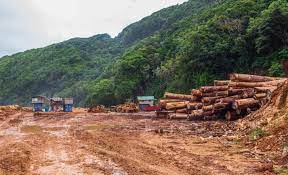
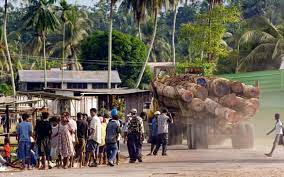
Logging companies arrived on the island about 10 years ago. Satellite images show extensive tree cover loss in the western part of the island and the scars of roads built to get the timber out.

Locals in West Rennell, like Ajilon Nasiu, say that since logging and mining began there, the environment has changed.

“Birds and animals here have moved out, probably to East Rennell. We haven’t heard the sound of birds in the morning,” says Nasiu, the former speaker of the national parliament in Honiara. He has been closely observing logging and mining activities since they started on the island. “The problems we experience are because landowners were not united to protect our forest and land or to confront companies.”

Mining soon followed the logging, with leases covering much of West Rennell granted to companies eyeing the bauxite-rich soil. Bauxite ore is the main source of aluminium.

Landowners and some officials estimate that since 2014 up to 50% of the bauxite-rich soil in West Rennell has been exported.

While Solomon Islands government offers generous tax exemptions to mining companies operating on Rennell, companies do pay into government coffers. The governor of Solomon Islands’ central bank says that while exempt from paying export taxes, Bintang Mining Company, one of the major operators on the island, contributed SBD$142m (US$17.8m) in foreign exchange in 2020 and $131m (US$16.4m) in 2019.

Businesses in West Rennell flourished during the peak of logging and mining activities. Children could buy mobile phones, shops opened and people had cash to spend.

But even current and former government officials have conceded that the way previous governments handled the process of land acquisition and granted leases for the bauxite mining industry did not abide by mining regulations and has harmed the community.

Former prime minister Rick Houenipwela told SIBC last year: “Sadly, Solomon Islands have not benefited from the Rennell mining operations.”

Amos Tuhaika, from Avatai Village, told the Guardian their forest, gardens and sea have been destroyed by extractive companies.

“We rely on the national government, provincial government and the police to protect us but they failed us,” he said.

People in West Rennell say that the arrival of mining and logging operations also changed the fabric of social life. Shops selling alcohol sprang up in villages near mining and logging camps.

In Lavagu village, Rosemary Tingi’ia said families had been destroyed by the impact of the foreign miners, who have had children to foreign mining workers.

While some of the men proving caring partners who provided for their children, more often the experiences were far more destructive. Often the women were paid for sex, sometimes just basic food and shelter, and when the miners’ work had finished, they returned to their home countries, leaving the young women to fend for themselves and their children. There is deep stigma and shame in Solomon Islands for the women and their children in this situation. The children have no defined traditional role in the community where land is passed down patrilineally, and the women struggle to be accepted by their indigenous families or to find future partners.

“These children now become fatherless without a house or a bank account,” said Tingi’ia.

And then, in February 2019, Rennell Island was the site of the most serious man-made disaster in the country’s history. During Cyclone Oma, a bulk carrier, the MV Solomon Trader, carrying 700 tonnes of oil, ran aground on Kongobainiu reef.

The carrier, hired by mining company Bintan Mining Solomon Islands, had been attempting to load bauxite from a nearby mine on the island. It spilled 300 tonnes of oil into the pristine bay.

The water turned black, people reported being forced to drink rainwater, because their fresh water sources were contaminated and, unable to fish, were reliant on deliveries of food from Honiara, 250km away. At Avatai village, every chicken died a week after the spill and children suffered skin and eye infections.

The owner of the vessel, King Trader, and its South Korean insurer, P&I Club, apologised for the spill in March 2019, describing the situation as “ totally unacceptable”. In a statement the companies said “although matters of liability are yet to be determined … [we] have expressed deep remorse”. The statement said they were “acutely aware of environmental damage” and were working as quickly as possible to bring the spill under control.

According to a report by local and international experts into the spill, which was given to Solomon Islands government in 2019 and leaked to the ABC, the oil spill caused the direct loss of more than 10,000 square metres of reef and more than 4,000 square metres of lagoon habitat and economic losses of up to AU$50m. The report said the site could take up to 130 years to recover.

Five months later, a second major spill hit the bay, when an estimated 5,000 tonnes of bauxite slipped into the water while it was being loaded on to a barge, turning the bay red.

“It’s like a scene from the Exodus,” a source on the island told the Guardian at the time.

The member of parliament for Rennell-Bellona province, Dr Tautai Agikimu’a Kaitu’u, said West Rennell landowners didn’t get what they should get from their natural resources.

“Logging and mining in West Rennell, especially mining, has caused many problems to our communities and the environment… The situation here in West Rennell with regards these operations is a sad one,” he said.

SOURCE: THE GUARDIAN/PACNEWS

The $3bn bargain: how China dominates Pacific mining, logging and fishing

0

By Josh Nicholas

One country dominates the Pacific’s resources extraction.

Guardian analysis of trade data has revealed that China received more than half the total tonnes of seafood, wood and minerals exported from the region in 2019, a haul worth $3.3bn(US$2.54 billion) that has been described by experts as “staggering in magnitude”.

The country’s mass extraction of resources comes as China has deepened its connections with governments across the region, amid a soft power push that sees it rivalling the influence of the US and Australia in the Pacific.

China took more by weight of these resources from the Pacific than the next 10 countries combined, with experts saying China “would easily outstrip” other countries, including Australia, when it comes to “gross environmental impact of its extractive industries”.

Data analysis reveals the extent of China’s appetite for Pacific natural resources.

In 2019 China imported 4.8m tonnes of wood, 4.8m tonnes of mineral products, and 72,000 tonnes of seafood from the Pacific.

The next single largest customer for the Pacific’s extractive resources was Japan, which imported 4.1m tonnes of minerals – mostly petroleum – 370,000 tonnes of wood and 24,000 tonnes of seafood. Australia imported 600,000 tonnes of minerals, 5,000 tonnes of wood and 200 tonnes of seafood.

Shane Macleod, a research fellow at the Lowy Institute, says that China is such a dominant customer of Pacific resources because of its proximity to the region and its need to power its economy.

“They just have the appetite. They have the need for natural resources and they’re looking for sources and the Pacific is geographically close. It has the added benefit that the supply lines are shorter,” he said. “So you can look at the Ramu nickel mine in Papua New Guinea. That is providing raw material for China in the region, directly, without having to be transported from the other side of the planet.”

From Solomon Islands, more than 90% of extractive resources go to China when measured by weight. And China regularly claims more than 90% of the total tonnes of wood exported by Papua New Guinea and Solomon Islands.

Beyond direct imports of resources, data from the American Enterprise Institute shows more than US$2bn was invested by Chinese companies in Pacific mining in the past two decades. These include investments in the controversial Porgera, Ramu Nickel and Frieda River mines in PNG.

The Chinese government has also sent billions of dollars in official finance into the region, including tens of millions for new marine and industrial zones.

Comparing the Pacific’s exports

China is the Pacific’s biggest customer whether measured by weight or US dollars. But Australia is close behind when measured in value – $2.8bn(US$2.15 billion) to China’s $3.3bn(US$2.54 billion) in 2019. This is due to the fact that many extractive products are heavy but relatively inexpensive commodities, like wood.

“In terms of the gross environmental impact of its extractive industries, China would easily outstrip other industrial nations that operate in the Pacific region, including Australia,” says Prof Bill Laurance from James Cook University in north Queensland.

“China’s mineral, timber, fossil fuel, food and other imports from Pacific Island nations are staggering in magnitude. They’re creating enormous challenges for sustainable development in the region.”

‘High-risk timber producers’

Papua New Guinea, Solomon Islands, Vanuatu, Tonga and Palau all regularly send more than 90% of their wood exports to China. China’s size doesn’t neatly explain this concentration, as it takes less than 10% of the wood exported by Malaysia, a much larger producer. Malaysian companies also dominate logging in PNG and Solomon Islands.

According to some estimates, illegal timber makes up as much as 70% of logs exported from Solomon Islands.

As a very large and nearby country, China is a natural customer for the Pacific’s exports. But experts say the outsized take also has to do with China’s lack of laws against importing illegal timber, and poor accountability for environmental or social impacts.

“Both [Papua New Guinea and Solomon Islands] suffer from entrenched endemic corruption that has made it (so far) impossible to hold to account both the logging industry and the politicians profiting from them,” says Lela Stanley, a policy adviser at the NGO Global Witness.

“They are known high-risk timber producers, and countries with more stringent laws on illegal timber should avoid them accordingly. Currently China has no law explicitly forbidding the import of illegally produced timber.”

The logging that takes place in the region has huge impacts on communities.

“Most of those logs have been produced illegally, often … through the violation of land rights. This is not an abstract concept in PNG but one with real-life impacts for countless people across the country. Most rural communities depend directly on their land and forests for at least some of their needs. When that forest vanishes, or is stolen, the impacts are severe.”

While China’s new forest law, which came into effect in July 2020, aims to promote sustainable trade of timber, as well as to safeguard China’s forests, there are still concerns about some companies’ practices.

“Even if the laws and rules change, it will take time and effective enforcement before the companies change behaviour,” Stanley says.

Foreign-flagged fishing vessels

Fishing is a huge source of income for many small Pacific nations. But they largely haven’t been able to capture the full value of this resource. Apart from Fiji, Pacific nations haven’t been able to move up the value chain into the processing of fish into more valuable products.

Kiribati, for instance, receives up to 75% of its government revenue from fishing access fees and levies. But Kiribati directly exports very little – just 1,000 tonnes of seafood were exported to China in 2019. Foreign-flagged vessels, meanwhile, landed hundreds of thousands of tonnes of fish in Kiribati waters.

A survey of boats operating in the Pacific in 2016 found that Chinese-flagged vessels far outstripped those of any other country. China had 290 industrial vessels licensed to operate in the region at the time, more than a quarter of the total, and more than the 240 from all the Pacific nations combined.

Outside of PNG, little of the offshore fishing in the Pacific is conducted by locally flagged ships. Rather, local fishing is concentrated in coastal waters. There are highly valuable species in these waters, according to Dr Hugh Govan at the University of the South Pacific, such as sea cucumbers. But Govan says many coastal fisheries are overfished or commercially extinct.

The main market for sea cucumbers is southern China, but these were overfished to such a degree in PNG that the government had to halt fishing for several years.

China’s foreign ministry spokesperson, Hua Chunying, says China is “a responsible fishing country”, with “‘zero tolerance’ for violations of relevant laws and regulations committed by distant fishing vessels”.

“We have … strengthened international cooperation, and done a great deal of fruitful work in jointly combating illegal fishing and promoting the sustainable development of fishery resources with other countries.”

Mining disasters and scrutiny

Measured by weight, Solomon Islands sends almost all of its mineral products to China, much of it aluminium ore.

Minerals account for more than 90% of the value of PNG’s total exports, and it sends just over 30% by weight to China. Australia is also deeply involved in mining in PNG – controlling many of the largest mines, and importing $2.5bn(US$1.9 billion) of gold in 2019.

Australia takes almost 100% of the gold from Fiji and about 80% from PNG. But when measured in weight these pale compared with the minerals exported to China.

But the Lowy Institute’s Shane McLeod, argues that a significant difference between Chinese and Australian trading partners is how accountable companies are held for environmental and social issues.

Large-scale mining operations in PNG have a horrific environmental track record, including disposal of mining waste at Anglo-Australian BHP’s Ok Tedi mine, at Anglo-Australian Rio Tinto’s Panguna and, more recently, at the Chinese-operated Ramu Nickel mine. Many foreign-owned companies have subsequently withdrawn from projects that have proven environmentally ruinous.

“But Chinese companies operating abroad aren’t subjected to scrutiny from their home markets in the same way as companies from western nations are,” McLeod said.

“Ok Tedi is a good example – the environmental disaster was a cause of major embarrassment for [BHP], with scrutiny from media eventually fed through to investors.”

“Companies with a Chinese listing/investors do face pressure and scrutiny, but I think the way that manifests itself is opaque and unseen. It’s not clear to what extent an environmental issue would limit the operations of a resource project, for example.

“I expect feedback for MCC [the Metallurgical Corporation of China, the operator of Ramu Nickel] comes through a political/governmental channel rather than, say, a journalist from China covering the environmental impact of a mine there.”

China’s foreign ministry did not reply to the Guardian’s requests for comment.

Last year the PNG government cancelled the mining lease of the part-Chinese owned Porgera mine, claiming that the country was not getting its fair share of major natural resource projects. The Chinese joint venture partner, Zijin Mining, “has flagged international political ramifications, warning the lease dispute could damage bilateral relations between [PNG] and China”.

The next test of corporate social responsibility may be on the horizon, with proposed mines from both Australian and Chinese companies in PNG facing pushback for environmental and cultural reasons.

SOURCE: THE GUARDIAN/PACNEWS
Fiji businesses to operate under relevant COVID safe measures

0

Fiji businesses cannot go back to operating in the usual manner and they will now have to abide by the minimum COVID safe measures.

Permanent Secretary for the Ministry of Commerce and Trade, Shaheen Ali, said that for the Lami, Suva, Nausori containment zone, only essential and approved businesses are allowed to operate.

Ali said certain businesses and industries that can comply with additional measures will be approved to operate on a case-by-case basis.

“We have been in discussion with a number of businesses and are reasonably assured that some can now operate. These businesses have the ability to establish bubbles that allow safe movement from home to work and return. I know there will be some anxiety amongst Fijians about allowing more businesses to open. But after being closed for over a month there is a socio-economic imperative to consider.”

Ali said businesses are important to the economy as they employ thousands of Fijians.

“Many businesses have export orders to fulfill and a number of them are extremely important for our micro and informal sector. Health and safety will take precedence which is why the curfew hours in the Lami-Suva and Nausori containment zone remains 6pm to 4am and high-risk businesses remain closed.”

The businesses in the Nadi and Lautoka containment zone can operate except for high-risk businesses.

“This is for the Nadi-Lautoka zone, we are working on protocols for these high-risk businesses to open and are quite advanced with these protocols for businesses such as hairdressers and barbershops.”

Ali said all businesses, including high-risk ones in the Northern Division and maritime island can operate.

The Ministry will continue to assess applications for passes through the COVID pass portal.

SOURCE: FBC NEWS/PACNEWS

Scott Morrison hints at Pacific travel bubble during New Zealand trip

0

Australia’s Prime Minister has hinted at expanding the trans-Tasman travel bubble to include other Pacific Islands after touching down in New Zealand for talks with his Kiwi counterpart Jacinda Ardern.

Prime Minister Scott Morrison touched down in famed ski town Queenstown on Sunday afternoon to hold talks with Ardern for the Australia-New Zealand Leaders Forum.

The visit comes after the opening of the trans-Tasman bubble last month and the Prime Minister hinted at expanding the travel bubble.

“We are very focused on supporting our Pacific family, and the idea of a bubble that goes beyond New Zealand and Australia is a real possibility,” Morrison told reporters.

He spoke to colleagues in the region and noted Fiji was going through a “difficult time” at the moment but Australia was supporting the nation.

It was not clear what countries could be included in the expanded bubble.

Morrison also hit back at criticism from Victoria’s Acting Premier James Merlino who said he was “beyond disappointed” the federal government refused to help the state during its fourth lockdown.

“The Queensland government and the Western Australian governments, when they were in similar circumstances, took on those responsibilities, having decided to go into those lockdowns, and they took on those responsibilities, and I commend them for that,” the Prime Minister said.

“We will continue to support Victoria to get Victoria open and to do everything we can to ensure that Victoria does not close itself again.”

The state recorded another five cases of Covid-19 on Sunday and is in the midst of a seven day “circuit-breaker” lockdown to help prevent the spread of the virus.

The Australian and New Zealand leaders shared a traditional Maori Hongi greeting and signifies the sharing of life force.

It is said the god Tāne-nui-a-Rangi moulded the shape of the first woman, Hine-ahu-one, from earth and breathed life into her by pressing his nose against hers.

The moment between Ardern and Morrison is politically significant as it is believed to be the first meeting of world leaders without masks in a nation devoid of COVID-19 since the pandemic began.

Rising tensions with China and the severe economic impact of the pandemic in the Pacific are expected to be the focus of the meeting.

It is only Morrison’s second time leaving Australia in more than a year and he noted the last time he met Ardern was in Sydney at the start of the pandemic.

“Here we are, two countries – some 18 months later – two countries that have weathered the storm of Covid arguably better than any two countries anywhere else in the world, both from saving lives as well as saving livelihoods,”Morrison said.

He attended a business function in Queenstown on Sunday before holding a private diner with Ardern and both leaders’ partners.

There will be more formal talks on Monday between the two.

Also in Queenstown were rugby league and union star Sonny Bill Williams and former Socceroo Craig Foster, who attended an Amnesty International event at the Queenstown Events Centre.

The pair took to social media to urge Morrison to take up New Zealand‘s long standing offer to resettle 150 refugees held in Australian-run offshore detention centres.

“We’ve got 150 empty chairs behind us that symbolise innocent refugees offshore, in Nauru and Manus Island,” the former soccer commentator said.

“There’s still around 240 people stranded there after eight years … that’s the amount of time Australian government has consistently refused to accept New Zealand’s generous offer to resettle refugees.

“We need to get these people to safety.”

Added Williams: “It shouldn’t happen. New Zealand have offered to take them … let’s get them off the islands and let’s get them to New Zealand shores, please.”..

SOURCE: THE AUSTRALIAN/PACNEWS

Fiji Airways receives third Boeing 737 Max aircraft

0

Fiji Airways received its third 737 MAX aircraft from Boeing last Thursday night.

Flight FJ2201 took off from Seattle on Tuesday and made a stop-over in Honolulu for a day, before heading for Fiji.

“Fiji Airways confirms receiving delivery of its third Boeing 737 MAX aircraft on Thursday evening (27 May), following the acceptance of return-to-service requirements as announced by the airline on 1st April,” said an airline spokesperson.

“Once approved for service by the regulators, the aircraft will be used for cargo and repatriation flights as earlier announced.”

Fiji Airways didn’t respond to Fiji Times question on whether payment has already been made for this latest plane and when will the airline receive the remaining two Boeing 737 MAX aircraft.

The national carrier had purchased five MAX8 aircraft but had only taken delivery of two before both aircraft were grounded in March 2019 after fatal crashes with other airlines using the same jets.

The Civil Aviation Authority of Fiji (CAAF) had sent a team to Seattle last month for regulatory certification checks and inspections before delivery.

SOURCE: FIJI TIMES/PACNEWS

Outgoing Pacific Forum head warns about external influences

The outgoing head of the Pacific Islands Forum has decried how the region is increasingly defined by the interests of external powers.

She has also warned of the dangers of the pre-eminent Pacific Islands organisation splitting up into sub-regional groupings at a time when geopolitical interests are converging.

Dame Meg Taylor, who has signed off after six years as the Forum’s Secretary-General this month, held an online talanoa for regional journalists where she reflected on big issues confronting the Pacific.

One of them was the wrestle for influence and strategic foothold in the Pacific by larger, external countries, what others have described as a “high-stakes rivalry” between China and the U.S.

Dame Meg said she had always pushed hard for the Pacific Islands to makes its own decisions without the influence of other powers.

“I find it so offensive that all of a sudden the region that we all come from is defined by people who are great military powers, who have no consideration for the peoples in the region, or our governments in the Pacifc, and the lack of deep consultations.

“I am concerned about the geopolitics that is playing out in the region. I think that this redefinition of the world into Indo-Pacific with no conversation with the leadership of the region is almost like our countries are irrelevant.”

A case in point was Japan’s recent announcement that it would soon deposit over a million tonnes of nuclear waste water in the Pacific Ocean.

“How come the Pacific was never consulted on these kinds of issues?” Dame Meg asked, adding her concern about the potential impacts on Islands peoples and their resources, particularly fisheries.

She warned Pacific Islands countries that nothing given to them by bigger powers came without owing them something in return.

“And what is it that we’re going to owe them? Are we going to owe them places for military bases? Are we going to owe them places for their influence and control of the Pacific Ocean. Are we going to owe them so they have access to our resources?

“All these things need to be discussed, and discussed by peoples in the Pacific,” She said.

Climate crisis

Of all the significant problems facing the Pacific Islands, climate change is the biggest, according to Dame Meg, and the one which major powers in the region are not discussing enough.

Reflecting on key achievements during her tenure in the Forum role, Dame Meg highlighted the Kainaki Declaration on the ‘climate change crisis’ at the 2019 Forum leaders summit in Tuvalu.

Difficult negotiations with Australia in particular over the Declaration highlighted the extra challenges Pacific Island governments face in navigating their relationships with aid partners while trying to fight for their very survival as a people.

Dame Meg lamented that an important partner such as Australia could be not on the same page as islands countries regarding how to respond to climbing global temperatures.

She expressed deep concern about sea level rise and what it would mean for Pacific Island countries’ maritime boundaries.

“I hope the world is paying attention to this. What does it mean for the future our peoples, what does it mean for the future of members states? I just think we’re heading for real trouble and no one is talking about it.”

Pitfalls of sub-regionalism

The election of Dame Meg’s successor as Forum secretary-general could hardly have been more controversial.

Earlier this year former Cook Islands prime minister Henry Puna won the race to become the new secretary general.

Among the four other candidates was Marshall Islands diplomat, Gerald Zackios, and his failure to get the top job prompted the five Micronesia members of the Forum to announce they would leave the organisation as they believed they had a gentlemen’s agreement that it was Micronesia’s turn to hold the role.

Dame Meg noted that there would be lessons learnt from the fallout, although Puna’s promise to work hard to heal the rift is unlikely to mollify Micronesian leaders.

However, a review of how the secretary general is appointed is underway. Dame Meg said there had been a lot of work going on behind the scenes, the outcome of which would go to leaders for approval in due course.

While the Micronesian states look to retreat to their own grouping in the north Pacific Islands, countries in the Pacific’s other two sub-regions, Melanesia and Polynesia, already have their own sub-regional groupings.

Wary of increasing fracture of the Forum, Dame Meg said there should be a political discussion about how the sub-regions operate together, stressing that the Pacific Forum needed all countries in this diverse islands region to stand together to best protect their common interests.

“I believe in the ocean continent of the Blue Pacific. Yes there are cultural issues, there are political issues, and if we divide into our sub-regions and then get played off by geo-strategic interests, our own interests as a collective will be undermined.

“Holding a region together isn’t easy,” Dame Meg conceded. “But I think there is a consensus in the Pacific that it’s when stick you together that we have the greatest voice.”

As for her own next steps, the Papua New Guinean said she was looking to finally return home after a long time away.

“Home calls my heart,” she said, revealing she would take time out to decide on her future path.

She’s relishing a step away from being at the helm of this diverse regional body for six years, but it’s also clear that her fears for the future of the Pacific Islands will stay with her.

SOURCE: RNZ PACIFIC/PACNEWS

Palau records first case of COVID-19

Palau has recorded its first case of COVID-19, but public health officials say it is “historical” with low risk of transmission.

Local media reports the Palau government held a press conference this morning revealing it is not currently an active case.

Health officials said the person contracted COVID-19 in January, before being vaccinated in the succeeding months.

They arrived in Palau from Guam on 09 May , quarantined for 14-days and tested negative twice before testing positive 21 days after arrival.

The case is now in isolation, while close contacts are tested and quarantined with contact tracing continuing.

SOURCE: ABC/PACNEWS

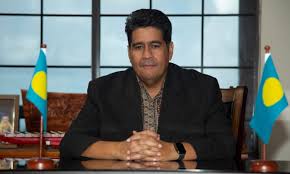
Palau President Whipps rejects political dialogue with new PIF Secretary-General

Palau President Surangel Whipps Jr on Wednesday rejected the call of the Pacific Islands Forum (PIF) new Secretary-General Henry Puna for a continued political dialogue over Micronesia’s withdrawal from the regional body.

“Probably not, we are out of PIF.,” Whipps told reporters last week.

President Whipps said Micronesian members, comprising Palau, the Marshall Islands, Kiribati, Nauru, and the Federated States of Micronesia, do not recognise Puna “as legitimate,” PIF Secretariat head.

He said Puna being selected as Secretary-General is a “slap in the face” to Micronesia.

“Our position has been very clear, we don’t recognise Puna as legitimate, and he should not be there, that was the decision that was taken and that’s why Micronesia is out,” Whipps said.

In a statement last week, Puna said that a political dialogue is underway with the Micronesian Presidents.

He said that dialogue is dialogue “is symbolic of our Pacific way of talanoa and amicable resolution of differences. Let us await the outcome of that process. As the Forum Secretariat, we will continue to serve all Members and I look forward to that ongoing engagement across our Forum family.”

But President Whipps said the trust has already been broken.

“We have to trust each other, we have to have a system that is based on trust and commitment that should be honoured,”

“Why are we part of an organisation that doesn’t honour commitment?’

In February, the PIF has fractured after Micronesia’s preferred candidate was not selected.

Micronesia said it was their turn to provide the Secretary-General and that they will leave the forum if their candidate is not selected.

Palau, Nauru, FSM, and RMI have submitted their notice of withdrawal from the Forum.

SOURCE: ISLAND TIMES/PACNEWS

Stay connected

529FansLike
172FollowersFollow
156SubscribersSubscribe
- Advertisement -