

Home Blog Page 1230

Unprecedented for government to walk out from parliament: Vanuatu Opposition leader

It was the first time for the government to boycott itself from parliament Tuesday morning, said Vanuatu Leader of Opposition, Ralph Regenvanu.

“We have never seen this kind of behavior in the parliament of Vanuatu before,” said Regenvanu who is serving his fourth term in Parliament.

“It was a bizarre and irresponsible behavior since there’s business to attend to.

“We have a Supplementary Appropriation Bill before parliament. It’s urgent it get passed so the money can be legally spent.

“The government choose to walk out and not to continue with the debate of that bill.”

“They (the government side) tried to put through the no-confidence motion to get rid of the Speaker but the Speaker said it was not consistent with the Standing Orders, which requires a seven days notice.

“The motion was clearly not mature as it was lodged just last Friday but it seems the government was forcing it to go.”

As normal procedure of a parliament sitting, Speaker Gracia Shadrack took the chair and called parliament to order.

After an opening prayer, he requested the Member for Santo Rural, Alfred Maoh, to table a document on a current matter of concern to parliament, relating to section 24 of the Standing Orders.

Leader of Government Business, Anatole Hymak, made a point of order relating to section 21 of the Standing Orders on business having precedence, saying the no-confidence motion against the speaker should take precedence as it is mature.

Section 21 of the Standing Orders states that: “The following matters take precedence on any sitting day and must be listed for debate immediately following the reading of the agenda by the Speaker: (a) No confidence in the Prime Minister; (b) No confidence in the Speaker; Dissent from a ruling of the Speaker; (d) Condolence or congratulatory.”

Hymak said the motion to remove the Speaker was an ordinary written motion which comes under Section 43 of the Standing Orders.

Member of Tanna Constituency, Jotham Napat, made a point of order bringing attention to section 44 of the Standing Orders which states that: “A Member who wishes to move a motion of no confidence must give written notice by delivering to the Clerk a copy of the motion in French and English signed by the Member and by one other Member acting as seconder, not less than seven days before the day on which the Member intends to move the motion.”

Speaker Gracia Shadrack ruled under section 59 of the Standing Orders that the motion against him was not mature and will be listed for Tuesday next week, including the other no-Confidence motion against the Prime Minister.

All government MPs walked out from parliament after the speaker said there’s government business to be transacted.

Public Relations Officer (PRO) of the Prime Minister’s Office, Fred Vurobaravu, said the government walked out from parliament because it disagrees with the Speaker’s ruling to have the motion against him moved to next Tuesday…..PACNEWS

SOURCE: VANUATU DAILY POST/PACNEWS
Vanuatu launches its COVID- 19 vaccination rollout

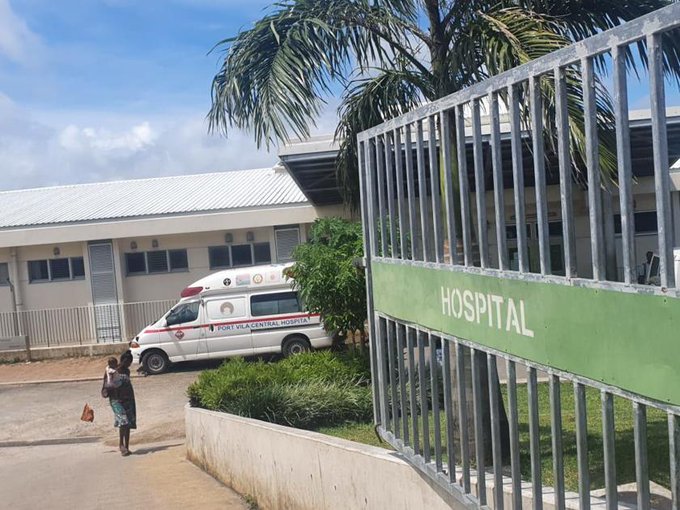
-Today marks a historic moment for Vanuatu as the Ministry of Health launches its COVID-19 vaccination rollout.

With the long-awaited and planned for COVID-19 vaccines arriving on 19 May, the 24,000 doses of the AstraZeneca will be the first COVID-19 vaccines to be used in Vanuatu to vaccinate the first 20 percent of its population. The vaccine will be rolled out initially to the prioritised populations on Efate and its offshore islands.

The vaccine – which needs to be administered in two (2) doses – will initially be prioritised for the health care workers, and the frontline workers, including border and quarantine staff, public transport drivers.

Other priority groups in the first phase of the rollout include elderly people aged 55 and above and people over 35 with existing medical conditions.

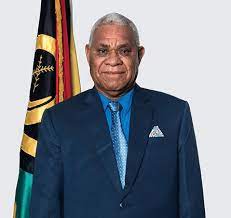
Vanuatu’s Prime Minister Bob Loughman stated, “What a fantastic opportunity Vanuatu has to be able to rollout the vaccine in a smooth and well thought through manner with the country being COVID-free! We know now that we have a safe and effective vaccine for use in Vanuatu to protect our country”.

“While the vaccine is not mandatory and people will be able to choose whether they would take the vaccine, many people in our communities are much more at risk than others due to the nature of the job as well as those at risk of serious complications due to COVID-19.

“This is why the vaccine is being prioritised to protect them first,” added PM Loughman.

“Our priority must be to protect the most exposed and most vulnerable first from severe illness and death,” said Minister of Health, Silas Bule.

“Along with the rollout of the safe and effective vaccines, we must also work towards a diverse vaccine portfolio. At the same time, we must be prepared to provide booster shots and adapted vaccines.”

Bule added, “Every jab brings us one-step closer to putting this pandemic behind us. I urge everyone to come forward as soon as they are called as part of the eligible groups in this first phase of rollout. The vaccine is safe and effective and could save your life.”

Minister Bule pays tribute to Ministry of Health staff who continue working tirelessly to deliver the first 24,000 doses of the COVID-19 vaccines to priority groups and communities in Vanuatu.

To celebrate this key milestone, there is an official launch event that is kicked off by a parade that the public is invited to join from 8am on Wednesday 2 June.

At the event, high level influential leaders will receive their first dose of the vaccine to show an example to the priority groups and the public.

Immediately following the high-level launch event, vaccine rollout will start for the prioritised populations at The National Convention Centre as follows:

• Thursday 03 June: Health care workers

• Friday 04 June: Airport workers (Air Vanuatu, AVL, private airlines and biosecurity) and Customs and Immigration

• Monday 07 June: Port Vila Land Transport Association (incl. taxi, bus, common transport, rental, drivers)

• Wednesday 09 June: Quarantine facilities and Wharf ( Ifira Stevedoring, Ports and Harbour)

• Thursday 19 June: VMF/Vansec Policy College, Maritime Wing; and

• From Monday 14 June: Priority Groups 3 and 4 (Elderly 55 years and above and people with existing medical conditions).

While administering of vaccines doses brings hope, other preventative measures must continue. Step by step vaccination the population will enable citizens, businesses and organisation to return to normal life as quickly as possible.

The Ministry of Health acknowledges the continues support of its partners including: the World Health Organisation; UNICEF for leading on procurement and supply of COVID-19 vaccines on behalf of COVAX facility; and the Governments of Australia, New Zealand, Japan, China, UK for allocating funds to COVAX facility…..PACNEWS

SOURCE: VANUATU DAILY POST/PACNEWS

Akaiti Puna sworn in as new Cook Islands MP

Akaiti Puna was sworn in as Manihiki’s new Cook Islands Member of Parliament on Monday during a flash sitting.

Puna, who won the Manihiki seat for the Cook Islands Party by 49 votes early last month, entered Parliament for the first time yesterday as an elected MP to take the oath of office.

“I’m glad it’s over, I’m glad that bits over and done with,” Puna said, “it’s always the worst part taking that hurdle to get into the House.

“So that’s done, it’s a weight off your shoulders.”

She said she wants to make sure her island moves ahead.

“That’s number one on the priority list,” she said.

When asked if her husband, Henry Puna, the former Manhiki MP and prime minister, had given her tips on her new role, she said with a laugh: “Yes, yes, he does. He guides me and says you should do this, you should do that, so I don’t trip over myself.”

The Manihiki by-election held on May 5 saw Cook Islands Party’s Akaiti Puna finish with 82 votes, Munokoa Maraeara of the Democratic Party on 33 and Temu Okotai who ran as an independent on five. The Manihiki seat was vacated after Henry Puna resigned earlier this year to take the role of the Secretary-General at the Fiji-based Pacific Islands Forum.

Leader of the Opposition Tina Pupuke Browne and Titikaveka MP Selina Napa congratulated and welcomed Akaiti Puna to Parliament.

There are now seven female MPs – four from the Opposition Democratic Party and three from the governing Cook Islands Party coalition – in the 24-member Parliament.

SOURCE: COOK ISLANDS NEWS/PACNEWS

Vaccine equity at heart of new $50 billion plan to end pandemic, drive recovery

Governments are being urged to finance a new US$50 billion roadmap to end the COVID-19 pandemic and drive a fast recovery, announced on Tuesday by the heads of the world’s predominant global financing, health and trade agencies.

The plan seeks to scale-up supplies of vaccines, tests and treatments, thus reducing the “equity gap” in developing countries, the leaders of the International Monetary Fund (IMF), the World Bank Group (WBG), the World Health Organisation (WHO) and the World Trade Organisation (WTO) said in a joint statement.

They warned that unless governments act now, continued waves of infections and outbreaks, as well as more transmissible and deadly virus variants, could threaten recovery.

“By now it has become abundantly clear there will be no broad-based recovery without an end to the health crisis. Access to vaccination is key to both”, they said, in a call to action published in newspapers across the world.

The US$50 billion investment is required for two crucial reasons.

The funding will increase manufacturing, supply, trade and delivery that would accelerate equitable distribution of the tools to diagnose and treat COVID-19, such as vaccines, oxygen and medical supplies, while also promoting economic growth around the world.

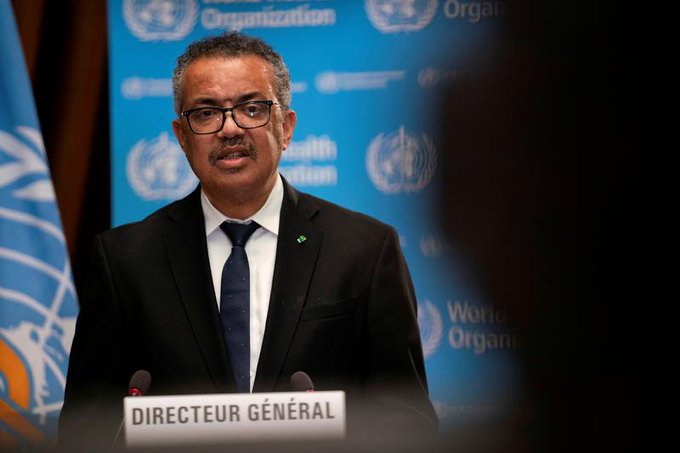
“This new roadmap reflects the need to enhance countries’ readiness and capacity systems to utilize these tools rapidly, safely and effectively”, said WHO Director General Tedros Adhanom Ghebreyesus, speaking at media briefing later on Tuesday.

The funding commitment will bring the pandemic to an end faster in developing countries, the partners said, reducing infections and deaths, while also accelerating economic recovery.

At the press briefing, Kristalina Georgieva, IMF Managing Director, explained the link between vaccination and the global economy.

“We are deeply concerned because an increasingly two-track pandemic is causing a two-track economic recovery with negative consequences for all countries. And our data shows that in the near term, vaccinating the world is the most effective way to boost global output. In other words, vaccine policy is economic policy,” she said.

The agency chiefs estimated that the investment will generate some US$9 trillion in additional economic activity by 2025, in line with recent analysis by the International Chamber of Commerce, the world’s largest business organization, and Eurasia Group, a political risk consultancy.

These entities have made the case for a relatively modest investment by governments, compared with the trillions spent on stimulus plans, and also lost in foregone economic output.

Critically, the funding will spur global vaccination and bridge “the equity gap” in accessing doses. UN Secretary-General António Guterres has repeatedly stressed that vaccines must be global public goods available to all people, everywhere.

WHO and its partners in the vaccine equity initiative, COVAX, recently set the goal of inoculating 30 per cent of the global population by the end this year. This could reach 40 per cent through other agreements and surge investment, and at least 60 per cent by the first half of 2022, according to the joint statement.

“To urgently get more shots in arms, doses need to be donated immediately to developing countries synchronised with national vaccine deployment plans, including through COVAX”, it said.

WTO Director-General Ngozi Okonjo-Iweala underlined the need for cooperation on trade, as export restrictions continue and countries wrangle over waiving an agreement on intellectual property rights, known as TRIPS.

She told journalists that trade policy can help scale-up vaccine production, including by freeing up supply chains, and through working with manufacturers to make the most of existing production facilities and build new ones, particularly in regions where they are lacking.

“We know that there is the TRIPS waiver debate going on at the WTO”, she added. “While I cannot take sides, we need to get to a conclusion on this debate. We need to promote also the transfer of technology and know-how to get lasting increases in production capacity.”

The joint plan was announced as WHO approved another COVID-19 vaccine for rollout.

The Sinovac-CoronaVac vaccine, made in China, has been validated for emergency use, meaning it meets international standards for safety, efficacy and manufacturing.

The Emergency Use Listing (EUL) process is a prerequisite for inclusion in COVAX and international procurement.

“The world desperately needs multiple COVID-19 vaccines to address the huge access inequity across the globe,” said Dr Mariângela Simão, WHO Assistant-Director General for Access to Health Products.

“We urge manufacturers to participate in the COVAX Facility, share their knowhow and data and contribute to bringing the pandemic under control

SOURCE:UN NEWS CENTRE/PACNEWS

Samoa Electoral petitions delayed to prioritise constitutional cases

0

Fifty plus electoral petitions and counter-petitions have been pushed back twice to allow the Courts to deal with constitutional issues that resulted in a Government in limbo.

Three Supreme Courts will be operating simultaneously on Monday next week to hear the electoral petitions – the last test for the winning members to secure 5 years tenure in Parliament.

The Appellate Court on Monday presided over a constitutional question on the interpretation of Article 44(1A) if the 10 per cent statutory requirement means 5 or 6 women in parliament.

Chaired by Chief Justice,Satiu Simativa Perese sitting with Justice Tafaoimalo Leilani Tuala-Warren and Justice Fepuleai Ameperosa Roma the decision has been reserved.

Aliimalemanu Alofa Tuuau was appointed as the 6th woman in Parliament by the Electoral Commissioner but that appointment was revoked by the Supreme Court.

That “unanimous” decision was appealed and the reserved decision of the Appeals Court will be delivered in a timely manner said Chief Justice Perese.

If the appeal is granted the country will return to a deadlock and is likely to head back to the polls.

If on the other hand the Appeal is dismissed then the Legislative Assembly will have one party with a majority of one seat.

Another separate case is brought by the Attorney General that seeks interim orders to stop the legal effect of the swearing in of 26 members of Parliament in an ad-hoc ceremony last week.

Those orders if granted will ultimately halt the transition of the Fa’atuatua i le Atua Samoa ua Tasi (FAST) party led Government that has a majority of one seat.

The party says they were forced to carry out the swearing-in of their 26 representatives on Monday evening last week after the Parliament doors were closed and the non-attendance of the Head of State, Clerk of the Legislative Assembly, Chief Justice and 25 elected members from the Human Rights Protection Party.

This followed two proclamations from the Head of State, the first being to call for Parliament to convene and the second to suspend his earlier proclamation. After FAST took it to court, the Supreme Court ordered for Parliament to convene on 24th May to comply with a Constitutional requirement for the assembly to meet within 45 days.

The Court also set aside a proclamation from the Head of State to suspend the assembly’s meeting until further notice.

But despite the orders from the Court the chamber remained locked and FAST went ahead with swearing in ceremony in the absence of the Head of State and other bureaucrats.

FAST claims that the ceremony, although done outside of Parliament and without the proper officials, was done on the principle of necessity to meet the Supreme Law requirement.

In disagreement, the Attorney General argued that the swearing-in ceremony was unconstitutional and unlawful.

That case is tentatively scheduled for Wednesday or Thursday this week for hearing.

One of the first constitutional challenges was one brought by the FAST party against a proclamation from the Head of State that voided results of 9th April General Election calling for fresh elections.

That proclamation was void and declared unconstitutional reinstating the results from April’s polling day. The case was not appealed.

SOURCE: SAMOA OBSERVER/PACNEWS

Fiji’s Nadi hospital, CWM’s East and West Wing on lockdown, 35 Covid-19 cases recorded

The Nadi Hospital and two wings of Fiji’s largest referral health facility – CWM Hospital – have been put on lockdown after positive cases of COVID-19 were detected there.

The case at the Nadi hospital – a staff – is from the Nawaka cluster.

And in addition to this staff, the Ministry of Health announced last night that further investigation had also revealed that a case announced over the weekend from the Nawaka cluster, who was discovered as part of screening and contact tracing in that area, had given birth and been discharged from the hospital a week ago.

Also, another previously announced positive case had spent significant time as a visitor in the hospital just prior to being positive.

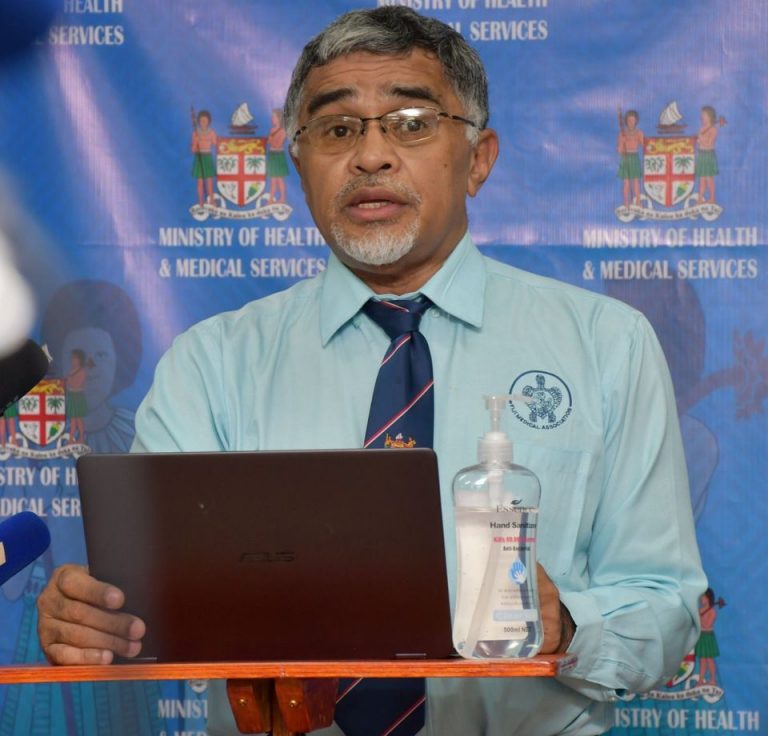
Ministry of Health permanent secretary Dr James Fong said all staff and patients currently in the hospital were being tested.

And in response to those cases, he said the Nadi hospital would be locked down and services would be relocated.

For Suva, as an early part of the response to the outbreak in Central Division, Dr Fong said frontline health staff had been removed from their places of residence and housed in bubbles in accommodation facilities across the capital city.

“These staff have been separated from their families for weeks on end in order to safeguard our essential health services. This nurse (new case announced tonight) had been working within a bubble and was housed at the Holiday Inn,” Dr Fong said.

“The detection of these two cases within the hospital will require measures to secure the hospital and its staff and patients.

“The existing protocol for weeks has been to isolate every new admission and their carer, and have them swabbed and tested before allowing admission into wards within the hospital.”

Dr Fong said hospital staff members were tested if they had symptoms, or if they were residents of an area with reported COVID-19 cases.

He said staff in the COVID-19 isolation ward were tested more regularly – with negative results required before ending their rotation through that ward.

Dr Fong said the data from the overnight testing would determine how the existing contingency plans would be reviewed and what further measures would be implemented.

Meanwhile, Fiji has recorded 35 new cases of COVID-19 .

The Ministry of Health and Medical Services has announced that all these new cases are linked to existing clusters.

Ministry permanent secretary Dr James Fong says all cases are stable and either in isolation facilities or home isolation.

“At the present time, the vast majority of cases have been arising from existing clusters and not as cases with unknown sources of transmission from the community,” Dr Fong said.

“This indicates that our contact tracing and the isolation of communities where infections are found is effective, however, we will continue to escalate our community surveillance programme to look for cases outside clusters and the contained areas.”

The new cases are linked to the following clusters:

*Navy cluster – 23
*Extra Supermarket cluster – 1
*Nawaka, Nadi cluster – 2
* Five of the cases are linked to the Navosai Narere cluster
* One link to the Waila cluster.
*One is from the Nawaka cluster and works at Nadi hospital
*Two cases detected at CWM Hospital.

“We are also aware of the increasing danger posed to our health facilities and will be escalating our mitigation measures. This will include setting up field hospitals and more quarantine and isolation facilities. As such this may involve temporarily taking over assets for this purpose,” said Dr Fong.

SOURCE: FIJI TIMES/PACNEWS

Vanuatu government takes spat with speaker to court

Vanuatu’s Supreme Court will sit on Wednesday morning to hear an urgent application from the government, which wants to remove parliament’s speaker.

Prime Minister Bob Loughman and his government walked out of parliament on Tuesday after Gracia Shadrak refused to let them debate a motion to remove him.

Shadrak has fallen out with the government after agreeing to a motion to hear a vote of no confidence in Loughman.

That is due to be heard next Monday, but the speaker’s actions prompted his colleagues to try and remove him, and Shadrak said that motion will also be heard next Monday.

It filed an urgent court application on Tuesday night, claiming the speaker’s ruling breaches MPs’ constitutional rights to elect a new speaker.

SOURCE: RNZ PACIFIC/PACNEWS

Samoa Appeals Court rules six -woman MP minimum

The Samoa Appellant Court has ruled that six women should sit in Parliament to meet a constitutionally mandated minimum level of representation.

But the inclusion of another woman MP in the Legislative Assembly could be months away until after all election results, including by-elections, are finalised.

“Although we have found that 10 per cent means six women in Parliament it remains to be seen whether second respondent [Aliimalemanu Alofa Tuuau] will be appointed as an additional member to satisfy the requirement,” the Court concluded.

Aliimalemanu is the second respondent and was appointed as a sixth woman to the XVII Parliament by the Office of the Electoral Commissioner before that appointment was revoked by the Supreme Court.

The uncertainty of Aliimalemanu’s appointment will leave the Fa’atuatua i le Atua Samoa ua Tasi (FAST) party with a 26 to 25 lead in sitting MPs over the Human Rights Protection Party until electoral petitions are resolved by the court in due course.

“We consider that Article 44 1A [of the constitution] is ambiguous as to the ideas it promotes and that primacy should be given to whichever of the competing ideas best promotes the establishment of human rights practice in Samoa,” the court ruled.

“In this case, that means we consider the prevailing measure is a minimum of 10 per cent of women representation which is six women.”

Chief Justice,Satiu Simativa Perese, Justice Tafaoimalo Leilani Tuala-Warren and Justice Fepuleai Ameperosa Roma presided the matter, which came before the court on Monday this week.

A total of at least six women are involved in election petitions, which are yet to be heard in the Supreme Court. If any candidate involved is found to have violated electoral law, a by-election will follow, potentially changing the number of women representatives in the Parliament.

FAST party lawyer Taulapapa Brenda Heather-Latu explains, the court also ruled that six women MPs is the correct number under the Samoan system of reserving parliamentary seats for women.

“But, that the decision whether or not to add a woman to make up the six cannot be determined until after the electoral petitions and the by-elections are complete.

“So that there is certainty as to the exact members that make up the parliament ,” she told RNZ Pacific.

Attempts by FAST to assume power have been thwarted at several points by HRPP leader Tuila’epa Sa’ilele Malielegaoi, who had been prime minister since 1999.

SOURCE: SAMOA OBSERVER/PACNEWS

U.S secretary of state warns Pacific leaders about ‘coercion’ in veiled swipe at China

0

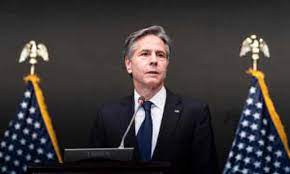
The U.S secretary of state has warned leaders of Pacific countries about “threats to the rules-based international order” and “economic coercion”, in what appears to be a veiled swipe at China’s growing influence in the region.

Antony Blinken was addressing leaders and their delegates from 11 Pacific countries and territories including Fiji, Solomon Islands, Cook Islands, Federated States of Micronesia, French Polynesia, Palau and Marshall Islands as part of the Pacific Islands Conference of Leaders, which is held in Hawaii.

Blinken reiterated U.S support for Pacific island nations as they face the “shared challenges that we have to confront together”, including Covid-19 and the climate crisis. He also appeared to make a criticism of Australia’s action on the climate crisis, calling for “all countries, particularly the biggest emitters, to swiftly and dramatically reduce emissions.”

But the main focus of his televised address was China’s growing influence in the region.

“Economic coercion across the region is on the rise. The U.S is all for more development and investment in the islands, but that investment should adhere to international standards for environmentally and socially sustainable development and should be pursued transparently, with public consultation,” he said. “And every country, no matter its size, should always be able to make choices without fear of retribution.”

Jonathan Pryke, director of the Lowy Institute’s Pacific Islands Program in Australia, said it was “pretty obvious” who Blinken had in his sights during the speech.

“There’s only one country that is engaging in the Pacific in a big way in the past few decades that isn’t part of the traditional club and that is China,” he said. “It’s very thinly veiled who he is talking about when he’s talking about economic coercion.”

China has deepened its connections with governments across the Pacific in the last few decades, amid a soft power push that sees it rivalling the influence of Australia.

China has engaged in significant lending to Pacific countries, as well as paying for massive infrastructure projects. A report in 2018 found that Papua New Guinea, the largest country in the Pacific Islands with a population of roughly nine million, had been accepting unaffordable Chinese loans, and in 2019, Papua New Guinea asked China to refinance its entire government debt, a request that marked a “significant shift” in regional politics, according to Pacific analysts.

“It’s fully legitimate for China to be operating in the Pacific and there are legitimate concerns about the way China is operating in the Pacific as well,” said Pryke. “I do think we underestimate the agency of Pacific nations and their ability to make decisions … Pacific islands have wisened up to China.”

Pryke also said that it was “a bit rich” for the US to be warning Pacific nations about China’s influence given the country’s almost nonexistent diplomatic presence in many Pacific countries.

“They really have such a marginal footprint, it’s one thing to say all these things about ‘be careful, we need to stop this malign influence in your countries’, but what are the alternatives you’re providing?”

Blinken’s address was part of the Pacific Islands Conference of Leaders, and was attended by leaders or delegates from 11 countries or territories, but representatives from a significant number of countries, including Papua New Guinea, Tonga, Vanuatu, Kiribati, Tuvalu and Samoa did not attend.

By contrast, last week, China held a virtual China-Pacific island discussion which was attended by senior representatives from the governments of most countries, including the prime ministers of Papua New Guinea, Solomon Islands, Tonga, Vanuatu, the president of the Federated States of Micronesia, the premier of Niue and Fiji’s defence minister.

In his address, Blinken also affirmed the United States’ commitment to taking action on the climate crisis, which he said posed a “threat that is existential for the islands”.

“Countries must make and beat ambitious commitments. The U.S is leading by example on this front. Biden has set out targets to reduce emissions by at least half by 2030,” Blinken said.

Dr Wesley Morgan, research fellow at Griffith Asia Institute, said it was “entirely possible” that Blinken had Canberra in mind when he made these comments.

“They are also taking a swipe at Australia and want to see action on climate,” he said.

“The Pacific has for decades now wanted Australia to take strong action on climate change and now they see an ally in the White House and they also see an ally in Downing Street. The Pacific used to be seen as ‘out there’ in calling for an end to coal, but now it’s Australia that is a long way out there … the Pacific has all these global allies now and Australia is very isolated on climate,” he said.

SOURCE: THE GURDIAN/PACNEWS

Big, rich, and powerful subsidisers to benefit from WTO Fisheries subsidies talks

0

Global talks to reign in global fisheries subsidies are failing to hold big, rich and powerful subsidisers accountable while unfairly shifting the burden onto vulnerable fishing communities.

Negotiations have run into deep trouble with the release of the latest version of the Chair’s text.

Some developing country members say they cannot accept the text as a basis for future negotiations, objecting to the chair-driven decisions for the text’s content and the opaque process for further negotiations.

“The recent negotiation text was said to be a step forward towards reaching an agreement in July but instead it represents a significant 10 steps backward for holding those countries with heavily subsidised fleets accountable and acting to reduce global pressure on fish stocks”, stated Adam Wolfenden, Campaigner for the Pacific Network on Globalisation(PANG).

Negotiations are taking place at the World Trade Organization (WTO), in Geneva with a view to reaching an agreement at a virtual Ministerial meeting on 15 July.

Current proposals in the text allow members to be able to provide subsidies that increase fishing fleet capacity provided that there are measures in the relevant fisheries to maintain stocks at a biologically sustainable level.

Wolfenden continued, “this text will allow those countries who have the historic responsibility for overfishing to continue to receive as much government support as they want without any time constraints thanks to the loopholes being proposed here”.

The talks at the WTO were revitalised by the Sustainable Development Goal (SDG) 14.6 which calls for the elimination of subsidies for Illegal, Unregulated and Unreported (IUU) fishing, prohibiting certain forms of subsidies that contribute to overcapacity and overfishing, while recognising that appropriate and effective special and differential treatment (SDT) for developing countries should be an integral outcome of the talks.

“Flexibilities in the subsidy bans being offered to Developing Countries, Least-developed Countries and Small Island States fails to fulfil the SDG mandate. What is proposed for developing countries is time-bound and largely only applies to fishing within 12 nautical miles of the coastline. Pacific Island Countries wanting to support small-scale fishers or develop greater domestic fleet capacity to fish their own waters will find it difficult to do that within these constraints,” added Wolfenden.

Included in the agreement is a condition that any flexibilities in the negotiations, even those only designated for least-developed and developing countries can only be utilised if a country meets its notification requirements under the agreement.

“Many Pacific Island Countries struggle to meet all their existing notification obligations under WTO membership due to lack of capacity. Special and Differential Treatment (SDT) is a recognition that differing levels of development should result in differing levels of obligations, the binding of flexibilities to burdensome notification requirements makes it even harder to access the flexibilities mandated under the SDG,” said Wolfenden.

The WTO’s new Director General Dr Ngozi Okonjo-Iweala has called a virtual ministerial meeting for July to reach agreement on the talks. This comes after over 150 non-government organisations from around the world called for no virtual negotiations as they disadvantage developing countries who lack resources and capacity.

“This pressure to conclude will result in an outcome that sees the livelihoods of small-scale fishers and the sovereign rights of countries to manage their waters sacrificed in order for the WTO to say it is still relevant. This is the exact reason why the WTO is in crisis – the failure to listen to those who are experiencing the real-world consequences of growing inequality and environmental destruction caused by the economic ideals espoused by bodies like the WTO,” concluded Wolfenden.

SOURCE: PANG/PACNEWS

Stay connected

529FansLike
172FollowersFollow
156SubscribersSubscribe
- Advertisement -