Home Blog Page 1137

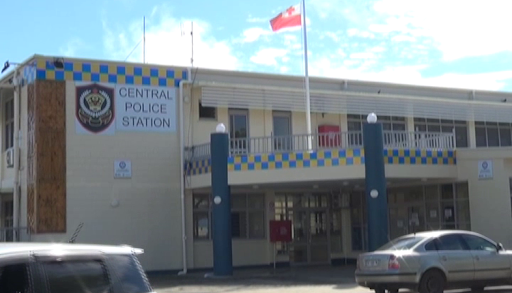
30kg meth seized, arrests in Tonga and NZ in transnational drugs trafficking operation

0

Thirty kilogrammes of methamphetamine, exported from Tonga to New Zealand in a refrigerated food container, was seized in a joint operation by police and customs taskforces.

There have been six arrests: one in Tonga and five in New Zealand, Tonga Police announced Wednesday.

A 45-year-old man from Nukuhetulu, Tongatapu, was arrested on 09 September and charged relating to the exportation of 30 kilogrammes of methamphetamine from Tonga to New Zealand.

Acting Deputy Commissioner Halatoa Taufa, National Crime and Investigations said that the illicit drugs were concealed in a refrigerated food container, intercepted through a joint operation with the New Zealand Customs and Police in early August.

New Zealand Customs also recently arrested five people in New Zealand for importing methamphetamine from Tonga, he said.

“No value has been released at this stage as that will be confirmed from New Zealand authorities later,” he said.

“Law enforcement from both countries will continue to work together and share information to ensure these transnational drug trafficking organisations are identified, dismantled and those responsible held accountable,” he said.

“Through a strong partnership between law enforcement in New Zealand and Tonga, the Tonga Police DET conducts parallel investigations in Tonga that led to the arrest of the accused person who has been placed on remand while investigations continue.”

The Tongan accused is remanded in police custody, as the Police investigation continues.

The large scale seizure of methamphetamine from Tonga, follows the seizure of 14kg cocaine that washed up on beaches at Höleva and Ha‘alaufuli in Vava’u, in July.

Tonga, like all Pacific Island countries is vulnerable to trafficking of illicit drugs and precursors because it is geographically located between known major manufacturers and markets for the illicit drugs trade.

SOURCE: TONGA WIRES/PACNEWS

 

PACNEWS Interview with Australia’s Minister for International Development and the Pacific,Zed Seselja

0

What was the purpose behind the PacificAusSports Olympic and Paralympic Partnership?

The purpose of the partnership is about providing elite level pathways to Pacific athletes, both potential Olympic and potential Paralympic athletes. One of the facts about the Pacific is there is extraordinary sporting talent and one of the things that Australia is blessed with is something we’ve developed over the last few decades is a lot of great coaches and some amazing facilities. So to be able to bring those Pacific athletes and give them in many cases for the first time, the opportunity to have that high level coaching and to have access to these higher level facilities is key to the programme and I think we saw some really good outcomes as a result of that with many going on and competing at the Olympics and the Paralympics.

The Australian Government has supported individual sports in the past – what is the opportunity DFAT sees in the Olympic and Paralympic sports?

There’s something very special about the Olympics and the Paralympics is that it lifts the spirits. We know that sports like rugby and rugby union and netball, which, of course are either professional or semi-professional, get a lot of attention by the Olympics, which is great, because what you get is you get some of the world’s best athletes, but you also get sports that don’t always get a high profile, and people have opportunities to come and compete. So I think there is something very special about the Olympics and Paralympics. Certainly in Australia, we know that we during this challenging pandemic, we took a lot of pleasure from watching our athletes and I took a lot of pleasure from watching Australian athletes, but also with a keen eye on those specific athletes doing great things as well.

How have you seen the outcomes so far?

Some amazing performances, I think there was something like five national records from Pacific athletes. We saw some extraordinary individual performances. So I think we can all be very pleased that the support of Pacific sports for these pathways for Paralympian’s and Olympians has been a great success. And I hope it’s something that we can continue to work on and continue to build on it future Olympics.

Personally, what has been your highlights from the Olympic Games and The Paralympic Games?

As an Aussie basketball fan, watching the Boomers finally get a medal was very exciting for me. So seeing Patty Mills in the team was just a whole lot of fun but from PNG, who I met, who is a long jumper, and did an extraordinary job really achieved great things. I think PNG would be very proud and I now see Bulimairewa, who I also met who was at the Paralympics, and he’s from Fiji and he is a Paralympic javelin thrower. He lost his leg and taught himself javelin on YouTube and came to Australia and had some opportunities to be coached for the first time and you know, it was great to see him competing.

The IOC has announced Brisbane as the host city for the 2032 Olympic and Paralympic Games, how do you see this impacting on the Pacific Region?

I think it’ll be a showcase for Australia, of course, but also for our family in our near region and the Pacific. We see great opportunities coming from the Brisbane Olympics. We know that the ties between Australia and the Pacific are very close, I think they’re particularly keenly felt in in places like Brisbane and Queensland. Having it in Brisbane, where there is such a strong Pacific presence already, will just highlight to the rest of the world that yes, you are coming to Australia, but you are experiencing these Olympics, which are very much the Olympics for our immediate region.

What do you see the next steps with the PacificAusSports Olympic and Paralympic Partnership?

I’m very hopeful that what we’ll see is a continuation into the future of the Pacific, our sports programme. Decisions need to be made by the government in coming years for further funding rounds. But I think what we are likely to see and what I genuinely hope is that we will build on what I think has been a very, very successful programme so far.

Finally, a question unrelated to the PacificAusSports if you want to answer on regionalism and regional solidarity. The recent move by the Micronesian Leaders’ Summit last week to set up their own interim secretariat in Nauru – signalling the withdrawal of the five Micronesian countries from the Pacific Islands Forum. How does Australia view this move especially coming at a time when the Pacific Islands Forum celebrating 50 years of regionalism and regional solidarity?

Australia, of course, takes the concerns of our Micronesian friends very seriously. And we’ve been engaging, we’ve been listening to their concerns. What my message to them has been and my message continues to be is that the region is stronger together. And what I would like to see what the Australian government would like to see is for the Pacific Islands Forum to continue as a unified organization, to look at what reforms are reasonable and necessary to make sure that all nations feel included in that decision making process. But going forward, we would like to see the Pacific Islands Forum continue together because we think that voice is very important. It’s not just important here, but it’s important on an international scale as well.

SOURCE: PACNEWS

Samoa Prime Minister, Speaker assure Head of State of calm

Samoa Prime Minister, Fiame Naomi Mataafa and Parliament Speaker, Papalii Lio Taeu Masipau have assured the Head of State, Tuimalealiifano Vaaletoa Sualauvi 11 that peace and calm will prevail despite the current political friction between the government and the Human Rights Political Party(HRPP).

The Prime Minister and Speaker met with the Head of State and the Member of the Council of deputies this afternoon and gave their assurances following this mornings’ events at parliament grounds.

Both the Head of State and the Member of the Council of Deputies came down to parliament this morning and shortly after, the Prime Minister moved a motion for parliament to end an hour early due “to continuing disruptions to Parliament by the HRPP party members.”

Mata’afa said the Head of State was concerned about the tension between the police and HRPP members regarding the security of parliament on the orders by the Speaker.

“But I gave the assurance that there is nothing to be concerned about as these are just issues between the political parties but everything is protected by the rule of law,” the Prime Minister said after the meeting.

“His main concern is to keep calm the peace throughout the country and we are holding onto that as well,” said Mata’afa

“There is nothing happening as its issues between the political parties that we have faced over the last four months and we all hope there will soon find a resolution to all these under the protection of the rule of law.”

Also raised was the issue of the swearing in of the HRPP members. “There are reasons which have clearly been laid out in written communications already publicized,” said Mata’afa.

According to the Speaker, the concern was that police were moving to implement the law (against HRPP members) this morning but the objective was to keep the calm as parliament was in session.

According to Mata’afa, she was concerned that both the Head of State and the Member of the Council of Deputies came down to parliament, when it is her and the Speaker who should go to see the Head of State.

On Monday this week, ahead of Tuesday’s parliament session, the Head of State personally went to see Mata’afa and the Speaker regarding the HRPP members swearing in.

SOURCE: TALAMUA ONLINE/PACNEWS

Fiji Bureau of Statistics CEO’s contract terminated, FRCS Acting CEO resigns

0

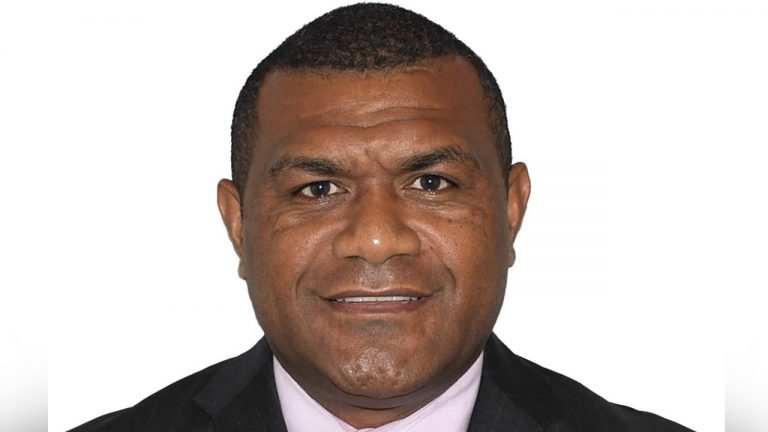
Fiji’s Ministry of Economy, through the acting Permanent Secretary, has terminated the contract of the chief executive officer of the Fiji Bureau of Statistics (“Bureau”), Kemueli Naiqama, for failure to comply with section five of the Statistics Act 1961.

According to a statement by the Fijian Government, in an unfortunate blow to the Bureau’s credibility, Naiqama endorsed the publication of unverifiable information in the Housing Income and Expenditure Survey 2019-2020 relating to ethnicity and religion –– data that was revealed to be extrapolated from erroneous sources and which exceeded the established scope of the survey’s data collection.

The Fiji Bureau of Statistics is charged with the collection of statistics relating to any of the matters set out in Schedule one of the Statistics Act 1961 as subject to the approval and direction of the Minister for Economy.

By exceeding the scope of data collection and ignoring fact-based methodology, Mr Naiqama breached the terms of his contract with the Ministry.

Under his employment contract, Naiqama will be paid all salary and accrued entitlements for the period up to 15 September 15, 2021.

Meanwhile, Fiji Revenue and Customs Service acting chief executive officer Jonetani Vuto has resigned.

According to a statement by the Fiji Revenue and Customs Authority, his resignation is effective as of this Friday.

FRCS added in the interim, FRCS Board Chair, Fay Yee has been appointed as the executive chair by the Minister for Economy, Aiyaz Sayed-Khaiyum.

“The Board acknowledges the contribution that Vuto has made during his term as Acting CEO since January 2021 and wishes him well as he pursues his personal ambitions,” stated Yee.

Vuto has thanked the Government, FRCS Board, stakeholders and the team at FRCS for their support during his term as Acting CEO.

He said it has been a privilege to be part of FRCS over the past 31 years and it has been an honor to have led the organisation with the support of the Board and the team to serve the people of Fiji.

SOURCE: FIJI TIMES/PACNEWS

New ideas, new resources: ADB’s blue bond a big step toward healthy oceans

0

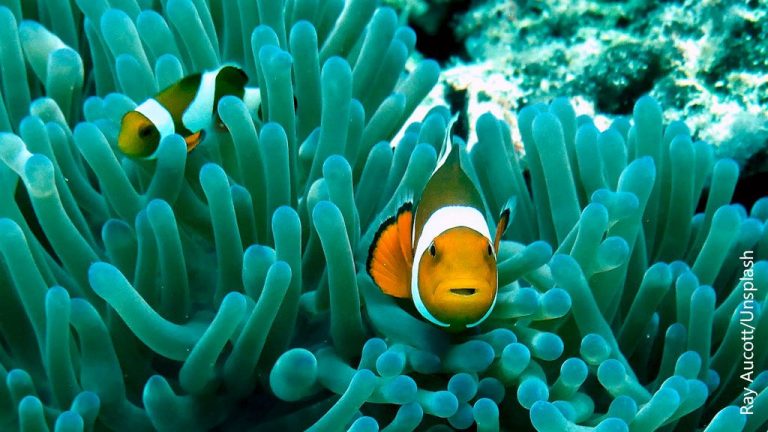
The Asia and Pacific region is home to three-quarters of global coral reefs and more than half of all mangrove areas.

The region’s aquaculture production supplies 60 percent of the globe’s total fish consumption. However, the region is also the epicentre of marine plastic pollution. Overharvesting of fish here is also putting global food security and, indeed, the entire seafood industry in peril.

So why aren’t governments and multilateral institutions acting faster to fix the problems of ailing oceans? The progress toward healthy oceans is hugely limited by one challenge: money.

“So far, funding for ocean projects has been short-term, piecemeal, and generally focused on mitigating the impacts of marine industries. The severity of the problem requires a transition from small deals to transformative market transactions,” said Bruno Carrasco, Director General, Sustainable Development and Climate Change Department, Asian Development Bank (ADB).

This month, ADB issued its first blue bond, driving forward its ambitious plan to build sustainable blue economies and to use the financial markets to scale up ocean solutions. The A$208 million (around US$151 million), 15-year issue was purchased by The Dai-chi Life Insurance Company and arranged by Citigroup Global Markets Limited. The NZ$217 million (around US$151 million) 10-year issue was purchased by Meiji Yasuda Life Insurance Company and arranged by Credit Agricole CIB.

In 2019, ADB launched its Action Plan for Healthy Oceans and Sustainable Blue Economies for the Asia and Pacific region. The plan aims to expand financing and assistance for ocean health and marine economy projects to $5 billion from 2019 to 2024, including co-financing from partners. Blue bonds are debt instruments in which the proceeds are used to fund projects that benefit ocean health. They act by de-risking ocean projects and bringing new investors to the table.

While investor demand for blue products has been robust, the market has been plagued a shortage of bankable deals due to high risks, low transaction sizes, and lack of universal investment standards. ADB is tackling some of these challenges through the blue bonds, backed by its successes in green bond issuances, totaling US$705 million in 2020.

“The tipping point for ocean health, marine protein and livelihoods is largely controlled in the Asia and Pacific region,” said ADB Vice-President for Finance and Risk Management Ingrid van Wees. “ADB is bringing new ideas and new resources to catalyse funding — and we believe blue bonds are a good step forward to meet this challenge.”

The blue bond model is replicable and scalable, and ADB is working closely with partners to support their efforts in issuing their own blue bonds. This will generate jobs and stimulate economic growth by investing in fisheries, marine, and coastal tourism, reducing coastal pollution, accelerating a circular economy, and boosting marine renewable energy, green ports, and shipping projects.

ADB is Asia and the Pacific’s climate bank but the support of key partners such as the European Investment Bank, the World Wide Fund for Nature, and The Nature Conservancy is helping to make progress toward healthy and sustainable oceans. To go further in making systemic changes at scale, ADB is looking to attract more partners to support action to protect Asia and the Pacific‘s oceans.

A healthy ocean is supported by strong, diverse ecosystems. Drawing inspiration from this, ADB is diversifying and strengthening the blue economy system. In addition to blue bonds, ADB is developing the use of insurance to protect coral reefs in the Pacific and Southeast Asia, innovating eco-compensation systems on the Yangtze River in People’s Republic of China, and supporting coastal resilience in vulnerable countries through nature-based solutions.

The rapidly growing ASEAN Green Catalytic Finance Facility was developed to support ASEAN governments to access technical assistance and co-finance, is identifying, accelerating, and funding blue projects throughout Southeast Asia. ADB’s work on natural capital financing is transforming agriculture towards healthy, inclusive, and natural food systems, expanding forest protection, and restoring marine ecosystems and ocean health. The marine plastic pollution programme is finding policy and fiscal solutions to stop the tide of marine plastics entering the coastal ocean.

“If inaction in one country can bring many countries to their knees, the opposite is also true: the actions of one country can inspire others and accelerate change,” said van Wees.

SOURCE: ADB/PACNEWS

Pacific media leaders meet to tackle corruption

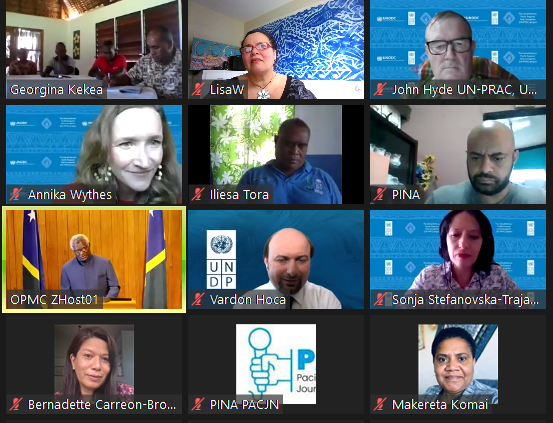
Pacific Island media CEOs and owners are meeting in the Solomon Islands and online from today to consider how they can better support anti-corruption reporting in their local media.

The two-day Reporting on Integrity & Anti-Corruption in the Pacific summit is being presented by the Pacific Anti-Corruption Journalists Network (PACJN), supported by the Pacific Islands News Association (PINA) and the United Nations Pacific Regional Anti-Corruption (UN-PRAC) Project.

“The facilitation of trans-national crime and systemic weaknesses exacerbated by COVID-19 are impacting on corruption in the Pacific. The media is a key partner in rooting out corruption, as recognised in the UN Special session of the General Assembly against corruption (UNGASS) in June, which called on governments to respect, promote and protect the freedom to seek, receive, publish and disseminate information concerning corruption,” said Jeremy Douglas, UNODC Regional Representative for Southeast Asia and the Pacific.

“Tackling corruption needs a whole-of-society commitment and Pacific media have a key role to identify priorities, highlight gaps and support evidence-based solutions. Local media can contribute to ensuring that the Sustainable Development Goals and Teieniwa Vision governance commitments are on track to the benefit of Pacific citizens and societies at large,” said Levan Bouadze, Resident Representative for UNDP Pacific Office in Fiji.

PACJN coordinator, Samisoni Pareti, welcomed the commitment of Pacific media CEOs and owners to consider how Pacific newsrooms can promote and highlight investigative journalism in corruption reporting.

“Just as criminals engaged in corruption are utilising the latest technologies and laundered money, we have to make sure our Pacific journalists have the resources to be one step ahead, particularly now that the onset of COVID-19 has drastically changed the national and media landscape,” said Pareti.

The two-day summit follows on from the original summit in 2019, which supported the establishment of PACJN with support from PINA and UN-PRAC.

During 2021, PACJN has undertaken training sessions for journalists on integrity issues such as Anti-Money Laundering, Right to Information, the UNGASS, COVID and Health Procurement, Public Reporting and Whistleblowing. PACJN also funded four Media Anti-Corruption Grants to promote in-depth reporting of anti-corruption issues.

The UN-PRAC Project is a joint initiative by UNODC and UNDP supported by the New Zealand Government.

SOURCE: UNDP/UNPRAC/PACNEWS

12 dead, hundreds sick after drinking stolen methanol in PNG

A senior PNG health official says twelve people have died and more than a hundred are seriously ill after villagers in PNG’s Eastern Highlands consumed stolen methanol.

CEO of the Kainantu rural hospital Dr Enename Susuke said five drums of methanol were stolen from an agricultural research facility last Thursday.

“A few people broke into a storage room and stole five 44 gallon drums of methanol.”

The chemical was then drunk by potentially hundreds of people in three villages in the Aiyura valley over the weekend

“They thought it was alcohol and everybody drank it at the weekend… so Friday, Saturday and Sunday, and we started to see the casualties on Monday.”

Dr Susuke said hospital has been swamped by people sick with methanol poisoning.

“100 to 200 people, so we have had 12 deaths.”

“We can’t keep the whole lot of them … because our bed space are not enough to keep all those people.”

“So those ones we think are stable are sending home,” he said.

The hospital is preparing for more people to get sick, because of the volume of methanol that was stolen.

“We will have another lot of people coming … because five 44 gallon drums of methanol more than 1000 litres is loose somewhere.” Dr Susuke said.

“I have sent in district health officers to the affected areas … even the police have been called in to stop people from drinking.”

He’s worried that PNG’s independence day celebrations, that start tomorrow, could make the situation worse.

“Now that alcohol is on the loose and people are drinking it, making the situation worse this is independence for PNG, and we will be celebrating tomorrow.”

“People will be drinking, and trying to celebrate, this will be a disaster for us.”

“This is exactly why I am sending out this message to try to stop people taking anymore,” Dr Susuke said.

SOURCE: ABC/PACNEWS

Vaccine apathy threatening to plunge Papua New Guinea into international isolation

A new term has come into play in Papua New Guinea, not vaccine hesitancy, but vaccine apathy, coined by the man leading the country’s COVID-19 vaccination taskforce.

Api Kassman said the problem his team are wrestling with is that many people don’t want be vaccinated, not because they are reluctant or afraid, but because they don’t believe it’s even necessary.

PNG has the lowest vaccination rates in the world right now, and there is acknowledgement that the country is at risk of global isolation.

The vaccination picture is so dire, that one forecast predicts that at current rates by 2026 only 20 percent of the population will be immunised against the coronavirus.

And just to emphasis the point on low take up, Kassman said they have just handed over 30 thousand doses of Astra Zeneca to Vietnam, rather than let them go to waste.

“Those vaccines were expiring on the 30th of September. Yes, it does display a certain strain of hesitancy, but we also believe that it’s vaccine apathy that’s our problem,” Kassman told Pacific Beat.

“There is a real sentiment amongst people that COVID is not real. And if it does come, it goes without really being life threatening. So that’s not hesitance, they don’t believe that COVID can affect them.”

It’s a view supported by the Catholic Bishop of Mendi, Donald Lippert, who said Highlands people are just not convinced by the COVID threat.

“The people have felt that it really isn’t here. On the other hand, there isn’t any massive testing program, and so whether it’s here or not, who would know? But it seems like it is not causing vast illnesses or people getting sick or people dying or hospitals being overrun in some of the provinces here in PNG.”

The vaccination taskforce has linked up with the mainline churches in an effort to counter the wave of misinformation and false beliefs being spread on social media, and by religious fringe groups.

“A lot of people out in the country areas are saying, I’m protected by the blood of Jesus, but the churches are saying to receive the vaccine is a blessing, and to understand that it’s people who have been blessed with knowledge that have developed this vaccine, and that we should use it widely,” Kassman said.

Kingtau Mambon who teaches economics at the University of Papua New Guinea is the co-author of a recent blog on vaccination rates in PNG prior to the pandemic, and the evidence suggests that even after the polio scare of 2019, the picture was not good, and the government’s own spending cuts didn’t help.

“The real collapse in vaccination rates was between 2013 and 2017. And it was during this period when the government revenue falls and health spending was cut by nine percent….health services were no longer the priority,” he said.

“It really affected the people at the forefront of our health operations generally….and we really were hamstrung from the start because when clinics are shutting, when people don’t have job security, it just makes the job so much harder,” Kassman told Pacific Beat.

And there is a stark warning that if vaccination rates don’t rise quickly and significantly, then PNG risks becoming a pariah state when international borders open up again.

“If PNG continues to self punish with these low vaccination rates, in the long run it will isolate itself from its neighbours,” Kingtau Mambon said.

“We need to achieve a certain level of vaccination for our country to be deemed safe to do business in, and obviously that’s the priority. We are concerned about being isolated, but at some point, we really have to try and shift the mindset of our people,” said Kassman.

“We’ve got to be more aggressive in our approach to get people on board with vaccination,” he said.

SOURCE: ABC/PACNEWS

Fiji records 131 new cases of COVID-19, one new death reported

Fiji has recorded 131 new cases of COVID-19 and one new death reported Tuesday, increasing the total number of cases to 49,174 and 537 deaths in the island nation since the outbreak that started in April.

Permanent secretary for Health, Dr James Fong said 63 cases are from the Western division, 66 cases are from the Central division in Vitilevu, Fiji’s main island and two cases are from the Eastern division.

“There have been 104 new recoveries to report since the last update, which means that there are now 12,951 active cases. 1,480 active cases are in the Central division, 11,164 active cases in the Western division, two active cases in the Northern division (Macuata) and 305 active cases in the Eastern division (all in Kadavu).

“There have been 49,174 cases during the outbreak that started in April 2021. We have recorded a total of 49,244 cases in Fiji since the first case was reported in March 2020, with 35,388 recoveries.,” Dr Fong said

He said there is one new COVID-19 death reported was for the Central division.

“There have now been 539 deaths due to COVID-19 in Fiji, with 537 of these deaths during the outbreak that started in April this year. As of 09 September the national seven day rolling average of COVID-19 deaths per day is two. The seven day rolling average for COVID-19 deaths per day in the Central division is one and in the Western Division is one.

We also have recorded 366 COVID-19 positive patients who died from the serious medical conditions that they had before they contracted COVID-19; these are not classified as COVID-19 deaths,” Dr Fong explained

He said there are currently 110 COVID-19 patients admitted to the hospital.

“35 patients are admitted at the Lautoka Hospital, five patients are admitted at the FEMAT field hospital, and 70 admitted at CWM hospital, St Giles, and Makoi.

“Eight patients are considered to be in severe condition, and three are in critical condition,” Dr Fong said.

A total of 349,731 samples have been tested since this outbreak started in April 2021, with 392,592 tested since testing began in March 2020.

The national seven-day average daily test positivity is 16 percent, which is on a downward trend but still indicating a high level of community transmission, he said.

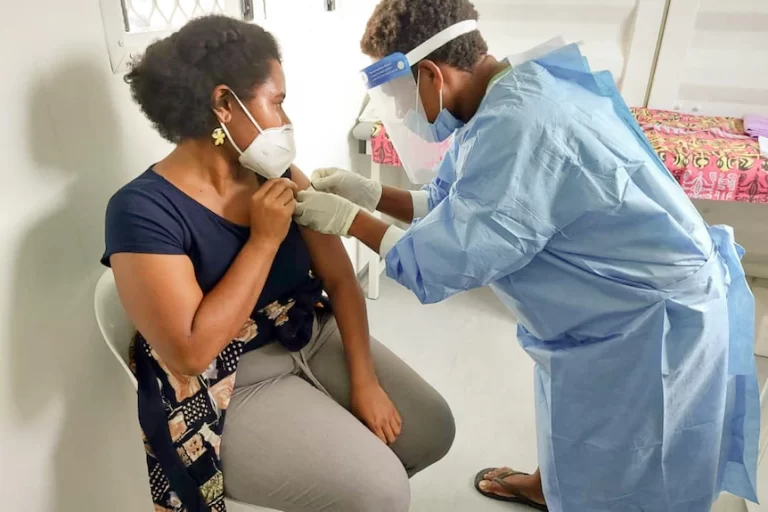
As of 13 September, 573,247 adults in Fiji have received their first dose of the vaccine and 350,007 have received their second doses.

“This means that 97.3 percent of the target population have received at least one dose and 59.6 percent are now fully vaccinated nationwide,” said Dr Fong.

SOURCE: PACNEWS

Cook Islands will only accept vaccinated tourists when travel bubble resume

All future tourists to the Cook Islands aged 12 years and older need to be fully vaccinated against Covid-19, says Cook Islands government.

The only exemption will be for people with a medical certificate, said a government statement.

The statement said the Cook Islands would not open its borders to New Zealand for quarantine-free travel until it was fully confident there was no community transmission.

The government said this would likely mean New Zealand would need to be in Covid-19 Alert Level 1.

The Cook Islands is also to remain at Alert Level 2 until New Zealand has had 14 days without community transmission.

Prime Minister Mark Brown said: “As one of the few countries in the world that has managed to keep Covid-19 out, we do not want to do anything to jeopardise the safety of our people.”

“While we acknowledge that at some point in the future all countries will need to learn to live with Covid-19, that time has not yet come. We do not want an outbreak here. The impact on our health resources as well as our economy would be devastating.”

Meanwhile, the Cook Islands Cabinet have approved the managed returns plan for the return of Cook Islands residents otherwise stranded in New Zealand following the current ‘Delta outbreak’ in Auckland and resultant suspension on inwards international arrivals to the Cook Islands since 16 August.

To date, the Cook Islands Government, through the Cook Islands High Commission in Wellington, has been engaged with some 350 Cook Islands residents currently sheltering in New Zealand who have registered for managed return to the Cook Islands, with 125 of these being in regions outside of Auckland.

“The return of our Cook Islands residents who have been stranded in New Zealand since the first detection of Case A and the resultant suspension of inwards international arrivals from New Zealand has been a priority of our Cabinet and therefore the Border Easement Taskforce (BET) including the Ministry of Foreign Affairs and Immigration (MFAI) since the 16 August,” said MFAI Secretary and BET Chair Tepaeru Herrmann.

“The Plan approved by Cabinet will focus on a first cohort comprising those currently sheltering in place outside the Auckland region on a flight from Wellington or Christchurch”.

While no date has been set for the first repatriation flight, with Cabinet approval of the managed returns plan, MFAI is working closely with Te Marae Ora – Ministry of Health (TMO), Air New Zealand and New Zealand agencies for the early and safe return of the 125 sheltering in regions outside Auckland.

Based on pre-registration information, Cook Islands residents sheltering in regions outside Auckland will be contacted directly to formally apply for managed return via completion of the ‘Cook Islands Managed Return application Form’. A negative COVID-19 test result within 72 hours prior to departure as well as mandatory completion of the ‘Online Contact Information Form’ will be required. A period of at least seven-days in MIQ on arrival into Rarotonga will also be required.

As confirmed by Prime Minister Brown in his announcement, Cook Islands residents sheltering in Auckland must wait for the alert level to drop to Level 2 or below before repatriation can commence from Auckland.

“I want to thank our people who have pre-registered for return home with our High Commission for their continued patience as we work to ensure their safe return whilst preventing COVID-19 and specifically the delta variant from reaching the Cook Islands,” said Secretary Herrmann.

“We extend our appreciation also to our partners in New Zealand, various New Zealand entities and our Cook Islands communities who have since the onset of COVID, bolstered our capacity to deliver some assistance to our people awaiting return. Should additional assistance be required by those stranded, we urge continued engagement with our High Commission in the first instance (at dhc@cookhicom.org.nz) and further information will be forthcoming in the coming days around enhanced support to those awaiting repatriation,” she said.

SOURCE: COOK ISLANDS NEWS/COOK ISLANDS GOVT/PACNEWS