Home Blog Page 1104

Delta surging fast in PNG

The highly infectious and deadlier Covid-19 Delta variant infection is surging fast – up 94 cases from 97 on 26 September to 191 on Sunday (three weeks).

In Madang, 49 new Delta cases were reported on Sunday.

And National Pandemic Controller David Manning said the Government would push for a higher vaccination rate as it had set a target to have 1.9 million people vaccinated by end of 2021 – that is about 10 weeks from now.

“It is a tall order for all provinces to step up the drive to meet the vaccination target. They have been given a set target,” he added.

Health and HIV/AIDS Minister Jelta Wong said Papua New Guinea was expecting an increase in Delta.

Manning told The National from the time the vaccines first arrived in PNG in April, the vaccination percentage rose from 0.1 per cent to 9.8 per cent in seven months with a total of 290,513 people vaccinated.

A total of 183,856 people have received one dose of the vaccine – AstraZeneca, Sinopharm and Johnson and Johnson.

“For women, 68,732 have received their first dose of the vaccine,” he said, adding tha t a total of 106,657 had been fully vaccinated (two doses).”

Manning said the age group that had really stepped up in taking the vaccinations were aged 25 to 49 (74,806 men and 44,591 women).

“All provincial health authorities must work on their vaccination rollout programme.

“The National Control Centre (NCC) does not need to tell the authorities what to do.

“They are on the ground and they are aware of what is needed for their vaccination rollout.

“All we can do is to provide support.

“Send to us what is planned to be carried out to boost the vaccination rate and then we can come with support.

“Each province through its provincial controller and health authority have been given targets depending on their size, geography and accessibility.”

Manning said: “Some provinces have higher rural population but we have set a target.

“If a province achieves above their target, it would be a great.

“All 22 provinces need to sit with us to come up with ways we can assist each other on the vaccination rollout programmes.

Three governors (from West Sepik, Jiwaka and Gulf) have signed a tripartite agreement with us for their programmes.

“When you talk about ‘herd immunity’ we still have a long way to go.

We would like to see at least 80 per cent of the population vaccinated before 2022 ends.”

The latest vaccination figures released on Friday for the 10 high risk provinces are Eastern Highlands (146,980), Western (61,786), Western Highlands (90,838), West Sepik (64,889), Morobe (189,992), Chimbu (76,963), Enga (98,321), Hela (62,028), Jiwaka (70,874) and Southern Highlands (133,846) . All have yet to achieve their target.

Southern Highlands registered only one per cent of vaccination with only 1,287 fully vaccinated out of 133,846 people eligible for vaccination.

SOURCE: THE NATIONAL/PACNEWS

Australia set to disappoint key allies on 2030 emissions target

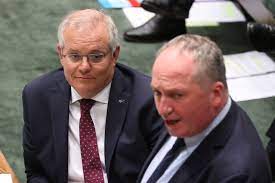
Australia’s decision not to boost its 2030 emissions reduction target will disappoint key allies that have called on Prime Minister Scott Morrison to do more ahead of next month’s United Nations climate summit in Glasgow.

Morrison told Parliament on Monday he would stick with the target that he took to the 2019 election, which was set by former prime minister Tony Abbott in 2015, to reduce emissions by at least 26 per cent from 2005 levels. His decision comes after Nationals leader Barnaby Joyce on Sunday all but ruled out support for a higher 2030 commitment.

British cabinet minister Alok Sharma, who will head the COP26 climate change conference, has called on Australia to set a 2030 emissions reduction target of up to 50 per cent. The United Kingdom has committed to cut emissions 68 percent by 2030 while the United States has set a goal to reduce emissions by 50 per cent and urged Australia to increase its near-term target. Japan is targeting 46 percent, South Korea 40 per cent and the European Union 55 percent.

Climate scientists say deep emissions cuts by 2030 are needed to achieve the goal of the Paris Agreement to limit global warming to less than 2 degrees, and as close to 1.5 degrees as possible to avoid the worst damage from climate change. Waiting longer to reduce greenhouse gases will allow too much carbon to build up in the atmosphere and cause heating long after 2050, even if net zero is achieved by then.

The government’s “technology not taxes” policy is focused on investment in low-emissions technologies to replace current carbon-intensive systems.

Morrison told Parliament many of the technologies had “long lead times” and there was “no linear trajectory” to net zero. He also warned against Labour’s 2019 election policy to cut emissions 45 percent by 2030, which the party has since dumped.

But business groups, investors, church leaders and farmers have all urged the federal government to increase its 2030 commitment.

Liberal-aligned think tank Blueprint Institute, which surveyed voters in resources seats over the past two weeks, found 67 percent of respondents in Capricornia and 68 percent in Flynn – both central Queensland electorates – backed a halving of Australia’s emissions by 2030. In the NSW seat of Hunter, 74 percent were in support along with 76 percent in Gippsland, Victoria.

Faith leaders representing major denominations on the National Council of Churches in Australia wrote to Morrison on Friday, calling on him to commit to a 2030 target to cut emissions by at least 50 percent and up to 74 percent.

“It is critical that we act now. For the love of God, for the love of creation and for the love of our neighbours, we must take steps that will limit impacts of climate change, so that all who make their home on earth can flourish,” Reverend Sharon Hollis of the Uniting Church in Australia said.

Charlie Prell, chairman of Farmers for Climate Action, one of the largest primary producer representative groups in the country, said committing to net zero by 2050 was a “big step that I don’t want to diminish the importance of”, but he said the Nationals were “kicking the can down the road” by rejecting a 2030 target.

“I don’t understand how they are saying ‘show me the plan’ when they are in government.”

A report released on Monday by the Asian Investor Group on Climate Change, Ceres and the Investor Group on Climate Change, which represent investors with a cumulative $62 trillion in assets, called for G20 leaders including Australia to set ambitious 2030 targets. It said Australia was among the least attractive countries for green investment, alongside Argentina, India, Indonesia, Mexico, Russia and Saudi Arabia.

Investor Group on Climate Change policy director Erwin Jackson said global investors, which Australia relies on for foreign investment, would flow away from countries without ambitious 2030 targets.

“Institutional investors with a lot of cash are making judgments on investment attractiveness based on macro policy,” he said. “Investors want to plug numbers into spreadsheets to determine climate risks in their investments, but you can’t do that without a target.”

The Business Council of Australia, which represents major banks, big miners, and other large corporations, last week called on Australia to boost its 2030 emissions reduction target to at least 46 per cent and up to 50 per cent below 2005 levels.

Analysts say state renewable energy drives will replace a lot of coal power and are expected to drive enough carbon cuts to enable a 35 percent 2030 target.

SOURCE: SMH/PACNEWS

UK PM Johnson and Bainimarama talk COP26 and international climate financing

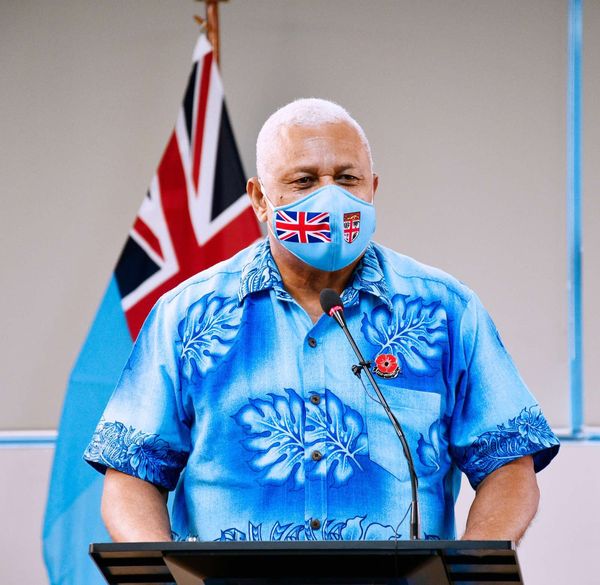
British Prime Minister Boris Johnson spoke to Prime Minister Voreqe Bainimarama Monday, a press statement from 10 Downing Street stated.

The two leaders discussed the upcoming COP26 Summit, particularly around the need to hit the US$100billion target for international climate finance.

“The Prime Minister emphasised the importance of promoting the voice of Fiji and other countries vulnerable to climate change,” it stated.

“The Prime Minister welcomed growing cooperation between the UK and Fiji, both through the Commonwealth and as a result of increased UK engagement in the Indo-Pacific region.

“He detailed the UK’s work in the region, including the new AUKUS alliance which will promote stability and security.”.

SOURCE: FIJI TIMES/PACNEWS

Downward trend in Fiji’s COVID-19 death rate

The overall COVID-19 death rate graphs for Central and Western divisions in Vitilevu, Fiji’s main island indicate a declining trend.

This, according to Ministry of Health and Medical Services permanent secretary Dr James Fong.

“The differences between the Central and Western are similar to the incidence of the daily cases and are likely a reflection of vaccination levels, COVID mitigation measures, and differences in population density,” he said.

“Overall the death rate graphs for the Central and Western divisions indicate a declining trend.

“The overall indications of the cases, hospitalisation, and deaths data indicate a positive response to our overall COVID response with the epidemic in the West having a lower and delayed disease peak with lower cumulative numbers compared to the Central Division.”

He said the first case of COVID-19 recorded during the second wave of the pandemic on Viti Levu was six months ago.

“Within Viti Levu, the outbreak was limited to the Lami to Nausori containment area long enough to escalate vaccination and clinical response capacity outside the containment area.

“This contributed to a lower peak and the total number of cases, hospitalisations, and deaths outside the containment area within Viti Levu.”

There have been 661 COVID-19 deaths in Fiji.

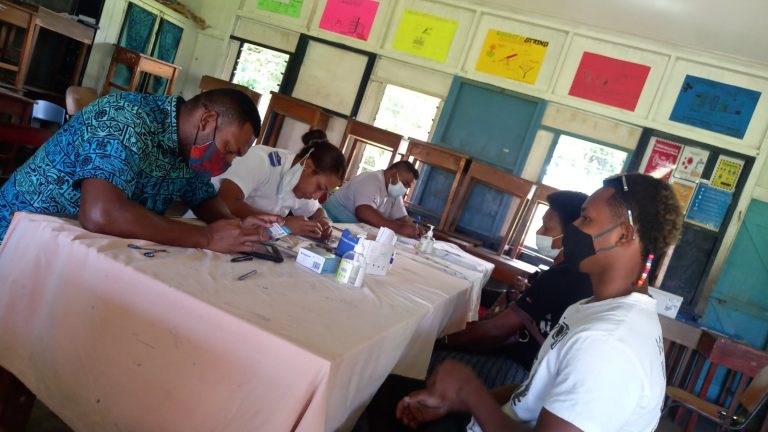
Meanwhile, Dr Fong says they are continuing the process of normalising movement between Viti Levu and Vanua Levu.

At present, he said the movement was mediated by registration for a repatriation number and the issuance of a MOHMS travel pass.

The current COVID-19 vaccine coverage rates for the North are 91.8 per cent for dose one and 75.1 percent for dose two.

He said the team managing the travel to and from the Northern Division would continue to increase the number of travelers they could support to travel as the vaccination rates improved.

“From tomorrow, Tuesday (October 19), all travel from Vanua Levu to the Central Division will not need a registration number nor a MOHMS pass,” Dr Fong said last night.

“The Registration and MOHMS pass process will be maintained with regards to travel from Viti Levu to Vanua Levu to ensure that the travel is documented for contact tracing, a negative pre-departure test, and vaccination status is verified, and the travel caseload to the North team is kept manageable.

“All these factors are important to both preventing and being able to contain Sars-CoV 2 transmission in the North.

“The public is strongly advised to only do a pre-departure test only after your registration number is obtained.”

Dr Fong added that given the increasing vaccination rates, daily traveling quotas to the North were being increased, and that they would also be transitioning to self-monitored home quarantine.

He said the ministry had – in preparation for easing of restrictions in the North – remodeled the health service provision to ensure strengthened quarantine capacity, community surveillance, registration and line listing of vulnerable persons, preparations for the monitoring of positive cases and vulnerable persons, and clinical care protocols for severe disease reviewed and strengthened.

SOURCE: FIJI TIMES/PACNEWS

PNG is back on the brink of a delta variant disaster


Complacency and vaccine hesitancy at all levels of society have left PNG wide open to delta infection. The country needs outside help – and very quickly.

Jonathan Pryke and Brendan Crabb

A little later than expected perhaps but the delta strain of COVID-19 is now ripping through Papua New Guinea, threatening to overwhelm its fragile health system.

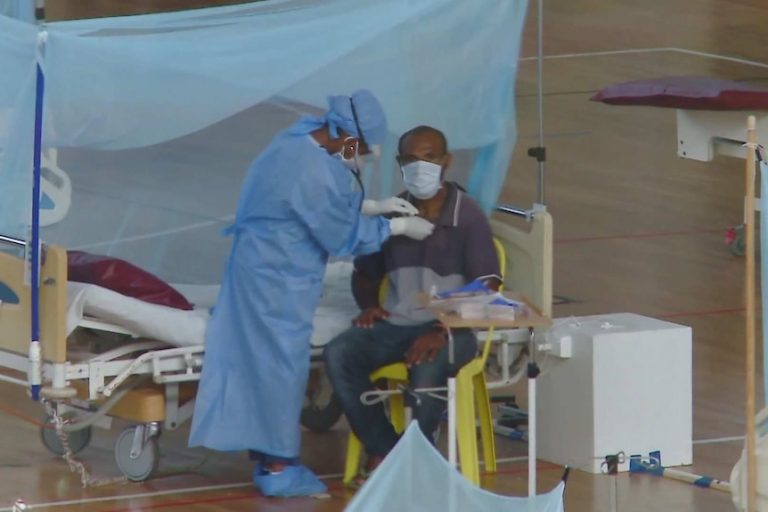
Hospitals in Port Moresby, Lae, Mt Hagen and Goroka have scaled down non-essential services to deal with rapidly growing cases while scrambling to set up overflow COVID-19 wards in nearby sports facilities.

Goroka hospital remains perilously close to running out of oxygen, and its morgue is full and has run out of body bags.

There is little testing but what exists paints a truly terrible picture. Of the 1848 tests conducted across the country of more than 9 million people between September 27 and October 3, 82 percent tested positive. Seven out of 10 people presenting at Port Moresby’s largest hospital with symptoms are now testing positive.

As of 03 October, only 140,000 Papua New Guineans had received their first jab, slightly more than 1.5 per cent of the country’s adult population and one of the lowest rates in the world.

Clearly, this is a recipe for catastrophe and indeed PNG’s health system is already on the edge of a crisis. As its nearest neighbour, dear historical friend and most important bilateral partner, Australia has an interest, and responsibility, to do everything it can to help PNG avert disaster.

It is unacceptable for a nation a mere four kilometres from Australia – with a population set to match ours by 2050 – to have the delta strain running unchecked through a largely unvaccinated population. The reality for Australia is that our own prospects for economic recovery and reopening borders depend on the ability of our nearest neighbours to do the same.

PNG’s leaders should and must take the lead – but have little appetite to acknowledge the scale and severity of the crisis.

Papua New Guinea has been here before. In March, the country was forced to deal with a similar surge of pre-delta COVID-19. Port Moresby’s main hospital was overrun and case numbers were increasing at an exponential rate. The system was close to a breaking point. Swift action, and a lot of luck, staved off the worst. Lockdowns were initiated, medical teams were sent in, and crucially vaccines were rushed into the country to at least protect frontline workers. PNG dodged a bullet, and the case numbers stabilised at a much higher but more manageable rate.

Yet while that crisis bought PNG and its development partners time, it appears to have led to complacency. There should have been a concerted effort to shore up the wobbly health system and coordinate a national information campaign to help push back against the chronic misinformation plaguing vaccine rollouts in the country. Politicians returned to business as usual, and vaccine hesitancy has calcified with a growing consensus that COVID-19 will just be another disease to be “lived with” alongside tuberculosis, malaria and other household name diseases in PNG.

This complacency has left PNG exposed – and the crisis is different this time. Delta is more contagious and more deadly. Daily averages are already eclipsing the March outbreak and there are no indications of slowing down. Without immediate intervention, PNG’s health system will collapse.

Australia must take the lead in coordinating an international response. The PNG government has already made the call for “urgent support from International Emergency Medical Teams”.

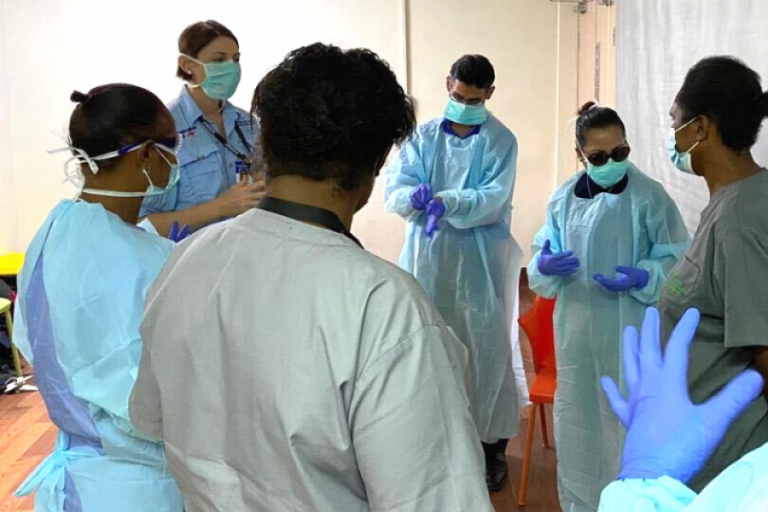
On Saturday, a small Australian Medical Assistance Team (or AUSMAT) was deployed to the PNG capital, similar to deployments earlier this year. This team should be available not just to Port Moresby, but scaled up and deployed into the provinces most badly hit. This should form a backbone of a coalition of partners, such as those that were sent from Germany and the United States in March, to be deployed across the country’s 22 provinces.

Alongside the medical teams, Australia should provide urgently needed medical supplies – from oxygen, to PPE, and critical medical supplies such as dexamethasone. Whatever logistical support is required to get these supplies and equipment to where they are needed, including Australia’s Defence Force, should be mobilised.

Alongside shoring up the frontlines, we need to redouble our efforts with the PNG government to turn around the country’s terrible resistance to vaccines that is being fuelled by rampant misinformation on social media.

The scale of this challenge cannot be overstated – vaccine hesitancy is being represented in all regions and demographics from the uneducated to the elite, but as we know from Australia, nothing breaks complacency like a crisis. The PNG government must use this outbreak as an opportunity to redouble efforts to get as many people across the country vaccinated.

Australia should spare no expense in providing the expertise and resourcing to help mobilise a localised and nationwide effort through Facebook, businesses, churches, sports leagues, NGOs, and the media. PNG’s successful campaign to counter the HIV epidemic in the early 2000s could serve as a starting blueprint.

These interventions will be a big ask. Papua New Guinea’s leaders should and must take the lead – but have little appetite to acknowledge the scale and severity of the crisis – with a hobbled economy and an election next year where half of them are likely to lose their seats.

In Australia, there will be immense resistance from the states to part with stockpiled medical staff or supplies as we brace for our own health systems to be tested.

But although the cost of action will be high, the costs of inaction will be far greater. Only through bold, immediate action can we help PNG stave off a catastrophe. There is a great deal at stake. The strength and speed of our action will not only save many lives from COVID-19 and the potentially worse non-pandemic health impacts of a broken system, but it will also help strengthen an already strong and crucial regional bond. It will be remembered. We have no choice but to act, and act now. We must do all we can to stand in steadfast support of PNG through this most difficult time, for its sake as well as our own.

Jonathan Pryke is the director of the Pacific Islands Programme at the Lowy Institute. Professor Brendan Crabb is the chief executive officer of the Burnet Institute.

SOURCE: AFR/PACNEWS
PNG Speaker’s ‘bizarre’ bid to delay 2022 General Elections by one year

Papua New Guinea Parliament Speaker Job Pomat has proposed to defer the 2022 National General Elections by one year, stating that the PNG Electoral Commission(PNGEC) is not ready.

He said at the Parliament State Function Room last Thursday during the PNGEC briefing with the MPs that he was prepared, as the Speaker of the House, for any amendments to defer the 2022 General Elections for a year due to the unpreparedness of the commission.

Supported by other MPs, they also alluded to the surge in Covid 19 cases throughout the country, suggesting and supporting the deferral if the situation worsened by end of the year.

Pomat took the acting PNG Electoral Commissioner Simon Sinai head on to tell the truth whether PNGEC was truly ready to conduct the 2022 National General Elections.

But Prime Minister James Marape said the law did not allow for these to be deferred and that the Government will step in and help support with the funding needed to conduct this election.

“…the law doesn’t allow for this, but you want K400 million (US$114 million), then we all give it to him, K400 million (US$114 million), in the 2022 Budget, and we give him full support in the 2022 elections,” Marape said.

Sinai told the packed Parliament State Function Room that he needed K400 million (US$114 million), to run the elections and an immediate K22 million(US$6.2 million) to purchase big ticket items, and a rundown of election proper costs – Nominations K1 million(US$285,000), Transport/Fuel K4 million (US$1.1 million), Polling TEW K10 million(US$2.8 million), Polls transport – K15 million(US$4.2 million), Polling Kits – K2.5 million(US$714,000), venue hires – K2.2 million(US$628,000) (111 count centres), counting cost –K20 million(US$5.7 million) (111 count centres) and a total of K53 million(US$15.1 million) needed altogether.

Sinai recommended that funding be released to support the PNGEC conduct its electoral roll programme, as well as strategies for polling and counting.

He said resources must be made available in the first quarter of 2022.

Marape said outside organisations would be included in the Election Planning Committee to ensure a free and fair elections.

He also appealed to people around the country to register their names for voting.

“We will include outside organisations such as Transparency International, National Research Institute, Institute of National Affairs and churches in the Election Planning Committee.

“This is to ensure a free and fair elections,” Marape said.

“I also ask our people to enroll in the census and common roll updates which will be carried out before the elections,” he said.

SOURCE: POST COURIER/PACNEWS

Samoa Court adjourns Prime Minister’s private prosecution trial

0

Samoa District Court Judge Alalatoa Rosela Papalii reluctantly granted another adjournment in the hearing of Prime Minister Fiamē Naomi Mataafa’s private prosecution trial.

She granted the adjournment but also noted that it would be the final adjournment.

Mata’afa is charged with one count of bribery from the FAST party campaign rally in the lead up to the April general election and the hearing was set for Monday after two adjournments in May and September.

Judge Alalatoa reminded both parties via email that if there were any preliminary matters to be dealt with, to inform the Court by Tuesday last week.

However, she was only informed of the application just before she came to preside over the trial.

After discussion with the District Court Senior Judge Talasa Atoa Sagaga, both agreed to call the matter and take it from there.

Counsel for the defendant, Kieran Raftery QC apologised to the Court and said the application was filed last Friday.

The application for the adjournment was for him to have time to get instructions from his client. He did not know about Samoa’s public holiday last week when he scheduled to have a zoom meeting with his client then.

The meeting was later rescheduled but was deferred by the defendant and by Thursday last week, he contacted counsel for the complainant Aumua Ming Leung Wai if he would agree to an adjournment.

Aumua informed the Court that he agreed to the adjournment on the basis of a fair trial given that defence counsel had not received any instructions from his client.

Judge Alalatoa was concerned that the charge has been around since 14 May 2021.

“It’s been hovering over the defendant for quite some time and if we consider the provision of Article 91 of the Constitution, it is stated that any defendant charged with any criminal offence including this one, although it is brought as a private prosecution, must be brought before the court of law for the matter to be dealt with at a reasonable time, “said Judge Alalatoa.

She further stated that she was concerned about the constitutional rights of the defendant to a fair trial, and provide more time for the defence to prepare for the trial so that she is not prejudiced nor handicapped by counsel not being prepared to represent the defendant.

The hearing is now scheduled for 13 and 14 December 2021, but not before the Judge informed counsel of the changes the Court will have to make to accommodate other matters already scheduled for hearing and the fact that his service was not cheap to the client.

Mata’afa is jointly charged with other Cabinet Ministers, Leatinu’u Wayne Fong and Laaulialemalietoa Leuatea Polataivao Schmidt who will appear in Court today….PACNEWS

SOURCE: TALAMUA ONLINE/PACNEWS

Fiji Rugby names Flying Fijians management and players for November tour

0

Due to the COVID-19 pandemic and traveling restrictions and challenges, the Fiji Rugby Union (FRU) has altered its November tour plan for the Flying Fijians who are set to face Spain, Wales and Georgia next month in Europe.

FRU Chief Executive Officer John O’Connor said taking in consideration the challenges associated with COVID-19 including travel and quarantine restrictions, Fiji Rugby has decided not to select any Southern Hemisphere based players. Further since we were not able to guarantee MIQ spots for our NZ based Coaches, none of our Coaching panel and management staff will also be part of the Northern tour.

This means Flying Fijians Head Coach Vern Cotter and his set of assistant coaches based in New Zealand and likewise Southern Hemisphere based players will not be part of the November tour this year.

O’Connor said “We could have made arrangements for management and players to travel to for the Northern tour but we were not able to guarantee their return with the unavailability of MIQ spots in Australia and New Zealand.

“We could not take the risk of players and staff being stuck in the Northern Hemisphere in 2022 as such we made the decision not to use anyone from the Southern Hemisphere for the tour.

He added “Since we are not engaging our Coaches, Management and players from the Southern Hemisphere, we have had no option but to look at alternative arrangements in the Northern Hemisphere. As such Olympic Gold medal winning and outgoing Fijian 7s Coach Gareth Baber has been given the responsibility to lead the pack as Head Coach, former Scottish and current Edinburgh attack coach Duncan Hodge will be in-charge of the backs, High Performance Skills Coach of the Seattle Seawolves and former Irish hooker Rory Best will look after the forwards and former Springboks and Scotland Coach Richie Gray who was with Flying Fijians during the Autumn Nations Cup last year will oversee the ruck and contact area.

It was a natural selection with Baber. He obviously has five years of experience working with the Fijian 7s team, managing high profile players and putting in a plan for the international competition and achieving positive results. While we understand it will be a challenge for Gareth, we believe he will jell well with the Fijian players as they prepare for the three tests. We are thankful that Gareth took on the challenge. His involvement as the Head Coach will be the final curtain of his 5 year involvement with Fiji Rugby prior to moving to his new appointment.

The Flying Fijians 2021 Northern Hemisphere Coaching and Management Team is:

Gareth Baber Head Coach

Duncan Hodge Assistant Coach

Rory Best Assistant Coach

Richie Gray Assistant Coach

Dan Baugh Lead S&C

Thomas McArdle S&C

Matt Lee Physio

Brian Downey Physio

Osian Griffiths Assistant Physio

Matt Johnston Lead Analyst

Josh Vuto Remote Analyst

Clive Monkley Doctor

Chris Thomson Manager

Alifereti Vakacokovanua Assistant Manager

Baber is thrilled to be given the opportunity to coach the Flying Fijians and believes he needs to work hard to be able to match the standard which Vern Cotter planted during the July tour to New Zealand.

“Working with the Flying Fijians is a fantastic challenge in a very unique situation. With the logistical difficulties for Vern Cotter and his staff preventing their travel it falls to me to combine this unbelievable playing talent and expertise of the support staff into a winning formula in such a short space of time.

“But what an honor it is and I am fully aware of the expectation for performance for the three games and the opportunity this creates for all concerned.

“I would like to thank the FRU Board, CEO John O’Connor and High-Performance General Manager Simon Raiwalui for their trust and faith in my abilities and I’m determined to pay this back in representing the nation of Fiji to the best of my abilities” said Baber.

Meanwhile, Fiji Rugby General High Performance Manager Simon Raiwalui said despite the difficulties they have managed to assemble a strong team for the three test matches next month.

The team consists of experienced players who have been playing

competitive rugby in the French Top 14, PRO D2, England’s Premiership Rugby and United Rugby Championship in Wales.

Raiwalui said “It’s a smaller squad than normal, normally we would travel with 32 players but due to shortage in positions we have got a group of 28 players who will have cover in majority of the areas.

“There are couple of areas where will have shortage of players such as Loose Head Prop, Hooker and Halfback. We don’t have depth in these position in the Northern Hemisphere and we would have brought in players from the Southern Hemisphere to fill in the positions but we have selected a great team.

“We have players who are returning from injury and missed a couple of tour with the Flying Fijians such as Viliame Mata and Nikola Matawalu.

“We have got three new players coming in from the Fijian 7s environment and the Olympic Gold medalists who have gone up North, Vilimoni Botitu, Aminiasi Tuimaba and Jiuta Wainiqolo.

“It’s a strong and exciting squad and we looking forward to the challenge,” Raiwalui added.

The team assembles on the 31st of this month to start their preparations, they then face Spain on the 6th of November in Madrid.

The Flying Fijians will travel to Wales and will face the Dragons on the 14th of November before wrapping up the Northern Hemisphere tour against Georgia six days later. The venue and time is yet to be confirmed.

Flying Fijians 28-member squad:

Loose Head Prop

Peni Ravai

Eroni Mawi

Hooker

Samuel Matavesi

Peniami Narisia

Tight Head Prop

Luke Tagi

Mesake Doge

Leeroy Atalifo

Locks

Tevita Ratuva

Temo Mayanavanua

Albert Tuisue

Leone Nakarawa

Backrow/Lock

Peceli Yato

Johnny Dyer

Backrow

Masivesi Dakuwaqa *

Mesulame Kunavula

Bill Mata

Halfback

Frank Lomani

Nikola Matawalu

Flyhalf

Ben Volavola

Centre/Flyhalf

Vilimoni Botitu *

Center

Levani Botia

Eneriko Buliruarua

Center/Wing

Waisea Nayacalevu

Josua Tuisova

Wing

Eroni Sau

Aminiasi Tuimaba *

Jiuta Wainiqolo *

Wing/Fullback

Seta Tuicuvu

Key: * is for the debutants

Flying Fijians Test Matches:

7th November 2021

Test Match: Flying Fijians V Spain

Venue: Estadio Central UC, Madrid

Kick Off: 2am

15th November 2021

Test Match: Flying Fijians V Walies

Venue: Principality Stadium, Cardiff

Kick Off: 4.15am

20th November 2021

Test Match: Flying Fijians V Georgia

Venue: TBC

Kick Off: TBC

SOURCE: FRU/PACNEWS

Sekope Kepu added to Moana Pasifika squad

0

Moana Pasifika have pulled off another major signing, adding former Wallabies prop Sekope Kepu to their squad ahead of the 2022 Super Rugby Pacific season.

Kepu played 110 games for the Wallabies, making his debut in 2008, becoming the first prop to bring up the century for Australia.

He would also go on to play 141 games for the Waratahs, helping them to their inaugural title in 2014.

The 35-year-old has since been plying his trade in England for London Irish after heading overseas in 2019, recently signing a deal with Counties Manukau to play in New Zealand’s NRC.

“With 110 test caps to his name, former Wallaby Sekope Kepu (Counties Manukau) will anchor our scrum in 2022,” the club said via social media.

“Kepu has played 295 professional matches since his debut in 2006 and bring with him a wealth of knowledge to impart on our exciting, young squad.”

Kepu joins fellow Australian Christian Lealiifano in the squad, with the Pasifika set to be based in Auckland.

Head coach Aaron Mauger confirmed that they have all but signed their playing roster for 2022, having announced Samoan trio Neria Fomai, Tomasi Alosio and former Force outside back Henry Taefu on Monday.

“We’re really excited by the squad,” he told SENZ.

“I know some of them will be unknown to many but the potential and ability of the guys to hit the ground running and make an impact on Super Rugby is massive. I’m really excited,” he said.

SOURCE: NEWS.COM.AU/PACNEWS

Moana Pasifika announce signings of three Manu Samoa internationals

0

Moana Pasifika have continued their spending spree in the lead-up to their debut Super Rugby Pacific campaign by announcing the signings of three Manu Samoa internationals.

Nine-test midfielder Henry Taefu and two-test utility backs Neria Foma’i and Tomasi Alosio have all signed for the new expansion franchise ahead of the 2022 season.

Taefu provides the most experience of the trio after having made his Manu Samoa debut against Tonga in Nuku’alofa four years ago.

Since then, the 28-year-old has featured regularly for Samoa at test level, starting in all four of his nation’s matches at the 2019 World Cup in Japan.

A former Australia U20 representative, Taefu has strong experience at the lower levels of the game, beginning his professional career in the now-defunct National Rugby Championship with the Greater Sydney Rams in 2014.

He then moved to Brisbane City the following year and was handed his first taste of Super Rugby experience with the Reds in 2016 before jetting abroad to join French club Colomiers in the second-tier Pro D2.

Taefu then returned to Australia in 2018 to link up with the Western Force in Global Rapid Rugby, and remained onboard with the Perth-based franchise through until this year.

He became a mainstay in the Force’s starting lineup, even after their induction back into Super Rugby last year, and went on to make his NPC debut in August, but has been limited to just two outings for North Harbour due to Covid-19.

By comparison, Alosio, a veteran sevens star for Samoa who has played more than 200 times for his country in the abbreviated form of the game, has enjoyed a lengthier spell in New Zealand’s premier provincial competition this year.

The 29-year-old has played seven times and scored one try as a wing for Wellington this year, six years after he scored three tries in nine outings as a midfielder in his debut campaign for the Lions.

In between his two spells in the Kiwi capital, Alosio made more than 200 appearances for Samoa on the World Sevens Series circuit.

Alosio was joined in making his first appearances for Samoa earlier this year by Foma’i, another veteran sevens star featured on the World Sevens Series circuit for Samoa over a five-year span between 2013 and 2018.

The same can’t be said for Foma’i, who has flourished for Hawke’s Bay this season as the Magpies sit atop the Premiership standings.

A regular for Hawke’s Bay since 2019, Foma’i has played in six of his side’s seven matches so far this year and has scored three tries from the right wing.

The 29-year-old has previous playing experience with Southland, having played for the Stags in 2017, and made his first two test appearances for Samoa in their World Cup qualifiers against Tonga in July.

Foma’i, who also played twice for Samoa against the Maori All Blacks leading into the Tonga tests, will be joined by provincial teammates Ere Enari and Solomone Funaki in the Moana Pasifika set-up.

Both players were announced as two of four player signings over the past week, with the other new additions being former Wallabies playmaker Christian Leali’ifano and ‘Ikale Tahi utility forward Sione Tu’ipulotu.

SOURCE: RUGBY PASS/PACNEWS

Stay connected

529FansLike
172FollowersFollow
156SubscribersSubscribe
- Advertisement -