By Finn McHugh
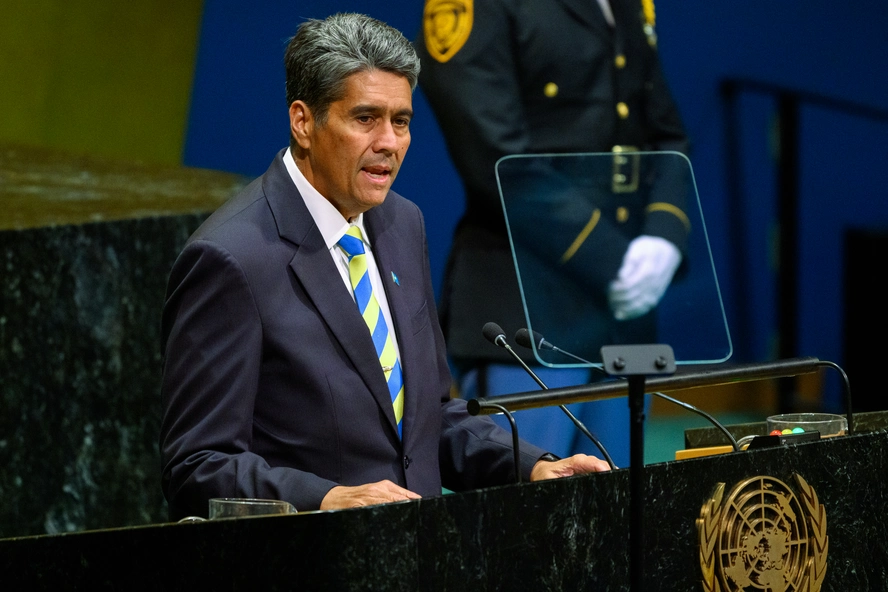
Palau President Surangel Whipps Jr visited Australia this week to open the country’s new embassy in Canberra, another sign of the Albanese government’s attempts to deepen its ties in the Pacific.
Looming over the region is China’s desire to exert influence and Whipps, the leader of a country with just 18,000 people, has stared down Beijing’s attempted coercion.
Finn McHugh sat down with Whipps, discussing that coercion, climate action, and why Prime Minister Anthony Albanese may be Palau’s “number one social media influencer.”
We’re a week on from the pre-COP negotiations. It received some criticism in Australia for not a lot of leaders outside the Pacific traveling. What was achieved?
First of all we need to understand what pre-COP events are. They’re ministerial meetings — that’s the first thing. This is the first time that leaders have gone to pre-COP. But the main purpose that we wanted, especially Pacific leaders and as many others that could join us, is to bring attention to the Pacific. It’s been about forests, it’s been about other things, but the oceans and the Pacific have not been in focus. So one of the reasons why the Pacific called for COP to happen in Australia is to bring that focus. Part of that was, if it was going to be an Australian COP, we would bring a pre-COP to the Pacific.
We’re grateful to the Australian government for following through, and even though they’re not hosting the COP here, the pre-COP still came to the Pacific — with the opportunity to bring leaders, media. There were over 3000 participants in Fiji, over a thousand side events. There were a lot of people there — ministers from India, ministers from Japan. The people that care, who see the importance of multilateralism and working together, were there.
Most importantly, the leaders of the Pacific were there because we continue to lead. We led on 1.5 [degrees Celcius warming target]. We led on sea level rises. We led on ocean conservation, ocean protection — the High Seas Treaty. These are things that the Pacific has done, so we felt that it’s important for us. We’re so grateful to Australia, because together we brought that attention to the Pacific. Going to Tuvalu, although it’s difficult and it’s far and it’s hard, was so important because you need to bring people in and help them focus. The message is the same for all our islands. The children say it best: “Please save our land, our home, our culture, and our identity.” That is the message that we need to get to the world.
We know that the challenge is great. We know that we’re going to exceed 1.5 [degrees] — but let’s not overshoot too much. There’s still hope, and we need to give our children hope. We know that energy transition is happening, and we need to double down. Hopefully these are the opportunities that we can help people focus and understand the importance.
I’ve heard you praise Australia’s actions in the Pacific. One of the criticisms that the Australian government receives, including during pre-COP, is that it goes to the Pacific and talks about climate change. When it’s back home, it’s building massive new coal and gas projects. Is that hypocrisy?
I’m pretty practical. People are still going to burn coal, they’re still going to burn gasoline. They’re going to still burn diesel, because they have equipment that depends on it. And whether it’s Australia selling to them, or Saudi Arabia, or West Virginia or whoever — they’re all selling because there’s a need for them. What’s more important is we focus on the energy transition, and I think that’s what the pre-COP and also COP coming up in Turkey is going to focus on.
How do we transition? Australia has already demonstrated that you’re at 50 percent, and your goal is to get to 82 percent in 2030. We want to be the first region in the world at 100 percent. Now in the Pacific, through programmes with the Australian government, Japan, Taiwan, that energy transition is beginning to happen. Palau, we just finished a project and we’re going to be at 25 percent renewable on our power grid. So I think the focus should be on Australian exports, but what are they doing to reduce and change?
The good news about countries like Australia, because they’re big in the energy transition — or China or India — is when you have these big markets, they drive down the cost, which helps everybody. India now has battery plus solar being built at 3.5 cents a kilowatt. Renewable energy is now cheaper than coal. So there is an end to the use of coal. It’s coming, because the economics already say that it’s going to happen. I don’t think we should be focused on who’s producing it, because if Australia is not producing, somebody else will. But what is Australia doing with the money that it is getting? It’s investing in renewables. It’s helping in adaptation in Tuvalu. It’s being responsible. So that’s what we expect the rest of the world to follow as a model.
It feels like climate denialism is rising in the West — U.S President Donald Trump is a perfect example. How much of a hindrance to global action?
I still think that progress continues to move. Politics, political people come in and change — they’re trying to speak to their base, what helps their economies, what helps their people. But with all the rumbles about Trump and his position on climate, the good news is that even though the War in Iran is terrible for the price of oil and for inflation, it’s been the best thing for speeding up the transition to renewables. I like to always look at what is the positive thing that’s happening. So if you look at it on one side, the U.S. is making a lot more money on 20 percent of the world’s oil that it supplies right now. But at the same time, the world has now understood that for energy security, for economic security, and for the planet, we should speed up our transition.
I actually wanted to ask you about the War in Iran. The U.S. is almost entirely responsible for Palau’s defence. Do you fear that Washington is spending too much attention on the Middle East, and not focusing enough on our region?
Peace and security should be our number one priority, that’s the only way you have prosperity. Unfortunately, the crisis in the Middle East — led by one country who has proxies all over the Middle East — has been a challenge to the world. The United States standing up to that, I think, is important. I was hoping that the rest of the world would support the United States and get this done. Unfortunately, politics doesn’t work that way. Everybody agrees that this is the number one terrorist organization on the planet. But sometimes you need the political will to follow through.
The War in Iran, unfortunately, has gone on longer than it was predicted. But oil is flowing; it’s just the price is not coming down, because of the presumed risk. We hope that it gets settled soon. I feel terrible for the thousands of people that lost their lives because they stood up to the regime, and they’re afraid to stand up. This is where multilateralism, and fighting for sovereignty and freedom, is so important. So it’s really important that like-minded countries stand together. Palau is small. Even with the U.S, even having to deal with Ukraine and having to deal with the Middle East, is also investing a lot in the Pacific. Even at home there is concern because the U.S has more military exercises, they’re upgrading our airport, they’re upgrading our ports. They’re putting in new radar systems. There’s one side that says we’re bringing war back to our islands. But what’s most important is deterrence. As a compact state with the United States and our free association, we agreed to give them our security rights — but we’re also in partnership with them to ensure that we have a secure Pacific. Part of that is making sure that the United States is ready and able to defend, and that means they need port access, they need airport access, they need radars, and it is a partnership to ensure that the Pacific is a peaceful place.
Australia is investing more in the military, Japan is investing more, Taiwan is investing more. That’s important because if you want to maintain peace, you have to deter. Australia started 30 years ago with a patrol boat programme in Palau. It’s a model of success. Through that program over the years, we’ve seen a reduction in illegal, unreported and unregulated fishing. Why? Because they know we have a patrol boat, and we’re going to come out, and we’re going to get them. We have to maintain that.
I’m grateful to our partners for helping maintain peace and security in the Pacific. Now, we’ve had our friends to the north who send missiles into the middle of the Pacific without notifying anybody. What we’ve asked for is transparency, we’ve asked for notification. Our issue is: why in the middle of all our islands? There’s the North Pacific — that’s all open. Just send it over there. Why don’t you send it over North Korea? Why next to Tuvalu?
On your “friend to the north.” There are different views across the region about whether China’s rise is a threat or an opportunity. Where on that spectrum do you land?
I think most importantly, the people in China are lovely people. Many visitors from China come to Palau. But sometimes the government practices don’t align with that. Of course, the government has its own interests — and one of them is trying to coerce Palau to sever ties with Taiwan. That’s been an ongoing conversation that I’ve had since I first got into office. Whether it’s the Chinese ambassador saying: “You’re a businessman and you understand China can give you a million tourists and build all the hotels you want. What are you waiting for? We have a billion people, and there’s only 23 million people over here.” That is their conversation. But then it also turns to: “Now, if you don’t follow what we say, we’re going to have to retaliate.”
To me, that’s not a partnership. That’s not being a good friend. We shouldn’t be beaten, or have our sovereignty threatened, because we have made our sovereign decision to recognise Taiwan.
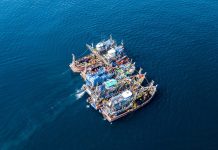
They have their research vessels, they come into our exclusive zone, violate our rule, which is — you need permits to do research activities. We’ve caught their vessels in our exclusive economic zone with gear in the water. We have cyber attacks, we have organised crime that’s come from China into Palau, and drugs. I’ve talked to them about these problems, and they say: “Oh yeah, we’d like to clean them up, too.” But sometimes you wonder, do they really want to clean them up? They’ll clean them up if you follow what they say.
Palau is one of the few remaining countries in the Pacific to recognise Taiwan. Why is that so important, and can you imagine that ever changing?
What’s most important to us is we’re a small country, and our values of freedom and democracy, and rule of law. These are shared values that we have with our friends in Taiwan. As a small country, understanding at times that you cannot protect your own sovereignty. You need alliances. If Taiwan can be taken over, then Palau can be taken over, and the Philippines can be taken over. It’s so important for us to defend each other, stand up for each other.
We’ve never said to China that we don’t want to be a diplomatic partner. What we’ve said is you don’t tell us that we can’t recognise Taiwan, because we don’t follow the One China Principle. But they try to tell me that we need to follow the One China Principle. I said: “That’s our choice, not your choice.”
Australia is talking a lot more about the need to build a closer relationship with Japan, which also has a vested interest in offering an alternative to China. How does Tokyo engage with Pacific countries like Palau?
Japan has been a long-standing partner of Palau. Palau and Japan go back before World War II. We were a colony of Japan, and 25 percent of our population has Japanese ancestry. Because of that relationship, after the war and in the development of our country, they’ve been an important partner — helping us with agriculture, fisheries, infrastructure development, education. They continue to be that supporting partner. But they also, in terms of security, want to help us enforce and control our borders. They continue to have exercises with the United States, and some of those exercises happen in Palau. That’s important. It’s important that not only the United States carries the burden of ensuring peace in the Pacific — that Japan, Korea step up and strengthen their militaries so that they can defend. It’s not about taking over another country, it’s about defence and deterrence.
You’re a leader on [stopping] undersea mining. But other Pacific countries — the Cook Islands, Nauru, Tonga, Kiribati — support it. How hard is it to galvanise a global opposition to it?
There’s no question it’s hard, because once again you have your domestic interests: we need to take care of our families, we need to provide for our people, and why not this opportunity that’s sitting at our doorstep? So I understand why Kiribati, Nauru, and Cook Islands are doing it. But I also understand that we all have a responsibility to ensure that whatever we do, we don’t do something that is irreversible.
Some people say it’s just a desert. Well, a desert has life in it. The bottom of the deep sea is full of life, and a lot of life that we don’t know anything about. That’s why it’s so important that we don’t destroy the treasures that we already have. We’re trying to reduce carbon emissions, but we’re going to destroy the carbon sink that we have?
This ocean is one ocean, and it moves around. If you’re deep sea mining in the northern hemisphere, that water that they’re dredging is the same water that comes all the way past Palau and circulates around the North Pacific. Then there’s the whole water column in between. How is that going to affect whales? How is it going to affect tuna, which so many Pacific islands depend on as part of their economy?
It costs a lot more to do underwater piping than one on shore. Many times more. So I just don’t understand how the economics make sense to go five miles underwater, to pull up deep sea minerals. But anyway, someone on Wall Street seems to think there’s a possibility. I wouldn’t invest in that company, but maybe somebody will.
Finally, when are we going to have daily flights to Palau from Australia?
Well, the good news is we’re having a second flight per week, and in the last year, the numbers for Palau through August were up 68 percent. It keeps on doubling every year, and that’s fantastic.
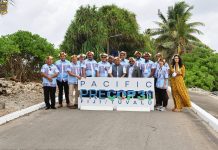
Many Australians don’t know about Palau, so having the PIF in Palau was fantastic. Having your prime minister giving his news briefings from Palau, then people go: “Oh, Palau, what’s Palau?”
What we need to do is fill up the Qantas flight, so Qantas thinks we need another one. I met with them on my way here in Brisbane, and that was the first thing I said: “Thank you for the second flight. How soon can we project to be on the daily system?”
It takes everybody working together. The word of mouth is key. So we’re grateful for Prime Minister Albanese for spending eight days in Palau and being the number one social media influencer for Palau.