



PACNEWS Editor in Chief Makereta Komai shares her experience from the tea-making ceremony in Asakusa, Tokyo
Five visiting journalists from the Pacific and Caribbean got a taste of Japanese culture through a traditional tea ceremony in Asakusa, Tokyo Monday.
But it was more than just drinking tea. It was a lesson in patience, respect, trust and the simple beauty of doing things together.
Our tea ceremony was led by a well-renowned female Japanese tea master known as ‘sensei, Rie Takeda,who spoke excellent English and made us feel relaxed from the moment we arrived.
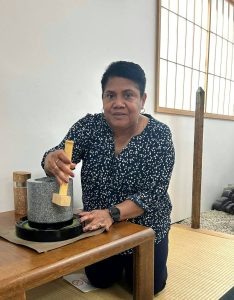
We began by watching a short video about the history of Japanese tea and the meaning behind the ceremony. We then ground our own matcha, a finely powdered green tea, before entering a traditional Japanese tea room.
There were delicious and colourful Japanese sweets to enjoy, followed by bowls of freshly prepared matcha served by our hostess.
Every movement had a purpose. From cleaning the utensils and preparing the hot water to carefully whisking the tea, everything was done with patience and care.
There was no rushing. No cutting corners. Just a quiet focus on getting every step right.
We were then given the chance to whisk our own matcha, following the instructions we had been given.
As I watched the ceremony unfold, I began to understand that making tea was only one part of the experience. It was also about the care, respect and thought that went into preparing something for another person.
The experience also offered a lesson in equality.
To enter the traditional chashitsu, or tea room, we had to pass through a small, square crawl-in entrance measuring just 60 centimetres by 60 centimetres.
The entrance, traditionally known as a ‘nijiriguchi’, is a reminder to leave the outside world behind. In the past, even samurai warriors had to leave their swords outside before entering the tea room.
Everyone had to bow and humble themselves to enter, regardless of their position or status.
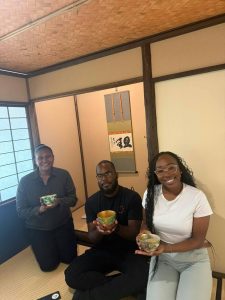
Inside the tea room, there were no titles, positions or social status. Everyone was equal.
It was a powerful reminder that we are all human beings, and that respect and humility matter more than the positions we hold.
Another lesson was trust — trusting the tea master to guide us through each step and allowing ourselves to slow down and enjoy the moment.
The Japanese tea ceremony is deeply connected to the ideas of ‘wabi’ and ‘sabi,’ which value simplicity, quiet beauty and the imperfect nature of life.
For our small group of visiting journalists, the experience offered a welcome pause from our busy APIC Japan Fellowship programme.
One bowl of matcha brought us together in a shared moment of calm, conversation and smiles.
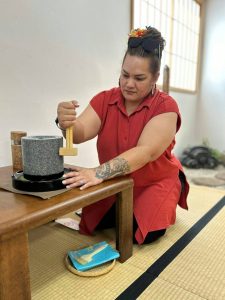
We arrived as journalists from different parts of the world, but inside that tea room, we shared the same experience.
And perhaps that is the beauty of the Japanese tea ceremony: sometimes, bringing people together does not require many words. It simply takes a bowl of tea, an open heart and the willingness to share a moment of peace.