By Dr Satyendra Prasad
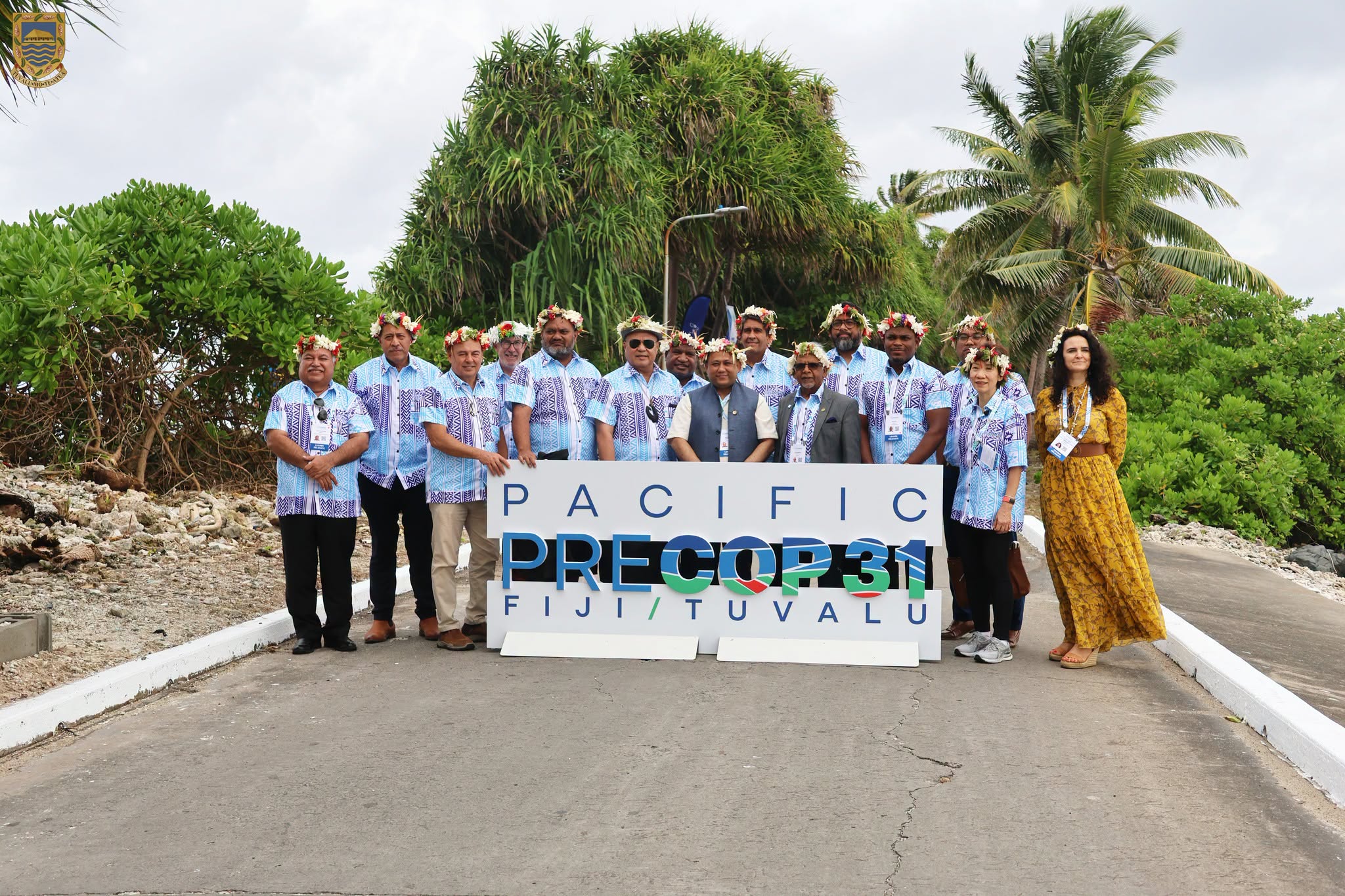
I join so many others in extending my warmest congratulations to the Fiji and Tuvalu Governments for their Herculian effort in hosting the Pre-COP31. Hosting some 5000 of the World’s leading community leaders, faith group representatives, climate change researchers and scientists, activists, influencers, leaders, negotiators on these shores concurrently is no mean task. Brilliant – take a bow.
To the Australian Government teams that first of all insisted on a Pacific Pre-COP and helped to deliver a hugely successful Pre-COP , a huge Vinaka vakalevu, Fakafetai .
This is remarkable display of companionship with the Pacific – even if Australia’s domestic press will disagree. Take a bow.
Making the COP process deliver for the Pacific
I have been often conflicted when participating in these global climate negotiations. Conflicted not because I or the Blue Pacific does not deserve to be seen and heard here but conflicted that so little seems to come out of them.
How hard can it be to secure resources to support rebuilding farms that have lost to salt water intrusion? How hard can it be to relocate some 50 health centres across the region to higher grounds? How hard can it be to build the 15,000 or so sea walls to keep rising seas at bay for that much longer from our coastal villages. Yet this remains hard. Making the case internationally for more financial resources yet another time always feels painful.
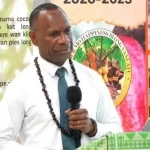
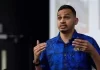
But this pain fades into insignificance when you is listen to Mia Kami, hear Tina Stege or Sindra Sharma making our case, or when you see the anxiety and the hope in the hymns sung by young folks at the opening Church Service Pre-COP.
It hurts when I hear them. Buy they lift me and I know countless others as well.
Our whole region should take much pride in having successfully hosted a Pre-COP at such a consequential moment internationally.
Thousands of influencers, policy makers, diplomats, media professionals heard countless voices from across our Blue Pacific at the Pre-COP31.
They saw efforts to describe our climate realities – through dance, music, prose and dialogue. So many of these voices would never be seen or heard at a global UN conferences otherwise. That is powerful.
The Pre-COP31 is a moment that was owned by people and communities who lived on frontlines of climate change. But they are not only living on its frontlines. They are indeed holding the frontlines for the rest of the world. Magical.
Pacific that is leading
The international community walked away from the Pre-COP fired up and wowed by the Blue Pacific. This is no longer restless region. This is not a region that lives on hope and prayers alone. We displayed progress and projected leadership – project by project, program by program, country by country, ambition by ambition.
The Prime Ministers of Solomon Islands and Tonga presented their new climate ambition. They presented their own national climate funds to back up that ambition – seeded in part through their own national resources.
Papua New Guinea presented to the World its stunning progress in setting up the policy foundations from which its forests – some 5 percent of total primary forestland on the planet can be turned into protected regions – earning incomes for communities and providing an ecosystem service to the World.
Palau, Niue, Tonga and others presented their innovations across the blue sector – showing how to transform ocean, marine, coral protection into incomes and better livelihoods.
A Pacific That is Creating Opportunities
For many years, we looked to the World for solutions. But this time it was different.
To the organisers who creatively used the Pre-CoP to create platforms to showcase progress from across the Blue Pacific, our presenters created new opportunities. To representatives of communities from Palau, Tonga, RMI, PNG and Fiji of course – Vinaka. You helped the world see that we too can innovate – we too can transform ancient memory into contemporary solutions. We have become a vast zone for learning.
From the Blue Community – came foundational innovations in financial engineering – blending national, international (public and private) resources for far reaching measures to protect our ocean and conserve its vast biodiversity.
This time the Pacific did not turn up as spectators – not as communities to be piloted upon – but as drivers who were framing-leading- implementing and learning as they did so. Surreal.
A Pacific that is inspiring
Some parts of the World remain frozen into old disputes reminiscing the debates of a past era when “smoking was good or injurious to your health” was still a contested phrase? The “drill baby drill” cheerleaders would have met their match if they were present.
Our messages were and will remain simple. We have placed our trust in the World’s scientists. They agree that 1.5 decree Celsius temperature rise is a guardrail for us across the Blue Pacific. They agree that 1.5 is equally the guardrail for whole of humanity.
Our Ocean helps to keep this planetary boundary within reach in a fundamental way. We are stewards of our share of the World’s ocean. We hold our stewardship with utmost responsibility. So must the World. A Blue COP31 in Atalya should now amplify this. Simple
The region has undertaken bold steps to protect its communities by providing sufficient resources in ways that communities can access through its Pacific Resilience Facility. A region tired of climate debts set up its own facility to rebuild resilience without driving up national debt.
If some of the smallest and most vulnerable states can make their own significant financial contributions into the Pacific Resilience Facility – so can the rest of the World. If the World did so, we can, as a region rebuild our resilience at pace. Antalya should deliver on this. Simple.
The Pacific has yearned for sufficient voice and representation in international forums where their futures get decided. The UN’s climate meetings are the place where the Pacific’s gravest priorities – the risk of state failures arising from repeated climate stresses ultimately get decided. Our collective futures now depend on our leaders succeeding into getting into the DNA of decision making by the international community. Hard but more doable now than before the Pre-COP.
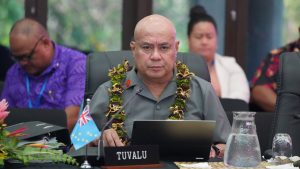
Our leaders have worked tirelessly to support our communities to make their voices heard in Funafuti and in Nadi at the hugely successful pre-COP meetings.
The Pacific’s leaders get fresh wind and energy from these. They take this energy into global negotiations. They carry prayers of our faith communities. They carry the hopes of those rarely seen or heard in international forums. To have raised our expectations from our leaders is not an unfair ask this time around therefore.
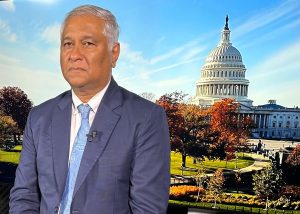
Dr Prasad is Fiji’s Former Ambassador to the United Nations and Senior fellow of Carnegie Endowment for International Peace. He is a Special Envoy to the Pacific Resilience Facility, Visiting Senior Diplomatic Fellow at Canterbury University and Climate Lead for Abt Global.