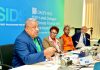
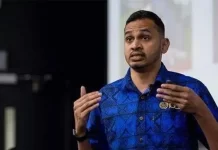

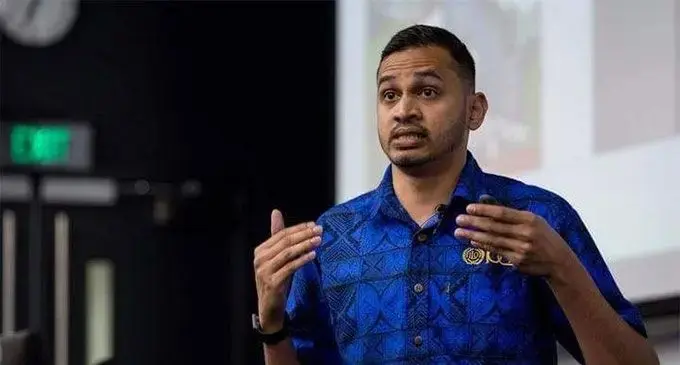
Hold the line on science and 1.5, is the first position Fiji will take into Pre-COP31, as Ministry of environment and climate change permanent secretary Sivendra Michael, unveiled the country’s four-pillar plan for the Nadi meeting from 05 to 8 October .
The pillars are keeping 1.5 degrees within reach, climate finance, oceans, and Pacific leadership.
Michael said the science position was under threat because some countries wanted other scientific bodies to guide decisions instead of the Intergovernmental Panel on Climate Change (IPCC).
“That limits participation of small countries like Pacific because we don’t have such kind of scientific bodies like a NASA,” he said.
He said the International Court of Justice had ruled the IPCC was the highest scientific authority.
On finance, Fiji wants money to reach communities faster. Mr Michael said the fund to be reformed should turn into “real access” for the Pacific and that solutions should be Pacific-owned.
Fiji also wants an answer on how climate displacement will be paid for.
“It shouldn’t take you 18 months to disperse a fund when a community is waiting for another 18 months,” he said.
He said Fiji would push to place oceans on the formal negotiating agenda.
The Pacific chief negotiators meet at Tanoa on 0 – 02 October to finalise the region’s positions.
Michael said 56 countries had yet to submit their national climate plans.
“This is a legally binding commitment under the Paris Agreement.”
He said 1817 people had registered for the Vale ni Vanua programme, up from about 500 at the 2017 Pre-COP.
Another 550 will be in the red zone at the Sheraton.
The Vale ni Vanua, or green zone, will host civil society, media and cultural exhibits. Side events will be at the Sofitel and the Crowne Plaza.
Julia Gillard, head of the Wellcome Trust, will speak on health and climate on Monday at 9.30am.
Youths will present a declaration from their October 1 to 3 meeting.
Meanwhile, Fiji has spent very little of the $200,000(US$100,000) allocated for co-hosting Pre-COP31, with the remaining funds to be redirected to other Ministry of Environment and Climate Change costs.
Permanent secretary Sivendra Michael said Australia was hosting and funding the summit, reducing the amount Fiji needed to spend from its allocation.
“Our utilisation is very little on this budget. It will be repurposed for other costs that the ministry needs,” he said.
Fiji’s biggest cost is setting up the Vale ni Vanua, a space for civil society and other groups attending the summit.
Michael said the aim was to give those in the Vale ni Vanua the same level of interaction as participants at the Sheraton.
Australia’s reported AUd$20 million (FJD$31.2 million) expenditure on the summit has drawn criticism from Opposition figures in Canberra.
Michael also responded to questions about whether attending international climate meetings provided value for money.
“If you are not on the table, you are not part of the decision-making process,” he said.
He said decisions affecting issues such as board representation and the timing of funding could otherwise be made without Fiji’s participation.
“We are civil servants. We are here paid by the taxpayers’ funds. We are here to serve our people,” he said.
Michael said negotiators carried the concerns of communities with them, including those raised through phone calls and emails to the Prime Minister and permanent secretaries.
“Sometimes we shed tears,” he said.