

Gaps in ocean monitoring across the western Pacific are threatening the region’s ability to track and predict climate events such as El Niño, prompting an international call at COP31 to protect the global climate observing system.
The warning was delivered at a high-level event Wednesday, where COP31 Co-Presidents Türkiye and Australia announced a call to action to strengthen support for the Global Climate Observing System (GCOS).
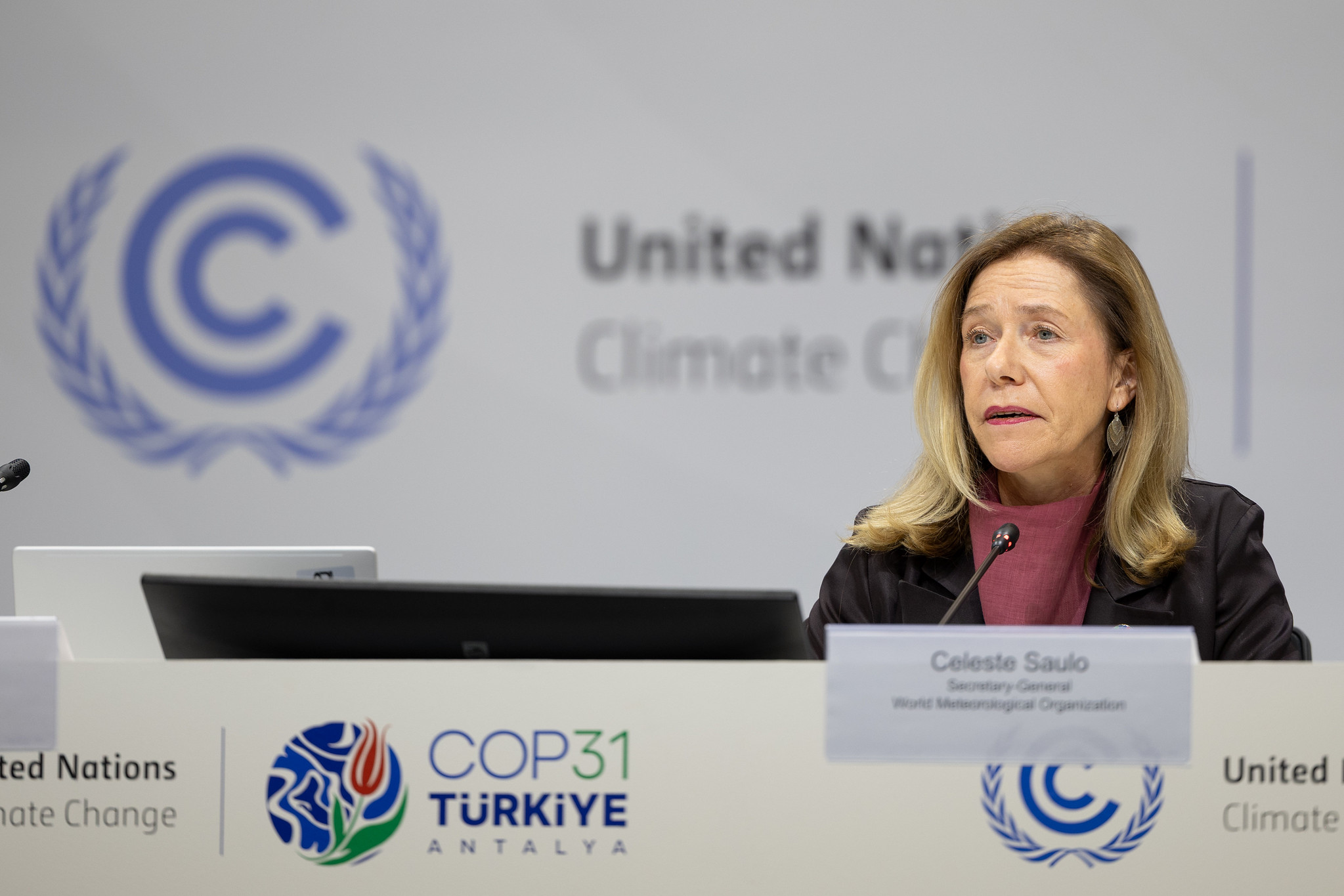
World Meteorological Organisation (WMO) Secretary-General Celeste Saulo said the global network was essential for monitoring changes across the atmosphere, oceans, ice and land.
“It is vital we keep taking the planet’s pulse,” Saulo said.
She warned that some of the world’s most important climate observation networks were deteriorating, including systems used to monitor ocean conditions in the Pacific.
“Across a large part of the western Pacific, no moored buoys are operating near the equator. That region helps shape the El Niño we’re facing now,” she said.
The loss of these observations threatens the continuity and coverage of long-term ocean records, weakening the ability of scientists to predict and monitor major climate patterns.
Saulo said the world spent close to US$10 billion annually on climate observations, but funding remained inadequate to maintain essential monitoring networks over the long term.
“Records built over decades currently rest on short-term grants. On a single satellite. On a few specialists. On one copy of the data. We are funding long-term records with short-term money,” she said.
GCOS Chair Thelma Krug also warned that progress in observing the planet was at risk, with some measurements already declining and others facing possible interruption.
The Global Climate Observing System, co-sponsored by WMO and other partners, monitors more than 50 essential climate variables across the planet’s major environmental systems.
Its networks rely on international cooperation, as climate observations in one country or region contribute to forecasts and early warnings worldwide.
Saulo said basic weather observation networks agreed by countries were less than 40percent in place, while many least developed countries and small island developing states lacked the resources to maintain sufficient weather stations.
A draft GCOS High-Priority Action Plan identifies three priorities: protecting essential observation systems, closing monitoring gaps and safeguarding data, and maintaining international coordination.
The plan highlights the need for funding through initiatives such as the Systematic Observations Financing Facility, which supports observation networks in countries with limited resources.
Saulo said maintaining the coordination work would cost about US$10 million annually, while protecting observation systems and closing critical gaps would require about US$500 million a year.
“For what they tell us and what they protect, these are small sums,” she said.
The proposed action plan and the forthcoming GCOS Status Report are open for public review, with both scheduled for publication in February 2027.
The reports are expected to inform the UNFCCC’s Global Stocktake process and related climate action.
The Global Ocean Observing System’s 2026 status report, released last week, also outlined progress in marine monitoring while warning of continuing gaps and risks to ocean observations.