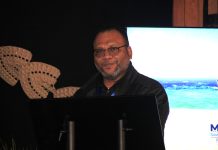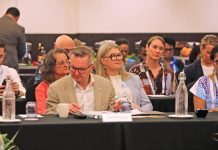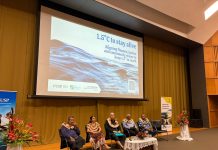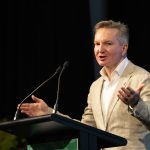
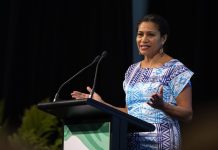
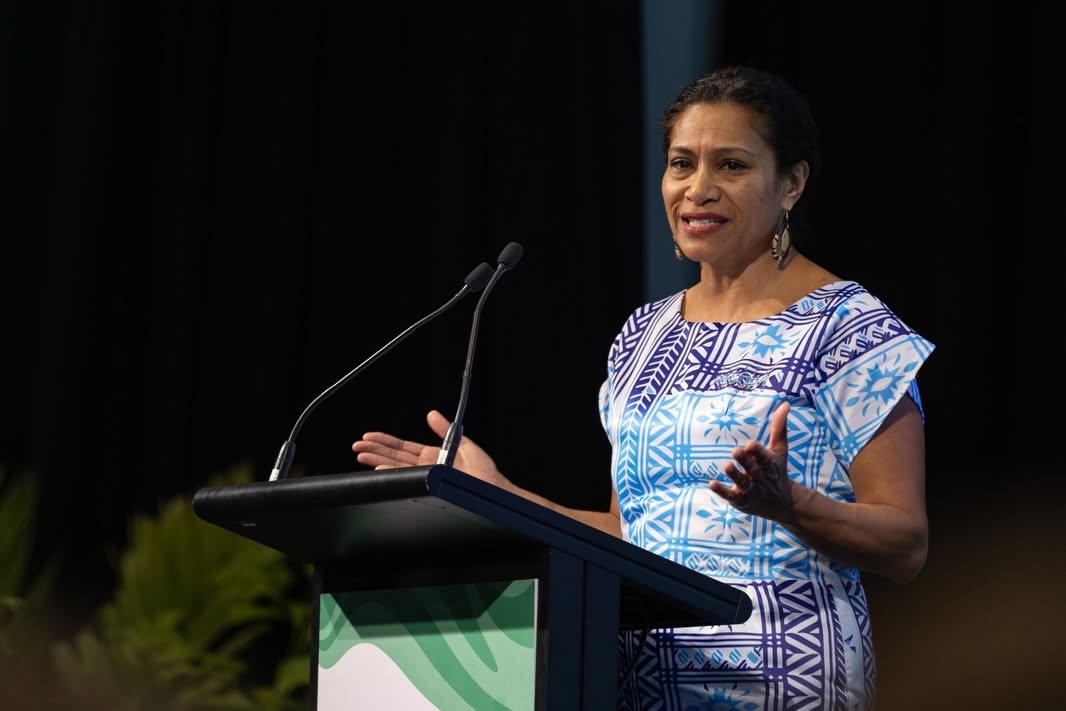
Fiji’s Minister for Environment and Climate Change Lynda Tabuya has called for Pacific voices to play a central role in shaping climate decisions ahead of COP31, as she opened the Pre-COP Stakeholder Programme, Vale ni Vanua: The Knowledge Exchange, in Denarau Monday.
Tabuya said climate decisions were only as strong as the voices that shaped them, stressing that participation should have a real influence on priorities, partnerships and decisions.
“Participation has value when it changes priorities, partnerships and decisions, not when people are consulted after the direction has already been set,” she said.
She acknowledged that recent COP meetings had produced decisions and dialogues that had moved some issues forward, but said major challenges remained.
“1.5-degree overshoot is imminent, finance is not flowing at the speed or scale required, and many core challenges within the agenda issues remain unresolved,” Tabuya said.
She said the test of the stakeholder programme would be whether the experiences and knowledge shared during the week could influence positions and help unlock the outcomes needed at COP31.
Tabuya said Fiji’s Prime Minister would take three clear messages to leaders during the week: keeping 1.5°C within reach, ensuring climate finance reaches communities that need it, and giving the ocean its rightful place in the climate regime.
She called on participants to use the Knowledge Exchange to provide practical evidence to support those priorities.
“First, show us what keeping 1.5°C within reach looks like on the ground,” she said, pointing to work in renewable energy, transport and sustainable management of land and resources.
On climate finance, Tabuya called for participants to highlight where finance was failing and where it was working, including their experiences with projects such as seawalls, water systems and solar minigrids.
“Tell us how long you waited for the seawall, the water system or the solar minigrid, and what would have made the difference,” she said.
She said these experiences would provide evidence Fiji would carry into ministerial discussions on access to finance on Thursday.
Tabuya also highlighted the ocean as a key priority, calling for its risks and critical role to be elevated in climate discussions.
“From coastal erosion and coral health to fisheries and food security, the ocean connects everything we hold dear,” she said.
She urged participants to ensure ocean priorities remained at the heart of the climate agenda.
“Let every stand, every session and every stage carry the message that ocean priorities belong at the heart of the climate agenda,” Tabuya said.
Tabuya also stressed the importance of ensuring Pacific voices lead discussions, particularly those of youth, women, Indigenous Peoples, persons with disabilities, faith groups, workers and outer-island communities.
“Pacific knowledge belongs to its people.
“It should be shared with consent, with attribution, with benefit-sharing and under community control” she said.
She also committed to reporting back to stakeholders after COP31 on the priorities Fiji advanced, what was agreed, what remained open and how stakeholder input was considered.
“You deserve to see the difference you have made,” she said.
Tabuya said the world was coming to the Pacific during the week, with leaders standing with the people of Tuvalu in Funafuti and ministers meeting in Nadi to prepare the ground for COP31 in Antalya.
She said the formal programme was only part of the story, with the stakeholder programme providing an opportunity for participants to influence the discussions.
“The other part will be written here, by you,” Tabuya said.
She said the name Vale ni Vanua reflected the connection between Fiji’s people, land and sea.
“In Fiji, a vale is a house. The vanua is far more than land: it is the land, the sea and the people, bound together as one living whole.
“Vale ni Vanua is the house of the vanua, a house where everyone who belongs to this place, and everyone who cares for it, has a seat and a voice,” she said.
Tabuya also encouraged participants to visit the Bula Village and engage with the work and stories being shared.
“Visit every stand, listen to every story, and start the conversations you did not plan to have,” she said.
She said the future of the Pacific was being shaped through the conversations taking place during the week.
“The future of the Pacific is being shaped in these conversations, and it must be shaped with you,” Tabuya said.
Tabuya declared Vale ni Vanua: The Knowledge Exchange and the Bula Village open.
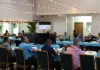
The event brought together representatives from civil society, Indigenous Peoples and local communities, youth, women’s groups, faith communities, persons with disabilities, workers and employers, outer-island communities, exhibitors, partners and friends.