
By Eddi Osifelo in Antalya, Türkiye
The Alliance of Small Island States (AOSIS) stands ready to work with all Parties to turn the Belém Gender Action Plan into tangible change for their people.
Adopted by Parties at COP30, the Belém Gender Action Plan (GAP) for 2026–2034 marks a new chapter for equality, ambition and inclusion in climate policy and action.
It places gender equality at the heart of climate action, focusing on safer participation, stronger data, improved access to finance and technology, and more inclusive decision-making.
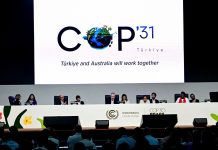
This was highlighted during a high-level event at COP31 in Antalya, Türkiye, focusing on how Parties are engaging women and girls, men and boys as agents of change for socially just transitions.
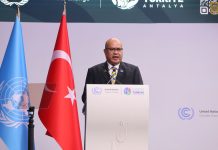
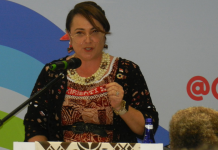
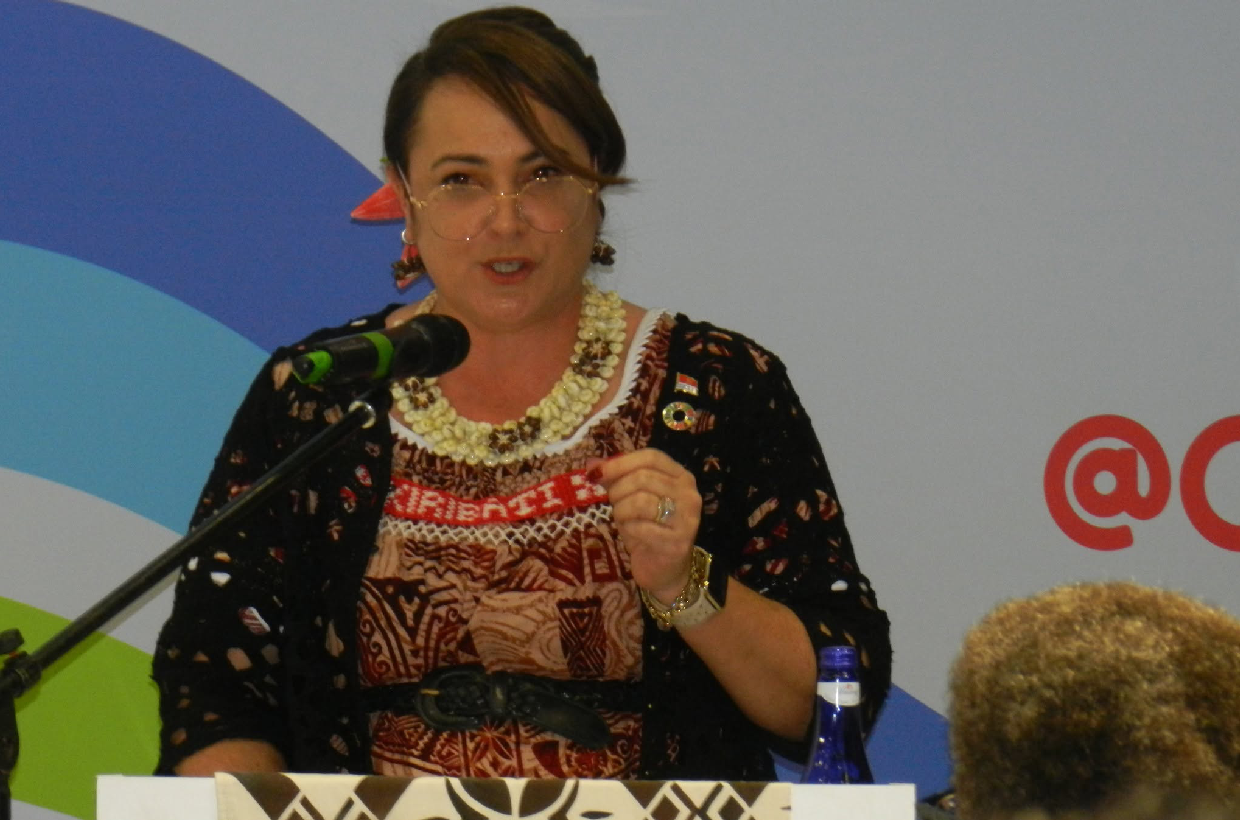
Speaking on behalf of AOSIS at the event on Wednesday, Kiribati Minister of Environment, Lands and Agricultural Development, Honourable Ruth Cross Kwansing, said AOSIS countries were already demonstrating what gender-responsive climate action could look like.
She highlighted several examples across the island states.
*Vanuatu, Kiribati and the Marshall Islands are integrating gender-responsive approaches across their Nationally Determined Contributions (NDCs), adaptation planning and climate policies.
*Fiji is mainstreaming gender across policies, plans and budgets while supporting women’s participation in areas such as climate-smart agriculture.
*The Cook Islands’ long-term development planning places women and girls within broader national wellbeing and decision-making.
*Tuvalu is demonstrating women’s leadership in climate justice, with women playing an important role in advancing the country’s case before the International Court of Justice (ICJ) on states’ obligations to address climate change.
*In the Caribbean, countries including the Dominican Republic, Saint Kitts and Nevis, and Belize are strengthening the integration of gender into national climate commitments, policies and institutional arrangements.
*In the Indian Ocean, Comoros is advancing gender-responsive climate action through its new NDC, which integrates gender-sensitive indicators and a just transition aligned with International Labour Organisation (ILO) principles, supported by a dedicated National Gender and Climate Change Focal Point.
Minister Kwansing, who is also the Pacific Climate Champion for Gender and Social Inclusion, said these efforts took different forms because national circumstances differed.
Pacific leaders
However, they shared an important message: Small Island Developing States (SIDS) were not waiting for transitions to happen to them.
“We are already building the policies, institutions and solutions needed to shape them. And we do this because, for SIDS, climate change is not an abstract challenge.
“It is rising seas, stronger cyclones, saltwater intrusion and lost livelihoods. It means greater economic insecurity and climate anxiety for men and boys; increased risks of gender-based violence for women and girls; additional barriers for persons with disabilities trying to reach safety; and disrupted education and opportunities for our children and youth,” she said.
Minister Kwansing said climate change was experienced differently by women, men, girls and boys, older persons and persons with disabilities.
Too often, she said, those who had contributed least to the climate crisis carried some of its heaviest burdens.
“That is why, for AOSIS, a socially just transition must be more than a shift towards low-carbon and climate-resilient economies.
“It must be fair, inclusive and people centred. It must address existing inequalities rather than reproducing them in new economic and development models. And it must give people not only the opportunity to participate in change, but also the resources and power to shape it,” she said.
She said women and girls in all their diversity must be recognised not only as beneficiaries of climate action, but also as leaders, decision-makers and agents of change.
“At the same time, our small island communities remind us that transformation requires everyone,” she added.
“Men and boys must be engaged as partners and allies in advancing gender equality. This means challenging harmful gender stereotypes and addressing the social and institutional barriers that limit the opportunities and leadership of women and girls.
“It also means recognising how unequal care responsibilities, gender-based violence and economic insecurity affect the ability of families and communities to adapt and prosper.
“Our youth, Indigenous Peoples, local and rural communities and persons with disabilities must also be part of shaping solutions from the beginning.
“In our islands, we often do not have the luxury of working in silos. Families, villages and communities respond together. And that can become a strength when climate action is designed to transform inequalities rather than reinforce them.
“We are already seeing examples of this in practice,” she added.
Minister Kwansing said renewable energy initiatives in the Pacific were creating opportunities to recognise and strengthen women’s roles in managing household energy systems.
“Adaptation programmes are supporting women’s livelihoods and cultural industries through technologies such as solar drying.
“And approaches such as family-based agricultural training are bringing women, men and young people together to improve livelihoods while strengthening shared decision-making within households,” she said.
She said these initiatives were practical examples of what a socially just transition could mean on the ground.
“The Belém Gender Action Plan now gives us a common framework to take this work further.
“And in the Pacific, we are already working to translate that global framework into our regional realities. Through the Pacific Pact on Gender and Climate Action, endorsed by Pacific Islands Forum Leaders and championed by Tuvalu, our region is working to contextualise the Belém Gender Action Plan so that implementation is driven by — and delivers for — our people and communities,” she added.
Minister Kwansing said discussions at COP31 had reinforced the importance of scaling up support for the implementation of the Belém Gender Action Plan.
“For SIDS, this means adequate, predictable and accessible finance, including grant-based and highly concessional resources, together with technology and sustained capacity-building.
“It means strengthening the national institutions and Gender and Climate Change Focal Points that our countries are already putting in place.
“It means improving our ability to generate and use gender-responsive and disaggregated data.
“And it means ensuring that gender-responsive climate finance reaches national and local actors, including women-led and community-based organisations, that are already turning commitments into action,” she said.
She stressed that socially just transitions must also remain anchored in the 1.5°C goal.
“There can be no justice in a transition that comes too late for island communities already confronting sea-level rise, extreme events, ecosystem loss and displacement,” she said.
“Across AOSIS, our members are demonstrating, each according to their circumstances and capacities, what gender-responsive climate action can look like.
“Our collective responsibility now is to ensure that these efforts have the support to be sustained, scaled up and translated into tangible benefits for every community, every woman and girl, every man and boy,” she added.