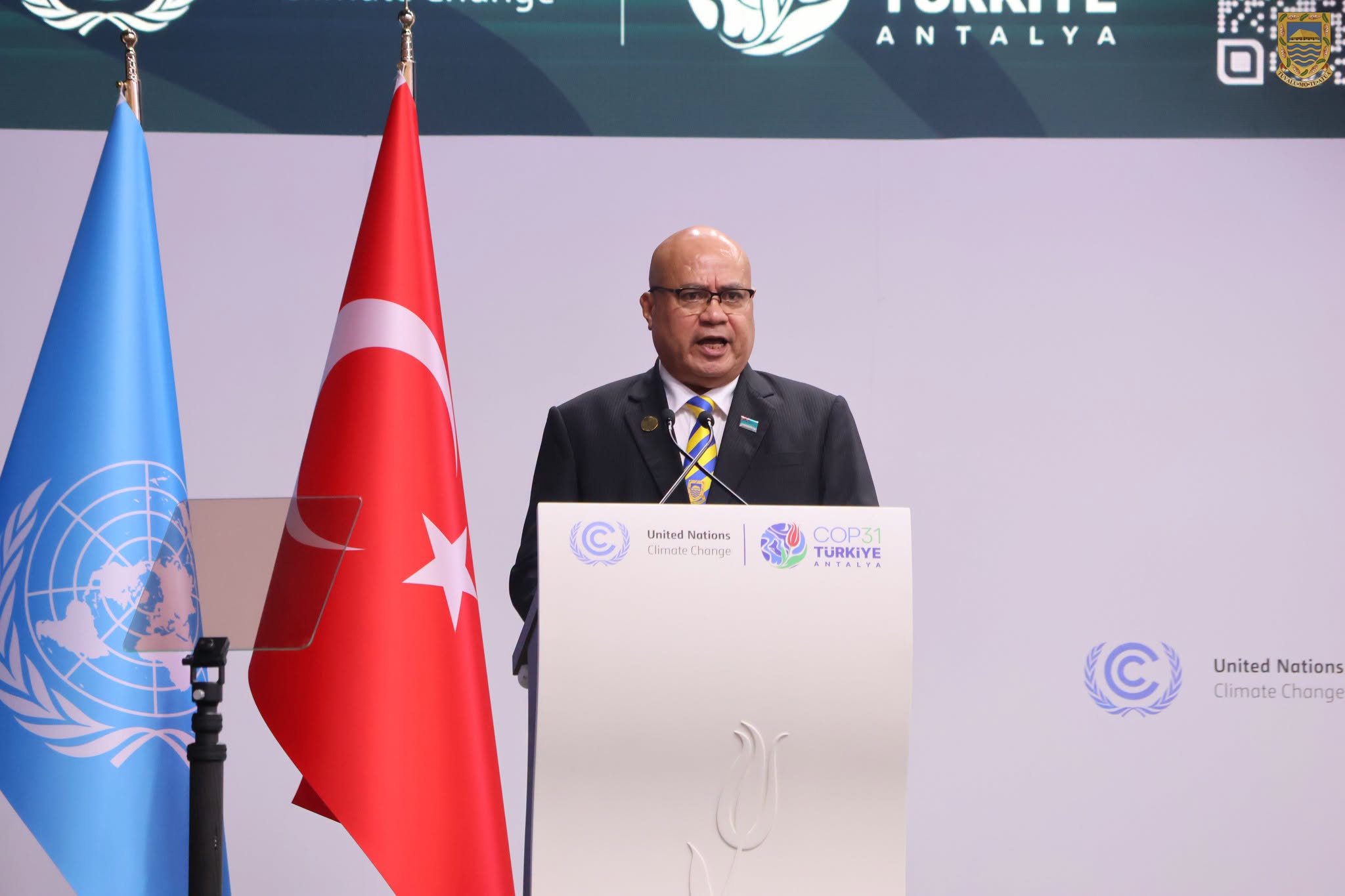
Tuvalu Prime Minister Feleti Teo has challenged world leaders to recognise the unpaid work women and men contribute to climate resilience, warning that Pacific communities cannot be expected to carry the burden of a crisis they did not cause.
Teo said women’s work in managing reefs, securing household water, protecting food supplies and sustaining community livelihoods was largely missing from national climate commitments and funding proposals.
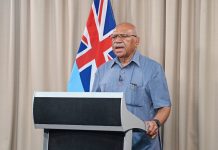
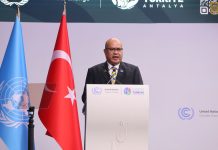
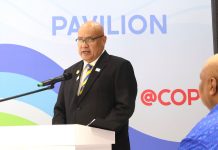
Addressing a COP31 high-level event on gender equality and socially just transitions in Antalya, Türkiye, on 18 November, Teo said the Pacific’s climate transition was already being driven by women and men in their daily lives, but their contributions were rarely recognised in government planning.
“Calling our people agents of change gives no one the right to ask them to carry more. They did not cause this crisis,” he said.
Drawing on his eight years as executive director of the Western and Central Pacific Fisheries Commission before becoming Tuvalu’s Prime Minister in 2024, Teo said international fisheries negotiations had detailed information about commercial tuna catches but overlooked the contributions of coastal communities.
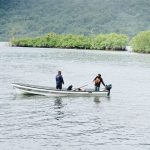
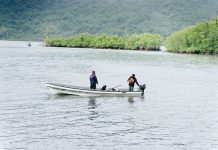
He said negotiators could account for every tonne caught by purse seine fishing vessels but could not explain what women collected from reef flats or what men caught in small boats to feed their families.
“They knew that ocean better than any of our models, and our models did not know they existed,” he said.
Teo described how women in Tuvalu monitored declining shellfish stocks and coral bleaching, adjusted their fishing activities to allow reefs to recover, managed household rainwater supplies and replanted pandanus trees further inland as coastal erosion threatened livelihoods.
He said these activities were forms of ecosystem management, water security, public health protection and climate adaptation, yet remained largely unrecognised in national climate plans.
“Almost none of this work appears in our Nationally Determined Contribution, and very little reaches a funding proposal. All of it is the transition,” he said.
Teo also highlighted the changing roles of men in Pacific households, particularly as many leave for seasonal employment in Australia and New Zealand.
He said women often managed households, land and community responsibilities while their husbands were away.
Teo called for policies that encouraged men to share domestic and caregiving responsibilities when they returned home.
“Good policy helps more men make that choice,” he said.
Teo warned that climate change was also threatening the ocean resources that support Pacific livelihoods and government revenue.
He said warming oceans were expected to push tuna eastwards, away from the waters of several Pacific Island countries, threatening fishing licence revenue used to fund essential services such as schools and health facilities.
“The reef that feeds a woman’s family and the fishery that funds her government face the same warming sea,” he said.
The Tuvalu PM called for the ocean to be included across all areas of international climate negotiations, including adaptation, finance, loss and damage and just transitions.
Teo said climate science must also remain central to decision-making, warning that cuts to ocean monitoring, climate research and national statistics would leave vulnerable communities invisible in government policies.
With Tuvalu’s highest point less than five metres above sea level, he said limiting global warming to 1.5 degrees Celsius was essential to the country’s survival.
“For us, a just transition on a planet that overshoots 1.5°C is a contradiction in terms,” he said.
He also referred to the International Court of Justice’s 2025 advisory opinion on states’ obligations to protect the climate system, saying the rights of women and girls were part of those obligations.
Teo raised concerns about violence against women and girls following disasters, saying overcrowding and financial pressures after king tides and cyclones could increase risks within households.
“I say this plainly as Prime Minister: that violence is a choice, and the men who choose it are responsible for it,” he said.
He said addressing violence required men to change and governments to include prevention measures and survivor support in disaster planning.
Teo also called on countries to implement the Belém Gender Action Plan and build regional approaches to gender equality and climate action.
He highlighted the Pacific Pact on Gender and Climate Action, endorsed by Pacific leaders in Palau in September, as a regional framework to advance the global commitments.
“A global plan becomes real when a region makes it its own,” he said, inviting other regions to develop their own gender action plans.
Teo warned against attempts by some countries to reopen agreed language on women’s and girls’ rights.
“Tuvalu will not negotiate backwards on the rights of women and girls, and we ask every Party in this room to hold that line with us,” he said.
In his call to action, Teo urged countries to honour their commitment to transition away from fossil fuels, strengthen ocean protection and ensure women, youth, persons with disabilities and Indigenous Peoples have direct access to climate finance.
Teo called on climate funds and development partners to establish simple funding mechanisms for community organisations, backed by multi-year core funding and allowing communities to decide how resources were spent.
He also urged governments to make gender commitments the responsibility of all ministries, including finance, planning, energy, fisheries, health and justice, rather than leaving them solely to gender ministries.
Teo said governments must collect data on unpaid care, water, food and ecosystem management work, broken down by sex, age and disability.
He called for disaster shelters and early warning systems to be accessible to persons with disabilities and for violence prevention and survivor support to be built into disaster response plans.
Teo said Tuvalu’s communities would continue their work to protect their islands regardless of the outcome of international negotiations.
“When I return to Tuvalu, the next king tide will already be on its way,” he said.
He said women would continue gathering food from reef flats, young people would plant mangroves and elders would teach children to read the weather.
“They are already doing their share of the transition. They deserve to hear what this Conference committed to put in their hands.
“Give me something to tell them,” PM Teo said.