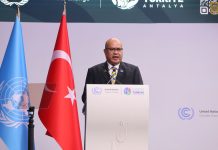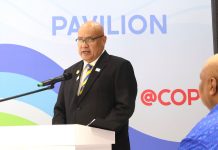
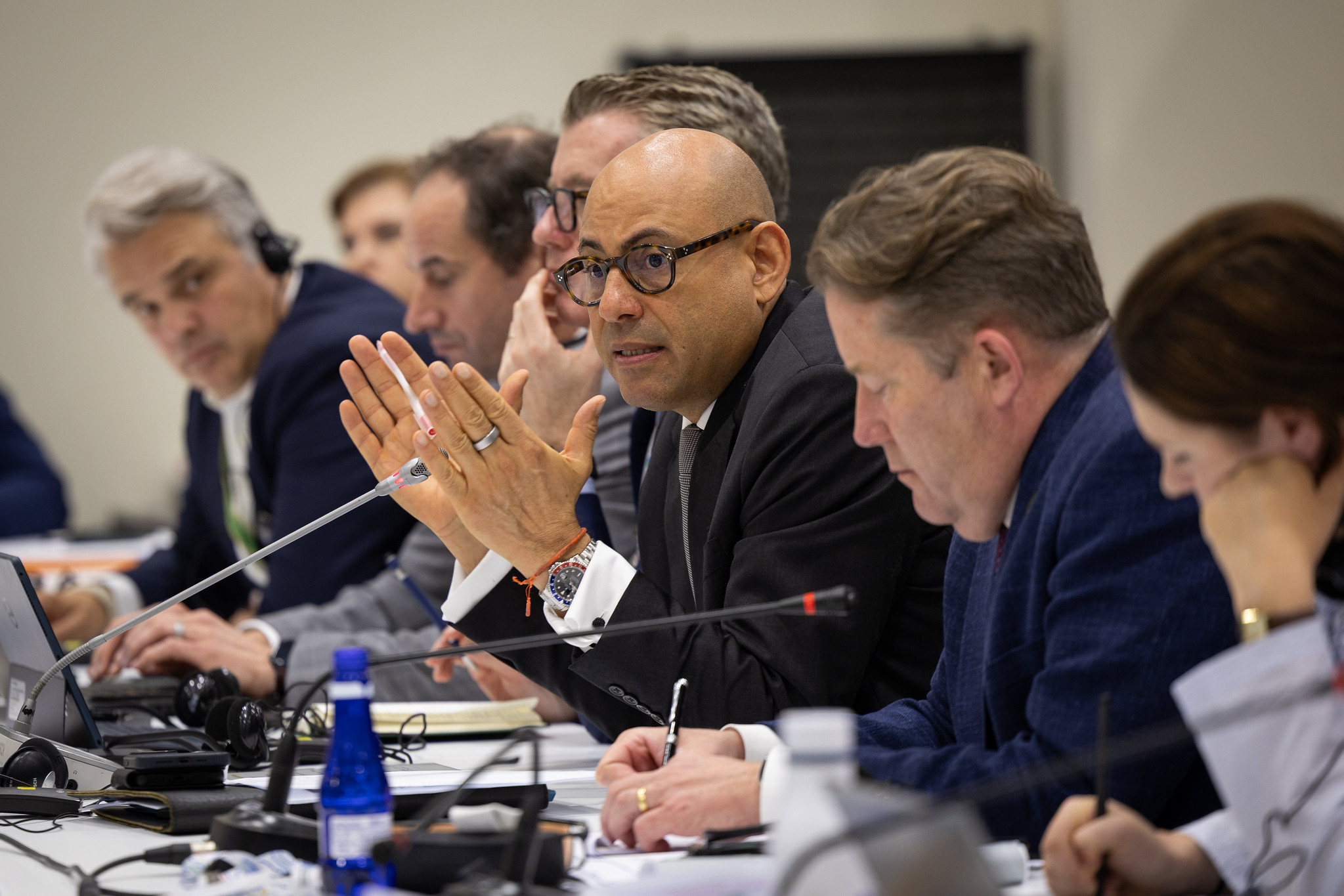
UN Climate Change Executive Secretary Simon Stiell has urged countries to accelerate delivery of existing climate commitments over the next two years, warning that the second Global Stocktake at COP33 must produce an honest assessment of progress and a clear direction for stronger action.
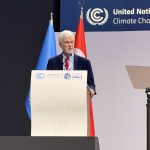
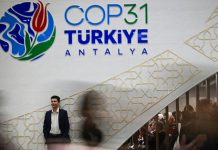
Stiell said the second Global Stocktake, launched at a ministerial high-level event at COP31 in Antalya, Türkiye, on Wednesday, was a major opportunity to assess what countries had achieved, identify gaps and build political support for the next phase of climate action.
‘We are at the starting line of the second global stocktake: This is a major moment in the international climate process,” he said.
The process will conclude at COP33 in 2028, giving countries two years to build agreement and political commitment around the findings.
Stiell said the assessment must be honest, based on evidence and grounded in equity, while building on commitments made during the first Global Stocktake.
These include limiting global temperature overshoot beyond 1.5 degrees Celsius, accelerating adaptation, tripling global renewable energy capacity and doubling energy efficiency by 2030.
Countries also agreed to transition away from fossil fuels in a just, orderly and equitable manner and move adaptation efforts from planning to implementation.
Stiell said delivering these commitments depended on increased climate finance, technology transfer and capacity building.
“Two years to build support, agreement, and political will.
“”This is a shared responsibility. A shared opportunity. And a common necessity,” he said.
He acknowledged the difficult geopolitical environment but said an ambitious outcome remained possible if countries concentrated on implementing existing commitments.
Stiell said 90 percent of Parties had incorporated outcomes from the first Global Stocktake into their Nationally Determined Contributions (NDCs), providing a foundation for stronger implementation.
“Over the next two years, we need to remain laser-focused on practical solutions that help countries deliver,” he said.
He said progress before COP33 would be essential to bringing countries closer to meeting the targets agreed under the first stocktake and the goals of the Paris Agreement.
Stiell said the second Global Stocktake must be supported by strong scientific evidence and an assessment of the economic, social and development impacts of climate action.
This would require examining investment and technology trends and gathering the experiences of businesses, investors, Indigenous Peoples, local communities and civil society.
He said participation from governments and non-government stakeholders would be critical throughout the process.
The information collection phase is already underway, and Stiell urged countries to contribute to an inclusive global assessment.
“The quality of information we gather will determine the quality of next year’s assessment,” he said.
He called on all Parties to support the process and ensure it remained relevant to their populations.
Stiell said the Global Stocktake should not be treated solely as a negotiation over international climate agreements, but as an assessment of issues directly affecting people’s lives.
“Ultimately, this is not just about negotiated texts. It is about the air we breathe, the work we do, and the places we love.
“Every person and every community has a stake,” he said
Stiell said the next two years would be critical in determining whether countries could turn existing commitments into measurable progress before the second Global Stocktake concludes at COP33.