


By Pita Ligaiula in Koror, Palau
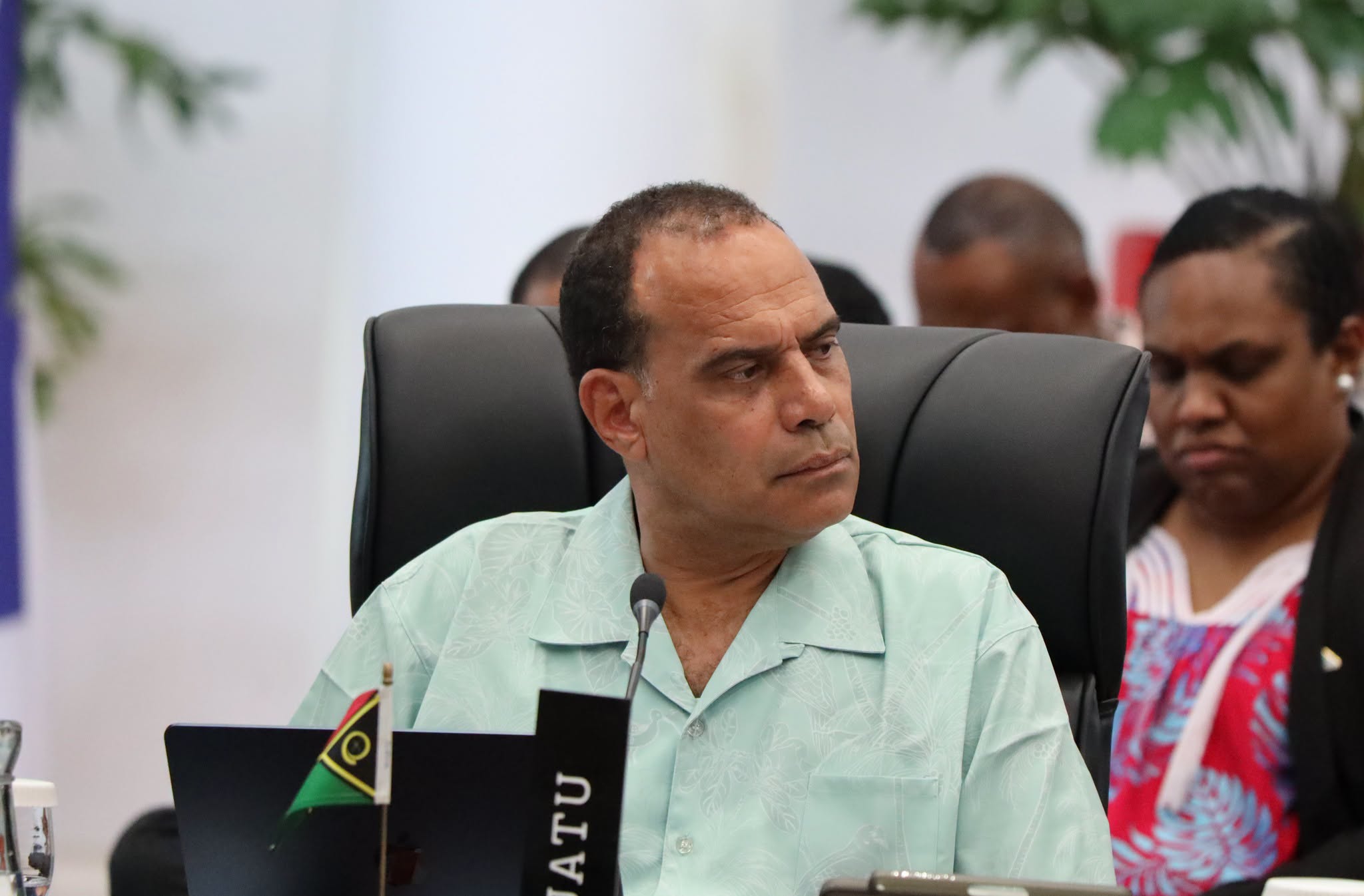
Vanuatu Climate Change Minister Ralph Regenvanu has accused Australia of not doing enough to tackle the climate crisis, saying a major fossil fuel producer must stop expanding production and accelerate its transition away from coal, oil and gas.
But Fiji Foreign Minister Sakiasi Ditoka disagreed with the criticism, saying Australia had done “quite a lot” for the Pacific and had “bent over backwards” in many cases to support the region.
The differing views emerged during discussions in Koror on the sidelines of the 55th Pacific Islands Forum Leaders’ Meeting, where Pacific leaders were warning of the risks facing the region if global warming exceeds 1.5 degrees Celsius.
Asked what his message was to Australia and whether the country was doing enough, Regenvanu gave a direct response.
“Australia is not doing enough.
“Australia is a major producer of fossil fuels, we all know. Fossil fuels are the primary driver of the climate crisis,” he said.
Regenvanu said the minimum action expected from a major fossil fuel-producing country was to stop expanding production.
“The very least a country like Australia should be doing is stopping future expansion, and it’s not doing that
“You need to stop the expansion and you need to start transitioning away,” he said.
Fiji Foreign Minister Sakiasi Ditoka, however, rejected the suggestion that Australia was not doing enough for the Pacific.

Asked by a Fijian journalist about Regenvanu’s criticism of Australia as a major coal producer, Ditoka said Fiji respected Vanuatu’s position but took a different view.
“I would disagree.
“I’d say that Australia has actually done quite a lot for the region,” Ditoka said.
Ditoka said Vanuatu was entitled to its own views on Australia’s climate policies.
“Vanuatu has their own views and are certainly respected
“But we believe that Australia has, I think, bent over backwards in many cases to help us improve the region, and we are very grateful for that” he said.
Ditoka said Fiji hoped to continue building on its partnership with Australia.
“Hopefully we can continue to build on that,” he said.
The contrasting views highlight the different approaches among Pacific countries towards Australia, one of the region’s largest development and security partners but also a major producer and exporter of fossil fuels.
Tuvalu’s Climate Change and Environment, Dr Maina Talia, said the Pacific’s wider message was directed at all countries continuing to produce and expand fossil fuels.
He said the central issue was whether governments had the political will to act.
“What is happening now is that we need the political will to transition away from fossil fuels,” Talia said.
“So that’s the message for all the oil-producing countries, fossil fuel countries, and of course the expansion of fossil fuels.”
Pacific Island countries have repeatedly warned that exceeding the 1.5-degree global warming threshold would bring severe consequences for the region’s ocean, fisheries, food security and low-lying communities.
The Pacific’s climate position has consistently called for stronger global action and a rapid transition away from fossil fuels.