


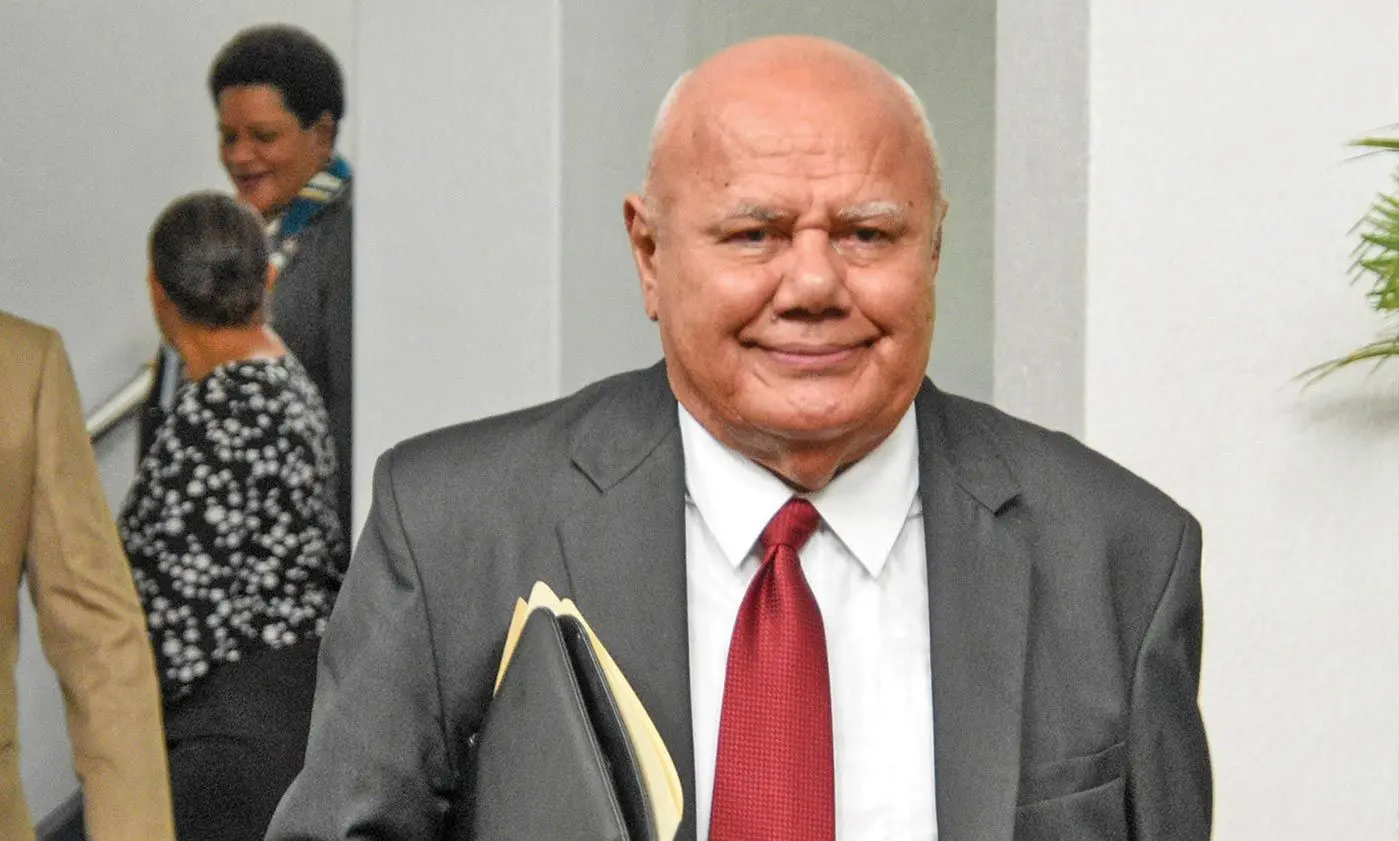
Fiji Minister for Tourism and Civil Aviation Viliame Gavoka has defended the proposed five percent Tourism Services Tax (TST) to financially support Fiji Airways amid heavy backlash from the tourism industry.
Gavoka said the industry needed to support Fiji Airways during a period of rising costs and international aviation pressures.
Fiji Hotel and Tourism Association (FHTA) chief executive officer Fantasha Lockington had earlier publicly opposed the proposed tax that would come into effect on 01 September.
She claimed the tax would affect the industry’s growth, and visitor numbers.
Gavoka said Fiji Airways needed $40 million (US$20 million) a month to meet fuel-related costs, with the new tax expected to generate about $70 million (US$35 million).
“Last month was the biggest month ever in tourism,” he said, referring to the 105,000 visitors recorded by the Fiji Bureau of Statistics.
Minister for Finance Esrom Immanuel said the TST was introduced as part of broader measures to support Fiji Airways.
Immanuel said Government was concerned by what he described as continued delaying tactics by the FHTA and a small number of industry players.
He said Government had consulted the industry since June, and moved the implementation date three times, from 01 July to 01 August and now 01 September to allow businesses to prepare.
However, questions over the tax have emerged alongside scrutiny of Fiji Airways’ spending priorities.
A leading corporate leader has quizzed the airline’s purchase of BYD electric vehicles for its operations in March.
Fiji Airways chief executive Paul Schuraah said the vehicles were cheaper than the previous fleet.
“Let Fiji Airways run Fiji Airways,” Gavoka said.
The debate now places Government and the tourism industry at a critical point, with the 01 September deadline approaching.
Meanwhile, the Fijian Government has defended its support for Fiji Airways, warning that a 20 to 30 percent reduction in flights could have a direct impact on the wider economy.
Deputy Prime Minister Manoa Kamikamica said continued assistance to the national carrier was necessary because of its importance to tourism, business, investment and the movement of Fijians.
“Fiji Airways is not only just an airline, it very much the lifeline of the Fijian economy,” Kamikamica said.
He said a large majority of tourists, business travellers and Fijians relied on the airline, making it an important national asset.
Kamikamica said Fiji Airways had faced significant financial challenges following the COVID-19 pandemic, including almost two years of severely reduced revenue.
He said rising fuel costs had subsequently placed further pressure on the airline’s operations.
Kamikamica said Government assistance, including measures aimed at helping Fiji Airways manage higher fuel costs, was necessary to protect the wider economy.
“The worst thing that could have happened if we had not given any assistance and let us say they cut the flights by 20 percent or 30 percent, that directly impacts the whole economy,” he said.
He said fewer flights could result in lower Value Added Tax (VAT) and other tax collections, slower economic activity and reduced investor confidence.
Kamikamica said the proposed tax measure was intended to be temporary and was understood to remain in place for only one to two years while Fiji Airways worked towards financial recovery.
Kamikamica also acknowledged concerns about the airline’s management structure and said the Fiji Airways board could examine its organisational structure for opportunities to reduce costs.
“There are some views around maybe Fiji Airways is top heavy with its management,” he said.
Despite those concerns, he said Government’s priority was to ensure the national carrier remained financially sustainable and continued supporting economic growth.
“I am hoping that Fiji Airways always can recover and continue to do what it’s doing, which is continuing to grow the Fijian economy and stabilise it,” he said.