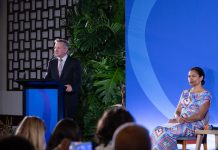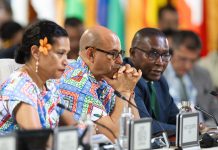

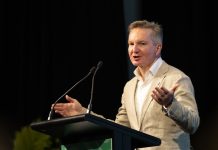
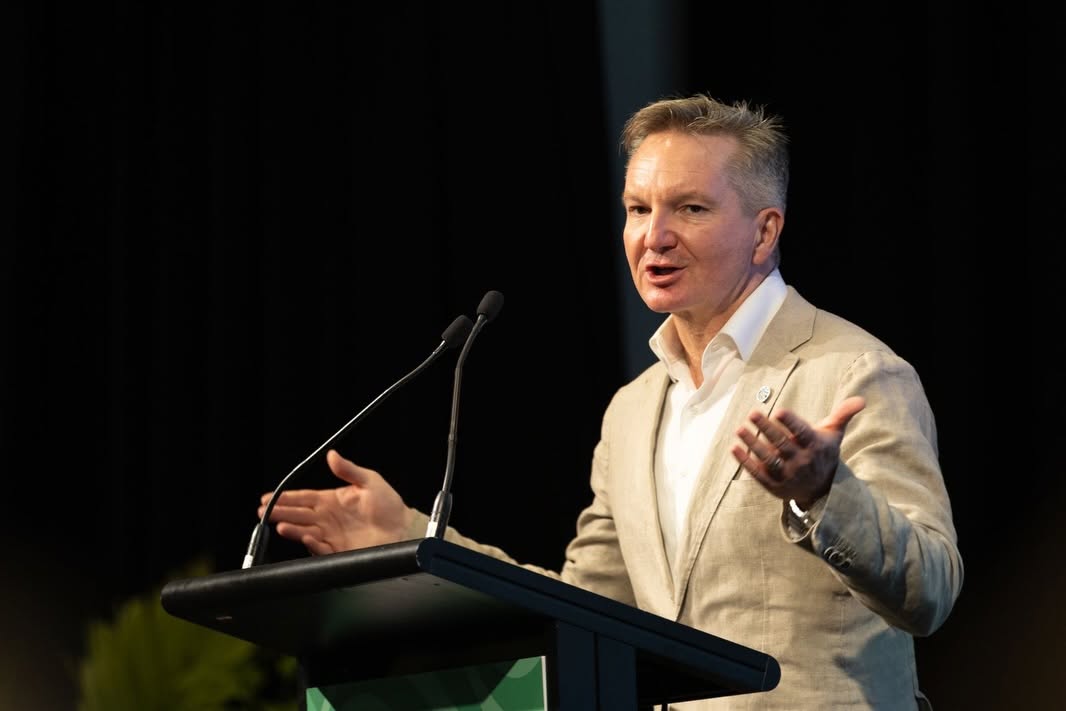
Australian Climate Change and Energy Minister Chris Bowen says Australia’s shift towards renewable energy is central to its efforts to work with Pacific countries on climate change, as questions grow over the country’s continued fossil fuel exports.
Bowen was asked whether he had discussed a recent Australian High Court ruling on a New South Wales coal mine expansion with Pacific Island ministers during the Pacific Pre-COP31 in Fiji.
The court ruled that an approval for an extended coal mine was invalid because the planning authority should have considered the climate impacts of coal burned after export.
Bowen said no Pacific minister had specifically raised the ruling with him, describing it as a decision concerning the interpretation of existing New South Wales planning law.
“Not specifically. But I’ve been talking to the Pacific climate ministers about lifting their agenda all week,” Bowen said.
He acknowledged that Pacific leaders had repeatedly called on Australia to stop exporting coal and gas, but shifted the focus to climate finance and Australia’s broader engagement with the region.
Bowen said only 0.2 percent of existing global climate finance went towards adaptation in Small Island Developing States (SIDS), including countries such as Tuvalu.
“Those countries like Tuvalu, which need it the most, struggled to get it – they get it the least, and that’s got to change,” he said.
He said improving access to climate finance was part of Australia’s responsibility to work with Pacific countries and strengthen its regional relationships.
Bowen higlighted closer engagement between Australia and Pacific governments, including new treaties and partnerships with Papua New Guinea, Vanuatu, Tuvalu and Nauru.
He attributed part of that change to Australia’s revised approach to climate policy and its efforts to support Pacific priorities internationally.
On fossil fuels, Bowen said the transition away from coal, oil and gas required countries to expand renewable energy capacity.
“The way to transition away from fossil fuels is to build more renewables.
“You can’t transition away from fossil fuels unless and until domestically you’re building new renewables,” he said.
Bowen said renewables now accounted for 50 percent of Australia’s electricity grid, compared with a target of two per cent when the current government first came to power, according to his account.
He said Australia was also working through international climate negotiations to influence emissions reductions beyond its own borders.
Bowen said Australia would continue working with Pacific countries and other governments ahead of COP31 in Türkiye to advance global climate action.
He also declined to predict whether China would support a proposed global agreement to increase electrification to 35 per cent by 2035.
Bowen said he had spoken with Chinese representatives during the Pre-COP and had also hosted China’s climate minister in Australia in recent weeks.
“I’m not going to pre-empt what’s going to happen at COP,” Bowen said.
He said Australia was also engaging with India, which he described as making progress in expanding electricity access and renewable energy.
Bowen said negotiations would continue in the lead-up to COP31, where Australia will serve as chair of negotiations alongside Türkiye’s COP31 presidency.
“That’s my job to as part of that COP process, to steer that negotiation, and we’ll continue to do that work in the lead up to the COP31 actual process,” he said.