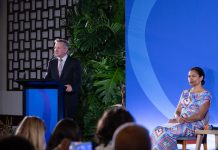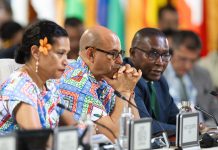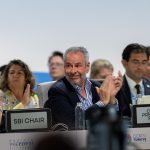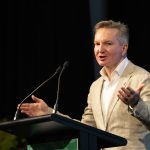
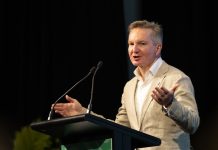
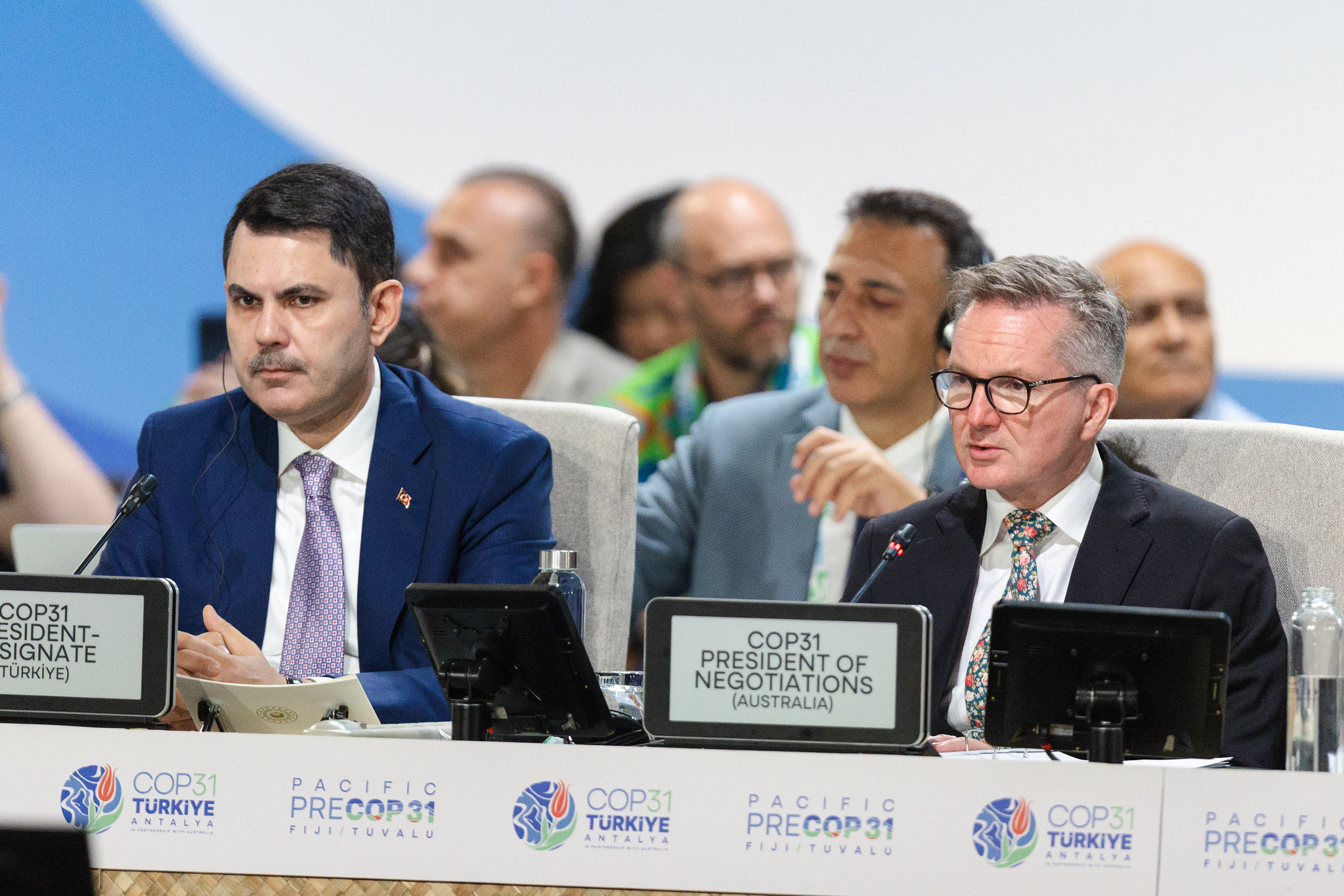
Australian Climate Change and Energy Minister Chris Bowen says Australia has used the Pacific Pre-COP31 to elevate the region’s climate priorities internationally, arguing that vulnerable island countries must have a stronger voice in global climate negotiations.
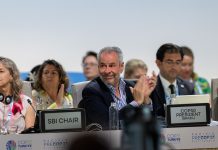
Bowen said the attendance of 53 ministers, prime ministers and presidents at the Fiji meeting, including a visit by senior officials to Tuvalu, had helped highlight the urgency of climate action and the need for faster access to climate finance.
He said the visit gave major emitters and other countries an opportunity to hear directly from communities experiencing the impacts of climate change.
“We wanted to really make sure that the Pacific, who’s been trying to get issues like access to finance and the importance of oceans on the COP agenda for years, has a better chance.
“And I think that objective was met,” Bowen said.
Bowen said several leaders had described the visit to Tuvalu as informative, particularly in understanding why countries needed to do more and act faster.
He said Australia’s support for Pacific climate priorities was important both as a matter of responsibility and for its strategic interests in the region.
“The Pacific Islands’ number one, two and three issue, which is climate change, is also one that we are working with them to elevate on the world stage,” he said.
“That’s important for moral reasons from my point of view, but it’s also vital for Australia’s geopolitical best interests in the region.”
Bowen, who will serve as COP31 President of Negotiations alongside Türkiye’s COP31 presidency, said Australia was pushing for a global target to increase electrification to 35 per cent by 2035.
He said electrification was necessary alongside existing international commitments to triple renewable energy capacity and double energy efficiency by 2030, agreed at COP28 in Dubai.
“We also need to electrify those things that can be electrified,” Bowen said.
He said Australia had been working with the Turkish Government, the International Energy Agency(IEA) and other partners to identify ways to shift energy use from fossil fuels to electricity.
“If we are to have any chance of holding the world to 1.5 degrees of warming, we need to get to that 35 per cent by 2035 level,” he said.
Bowen said Australia was engaging with countries including China, India, Saudi Arabia and the United Arab Emirates on the electrification agenda.
He distinguished the voluntary pledge, which countries could sign, from the formal COP negotiations, where decisions must be reached by consensus among nearly 190 countries.
“The negotiations are done by consensus — we’ve got to get 190 countries to agree,” he said.
“Ultimately, that’s the challenge for the negotiations, and Australia is Chair of the negotiations.”
Bowen said advancing the electrification agenda would require Australia to work with Türkiye and Pacific countries in a complex geopolitical environment.
He said the partnership was an opportunity for Australia to use its influence as a middle power to help shape international climate action.
“That’s an important part of the agenda, it’s an important part of the COP, and it’s an important part of Australia stepping up as a middle power, working with Turkiye in a very contested geopolitical environment,” Bowen said.
He said Australia would continue working with its Pacific partners and Türkiye to push for stronger global climate commitments ahead of COP31.