



By PACNEWS Editor, Makereta Komai in Amami-Oshima, Japan
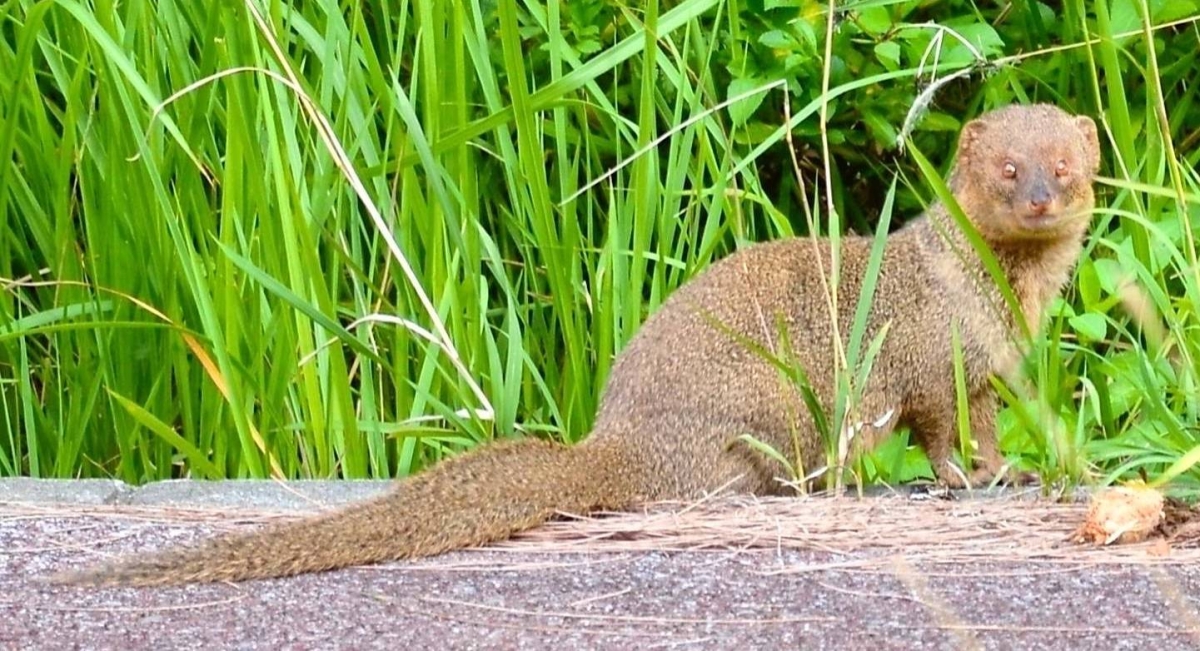
A 20-year partnership between the Japanese Government and local communities has successfully eradicated the Asian mongoose from Amami-Oshima Island, one of the four islands designated by UNESCO as a World Heritage site in southwestern Japan.
The eradication programme cost about JPY3.6 billion (about USD$24 million) and was officially declared successful in 2024, after 45 years since the first mongooses were released on the island.
About 30 mongooses were introduced to Amami-Oshima in 1979 to control venomous habu snakes and rats.
Instead, the mongoose became a major threat to the island’s native wildlife, including the endangered Amami black rabbit.
Ichihito Yamamoto, a ranger at the Amami Wildlife Centre, said the mongoose population grew rapidly and reached an estimated 10,000 by 2000.
“As the mongoose population increased, native species such as the Amami rabbit, Amami spiny rat and Amami Ishikawa frog began to decline,” he said.
The Japanese Government, through the Ministry of Environment, introduced the Invasive Alien Species Act in 2005, allowing a major eradication programme to begin.
Yamamoto said removing the mongooses from the island’s mountainous and difficult-to-reach areas was a major challenge.
This led to the formation of the Amami Mongoose Busters in 2005, bringing together local people with professional trapping skills.
The group used traps and specially trained detection dogs to track mongooses and locate their hiding places.
By 2018, more than 32,000 mongooses had been captured.
The Japanese Ministry of Environment also introduced a bounty system, initially paying JPY2,200 (USD$31).
Yamamoto said the eradication programme was successful because of the strong partnership between government and local communities.
“I am 99.9 percent sure that all the mongooses have been removed from the island,” he said.
However, traps are still being kept in some areas in case any mongooses remain.
“This is an example of what can be done when the government and citizens work together to protect the environment from invasive species,” Yamamoto said.
He said wild goats are now emerging as another concern for the island’s biodiversity.
Amami-Oshima was among three other islands as a UNESCO Natural World Heritage site in 2021 because of its rich biodiversity.
The island is home to Japan’s largest subtropical evergreen forest and thousands of species of plants, insects, birds, amphibians and mammals.
But invasive species and road kills remain a challenge.
Yamamoto said about 160 endangered Amami black rabbits are killed on the island’s roads every year.
Fighting invasive species together
The experience of Amami-Oshima offers an important lesson for Pacific Island countries that continue to fight invasive species.
In Fiji, the Asian mongoose remains a major threat to the critically endangered Fiji crested iguana on Yadua Taba, a small island off the northwest coast of Vanua Levu.
Yadua Taba is managed as a protected sanctuary by the National Trust of Fiji, with strict measures to keep invasive predators such as mongooses, feral cats and rats off the island.
The island is home to about 12,000 of the estimated 13,000 Fiji crested iguanas left in the world. A single mongoose reaching the island could have a serious impact on the population.
Like Amami-Oshima, mongooses were introduced to control rats. They were brought to Fiji in 1883 during the colonial period to protect sugar cane fields.
Fiji is now implementing a Species Action Plan for its iguanas, focusing on habitat protection and restoration, invasive predator control, better forestry and farming practices, and working with local communities.
The success of Yadua Taba in protecting the Fiji crested iguana has also made the species a symbol of the island nation’s biodiversity conservation efforts.
The experience of Amami-Oshima shows that removing invasive species can take decades, significant investment and strong commitment.
But it also shows that when governments and communities work together, there is a greater chance of protecting native species and the environment for future generations.