Home Blog Page 1242

Australia announces additional $15m for cyclone recovery in Fiji

School children in cyclone affected areas will benefit from an additional F$15 million package of support that was announced today by Australian High Commissioner to Fiji, John Feakes.

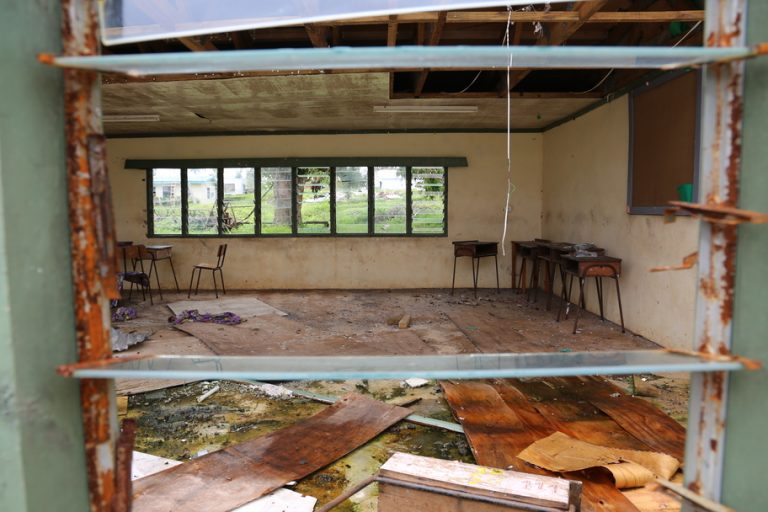
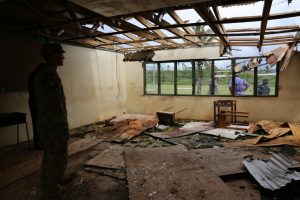
The new package of Australian support will assist the Fijian Government to reconstruct schools damaged or destroyed by Tropical Cyclones Yasa and Ana.

High Commissioner Feakes said Australia is pleased to be able to support its Fijian vuvale to ensure Fijian children could continue to access a quality education.

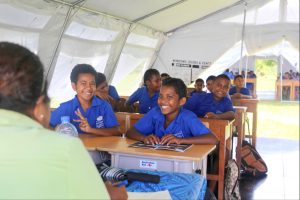
Fijian school children in tent classroom. Photo DFAT Public Affairs Suva

“Fiji’s next generation of leaders need safe and high quality facilities to ensure they can maximise the benefits of their schooling,” he said.

With this package of support, local contractors will be engaged to repair the schools, providing a much needed boost to local families and communities.

Damaged classroom. Photo: DFAT Public Affairs Suva

“Australia’s support will help create employment and provide an income to families who have been suffering from the dual blow of COVID-19 and tropical cyclones,” Feakes continued.

This new package of assistance follows initial lifesaving support in response TCs Yasa and Ana valued at around FJ$11 million.

SOURCE: Australian High Commission Suva/PACNEWS

Pacific Aviation Safety Office to focus on Pacific regional cooperation and operational stability

Fostering Pacific regional cooperation and organisational operational stability are the focus for the Pacific Aviation Safety Office (PASO) over the next twelve months to enable continued delivery of aviation safety and security Member services agreed the PASO Council of Directors at their Annual General Meeting.

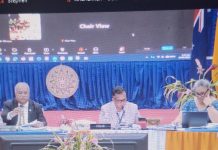
The PASO Annual General Meeting on Thursday, 11 March 2021 was attended virtually by representatives from eight signatories of the Pacific Islands Civil Aviation Safety and Security Treaty (PICASST) and two Associate Members.

PASO Council representation included Pacific government executive level transport and foreign affairs officials from Australia, Cook Islands, Kiribati, Nauru, New Zealand, Niue, Papua New Guinea, Samoa, Tuvalu, and Vanuatu. The Singapore Civil Aviation Authority also attended on the invitation of the PASO Council.

The PASO Council considered PASO’s annual performance and direction, including improved governance arrangements, continued operational strengthening, corporate compliance, strategic partnerships and donor support, and noted the ongoing preparations for the virtual Regional Aviation Ministers Meeting (RAMM) in April.

PASO Council elections

In accordance with the PASO Constitution, the PASO Council conducted elections for the Council Chairperson and Deputy chairpersons at the Annual General Meeting.

Member State Samoa was unanimously re-elected to Chair the PASO Council. Magele Hoe J. Viali, the Secretary of Transport, Chief Executive Officer and Director General of Civil Aviation will continue as the PASO Chairperson.

Niue was appointed unopposed as the Deputy Chair of the Council and Chair of the Technical Sub-Committee by the PASO Council. Bill MacGregor, Director of Niue Civil Aviation, and a long-serving member of the PASO Council will perform the role on behalf of Niue.

With this change in PASO Council leadership, the Council of Directors took the opportunity to note Vanuatu’s long standing service and thanked them for their contribution to PASO in this capacity.

The Cook Islands was re-appointed unopposed as the Deputy Chair of the Council and Chair of the Finance Sub-Committee. John Hosking, Secretary of Transport for the Ministry of Transport will stay in the role on behalf of the Cook Islands.

Strong organisational growth

The PASO Council recognised PASO’s strong service delivery and organisational strengthening achievements over the previous twelve months despite the operational challenges of the COVID-19 pandemic.

The PASO Council Chairperson, Magele Hoe J. Viali said:

“Amidst the COVID-19 pandemic there became an increasing need to improve PASO’s services for our Members and to ensure PASO is fit-for-purpose with a new organisational structure that allows better collaboration, and coordination, and encourages greater efficiencies for our Members.”

“Now the key emphasis for PASO is maintaining stability, strong governance, and organisational effectiveness to support our Members with their economic recovery efforts. Pacific aviation safety systems must be robust for when borders eventually open. We must be prepared.”

“PASO is moving forward, and we are making progress at last, despite these hard times. Hopefully with the vaccine programme being rolled out it will enable some travel restrictions to be lifted so our aviation safety inspectors can attend to work on the ground,” said Viali.

Nauru’s Director of the Civil Aviation, Dominic Tabuna at the meeting said:

“We commend PASO for strategically addressing the Pacific’s need for an integrated and harmonised regulatory system to support aviation safety and enable connectivity. This good work is critical and will benefit all PICASST Signatories, and we are grateful for PASO’s assistance.”

The Council heard that PASO will embark in coming weeks on virtual country consultations and regional engagement in advance of the RAMM preparations and endorsement of individual country service-level agreements.

Strategic Partnerships

The PASO Council recognised that the Australian Government’s AUD$2 million COVID-19 PASO Support Package for 2021 would assist with organisational stability and technical advisor service delivery.

The funding support is directed at assisting PASO to provide aviation safety oversight services directly to Members to increase their aviation safety and security compliance levels to meet international obligations under the Chicago Convention.

“We are very grateful to the Australian Government for their strategic donor support in recognition of the economic hardship and aviation security challenges PASO and its Member countries have faced this year with the COVID-19 disruption. Australia’s assistance ensures our Members are supported during these challenging times and can continue their required aviation safety oversight,” said Viali.

“This strategic funding support enables PASO’s Technical Advisor Programme, which includes provision of expert advice and assistance from six technical aviation advisors for a period of 12-months in the areas of aerodromes and ground aids, air navigation, airworthiness, and flight operations,” said PASO’s General Manager, Andrew Valentine.

PASO is well positioned to rapidly meet the needs of Members in 2021 and will have sufficient resources to respond to requests for technical assistance.

“We continue to appreciate the financial support from our other strategic partners, including the Vanuatu Government as host of PASO, the World Bank funded PASO Reform Project, and the New Zealand Government for PASO core funding and indirect support via PASO’s USOAP programme,” concluded Valentine.

The Council also welcomed Singapore’s participation at the meeting and was pleased to hear of their continued commitment to capacity building for Pacific Island civil aviation authorities.

A PASO Special Council meeting is scheduled for 24 March 2021 for the PASO Council to progress RAMM arrangements in collaboration with Members of the Pacific Island Forum Secretariat.

SOURCE: PASO/PACNEWS
The EU and the Pacific: global tax governance

0

Written by Sujiro Seam

The European Union (EU) “tax list” is the primary instrument of a more ambitious agenda to promote the principles of tax good governance around the world, to curb tax fraud, tax evasion, tax avoidance and to ensure a level playing field for all taxpayers.

In this respect, the EU’s first focus has been to put its own house in order.

In the past few years, the EU has adopted and implemented new tax standards and rules on transparency, tax avoidance, fair taxation and anti-money laundering. The EU tax transparency framework, beyond the benchmark of international standards, provides for automatic exchange of information. EU Member States have agreed on anti-tax avoidance rules to clamp down on key aggressive tax planning structures. The EU has made proposals for the fair taxation of the digital economy. Recent EU anti-money laundering legislation also required Member States to set up centralised registers of Ultimate Beneficial Owners of companies and to make key parts of this information publicly available.

The EU has systematically scrutinised its own Member States’ tax regimes since 1998. This does not mean there is no room for improvement, and loopholes will continue to be addressed. But the EU holds itself to very high standards when it comes to tax good governance, in some cases higher than those applied to third countries.

Between third countries, the EU “tax list” does not discriminate.

The EU “tax list” is based on the same objective, transparent and clear criteria for all countries, reflecting tax good governance standards elaborated at international level, in particular the Global Forum on Transparency and Exchange of Information for Tax Purposes and the G20/OECD Inclusive Framework on Base Erosion and Profit Shifting (BEPS) minimum standards. Not only small countries have appeared on the EU “tax list”. G20 countries such as Australia, Turkey and South Korea (on the so-called “grey list”) have also been asked to make commitments to enhance their cooperation with the EU and to improve their tax systems.

As of 22 February 2021, four Pacific island countries (Fiji, Palau, Samoa and Vanuatu) and two Pacific territories (American Samoa and Guam) remain on the EU “tax list”. Focusing on the former group, Fiji, Palau and Vanuatu appear on the list because of shortcomings with respect to the Global Forum on Transparency and Exchange of Information for Tax Purposes and the OECD Multilateral Convention on Mutual Administrative Assistance in Tax Matters, so it is incorrect to assume that most Pacific countries are already compliant. In addition, Fiji and Samoa have “harmful preferential tax regimes” and Vanuatu “facilitates offshore structures and arrangements aimed at attracting profits”.

To resolve tax issues, the EU has stepped up its cooperation with the Pacific.

Through dialogue, the EU has provided explanations, clarifications and technical advice to third countries. In the Pacific, this cooperative approach has been successful for Cook Islands, the Republic of Marshall Islands, Nauru, Niue and New Caledonia (an Overseas Country and Territory of France), which have all been removed from the “tax list”.

The EU is serious about helping jurisdictions to comply with international tax good governance standards. The EU “tax list” has enabled many countries around the world to improve their transparency standards, and has reformed over 130 harmful tax regimes worldwide. It has also prompted a new level of dialogue between the EU and its international partners on tax issues, which affect all countries.

For the Pacific countries that remain on its “tax list”, the EU continues to offer, through high-level political dialogue, substantial technical and financial support to tackle tax abuse and strengthen local administrations.

At the end of the day, Pacific countries will benefit from tax good governance.

Ultimately, tax evasion and avoidance affect everyone. However, global tax abuse has a disproportionate impact on the revenues of small and developing countries. According to the recent report by Tax Justice Network, developing countries’ tax losses are proportionally larger when compared to the tax revenue they typically collect. Pacific countries, as with all countries around the globe, can gain from addressing unfair tax competition and harmful tax practices…..PACNEWS

This article is in response to “Impact of the EU tax blacklist in the Pacific” by Roneil Prasad on 03 March, 2021.

Sujiro Seam is the Ambassador of the European Union for the Pacific and this text reflects his personal views.


SOURCE: DEVPOLICY.ORG/PACNEWS


Former NRL star Jarryd Hayne found guilty of sexual assault

NRL superstar Jarryd Hayne has been told by a judge a jail sentence is “inevitable” after he was found guilty of sexually assaulting a woman at her Newcastle home two-and-a-half years ago.

After three days of deliberating a jury on Monday afternoon found Hayne, 33, guilty of two counts of sexual intercourse without consent.

He was found not guilty of the more serious charges of aggravated sexual intercourse without consent, recklessly inflicting actual bodily harm.

Following a seven-day trial in Sydney’s Downing Centre District Court, the jury of seven men and five women found the two-time Dally M winner and ex-NFL convert guilty of the two alternative charges of sex assault.

The crown prosecution applied for Hayne to be taken into custody immediately.

But Hayne’s barrister Richard Pontello SC successfully argued for him to be given bail on the condition he hand over a $50,000(US$38,861) surety.

Judge Syme granted bail so that he could organise accommodation for his family and for psychological reports to be compiled.

Hayne will now face a sentencing hearing on May 6 in Newcastle District Court.

He is facing a maximum possible sentence of 14 years in jail.

“A custodial sentence is inevitable,” Judge Syme said.

Hayne pleaded not guilty and denied sexually assaulting the then 26-year-old woman at her home at Fletcher, on Newcastle’s outskirts, in September, 2018.

His first trial in Newcastle last year ended in a hung jury, however the jury of seven men and five women found him guilty of performing oral and digital sex on the woman without her consent.

During her evidence, which was replayed from Hayne’s first trial, the woman said she refused to consent to sex because the ex-Parramatta fullback had a taxi waiting outside.

He had been in Newcastle for a two-day buck’s party and had organised to pay a cab driver $550 to take him back to Sydney, where he was required to attend an event at Alexandria at midnight.

The woman, who cannot be named for legal reasons, said when she heard the taxi beeping outside her bedroom window she resolved there was “no way” she was going to consent to sex.

“Like my heart dropped because I felt like he had only come there for one thing,” she said.

“Like why would you get (the taxi driver) to wait outside for you for 20 minutes.

“I felt saddened because I felt like he must have only seen me in one type of way.”

She said the presence of the taxi made her feel “like absolute crap” and “sad and stupid for flirting with him to start”.

“He doesn’t want to meet me or have a conversation.”

The pair had communicated via social media for several weeks leading up to the incident but had not met face to face before the evening of September 30 — the same night as the NRL grand final.

Hayne was drinking on the taxi ride to the woman’s house and left the empty bottle of a pre-mixed alcoholic drink on the letterbox.

He said he went into the woman’s bedroom and lay on her bed where he attempted to serenade her by singing along to some of his “go-to” songs on YouTube, including an Ed Sheeran cover of Oasis’s Wonderwall.

According to the woman, he forcibly kissed her during and pushed her head into the pillow.

She described being overpowered by Hayne, who she said pulled off her jeans before sexually assaulting her despite her attempts to stop him.

She described his actions as being: “Forceful and fast, that’s why I can’t say for sure how the injury was done.”

The woman suffered two lacerations and began bleeding about 30 seconds into the sexual encounter.

A video recorded by the complainant, which was played to the jury, showed her bed and pillows covered in blood.

While Hayne got up to wash his face in the bedroom’s ensuite, the woman got in the shower and said that the injury was “stinging like mad” as she watched the water run red down the drain.

After asking if a $50 note on the bed was hers, he left on the trip to Sydney.

Soon after, the woman sent him a string of text messages saying “I am hurting so much” and “I know I’ve talked about sex and stuff so much but I didn’t want to do that after knowing the taxi was waiting for you”.

Hayne replied: “Go doctor tomorrow.”

She also messaged another friend saying he was “rough” and that he “ended up getting his hand down there”.

“I said ‘stop’ and stuff and then I kind of just let it go because he was so into it and pushy,” she said.

“I just feel like I let it happen to myself by not screaming at him.”.

SOURCE: FOX SPORTS/PACNEWS

Fiji explores quarantine free regional travel

-Fiji is meeting with regional countries to explore potential quarantine-free travel.

Minister for Tourism Faiyaz Koya said hey have had some discussion with New Caledonia and Tuvalu on this possibility.

“We have had an introductory meeting with New Caledonia and Tuvalu’s health officials to try and explore some quarantine-free travel and of course there are a number of variables to consider on this. Discussions with New Caledonia have been put on hold in light of their community outbreak.”

Koya said the discussion with Tuvalu is progressing well and they are sharing health and COVID safe protocols.

The Minister said this will ensure that the Pacific pathways will continue to progress as well.

SOURCE: FBC NEWS/PACNEWS


New forest portal to shine a light on PNG’s logging industry

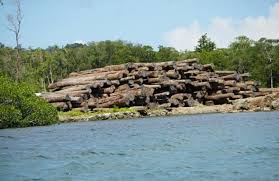
For more than twenty-five years, deep in the remote and inaccessible tropical forests of Papua New Guinea, a huge industrial complex has been operating; foreign owned companies have been bulldozing tracks, felling huge trees, cutting logs and dragging them to the coast to be loaded onto ships and sent overseas.

According to official records, since 1993, at least 78 million cubic metres of unprocessed logs, with a declared value of around US$8 billion (K28 billion), have been exported from the forests of PNG.

It is an industry that has attracted much criticism. Rampant corruption was first laid bare in the seminal Barnett Commission of Inquiry, but a new Forestry Act that followed did little to stem the tide.

Allegations of illegal logging, human rights abuses, violence, trespass, environmental damage and unsustainable logging have all be born out in numerous court cases, published reports and even television documentaries; but nothing seemingly has ever changed.

More than one hundred and fifty different companies have been involved in the plunder. Some of them, like Rimbunan Hijau and WTK have become household names, but most remain anonymous and unknown.

Who are the companies that have been involved in the industrial logging of PNG forests? Where have they operated? How much timber have they exported? And on what legal basis?

These are all questions that until now have had no answer; the anonymity of the logging industry is one factor that has allowed it to operate with impunity.

But a new online forest portal, PNGi Forests, is about to change that.

The new portal www.pngiforests.org combines data collected from a number of different sources and dating back to 1993 to shine a light onto Papua New Guineas industrial logging industry.

PNGi Forests allows the user to search and filter information on logging companies, their ownership, their logging operations and their exports.

Log export volumes and other data is displayed in interactive graphs and the information can be easily download in csv files.

Users can quickly and easily see which logging companies have been operating in which forests and when, how much timber they have exported and the type of logging licence they have.

Data can also be accessed according to Province, logging concession, concession type and for specific years.

The Portal also reveals who the logging company shareholders and directors are and the ownership links between the different companies.

Adding another layer, the Portal also lists the court cases, official inquiries and published reports the individual logging companies and concessions have been mentioned in.

The user can view and read individual documents online, all without leaving the Portal….

SOURCE: PNGI FOREST/PACNEWS

ANZ extends fee waiver for money transfers to Pacific

0

ANZ will extend its fee waiver until September 2021 for online foreign currency payments made from Australia and New Zealand into 10 Pacific countries.

Latest figures show the value and volume of transfers made by ANZ customers to the Pacific has increased substantially on the same period last year.

In February 2021 ANZ Australia and New Zealand customers sent a combined volume of 8,761 International Money Transfers worth AUD$12m(US$9.2 million – a 95 percent increase in volume and 33 percent increase in value compared with the same period last year.

Money sent back to the Pacific from overseas, known as remittances, can make up a large part of a Pacific household’s disposable income – up to 25 percent.

ANZ Regional Executive Pacific Tessa Price said the move will provide some relief for ANZ customers during a difficult period.

“With industries like tourism drying up due to Covid-19 restrictions, many families are still unable to generate the income they desperately need,” she said.

“It’s great to see many Pasifika families in New Zealand and Australia taking advantage of the fee waiver and sending more money home to help”.

ANZ Pacific Economist Kishti Sen said the biggest boost to household disposable income growth in recent years has come from private inward remittances.

“A combination of factors contributed – obviously, at the top of the list is the Pacific shared identity of ‘stronger together’ – sticking together when it matters most,” he said.

“A huge part of Pacific culture is about taking care of each other.

“Ongoing employment in the essential service sectors like healthcare, construction and manufacturing of the developed world also helped, along with hefty government income support payments to households in remitting countries.

“More recently, a restart of the seasonal worker programme and a stronger Australian and New Zealand dollar has contributed also, as well as the lower cost of remittances,” said Sen

ANZ customers in Australia and New Zealand can send money electronically with no ANZ transfer fee, using ANZ Internet Banking (from both Australia and New Zealand) and the ANZ GoMoney App (from New Zealand only), until the end of February 2021.

The waiver applies to any foreign currency international money transfer sent from Australia and New Zealand to the following Pacific countries: Cook Islands, Fiji, Kiribati, New Caledonia, Papua New Guinea, Samoa, Solomon Islands, Tonga, Timor Leste and Vanuatu. Usual foreign exchange rates and terms and conditions will still apply.

For certain currencies, a correspondent bank may charge a fee for processing the payment to the beneficiary bank and the beneficiary’s bank may charge the beneficiary fee(s) for receipt of the payment. Additional fees may also apply when using an ANZ Credit Card.…PACNEWS

SOURCE: ANZ/PACNEWS

Fiji Parliament urged to ratify PIF 2005 Establishing Agreement

The Standing Committee on Foreign Affairs and Defence in Fiji has recommended to Parliament to ratify the 2005 Agreement establishing the Pacific Islands Forum (PIF).

“Fiji is the only country that has yet to ratify the 2005 Agreement and since it will be hosting and chairing the PIF Leaders Summit in 2021, it would be timely for Fiji to ratify the Agreement, said committee chairperson, Alexander O’Connor in his report to Parliament today.

The Committee said endorsing the Agreement will ‘signal to PIF member countries that Fiji has committed itself to accepting membership of the PIF and all the duties and obligations that flow from it.”

“Fiji would be demonstrating its strong commitment to the PIF by making the 2005 PIF Agreement part of the statutory laws of Fiji. Without ratification by Parliament, this regional agreement is not legally binding on Fiji notwithstanding Fiji’s signature of it.

Fiji is the designated depository to the 2005 PIF Agreement and it cannot lawfully exercise this role unless it has consented to the Agreement.

“By ratifying, Fiji would strengthen its leadership role and avoid fragmentation of the Pacific Island Forum which looked up to Fiji for guidance on issues of regional interest.

“Fiji should assert itself as the custodian of its regional and international organisations and move the process of consolidation forward,” said O’Connor.

He said Fiji has a duty of care for smaller island states and not just its national interest.

“Fiji is well positioned to use the Pacific Way as a means of engagement within the region. Fiji should have the political will and moral responsibility to do it because the Pacific Islands look up to Fiji as the centre of the Pacific.

“Fiji has been very much a part of the PIF from the very beginning, even while the country was suspended post-2009. With its more recent leadership role internationally, through acquiring prominence in Climate Change and Oceans crisis facing the planet, these assets continue to enhance the profile of our region in world forums. Fiji is friend to all and enemy to none.

Significant changes in the 2005 Agreement include the establishment of the Pacific Islands Forum as an international organisation. The role of the Forum is also expanded beyond economic development and trade, to “economic growth, sustainable development, good governance and security.

“Fiji’s ratification will be significant for the region as it is the final act required to bring into force the 2005 Agreement, and thus set in motion the next chapter of the Forum.

“The incorporation of the 2005 agreement into the statute laws of Fiji is important in the event disputes arise over, for example the privileges and immunities of Fiji based Pacific Islands Forum Secretariat (PIFS) and other CROP agencies as well as their respective expatriate staff under the Diplomatic Privileges and Immunities Act, said O’Connor.

The six member Standing Committee in its deliberations heard submissions from the Office of the Solicitor-General, the Ministry of Foreign Affairs (MOFA), Pacific Islands Forum Secretariat (PIFS), Jioji Kotobalavu of the University of Fiji, Professor Steven Ratuva, University of Canterbury, New Zealand, University of the South Pacific, South Pacific Tourism Organisation (SPTO) and the Pacific Islands Development Forum (PIDF).

The recommendation will be debated at a later sitting of Parliament.

SOURCE: PACNEWS

PNG Health facilities need staff as COVID-19 cases continue to rise

Health facilities in the capital city of Papua New Guinea are facing manpower crises as a direct consequence of the exponential increase in the Covid-19 cases.

National Capital District (NCD) health authority acting chief executive officer Ken Wai said the Gerehu Hospital, which was the only major hospital apart from the Port Moresby General Hospital (PMGH), was closed because many of the staff had contracted the Covid-19.

Wai said the hospital could not continue to close because people depended on it hence, they were working around the clock to have it opened.

“I am organising new short term contract staff (STCS) to help us and it will be opened today (Monday),” he said. “More staff are falling ill with the Covid-19 so we will recruit 10 more STCS for Gerehu Hospital and 57 STCS have already been hired and are operating Rita Flynn Covid-19 centre for the last two weeks.

“More awareness has been done throughout the city for two weeks by our public health staff.

“The National Capital District Commission came in big to go out to 75 hot-spots to do awareness from Friday to Monday.

“Today, (we) met to enforce the prevention measures with police, military and Road Transport Association.

“Clinically, triaging and testing is continuing and we are managing patients at PMGH, Rita Flynn and the Taurama Aquatic Centre will be opened on Thursday.”

Wai said as of Monday there were 31 Covid-19 patients at Rita Flynn.

The closure of Gerehu Hospital has put a strain on PMGH as patients were all going to the country’s major referral hospital according to the chief executive officer Dr Paki Molumi.

Due to growing number of staff getting infected, on March 8 the hospital announced that it would be scaling down and prioritising its services over the next two weeks.

Dr Molumi said the hospital experienced a huge surge in the last two weeks which saw more than 200 cases reported which include staff, patients and guardians.

He said more than 100 staff were isolated and six to eight cases were reported at the hospital daily with a trend of 70 per cent infection rate in positive cases.

Meanwhile, PNG’s only public ambulance service is under pressure as the number of the Covid-19 cases continue to increase in the National Capital District.

Apart from maintaining the normal ambulance services, St John Ambulance was responsible for transporting Covid-19 patients from home and between health facilities, chief executive officer Matt Cannon said.

“We are feeling significant pressure in terms of ambulance cases,” he said.

“Due to the degree of decontamination required, it is essential ambulances are thoroughly decontaminated between patients. We have brought in more ambulances and we have rostered on extra ambulance officers, but we are seeing that the demand for emergency services exceeds what is available.”

Cannon said there would be longer waiting times for ambulances during this period as the response to the Covid-19 emergency took up the service’s available resources.

“We ask people to be patient, kind and respectful towards our staff,” he said.

Cannon said more people were tuning up for testing at the drive-thru testing facility facilitated by SJA at the Taurama Aquatic Centre.

SOURCE: THE NATIONAL/PACNEWS

Bougainville Speaker infected with Covid-19

The Speaker of the Bougainville parliament, Simon Pentanu, has confirmed that he has Covid-19.

Pentanu said he was now into day 5 of 14 days in isolation.

His infection comes as part of a surge in Papua New Guinea of Covid-19 infections, where there were now over 3,000 cases and at least 36 deaths.

In the autonomous region of Bougainville, the number of infections was still being measured in the dozens, with no known deaths.

Pentanu, in a Facebook post, wrote:

“I have no qualms coming out in public about this. I am now in isolation on 14 days lockdown. I would not wish this on anyone, least of all on members of the same family. It is not nice. Its morbidity in the country is serious, increasing and more than worrying.”

Pentanu’s revelation followed confirmation that Kerema MP Richard Mendani, who was 53, died of Covid-19 over the weekend.

Mendani had initially been diagnosed with pneumonia before Covid-19 was confirmed.

Over a dozen members of the PNG Parliament have been diagnosed with the coronavirus since the beginning of the pandemic.

SOURCE: RNZ PACIFIC/PACNEWS

Stay connected

529FansLike
172FollowersFollow
156SubscribersSubscribe
- Advertisement -