
Home Blog Page 1227

Fisheries Operation celebrates 20 years of protecting Pacific waters

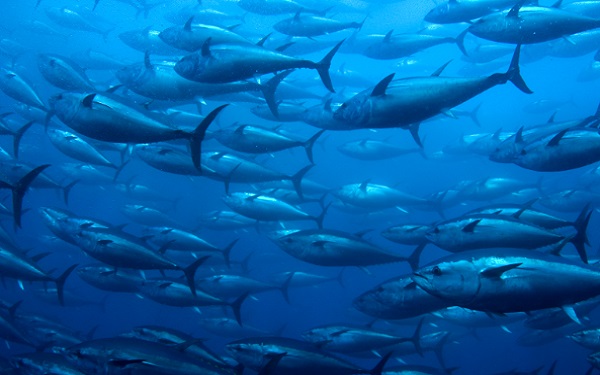
Operation Tui Moana, a regional fisheries surveillance operation covering the Exclusive Economic Zones (EEZs) of Cook Islands, Fiji, Niue, Samoa, Tokelau, Tonga and Tuvalu as well as associated high seas, marked 20 years of protecting this important Pacific resource.

Pacific Islands Forum Fisheries Agency (FFA) Director of Fisheries Operations, Allan Rahari reflected that recognising the contribution of Operation Tui Moana to the protection of over six million sq kms of ocean is particularly relevant as the world celebrates UN International Day for the Fight against Illegal, Unreported and Unregulated Fishing (June 5).

“In my own experience of working on Tui Moana over the last 13 years I’ve seen a real evolution in how we respond to illegal, unreported and unregulated fishing,” said Rahari.

“We see less “dark”, or unlicensed, vessels but are responding to more issues around licensed vessels contravening their conditions, especially though misreporting and under-reporting their catches and through unauthorised transhipment.

“We have increasingly focused on intelligence gathering and analysis, providing targeted information before and during operations in order to support surveillance activities by Pacific countries. Utilising the latest technology such as dark vessel detection and satellite monitoring has also improved our success rates.”

FFA’s Director General, Dr Manu Tupou-Roosen acknowledged the importance of Pacific collaboration in securing the region from illegal activities.

“This is a significant milestone in our commitment to protecting our economically important fisheries.” said Dr Tupou-Roosen.

“We are so grateful to our Members and partners for standing with us to deter illegal, unreported and unregulated fishing in our waters over such a significant amount of time. The strength of our partnerships has been especially notable and enhanced during the COVID-19 crisis.”

Despite the challenges of Covid, five Pacific patrol vessels were scheduled to participate in Operation Tui Moana this week, alongside one maritime surveillance aircraft from the Royal New Zealand Air Force.

FFA conducts four operations every year and Tui Moana is the second this year. FFA has been providing surveillance support to the Pacific region for 42 years.

Traditionally Pacific QUAD partners, Australia, New Zealand, France and the United States, provide support through aerial and surface surveillance, alongside the FFA Aerial Surveillance Programme aircraft and Pacific Island country patrol boats, further enhancing the maritime surveillance coverage during each operation.

SOURCE: FFA/PACNEWS

OFC competitions calendar rescheduled

International travel within OFC’s Member Associations continues to pose significant risks to the health and welfare of the Pacific community.

Taking this into consideration, the OFC Executive Committee has agreed to a range of changes to the football calendar, including the cancellation of this year’s OFC Champions League.

It will mark the second consecutive year that no winner of the Champions League will be crowned after last year’s competition had to be abandoned following the group stages due to the COVID-19 pandemic.

A number of options were explored for this year’s tournament but given the border closures throughout the Pacific it became impossible to operate the event.

A decision will be made no later than July 31 regarding which club will be nominated to represent Oceania at this year’s FIFA Club World Cup.

OFC General Secretary Franck Castillo said while it was disappointing to cancel more competitions, many Member Associations in the Pacific had made significant strides in the domestic game in the past year.

“While COVID-19 has presented many challenges, we have been thrilled to see the new women’s leagues in Papua New Guinea, Fiji and the Solomon Islands, while New Zealand’s refreshed National League structure represents a great investment in the long-term sustainability of the game,” Castillo said.

“We remain committed to running our competitions when we can safely and look forward to the return of international football in our region.”

In other changes, the OFC U-19 Women’s Championship that was due to be held in July has been rescheduled for next April, while the OFC U-16 Women’s Championship that was slated for September will be moved to June 2022.

These OFC events will serve as the respective qualifying tournaments for next year’s FIFA U-20 Women’s World Cup and FIFA U-17 Women’s World Cup.

This year’s OFC Futsal Champions League that was due to be played in December has been cancelled.

The OFC Youth Development and OFC U-15 Boys Centre of Excellence tournaments have been postponed until later in the year with an eye to play them if smaller regional bubbles open up in the Pacific.

“This is a crucial age for development in young footballers and we want to explore every possible option to give these players a chance to compete,” Castillo said.

The Qualifying Stage for the OFC Champions League 2022 that was scheduled for October has been pushed into next year.

The Executive Committee also agreed on a range of proposals that will impact the 2022 football calendar.

The OFC Champions League will be moved from its traditional slot at the beginning of the year to August; a revised format for the event will be presented at the next Executive Committee meeting.

In other 2022 amendments, the OFC U-19 Championship for men will be moved to August from July, the OFC Futsal Champions League will be brought forward from December to October, and the Qualifying Stage for the OFC Champions League 2023 will be moved from December to 2023.

A handful of events for 2022 have been cancelled, including the OFC Youth Champions League and the OFC Futsal Youth Development tournament due to congestion in the football calendar.

The previously rescheduled OFC Girls Centre of Excellence tournament and the OFC Youth Women’s Development tournament have been cancelled as those players will now be eligible for the OFC U-16 and U-19 Women’s Championship events taking place in 2022.

Expressions of interest will be sought in the coming weeks for a host for next year’s OFC Women’s Nations Cup that is scheduled to be played in July.

OFC will continue to explore its options around how the qualifying process for next year’s men’s FIFA World Cup will look.

SOURCE: OFC/PACNEWS

UNGASS: World leaders urged to take bold action to advance transparency and anti-corruption efforts

0

The UNCAC Coalition has responded to the very modest advances in the Political Declaration adopted today by world leaders meeting at the first-ever UN General Assembly Special Session (UNGASS) on the topic of corruption with a call for strong action and leadership by governments truly committed to the fight against corruption.

“Diplomatically-worded statements will not help the billions of people whose lives are damaged by corruption. We need leadership from the countries truly committed to preventing and fighting corruption at home and abroad,” said Mathias Huter, Managing Director of the UNCAC Coalition, a global civil society network of more than 350 non-governmental organisations committed to advancing the implementation of the UN Convention against Corruption (UNCAC).

The UNGASS Political Declaration, while containing some relevant commitments such as securing safe space for civil society and journalists, will not be sufficient to ensure substantive progress in global efforts to prevent corruption, hold perpetrators to account, and increase the recovery and return of stolen assets.

The Covid-19 pandemic has exposed massive shortcomings in governance structures around the world, with aid money and public procurement funds being stolen or diverted to those with political connections, depriving millions of access to health care and urgently needed help.

Governments need to learn the right lessons of this global health crisis – and the economic and governance crisis that has ensued:

*by strengthening public access to information, transparency of decision making, government contracting and spending, as well as ensuring the full disclosure of the direct and ultimate owners of companies and other legal entities;

*by guaranteeing an enabling environment for civil society organizations working on anti-corruption;

*by guaranteeing the protection and support of whistleblowers, investigative journalists, and anybody who uncovers and reports on corruption;

*by enhancing accountability mechanisms for public and elected officials;

*by ensuring that oversight institutions have the necessary powers, independence and resources to fulfil their roles effectively;

*by stepping up efforts to work with other jurisdictions to investigate, prosecute and hold accountable those involved in corruption, as well as those who facilitate it, such as brokers, agents, lawyers, accountants, auditors and banks; and

*by advancing the recovery and return of stolen assets in a transparent and accountable manner to repair the damages caused by corruption.

“In particular, the Political Declaration does not adequately address the urgent need for the international community to end the impunity of powerful individuals in large-scale corruption cases,” said Huter. “Following the UNGASS, governments need to work on implementing the commitments they have made – and they need to be public about what they are doing to follow up on their political promises. To ensure that anti-corruption reforms have the desired impact, governments need to work closely with civil society and other non-governmental stakeholders.”

“For the recovery from the pandemic to be effective, it must be free of corruption, which can only be achieved with full transparency and strong integrity measures,” said Helen Darbishire, Executive Director of Access Info Europe and Chair of the Board of the UNCAC Coalition.

“A particular priority is for governments to act to open company registers so that the structures used to launder money and avoid taxes worldwide can be eliminated – this one transparency measure could help save billions in lost tax revenue, reducing illicit financial flows, and securing the resources needed to recover from the pandemic and to advance with the Sustainable Development Goals,” added Darbishire.

Over the past year, the UNCAC Coalition and many of its member organizations have engaged with delegates involved in the preparation of the UNGASS Political Declaration, urging governments to step up their anti-corruption commitments and to scale best practice approaches worldwide.

Governments need to go beyond the consensus of measures agreed in the Political Declaration in their anti-corruption efforts, in particular by:

*adopting and implementing strong access to information laws that comply with international standards, recognizing a fundamental right of access to information held by State bodies, and by establishing independent commissions or commissioners to supervise the implementation of this law, and to promote effective and timely access to information;

*implementing open contracting approaches and ensuring full public access to information and to all documents and agreements throughout the lifetime of a contract, from planning to implementation, by publishing all state contracts online, including in standardized open formats such as the Open Contracting Data Standard;

*establishing freely accessible company ownership registers containing information on the direct and beneficial owners of companies, foundations, trusts and all other legal entities, with timely and accurate information that can be accessed easily and used by law enforcement and competent authorities as well as by the private sector, journalists, civil society and the general public;

*adopting and implementing measures to ensure adequate transparency and accountability in the financing of political parties and electoral campaigns, as well as independent, adequately resourced oversight of the finances of parties, candidates and campaigns;

*requiring annual public asset and interest declarations from public officials and elected leaders in decision-making positions, mandating that these declarations are made public online in easily accessible formats, ensuring the independent verification of the filings, and establishing and enforcing effective sanctions in cases of non-compliance;

*promoting a safe and enabling environment for civil society, guaranteeing the safety of anti-corruption activists, witnesses, whistleblowers, journalists and others who uncover and report on corruption, and by actively facilitating the participation of civil society and other non-state stakeholders in national, regional and international anti-corruption efforts;

*taking concrete steps to strengthen the capacity as well as the political and operational independence of institutions and oversight bodies that play a crucial role in national integrity systems, such as election commissions, regulatory and oversight bodies, anti-corruption bodies, financial intelligence units, law enforcement agencies, supreme audit institutions, the judiciary and parliaments;

*addressing weaknesses in legal frameworks and enforcement systems and ensuring effective investigations and enforcement of all domestic and foreign corruption offences; and by publishing detailed, comprehensive and timely data on criminal, civil and administrative investigations, charges, proceedings, outcomes and mutual legal assistance activity;

*adopting and implementing comprehensive legislation on reporting mechanisms and whistleblower protection in line with best practice and international standards; by ensuring transparent implementation in practice as well as robust protection from retribution and criminalization to all whistleblowers and their families, providing them with timely and effective assistance and resources as needed;

*taking effective action against the serious crime of grand corruption and encouraging the exercise of extraterritorial jurisdiction for the prosecution of the same on a national, regional and international level, in line with UNCAC Article 16.2;

*making settlement agreements public, including their terms of justification, the facts of the case and the resulting offences, providing for effective sanctions, and including reparations for damages caused by the corruption as part of the settlement agreement;

*recognising that corruption is not a victimless crime; by establishing legal frameworks to enable and facilitate the compensation of both individual and collective victims of corruption (communities); by increasing efforts to repair damages caused by corruption by providing victims with material and/or symbolic reparations; and by granting independent non-governmental organizations legal standing before all courts to represent individual and collective victims of corruption;

*advancing the recovery and return of assets, ensuring transparency and accountability at all stages of the process with the close involvement of civil society and in a manner that contributes to fulfilling the Sustainable Development Goals (SDGs) as well as to the reparation of the damage caused to victims and to society; by considering a new multilateral agreement and/or mechanism to overcome asset recovery roadblocks;

*acknowledging gendered forms of corruption, producing gender-disaggregated data on corruption offences, ensuring the criminalisation of sextortion, and creating safe and gender-sensitive corruption reporting mechanisms for women and other vulnerable persons;

*making the UNCAC implementation review process more transparent, inclusive and effective, including by committing to involve non-governmental stakeholders in the review process, publishing key documents of the review and information on the process, and by agreeing on a mandatory follow-up mechanism that reviews progress made on implementing recommendations from previous review cycles; and

*launching an inclusive mechanism for Member States, international organizations, experts, civil society representatives and other stakeholders to develop solutions to close gaps in the existing anti-corruption framework and address shortcomings in implementation.

SOURCE: UNCAC COALITION/PACNEWS

Fiji Rugby names men and women squad for PacificAus Sports Oceania Rugby SevensFiji Rugby names men and women squad for PacificAus Sports Oceania Rugby Sevens

0

Fiji Rugby Chief Executive Officer John O’Connor has welcomed the opportunity for our Fijian and Fijiana 7s teams to play important lead up against tough opposition in lead up to the Olympic Games in Japan next month.

Both the men and women’s teams will take part in the much-anticipated PacificAus Sports Oceania Rugby Sevens from the 25th to the 27th of this month in Townsville, Australia.

Fiji Rugby Chief Executive John O’Connor thanked the Australian Government and Oceania Rugby for supporting both the teams during this trying times.

“I would also like to thank Ministry of Health and the Fijian Government for their support to both teams as we battle against the second wave of COVID-19. We would like to thank the Australian Government and Fiji Airways in particular for their assistance in the arrangements to fly the players to Australia”.

Australian High Commissioner John Feakes said “We are delighted to be supporting Fiji’s travel to Australia to compete in this important event which will be critical for Fiji’s preparations for the Tokyo Olympics.”

Both teams depart for Brisbane tomorrow morning and will be in quarantine until the 18th of this month before traveling to Townsville for the tournament.

O’Connor said “It’s the first opportunity the teams now have to travel out of Fiji to get to play some international rugby game time.

“Australia and New Zealand have already competed against each other, while our plans have been to maintain our training programme to ensure our players reach their optimal international level,” O’Connor said.

In line with the Oceania 7s announcement, Fijian 7s Coach Gareth Baber and Fijiana 7s Coach Saiasi Fuli have named their respective 18-member extended squad.

Baber has named a mixture of experience and young players for the Oceania tournament.

After recovering well from an ACL injury, Kalione Nasoko makes his return and joins a powerful forward pack which consists of experienced players in the likes of Josua Vakurunibili, Meli Derenalagi, Kavekini Tabu and Asaeli Tuivuaka.

Tabadamu’s Iosefo Masikau, Barbarians and Nabua rugby clubs Taniela Sadrugu, Police 7s stars Rusiate Nasove and Joseva Talacolo completes the Fijian 7s thrilling forward-pack.

Baber has named two Olympic Gold medalists in the backline, World Rugby Player of the Decade Jerry Tuwai and Kitione Taliga.

Barbarians and Nabua winger Juita Wainiqolo, Sireli Maqala and Uluinakau’s Kaminieli Rasaku also join an exciting and entertaining backline.

Tuwai will captain the side.

Baber said the balance and combination of experienced as well as young talent is important.

“The new players named in the squad have done exceptionally well here in Fiji and have won a spot in the team because of their behaviour and performance during training sessions.

“Now the big test for them is to go-up against players they don’t know and face a different style of rugby in both defence and attack, and track themselves progressively, “said Baber.

Baber added that the Oceania 7s will set a platform which will give him an opportunity to gauge the players while playing against New Zealand and Australia.

He added through its usually difficult for an athlete to understand and be aware of their fitness-form as a player.

“Through-out the trainings we have had, we introduced periods of competition where we played against each other internally, in almost like an Olympic format.

“It is a hard prospect, normally we would have had competition such as World Rugby Sevens Series to play in, where we can measure each other against the rest of the world.

“We have improvised and have done that internally and I think the biggest thing for us now is just to give the players an opportunity to play against Australia and New Zealand,” said Baber.

Fijiana 7s Coach Saiasi Fuli says that it’s been a long wait and the team is glad to get an opportunity to play against Australia and New Zealand.

Fuli has named 7 forwards and 11 backs including Olympians Rusila Nagasau, Rejieli Daveua and Viniana Riwai.

Seasonal half-back Tokasa Seniyasi will captain the side and will be helped by Mereula Torooti, Lavena Cavuru, Ana Maria Naimasi, Roela Radiniyavuni and Aloesi Nakoci in the backline.

The newcomers in the squad are Lautoka trio Sesenieli Donu, Vani Buleki, Vasiti Solikoviti, Yasawa’s Bulou Rokodinono, Laisana Likuceva and Nadroga’s Reapi Ulunisau.

Fuli said “It’s a very good time for us to go and play in a competition and play against the top two teams in the world who have set the bench mark and are the best in the business.

“This is the only way we can measure our strength, team performance and individual players whom we can select later for the Olympic Games,” Fuli added.

Baber and Fuli are expected to name their final 13-member squad for the Olympic Games after the completion of the Oceania 7s tournament.

On the eve of the teams’ departure the CEO Fiji Rugby on behalf of the management and the teams travelling would like to acknowledge and thank all the front-liners for their commitment, sacrifice, hard work and dedication in the fight against COVID19 and keeping all Fijians Safe.

Fijian 7s Squad for Oceania 7s

Kalione Nasoko
Josua Vakurinabili
Meli Derenalagi
Kavekini Tabu
Iosefo Masikau
Asaeli Tuivuaka
Joseva Talacolo
Taniela Sadrugu
Rusiate Nasove
Jerry Tuwai
Livai Ikanikoda
Napolioni Bolaca
Waisea Nacuqu
Jiuta Wainiqolo
Kaminieli Rasaku
Sireli Maqala
Kitone Taliga
Alasio Naduva

Fijiana 7s squad for Oceania 7s

Sesenieli Donu
Rusila Nagasau
Vani Buleki
Vasiti Solikoviti
Bulou Rokodinono
Rejieli Daveua
Lavenia Tinai
Tokasa Seniyasi
Reijeli Uluinayau
Mereula Torooti
Viniana Riwai
Lavena Cavuru
Luisa Tisolo
Ana Maria Naimasi
Roela Radiniyavuni.

SOURCE: FIJI RUGBY/PACNEWS

Langkilde recalled to Manu Samoa 7s squad

0

Former international sevens player Gordon Langkilde has been recalled to the Manu Samoa training squad.

Lakapi Samoa General Manager, Seumanu Douglas Ngau Chun, confirmed when contacted by the Samoa Observer that Langkilde will join the training squad in New Zealand when his travel documentation is finalised.

He said the head coach Vaovasamanaia Seilala Mapusua made the call to get Langkilde to join the training squad.

“He (Langkilde) was not selected in the final Manu Samoa squad. The selection was made by Seilala himself and he saw four players who were ready for this,” he said.

“Our boys from Europe may not be able to travel due to borders and as you know we have players who are in the group (elite) who are ready to come when they are being called.

“But it’s the paperwork that will stand in the way because it has to go through Foreign Affairs to us and the process takes so much time.”

The Manu Samoa training squad had nine players with only four making the cut: Elisapeta Alofipo, Theodore McFarland, Joe Perez and John Vaili.

It is understood the other five players were supposed to be flown to New Zealand from Europe. They are Ah See Tuala, who is currently in England; Aj Alatimu in America; Seilala Lam in France; and Aki Seiuli and TJ Ioane who are both in Scotland.

Seumanu added that he is working with the manager to get the players to arrive before the test matches.

“I and the manager are constantly working on getting the players for these test matches, and hopefully they’ll make it in time,” he said.

“New Zealand has its own flight restrictions and we have no power over that so far our team is still in quarantine.”

The Manu Samoa squad is captained by the Crusaders prop, Michael Alaalatoa with the head coach being Vaovasamanaia Seilala Mapusua, assistant coach Mase Mahonri Schwalger and manager Su’a Hesed Ieremia.

Seumanu also traveled with the Manu Samoa training squad to New Zealand last Friday.

During the interview, Seumanu said Manu Samoa is preparing for all the four test matches with two against Tonga and two against the New Zealand Maori in Auckland and Wellington.

Langkilde was charged and pleaded guilty in 2018 for attacking opposition players after Samoa was defeated by Wales during the Sevens World Cup in San Francisco.

He was ordered to pay compensation to the victims and withdrew from playing rugby for a year, completing his suspension from the game in April last year.

SOURCE: SAMOA OBSERVER/PACNEWS

ONOC Digest – 49 Days to Go to the Tokyo Games

Fiji Rugby names men and women squad for PacificAus Sports Oceania Rugby Sevens (Fiji Rugby)

Fiji Rugby Chief Executive Officer John O’Connor has welcomed the opportunity for our Fijian and Fijiana 7s teams to play important lead up against tough opposition in lead up to the Olympic Games in Japan next month. He acknowledged and thanked the Almighty for allowing such opportunity in these challenging times. Both the men and women’s teams will take part in the much-anticipated PacificAus Sports Oceania Rugby Sevens from the 25th to the 27th of this month in Townsville, Australia.
Fiji Rugby Chief Executive John O’Connor thanked the Australian Government and Oceania Rugby for supporting both the teams during this trying times.
I would also like to thank Ministry of Health and the Fijian Government for their support to both teams as we battle against the second wave of COVID-19. We would like to thank the Australian Government and Fiji Airways in particular for their assistance in the arrangements to fly the players to Australia.
Australian High Commissioner John Feakes said “We are delighted to be supporting Fiji’s travel to Australia to compete in this important event which will be critical for Fiji’s preparations for the Tokyo Olympics.”
Both teams depart for Brisbane tomorrow morning and will be in quarantine until the 18th of this month before traveling to Townsville for the tournament.
O’Connor said “It’s the first opportunity the teams now have to travel out of Fiji to get to play some international rugby game time.
“Australia and New Zealand have already competed against each other, while our plans have been to maintain our training program to ensure our players reach their optimal international level,” O’Connor said.
In line with the Oceania 7s announcement, Fijian 7s Coach Gareth Baber and Fijiana 7s Coach Saiasi Fuli have named their respective 18-member extended squad.
Baber has named a mixture of experience and young players for the Oceania tournament.
After recovering well from an ACL injury, Kalione Nasoko makes his return and joins a powerful forward pack which consists of experienced players in the likes of Josua Vakurunibili, Meli Derenalagi, Kavekini Tabu and Asaeli Tuivuaka.
Tabadamu’s Iosefo Masikau, Barbarians and Nabua rugby clubs Taniela Sadrugu, Police 7s stars Rusiate Nasove and Joseva Talacolo completes the Fijian 7s thrilling forward-pack.
Baber has named two Olympic Gold medalists in the backline, World Rugby Player of the Decade Jerry Tuwai and Kitione Taliga.
Barbarians and Nabua winger Juita Wainiqolo, Sireli Maqala and Uluinakau’s Kaminieli Rasaku also join an exciting and entertaining backline.
Tuwai will captain the side.
Baber said the balance and combination of experienced as well as young talent is important.
“The new players named in the squad have done exceptionally well here in Fiji and have won a spot in the team because of their behaviour and performance during training sessions.
“Now the big test for them is to go-up against players they don’t know and face a different style of rugby in both defence and attack, and track themselves progressively, “said Baber.
Baber added that the Oceania 7s will set a platform which will give him an opportunity to gauge the players while playing against New Zealand and Australia.
He added through its usually difficult for an athlete to understand and be aware of their fitness-form as a player.
“Through-out the trainings we have had, we introduced periods of competition where we played against each other internally, in almost like an Olympic format.
“It is a hard prospect, normally we would have had competition such as World Rugby Sevens Series to play in, where we can measure each other against the rest of the world.
“We have improvised and have done that internally and I think the biggest thing for us now is just to give the players an opportunity to play against Australia and New Zealand,” said Baber.
Fijiana 7s Coach Saiasi Fuli says that it’s been a long wait and the team is glad to get an opportunity to play against Australia and New Zealand.
Fuli has named 7 forwards and 11 backs including Olympians Rusila Nagasau, Rejieli Daveua and Viniana Riwai.
Seasonal half-back Tokasa Seniyasi will captain the side and will be helped by Mereula Torooti, Lavena Cavuru, Ana Maria Naimasi, Roela Radiniyavuni and Aloesi Nakoci in the backline.
The newcomers in the squad are Lautoka trio Sesenieli Donu, Vani Buleki, Vasiti Solikoviti, Yasawa’s Bulou Rokodinono, Laisana Likuceva and Nadroga’s Reapi Ulunisau.
Fuli said “It’s a very good time for us to go and play in a competition and play against the top two teams in the world who have set the bench mark and are the best in the business.
“This is the only way we can measure our strength, team performance and individual players whom we can select later for the Olympic Games,” Fuli added.
Baber and Fuli are expected to name their final 13-member squad for the Olympic Games after the completion of the Oceania 7s tournament.
On the eve of the teams’ departure the CEO Fiji Rugby on behalf of the management and the teams travelling would like to acknowledge and thank all the front-liners for their commitment, sacrifice, hard work and dedication in the fight against COVID19 and keeping all Fijians Safe.

Crumpler and AOC launch Olympic luggage marking 50 days to go to Tokyo (Australian Olympic Committee)
Australian Olympic Team members will take their Olympic kit in the award-winning VIS 2.0 Lite, Crumpler’s lightest hard luggage ever.
Featuring green and gold straps, a custom internal colourway, and a strong, durable and lightweight outer shell with a unique opaque top section, allowing each Olympian’s green and gold team uniform housed inside to shine through.
Australian Olympic Team Chef de Mission Ian Chesterman welcomed Crumpler’s support for the Team.
“Thank you to Crumpler for providing fantastic luggage for the Australian Olympic team,” Mr Chesterman said.
“We’re thrilled Crumpler are supporting the Team for their second Summer Olympics. Rio Olympians are still getting use from their 2016 luggage and I’m sure our Tokyo Olympians will be delighted with this luggage.

“With just 50 days until the Opening Ceremony, today is another exciting milestone for athletes on their journey to what will be a special Olympic Games, bringing the best from around the world amidst all the challenges to celebrate sport and the achievements of so many inspirational athletes.”
With an expected team size of around 480 athletes, Crumpler have included green and gold sticker kits for athletes to personalise their luggage, to make sure each athlete can identify their luggage from their teammates.
Rio Olympian artistic swimmer Amie Thompson, already selected for her second Games, was excited to see what she and her teammates would be travelling with to Tokyo.
“I love the design, it’s very modern and ties in so well with the Tokyo Games,” Thompson said. “It’s so awesome that the top part is clear.”
“Receiving your Olympic suitcase is so special, you feel like a kid at Christmas and can’t wait to open up everything inside.”
Adam Wilkinson, Crumpler CEO, welcomed today’s launch with 50 days until the Olympic flame is lit in Tokyo.
“We are very proud of our major sponsorship of the Australian Olympic Team and the fact that this is our second Olympics as the official luggage sponsor shows how successful the partnership has been,” Mr Wilkinson said.
“We are honoured and privileged to partner with the Australian Olympic Committee who make it possible for athletes from all over the country to come together to represent Australia, pursue their dreams and be a part of history.”
Functionality is always a main driving force behind Crumpler’s design thinking. Product Designer, Zac Douglas, says the idea of a semi-transparent case for the Australian Olympic Team not only provides a unique modern twist, but also as a key feature to help athletes identify their own luggage on the carrousel among their peers.

50 days to go: Podiums, theme music and other key items unveiled in Tokyo 2020 ceremony (Tokyo 2020)

Tokyo 2020 has today unveiled the key items that will be used during the victory ceremonies at both the Olympic and Paralympic Games in 2021 during an emotive ceremony in the city.
With just 50 days remaining until the curtain is finally lifted on the Olympic Games, the historic event at the Ariake Arena saw the highly-anticipated reveal of the podiums, theme music, costumes worn by medal bearers and medal trays that will be used when athletes are awarded for their achievements from July 2021.
The venue, which will play host to the volleyball and wheelchair basketball tournaments this summer, provided a stunning backdrop to the ceremony that was live-streamed to a global audience.
“At the Tokyo 2020 Games, there will be a total of 878 Victory Ceremonies; 339 during the Olympic Games and 539 during the Paralympic Games,” Tokyo 2020 President HASHIMOTO said. “I hope, when the athletes are on top of the podiums, and with the whole world watching, that in these moments we can truly appreciate the value of the Olympic and Paralympic Games in this era.”
“I look forward in earnest to the outstanding performances of all athletes, and would like everyone in Japan to join in uplifting them as we endeavour through these challenging times together,” she added.
Among those to oversee proceedings was boxer MURATA Ryota, a gold medallist at London 2012 and record-breaking swimmer IWASAKI Kyoko, who was just 14-years-old when she scooped gold at Barcelona 1992. They were joined on stage alongside five-time Paralympic swimming gold medallist KAWAI Junichi and OBINATA Kuniko, a multiple Para alpine skiing medallist who competed at every Paralympic Winter Games from 1994 to 2010.
“Standing on the podium versus what I feel now, hearing the music, being blind, is very big,” Kawai explained. “I had goosebumps. I’m not an athlete anymore and I won’t have the experience of going up on the podium [anymore], but hearing that music makes me remise the moments of standing on the podium.
“Being on the podium was a moment that changed my life. I want to tell them [athletes] that their dreams can come true. That’s a message I’d like to convey.”

Behind the Tokyo 2020 Olympic Victory Ceremonies Podium
More than just being on top of a podium: it’s the summit of a lifetime
In an Olympic and Paralympic first, the podiums that will be used at Tokyo 2020 have been created using recycled household plastic waste, donated by the people across Japan to illustrate how a sustainable society can be realised.
Over the course of nine months, 24.5 tonnes of recycled plastic – the equivalent of 400,000 bottles of laundry detergent – were collected to create the 98 podiums used during the Games.
The shining symbols embedded in the podiums were also made from waste, created using aluminium that was recycled from temporary housing provided in the regions affected by the Great East Japan Earthquake in 2011.
“I am so proud of the design and its concept, rooted in the word ‘connect'”, said designer TOKOLO Asao, who also designed the Tokyo 2020 emblem. “I hope this project serves as a baton that runs toward the future.”
“I designed the podium in a pre-pandemic world, but I want to be optimistic about the possibility and the hope of people ‘connecting’ again despite the current reality of separation.”
Victory ceremony theme music
The strong melody and soaring chorus that will play as athletes are presented with their medals was composed by SATO Naoki, one of Japan’s leading composers, and aims to make athletes from all Olympic and Paralympic committees feel at ease during the ceremonies.
Featuring a variety of musical styles, the arrangement brought together 144 leading studio musicians and members of Japan’s leading symphony orchestras with a further 112 string and chorus members contributing to the emotional and suspenseful score.
Sato said the music is designed “to accompany the moment when people around the world unite in praise and celebration of the athletes on the podium.”
“The Tokyo 2020 Victory Ceremony music is an anthem for the athletes who are the heroes of the Games.
It is a tribute to the Olympians and Paralympians who have overcome all kinds of adversity to participate in the Games.”

Costumes and medal trays
The costumes used at the victory ceremonies were based on a concept of modern ceremonial dress and incorporate traditional kimono production techniques including “kasane” (layering), “ori” (weaving), “musubi” (knots), and “so-me” (dyeing).
Designed with cooling technology so the wearer can withstand the heat and humidity of a Tokyo summer, the costumes, to be worn by volunteers who will carry the medals and escort athletes at the ceremonies, were made from environmentally-friendly recycled fibres.
The trays on which the famous gold, silver and bronze Tokyo 2020 medals will sit, was produced using recyclable thermoplastic polymer and bear a traditional Japanese fan motif. The base, coloured indigo blue – the deepest of the Tokyo 2020 core graphic colours – harmonises with the podiums and costumes.
Up-and-coming Japanese fashion director YAMAGUCHI Sota, who designed both the costumes and medal tray, said: “Blending the emotional aspect of Japanese clothing with the practical design of Western clothing has allowed me to create comfortable and lightweight formal wear. In a nod to forward-facing Japanese craftsmanship, I engaged craftspeople and factories across Japan, using eco-friendly materials to produce only the quantity needed in the most efficient manner possible.”
“I sincerely hope that all the athletes who will participate in the victory ceremonies will do so with enthusiasm, and the volunteers who wear the costumes feel proud of who they are.”

Countdown to Tokyo 2020
As of 4 June, the world has 49 days to go to the Tokyo 2020 Games.

Established in 1981, the Oceania National Olympic Committees (ONOC) is one of five Continental Associations. It looks after the interests of 17 member nations in the Oceania Region, including Australia and New Zealand as well as seven associate members. For more information email: communications@onoc.org.fj or visit oceanianoc.org

SOURCE: ONOC MEDIA/PACNEWS

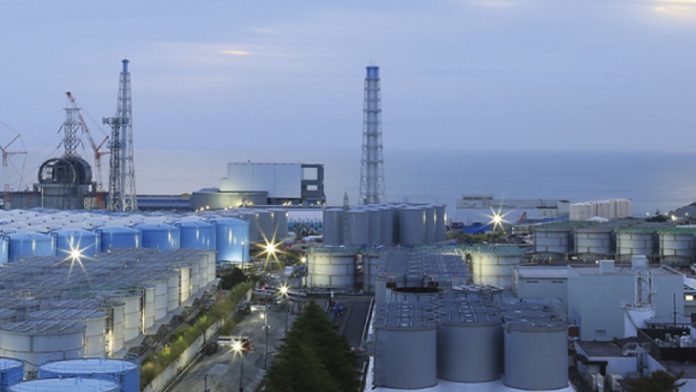
Pacific nations want answers to questions, more evidence in Japan plans to dump Fukushima wastewater

Pacific Islands Forum Secretary General Henry Puna has called for more answers and evidence-based science on Japan’s plans to dump more than a million tonnes of treated Fukushima wastewater in the Pacific.

In a statement released by the Forum Secretariat, the new Secretary General who has replaced former SG Dame Meg Taylor, told forum member officials it was his first appearance in the role.

He said the objective of the briefing with the Director General of the International Atomic Energy Agency (IAEA), Rafael Grossi, regarding Japan’s Decision to Discharge ALPS Treated Water into the Pacific Ocean, was to have “a very frank dialogue with the IAEA regarding the recent decision by our close partner, Japan. We, as a region, are entitled to clear answers, including evidence-based scientific assessments, which underpin the decision by the Government of Japan, which the IAEA has endorsed.”

The Vienna-based International Atomic Energy Commission had come out in defending the Japan announcement in April 2021, saying it was ‘technically feasible’.

But neither environmental groups in Japan and globally, nor Japan’s powerful Fishing Association, are convinced. Leaders of China, South Korea and Taiwan had also recorded their concern, and Pacific Forum members had sent out a ‘Hold off’ message in response to the Japan announcement in April.

Their concerns on lack of independent research, consultation and information to key questions have been echoed in the latest statement from the new Secretary General.

“This clarity will inform and advance our shared understanding of the full spectrum of impacts of Japan’s decision to discharge a large volume of treated nuclear water into the Pacific Ocean,” he said, pointing to the likely moves towards “further collaboration to seek access to other independently verifiable scientific environmental assessment.”

For the Pacific countries, the plans for treated but still radioactive wastewater to be dumped into their Oceans has triggered a wave of remembrance of nuclear testing across the region. The ‘nuclear legacy’ for the Pacific is far from positive. For decades the people of the Marshall Islands have advocated for more recognition of the impacts of the U.S testing programme on their future and set up a National Nuclear Commission to pursue their claims for nuclear justice. In March 2021, disturbing findings emerged, that France had concealed the true impact of its nuclear tests in French Polynesia. In the last year, the signatories to the South Pacific Nuclear Free Zone Treaty, also called the Rarotonga Treaty, have held their first meeting, raising awareness of their intentions to keep the Pacific Nuclear Free.

“Our 50-year history as the Forum has been overshadowed by our nuclear legacy issues, which continue to impact affected communities today, and we should not accept anything less,” Secretary General Puna noted in his statement, “As emphasised by our Leaders in 2019, the threat of nuclear contamination continues to be of significant concern to the health and security of our Blue Pacific Continent.”

The strong call and frank words from the Pacific were played down by the Director General of the International Atomic Energy Agency (IAEA), Rafael Grossi, who tweeted his enthusiasm for the briefing, without responding to the Pacific concerns.

He acknowledged the “work of the IAEA to support Members’ efforts in adopting and implementing the highest standards of nuclear non-proliferation safeguards. Indeed, the safeguards mechanism is a fundamental pillar of our very own Treaty of Rarotonga. As Parties to this Treaty, we take very seriously our commitment to leave for our future generations a nuclear free Pacific,” Puna said.

He noted the Pacific’s engagement with the IAEA spans many decades, “in view of the nuclear testing legacy issues that remain unresolved and that continue to pose serious environmental and health concerns for the Pacific.”

Whether the environmental and health concerns over the Fukushima wastewater will feature on the agenda of the next Japan-Pacific leaders meeting, known as the PALM, is unknown.

SG Puna referred to the PALM9 Senior Officials meeting, but there are no details yet on whether the PALM will address the issue.

SOURCE: PACNEWS

Restoration call for area ‘the size of China’ to protect falling biodiversity and food insecurity

An area of land roughly the size of China needs restoring if the planet’s biodiversity and the communities who rely on it are to be protected, UN agencies said on Thursday.

The Food and Agriculture Organisation (FAO) and UN Environment Programme’s (UNEP) call to reinstate at least one billion degraded hectares of land by 2030 must also be matched by a similar commitment to the oceans, or else risk a growing threat to global food security, they added.

In a new report marking the start of a Decade of Ecosystem Restoration, the agencies warned that humans are already using 1.6 times the resources that nature can provide sustainably.

Some 420 million hectares of forest have been lost since the 1990s, the UN report noted, and Member States are “not on course” to meet pledges to increase the overall amount of woodland by three per cent by 2030, said Mette Wilkie, Director of FAO’s Forestry Division.

“Conservation efforts alone will be insufficient to prevent large-scale ecosystem collapse and biodiversity loss”, FAO and UNEP maintained, before underscoring the need for countries to “reprogramme” their post-COVID-19 recovery and move away from massive subsidies to carbon-heavy sectors such as fossil fuels.

“It is no longer enough just to protect what we have, we have to go beyond that and restore, not only to halt the loss of biodiversity, but also to meet the Paris Agreement’s climate targets”, said Tim Christophersen, head of UNEP’s Nature for Climate Branch, Ecosystems Division, in reference to the 2015 summit, where countries committed to limit global average temperature rise to well below two degrees Celsius compared to the pre-industrial level, and preferably 1.5C.

“If we do this at the necessary scale it will have benefits far beyond climate change and biodiversity…for food security, for health, for clean water, for jobs. Restoration can benefit all these Sustainable Development Goals”, he explained.

Ecosystems – from forests and farmland to rivers, oceans and coastal areas – offer natural protection from the triple threat of climate change, loss of nature and pollution, but “poor stewardship of the planet” threatens the well-being of future generations, the agencies warned.

Those places in most urgent need of attention include farmland and forest, grasslands and savannahs, mountains, peatlands, urban areas, freshwaters, and oceans, FAO and UNEP insisted, adding that communities living in almost two billion degraded hectares of land include some of the world’s poorest and marginalised.

Launching the joint UN report, UNEP Executive Director Inger Andersen and FAO Director-General, Qu Dongyu, urged all countries to commit to a “global restoration effort” to protect and promote natural spaces, as this will bring cleaner air and water, mitigate against extreme weather shocks, promote human health and biodiversity, whose benefits include improved plant pollination.

“Degradation is already affecting the well-being of an estimated 3.2 billion people – that is 40 per cent of the world’s population”, said Andersen and Dongyu. “Every single year, we lose ecosystem services worth more than 10 per cent of our global economic output,” but “massive gains” are possible if these trends can be reversed, they added.

To achieve land restoration targets by 2030, UNEP and FAO estimate that investment of at least US$200 billion per year by 2030 will be needed. Amid concerns about where this funding might come from, the UN report noted that every $1 invested in restoration is expected to create up to 30 times that amount in economic benefits.

While the need for land restoration is urgent – as recognised by a UN General Assembly-sponsored UN Decade on Ecosystem Restoration 2021–2030, coastal and marine protection is even more important for everyone’s wellbeing, the UN agencies insisted.

“We speak of two thirds of ocean ecosystems being damaged, degraded and modified, and if you consider that the planet is 70 per cent ocean, that is an enormous amount, including plastic pollution which is so ubiquitous that it is very hard to avoid plastic – even in fish that we catch and eat,” said UNEP’s Christophersen.

SOURCE: UN NEWS CENTRE/PACNEWS

UN states seek more teeth and sting in the corruption fight

By Samisoni Pareti

Ensuring general elections are transparent, free and fair and that the independence of the judiciary are upheld are among key features of the 18-pages political declaration that the United Nations General Assembly (UNGA) Special Session Against Corruption have passed by affirmation.

Called ‘Our common commitment to effectively addressing challenges and implementing measures to prevent and combat corruption and strengthen international cooperation,’ the declaration is the result of more than two years of work by representatives of member states of the world body.

Starting on Wednesday this week, the three-day special session of the UN General Assembly is the first of its kind to be convened solely on corruption.

“We will maintain, strengthen, develop and implement measures that protect the integrity of the electoral process and promote its accountability to voters, transparency and impartiality in domestic electoral institutions and oversight mechanisms, and transparency in the funding of candidatures for elected public office, political parties and electoral campaigns, where applicable, with a view to preventing corruption, ensuring accountability, promoting good governance and reinforcing trust in public institutions,” states paragraph 12 of the Political Declaration.

Paragraph 27 focuses on the independence of the judiciary, and member states of the UN ought to “ensure equal access to justice for all and maintain and, when necessary, strengthen integrity, impartiality, inclusivity, due process, fair trial rights, transparency and equality before the law in our national criminal justice systems.”

This new UN document on eliminating corruption shares some of the aspirations of Pacific Island Leaders under the Teieniwa Vision which they adopted in Tarawa, Kiribati in February 2020. Like the Teieniwa Vision, the UN Political Declaration Against Corruption is big on ensuring national anti-corruption bodies are well resourced, and that a huge programme of education and public awareness is key.

Unlike the Teieniwa Vision of the Pacific, the UN Political Declaration does not use the term whistleblowers, but what it may lack in labeling, it made up in specifying the many layers of support and protection UN member states ought to provide “to those who expose, report and fight corruption and, as appropriate, for their relatives and other persons close to them, and will support and protect against any unjustified treatment any person who identifies, detects or reports, in good faith and on reasonable grounds, corruption and related offences.”

Adds paragraph 31: “We will strive to provide a safe and adequate environment to journalists, and we will investigate, prosecute and punish threats and acts of violence, falling within our jurisdiction, committed against them.”

Money Laundering got a lot of mention in the new Political Declaration Against Corruption of the UNGASS where suggestions included promoting beneficial ownership disclosures and transparency in the form of creating appropriate registries.

“We will take measures to prevent the financial system from being abused to hide, move and launder assets stemming from corruption, including when vast quantities of assets are involved. Those crimes undermine the integrity of the financial system, and we commit to promoting the implementation of the Convention and our respective applicable international obligations.

“We will reinforce and enhance inter-agency cooperation at all levels to prevent individuals and companies, other legal entities, and systems used to transfer money, as well as non-regulated or unregistered financial or commercial or non-commercial entities at serious risk of being abused for corruption and money-laundering, from committing or being used to facilitate acts of corruption, and will encourage and support companies and financial institutions in this regard, including to make better use of resources already expended.”

The Declaration calls on member states to be tough on fugitives who seek refuge in their jurisdictions, as well as against public officials who are guilty of “abuse of functions and illicit enrichment.”

Sports should also be safeguarded from corruption, and UN member states must ensure that corruption safeguards remain intact in their COVID-19 pandemic responses.

“We will ensure that appropriate measures are in place to prevent and combat corruption when responding to or recovering from national crises and emergencies, while striving not to negatively impact the speed and quality of responses in such situations.

“In this regard, we recognise the role of supreme audit institutions and other oversight bodies and their functions in upholding policies and procedures for the management of public finances and public procurement, and the importance of partnerships between the public and private sectors and other relevant stakeholders, in accordance with domestic law.”

The Political Declaration also welcomes the creation of a new tool in combating cross-border corruption offences, called the Global Operational Network of Anti-Corruption Law Enforcement Authorities, which will be housed under the United Nations Office on Drugs and Crime (UNODC).

SOURCE: PACJN/PACNEWS

UN hails new anti-corruption network, as ‘important step’ to build trust, promote justice

With factors contributing to transnational corruption becoming increasingly complex, the UN launched an initiative on Thursday to “empower all countries” to find practical solutions and better tools to track, investigate and prosecute the scourge.

UN Secretary-General António Guterres told the General Assembly’s first-ever Special Session against corruption via a video message, that before the COVID-19 pandemic, countries all over the world had been “roiled by huge anti-government demonstrations”.

“Corruption was one of the protestors’ main grievances. We can be sure those protestors are watching closely now, as trillions of dollars are invested in recovery”, he added.

Corruption is often systematic and organised, a crime that crosses borders and “betrays people and democracies”, the UN chief said.

“It steals trillions of dollars from people all over the world – usually from those most in need, as it siphons off resources for sustainable development”, he added.

When powerful people get away with corruption, citizens lose trust in their governing institutions and democracies become weakened by cynicism and hopelessness.

“Turning the tide against corruption is essential if we are to achieve the Sustainable Development Goals (SDGs), promote peace, and protect human rights”, Guterres spelled out.

The top UN official stressed the need to reinvigorate political commitment to fight corruption, strengthen international cooperation to recover stolen assets and prevent criminals from finding safe havens overseas for themselves and their funds.

He called the creation of the Global Operational Network of Anti-Corruption Law Enforcement Authorities, or GlobE Network, “a step in the right direction”.

“The Network will enable law enforcement authorities to navigate legal processes through informal cooperation across borders, helping to build trust and bring those guilty of corruption to justice”, explained the UN chief.

During the launch, anti-corruption experts discussed the role of the GlobE Network in ensuring that all countries and their independent anti-corruption authorities have the contacts and tools they need to track, investigate and prosecute cross-border corruption – including origin, transit and destination countries – quickly and effectively.

The Secretary-General said the Organisation would continue to provide technical assistance and called on all Governments to “make full use of the network and encourage further efforts to eradicate corruption”.

“Ending impunity for corruption, and returning stolen assets to their owners, are important steps towards a new social contract based on trust, integrity and justice”, he concluded.

SOURCE: UN NEWS CENTRE/PACNEWS

Stay connected

529FansLike
172FollowersFollow
156SubscribersSubscribe
- Advertisement -