Home Blog Page 1199

Bougainville sets 2027 deadline for independence from Papua New Guinea

Bougainville’s leaders set a deadline of 2027 to gain full independence from Papua New Guinea Tuesday during talks on the future of the once-wartorn Melanesian island.

A resounding 97.7 percent of Bougainvilleans voted to secede from Papua New Guinea and become the world’s youngest nation in a 2019 referendum.

The poll capped a 2001 peace agreement that followed a decade-long war between Bougainville rebels, Papua New Guinea security forces and foreign mercenaries that left up to 20,000 people dead.

Papua New Guinea’s government has accepted the result, despite concerns that Bougainville’s departure could cause the ethnically and linguistically diverse country to fracture.

But it has so far refused to commit to full independence.

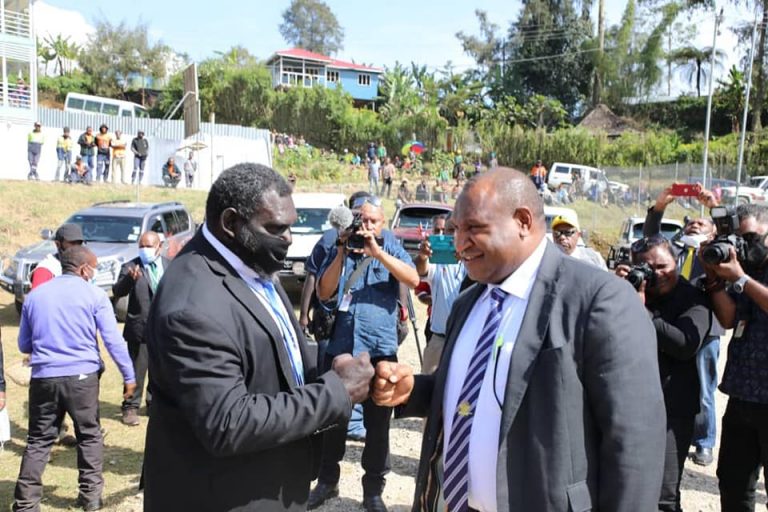
Rebel commander turned Bougainville president Ishmael Toroama and Papua New Guinea’s Prime Minister James Marape held talks in the Highlands town of Wabag on Tuesday to try to agree to a way forward.

The pair agreed to a timetable for handing many powers to Bougainville authorities by 2023, amending Papua New Guinea’s constitution and drafting a new Bougainville constitution, according to documents seen by AFP.

The process would culminate in 2027, when Bougainville would “assume all or any sovereign powers” and would issue a “declaration of independence”.

But there appeared to be no agreement on whether that would mean fully fledged independence or a form of self-governance.

Many Pacific Island nations have “associated state” agreements with regional powers that blur the usual lines of sovereignty — ceding control over issues such as defence and foreign policy.

Toroama insisted that independence has to be more than symbolic.

“The message is clear — this long journey must end sooner rather than later,” he said, adding that Bougainville must become a country “no later than 2027”.

Marape had pushed for a slower timetable, insisting “this process cannot be rushed. The future of our nation is at stake.”

“My job is to ensure that the rest of the country remains united.”

Papua New Guinea’s parliament will have the ultimate say on whether to ratify Bougainville’s vote, and it remains unclear if the 111 members will block independence.

“There is nothing to fear from an independent Bougainville,” Toroama told them Tuesday.

“While Bougainville will have new national symbols and a new international border, Bougainville will still be a Melanesian brother,” he said.

SOURCE: AFP/PACNEWS

Samoan Head of State’s proclamation wrong, expert says

A legal expert has added his voice to those who say Samoa’s Courts have the final say on constitutional issues, not the Head of State or the Government.

Samoa’s FAST party holds 26 seats, to the HRPP’s 21 seats. But there are more electoral petitions to come.

Earlier this week, the Head of State issued a proclamation claiming the Supreme Court had usurped his powers by ordering parliament to sit; and that the Court had shown flagrant disregard, and disrespect, of the powers of the Head of State.

That came after the Supreme Court ruled parliament must sit by Monday 05 June, and warned any attempt to obstruct that sitting would be considered as contempt of court and parliament.

Parts of the 28 June decision are being appealed by the caretaker Human Rights Protection Party. The HRPP is also asking the justices involved in the 28 June decision to recuse themselves on any contempt issues (that matter is adjourned until 12 July)

But John Upton QC told Midday Report the Head of State’s (HOS’s) claims about his legal powers and constitutional authority were wrong.

“With due respect to the Head of State… the courts have the final say on Samoa’s constitution. The parliament makes the law, the courts actually interpret it. In this case, we’re looking at the interpretation of the constitution, and the court has spoken last week in what was a clear and thoughtful decision,” he said.

Upton said he’s been involved with Samoa and its constitution “over the years”, and says it requires the HOS to accept the advice he’s given.

“He’s clearly acting on advice… but the advice … is not good advice. It’s clearly wrong in my view,” he said.

Parliament needed to sit urgently, he said.

“It’s absolutely critical they get on … [because] they have to pass a budget. Without a budget, whatever money is spent is spent illegally. And the people who are involved in spending the money from the prime minister down are personally liable for the consequences.”

While the 28 June Supreme Court ruling said the FAST party’s impromptu swearing-in ceremony on parliament’s grounds was illegal, it spelled out an alternative way forward if Parliament did not sit in accordance with its instructions.

Upton said the court could now reconvene to validate the arguments around the doctrine of necessity, a well-known doctrine of law that had been successfully used in Fiji and Grenada.

“The Court… could actually say what happened in the swearing in the tent in front of parliament was valid,” he said.

“They have got power to get things on track if they think it appropriate,” he said.

SOURCE: RNZ PACIFIC/PACNEWS

Possible criminal charges against FAST leaders investigated

A Commission has been set up in Samoa to investigate possible criminal charges against FAST Party leaders and its legal advisers.

The Police Commissioner, Fuiavailili Egon Keil said that the Commission has been assembled and include the Assistant Police Commissioner, two police attorneys and the Attorney General to investigate any potential criminality following a letter from the caretaker government requesting criminal charges be laid.

Fuiavailili said he received a letter signed by the caretaker Human Rights Protection Party member for Faleata West, Lealailepule Rimoni Aiafi.

Fuiavailili confirmed the complaint relates to FAST’s swearing-in outside Parliament on 24 May, which the Supreme Court last week ruled was not legal because the Head of State was not present.

The complaint named FAST’s leader and deputy leader, an MP who acted as Speaker and two of the parties legal representatives.

The letter also claims that La’auli had consistently incited members of the public to be hostile, violent and to rise up against the Government of Samoa and calls for charges be brought against him.

He also claimed that FAST’s leadership presented themselves as the new and official Government of Samoa.

He complained that Mata’afa issued press releases overseas seeking international intervention and recognition from governments such as those of New Zealand, Australia and other Pacific nations.

“Such actions have diminished the reputation of the Government of Samoa internationally and have caused irreparable damage locally and internationally,” he said.

Lealailepule also asked police to file relevant charges against `Mata’afa, La’auli, Olo Fiti Va’ai, Faumuinā Wayne Fong and other senior members of the party.

SOURCE: TALAMUA ONLINE/PACNEWS

Australia denies using ‘plants’ to undermine China’s Covid vaccine rollout in Pacific

The Australian government has denied undermining China’s plan to roll out Covid vaccines to Pacific countries after Beijing lashed Canberra’s purported “callous” and “irresponsible behaviour”.

The allegation, first aired in Chinese state-controlled media and then amplified by the foreign ministry in Beijing, was “absolutely not” true, the Australian government said on Tuesday.

The spat is the latest flashpoint in the deteriorating relationship between China and Australia amid intense competition for influence in the Pacific region.

The Global Times, a Chinese state-run newspaper, said it had “learned exclusively from sources that Australia has been racking its brain to undermine China’s vaccine cooperation with Pacific Island countries” and had “planted several ‘consultants’ in the national epidemic prevention center in Papua New Guinea”.

The paper accused Australia of “working in the shadows” to delay the authorisation of the emergency use of Chinese vaccines in PNG and of “threatening senior officials from welcoming Chinese vaccines”.

The Chinese foreign ministry spokesperson, Wang Wenbin, called on the Australian government to “stop disrupting and undermining vaccine cooperation between China and Pacific island countries”.

“Those in Australia who take advantage of vaccine issues to engage in political manipulation and bullying coercion are being callous to the life and health of the people in PNG,” Wang told reporters on Monday, in response to a question from CCTV, another state-controlled broadcaster.

But the Australian minister for international development and the Pacific, Zed Seselja, told the ABC the claim Canberra was interfering was “absolutely not the case” and “rejected by the Australian government”.

“My message to people who may have read that, or other articles, would simply be to look at Australia’s record during this period, and over a long period of time, of providing high-quality healthcare support and providing vaccine support,” Seselja said.

Seselja arrived in PNG on Sunday for a trip aimed at strengthening “cooperation on health security and infrastructure”. He met with the prime minister, James Marape, in Port Moresby on Monday.

In an interview with the ABC’s PNG correspondent, Natalie Whiting, Seselja said the Australian government was “fulfilling our moral and economic responsibility” to the region.

“We come to these issues in good faith, and we’ll continue to do things that are in the interests of our region and in the interest of our friends and neighbours, most particularly PNG,” Seselja said.

The Australian government announced on Tuesday it was planning to allocate up to 15 million doses of Covid-19 vaccines to the Pacific and Timor-Leste, saying it would help “our closest partners” to “achieve comprehensive vaccine coverage”.

The allocation comes from the 20 million doses that Scott Morrison pledged to the broader Indo-Pacific region when he attended the G7 summit last month, although the deadline for delivery is mid-2022.

“Australia has already shared more than half a million vaccine doses with our Pacific and Timor-Leste partners since March,” Seselja and the foreign affairs minister, Marise Payne, said in a statement.

Marape said in March PNG was also “working closely with the Chinese government” and “once the vaccines from China are cleared by the medical board then we will bring that in as well”.

Australian government officials have previously raised concerns that China’s vaccine diplomacy could come with “strings attached”, saying it “wouldn’t be surprising if there were conditions attached in some instances”.

But Wang hit back at that idea on Monday, saying China was doing its utmost “to help developing countries save more innocent lives”. “We have no geopolitical agenda and attach no political strings,” he said.

The latest dispute is part of a broader rift between China and Australia over diplomatic, trade and security issues.

Beijing announced last month that it was launching a formal challenge against Australian tariffs on several Chinese products.

That follows Australia’s own twin challenges at the World Trade Organisation against Beijing’s imposition of tariffs on Australian barley and wine.

China has blocked ministerial-level talks for at least the past year, amid a souring of the relationship over a range of issues including Australia’s early public calls for an international investigation into the origins of the coronavirus and its criticism of China over the crackdown on dissent in Hong Kong and human rights abuses in Xinjiang.

SOURCE: THE GUARDIAN/PACNEWS

‘I’m always afraid’: Fiji reels as it moves from Covid haven to frontline

For most of the pandemic, when Fijians tuned in each night to updates from the country’s health experts, they were greeted with the same message: the nation had reported zero, or one or two cases that day.

While most countries around the world grappled with surging Covid cases and overwhelmed health systems, Fiji – a country of about 900,000 people in the south Pacific, about a four-hour flight from Australia – was largely spared a widespread outbreak. Like many countries in the Pacific, the impact of Covid on Fiji was chiefly economic, as tourism-dependent economies contracted, but there were few deaths.

By the end of March this year, the country had recorded just two deaths and 67 cases over the entire pandemic. But in April, as people tuned in to watch the government officials, there was a different story: daily case numbers began climbing. Lockdowns were ordered, curfews put in place, the vaccine rollout was sped up, but still the cases kept rising.

The country has seen daily records broken over and over. On Monday this week, there were 352 cases. On Sunday, there were 522 new cases and three Covid-19 deaths. On Tuesday there were 636 new cases and six Covid-19 deaths. The country currently has 5,776 active cases in isolation, and has recorded 37 deaths.

‘It scares me’

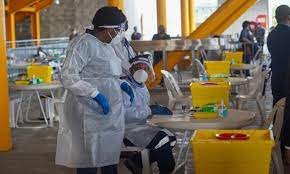
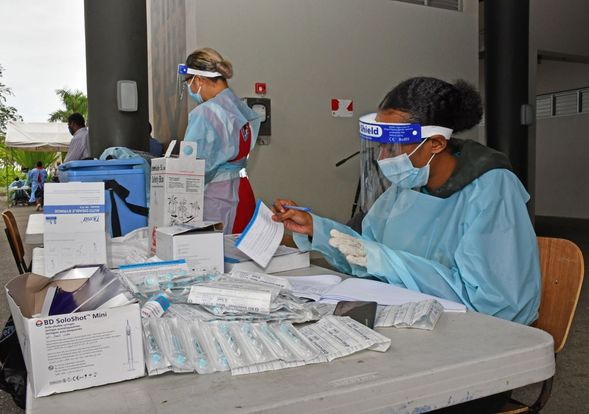
Registered nurse Sharon Zibran is up at 5.30am each day to prepare for work, rolling out the national vaccination campaign.

She works in the greater Nakasi area on Fiji’s mainland Viti Levu with 50 others, trying to vaccinate the almost 25,000 people who live there.

Zibran, 31, savours the weekend because it is the only time she gets to be with her two young children. But even then, she is cautious around them, mindful of what she does or where she goes. Sharon has received both doses of the AstraZeneca vaccine, the only vaccine option for Fijians at the moment. Just 9% of the target population has been fully vaccinated, with 54% receiving at least one dose.

“Initially I was afraid, especially being a frontline worker. There was that fear, but after receiving the vaccination and provided adequate personal protection equipment, I feel more confident to do my part to help our beautiful nation fight this pandemic and get back on its feet,” says Zibran, who hails from Fiji’s old capital, Levuka, on the island of Ovalau.

“The higher the vaccination rate, the better the protection to our entire families and country. There have been some resistance to the vaccination but once we explained this better to the people that visited us, it helped them overcome their fears.”

Jese Smith (not his real name), a registered nurse in the Central Division, is more fearful.

“I’m always afraid. Every day I walk out the door and go to work, I know the risk and the chances of being positive are high. It scares me to think that, if anything happens to me, I’d be leaving my child behind with his grandparents,” says Smith, who has received two doses of AstraZeneca.

He works 14 days straight away from home while attending to Covid cases then undergoes 14 days in isolation before he returns to his family.

“As a family, we have adapted to phone and video calls and the usual question always pops up: ‘Dad, when are you coming home, why can’t you stay a little longer, you are always going out.’ These questions always bring me to tears.

“The challenge every day is that I might go to work today and not be certain if I may go home the same day because at any time I can be a primary contact for a Covid-19 positive case and isolate for 14 days. It’s tough.”

It is during those tough times that he constantly reminds himself about this profession that he chose, the work he is passionate about.

“Even though we have Covid-19-positive patients, it hasn’t deterred our care as nurses or a team to make sure that we give our best to our patients … at the end of the day, nursing is a calling to serve mankind.”

Smith chose to share his experience on the condition of anonymity because he feared speaking to the media might cause him to lose his job, and he has seen the devastating economic impact brought on by Covid-19 nationwide.

The economic juggle

The economic impact on Fiji has been severe.

Fiji’s tourism sector, which was valued at more than FJD$3bn (USA$1.5bn) in 2019, was hit hard – 93% of 279 members of the Fiji Hotel and Tourism Association closed down because of a drastic decline in tourist arrivals.

The sector contributes 40% of Fiji’s gross domestic product and employs 40,000 Fijians directly, and 100,000 indirectly, according to the association.

Sereana Naituki, 44, was one of many hospitality workers made redundant because of hotel closures. She worked in hospitality at the Naviti Resort Fiji, on the Coral Coast.

Her husband has also lost his job. While it was a big blow for the family’s finances, Naituki says they decided to go back to the land and sea for provisions.

“When we worked at the hotel, we did not have time for these two resources – the land and sea – because we were earning an income from our work at the hotel. But this pandemic really taught us a lesson, and now we farm the land and fish for our sustenance,” she says.

“We have a home garden for our tomatoes, okra, eggplant and cabbage. Families in the village also trade the barter system way – root crops in exchange for a bundle of fish, or octopus, and sometimes even chicken.

“Our surplus we would sell at the roadside market. A dozen coconuts or heap of vegetables for FJD$5 (US$2.50), a bundle of fresh fish for FJD$10-$25 (US$5- US$12), octopus for FJ$20 (US$10) and yaqona (kava root) for FJD$60-$80/kg (US$30 – US$40).”

Naituki says the villagers have banded together as a community to assist one another and that one positive from the pandemic has been the change to spend more quality time with her husband and children.

Fiji has had to balance the health risks of Covid-19 with the economic impact of widespread lockdowns.

“Developing countries have never successfully implemented total lockdowns,” Fiji’s prime minister, Frank Bainimarama, said last month. “It is easy to call for drastic measures like 28 days of straight lockdown for the whole of Viti Levu if you are still in a high-paying job or have a healthy savings account.

“It is easy to call for a lockdown if you do not depend on day-to-day wages or struggle to pay bills for a business that is closed.

“It is easy to call for a lockdown if you don’t work at a factory that might permanently leave Fiji if they must shut down completely for 28 days; the garment factories and call centres that cannot serve overseas clients will lose those contracts – and the jobs they support – forever.”

He said Fiji would get through this ordeal by an intelligent and targeted application of measures to contain the spread until enough people were vaccinated to achieve herd immunity. Even amid growing concerns about blood clots, he is hoping the AstraZeneca vaccine will provide Fijians with 92% protection against hospitalisation.

“[W]e believe that if we follow some sensible guidelines designed to keep us from gathering indiscriminately in large groups, we can manage this virus while protecting our health, protecting Fijian jobs and businesses and safeguarding the long-term prospects of our young nation,” said Bainimarama.

SOURCE: THE GUARDIAN/PACNEWS

Fiji records 636 new cases of COVID-19; six deaths reported

Fiji has recorded 636 new cases of COVID-19 and six deaths related to COVID-19 Tuesday.

Permanent secretary for Health Dr James Fong said the first COVID-19 death is a 74-year-old woman from Delainavesi, Lami.

“She presented to the FEMAT field hospital in respiratory distress and died on the same day. She was not vaccinated.

“The second COVID-19 death is a 74-year-old woman from Raiwaqa. She was admitted to CWMH Hospital for treatment of a serious non-COVID-related medical condition and later tested positive in the hospital. After investigation, her doctors have determined that her death was caused by COVID-19 and not the prior medical condition. She was not vaccinated.

“The third COVID-19 death is an 80-year-old man, from Suva. One of our response teams was called to attend to him at home and he was then transferred to CWM Hospital after being assessed to have severe symptoms including shortness of breath. Unfortunately, he developed severe respiratory distress and died two days later. He had received the 1st dose of the vaccine in the first week of June. However, he had not received the 2nd dose and was not fully vaccinated.

“The fourth COVID-19 death is a 43-year-old woman from Makoi. She was admitted to CWMH Hospital for treatment of a serious non-COVID-related medical condition and later tested positive in hospital. After investigation, her doctors have determined that her death was caused by COVID-19 and not her prior medical condition. She had received the 1st dose of the vaccine at the end of April. However, she had not had the 2nd dose and was not fully vaccinated.

“The fifth COVID-19 death is a 70-year-old man from Nausori. He presented to the FEMAT field hospital in severe respiratory distress and died on the same day. He received his 1st dose of the vaccine in the first week of June. However, he had not received the second dose and was not fully vaccinated.

“The sixth COVID-19 death is a 63-year-old man from Nailuva Road. He presented to the FEMAT field hospital in severe respiratory distress and died on the same day. He was not vaccinated.
There has been one more death of a COVID-19 positive patient. However, this death has been classified as non-COVID death by doctors. Doctors have determined that his death was caused by a serious pre-existing medical condition,” said Dr Fong.

He said there have now been 39 deaths due to COVID-19 in Fiji, with 37 of these deaths during the outbreak that started in April this year.

“We also have recorded 16 COVID-19 positive patients who died from the serious medical conditions that they had before they contracted COVID-19.

“There have been 31 new recoveries reported since the last update, which means that there are now 5,776 active cases in isolation. There have been 7,079 cases during the outbreak that started in April 2021. We have recorded a total of 7,149 cases in Fiji since the first case was reported in March 2020, with 1,318 recoveries,” Dr Fong said.

The national 7-day average daily test positivity is 11.9% and continues on an upward trend, he said.

“To date, 324,462 adults in Fiji have received their first dose of the vaccine and 54,737 have received their second doses. This means that 55% of the target population has received at least one dose and 9.3% are now fully vaccinated nationwide.

“The 7-day average of new cases per day has increased to 429 cases per day or 485 cases per million population per day. As expected, with the increasing case numbers we are also seeing increasing numbers of people with severe disease and more deaths in the Suva-Nausori containment zone.

“We continue to see people with severe COVID-19 dying at home or coming to a medical facility in the late stages of severe illness and dying within a day or two. Severe COVID-19 is a medical emergency and a delay in receiving appropriate medical treatment may result in a higher risk of death,” Dr Fong said.

SOURCE: PACNEWS

Micronesia to lose access to Pacific-led resilience fund if it leaves PIF

Communities in Palau could lose financing access to the homegrown Pacific Islands Pacific Resilience Facility (PRF) if Micronesia leaves the Pacific Islands Forum (PIF).

One of the issues Pacific leaders will discuss in the upcoming Forum Economic Ministers Meeting slated next week is the main launch of funding support for October 2021.

The aim of the PRF is to ensure that Pacific nations will not be left in debt and will have access to small-scale, smaller funds for projects to help communities prepare and plan ahead of disasters.

Small scale projects in the community can be retrofitting of schools, local roads, and community halls to better prepare for the impacts of climate change.

But the exit of Micronesia, including Palau could mean the five countries can’t be part of the PRF. Denton Rarawa, Forum Senior Economist acknowledged to reporters last week.

“The Facility itself, say for example the members of the Micronesian countries withdraw, will continue. It’s intended to assist community projects in the region and so that will continue. So if the Micronesia countries come back, they will benefit from that. But if they withdraw, they will not be part of the Facility but it will continue,” Rarawa said.

The facility aims to limit the vulnerability of the Pacific to climate change and to avoid the countries from mounting even bigger debts.

Rarawa said work on soliciting support from the Forum’s traditional and non-traditional major partners for the capitalisation of the PRF.

The objective, he said, is to raise about US$1.5 billion to fund the Facility.

The PRF is also set up to ensure that Pacific countries will not be saddled by more debt financing.
The PIF calls it a “Pacific owned, Pacific led solution.”

The PRF will offer grants to governments for community-level projects that are crucial for disaster risk reduction and small-scale initiatives ranging from US$50,000 to US$200,000.

SOURCE: ISLAND TIMES/PACNEWS

We will fight back, together, and win back, together: Forum SG Puna

The last 18 months have been, perhaps, one of the toughest periods for the Pacific region, for countries, and most especially, the people of the Pacific.

The Pacific has had to contend with a global pandemic that has shut down major sectors of island economies and plummeted countries into unprecedented levels of debt and growing inequality.

Speaking during the Forum Economic Officials Meeting 2021, Secretary-General of the Pacific Islands Forum Henry Puna urge Senior Officials of Pacific Island countries to work collectively.

“Excellencies, Senior Officials, it is no secret that we are facing a debt crisis. One that has been exacerbated by the pandemic and its devastating impacts on our economies. Indeed, across the region, we have seen substantive increases in debt levels as Governments have fought to combat the economic and health fall-out of the pandemic,” said Puna.

“I urge you all to use this meeting to find a workable way forward, and furthermore, to collectively discuss how best we can work together to ignite much-needed reforms to the international debt architecture,” he added.

The IMF predicted a negative economic outlook for the region in 2021. GDP forecasts across our Pacific economies reflect a decline while public debt continues to increase.

Pacific businesses, big and small, have all felt the impacts of COVID-19. Indeed, for some, tourism— has come to a standstill.

The fisheries industry, particularly the tuna longline fishery, is on life support. Manufacturing sectors have contracted across the region. While on the climate front, immediate and urgent adaptation and mitigation actions and strategies are needed to address the special and unique circumstances in the region.

Access to and mobilisation of financial resources from international development partners continues to be a challenge.

Puna reminded all “the Pacific Resilience Facility continues to be a stellar example of what we can achieve together if only we put our minds to it and collectively inspire solutions that address our unique circumstances.”

In closing, Secretary-General offered some words of encouragement.

“We the Pacific people, are resilient people. We have faced many challenges in our history, and we have always fought back and won back. I believe that now is no exception. We will fight back, together, and we will win back, together,” said SG Puna

SOURCE: EMTV/PACNEWS

All Blacks expecting tougher test from Fiji after Tonga mismatch

0

The All Blacks are expecting a much sterner test when they face Fiji in Dunedin, despite having waltzed to a 102-0 victory over Tonga at Mt Smart Stadium on Saturday.

In one of the most one-sided tests in New Zealand history, the All Blacks ran in 16 unanswered tries against a severely understrength Tonga – who were missing a number of first-string players due to unavailability overseas.

All up, Tonga’s matchday 23 included 13 previously uncapped players – some of whom had come from New Zealand club rugby to face the All Blacks.

But Fiji will have no such issues, with arguably the only star missing being former NRL winger Semi Radradra.

What’s more, Fiji is coached by a familiar face – Kiwi Vern Cotter – who’ll have an idea of what to expect from Ian Foster’s All Blacks.

And speaking on Sunday, All Blacks assistant coach Scott McLeod made it clear that his side is aware of the step-up in quality heading into this week’s test at Forsyth Barr Stadium.

“Fiji is a different beast,” McLeod says.

“They’ve got a number of players from Europe that are very good players. We’ve been making the team very aware of that.

“They run just as hard as the Tongan boys, so our collision area in defence will have to be up another level, I think.

“We’re expecting them to be highly organised, [with] a new coaching set-up for them, and playing them under the roof, they’ll want to throw the ball around as well.”

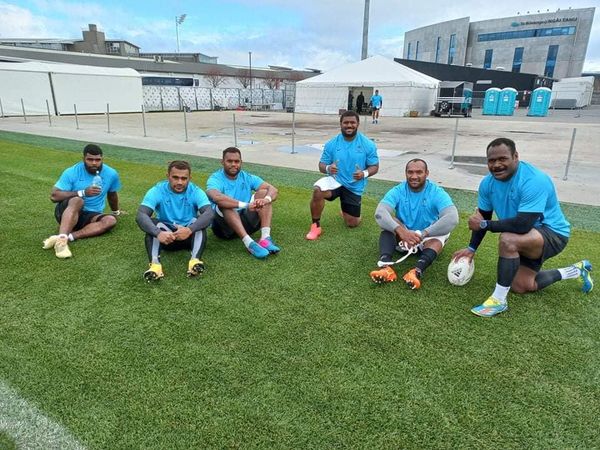
McLeod adds Fiji will face the All Blacks with a more physical gameplan, boasting 14 players playing out of France, five from England and Scotland, three from Australia and two from New Zealand.

“From one to 23, [Fiji] can carry the ball – carry heavy ball. They’ll just want to run straight through you and over you.

“They’re actually quite smart with their set-piece play. They’ve got a new coaching set-up that are smart coaches.

“They haven’t played a lot, so [we] haven’t been able to see what they will bring. But knowing the strength of the people, the coaches will be smart in the way they use them.

“And from what I’ve seen out of the European players, it’s pretty direct and hard.”

The All Blacks on the other hand could be without flanker Dalton Papalii, with McLeod confirming a calf-strain 23-year-old. But in better news, the duo of Ardie Savea and Shannon Frizell could be shaping towards a playing return.

“Dalton strained [his] calf, [he] came off last night as a precaution. Length or term [we’re] not too sure, we just have to see how he unfolds over the next couple of days.

“We have to wait until Tuesday, they’re [Savea and Frizell] both in a similar boat, in terms of their availability, we just have to test them a little bit more. It’s not that they’re available as of today,” he said.

SOURCE: NEWSHUB/PACNEWS

Samoa police asked to move against FAST

Samoa’s police commissioner has received a letter from the caretaker government requesting criminal charges be laid against leaders of the election winning Faatuatua I le Atua Samoa ua Tasi (FAST) party and its legal advisers.

The commissioner Fuiavailili Egon Keil said he received a letter signed by the caretaker Human Rights Protection Party (HRPP) member for Faleata West, Leala’ilepule Rimoni Aiafi.

Fuiavailili confirmed to RNZ Pacific the complaint related to FAST’s impromptu swearing-in outside parliament on 24 May, which the Supreme Court last week ruled was not legal because of the Head of State’s absence.

The complaint named FAST’s leader and deputy leader, an MP who acted as Speaker and two of the parties’ legal representatives.

A commission including the Assistant Police Commissioner, two police attorneys and the Attorney General has been assembled to investigate any potential criminality, Fuiavailili said.

Leala’ilepule told the Samoa Observer his reason for writing to the commissioner, on behalf of the HRPP, was to give notice of complaint with regard to the recent Supreme Court ruling.

“The court clearly stated that the 24 May, 2021 swearing in under the tent outside Parliament by FAST party members [and] their legal advisers are unconstitutional, unlawful and therefore deemed void and of no effect.”

“I respectfully, lodged a formal Police complaint against Matafeo George Latu and Taulapapa Brenda Heather-Latu given that they were instrumental and took the lead in advising the FAST party leaders and members to conduct the unlawful swearing in ceremony.”

He said the roles of conducting the swearing-in of Parliamentarians were exclusive to the Head of State, Clerk of the House and others stipulated in the provisions of the Constitution.

He alleged that FAST’s leader Fiame Naomi Mata’afa and La’auli Leuatea were instigators of the ceremony and had incited people to participate in the swearing-in.

The letter claims that La’auli had consistently incited members of the public to be hostile, violent and to rise up against the Government of Samoa and calls for charges be brought against him.

Leala’ilepule also said FAST leadership presented themselves as the new and official Government of Samoa.

He complained that Ma’atafa issued press releases overseas seeking international intervention and recognitions from Governments such as those of New Zealand, Australia and other Pacific nations.

“Such actions have diminished the reputation of the Government of Samoa internationally and have caused irreparable damage locally and internationally,” he said.

Leala’ilepule also asked the Police to file relevant charges against Mata’afa, La’auli, Olo Fiti Va’ai, Faumuina Wayne Fong and other senior members of the party.

SOURCE: RNZ PACIFIC/PACNEWS

Stay connected

529FansLike
172FollowersFollow
156SubscribersSubscribe
- Advertisement -