Home Blog Page 1186

Fiji records 784 new cases of COVID-19 and 15 deaths reported

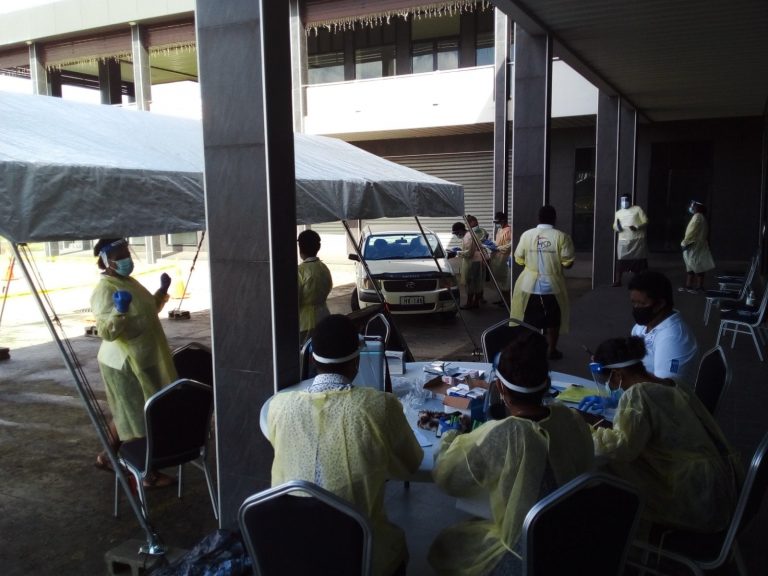
Fiji has recorded 784 new cases of COVID-19 and 15 deaths reported Monday.

Permanent secretary for Health Dr James Fong said the new COVID-19 deaths for the period of 12 – 19 July.

“The first COVID-19 death to report is a 65-year-old woman from Laucala Beach. She presented to the CWM Hospital Emergency Department in severe respiratory distress. She died 7 days after admission (18/07/2021). She received the 1st dose of the vaccine in earlyJune. She had not received the 2nd dose of the vaccine. This means that she was not fully vaccinated.

“The second COVID-19 death to report is a 77-year-old man from Valelevu who died at home on 18/07/2021. He was not vaccinated.

“The third COVID-19 death to report is a 47-year-old man from Lami who died at home on 12/07/2021. He was not vaccinated.

“The fourth COVID-19 death to report is a 67-year-old woman from Nasinu who died at home (17/07/2021). Her family reported that she was unwell with COVID-19 symptoms for one week prior. She was not vaccinated.

“The fifth COVID-19 death to report is a 51-year-old man from Colo-I-Suva who died at home on 17/07/2021. He was not vaccinated.

“he sixth COVID-19 death to report is a 40-year-old man from Lami. He presented to the FEMAT field hospital in respiratory distress. He died 6 days after admission (17/07/2021). He was not vaccinated.

“The seventh COVID-19 death to report is a 72-year-old man from Nabua. He presented to a medical facility in severe respiratory distress. He was retrieved by a medical team to the CWM hospital. He died one day later in hospital (18/07/2021). He was not vaccinated.

“The eighth COVID-19 death to report is a 65-year-old man from Suva who died at home on 18/07/2021. He was not vaccinated.

“The ninth COVID-19 death to report is a 81-year-old woman from Samabula. She presented to the CWM Hospital emergency department in severe respiratory distress. She died in hospital on the same day 19/07/2021. She was not vaccinated.

“The tenth COVID-19 death to report is a 63-year-old man from Delainaivesi who died at home (17/07/2021). He was not vaccinated.

“The eleventh COVID-19 death to report is a 79-year-old woman from Cunningham who died at home (17/07/2021). She was not fully vaccinated.

“The twelfth COVID-19 death to report is a 73-year-old woman from Suva. She presented to the FEMAT field hospital in severe respiratory distress. She died in hospital one day later on 18/07/2021. She was not vaccinated.

“The thirteenth COVID-19 death to report is a 83-year-old man from Nasese. He presented to the FEMAT field hospital in severe respiratory distress. He died four days after admission on 17/07/2021. He was not vaccinated.

“The fourteenth COVID-19 death to report is a 65-year-old man from Suva. He presented to the CWM hospital in severe respiratory distress. He died in hospital on 18/07/2021. He was not vaccinated.

“The fifteenth COVID-19 death to report is a 50-year-old woman from Dakuibeqa. She presented to the CWM hospital in severe respiratory distress and she died in hospital on 16/07/2021. She was not vaccinated,” Dr Fong said.

He said there are 17 more deaths currently under investigation.

“These will be discussed once investigations (including test results) and classifications are complete.

“There have been 7 more deaths of COVID-19 positive patients. However, their deaths have been classified as non-COVID deaths by their doctors. Doctors have determined that these deaths were caused by serious pre-existing medical conditions and not COVID-19.

“There have now been 113 deaths due to COVID-19 in Fiji, with 111 of these deaths during the outbreak that started in April this year. We also have recorded 48 COVID-19 positive patients who died from the serious medical conditions that they had before they contracted COVID-19; these are not classified as COVID-19 deaths,” Dr Fong said.

He said there have been 125 new recoveries which means that there are now 14,247 active cases.

“There have been 18,228 cases during the outbreak that started in April 2021. We have recorded a total of 18,298 cases in Fiji since the first case was reported in March 2020, with 3,890 recoveries.

“The national 7-day daily test average is 3875 tests per day or 4.4 tests per 1,000 population. The national 7-day average daily test positivity is 26% and continues on an upward trend.

“The 7-day average of new cases per day is 988 cases per day or 1116 cases per million population per day. With the high numbers of new daily cases we are also seeing increasing cases of severe disease and deaths,” said Dr Fong.

Dr Fong confirmed COVID-19 infections are widespread across the Suva-Nausori containment zone.

“This means that if you develop any of the symptoms of COVID-19 you should assume you have COVID19 and isolate yourself at home. Do not wait for a positive test result to self isolate. Isolating yourself will help to stop the spread of COVID-19 to others.

“Severe COVID-19 is a medical emergency, and a delay in receiving appropriate medical treatment reduces your chance of recovering from the disease. You do not need to have a positive test result to watch out for these symptoms,” he said.

The severe symptoms of COVID-19, which include the following:

• Difficulty breathing
• Persistent pain or pressure in the chest
• Severe headache for a few days
• New confusion, inability to wake or stay awake
• Pale, gray, or blue-coloured skin, lips or nail beds

Dr Fong said in the Suva-Nausori Containment zone they have identified health facilities specifically designated to receive people with symptoms of severe COVID-19.

As of the 17th July 393,095 adults in Fiji have received their first dose of the vaccine and 78,624 have received their second doses. This means that 67% of the target population have received at least one dose and 13.4 % are now fully vaccinated nationwide, he said.

SOURCE: PACNEWS

PNG records three new COVID-19 cases – total cases at 17,467

Papua New Guinea has recorded three new COVID-19 cases on Friday 16 July, increasing the total number of cases to 17,467.

The cases were reported in three provinces. West Sepik, East Sepik and Hela reported a single case each.
Of the three reported cases, two were males and a female. Their ages range from 25 to 58 years. One out of the three cases one was experiencing symptoms of COVID-19 at the time of testing.

The country’s COVID-19 cases now stands at 17,467 with 187 known deaths. The total cumulative recoveries stands at 17,146. To date, a total of 143,305 people have tested for COVID-19.

All 22 provinces including the Autonomous Region of Bougainville (AROB) have reported cases.

SOURCE: PNG GOVT/PACNEWS

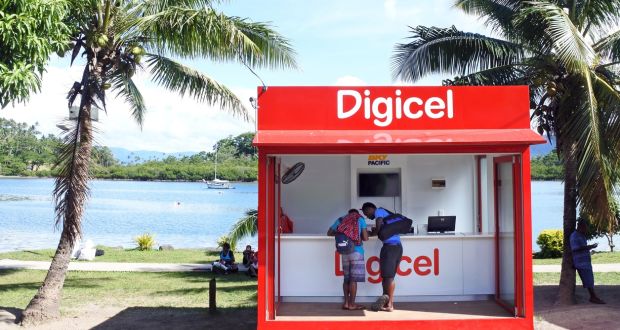
Telstra in talks to buy Digicel Pacific with Australian government support

0

Telstra Corp Ltd (TLS.AX) said on Monday it was in discussions to buy the Pacific operations of telecom company Digicel Group, with the support of the Australian government, which will likely fund the majority of the deal amount.

The announcement follows a report over the weekend by the Sydney Morning Herald that said the deal could be worth AUD$2 billion (US$1.48 billion), with the Australian government paying around AUD$1.5 billion (US$1.1 billion).

Telstra said it was approached by the government to provide technical advice initially on Digicel Pacific, which is “critical to telecommunications in the region.”

The company added that if the deal were to go through, it would be with “significant” government funding and support, while Telstra’s contribution will form a “minor portion”.

“The discussions are incomplete and there is no certainty that a transaction will proceed,” Telstra added.

Digicel Pacific is a leading telecom provider in Papua New Guinea, Fiji, Nauru, Samoa, Tonga and Vanuatu,

Its regional operations generated core earnings of US$235 million in 2020 with strong margins, the company said .

SOURCE: REUTERS/PACNEWS

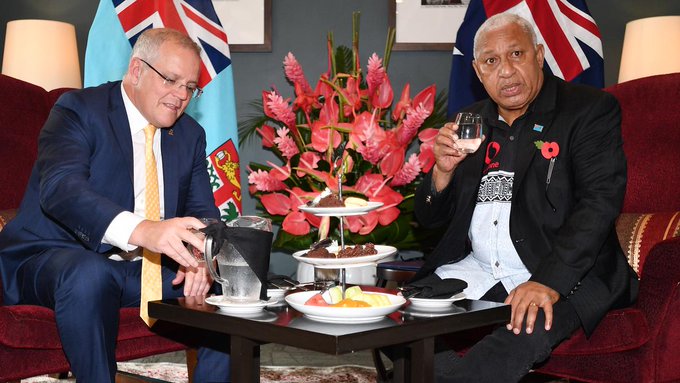
Morrison left out on Pacific rim over climate diplomacy

By Wesly Morgan

The first national leader to congratulate Joe Biden on his election as U.S President was Fiji’s Prime Minister, Frank Bainimarama. There was little doubt what he wanted from the new head of the world’s most powerful nation.

“Together, we have a planet to save from a climate emergency,” he tweeted. Bainimarama knew Pacific island countries had gained a powerful ally in the fight to tackle climate change. Not only would Biden return the US to the Paris Agreement; he would also, as his administration’s list of “immediate priorities” promised, pressure countries “to ramp up the ambition of their climate targets”. Bainimarama quickly followed up with a formal letter inviting Biden to attend the 2021 Pacific Islands Forum.

This audacious diplomacy from Fiji fits with a recent pattern from Australia’s island neighbours – the 14 independent nations of the Pacific Islands Forum – who have become adept at working with major powers to shape global diplomacy on climate change. In 2015, for example, Pacific diplomats were instrumental in securing the Paris Agreement, though their role in the negotiations was not widely appreciated in Canberra. Now, Pacific countries are working with some of Australia’s closest allies and partners – including the US and Britain – to press countries to commit to more ambitious Paris targets before the UN Climate Change Conference (COP26) in Glasgow in November.

For Australia, engagement with Pacific island countries is driven, above all, by a strategic imperative to maintain political influence and to deny the islands to other powers. In the context of the US alliance, Pacific island states are understood as part of Australia’s sphere of influence. Security relations are shaped by the ANZUS Treaty, but also by an ancillary Australia-US naval agreement that deems Australia responsible for maritime security in the southwest Pacific.

This results in a curious state of affairs: Australia views itself as a regional leader, yet its identity as a Pacific nation remains uncertain. To compound matters, Australia’s attention span is short, and engagement with the Pacific tends to be episodic, driven by periodic crises that are understood to require Australian intervention, such as the civil war in Bougainville in the 1990s, or coups in Fiji and unrest in the Solomon Islands in the early 2000s. Between these crises, Canberra tends to forget the Pacific again.

It can be easy to forget, but before the Covid-19 pandemic, Prime Minister Scott Morrison’s signature foreign policy was the “Pacific Step-up” – an initiative intended to cement Australia’s position as a security partner of choice for Pacific states. But Morrison is learning the hard way that the step-up will not succeed until Australia does more to tackle the issue that Pacific island leaders see as their main security threat: climate change.

In the six years since the Paris conference, geostrategic competition between the US and China has prompted major powers to take a renewed interest in Pacific island states. China, through its Belt and Road Initiative, has financed important infrastructure projects in the region, including wharves, airports and roads. The US has responded with hundreds of millions of dollars in aid as part of a 2019 “Pacific Pledge”.

Japan too has committed new funds for infrastructure, while New Zealand bumped up aid as part of a 2018 “Pacific Reset”. Britain has dived back into the region with a 2019 “Pacific Uplift” that includes three new diplomatic posts in the Pacific. French President Emmanuel Macron visited Australia and New Caledonia in 2018 to remind everyone that France was a “Pacific power” with a keen interest in making sure China does not dominate the region. Even Indonesia announced a “Pacific Elevation” in 2019. Amid these pledges, resets, elevations and uplifts, Australia’s Pacific Step-up is in a crowded field.

Unlike Australia, however, other countries have leveraged climate policy to win friends in the region. They have highlighted steps they are taking to reduce emissions and have promoted Pacific leadership on climate. France, for example, has recast its Pacific image from a colonial power that tests nuclear bombs to a key partner in the climate fight.

As other powers have exercised climate diplomacy they have, perhaps inadvertently, highlighted Australia’s lack of climate action. In 2018, New Zealand legislated a net-zero emissions target for 2050, which in the eyes of Pacific leaders set Wellington apart from Canberra. At the 2019 Pacific Islands Forum leaders’ retreat, while Morrison argued over the text of a regional climate declaration, Bainimarama took a lunchtime walk with Jacinda Ardern. He live-tweeted a picture of the two strolling the Funafuti foreshore, captioning it, “When combating climate change, it’s good to have an ally like New Zealand in your corner. Together, we can save Tuvalu, the Pacific, and the world. Vinaka vakalevu [thank you so much] for the passion you bring to this fight, @jacindaardern”.

Ardern told reporters that “Australia has to answer to the Pacific” on climate change. The contrast between other countries and Australia is especially pronounced this year, as major powers the US, the European Union and Britain work with Pacific island countries to press for stronger targets before the COP26 summit.

While Pacific countries understand the climate crisis as an urgent threat to their security, Australia does not yet see it in the same way. This has led to a mismatch in strategic priorities.

Australia’s Pacific Step-up is driven by security concerns, particularly that China could leverage infrastructure lending to establish a military base in the Pacific. But island leaders take a different view. At the 2018 Pacific Islands Forum, they issued a declaration formally reaffirming climate change as the “single greatest threat to the livelihoods, security and wellbeing of the peoples of the Pacific”.Unlike Australia, however, other countries have leveraged climate policy to win friends in the region. They have highlighted steps they are taking to reduce emissions and have promoted Pacific leadership on climate. France, for example, has recast its Pacific image from a colonial power that tests nuclear bombs to a key partner in the climate fight.

As other powers have exercised climate diplomacy they have, perhaps inadvertently, highlighted Australia’s lack of climate action. In 2018, New Zealand legislated a net-zero emissions target for 2050, which in the eyes of Pacific leaders set Wellington apart from Canberra. At the 2019 Pacific Islands Forum leaders’ retreat, while Morrison argued over the text of a regional climate declaration, Bainimarama took a lunchtime walk with Jacinda Ardern. He live-tweeted a picture of the two strolling the Funafuti foreshore, captioning it, “When combating climate change, it’s good to have an ally like New Zealand in your corner. Together, we can save Tuvalu, the Pacific, and the world. Vinaka vakalevu [thank you so much] for the passion you bring to this fight, @jacindaardern”.

Ardern told reporters that “Australia has to answer to the Pacific” on climate change. The contrast between other countries and Australia is especially pronounced this year, as major powers the US, the European Union and Britain work with Pacific island countries to press for stronger targets before the COP26 summit.

While Pacific countries understand the climate crisis as an urgent threat to their security, Australia does not yet see it in the same way. This has led to a mismatch in strategic priorities.

Australia’s Pacific Step-up is driven by security concerns, particularly that China could leverage infrastructure lending to establish a military base in the Pacific. But island leaders take a different view. At the 2018 Pacific Islands Forum, they issued a declaration formally reaffirming climate change as the “single greatest threat to the livelihoods, security and wellbeing of the peoples of the Pacific”.

Compared with a more coercive China, and competition between the US and China, island leaders see the impacts of climate change – stronger cyclones, devastating floods, rising seas, dying reefs and ocean acidification – as more tangible and immediate threats. As Fiji’s military commander, Rear Admiral Viliame Naupoto, told the 2019 Shangri-La Security Dialogue in Singapore: “I believe there are three major powers in competition in our region. There is the US … there is China [and] the third competitor is climate change. Of the three, climate change is winning, and climate change exerts the most influence on countries in our part of the world. If there is any competition, it is with climate change.”

Increasingly, the rest of the world shares the Pacific’s perception. Australia is out of step not only with Pacific island states, but also with major powers and friends.

A new Australian climate policy would allow a reset of Australia’s Pacific strategy. Morrison himself understands how important climate action is for Australia’s relationships in the region. Soon after he became Prime Minister, he was asked by Alan Jones why we shouldn’t just “rip up” the Paris Agreement and bow out of it. His response was telling. He told Jones the agreement was “enormously important” to Australia’s island neighbours, “who are strategic partners in the Pacific”. He was right, of course. Good relationships with Pacific island countries are vitally important for Australian security.

If Australia begins to shift its approach to climate change, it will have a chance to work with Pacific countries as climate partners. The first order of business will be to announce a target of net-zero emissions by 2050. Doing so at this year’s Pacific Islands Forum would tell the world Australia is committed to action and working with Pacific island countries to achieve it.

Wesley Morgan is a Griffith Asia Institute Fellow and this is an edited extract of his essay Ripple Effect in the current issue of Australian Foreign Affairs, Feeling the Heat, published this week. Compared with a more coercive China, and competition between the US and China, island leaders see the impacts of climate change – stronger cyclones, devastating floods, rising seas, dying reefs and ocean acidification – as more tangible and immediate threats. As Fiji’s military commander, Rear Admiral Viliame Naupoto, told the 2019 Shangri-La Security Dialogue in Singapore: “I believe there are three major powers in competition in our region. There is the US … there is China [and] the third competitor is climate change. Of the three, climate change is winning, and climate change exerts the most influence on countries in our part of the world. If there is any competition, it is with climate change.”

Increasingly, the rest of the world shares the Pacific’s perception. Australia is out of step not only with Pacific island states, but also with major powers and friends.

A new Australian climate policy would allow a reset of Australia’s Pacific strategy. Morrison himself understands how important climate action is for Australia’s relationships in the region. Soon after he became Prime Minister, he was asked by Alan Jones why we shouldn’t just “rip up” the Paris Agreement and bow out of it. His response was telling. He told Jones the agreement was “enormously important” to Australia’s island neighbours, “who are strategic partners in the Pacific”. He was right, of course. Good relationships with Pacific island countries are vitally important for Australian security.

If Australia begins to shift its approach to climate change, it will have a chance to work with Pacific countries as climate partners. The first order of business will be to announce a target of net-zero emissions by 2050. Doing so at this year’s Pacific Islands Forum would tell the world Australia is committed to action and working with Pacific island countries to achieve it.

Wesley Morgan is a Griffith Asia Institute Fellow and this is an edited extract of his essay Ripple Effect in the current issue of Australian Foreign Affairs, Feeling the Heat, published last week.

SOURCE: THE AUSTRALIA/PACNEWS

Samoa seal Rugby World Cup 2023 qualification with play-off win over Tonga

0

Manu Samoa will take their place in Pool D at France 2023 having secured a 79-28 aggregate win against Tonga in Hamilton on Saturday.

Samoa secured Rugby World Cup 2023 qualification with a 37-15 defeat of Tonga in Hamilton on Saturday.

Holding a healthy 42-13 advantage from the first leg in Auckland last weekend, Manu Samoa needed to avoid defeat by 30 points to make sure of their place at France 2023.

And, they did more than that at FMG Stadium, running in four tries and holding off the threat of a Tongan comeback to secure a 79-28 aggregate win.

Victory takes Samoa’s record in Rugby World Cup qualification matches against Tonga to nine victories and one defeat, and means they will feature in Pool D of RWC 2023 alongside England, Japan, Argentina and the Americas 2 qualifier.

“It’s very satisfying, the last four weeks have been building to this game,” Samoa captain Michael Alaalatoa said.

“We made it hard for ourselves in the second half, they were in our faces and we weren’t able to deal with that well, but the boys stuck at it.

“We don’t expect anything less when we play against Tonga.”

Samoa made to work

As in Auckland last weekend it was Tonga who scored first in Hamilton, as James Faiva slotted an early penalty.

However, Samoa hit back to lead 6-3 thanks to the reliable boot of Henry Taefu and then took control of the match in the second quarter as Ed Fidow crossed following a lineout steal from Alamanda Motuga.

Manu Samoa stretched their lead at the end of the first half when an incisive break from Neria Fomai allowed Jonathan Taumateine to score.

Another Taefu penalty early in the second period gave Samoa a 20-point lead, but Tonga began to dominate thereafter and closed the gap with two quick fire tries.

First replacement hooker Jay Fonokalafi burrowed over, after a dominant carry from Ben Tameifuna, and then Sione Tuʻipulotu cut the deficit further following a strong lineout drive.

Samoa’s lead was now just eight points with 20 minutes remaining, and Tongan hopes of getting something from at least the second leg were raised when prop Tietie Tuimauga was sent to the sin bin.

But Manu Samoa coped well with going down to 14 players and scored two late tries — through Stacey Ili and Kalolo Tuiloma — to make sure of victory.

Despite defeat, Tonga remain in the hunt for a place at RWC 2023 and will take on the Cook Islands next weekend. The winner of that match will compete in the Asia/Pacific play-off.

SOURCE: WORLD RUGBY/PACNEWS

First ever Pacific hearing of Abuse in Care Royal Commission of Inquiry gets underway

The Pacific hearing of the Abuse in Care Royal Commission of Inquiry has started, with survivors expected to discuss the impacts of the Dawn Raids.

Tulou: Our Pacific Voices; Tatala e Pulonga is the first of its kind for New Zealand and will be held over two weeks at the Fale o Samoa in Māngere.

The public hearing considers the impacts of the Dawn Raids on individuals and the wider Pacific community – part of a bigger investigation into abuse and neglect in care from 1950 and 1999.

Tulou is a term commonly used in many Pacific languages to show courtesy when one comes within another’s open space. In Tongan, Tatala e pulonga is a metaphor meaning lifting the dark cloud.

Commissioner Ali’imuamua Sandra Alofivae said the Fale translates to home, and goes beyond a physical space but provides a cultural and spiritual safe environment to help survivors come home.

The hearing opened with an ava ceremony and a colourful mix of Pacific identity, with presentation of gifts from all corners of the Moana.

Two people are expected to give their testimonies on Monday – Luamanuvao Dame Winnie Laban, New Zealand’s first Pasifika Member of Parliament, and survivor Fa’amoana Luafutu, an artist and writer.

Minister for Pacific Peoples, Aupito William Sio, said the Pacific hearing will give an opportunity for those victims of abuse in care to begin telling their stories.

“And hopefully, in my view, will shine a light on the darkness that many have tried to cover up,” Sio said.

“We are not going to be able to move forward in confidence, to prosper and thrive as a nation unless we tackle these challenging and difficult matters head on.”

Sio said often times when it comes to matters of family abuse and sexual abuse, these issues are pushed aside and covered up.

“Because it’s so challenging for our communities to talk about it.”

Over the two weeks of 19-30 July, the hearings will follow the story of Pacific survivors of abuse in state care.

They will talk about their migration to New Zealand, circumstances which saw them separated from their parents and families, and the care they received in their new country.

Sio said bringing the hearing out to the Fale, instead of using a courtroom, matters to the Pacific community.

“In the Pacific communities, matters of significance must be discussed and debated in the open, for complete transparency.

“It’s not just those who were involved, it’s also for the leadership and for the younger generation to hear it, because the solutions to some of these most complex issues are often long-term, and it will be up to the next generation to learn from the mistakes of the past and hopefully not repeat it,” he said.

SOURCE: STUFF NZ/PACNEWS

Vanuatu Government satisfied with court of Appeal decision

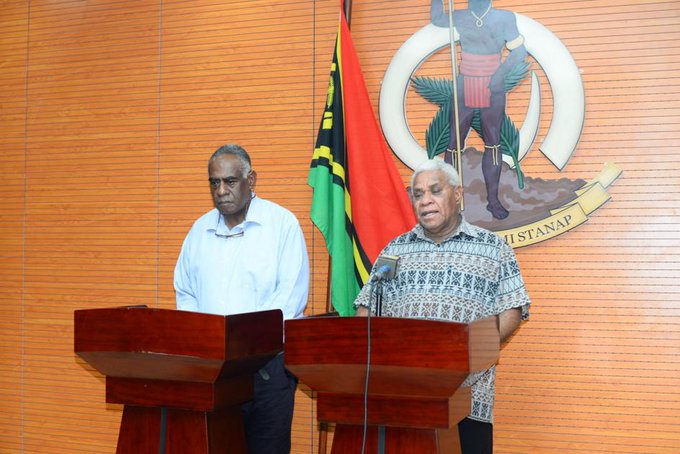
The Loughman-led coalition has welcomed the decision of the Vanuatu Appeal Court that was delivered Friday.

In a press conference, Prime Minister Bob Loughman conveyed his acknowledgment to all church leaders, religious groupings and chiefs for their prayers and continuous moral support during this time when Vanuatu was experiencing a political saga.

He thanked all citizens for adhering to his advice to remain calm and allow court to deal with the matter.

Loughman admitted that while people have their own rights to express their opinion, the final decision would come from the court.

Echoing the words of Loughman, Deputy Prime Minister and Minister of Internal Affairs, Ishmael Kalsakau also thanked everyone for maintaining peace at a time when things were tense until “justice had been delivered to the satisfaction of everyone”.

Kalsakau also commended the leadership of PM Loughman.

He stressed that it was unfortunate that a particular point of law had almost placed on hold all the machineries of the government.

DPM admitted that the situation had resulted in loss of public fund during a time when everyone were expected to focus on development of this nation.

To all “fake ID users on Facebook, keyboard warriors, ‘bush lawyers’ who graduated from Facebook, it is time for everyone to take a lesson of humility.

“When there is a case before court, we allow justice to take its course.”

He said the case to question as to whether the MPs were never absent is before the court.

DPM reiterated that they were never absent from the three consecutive meetings. He asked of everyone to remain humbled and let justice deliver its judgment where deemed fit.

He said the government has plans to work for. His message to the people is to focus on Vanuatu, tomorrow.

SOURCE: VANUATU DAILY POST/PACNEWS

Fiji’s Vuniwaqa vies for top UN Women job

Fiji’s Minister for Women, Children and Poverty Alleviation, Mereseini Vuniwaqa has applied to be the new executive director of UN Women, the United Nations agency dedicated to gender equality and the empowerment of women.

Vuniwaqa is one of several candidates who have applied from the Asia-Pacific, to replace former South African vice president, Phumzile Mlambo-Ngcuka, who leaves after eight years heading UN Women.

It’s understood Fiji’s Pacific Island neighbours, who make up a substantial voting bloc in the UN, have been canvassed on their support for Vuniwaqa, with other senior Pacific women making the calls.

The Pass Blue news service reports that other rumoured candidates include the current UN Women deputy heads, Asa Regner of Sweden and Anita Bhatia of India, Radhika Coomaraswamy of Sri Lanka, Kang Kyung-wha of South Korea, Zineb Touimi-Benjelloun of Morocco and Sima Sami Bahous of Jordan.

Applications for the role are still open, with the original 28 June deadline extended. Credible applicants need the endorsement of their governments.

UN Secretary-General António Guterres makes the final call on the appointment, although it is done with an eye to representation, the membership’s wishes and the track records of the candidates.

In the Pacific, UN Women works on ending gender-based violence, through economic empowerment initiatives such as its ‘Markets for Change’ programme, providing humanitarian assistance, and support for women in leadership and political representation.

SOURCE: ISLANDS BUSINESS/PACNEWS

Fijian Government announces $200m unemployment income support, unveils US$1.78 billion Covid-19 budget

0

The Fijian Government has announced a $200million(US$100 million) in unemployment income support to Fijians affected by COVID-19, both in the formal and informal sectors.

Attorney-General and Minister for Economy Aiyaz Sayed-Khaiyum made the announcement while delivering the 2021-2022 National Budget in Parliament Friday.

He announced that beginning from 01 August, 2021, every affected Fijian will be entitled to a monthly allowance of $120(US$60) for six months, which will be made in two lump-sum payments.

“The first lump-sum payout of $360 per person will be done in August 2021 to cater for the three months from August to October, with a total estimated payout of around $100million(US$50 million),” Sayed-Khaiyum said.

“This support will assist individuals who are in the formal and informal sectors, are above the age of 18 years, living in Viti Levu, and do not benefit from any social welfare payments, education allowances, any other government-funded assistance or withdrawals from FNPF.

“This assistance will only be provided to those eligible individuals who have received at least their first dose of the COVID-19 vaccine before the application period ends. Eligible Fijians have at least three weeks to ensure that they get at least the first dose of the COVID-19 vaccine. No jabs, no assistance.”

Sayed-Khaiyum said the Government would make the second payment of $360 in November to eligible Fijians provided they were fully vaccinated by 31 October, with a total estimated payout of an additional $100m(US$50 million).

“This payment will cater for the three months ending January 2022. We will make medical exceptions for those with a certificate from the PS for Health and Medical Services,” he said.

Meanwhile, Fiji’s National Budget worth US$1.78 billion announced on Friday night is designed with three objectives, all of it linked to the Covid-19 pandemic.

Aimed at protecting Fijians from the coronavirus, supporting individuals and businesses and ‘future proofing Fiji,’ the government relies on loans to make up almost 45 percent of the funds it needs to run the country into 2022.

In his address to Parliament, Attorney-General and Minister for Economy Aiyaz Sayed-Khaiyum, said the aim is to protect Fijians from the escalating Covid-19 crisis.

His comments come amid record daily case numbers and deaths reported by the health ministry – over 11,000 positive people are in isolation with more than 80 deaths confirmed in this latest outbreak that began in April.

Sayed-Khaiyum said there was nothing ordinary about this Budget.

“There is nothing ordinary about our lives at this moment. Never has a person’s well being and the health of our economy be more intertwined. And so this will not be an ordinary budget,” he said.

“We are still deep in the world’s worst economic crisis in a century. This pandemic has stolen jobs and precious life. It has kept families apart, in times of celebration and sadness.

“It has crippled industries built through strong vision and years of steady investment. The arrival of the more virulent variants has sent its devastating toll to painful, new heights.”

Funded by government revenue of US$1 billion of which about US$220 million is expected to come from direct taxes.

Sayed-Khaiyum said indirect taxes should bring in another US$530 million, the deficit of US$770 million from local and overseas loans.

The government’s vaccination rollout campaign took centre stage as it built incentives for Fijians to get immunised through various measures to achieve a goal of immunising 80 percent of the 587,651 adults in the country by 31 October.

Asserting the safety of vaccines, Sayed-Khaiyum said they were key to reopening Fiji’s economy at full capacity.

He said the government would hasten its goal of vaccinating every eligible Fijian because it “is the most essential element to protecting ourselves and pave the way to a sustainable and Covid-safe economy, and way of life.”

The Budget, due for review in six months, includes government-funded benefits to those who take the vaccines as well as obligations to those who receive government allowances and scholarships.

“The government will not sit idly by and wait for fate to control our destiny. We have a vision through decisive action and leadership. We will see that vision come true, come what may.”

“We expect to have at least 80 percent of the 587,651 Fijians who make up our target population fully vaccinated by 31 October this year. In other words, 470,121 adults. In a night full of numbers, this is the most important metric, I will mention.”

Meanwhile, the budget was designed to quell increasing anti-government sentiment says opposition.

But Shadow Minister for the Economy and leader of the opposition National Federation Party, Biman Prasad, does not believe that the government can realise its revenue plans.

Professor Prasad, an economist, said the Budget was designed to quell increasing anti-government sentiment.

Fijians are expected to go to the polls in next year’s General Election.

“There are lots of promises of ‘we will pay for this, and we will pay for that’ but just like in the past, the reality of the matter is that these schemes never work.

“It’s a budget based on assumptions that will, like other budgets, result in hopelessness and despair.”

Professor Prasad called it a ‘bogus budget’ that was overly optimistic, but which avoided acknowledging the reality of the Covid crisis in the country.

He said government reliance on its ability to collect U$S1billion in revenue was worrying and “it did not take into account the exponential rise in Covid cases.

“In short, it is a really good budget because the minister and his government realised that people are angry and anxious. People know that this government has failed in dealing effectively with the Covid crisis.

“He is also signalling deep cuts to government spending if we don’t get there, and telling us ‘It will be people’s fault,”, Professor Prasad said.

SOURCE: FIJI TIMES/RNZ PACIFIC/PACNEWS

Convening Parliament court’s power: Samoa Law Society

Samoa’s Court of Appeal, which sat on Friday with a view to determining a case that could finally settle a three-month long national political impasse, has been told that it has the constitutional power to force Parliament to convene.

The question of whether the courts have the legal right to convene Parliament, or whether that power is exclusively vested in the Head of State, lies at the heart of a question that has left Samoa without a new Government more than 100 days since it held national elections.

Joining the case not as a directly affected party but as an intervenor, the Samoa Law Society (SLS) said the constitution gives the courts the ultimate powers to overrule other parts of the law.

This contradicts claims by the existing caretaker Government and its refusal to commit to a Parliamentary sitting: that only the Head of State and not the court may convene Parliament.

(If Parliament would convene, the election winning Fa’atuatua i le Atua Samoa ua Tasi (FAST) party would have the numbers to form a new Government if Parliament were to convene, ousting the Human Rights Protection Party’s (HRPP) current caretaker Government).

In their submission in the Appeal Court on Friday, Robert Lithgow QC, acting for the SLS said their concern primarily was upholding the rule of law, the bedrock of which is the nation’s constitution.

He said the society supports the courts’ supremacy but does not do so with any regard to the political outcome of its conclusions.

But he said something has stood in the way of the Legislative Assembly convening despite its clear power to force Parliament to sit within a day.

When that order is made, Lithgow said there must be no ‘ifs’ or ‘buts’ and should it wait until a court application is made it is exactly what constitutional law must avoid.

He said the constitution, as the supreme law of the land, could not be “bolted” down by interested parties but it had a broader, higher purpose: protecting the central interests of the Samoan people as expressed by them in their recent election.

Lithgow also submitted that the question of whether the Government changes after forthcorthcoming by-elections may eventually lead to a change in the current composition of Parliament was not at all relevant.

Unlike New Zealand, that doesn’t have a Constitution, Lithgow says the Constitution gives the Court all the powers necessary to make the laws of Samoa work and operate.

“Any law or legislative instrument that is inconsistent with that gives way [to the Constitution],” the lawyer said.

“The courts of New Zealand don’t have the wide power given to you by your constitution.

“In some countries it’s other bodies but in Samoa it’s the court starting with the Supreme Court and then the Court of Appeal…”

The appellant in the matter is the Attorney General; the FAST party is the respondent.

The Attorney General is seeking to stay the execution of part of a decision made by the Supreme Court that ordered Parliament to meet within seven days.

The HRPP, whose leader, Tuila’epa Sa’ilele Malielegaoi has repeatedly refused to concede the court’s ability to deliver orders on Parliament’s sitting, is the other party in the proceeding.

The Law Society, which takes a neutral position in the appeal, submits that Article 52, notes the Legislative Assembly shall meet where the Head of State appoints from time to time.

But Lithgow said at the second part of the Article is a legal concrete wall: one that prevents Parliament from being called more than 45 days after a national election is held.

(In the case of the 09 April election that period expired on 24 May. On that day day the FAST party held its own informal swearing-in ceremony that was also struck down as unconstitutional by the most recent Supreme Court decision calling for Parliament sit within seven days.)

Lithgow agreed that the current delay and lapse in legal obligation would be entirely consistent with the proposition that the Head of State (HOS) is functus officio (past the point at which he may make his own decisions about Parliament sitting) under those provisions.

Lithgow says he means no disrespect to the Head of State’s other rules, such as making advice on emergency powers; but the window in which he was legally obliged to call Parliament to sit has since closed (functus).

In addition to ordering that Parliament sit within seven days, the earlier Supreme Court ruling concluded that an ad-hoc swearing in event held on the lawns of the Legislative Assembly, on the final, 45th day after the election was deemed unconstitutional. The swearing in was attended by 26 F.A.S.T. M.P.s-elect but not public officials such as the Head of State. Their roles, the gathered members voted, would be replaced by a vote, including a vote on who would serve as Parliament’s Speaker or the Clerk of the Legislative Assembly.

The Law Society also addressed the proposition that the election of the Speaker couldn’t have occurred because the Head of State wasn’t present at the purported event.

Lithgow pointed out that under the constitution it is necessary for the Speaker to be elected and deemed to be duly elected and the expression shall be endorsed by the Assembly.

The Speaker’s sworn oath is administered by the Head of State but Lithgow asked the hypothetical question of what should happen if the Head of State is not present for whatever reason.

He says the Speaker’s oath in the constitution, reminds those being sworn in of their allegiance to the Almighty God and the obligations of the office.

The lawyer argued that the Head of State is merely given a ceremonial task to administer the oath; the oath is not to the Head of State himself.

“The Head of State does not add anything to the meaning of the oath or the obligation that the office holder or the elected representative takes on,” said Lithgow.

“What happens if the Head of State and the Executive Council decline to involve themselves for whatever reason and can’t get there [… and serve that] administrative function?

“A normal proposition would be or using fancy legal term of cy-près or nearest or closest. Somebody has got to do it; it doesn’t stop because the oath administrator can’t make it.”

(The cy-près doctrine in English law allows the court to amend a legal document to enforce it “as near as possible” to its original intent in cases when it is impossible, impracticable or illegal to enforce under its original terms.)

The law society submitted that the cy-pres doctrine could be something that the Court of Appeal considered as part of its decision on the issue of who was to administer and take the oath; and if the actions of FAST party in choosing their own administrator were insufficient.

Lithgow says there has to be a meeting of the Assembly in the future because none has taken place already, long past the date at which it is legally mandated.

He says the court was entitled to anticipate that the Head of State may not be there and so the question returns to who is going to perform the swearing-in.

He added that this is precisely the reason an anticipatory order made to be sure that the Legislative Assembly convenes.

“The Government is a creation of the Legislative Assembly and the Legislative Assembly comes from the constitution not the other way around,” the Law Society’s barrister said.

“Obviously we can look at what happens to date with many frustrations and to have opinions about what other people should and shouldn’t have done.

“The answer has to be found in the constitution.

“[The] Supreme Law of Samoa creates the Head of State; the Head of State who holds that office from time to time has powers and [its office] also has simple administrative tasks to be part of the ceremonial chain…”

But refusing to administer the oath simply is not a constitutional option available to the Head of State; he is bound to act within the rules of the constitution.

“You [the Courts] on the other hand have original appellate jurisdiction to exercise all judiciary powers necessary to administer the laws of Samoa,” he said.

“So bluntly that would be Samoa requires a Legislative Assembly to meet within 45 days, when it’s not done who has the backup authority to make sure it happens then that must be you.”

Another issue addressed by the Samoa Law Society in their submission were the orders from the Supreme Court that ordered convening of parliament.

The society said the Supreme Court may have worked on the assumption that various constitutional actors and the Head of State would obey the court and obey the order.

Parliament did not, as ordered, convene within the seven days the Supreme Court ordered but its orders were instead appealed by the Attorney-General who sought to recall the order.

That motion is being supported by the HRPP party.

The Law Society is saying that actions from the constitutional actors speak louder than words and that those involved simply refused to do what the court had ordered.

“An ordinary language is what more do you need to know if they won’t do it,” said Lithgow.

He said this could possibly allow the court to reach the conclusion that the impromptu swearing-in of FAST. Members-elect outside the lawn of Parliament was in factright because other constitutional actors would go on to frustrate the demands of the law.

That is separate from whether they were compelled by the Constitution, that they had to meet and had had no choice; that it had to be done, he submitted.

“They gave it the best go,” the QC said.

“If they made mistakes [FAST’s] primary proposition is they were near enough because the critical issue is to have a Legislative Assembly.”

He maintained the constitution must not be locked down by interested parties to prevent its job of upholding the interests of the people of Samoa and the expression of their will at the election.

By contrast, in their submission, the Attorney-General’s Office, represented by barrister Paul Rishworth, QC, outlined their grounds of appeal were prompted by the confusing nature of the Supreme Court’s decision, which was handed down last month.

He submitted the orders made were beyond the scope of the Attorney-General to give effect to; she had been instructed to advise other constitutional actors to convene Parliament within seven days.

According to Rishworth the orders made were premised on an unwarranted finding of delay and procrastination and related to a proclamation that related to a passed or lapsed date.

He argued the orders were incapable of being executed because they required a new proclamation which could not be made by the Attorney-General but only the Head of State

“In the court below if the Assembly is invalid then the matter stops there,” the court heard.

“The Constitution speaks on what happens next.

“But surprisingly with the judgment [from the Supreme Court] it not only answered the question, it made further orders about what the Attorney-General should do.

“The framing of the case by the court below is that the Attorney-General was not representing the government but representing something else on a personal capacity other than for the Government.

“We strongly oppose that and appeal the orders as [ambiguous in regard to] the nature of the Attorney-General…”

Rishworth maintained that the Attorney-General did not appear in her personal capacity but only in that of her role as the Attorney-General under the constitution.

He said the Attorney-General brought the current proceeding to seek clarity and there was nothing inconsistent about having done so.

He submitted that the Supreme Court was given a question to answer on the validity of the swearing-in and it was wrong to deliver other orders that were not part of that sole question (such as when or if Parliament should convene).

Lithgow also made submissions for the HRPP.

He said the party supports the motion from the Attorney-General for the court to recall part of its decision relating to the sitting of Parliament and whether it required that the “doctrine of necessity” should be revisited or if the Attorney-General could be ordered to advise key actors about the ruling

Lithgow also told the Appellate Court that there is a new question that needs to be answered: namely, when the constitution’s counting down of the 45 days post- election sitting requirement begins and what happens should it pass by.

He said the question of uncertainty cuts both ways saying that the Head of State’s political judgement is consistent with his decision on when to calculate the 45 days.

The HRPP lawyer also submitted that the Attorney-General while providing legal advice to key constitutional figures should not being equated as being their representative to the proceedings.

His point is that if the court is to make orders on the Government and other parties that are not represented in the appeal it without them having a say in the matter.

But Chief Justice,  Satiu Simativa Perese, told the lawyer that the Attorney-General was instructed to serve all parties with the current proceeding so they could choose whether to follow them or not.

He said that all the parties including the Head of State, caretaker Prime Minister and others were served and were given the opportunity to be party to the case.

Only the Speaker on behalf of his lawyer Ruby Drake appeared out of courtesy but did not want to be party to the proceeding.

The FAST overseas lawyer that participated via video link Ben Keith had contested the arguments from the Attorney-General

Keith said the orders from the Supreme Court were neither excessive nor unfair to the Attorney-General

He said there were proper grounds on which the court could exercise its discretion to afford such declaration as it considered necessary.

The grounds for the declarations as made, he said, were raised through the respondent’s pleadings and were in issue in argument before the Court.

More concretely, he said, the circumstances giving rise to the declarations and the continued non-compliance with article 52.

“There is no imprecision or confusion in the three orders they required mainly that the Parliament convene in accordance with Article 52,” he said.

“The orders made by the Court below were necessarily made in terms of the constitutional role of that office under article 41.

Even if a new proclamation had been required the premise of the orders of the court below is that the head of State will act in accordance with the orders of the Court including where necessary with the advice of the Attorney-General…”

The Apellate Court was chaired by Chief Justice Perese sitting with Justice Niava Mata Tuatagaloa and Justice Tafaoimalo Leilani Tuala-Warren.
Its decision has been reserved and will be delivered before 02 August.

SOURCE: SAMOA OBSERVER/PACNEWS
Stay connected

529FansLike
172FollowersFollow
156SubscribersSubscribe
- Advertisement -