Home Blog Page 1177

We don’t want Suva to be burnt like before: Fiji Defence Minister

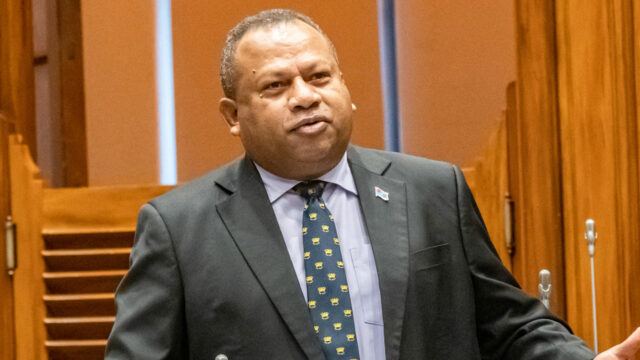
Fijian Defence Minister Inia Seruiratu has shed some light on why politicians have been taken in for questioning in relation to Bill 17.

Members of the Social Democratic Liberal Party (SODELPA), the National Federation Party (NFP) and the Fiji Labour Party (FLP) have been questioned by the Criminal Investigations Department over the past week.

Speaking in parliament Friday, Seruiratu pointed to Fiji’s past upheavals where iTaukei landowners were lied to and used to cause public unrest.

“I’m sorry that people are being interviewed by police, but the police are doing their job because of the mistakes of what has happened in the past. We don’t want Suva to be burnt again. Whatever statement we are making let’s do it with responsibility because words are powerful.”

Police have also increased their public presence and monitoring in the past few days saying it’s related to comments being made on Bill 17 and the possibility that it could lead to incitement.

Meanwhile, misinformation about the iTaukei Land Trust Amendment Bill has caused strife among Fijians.

Minister for Infrastrucutre, Jone Usamate has supported Bill 17 in parliament saying it is for the benefit of landowners and tenants.

Usamate also said a number of lies about the Bill have been propagated by members of the Oppositon in parliament

“What government has been doing has not created instability. It is the false information about the Bill that is causing instability. Those false statements are creating misinformation about what the Bill is all about.”

Minister for Economy, Aiyaz Sayed-Khaiyum said the passage of Bill 17 will result in more efficiency in developing iTaukei land by tenants and investors.

Sayed-Khaiyum has told parliament that the amendments to the iTaukei Land Trust Act will remove the requirement for tenants to seek approval before any development can take place.

He said there is already a backlog that needs to be dealt with.

In another development, Parliament has passed the iTaukei Land Trust Bill this afternoon.

The Bill was debated extensively in the House today, however, the government with a majority in the House passed the amendments by acclamation.

Prime Minister Voreqe Bainimarama before the vote had expressed disappointment that iTaukei landowners had been tricked into signing a petition against the Bill.

“To the people who signed the petition under false pretences, you should demand an apology. They asked you to affix your good name to a lie. You have been misled.”

The Bill was passed along with a host of other consequential amendments which were brought to parliament along with the 2021-2022 National Budget.

SOURCE: FBC NEWS/PACNEWS

NZ monitoring ongoing arrests of Fiji opposition politicians

New Zealand has reiterated its concern with ongoing police questioning of opposition politicians in Fiji.

Several opposition MPs as well as two former prime ministers have been taken in by police this week.

Police said the opposition members were being questioned under the Public Order Act in relation to their criticism of a government land bill.

The Ministry of Foreign Affairs voiced New Zealand’s concern following the first spate of arrests on Sunday

Following ongoing detention of political figures in the past two days, a ministry spokesperson says the government is continuing to monitor the situation in Fiji.

They said the New Zealand High Commission in Suva is making inquiries with Fiji officials to ascertain further details.

New Zealand’s government says it’s in ongoing dialogue with Fiji regarding how it can further support its worsening health crisis.

Fiji reported 1,301 new cases of Covid-19 in its latest daily update, while nine more people have died, taking the death toll to 227.

Fiji’s government says it wants to exhaust all domestic options before having more health workers flown in from overseas.

Small contingents of Australian and New Zealand medical workers have been in Fiji since June.

On 17 July a second group of New Zealanders was deployed to Fiji, joining a Medical Assistance Team alongside Australian partners.

According to the Ministry of Foreign Affairs, the group includes an anaesthetist, a public health physician, a registered nurse, a logistician, and a liaison officer.

“The team is working with the Fiji Health Ministry to support operations at the Colonial War Memorial Hospital in Suva, Fiji’s primary Covid-19 treatment hospital.

“The public health physician has also been providing advisory support to Fiji’s Covid-19 incident management team,” the spokesperson said.

Fiji’s Health Secretary Dr James Fong said the New Zealand medical personnel were looking at how Fiji can utilise all its resources effectively.

“They are looking at how we can ensure that we have utilised efficiently all our resources, and then we bring in extra help” Dr Fong explained.

“We’ve got that process going right now. We are getting into that space we we are being able to deal more effectively with what we’ve got.”

New Zealand’s Ministry of Foreign Affairs said the government stands ready to respond to further requests for assistance.

Dr Fong has denied a claim in an Australian media report that Fiji health care workers symptomatic with Covid-19 have been told they must continue working to ensure health clinics are operating at full capacity.

“At no point did we say that a positive person, especially a positive person who is symptomatic, should continue working.

“We just escalated our PPE programme, just like they do in every other country that’s in mitigation phase, to ensure that any contact with a positive person is a low risk contact”.

Meanwhile, a New Zealand government minister has described the decision to allow a critically ill UN worker to be medevacced from Fiji as an operational rather than political decision.

The Covid-19-infected patient was flown to Auckland for treatment last night, despite the Ministry of Health’s earlier decision to decline the transfer.

Regarding the change, the acting Covid-19 Response Minister, Ayesha Verrall, said it was an operational decision between clinicians and the ministry.

“So, no I didn’t have visibility of that, and I’m not aware of the specifics,” she told reporters at a mass vaccination event in Auckland this morning.

“But just from my experience as a doctor, these are complex issues, transferring critically ill people between countries, and it’s normal to have a bit of back and forth about those things.”

The request was initially declined for “capacity reasons” but the ministry said the situation was changeable at Auckland intensive care units.

SOURCE: RNZ PACIFIC/PACNEWS

Federated States of Micronesia makes COVID-19 vaccine mandatory

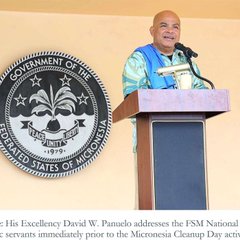
The Federated States of Micronesia (FSM) has become one of the first nations to adopt mandatory COVID-19 vaccinations.

Everyone in the western Pacific country over the age of 18 will be required to be vaccinated.

President David Panuelo saidit’s a necessary step to achieve heard immunity.

“We have 58-thousand of our population who are eligible and these are individuals that are subject to getting that vaccine, and congress has just made that compulsory,” he said.

“We are so fortunate that we are still one of COVID-19 free countries in the world.””

Panuelo told Pacific Beat the government hopes to have more than 70 per cent of population vaccinated by Christmas, but some people will not be required to get the jab.

“People who have vulnerable health conditions, pregnant women and children under 18… are not subject to the mandatory vaccinations.”

“We see that we are going to reach our 70 percent target and we should even to go beyond that.”

“People with vulnerable health conditions, pregnant women and children under 18… are not subject to the mandatory vaccinations.”

“We see that we are going to reach our 70 percent target and we should even to go beyond that.”

“My hope is that we reach heard immunity by Christmas, so we can move from COVID-19 free to COVID-19 protected,” he said.

The FSM President has acknowledged that some people remain vaccine hesitant but that health officials are working to convince them of the benefits.

“Like in very country we have people who are hesitant.”

“Those are the issues we are going to deal with… but we are [campaigning] fairly aggressively so that we can share the importance and benefits of getting vaccinated,” he said.

“Rather than laying back in our hammock thinking we are okay … [we are] getting out and explaining the benefits of getting vaccinated so we can be safe from this deadly virus.”

Meanwhile, FSM and the United States have agreed on a plan to build a military base in the Pacific nation.

The two countries have a long-standing relationship through the treaty known as the Compact of Free Association.

FSM also maintains diplomatic ties with China but President David Panuelo does not believe the plan for the new base will harm that relationship.

“We have that right to delegate some of the defence responsibility to a close ally and in this case with the United States,” he said.

SOURCE: ABC/PACNEWS

Five people arrested for possessing washed-up cocaine in Vava’u

The Tongan Police Drugs Enforcement Taskforce has arrested five people relating to the washed-up cocaine in Vava’u.

The Taskforce raided three residences last night, two in Vava’u and the third in Tongatapu.

A 28-year-old male was arrested together with his 30-year-old wife and a 61-year-old male from a home in Ha’alaufuli along with five packages of cocaine. They have been charged with possession and with engaging with others in the supply of illicit drugs.

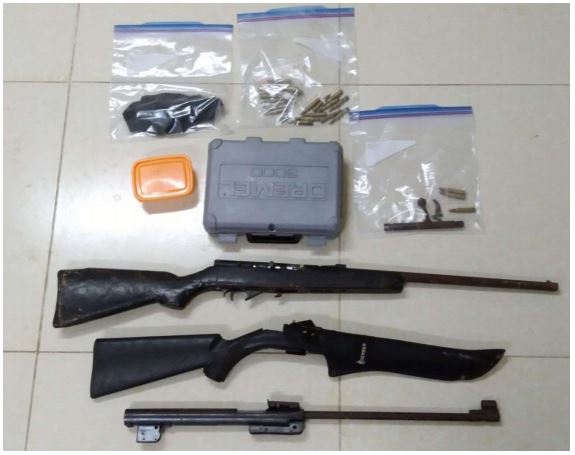
The second home raided, located at ‘Utulangivaka, Police arrested a 27-year-old male and seized approximately 1 gram of cocaine and unlicensed .22 rifle and ammunition. Related criminal charges have been laid against him.

Taskforce officers also arrested a 38-year-old male from a home at Nukunuku for having engaged with others in the supply of illicit drugs. He is from ‘Utulangivaka and has recently arrived in Tongatapu from Vava’u.

“We suspect that some of the washed-up drugs are still in the community. I urge yet again any member of the public who has in their possession any of the washed-up cocaine to do the right thing and surrender the drugs to the Police,” said Detective Acting Deputy Commissioner of Police Halatoa Taufa.

“Appropriate police resources have been deployed to hunt down anyone who dares to hide or distribute any of the washed-up cocaine. We will continue to make arrests if you choose not to cooperate.” said Taufa.

“We can work together as one people to protect our children, families, and communities from the harmful effects of drugs. Contact Police if you know any information that would help,” said Taufa.

SOURCE: TONGA WIRES/PACNEWS

Study: Warming Waters Threaten Tuna-Dependent Economies in the Pacific

Climate change is driving tuna further to the east, threatening the economic security of several small island nations

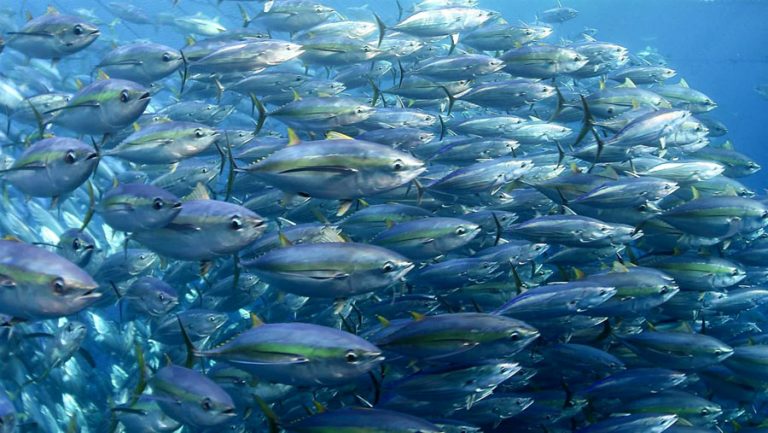
Global warming is expected to progressively push tuna populations from the waters of 10 Pacific Small Island Developing States (SIDS) into the high seas, disrupting island economies, according to a new collaborative study by Conservation International and a consortium of technical agencies, including The Pacific Community (SPC), the Pacific Islands Forum Fisheries Agency (FFA), the Parties to the Nauru Agreement Office (PNAO), the University of Wollongong and their partners.

The research, published today in the journal Nature Sustainability, explores the impacts of ocean warming on tuna and quantifies the potential financial losses that these Pacific SIDS are likely to incur as tuna are redistributed due to climate change.

The robust modelling done during the multi-disciplinary study demonstrates that if ocean warming continues at current rates the tuna catch in the combined waters of the 10 Pacific SIDS is expected to decline by an average of 20% by 2050.

“This is a climate justice issue,” said Johann Bell, lead author and the Senior Director of Tuna Fisheries at Conservation International’s Centre for Oceans. “The 10 Pacific SIDS have a deep economic dependence on tuna fishing but contribute little to global warming. In contrast, nations responsible for 60% of historical greenhouse gas (GHG) emissions would benefit from the migration of tuna to the high seas.”

“The new modelling shows for the first time that tuna catches are likely to decrease in each of the 10 Pacific SIDS by 2050 under a high GHG scenario,” said Simon Nicol, Principal Fisheries Scientist (Fisheries and Ecosystem Monitoring and Analysis) at SPC. “Previous modelling indicated that some of the 10 Pacific SIDS would be losers and others would be winners from tuna redistribution. This new study demonstrates that all of the 10 tuna-dependent economies will be negatively impacted.”

The lower tuna catches are expected to reduce the access fees that Pacific SIDS receive from distant-water fishing nations to operate in their waters, resulting in annual losses of total government revenue in the range of 8-17% for some Pacific SIDS by 2050 under a high emissions scenario.

Such losses, according to the Director-General of Pacific Islands Forum Fisheries Agency, Manu Tupou-Roosen, will have serious consequences for governments and Pacific people, who depend on tuna revenue to support livelihoods and vital programmes in key sectors such as education and health. “The losses are also expected to reduce the financial flexibility needed to assist communities to adapt to climate change,” she said.

The study identifies two pathways that would likely limit the impacts of tuna migration on the region:

*Implementing ambitious action plans from the largest GHG emitters to curb emissions and limit global warming to 1.5°C, in line with the Paris Agreement. This would largely prevent redistribution of tuna.
*Enabling Pacific SIDS to negotiate, through the Western and Central Pacific Fisheries Commission (WCPFC), to maintain the benefits they receive from tuna, regardless of the effects of climate change on the distribution of the fish.

“Pacific SIDs are disproportionately suffering from a crisis for which they are hardly responsible. Tuna redistribution is one of the many consequences of climate change, which is expected to further weaken Pacific economies and important food systems already heavily impacted by COVID-19. This critical situation has already been raised in several international fora including the UN Security Council and will be highlighted by the Pacific Island region at COP26 in Glasgow, and we strongly hope that it will lead to concrete commitments by the COP and the UNFCCC architecture including its financing mechanisms” said Stuart Minchin, Director-General of SPC.

The study also shows that tuna redistribution has implications for management of one of the world’s largest fisheries.

“When tuna move from the exclusive economic zones of Pacific SIDS to the high seas, it is more difficult to enforce the regulations designed to sustain the stocks and the economies that rely on them,” said Sangaalofa Clark, CEO of the Office of the Parties to the Nauru Agreement – the Pacific Island countries that have implemented the world-class ‘vessel day scheme’ to manage tuna catches sustainably within their combined waters.

According to Quentin Hanich from the University of Wollongong, the implications of tuna redistribution are potentially severe and need to be addressed through cooperative management consistent with the international legal framework. “The WCPFC, has already begun to consider such issues and adopted a Resolution on Climate Change in 2019,” he said.

New levels of co-operation between the two regional fisheries management organisations responsible for regulating tuna fishing in the high-seas areas of the Western and Central Pacific Ocean and in the Eastern Pacific Ocean will also be needed to ensure a balance that benefits both natural resources and Pacific Island economies.

The study, “Pathways to sustaining tuna-dependent Pacific Island economies during climate change” was co-authored by scientists and other experts from 21 institutions. It is dedicated to the late Sue Taei, former Executive Director of Conservation International’s programmes in the Pacific Island region, and the first person to call for an investigation of the climate justice implications of tuna redistribution.

The 10 SIDs included in this study are: Cook Islands, Federated States of Micronesia, Kiribati, Marshall Islands, Nauru, Palau, Papua New Guinea, Solomon Islands, Tokelau and Tuvalu.

Media contacts

Jessica Brown, Media Relations Specialist, Conservation International, Washington DC | jbrown@conservation.org or 734-748-7361

Toky Rasoloarimanana, Communications Officer, Fisheries, Aquaculture and Marine Ecosystems Division, Pacific Community (SPC), Noumea | tokyr@spc.int or Whatsapp : +230 57433661

Samantha Mattila, Strategic Communications Manager, Pacific Island Forum Fisheries Agency (FFA), Solomon Islands | Samantha.mattila@ffa.int or +61 434 567 673

SOURCE: SPC/FFA/CONSERVATION INTERNATIONAL/PACNEWS

First FAST cabinet down to work – when the impossible happens

By Lagi Keresoma

The year 2021 is already down in Samoa’s modern history as when some compelling political events occurred. But significantly, when a party that has been in power for 36 years refuses to give up power after the general elections and ‘red herrings’ were thrown in the way and causing a three months long political crisis.

The barely year old FAST Party, led by Samoa’s first woman Prime Minister has finally unseated a party led by a Prime Minister of 22 years in power.

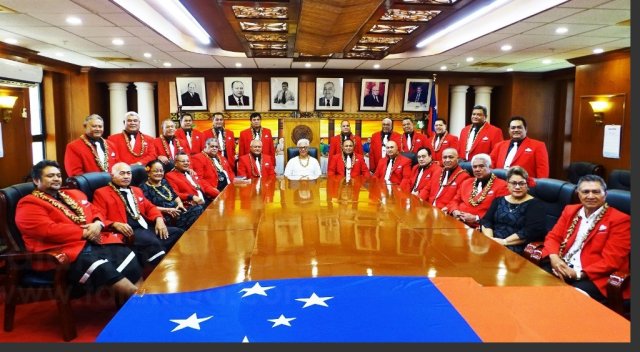
Finally taking office on Tuesday this week, 27 July 2021, the seeming impossible in a masculine dominated society has happened.

Mata’afa moved into office with her 12 Cabinet members and are down to work. Apart from her and La’auli as former Cabinet Ministers, the rest are all new.

The other two FAST party women MPs are also in Cabinet. All 12 Associate Ministers are first time Members of Parliament.

FIAME NAOMI MATA’AFA – Prime Minister, Ministry of Foreign Affairs and Trade, Public Service Commission, Office of the Attorney General, Ombudsman, Ministry of Natural Resources and Environment, Samoa Tourism Authority.

Other Responsibilities: Executive Council, Honours and Awards, Remuneration Tribunal, Cabinet Development Committee, National Disaster, National Parks, Recreation and Water Conservation, Meteorology and Forestry.

Mata’afa is no stranger to politics. Her father, Fiame Mata’afa Faumuina Mulinuu 11 was Samoa’s first Prime Minister upon the country’s independence in January 1962. Her mother, Laulu Fetauimalemau Mataafa was a Member of Parliament and later served as Samoa’s a diplomat abroad.

She grew into politics at a young and tender age.

Mata’afa was educated locally and moved abroad for higher education at the Samuel Marsden College and Victoria University in New Zealand.

After the sudden passing of her father in 1975, she was asked to return home and bestowed the Tama Aiga title Fiame previously carried by her father. She was only 20 years old.

She entered politics in 1985 aged representing the electoral constituency of Lotofaga once held by her mother.

She said becoming a matai moulded and changed her a lot not only in her family, village and district but how she relates to male MPs and political leaders when she entered politics and served under the late Tofilau Eti Alesana and Tuilaepa Sailele Malielegaoi.

Her Associate Minister is first time MP, orator Manuleleua Paletasala Tovale.

TUALA TEVAGA IOSEFO PONIFASIO – Deputy Prime Minister, Ministry of Customs and Revenue, Audit Office, Public Trust Office. Other Responsibilities: Liquor Board, Revenue Board

A lawyer by profession, Tuala is a graduate of Auckland University. He is married to lawyer Fuimaono Sarona and run their own law firm.

A first time MP, after trying several times, he held the balance of power when the general election result tied at 25 all.

He gave the FAST Party the majority and the political party to become the Government of the day.

MULIPOLA ANAROSA ALE-MOLIO’O– Minister of Finance. National Provident Fund, Central Bank of Samoa, Development Bank of Samoa, Samoa Life Assurance Corporation, SIFA, Unit Trust of Samoa. Other Responsibilities: Tenders Board, Offshore Jurisdiction, Renewable Energy.

An Auditor/Accountant by profession, Mulipola graduate of the National University of Samoa and the University of Canberra, Australia, She is also a business woman who is the Deputy General Manager (Fexco Samoa – Agent for Western Union Money transfer & No1 Currency, Country Manager (Travelex Money Transfer).

She has been very active in development projects to empower communities, especially women at the grassroots level and an active participant and Board member of the Samoa Victim Support Group –a haven for victims of abuse and domestic violence.

As Samoa’s first woman Minister of Finance, she will be in charge of financial side of the FAST Party’s decentralisation policy to uplift the economic well-being of rural communities.

MATAMUA VASATI SILI PULUFANA – Minister of Justice and Courts Administration, Samoa Law Reform Commission. Other Responsibilities: Film Censorship, Registry of Births/Deaths/Marriages, Juvenile Rehabilitation

Matamua is the first woman MP for Fa’asaleleaga No 1. The former teacher and business woman, unseated a highly regarded former Minister of Finance and it is her people skills that she acknowledged as her winning edge.

Although it is her first time as Member of Parliament, she is not a newcomer to politics as her late husband was a Member of Parliament. Before her husband’s passing, he encouraged her to take the challenge and run for Parliament.

Her Associate Minister is Fesola’i Apulu Tusiupu Tuigamala, also a first time Member of Parliament for Aana Alofi No 1.

OLO FITI VAAI – Minister of Works Transport & Infrastructure. Samoa Water Authority, Electric Power Corporation, Samoa Ports Authority, Samoa Airport Authority, Samoa Shipping Corporation, Land Transport Authority, Samoa Shipping Services & PFL. Other Responsibilities: Civil Aviation, PUMA

One of the most outspoken MPs, Olo entered Parliament in 2011 as member of the Samoa Democratic United Party (SDUP) led by his late uncle Leilua Manuao. He later joined the Tautua Samoa party. He has always been an Opposition MP and had fought ably in significant debates with the former Prime Minister who described Olo as a “stirrer in parliament.”

After 15 years as an MP, Olo is become the Minister of Works where the FAST Party’s plans incorporated in its Manifesto will be implemented for the development of the country.

Olo will be assisted by Associate Minister, Niuava Eti Malolo, a former school teacher and environmental scientist who was a Project Manager for the Ministry of the Environment.

LEATINU’U WAYNE SO’OIALO – Minister of Commerce, Industry & Labour (inclusive of Recognized Seasonal Employers Scheme (RSE), Ministry for Public Enterprises, Samoa Land Corporation, Samoa Housing Corporation, Accident Compensation Corporation, Samoa Sports & Facilities Authority, Samoa Airways.
Other Responsibilities: Trade negotiations – WTO, ACP/EU, PACER, PICTA, Samoa Business Hub, Consumer Protection, Government Housing Committee, Totalisator Agency Board (TAB), Samoa Gambling Control Authority.

Another vocal MP, Leatinu’u entered Parliament in 2016 as a member of the Human Rights Protection Party for the Urban West constituency. The party later sacked him due to his outspoken comments against some of the Government’s policies.

He became an Independent MP and later joined FAST party where he now sits as the Minister for Commerce Industry and Labour. He represents the electoral constituency of Faleata No 2.

Prior to his political career, Leatinu’u worked at was then Polynesia Airlines company both locally and abroad and later became a self-employed businessman operating a shipping cargo company.

His Associate Minister is Laga’aia Ti’aitu’au Tufuga, an orator, former teacher, businessman and farmer from Palauli, Savaii.

VALASI LUAPITOFANUA TAFITO SELESELE – Minister of Health, National Kidney Foundation. Other Responsibilities: Oceania University of Medicine, District Hospitals & Health Centre.

Valasi is no stranger to parliament as he served two terms between 1996 and 2001 as an Opposition MP. He was Leader of the Samoa National Democratic Party but combined under the FAST party banner in the Aril general elections. He is a very able debater and a respected orator. Valasi is the Minister of Health.

His Associate Minister is a two time former Opposition MP, Tea Peato who is the oldest Member of Parliament at 80.

FAUALO HARRY JEFFEREY SCHUSTER – Minister of Police and Prisons. Fire and Emergency Services Authority (FESA). Other Responsibilities: Electoral Commission, Traffic Division.

A lawyer by profession, Faualo is a former District Court Judge and previously served one term as an Opposition MP. As law is in the family blood, his younger brother is a sitting Court Judge and his father is a retired Commissioner of Police.

He will be assisted by Associate Minister Fepuleai Fa’asavalu Faimata.

LAAULIALEMALIETOA LEUATEA POLATAIVAO SCHMIDT – Minister for Agriculture & Fisheries. Scientific Research Organisation of Samoa (SROS), Samoa Trust Estates Corporation.

Laauli’s political career was nurtured from a young age being surrounded by a family of politicians including grandfathers, uncles and his late father, who was one of the longest serving MPs and Cabinet Ministers. He first won the Gagaifomauga 3 seat formerly held by his father in 2006.

A former Parliament Speaker, he was appointed Minister for Agriculture and Fisheries in 2016 but resigned from the ministerial post in 2017over a legal battle with another HRPP member.

He told the PM then that “he will be back.” He remained an MP but things got bitter between him and the Prime Minister and he resigned from Parliament.

He founded the FAST Party in 2020 and bounced back after a by-election as the very first FAST party MP in the last few months of the 16th Parliament.

He is the Chairman of the FAST party.

Going back into his old office on Tuesday this week, he was certainly back as the Minister for Agriculture and Fisheries. He will drive the FAST Party agricultural and fisheries projects and policies including a push for agricultural exports through the establishment of an Export Authority.

His Associate Minister is a former teacher Va’ele Iona Pa’ia’aua.

SEU’ULA IOANE – Minister of Education, Sports and Culture (inclusive of NUS, Polytechnic and Pre-Schools), Samoa Qualifications Authority. Other Responsibilities: Museums and Archives, Robert Louis Stevenson Foundation, Scholarship Committee.

The career teacher resigned as a Headmaster to run for the April 2021 general elections. Moving up to the Ministerial post, may help refine some of the gaps he had identified in a long career in education and serving his remote village of Neiafu on the western very end of Savai’i Island and the church.

His Associate Minister is also a career educationalist, Aagaseata Tanuvasa Peto. The major issue is the low levels of literacy and numeracy and the shortage of teachers. The FAST manifesto identifies using technology to bridge the gap but depends on internet coverage and speed.

TOELUPE POUMULINUKU ONESEMO – Minister for Communications, Information and Technology. Office of the Regulator, Legislative Assembly. Other Responsibilities: Radio 2AP, Samoa Post.

He is a Civil Engineer with a Masters degree from the Sydney University, Australia. He also has a Bachelor of Science degree and a Teaching certificate from the University of the South Pacific.

He started his public service in Samoa as a teacher in 2002. He later served at the Ministry of Natural Resources and Environment. In 2015, he was appointed the Chief Executive Officer of the Ministry of Works, Transport and Infrastructure.

A first time MP, Toelupe has a lot in his hands to drive the FAST Party’s manifesto that launched a free Wifi for education in the rural villages but was cut short by the previous government. Despite huge national investment in communication and technology, Samoa is still far from being properly served in coverage and speed.

His Associate Minister is the youngest Member of the current parliament, Magele Sekati Fiaui, a former teacher and a youth, community and church leader.

LEOTA LAKI LAMOSITELE – Minister of Women, Community and Social Development, Samoa Bureau of Statistics. Other Responsibilities: Village Mayors & Sui o le Malo, Non-Government Organisations, Women Health Committee.

Leota is a businessman, farmer and consultant with Masters in Business Administration from the University South Pacific and Masters in Project Management, Southern Queensland University. He has wide experience having worked with the Development Bank for 18 years, the development of Small Businesses, Treasury and as CEO of the National Health Service. Through the Ministry of Women and Community Development, he will be in a crucial position on how to implement the FAST Party’s $51 million tala (US$19 million) funding of village development in its decentralisation policy. Leota is also the Associate Minister of Finance.

His Associate Minister in the Ministry of Women, is respected orator and church deacon, Seuamuli Fasi Toma.

SOURCE: TALAMUA ONLINE/ PACNEWS
Tuilaepa refuses to vacate office: PM Fiame

0

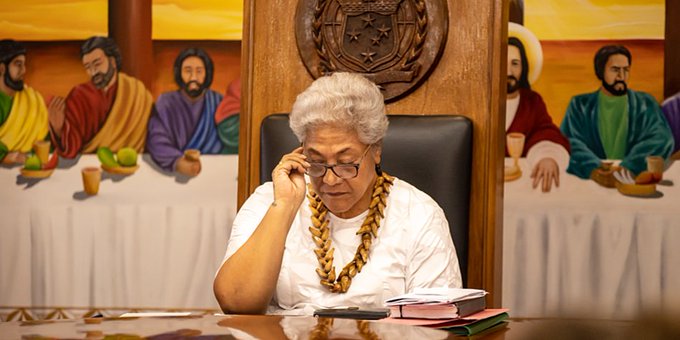
Samoan Prime Minister Fiame Naomi Mata’afa says criticism by the leader of the Human Rights Protection Party(HRPP) against the judiciary is due to his refusal to vacate office, nothing more.

HRPP leader and former Prime Minister, Tuilaepa Dr. Sailele Malielegaoi has continued to criticise the Court claiming that their recent decision destroyed the Constitution.

He has called for a car convoy protest on Friday and a march demonstration next week to support their course, to “uphold the Constitution” which they claim has been disregarded by the judiciary in its recent rulings.

But Fa’atuatua i le Atua Samoa ua Tasi (FAST) leader, who took over the Government’s administration on Tuesday this week, said the claims by the former leader are unfounded and his refusal rejects the results of 09 April 2021 general election.

“The problem is Tuilaepa refuses to leave, nothing more,” she said. “It has dragged on for three months consuming time and money leaving the members of parliament without pay.

“I’m quite shocked about the members of parliament from that side for their patience if this is what they wanted.”

Mata’afa went on to say that the decision by the Appellate Court reconfirms the results from the general election where her party commands a majority of 26 seats.

“The claim that we were appointed by the Court is not right,” she said. “We are in Government because the country chose us. The only thing that the Court has done is to re-confirm that through the law…”

She then referred to previous claims by the HRPP leader that the Parliament cannot convene unless all the petitions and by-elections are dealt with.

But the Court has clarified that claim is inconsistent with the Constitution where Parliament has to convene within 45 days and any vacancy in office will not prevent the business of the Assembly.

“That claim [by the HRPP] was wrong and we all know that after every election Parliament goes on with its business and the Court carries out its work,” she said.

“The truth is any Government is voted in by the people, it’s not something that we made up.

“The country responded on polling day and chose 26 of us from the political party that is the Government…our goal is to deliver what the people wanted and that shouldn’t be stopped by one person or another.”

Earlier this week Tuilaepa said he conceded defeat because continuing the fight would lead to “unrest” and the party wanted to maintain peace and harmony.

However, he maintained that the decision by the Court validated an “unlawful and unconstitutional act”, claiming the new administration is illegitimately in office.

He said the Head of State is a symbol of unity of Samoa and should be protected but the decision was a clear disregard of the highest office of the land.

“[We need to] restore the respect and maintain the supremacy of parliament that is no longer there,” he said.

“Our parliament is a mockery, our Government is a mockery and we need to restore the respect and integrity of the Court system which sadly is no longer there.

“The judiciary failed to discharge its duty as the protector of the Constitution and it has disregarded the powers of the Head of State that is a symbol of our country’s unity.”

In the Appellate Court’s landmark judgement, it ruled that the Head of State’s refusal to carry out the “administration of the oath” should not prevent the formation of a Legislative Assembly after the election.

“We reject the notion that the framers [of the Constitution] intended the administration of the oath of office to rest solely on the Head of State, and that is because as was eloquently submitted by Robert Lithgow QC, on behalf of the Samoa Law Society, the person who makes the oath gives his or her oath to God and not to the Head of State,” the Court of Appeal ruled.

“We consider that the act of swearing in the relevant Offices and members of the Legislative Assembly is a ceremonial role.

“It is by the Constitution a duty which is allocated to the Head of State. However if he does not attend the ceremony then someone else can carry out that ceremonial function.

“We therefore determine that where the Head of State fails or refuses to carry out his constitutional duty to swear in the incoming Government at a convening of parliament he has earlier called, and which proclamation has been endorsed by the Supreme Court, the constitutional purpose of forming a Legislative Assembly can be facilitated by someone else carrying out that ceremonial duty.”

The Court further ruled “for the avoidance of doubt, this means that there has been lawful government in Samoa since 24 May 2021 and that lawful government is the FAST party which holds the majority of the seats in parliament.”

SOURCE: SAMOA OBSERVER/PACNEWS

Dr Rodgers warns Delta Variant can seriously affect Solomon Islands than Fiji

Secretary to the Prime Minister Dr Jimmy Rodgers warns Solomon Islands could be seriously affected by the delta variant of COVID-19 than the current situation in Fiji if all who are eligible do not get vaccinated.

Dr Rodgers made the assurance when he participated in a talk back show via zoom from Fiji.

He said the delta variant of COVID-19 is serious and can affect the country if there is a community transmission.

“Among other things that Fiji has done it well is the screening by mobile teams and clinics. So far since April, they screened more than one million cases. This shows the capacity that Fiji has to screen anyone and everyone in its contact tracings.

“I have mentioned these figures ‘Wantoks’ because if we have the delta variant of COVID-19 in Solomon Islands, I don’t think that we have the capacity to do such screening in Solomon Islands,” Dr Rodgers said.

Dr Rodgers assures Solomon Islands needs to step up with its testing capabilities if there is a community transmission of the virus.

He said about 440,000 of the eligible population in Fiji get their first doses of vaccines which represents nearly 75 percent of the target population.

He said Solomon Islands still has enough time to vaccinate all who are eligible.

“Solomon Islands began its vaccination before Fiji. So far, Fiji has reached nearly half a million of those who get vaccinated. Solomon Islands has enough time to catch up with its vaccination because if the virus reached our shores and transmitted into the community, the only way to protect ourselves is to get vaccinated,” Dr Rodgers said.

Meanwhile, Chair of the Technical Working Group in the Ministry of Health and Medical Services Dr Nemiah Bainivalu said Solomon Islands has conducted a total of 14,307 tests as of last Friday.

Dr Bainivalu said majority of the tests are those for screening purposes at the quarantine centers and follow up checks.

He said the Ministry is planning to expand its testing capabilities in the provinces.

Dr Bainivalu said roughly about 40,404 doses of both AstraZeneca and Sinopharm vaccines were used in the current vaccination roll out.

Of the total doses, only about 10. 000 people have been fully vaccinated.

The Technical Working Group Chair adds, roughly about 18, 000 people of the eligible population are yet to receive their second doses.

He called on those eligible to get vaccinated against the virus.

SOURCE: SIBC/PACNEWS

PM Sogavare cautions Journalists of “Yellow Journalism”

Solomon Islands Prime Minister Manasseh Sogavare has warned the media that the Emergency Powers (COVID-19) (No.2) Regulations 2021 has provisions relating to Yellow Journalism.

Speaking in Parliament on the motion to extend the State of Public Emergency by a further four months in Parliament Thursday, Prime Minister Sogavare said, the rationale for having this provision is to ensure that individuals or the media do not spread rumors or misinformation that may cause disturbances that may divert much needed resources to deal with such disturbances.

“I respect our freedom to express ourselves but I must say that I am extremely disappointed in how some individuals and mainstream media have continued to disseminate rumors and misinformation to our people,” Prime Minister Sogavare said.

He brought to the fore, recent media reports that were published in the past few days as pathetic and disappointing, especially since the publications are mere rumors, misinformation and just outright lies.

“The Government has been very tolerant of these malicious lies and rumors published in the media. We have demonstrated restraint but I must say our patience and restraint is surely tested with this yellow journalism,” Prime Minister Sogavare said.

Press, he adds, though not formally recognised as an established part of the formal political system, does play the role of the watchdog over the formally established three estates of the state – judiciary, legislature and executive.

Prime Minister Sogavare reemphasised, the role of the watchdog must be based on the press providing verified and reliable information to the public.

He said the press is accorded the title of ‘Fourth Estate’ because of the confidence and trust that the public has in the press as the watchdog.

Quoting Sir, Franklin D. Roosevelt. The Prime Minister said, “Freedom of the press is essential to the preservation of a democracy; but there is a difference between freedom and license. Editorialists who tell downright lies in order to advance their own agendas do more to discredit the press than all the censors in the world.”

Prime Minister Sogavare further quoted Arthur Hays Sulzberger, the publisher of the New York Times from 1935 to 1961 saying, “Perhaps we ought to ask ourselves just what freedom of the press really is. Whose freedom is it? Does it merely guarantee the right of the publisher to do and say whatever he wishes, limited only by the laws of libel, public order and decency…?

“Is it only a special license to those who manage the units of the press? The answer, of course, is No. Freedom of the press — or, to be more precise, the benefit of freedom of the press belongs to everyone — to the citizen as well as the publisher,” he said.

“The publisher is not granted the privilege of independence simply to provide him with a more favored position in the community than is accorded to other citizens.

“He enjoys an explicitly defined independence because it is the only condition under which he can fulfil his role, which is to inform fully, fairly and comprehensively. The crux is not the publisher’s ‘freedom to print’; it is rather the citizens’ right “to know,” Sogavare added.

Yellow Journalism refers to reporting rumors and false information often using eye-catching headlines merely for increased sales.

SOURCE: SOLOMON TIMES ONLINE/PACNEWS

Countries urged to develop pandemic preparedness and response treaty: WHO

A senior official with the World Health Organisation (WHO) has highlighted the need for a global treaty on pandemic preparedness and response, urging countries to “seize the moment” and support its development.

Dr Mike Ryan, Executive Director of the agency’s Emergencies Programme, delivered opening remarks at a UN General Assembly meeting on Wednesday where ambassadors were briefed by the Independent Panel for Pandemic Preparedness and Response (IPPPR).

He spoke on behalf of the WHO Director General, Tedros Adhanom Ghebreyesus.

Dr Ryan said one of the major gaps exposed during the COVID-19 pandemic has been the lack of international solidarity and sharing, including sharing of pathogen data and epidemiological information, but also resources, technology and tools, such as vaccines.

“That’s why the one recommendation that WHO believes will do most to strengthen both WHO and global health security is the recommendation for a treaty on pandemic preparedness and response,” he said.

“We need a generational commitment that outlives budgetary cycles, election cycles and media cycles; that creates an overarching framework for connecting the political, financial and technical mechanisms needed for strengthening global health security.”

He added that any international “structure, framework or mechanism” must be designed and owned by all countries and implemented as a complete package.

During the most recent meeting of the World Health Assembly, WHO’s decision-making body, held in May, countries agreed to convene a special session in November to consider developing a WHO convention, agreement or other international instrument on pandemic preparedness and response.

“We call on all Member States to engage in this process. We must seize the moment. In the coming months and years, other crises will demand our attention, and distract us from the urgency of taking action now,” said Dr Ryan.

“If we make that mistake, we risk perpetuating the same cycle of panic and neglect that has led us to the point.”

Dr Ryan began his remarks by thanking the independent panel, which was co-chaired by former Liberian President Ellen Johnson Sirleaf and former New Zealand Prime Minister Helen Clark.

WHO established the panel in July 2020 to examine global response to the COVID-19 pandemic. Its report, issued in May, urged bold action to end the crisis, while also calling for WHO to be given greater authority to respond more quickly to future threats.

The report also recommended the General Assembly adopt a political declaration on strengthening the international system, and for richer nations to provide one billion vaccine doses to low and middle-income countries by September.

COVID-19 is an ongoing disaster which the panel believes could have been averted, Johnson Sirleaf told the General Assembly informal meeting, convened by the President, Volkan Bozkir.

“The General Assembly has a decisive role to play in backing the needed reforms, strengthening the multilateral infrastructure so that it can identify and respond more quickly to the next virus with pandemic potential”, she said.

“While in some places, vaccines are blunting the worst of COVID-19’s impact, for too many countries, supplies are so limited, and prospects for access pushed so far into the future, that hope is turning to despair.”

The panel also found that geopolitical tensions and nationalism had weakened the multilateral system designed to keep the world safe, Clark said.

“The pandemic is not only a health crisis; it is also a social economic, political, and peace and security crisis,” she said. “The General Assembly has a crucial role to play in ensuring that the international system is coordinated and empowered to identify and act against future diseases with pandemic potential,” said Clark.

SOURCE: UN NEWS CENTRE/PACNEWS

Stay connected

529FansLike
172FollowersFollow
156SubscribersSubscribe
- Advertisement -