Home Blog Page 1165

Tongan rugby coach ‘clinging to life’ after defending family in stabbing frenzy

0

Tongan rugby coach and Wallabies legend Toutai Kefu is clinging to life after being stabbed in his Brisbane home while trying to defend his family during a reported break in.

The former back rower was at home when three people broke into his family home in Coorparoo at 3am on Monday morning.

According to Channel 7, Kefu was stabbed in the stomach after a brawl erupted and was rushed to Princess Alexandra Hospital in a serious condition with abdominal wounds.

Kefu’s wife, son and daughter were injured during the frenzy and were also taken to hospital.

His wife suffered a significant arm injury, while his son suffered lacerations to his back and abdominals and his daughter a hand injury.

Neighbours were reportedly woken and raced to the scene to help, holding down one of the alleged offenders who was arrested at the scene.

The other two remain on the run.

Kefu played 60 times for the Wallabies, including winning the World Cup in 1999 and scoring a match-winning and Bledisloe Cup-winning try in 2001.

He made 103 appearances for the Queensland Reds during his career before moving to Japan and eventually taking up coaching, and is currently the head coach of the Tongan national team.

SOURCE: FOX SPORTS/PACNEWS

Pacific Islands regionalism critical amid geopolitical ‘contest of wills’: U.S Rep Case

Amid a regional rift among the countries of the Pacific Islands Forum and increasing great-power competition between the United States and China, U.S representative Ed Case said that it would be a “terrible tragedy” if the Forum were to split up.

Five Micronesian states have announced plans to withdraw from the Forum over a dispute about the regional rotation of the body’s Secretary-General post.

“It’s up to the countries and jurisdictions of the Pacific Islands to decide how to maintain regionalism,” Case said.

“But I will say very directly that I believe that regionalism is not only an advantage for the Pacific Islands, but it’s really the only way forward. … There are many countries in the world that would prefer the Forum to not work—and that’s not in the interests of the Pacific Islands, it’s in their own interests. So I don’t think you want to let that happen,” said Case in a virtual news conference with Pacific Islands journalists Thursday.

Rep Case has taken a leading role in Congress on matters related to the Pacific Islands.

He co-founded the Congressional Pacific Islands Caucus and has introduced legislation aimed at increasing U.S engagement in the region.

He acknowledged that in the decades after the 9/11 attack, American engagement “lagged” in many areas of the world, including the Pacific Islands.

“To have a good partnership, you’ve got to show up,” he said.

As a result, Case said, the caucus members “want to make sure that we magnify the importance of the Pacific Islands within the halls of Congress and make sure that our national policy is consistent with our belief in the importance of the Pacific Islands. … We want to facilitate communication between our countries on issues of shared interests, whether they be development, trade, regional stability and security, or climate change. And finally, to assist in the formulation of sound national policy.”

The congressman pointed to remarks offered by U.S President Joe Biden at the Fifty-First Pacific Islands Forum Leaders Retreat on 06 August as “a statement by him of the United States’ belief that we are and always will be a Pacific country, and we intend to fulfill our responsibilities and assist as we can with the development of the Pacific.”

Case listed some of the goals he and the caucus are backing as including:

*Pandemic recovery and climate change assistance
*Increased development aid
*Maritime security and illegal fishing enforcement
*Improved disaster preparedness and response
*Return of a more robust Peace Corps presence in the region

Recognising that the Pacific Islands face “not just an inconvenience but an existential threat” from climate change, Case said that under the Biden administration the U.S once again “comes to this not only from a position of the expectation of world leadership on climate issues, but from the fact that we are one of the major carbon emitters in the world. … This is a matter of grave significance to the human race, not to mention the rest of our natural world. And so we’re pushed by necessity, and we’ve lost a lot of time already.”

Case acknowledged that it is impossible to discuss regional issues without “recognising that the U.S views China as a real concern in the Pacific Islands.”

He described the friction between the two powers as “a contest of wills as to who can really present the best alternative to all of the world … in terms of which forms of government will succeed and prosper over time.”

In terms of defence, he said, “Our goal here is simple—to maintain a free and open Indo-Pacific where no one country can dominate and exert malign influence on any other country; where we do project the values and principles that we believe are the best way forward for our country and the world; and where we can, where necessary, assist with military endeavors in countries that need help and welcome our help, as we are doing with several countries in the Pacific Islands.”

Pressed by a journalist who said that broad, “cookie cutter” approaches to foreign engagement have previously failed in the Pacific due to the region’s diversity, Case said the legislation he and his colleagues have put forward “doesn’t try to micromanage how the actual assistance and programs are applied. We’re not trying to do a one-size-fits-all approach. … The idea is to re-engage in the Pacific Islands on the terms that each of them needs.” .

SOURCE: EAST WEST CENTRE/PACNEWS

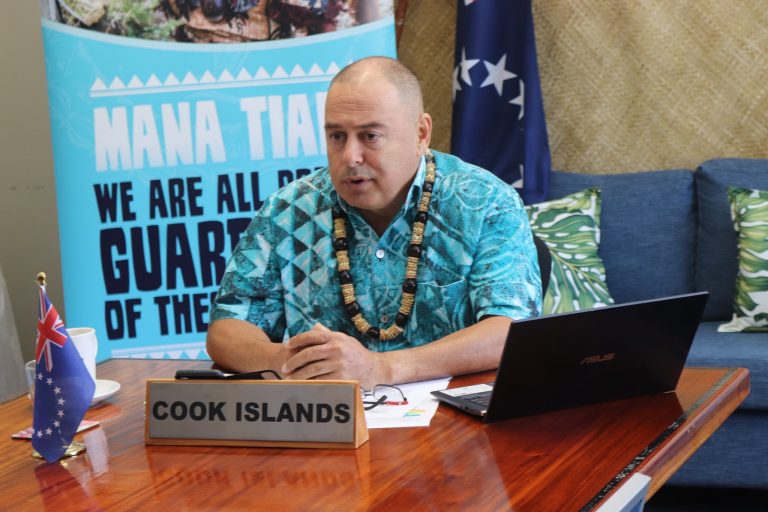
Forum stronger together: Cook Islands PM

As a proud founding member of the Forum, the Cook Islands has always taken the view that we are stronger together” says Prime Minister Mark Brown.

Brown made the comments as Forum leaders celebrated the 50 years of the Pacific Islands Forum last week.

The retreat chaired by Fiji’s Prime Minister Voreqe Bainimarama last Friday was attended by Forum leaders including Nauru President Lionel Aingimea from the Micronesia subregion.

“This 50th Anniversary and the unprecedented challenges amidst COVID-19 global impact require elevated levels of regional co-operation and I look forward to working closely with the Forum Chair Fiji, my colleague Forum leaders and the Secretariat in the months ahead as we recalibrate our regional priorities and elevate efforts to support our individual health and economic recoveries,” said PM Brown.

In discussing regional COVID response, Leaders emphasised the importance of ensuring the timely and affordable distribution of safe and effective COVID-19 treatments and vaccines to all Pacific peoples to mitigate health concerns, improve their wellbeing and support economic recovery.

Forum Leaders underscored the threat posed by the Delta variant and its impact on several member countries while emphasising the importance of timely and affordable COVID-19 vaccination roll-out, vaccine certification for the reopening borders and utilization of the existing Pacific Humanitarian Pathway on COVID-19 to support all Members recovery plans.

Leaders committed collectively to ensure comprehensive vaccination coverage target of 80% of the eligible population for the Pacific region by the first quarter of 2022 and acknowledged the invaluable and ongoing support of Australia, New Zealand and other development partners in ensuring Pacific access to COVID-19 vaccines.

Leaders also discussed threats to maritime zones.

“I particularly welcome our Declaration of Preserving Maritime Zones in the face of Climate change-related sea level rise”, said Prime Minister Brown.

“Our ocean resources, as demarcated by our territorial boundaries are fundamental to our national security. This Declaration by our 18-member Forum Family is our collective interpretation of the United Nations Convention on the Law of the Sea (UNCLOS) maritime zones provisions and strengthens our individual and collective efforts to preserve our existing boundaries against the threat of sea-level rise,” he said.

The Ministry of Foreign Affairs and Immigration continues to lead Cook Islands international engagement on maritime boundaries related issues. This most recent Maritime Zones declaration by the PIF provides a strong basis for Forum engagement, visibility, advocacy on maritime zones at the global level including at the upcoming UN General Assembly and COP26 negotiations scheduled for 12 November 2021.

Retreat discussions also included the commemoration of the 50th Anniversary of the establishment of the Pacific Island Forum focusing on the theme of “Forum-Security and Prosperity in Unity”.

Amongst the successes of regional efforts over the last 50 years, Leaders reflected on support towards self-determination and statehood of PIF members; the assertion of Pacific interests in the shaping of the 1982 UN Convention on the Law of the Sea (UNCLOS); the establishment of a Nuclear Free Zone in the Pacific through the 1985 Treaty of Rarotonga; the proactive institution of oceans governance measures at all levels to protect the health and resilience of the oceans and its resources, gaining recognition as leaders in oceans governance; the establishment of dedicated regional agencies for fisheries and the environment; strengthening regional security through the 2000 Biketawa Declaration and the 2018 Boe Declaration; the common advancement of economic and trade interests within the region and further abroad; and global advocacy on climate change culminating in our positioning within the Paris Agreement.

SOURCE: PACNEWS/COOKS FOREIGN MINISTRY

New police patrol boat for Kiribati

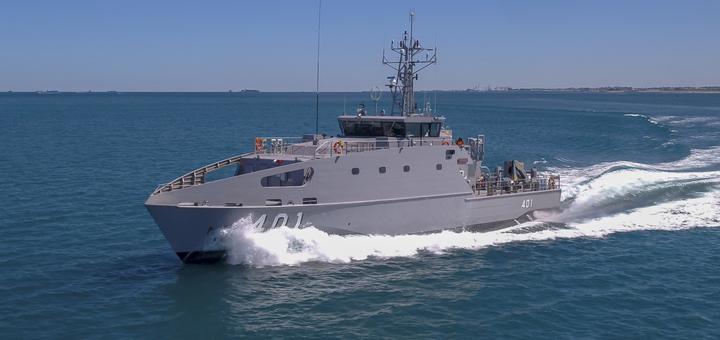
Kiribati is the latest recipient of a new police patrol boat donated by Australia.

Radio Kiribati reports the RKS Teanoai II arrived in Kiribati waters this week after a long journey from Western Australia through Cairns and Solomon Islands.

It replaces its predecessor, also called Teanoai, which was also gifted by Australia, under the original Pacific Patrol Boat Programme between 1987 and 1997.

Australia has progressively been replacing those vessels with 19 larger and more capable Guardian-class Patrol Boats, which are going to 12 Pacific states.

RKS Teanoai II is now off Tarawa where the crew are expected to spend at least two weeks in quarantine, before an official welcome.

Austal Chief Executive Officer Paddy Gregg said the latest delivery of the Pacific Patrol Boat replacement project highlighted the resilience, flexibility and efficiency of the teams collaborating from Austal Australia and the Department of Defence.

“The Teanoai II was originally scheduled for delivery in the middle of 2020, but due to the COVID-19 pandemic was postponed until such time as we could get the Kiribati crew safely into Australia,” Gregg said.

“While the delivery of this particular vessel was postponed, it did not affect, delay or hinder the construction or delivery of subsequent Guardian-class Patrol Boats and we remain on track to deliver all 21 vessels by the end of 2023.

“The Austal Australia and SEA3036-1 Project teams have worked together successfully to maintain productivity and meet the objectives of the Pacific Patrol Boat replacement project, throughout the COVID-19 pandemic.”

Faster, with improved seakeeping, better amenities and an enhanced mission capability – including an integrated RHIB stern launch and recovery system – the Guardian-class Patrol Boats provide the Kiribati Police Force with a much improved naval asset to carry out border patrols, regional policing, search and rescue, and many other operations domestically and internationally.

The Pacific Patrol Boat Replacement (PPB-R) Project was awarded to Austal in May 2016, with an additional contract option awarded in April 2018, taking the program to 21 vessels, valued at more than AUD$335 million (US$245 million).

Twelve Pacific Island nations including Papua New Guinea, Fiji, the Federated States of Micronesia, Tonga, Solomon Islands, Cook Islands, Kiribati, Marshall Islands, Palau, Samoa, Tuvalu, Vanuatu and Timor Leste will receive the vessels through to 2023.

SOURCE: RNZ PACIFIC/RADIO KIRIBATI/AUSTAL/PACNEWS

How the Fijiana battled adversity to win historic Olympic medal at Tokyo Games

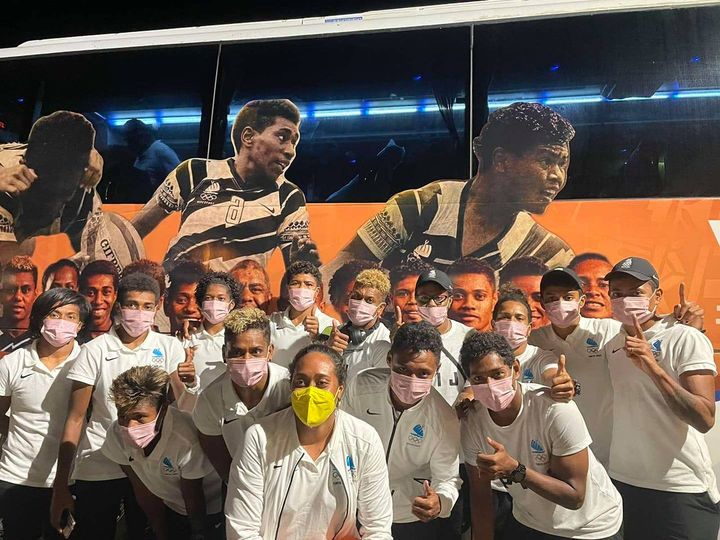
Flight FJ 1910 touched down at Nadi International Airport on Wednesday evening local time, as the Fijiana’s historic Olympic campaign concluded in style.

The Tokyo 2020 bronze medallists had been upgraded to business class for the final leg of the journey from Sydney, and images posted on social media showed players tucking into celebratory cake and posing for photos with delighted cabin crew.

Rusila Nagasau, who took part in the Games’ closing ceremony on Sunday, and her groundbreaking team-mates must now complete two weeks of quarantine before they return home to friends and family they have not seen since April.

But, as the squad heads into isolation the players should be comforted by the fact that their success in Japan could prove transformative for women’s sport in Fiji.

Five years ago, in the wake of the team’s run to the medal quarter-finals at Rio 2016, the country experienced an increase in the number of women and girls who wanted to play sevens.

Having become the first women to win an Olympic medal for Fiji, the signs suggest that the team’s exploits in Tokyo could have an even bigger impact.

“Straight after that bronze medal win I had hundreds of calls from girls in Fiji and Fijians overseas wanting to come and join the Fijiana,” coach Saiasi Fuli told Radio New Zealand last week.

“That is the positive impact of this Olympic tournament and it motivates and encourages young girls in Fiji to take up the sport of rugby sevens and increase the number of women’s participation in Fiji.”

‘It’s an amazing story’

That is a sentiment shared by Chris Cracknell, who coached the Fijiana in Rio. “The fact that they’re being rewarded and recognised for what they’ve achieved is fantastic,” he told World Rugby.

“They’ve also been awarded a bonus for coming home with a medal as well, which just shows how much things have moved on, so to speak, from a couple of years ago when they wouldn’t have been seeing those rewards.

“It’s inspirational, not only for the kids back on the island, but if you look at the depth of the story, it could be inspirational for the girls around the globe.

“If you look at their stories and their backgrounds and where they’ve come from, what they’ve overcome and why they’re pushing themselves, it’s an amazing story.”

Captain Nagasau, who started playing rugby in 2007 after being invited to a training session by a friend, has spoken previously about the “comments” she and others were subjected to for daring to play what was considered a man’s game.

Cracknell had travelled to Fiji as part of Ben Ryan’s coaching set-up with Fiji’s men, and having accepted to work as director of rugby for the women alongside that role in 2015, was confronted by those negative attitudes.

“My second training session we held down at the university because at that point we hadn’t had the opportunity to get the girls into a full-time environment,” he said.

“The girls were heckled throughout the entire hour-long session that we held for them. Now at the time I didn’t speak particularly fluent Fijian, but it didn’t take a rocket scientist to work out what was being said.”

Cracknell added: “It showed the attitude of the girls in that they just used that to spur them on, and they just wanted to always prove people wrong the entire time, because everyone measured the boys as the shining light and the girls wanted to emulate them.

“But, at the same time, wanted to put a marker out for themselves and thus change the perception of women and female athletes in the country.”

Empowering women in Fiji

The players were able to do that in Rio, where a creditable eighth-place finish led to an uptick in participation back home, but by 2019 the team was beginning to struggle on the World Rugby Sevens Series.

That is when current coach Fuli came in, and the Fijian cast his net far and wide for new players while reintroducing a number of measures that had initially been put in place in the build-up to the previous Olympics.

Diet was a particular focus, and carbs, sugar and milk were banned — outside of one cheat meal per week — while mobile phone use was only allowed on the weekends.

COVID-19 restrictions, and the worsening situation in Fiji, meant that the squad was required to bubble together at the beginning of April.

Fuli was concerned a lack of domestic competition could hamper the Fijiana’s chances in Tokyo. Only four teams, two of which were made up of national 15s players, played in the Fiji Rugby Super Sevens Series earlier this year.

However, an early sign that the squad would be competitive in Tokyo arrived at the Oceania Sevens in Townsville in June, where the Fijiana beat defending Olympic champions Australia and ran New Zealand close.

For several members of the squad, the trip to Australia had been their first time on a plane. But, despite the challenges of travelling internationally during a global pandemic, the team showed little sign of rust when the women’s Olympic sevens tournament got under way at Tokyo Stadium.

Fiji opened with a narrow loss to eventual silver medallists France before making a statement with victory over Canada, who had finished third in Rio.

Reapi Ulunisau, a former netball player with no World Series experience, scored an Olympic record four tries as Brazil were beaten 41-5 before Australia were defeated again, this time in the medal quarter-finals.

Ulunisau also scored in the semi-final against New Zealand, but the Black Ferns Sevens snuck through in sudden-death extra-time.

That left Great Britain standing between Fiji and an Olympic medal. “In 2016, we lost to Great Britain in the main quarter-final and it was heartbreaking,” Viniana Riwai, one of five survivors from Rio, told the Fiji Sun.

“I told myself that I’ll make it to Tokyo and avenge that loss.” Two tries from Alowesi Nakoci helped deliver victory, a modicum of revenge and a medal.

“It’s a massive, massive achievement. The efforts shown by our girls. It was a tough, tough journey,” Fuli said after the bronze medal match.

“For the long-term, we need to try and promote the game, develop the game for more girls to take rugby for their sport in Fiji.

“This is the impact that will influence young girls in Fiji to play rugby. That is the message I send to the girls — we are here to encourage and empower and promote the game to girls in Fiji.”

Rugby could not wish for better ambassadors than the fantastic Fijiana.

SOURCE: WORLD RUGBY

Transhipment challenges in the WCPO

0

By Iliesa Tora

Not many Pacific Island women work on fishing vessels, but a young Fijian woman has found a way to support the work of fishers such as her brother and cousins so they can continue to make a living from Pacific tuna.

Esther Wozniak, who comes from a family of albacore tuna fishers, works with Pew Charitable Trusts’s international fisheries project on improving the regulation of transhipment so that tuna fisheries are able to be sustained. There is a lot of work to be done, she said.

Wozniak wrote in SPC’s Fisheries Newsletter last year that, in 2018, 66% of tuna landings in the world, worth US$26.2 billion, came from the Pacific.

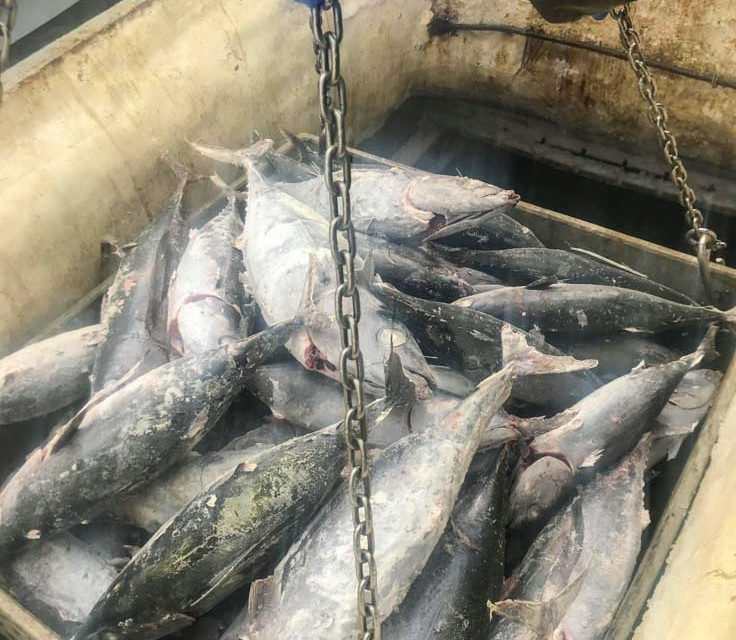
Although transhipment had become an important component of the seafood supply chain for many tuna fisheries, it was also widely recognised as one of the main ways that illegally caught fish found its way onto the market.

That’s because transhipment happened out at sea “out of sight of authorities”, she said.

In an interview, Wozniak shared the work she does and discussed the transhipment-related challenges Pacific tuna fisheries face.

She said the latest Western and Central Pacific Fisheries Commission (WCPFC) annual report on transhipment, which highlighted 2019 activities, indicated that the number of reported transhipments in the high seas had increased by 124% between 2011 (656 transfers) and 2019 (1,472 transfers).

IT: Can you define what transhipment in the high seas involves?

EW: Transhipment is a vital but largely hidden part of the global commercial fishing industry. It involves hundreds of refrigerated ships roaming the ocean, taking in catches from thousands of fishing vessels and transporting it for processing. Because most transhipments take place far out at sea – out of the sight of authorities – unscrupulous operators can hide or falsify data on where, how and when they fished, and on the amount and type of fish they caught or transhipped. A lack of effective monitoring and controls also fosters conditions that lead to other transnational crimes, such as trafficking in humans, weapons and drugs.

IT: How big a problem is that in the Western and Central Pacific region?

EW: A 2016 study to quantify the amount of illegal, unreported and unregulated (IUU) fishing in the Pacific Islands region concluded that illegal transhipment is a significant element of IUU activity, accounting for around 26% of overall estimated ex-vessel value of the tuna catches.

IT: IUU fishing is a continuing issue the Pacific fisheries deal with. What does Pew do to help in this area?

EW: Pew is focused on building a global system to combat IUU fishing by working with governments, fisheries management bodies, enforcement authorities, and the seafood industry to adopt and implement international agreements and regulations, and form multi-state coalitions that will safeguard their waters.

IT: Electronic monitoring sounds like a new technology to assist in eradicate these problems. How far has that been implemented and how is that being done?

EW: As fisheries managers, scientists, and other stakeholders increasingly recognise the need to gain a more comprehensive look at fishing activity, electronic monitoring, or EM, offers a cost-effective solution to scale up monitoring coverage using GPS, cameras and gear sensors. Many Pacific Island countries such as Fiji, the Federated States of Micronesia and Vanuatu have begun EM trials. Key to EM development are standards to ensure that the information collected is accurate and can be consistently analysed and shared among regulators and scientists. WCPFC has been developing EM standards since 2018, and this year members have an opportunity to finally adopt standards for the implementation of EM.

IT: What are some of the challenges Pew faces in the work that you do in these areas?

EW: I think one of the biggest challenges to the WCFPC work is that like most tuna regional fisheries management organisations (RFMOs), decisions are consensus-based, so that all member countries must agree. This can really slow down progress, especially when all the meetings are currently virtual.

Specific to the work we do on EM, I think there is a lot of hesitancy to adopt new technologies, and fears around costs, but is a cost-effective way to gain more information on fisheries and help the fishing industry meet the growing market demand for sustainability and transparency.

There is some hesitancy from countries who are worried that EM will take employment away from their human observers on vessels. However, we are only advocating for EM for vessels that currently have low observer coverage, such as longline vessels, where only 5% observer coverage is mandated. This is where EM truly has an opportunity to increase monitoring coverage to the recommended 20% – by complementing human observers and ensuring that fisheries managers have access to more data to make informed decisions.

Observers have been described as the fisheries managers’ “eyes at sea” because they submit independent information on catch, bycatch and other vessel operations. However, this does not extend to transhipments on the high seas in the Western and Central Pacific Ocean (WCPO), where observer reports usually do not reach the WCPFC secretariat. This leaves the Commission and its science provider, the Secretariat of the Pacific Community (SPC), without access to independent records of transhipment activity.

Other tuna RFMOs recognise the importance of independent oversight of transhipments, and in most cases secretariats have access to transhipment observer reports.

IT: Who are the partners that you work with in the region?

EW: Pew partners with many other environment NGOs in the field, including the Nature Conservancy, World Wildlife Fund (WWF) and the Australian National Centre for Ocean Resources and Security (ANCORS) at the University of Wollongong.

Pew also works to support efforts of regional fisheries organisations such as the Pacific Islands Forum Fisheries Agency (FFA), Parties to the Nauru Agreement (PNA) and the Pacific Community (SPC).

IT: How important is the work that is being done?

EW: In 2019, an estimated 2,961,059 metric tons of tuna was caught in WCPFC waters. That is 55% of the global tuna catch, worth about US$5.8 billion. To ensure that these fisheries are sustainable, WCPFC needs reliable data on catch, bycatch, fishing effort and compliance with regulations. EM will enable WCPFC to build on existing observer programs, expand monitoring coverage, and support sustainable management.

Bigeye tuna accounted for 34% (27,316 metric tons) of the total quantities transhipped in 2019. Bigeye tuna caught by longline vessels are often used for fresh or frozen sashimi and therefore command higher prices per metric ton.

In 2018, bigeye tuna had a global end value – the total amount paid by the final consumer – of US$4.3billion. Recognising the relatively high value of tuna transhipped and the increasing trend of high seas transhipments of severely depleted stocks occurring in its convention area, WCPFC should improve its current transhipment measure to allow authorities to better track and audit data on transhipped catch.

IT: How much money does the Pacific tuna fisheries lose annually because of these problems?

EW: It is estimated that in the WCPO alone, at least US$142 million worth of tuna and tuna-like species are moved in illegal transhipments each year.

IT: What else can be done to help prevent the issues?

EW: As long as there is no requirement for transhipment observer reporting to the WCPFC secretariat, the Commission has no ability to fully monitor and verify transhipment activities. This leaves the door open for IUU fishing and other illicit activities. But transhipment oversight can be significantly improved by adopting available forms at this year’s WCPFC meeting.

In addition, WCPFC needs to prioritise the development and adoption of the necessary EM standards to increase oversight of unmonitored fisheries.

SOURCE: TUNA PACIFIC/PACNEWS
14 death row prisoners to be executed: PNG Correctional Commissioner

Fourteen out of 15 prisoners currently on death row will be executed after a “possible execution mode is identified”, says Papua New Guinea Correctional Services Commissioner Stephen Pokanis.

Pokanis also said all executions could proceed soon after the National Executive Council (NEC) appoints members to a committee that will identify the most possible mode of execution.

His comments came in light of a court decision last week in which a five-man bench quashed a National Court temporary order that stayed the prisoners’ death sentences.

Pokanis said initially a total of 26 detainees were sentenced to death.

However, only 15 are in Correctional Service custody.

He said three had died while serving their sentences while four escaped from custody and are still at large.

“All those sentenced to death committed crimes that involved multiple murders,” Pokanis said.

“Two were released upon successful appeal to the Supreme Court and were released from Correctional Institutions and another two had their death sentence commuted to life sentences upon successful appeal.”

Pokanis said the 15 prisoners on death row are all low risk and are among the number of the best low risk detainees in the country.

“Correctional Service does not have a separate holding facility for death sentence detainees thus they live together with other sentenced detainees,” he said.

“Correctional Service treats all convicted detainees fairly like having same meals, access to families, access to church services, allowing them out for educational awareness, and allowing them to work in farms and other activities based on their risk assessment as low risk detainees who have the privilege to services like any other convicted-low risk detainee.”

The 14 are also eligible to apply for the power of mercy which comes into effect only after prisoners on death row have exhausted their right to appeal.

Solicitor General Tauvasa Tanuvasa said there was no impediment now and that those on death row could now apply to the power of mercy.

He said death row prisoners can get that help by writing and requesting for clemency and it is then that the power of mercy is considered or exercised by the advisory committee.

The last execution in Papua New Guinea was done in November 1954, in Port Moresby.

In 1970, Papua New Guinea abolished capital punishment but later re-introduced it in 1991 as an amendment to the PNG Criminal Code Act in 1974.

In 2013, Papua New Guinea took steps to revive the capital punishment, at the same time amending legislation for harsher punishment for heinous and premeditated crimes.

Following the 2013 amendment of the Criminal Code, the government introduced capital punishment by way of lethal injection, deprivation of oxygen (“medical” asphyxiation), firing squad, electrocution and hanging.

With the addition of four alternate methods of execution, the Constitutional Law Reform Commission was requested to report on the best method of execution and the most appropriate for PNG to utilise.

The commission travelled to countries with experience in capital punishment that included United States, Malaysia, Indonesia, Thailand and Singapore “in order to provide advice to the government on what methods of execution should be adopted”.

But many in Papua New Guinea are still against the death penalty.

General secretary of the Catholic Bishops Conference of Papua New Guinea and Solomon Islands Father Giorgio Licini said: “As far as the Catholic Church is concerned it has recently ruled out, at its top level, any support, justification, approval for the death penalty under any circumstances.

SOURCE: POST COURIER/PACNEWS

Fiji records 398 new cases of COVID-19, five new deaths reported

Fiji has recorded 398 new cases of COVID-19 and five new deaths Thursday, increasing the total number of cases to 38,742 and 343 deaths since the outbreak in April.

Permanent secretary for Health, Dr James Fong said 254 cases are from the Western division and 144 cases are from the Central division in Vitilevu, Fiji’s main island.

“There have been 703 new recoveries reported since the last update, which means that there are now 23,981 active cases. 17,999 active cases are in the Central Division and 5,982 active cases in the Western division.

“There have been 38,742 cases during the outbreak that started in April 2021. We have recorded a total of 38,812 cases in Fiji since the first case was reported in March 2020, with 14,301 recoveries,” Dr Fong said.

He said the five new COVID-19 deaths reported for the period of 10 – 12 August. Three deaths were reported from the Central Division and two deaths were reported from the Western division.

“The first COVID-19 death to report is a 91-year-old woman from Navua who died at home on the 10/08/2021. She was not vaccinated.

“The second COVID-19 death to report is an 86-year-old woman from Rakiraki. She was declared dead on arrival by the attending medical officer at the Rakiraki Hospital on 10/08/2021. This means that she died at home or on her way to the hospital. She was not vaccinated.

“The third COVID-19 death to report is a 30-year-old man from Ba. He was declared dead on arrival by the attending medical officer at the Ba Mission Hospital on 10/08/2021. This means that he died at home or on his way to the hospital. He was not vaccinated.

“The fourth COVID-19 death to report is a 71-year-old man from Naitasiri who died at home on the 11/08/2021. His family reported that he had a cough and fever two days prior. He was not vaccinated.

“The fifth COVID-19 death to report is a 76-year-old man from Naitaisiri who died at home on the 12/08/2021. He was not vaccinated,” said Dr Fong.

He said there have been eight more deaths of COVID-19 positive patients.

“However, these deaths have been classified as non-COVID deaths by their doctors. Doctors have determined that their deaths were caused by serious pre-existing medical conditions and not COVID-19.

“There have now been 345 deaths due to COVID-19 in Fiji, with 343 of these deaths during the outbreak that started in April this year. The national seven-day rolling average of COVID-19 deaths per day is 9. The seven-day rolling average of COVID-19 deaths per day in the Central division is 6 deaths and the Western division is three deaths.

“We also have recorded 185 COVID-19 positive patients who died from the serious medical conditions that they had before they contracted COVID-19; these are not classified as COVID-19 deaths,” Dr Fong said.

To date no one in Fiji has died due to COVID-19 after they have been fully-vaccinated, he said.

Dr Fong said there are currently 291 COVID-19 patients admitted to hospitals in Fiji.

“72 patients are admitted to the Lautoka Hospital, 60 patients are admitted at the FEMAT field hospital, and 159 admitted at CWM hospital, St Giles, and Makoi. 67 patients are considered to be in severe condition, and 14 are in critical condition.

“The seven-day daily test average is 1968 tests per day or 2.2 tests per 1,000 population. The national 7-day average daily test positivity is 34.5%.

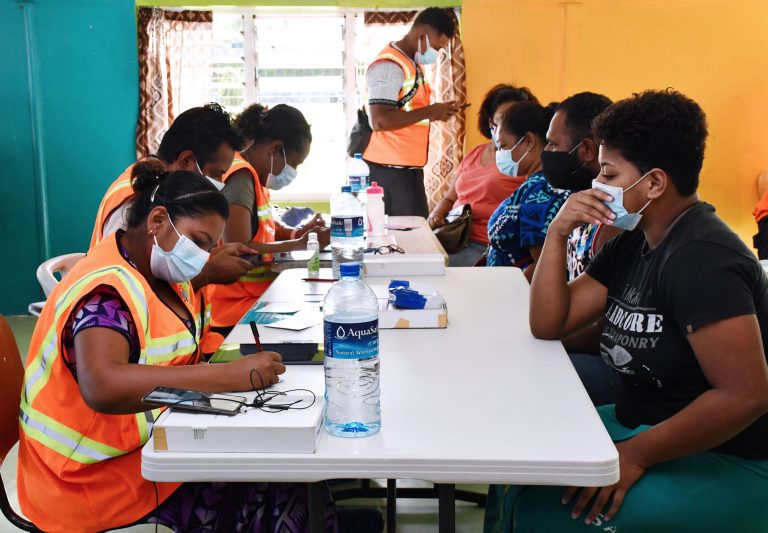
Meanwhile, the Ministry of Health has released a list of “priority groups” for the Moderna COVID-19 vaccine for Viti Levu effective Thursday.

The groups include:

*pregnant women
*individuals aged 60 years and above
*persons with comorbid issues such as hypertension, asthma, chronic lung disease, cardiac disease, severe obesity, diabetes, liver disease;
*persons with Rheumatic Heart Disease; and
*Human immunodeficiency virus (HIV) infection and persons with disability.

The ministry has stated that individuals receiving the Moderna vaccine must present antenatal care clinic cards, Special Out-Patient Department (SOPD) clinic cards or medical report/certificate to prove the medical condition at the vaccination centre before getting vaccinated.

As of 11 August 528,706 adults in Fiji have received their first dose of the vaccine and 202,334 have received their second doses. This means that 90.1% of the target population have received at least one dose and 34.5% are now fully vaccinated nationwide.

SOURCE: PACNEWS

$14-million climate change funding support to benefits Pacific Islands

Pacific Countries will be benefiting from a $14-million (US$9.7 million) climate change funding support from the New Zealand government.

The five-year funding assistance will help Pacific countries in addressing the impacts of climate change in the region.

The fund will be channelled through the Pacific Community programme to improve food security, livelihoods, economic and environmental resilience in the Pacific.

New Zealand Minister for Pacific Peoples and Minister for Courts, Aupito William Sio announced the funding during the Pacific Fisheries Minister virtual meeting last week.

“Climate change remains an enormous challenge in the region. We note that the coastal fisheries resources have been under increasing pressure as a result of climate change, pollution, and, as noted at last year’s Regional Fisheries Ministers Meeting, the impacts of COVID-19.

The new project will build on the significant progress made over the last five years in developing and implementing relevant legal and policy frameworks, setting biosecurity standards, and providing business and technical training for aquaculture enterprises,” Sio said.

Meanwhile, Solomon Islands Minister of Foreign Affairs and External Trade, Jeremiah Manele has called on Pacific Island countries to work on innovative ways to ensure everyone benefited from Pacific marine resources.

He said Pacific leaders should consider developing strategies that will address the impacts of climate change in the fisheries sector.

“We need to focus on key strategic issues to align ourselves in the battle against climate change, and our fisheries are important. More or so, we have to work together on innovative solutions to cope with climate change and the recent COVID-19 pandemic.”

Newly appointed Chair of the Pacific Regional Fisheries Ministers Meeting (RFMM), Semi Koroilavesau has appealed for greater solidarity to overcome all obstacles through harnessing collective strengths.

“We are stronger together, and as a nation, we can overcome all obstacles if we keep harnessing our collective strengths”, Minister Koroilavesau said.

SOURCE: SIBC/PACNEWS

‘No public protest is allowed’ says Solomon Islands Attorney General

Public assembly or procession of any form will not be allowed under the current state of emergency unless authorised by the Prime Minister, says Solomon Islands Attorney General John Muria junior.

Parts of Honiara, the Western Border, and Malaita Outer Islands are currently declared as emergency zones.

“In any emergency zone, public assembly or procession is prohibited, unless there’s any order made by the Prime Minister. The keyword here is Emergency Zone, where we currently have three emergency zones.

Last week Prime Minister Manasseh Sogavare made the same call for people to work together and ensure the country is safe and secure.

“I wish to remind all people that public assembly and the public procession is not allowed during this state of public emergency. I Would like to call on all good people of the Solomon Islands, not to take laws into their own hands! Let’s respect our laws and do things lawfully as provided for under our laws.

The Solomon Islands is our country; Honiara is our city. Let’s work together for a safe, and secure future for ourselves, our children, and their children.”

The Office of the Police Commissioner is yet to receive a copy of the petition from those planning to stage a peaceful protest to the Prime Minister’s Office earlier this week.

Police Commissioner Mostyn Mangau said police respect individual rights to protest but must be done according to the laws.

The Police Commissioner calls on the public to continue with their normal business as the police is currently monitoring the situation.

Section 14 (1) of the Emergency Powers (COVID-19) (No. 2) Regulations 2021 provides, a person must not participate in a public assembly or public procession in an emergency zone unless the Prime Minister, by Order, authorises the public assembly or public procession.

The Order authorising the public assembly or public procession may specify the maximum number of individuals that may participate, the area where the public assembly or public procession may be held, or the procedures and measures necessary in the public interest to regulate the public assembly or public procession.

Penalties for breaching the provisions under section 14 is SBD$10,000 (US$1,243) fine or five years’ imprisonment or both.

SOURCE: SIBC/PACNEWS

Stay connected

529FansLike
172FollowersFollow
156SubscribersSubscribe
- Advertisement -