Home Blog Page 1161

Fiji AG says Ahluwalia appointment illegal, outgoing USP chancellor calls for “new Pacific consciousness”

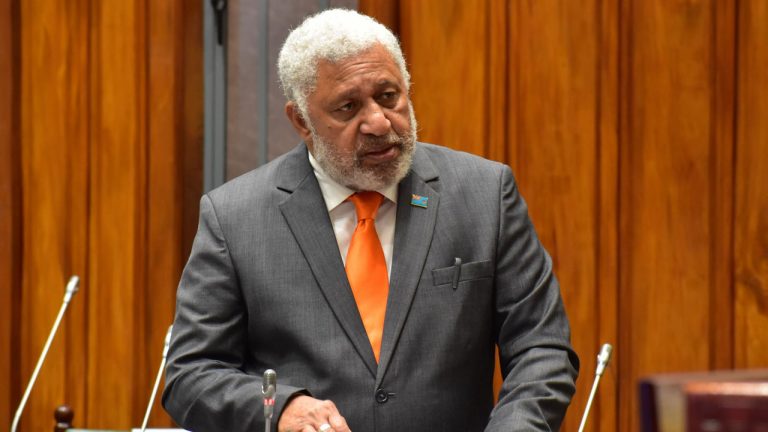
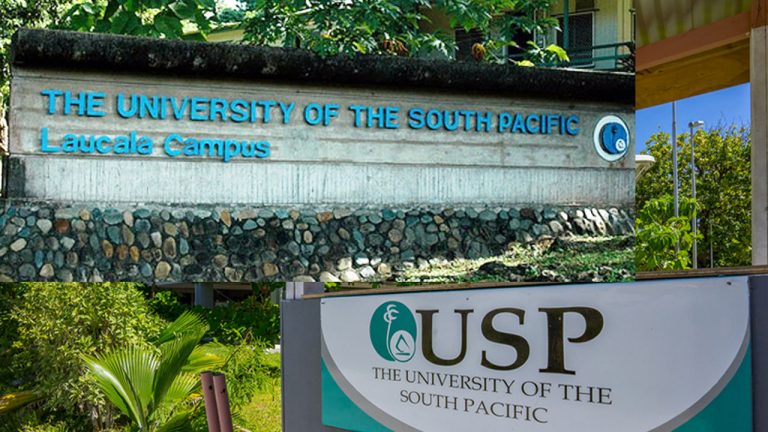
Fiji’s Attorney General, Aiyaz Sayed-Khaiyum has labelled the appointment of University of the South Pacific’s vice chancellor Professor Pal Ahluwalia – illegal.

He said this is a backward and divisive step that goes against the interest of students, governments and regional goodwill.

Sayed-Khaiyum claims Professor Ahluwalia’s desperate bid to drum up media attention and frame himself as a victim, has deeply divided the region.

He said in under two years in Ahluwalia’s charge 50 years of achievements have been out into dire jeopardy and Fiji was not alone in opposing the re- appointment.

“It signals a concerning complacency with a record of nepotism, cronyism, poor financial accountability and in some instances outright fraud by the former VC that risks straining the USP’s legacy.”

Sayed-Khaiyum has today told the Parliament that the Fijian government will not make any contribution of grant funding to USP.

He said given the gravity of the allegations of serious mismanagement against Ahluwalia, no funding will be given to USP until such time when a new VC is appointed.

Sayed-Khaiyum said they also want all the alleged breaches against the Professor to be investigated further independently.

“Fiji does not accept Ahluwalia as the Vice-Chancellor and will not provide any funding to USP for as long as he remains the supposed Vice-Chancellor.”

Sayed-Khaiyum said the USP Council’s attention has been drawn several times to the processes set-up in the USP statue on the appointment of the Vice Chancellor which Fiji insists the Council must adhere to.

He said they are also considering Fiji options to recommend to the Fijian Prime Minister to have a Commission of Inquiry into USP.

Meanwhile, ‘Pacific regionalism’ has been under threat as USP has battled internal division, according to outgoing chancellor and President of Nauru, Lionel Aingimea.

In an editorial penned for the Pacific Advocate, Aingimea, who by his own admission served as chancellor during “some of the most trying times that USP has faced in its history”, stressed that the university “stands as a pinnacle of Pacific regionalism given that it is jointly owned by the governments of 12 Pacific Island countries.”

“All member countries of the USP have the right to an equal voice in the decisions and operations of the university,” he said.

USP has endured a tumultuous 12 months with Vice-Chancellor Pal Ahluwalia being targeted by the Fijian Government allegedly because he exposed financial irregularities by the former leadership.

The dispute saw him sacked, reinstated then deported by Fiji. He was recently reappointed again and is now based at the USP Alafua Campus in Samoa.

Throughout the ordeal Aingimea has been a strong supporter of the vice-chancellor and due process, and has stood firm against what many saw as bullying by the Fijian Government and in particular Attorney-General Aiyaz Sayed-Khaiyum.

Despite this, Aingimea wrote in the editorial that he is positive about the university’s future.

“With over 30,000 students in its care, USP represents our collective voice for the Pacific region,” he wrote.

But it came with a warning.

“For more than half a century, the university has educated generations of Pacific scholars. How USP handles its affairs at this critical juncture, will define its future and set a course for the next fifty years.

“The ongoing ‘USP Saga’ has tested our unity as a region. Our integrity, values and respect for equal voice at the table, will determine the standards that can be collectively harnessed for the good of the Pacific going forward.”

He also called on the USP council to act on the independent report commissioned as a result of Professor Ahluwalia’s investigation.

“BDO uncovered underlying issues relating to longstanding matters that require robust action. The BDO report recommended that these issues be swiftly resolved and subsequently the USP Commission was appointed to assist the University to deal with the myriad issues.

“Currently, USP is dealing with the Commission’s recommendations, and it is vital that the outcome resolves the governance issues and enhances the regional nature and character of the institution.”

He called for a “new paradigm, a renewal, a renaissance for our region – indeed it is about developing a new Pacific consciousness for the 21st century,” and said that as Nauru’s president he is, “part of the new generation of Pacific leaders….and deeply aware of our challenges.”

“I am extremely grateful that as chancellor I had the opportunity to transform USP, and to be part of the journey of “Shaping Pacific Futures” ..

SOURCE: FBC NEWS/PACIFIC ADVOCATE/PACNEWS
Risk of Delta-variant to Niue low as government considers flight cancellations

The Niue government is considering cancelling an incoming Auckland flight on Monday, in light of New Zealand’s Delta-outbreak that’s seen cases rise to seven on Wednesday.

It isn’t clear how any passengers are booked to fly out, but Niue Premier Dalton Tagelagi said his team was exploring all options in terms of its Covid-19 response.

New Zealand went to alert level 4 lockdown after a case was found in the Auckland community on Tuesday. The government confirmed it was the transmissible Delta variant on Wednesday and announced six more new cases.

Auckland has been placed on a seven-day lockdown, with the rest of New Zealand in level 4 for three days.

New Zealand has a one-way travel bubble arrangement with incoming travellers from Niue not requiring quarantine. Those flying to Niue, however, need to undergo a 14-day quarantine.

Tagelagi said the government would make a decision about next Monday’s flight soon, as it tracked the outbreak and information coming out from New Zealand.

“This is particularly important for the passenger flight scheduled for next Monday that we are currently considering,” Tagelagi said.

The small Pacific nation vaccinated almost 100 per cent of its population in July.

Tagelagi said recent travellers from Auckland to Niue posed a very low risk of bringing the Delta-variant to the Covid-free Pacific nation.

The last passenger flight from Auckland to Niue arrived on August 9 and carried 47 passengers.

Those passengers had been on the island for eight days and showed no symptoms of the virus.

As a result of the new case, Niue health officials ramped up their Covid-response by getting frontline workers tested.

Regular checks are being made to all recent passengers quarantining in home isolation and at Homofiti.

Tagelagi said the government was keeping New Zealand and Australia, which is also seeing increased outbreaks of the virus, in its prayers.

SOURCE: STUFF NZ/PACNEWS

Fiji ratifies agreement establishing the Pacific Islands Forum, remains a key player in PIF: PM Bainimarama

The motion to ratify the 2005 Agreement establishing the Pacific Islands Forum has been passed by the Fijian parliament Wednesday.

The agreement recognises the Forum as an international organisation and will be a region of peace, harmony, security, and economic prosperity, whose people can all lead free and worthwhile lives.

Prime Minister Voreqe Bainimarama said Fiji remains a key player in the region and it will do its best in spearheading the work of the Forum.

He assured that Fiji’s chairmanship of the Pacific Island Forum will bring about the change the region deserves.

“Fiji was suspended from the Forum – a decision Pacific regretted. This is something that through our leadership we will not allow any other country to go through. Fiji, just fully joined the Forum in 2019 in the Leaders Meeting in Tuvalu. We began the ratification process after rejoining the Forum. It was unfortunate that it has taken us long to ratify this agreement but it was outside of our control,” said Bainimarama in Parliament.

Bainimarama also said Fiji will not shy away from holding accountable regional organisations so long they are kept on track.

“USP and regionalism. Even though we are committed to the operation of regional organisation we also need to keep them accountable. But we will not shy away from keeping regional organisations accountable. It is a position that we have always maintained in regional discussions and we will continue to make,” he said.

Bainimarama told parliament regional leaders have realised the many challenges faced in the region. He highlighted that the Pacific Way will continue to be a means of regional engagement and cooperation.

“I note that regionalism has not been excellent over the years – it continues to be a challenge but I can confirm that with everyone, Fiji’s Chairmanship in the Forum, will bring about the change the region deserves.

“I as Chair of the Pacific Islands Forum will rely on to resolve our differences, rebuild trust and reaffirm our collective commitment for a better Pacific for all.

“I remain confident that as always, Fiji will do its part to emphasise unity and solidarity in the region and ensure that we remain committed to the goals and purpose of the Pacific Islands Forum.

“Lastly as a founding member, host to the Pacific Islands Forum Secretariat and Chair of the Pacific Islands Forum, Fiji’s ratification of this Agreement is an important step forward in promoting regional solidarity and unity,” PM Bainimarama said.

He also highlighted the reason why Fiji established the Pacific Islands Development Forum (PIDF).

“I will also add here that within the regional architecture we see the role of the Pacific Islands Development Forum being complementary to the Pacific Islands Forum as it brings a unique format to the region with the inclusion of the Private Sector and the Civil Society Organisations in its fold.

“The Pacific Island Forum doesn’t have this,” Bainimarama explained.

“This is one of the reasons why we established the PIDF – we realised that even though we were suspended from the PIF – Pacific countries still depended on us. We therefore established the PIDF as a medium to channel our assistance and assist other countries.

“In addition, this is the reason why we established a new division of the roving ambassador in the Ministry of Foreign Affairs. We are development partners to countries in the region. We have many memorandum of understanding with Pacific’s small island developing states and have been assisting them and we will continue to do this. And I am confident to see this now. And as I said the PIDF has civil society participation which PIF doesn’t have,” said Forum Chair Bainimarama.

SOURCE: PACNEWS/FBC NEWS

Fiji records 653 new cases of COVID-19, eight new deaths reported

Fiji has recorded 653 new cases of COVID-19 and eight new deaths Wednesday, increasing the total number of cases to 41,760 and 411 deaths since the outbreak in April.

Permanent secretary for Health, Dr James Fong said 462 cases are from the Western division and 191 cases are from the Central division in Vitilevu, Fiji’s main island.

“There have been 1,088 new recoveries reported since the last update, which means that there are now 21,304 active cases. 13,652 active cases are in the Central division, 7,651 active cases in the Western division and one active case in the Northern division

“There have been 41,760 cases during the outbreak that started in April 2021. We have recorded a total of 41,830 cases in Fiji since the first case was reported in March 2020, with 19,883 recoveries,” he said.

Dr Fong said the eight new COVID-19 deaths reported for the period of 14 -18 August. Five deaths were reported from the Central division and three deaths were reported from the Western division.

He said there have been seven more deaths of COVID-19 positive patients.

“However, these deaths have been classified as non-COVID deaths by their doctors. Doctors have determined that their deaths were caused by serious pre-existing medical conditions and not COVID-19.

“There have now been 413 deaths due to COVID-19 in Fiji, with 411 of these deaths during the outbreak that started in April this year. As of 17th August the national seven-day rolling average of COVID-19 deaths per day is 10. The seven-day rolling average for COVID-19 deaths per day in the Central division is 4 and in the Western division is six.

We also have recorded 230 COVID-19 positive patients who died from the serious medical conditions that they had before they contracted COVID-19; these are not classified as COVID-19 deaths,” said Dr Fong.

He said there are currently 327 COVID-19 patients admitted to the hospital in Fiji.

“124 patients are admitted to the Lautoka Hospital, 44 patients are admitted at the FEMAT field hospital, and 159 admitted at CWM hospital, St Giles, and Makoi. 54 patients are considered to be in severe condition, and 15 are in critical condition.

The national seven-day average daily test positivity is 33.3 percent,” Dr Fong said.

As of 17 August 537,704 adults in Fiji have received their first dose of the vaccine and 220,034 have received their second doses.

“This means that 91.7 percent of the target population have received at least one dose and 37.5 percent are now fully vaccinated nationwide. We are currently doing a mop up exercise of our first dose campaign, which will allow us to specifically target specific communities with low coverage, and subsequently also correct and update the total eligible population for our current vaccination programme,” said Dr Fong.

SOURCE: PACNEWS

PNG authorities order corpses to be swabbed amid fear of undetected Delta outbreak

One of Papua New Guinea’s chief health officers have warned the country’s low testing rates, high percentage of positive tests and low vaccination rates provide a “recipe for major spread of the Delta variant” after the country recorded its 12th case of the deadly strain.

Dr Daoni Esorom, the deputy controller of PNG’s national pandemic response, said officials were so concerned that low testing rates were masking a serious outbreak that they had ordered doctors at the country’s biggest hospital to swab all corpses of people who had died from unknown causes or who had respiratory illnesses, to see if they had Covid-19.

“Testing in PNG has also reduced since March, it is difficult to know how widespread the transmission of Delta variant is in the country,” said Esorom.

“If you have a low level of testing, and have a high uptake of detection of positive cases (at the moment it’s 12%) and you have a large pool of unvaccinated people, that is recipe for major spread of the Delta variant.”

“There is also anecdotal evidence from Madang’s Modilon hospital of increasing number of deaths of unknown causes and also at the Port Moresby General hospital. We have since sent out a circular sent to Port Moresby General hospital to swab all corpses with unknown causes of death and those with respiratory illnesses,” he said.

The Delta variant was first detected in PNG on 10 July after the captain of a ship from the Philippines and one of his crew tested positive and underwent isolation at the Port Moresby General hospital isolation facility for 15 days.

The country now had 12 confirmed Delta cases, the last three detected in Western province. A team had been dispatched to the province to help with contact tracing and give technical advice and guidance on how to respond on the ground. Similar measures were taken last week when cases were detected in Madang in the country’s north-east.

Papua New Guinea had officially recorded 17,827 Covid-19 cases and 192 deaths across the pandemic.

An outbreak in March saw PNG’s partners scramble to send emergency doses of vaccines to the Pacific nation, but the rollout of the vaccine had been slow, with fewer than 100,000 doses administered among a population of around nine million people. Health authorities would not confirm how many of those doses were first or second doses, but in July, just 60,000 people – or 0.6% of the population – had received their first dose, with just over 2,800 people having received their second dose.

Dr Rendi Moke, the Covid-19 committee chairman at Port Moresby General hospital, said they were on alert for a probable surge in Delta cases, at least for the rest of this year.

“We are communicating closely with NCD Provincial Heath Authority and St John Ambulance, with appropriate surge plans.”

Moke said there were fewer positive cases presenting to the hospital than during the March outbreak and the hospital currently only had two mild cases in its isolation facility, but they were bracing for a bigger outbreak.

“I’m not sure at this stage why there has been no surge since Delta case was first reported,” he said. “But we will remain vigilant.”

Despite growing concerns from health authorities, there was still a lot of scepticism about Covid-19 among the general population.

Esther, a primary school teacher from Port Moresby who did not wish to give her surname in case she was penalised by her bosses, said she did not think Covid-19 was real and the government was only talking about the Delta variant to make money from partner countries, who had offered support to PNG to combat Covid.

“I teach in a crowded classroom every day, my students come from all parts of the city, if Covid was real we would have long been infected.”

Justin Asasu, a 39-year-old man from Gulf, said he used public transport to go to work every day.

“Living in Gerehu, which has the biggest population in Port Moresby, we always rush and even push each other to get on the bus every morning and every afternoon. But still I haven’t been infected yet, I think it’s just bullshit,” he said.

Anand Das, ChildFund’s PNG country director, said vaccine confidence was a huge barrier.

“We have plenty of AstraZeneca vaccine supply available, but unfortunately we are seeing a lot of vaccine hesitancy in the community – mostly due to misinformation being spread on social media and people not understanding the real threat that the Covid-19 virus poses.

“There is still misinformation being spread that Covid-19 is like a flu, which means that people aren’t as readily turning up to get vaccinated. Many people are not convinced that Covid is a real threat to lives,” said Dass.

SOURCE: THE GUARDIAN/PACNEWS

WHO condemns rush by wealthy nations to give Covid vaccine booster

The World Health Organisation (WHO) has condemned the rush by wealthy countries to provide Covid-19 vaccine booster shots while millions of people around the world have yet to receive a single dose.

Speaking before U.S authorities announced all vaccinated Americans would soon be eligible to receive booster doses, WHO experts insisted there was not enough scientific evidence to support the additional shot.

Providing them while so many people were still waiting to be immunised was immoral, they argued.

“We’re planning to hand out extra lifejackets to people who already have lifejackets, while we’re leaving other people to drown without a single lifejacket,” said Dr Mike Ryan, the director of the WHO’s health emergency programme.

“The fundamental, ethical reality is we’re handing out second lifejackets while leaving millions and millions of people without anything to protect them.”

Earlier this month, the WHO called for a moratorium on Covid vaccine booster shots to help ease the drastic inequity in dose distribution between wealthy and poor countries. That has not stopped a number of countries moving forward with plans to add a third jab, as they struggle to contain the Delta variant.

U.S authorities, warning that Covid-19 vaccination effectiveness decreased over time, said on Wednesday they had authorised booster shots for all Americans from 20 September. The booster would be given eight months after an individual has been fully vaccinated.

While the vaccines remain “remarkably effective” in reducing the risk of severe disease, hospitalisation and death from the effects of Covid, said officials, protection could diminish in the months ahead without boosted immunisation.

Washington had already authorised an extra dose for people with weakened immune systems. Israel has also begun administering third doses to Israelis 50 and over.

But WHO experts insisted the science was still not clear on booster doses of Covid vaccines and stressed that far more important was ensuring people in low-income countries where vaccination was lagging received jabs.

Dr Tedros Adhanom Ghebreyesus, the director general of the WHO, said: “What is clear is that it’s critical to get first shots into arms and protect the most vulnerable before boosters are rolled out. The divide between the haves and have nots will only grow larger if manufacturers and leaders prioritise booster shots over supply to low- and middle-income countries,”

Tedros voiced outrage at reports that the single-dose Johnson & Johnson vaccine being produced in South Africa was being shipped for use in Europe “where virtually all adults have been offered vaccines at this point”.

“We urge J&J to urgently prioritise distribution of their vaccines to Africa before considering supplies to rich countries that already have sufficient access,” he said. “Vaccine injustice is a shame on all humanity and if we don’t tackle it together, we will prolong the acute stage of this pandemic for years when it could be over in a matter of months.”

South African NGOs have denounced the shipments from as “vaccine apartheid” when less than 2% of 1.3 billion Africans have been fully vaccinated so far.

Millions of doses produced in South Africa have been exported since March to Europe and the US, several NGOs said in a joint statement on Tuesday.

“J&J are complicit in vaccine apartheid, diverting doses from those who really need them to the wealthiest countries on Earth,” Fatima Hassan of Health Justice Initiative told AFP. “It’s colonialist extraction, plain and simple.”

Doses are assembled and packaged in South Africa by the pharmaceutical group Aspen in Gqeberha, formerly known as Port Elizabeth.

Dr Matthew Kavanagh of the Health Law Institute at Georgetown University said: “Global allocation of vaccines is currently not being made by public health officials but instead by a handful of company officials, who consistently prioritise Europeans and north Americans over Africans.

SOURCE: THE GUARDIAN/PACNEWS

Kiribati prolonged lockdown ends work arrangement with German shippers

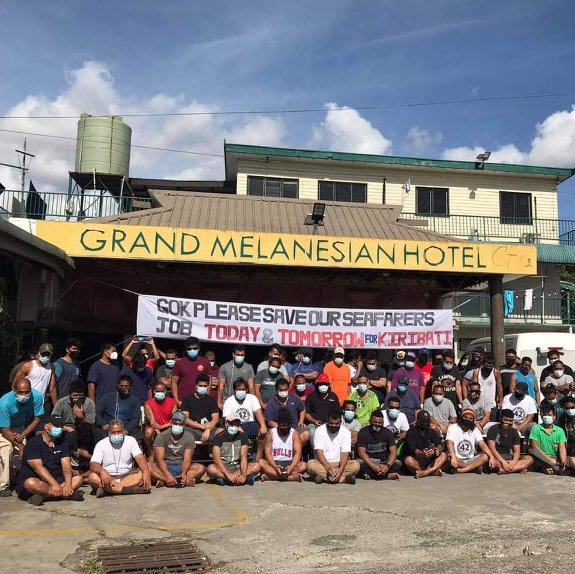
Hundreds of Kiribati seafarers stranded overseas are pleading with their government to allow them to return home as the country continues to shut its border to international flights.

Captain Tekemaua Kiraua is among 165 seafarers who’ve been in Fiji since March, he says the long wait is affecting their mental health.

“It’s frustrating our crew are not good. There’s a lot of anger. There’s a lot of worries and problems within the family [in Kiribati],” he said.

With a COVID-19 outbreak sweeping Fiji, they’ve been confined to their hotel in Nadi where their meals and room is paid for by the German shipping company they work for.

But since arriving in Fiji their basic wages have stopped and the men can no longer send money home.

“We have kids who go to school, some of our seamen lost their wives they went for another wife…It’s a very sad thing, sitting down here doing nothing, earning nothing and all the time you’re occupied with problems,” he said.

As parliament meets this week Captain Kiraua said its important that their situation is raised and discussed to pressure government into allowing them home.

Their situation has prompted a consortium of German shipping companies to terminate a decades long agreement to train and recruit i-Kiribati workers.

The companies said they could no longer recruit workers without a way to return them home and ended the arrangement in June after talks with the government collapsed.

Pastor Matthias Ristau is the Chaplain at the Port of Hamburg in Germany where he is supporting another 20 stranded iKiribati seafarers.

“There are different ways to bring them home, maybe via Australia… It is technically possible, it’s financially possible. It’s just that the government has to make it possible saying yes, we will do it,” he said.

He said the end to the work arrangement means seafarers on Kiribati would effectively lose their jobs and that would have devastated the community.

But he’s still hopeful that a last minute solution can be reached before December, which is when the companies completely pull out of Kiribati.

As parliament meets this week family members, including Captain Kiraua’s wife Aenererei are hoping for good news on the work arrangement with German shippers and on the return of their loved ones.

“My husband is not here, it’s a big burden. And now I am thinking of him, and wishing he is back,” she said..

SOURCE: ABC/ PACNEWS

Delta variant spreads in PNG

Three Covid-19 Delta cases have been reported in Western Province and Papua New Guinea Health Minister Jelta Wong says the priority now is to ensure provinces are prepared to manage the highly infectious disease.

The Delta variant infections were confirmed by the National Control Centre (NCC) in a media conference Tuesday.

Presenting the Papua New Guinea health sector report in Parliament, Wong said it had been a difficult 18 months of preparing for and managing Covid-19 operations and enforcement that included quarantine of international passengers, contact tracing, isolating cases, updating the public and the vaccination rollout programmes.

“The current fear and concern is Delta, which is already in PNG. A nurse in Madang tested positive for Delta, suggesting that she could have been infected through border transmission with Indonesia. Contact tracing is underway to determine if Delta has spread,” he said.

He said frontline health workers should be protected through training, steady supply of personal protective equipment and vaccination though vaccine hesitancy in the health workforce was a challenge.

“We have three types of vaccines – the two-dose Astra Zeneca and Sinopharm, and the single-dose Johnson & Johnson (J&J),” he said, adding that 20,000 doses of AstraZeneca were donated by Australia, 132,000 doses from the Covax-Facility and 146,000 doses donated by New Zealand through Covax, 226,000 doses of Sinopharm donated by China and 504,000 doses of J&J from the United States via Covax. AstraZeneca doses have been provided to all provinces and we are in the process of rolling out Sinopharm and J&J doses on demand.

“J&J will be rolled out in three tranches with border provinces first in the next three weeks accompanied by an intense communications campaign to encourage vaccination.

A total of 3 million doses through Covax is expected this year.

“This will cover 20 per cent of PNG’s eligible population. As infection risks grow, there must be greater acceptance of AstraZeneca which had a shelf life of six months and the J&J 4.5 months.”

Pandemic response deputy controller Dr Daoni Esorom said the yet to be confirmed causes of a number of deaths where Delta cases had been reported had “prompted us to issue a strong warning for people to be vigilant”.

“A directive was issued to the Modilon Hospital in Madang and Port Moresby General Hospital to run Covid-19 tests on the corpses and everyone that present themselves at the hospital with symptoms of respiratory illnesses,” he said.

“The three new Delta cases reported in Western means PNG’s Delta cases is now at 12. But the numbers could be higher due to lack of testing. To date, eight Delta cases were reported in the National Capital District, one in Madang and the three now in Western.

“The cases were mild to moderate and the infected have recovered, except the first case of the ship captain (a Filipino) who is still in hospital because he has other underlying medical conditions.”

Dr Esorom said currently, phylogenic tests were conducted on the three Delta cases from Western to determine whether they were the same virus ravaging Indonesia.

“We believe there is local transmission of the Delta in Kiunga and North Fly District. If we have a Delta surge, we will not be able to handle it,” he said.

“The level of Covid-19 testing has dropped since March and it is really low in the country at the moment. Our vaccination uptake too is very low. If we have low levels of testing, then we would not know the real extent of the spread of Covid-19 and Delta variant to help us in the response.

“With low vaccination, there is a potential of a high surge of Delta variant cases in the unvaccinated population. There are enough testing kits in provinces and health facilities should start triaging and conducting Covid-19 tests.

Meanwhile, Minister for Health and HIV/AIDS Jelta Wong says the new National Health Plan (NHP) 2021-2030 will require K42 billion(US$11.9 billion) to implement.

Wong said the plan was focused on strengthening primary healthcare and improving access for the rural majority with increased specialist care and greater community participation.

He said this would cover the cost of increasing the health workforce from 11,000 people to 25,000 by 2030 and key infrastructure investment including building new hospitals in Hela, Jiwaka, Central and Gerehu in Port Moresby and rebuilding hospitals in Daru, Kimbe, Manus, Mendi and Mt Hagen.

“As a responsible Government we are committed to fully support and resource the new NHP from 2022 fiscal year onwards in order to see a paradigm shift in the delivery of health services our people deserve,” he said.

Wong said the NHP was approved by the Government in principle on 14 July and was expected to be finalised shortly so that implementation could commence.

SOURCE: THE NATIONAL/PACNEWS

Low vaccine uptake makes Delta more dangerous for Pasifika and Maori – expert

A Pacific health expert is advising the Pasifika and Maori community to heed lockdown advice and stay home after more cases of the Delta variant were confirmed on Wednesday in Auckland.

Dr Colin Tukuitonga, associate professor of public health at the University of Auckland, said Pasifika and Māori were the most vulnerable to Covid-19 and the Delta variant was “no joke”.

He said people only had to look at the outbreak in Fiji and how one case turned into more than 40,000 cases in four months.

Fiji currently had more than 21,000 active cases and more than 400 deaths since the April outbreak of the Delta variant.

“The risk to Pasifika and Māori is very high, with housing, overcrowding, diabetes and other underlying health conditions,” Dr Tukuitonga said.

“This is the real deal, it’s serious, it’s highly infectious and more effective than the original strain. One case can infect up to nine people, that nine can spread it to a further nine.

“The spread of the Delta variant is likely to be fast and rapid.”

The added risk to Pasifika and Māori was the low uptake in the Covid-19 vaccine.

As of 16 August, more than 1.6 million people had received their first dose of the Pfizer vaccine – 95,000 of these were Pasifika – the lowest group uptake.

Maori, the second lowest uptake in first dose vaccinations, recorded 140,000.

Only 59,006 Pasifika people had received their second jab and 86,137 Māori out of more than 900,000 fully vaccinated New Zealanders.

“They are the most vulnerable at risk, and we should have made more efforts to vaccinate them.”

He had criticised the recent mass vaccination event in Manukau, a Pacific hub which did not serve the Pasifika community.

Of the nearly 16,000 people that received their first Covid-19 vaccine there, only 1301 were Pasifika and 1061 Maori.

“It’s a complex thing, but we have to try all of these things to try and overcome the lethargy, the lower rates of uptake by Maori and Pacific [people].

“It’s why I am making a big song and dance about these mass vaccination figures in Manukau. If anything, it’s making the inequities wider.”

Lockdown messaging was clear: people needed to stay home, in their bubbles, wash hands regularly and wear masks and practise social distancing when out to use an essential service, Dr Tukuitonga said.

“Pasifika people, we have been spared numerous times in this pandemic. It’s like the boy who cried wolf: people have heard this before.

“But, we should look at what is happening in Fiji and how quickly it can get out of hand. We need to pay attention to the message and stay home. We cannot be complacent.”

Dr Tukuitonga said the next 24-48 hours are crucial for New Zealand.

“In Fiji, their outbreak started off very small with one case. They admittedly didn’t go into level 4 like we’ve done, but the message is the same: stay home,” he said.

SOURCE: STUFF NZ/PACNEWS

Kuini Vuli: Fijiana have helped us to believe anything is possible

0

As a match official, Kuini Vuli has appeared in some of the game’s most prestigious tournaments around the world. But, in time, she is hopeful that more Fijian women will follow in her footsteps and go on to scale even greater heights.

Vuli was the second Fijian woman behind Elenoa Kunatuba to officiate in top-class matches when, in 2009, she began a ground-breaking journey that has taken in places as diverse as Moscow and Dubai.

Back then, organised women’s matches were few and far between and she chose to officiate rather than continue playing to satiate her love of rugby on a more regular basis.

The recently turned 40-year-old began by controlling men’s club games in Suva, before quickly graduating to the international stage in rugby sevens.

In 2012, Vuli officiated in the opening tournament of the inaugural World Rugby Women’s Sevens Series in Dubai before appearing at Rugby World Cup Sevens in Moscow the following year.

She continued to referee in many tournaments in the Oceania region before taking a break from officiating when she was diagnosed with Stage 2 breast cancer in 2016.

Once happily recovered, Vuli picked up the whistle and flag again and resumed officiating in both sevens and in 15s.

For the last two years, however, Vuli’s focus has shifted towards helping the Fiji Rugby Union to train and develop the next generation of match officials in her role as referee educator.

“There’s a whole lot more girls getting into refereeing now. Not everyone wants to play or can play,” she says.

“We have about six or seven female officials that are actively refereeing but a lot more running touch, where they can build up their experience in provincial games.

“Game time is crucial as more game time brings with it game experience which is important if you want to develop technically and tactically as a referee.”

Inspirational role models

Even before Fijiana claimed the bronze medal at the Tokyo Olympics, women’s rugby was growing rapidly on the Islands.

Pre-Games, over 40 teams took part in the National Provincial Sevens Championship in 2019 and the momentum will only surely continue now that the women have homecoming heroes.

Facilitating that demand requires more coaches and more referees.

In addition to the outstanding work of the Fijian Rugby Union in promoting gender equality, visibility on a local and global level is helping to encourage more women into officiating.

“While girls are watching games on the sidelines, they are starting to notice that there are women refereeing the games,” Vuli observes.

“You also have to give credit to the girls’ performance. When they perform well in the field, they encourage other girls to get out there and try it for themselves.”

Further afield and at a higher level, the likes of Amy Perrett and Joy Neville are role models for aspiring officials to look up to.

Neville became the first female referee to officiate a men’s PRO14 match in 2018, while Australia Perrett did likewise in Super Rugby in August 2020, when she blew her whistle to signal the start of the Brumbies’ match against the Western Force.

In July, Texan Kat Roche, 26, joined the elite but expanding club of ground-breaking women referees when she became the first female out in the middle of a Major League Rugby (MLR) match.

“Amy doing that was massive,” beams Vuli, as she clenches her fists to show her delight.

“I am sure those ladies paving the way have had to overcome a lot of hurdles and we are very thankful that they are breaking down barriers.

“I have never believed anything was impossible.

“I think the Fijiana performance did a lot. If they are able to do it, to reach the top, the women’s referees should go there as well. It is just a matter of understanding how to get there and working with people that really know how to get you there.

Brotherly love

Normally the one handing out sage advice, Vuli says she welcomes the chance to discuss rugby matters with her famous older brother, Sunia, the former Fiji national team hooker.

“He has gone into coaching now and he looks at it (rugby) from a coach’s perspective and I look at it from a referee’s perspective. I am a year younger so there is a limit to the debate!” she jokes.

“He is a really good brother and I love his experience because he has played a lot of international matches with tier one teams.

“He comes up with all these scenarios and I put them into my game or see how it fits in according to the laws.

“He’s in France at the moment so we are very thankful for technology, that we can chat once or twice a month. I love it when we discuss things,” she said.

SOURCE: WORLD RUGBY/PACNEWS

Stay connected

529FansLike
172FollowersFollow
156SubscribersSubscribe
- Advertisement -