Home Blog Page 1152

World Rugby welcomes inclusion of Fijian Drua and Moana Pasifika in new-look Super Rugby Pacific 2022 competition

0

The Super Rugby format for 2022 has been confirmed with Moana Pasifika and the Fijian Drua making up an exciting 12-team line-up.

The decision was made following a detailed financial, performance and commercial feasibility study in partnership with New Zealand Rugby and the respective unions of Samoa, Tonga and Fiji.

Having two teams in Super Rugby will enhance the player development pathway in the Pacific Islands, improving the opportunity for the three countries to perform to their full potential on the world stage.

It supports the ambition to develop locally-based players through to test match level and builds on the progress already achieved through the Pacific Challenge and Pacific Combine.

Since its inception in 2018, 75 players have graduated from the Pacific Combine and 17 have gone on to represent the Pacific Islands on the world stage, including seven at Rugby World Cup 2019 and 12 in Fiji’s squad for the Autumn Nations Cup in 2020.

Game-changing decision

World Rugby Chairman Sir Bill Beaumont has hailed the announcement as “a game-changer” for rugby in the region.

“We are delighted to see this ambitious dream to boost Pacific Island rugby become a reality,” he said.

“It is nothing short of a game-changer and should not be under-estimated. From a strategic perspective, it provides the best-possible platform and pathway for the Islands to reach their potential. We are proud to be playing our part in financial and technical assistance.

“On a human level, this is absolutely the right thing to do. It is great for the players, allowing them to make the choice for the first time to be part of a local professional team at the top level of elite club rugby. It is also great for fans of Pacific Islands rugby.

“I would like to thank Rugby Australia, New Zealand Rugby and the Pacific Island unions for their passion and dedication to making this happen. It is great for rugby.”

Financial support package

The announcement completes a journey that began when World Rugby’s Rugby Committee met in Suva in 2016 to consider opportunities to further support Pacific Islands rugby on and off the field.

The franchises will share the £1.2m (US$1.6 million) annual funding package from World Rugby over an initial three-year period, which was approved back in March, in addition to support from their respective unions and potential third-party funding.

The Fijian Drua made a spectacular impact when they were introduced to Australia’s National Rugby Championship (NRC) in 2017. Fully financially supported by World Rugby, they won the title in their second season, with players like Albert Tuisue using the NRC as a springboard to become an established test player.

Super Rugby Pacific 2022 will afford locally-based players similar opportunities when it begins next February with a 15-week regular season followed by quarter-finals, semi-finals and a final, to be played on 18 June.

The 12 teams will play 14 regular season matches, split evenly between home and away. The venue for the Fijian Drua’s home matches has yet to be announced, while Moana Pasifika will play home matches primarily in New Zealand.

Teams will play eight teams once and three teams twice with an emphasis on derby fixtures.

Meanwhile, the old Conference system has been abandoned in favour of a one table approach with the top eight teams at the end of the regular season qualifying for the quarter-finals and seeded according to their finishing positions.

SOURCE: WORLD RUGBY/PACNEWS

Pacific Super Rugby teams to finalise squads

0

With ‘Super Rugby Pacific’ confirmed to kick off in February, the race is on for Moana Pasifika and the Fijian Drua to sign up their inaugural playing squads.

The Drua also have to decide where they will be based next season, with Fiji’s ongoing Covid-19 problems ruling out plans to play on home soil.

Flying Fijians prop Haereiti Hetet said the Drua was a hot topic of conversation when national squad during their recent test series against the All Blacks.

“It’s just like another platform really for Fijian players to showcase their skills for the world stage, in terms of it’s a step up from just playing their club and comps and stuff in Fiji and playing against the best,” he said.

“Obviously Super Rugby you’ve got Wallabies and All Blacks playing so it will be good for the Fijian players to test themselves against the best.”

The Bay of Plenty loosehead is in his fourth season of provincial rugby in New Zealand but has to juggle his playing commitments with work at the local timber mill in Otorohanga.

The 24 year-old has represented the Māori All Blacks and Fiji and could be among the players to benefit from Super Rugby teams that are dedicated to Pacific Island players.

“Yeah I’ve had conversations about this, it’s an option definitely. I don’t know where they’re based or anything like that but yeah it is a good opportunity.”

Pacific Rugby Players Interim CEO Hale T-Pole said Moana Pasifika and the Drua missed out on some high profile signings because of ongoing delays.

“It would have been a lot easier for both organisations that these were sorted a lot earlier,” he admitted.

“They had a lot of big players in their books when they started the conversations about playing for them – the Moana and the Drua – but then in the last month they had to make decisions and then sign overseas.”

But with Super Rugby Pacific finally confirmed, the former ‘Ikale Tahi flanker was confident both teams would still assemble competitive squads.

“They’ve still got good players around that they’re working with, with their coaches and squad, and I think it will work out pretty quick because of the turnaround to get players sorted out and management…they’re ahead with those discussions and just waiting for the licence agreement to be ticked off and then away they sign off.”

Tonga Rugby Union CEO Peter Harding said at least 80 percent of the Moana Pasifika squad will be eligible to represent Manu Samoa or the ‘Ikale Tahi.

“It’s a 38-man squad…and 31 of them will be Samoan and Tongan qualified, so that’s the way it’s put together,” he said.

“The others are floaters at this stage – I think all new franchises that put teams together, no matter what sport they’re in etc, go through that, so we’re looking to share 31 players.”

T-Pole said it was important that Manu Samoa coach Seilala Mapusua and Tonga’s Toutai Kefu were heavily involved in the recruitment process.

“Where they tick off some players or maybe some players they put up and they get to ask the questions themself,” he said.

“I stay in touch with Seilala and Toutai about that and there’s good discussions where they say ‘why is this player there’, ‘why aren’t my 10 in my national teams or my locks’ or whatever, because this is set-up is to help and benefit the home unions.”

Peter Harding said a high performance plan for Moana Pasifika was already in development, which will ensure the team delivers on its promise to strengthen and develop the Samoa and Tongan national teams.

“What we want to do is make sure the pathway is correct and, in effect, that both the Samoan Rugby Union and Tongan Rugby Union, if they don’t own the project, then they’re right up to their neck in it and we will be the ones that will be the beneficiaries out of the project eventually.

“I think that was the way it was conceived by all people who put applications in and I think both Samoa and I are pretty happy with the way that is going.”

The Drua won’t be able to play games in Fiji next year because of the country’s ongoing Covid-19 situation.

T-Pole said Fiji Rugby is exploring a range of options and a final decision on where they will be based is expected shortly.

“They’ve been working hard on it. We’ve been working across the discussions the whole time, whether it’s going to be in NZ in Whangarei or in Australia on the Sunshine Coast.

“They’re well ahead of their discussions and we’re just trying to work out every detail and what benefits all parties and then we will roll with it.”

Moana Pasifika chair Sir Michael Jones said while the pandemic means their home games will be primarily in New Zealand next season, they were keen to play games in Samoa and Tonga if Covid restrictions allow.

“If that can’t happen in year one, it will definitely be an aspiration for year two,” he told RNZ.

“It is something that’s very much determined by the Covid restrictions. We’re looking forward to playing in front of a really vibrant, colourful and vocal fan base, whether that’s here in New Zealand or back in the Islands.”

Super Rugby Pacific will start next February with 12 teams playing a 15-week regular season with one points table.

SOURCE: RNZ PACIFIC/PACNEWS

Venues for Fijian Drua home matches to be decided

0

The decision on the venue for the Fijian Drua’s home matches for the 2022 Super Rugby Pacific will be decided soon.

The Drua will join the Australian and New Zealand Super Rugby sides in a new 12-team competition next year, but this will be dependent on when its unconditional license will be granted.

Fiji Rugby Union chief executive John O’Connor says they’re expecting some good news in the coming days.

“The situation is straightforward with the COVID-19 happening and the borders locked. The issue we are discussing is whether we can be able to fill a team to be based in Fiji or we have to relocate the teams. Those are the details that we are currently working out now.”

For the Moana Pasifika team, home fixtures will be played in New Zealand.

O’Connor adds it’s not all down to getting the logistics right.

“It’s not straightforward as Moana Pasifika, they are based in New Zealand and we know that travel is very challenging at the moment. You have to come to Fiji and quarantine and back to Australia and whether it’s a reality of having a team in Fiji in 2022.”

Super Rugby Pacific will kick off on 18 February next year.

The 15-week long competition will see an eight-team playoff series culminating in a final on 18 June.

SOURCE: FBC SPORTS/PACNEWS

UN Secretary-General calls for bold action to end biodiversity crisis

With one million species at risk of extinction, UN Secretary-General António Guterres on Monday called for greater leadership and political will to end the biodiversity crisis.

In remarks to a high-level virtual meeting to develop a new global framework to address biodiversity loss, he underlined the need for commitment, ambition and credibility.

“The future of humanity depends on our collective efforts”, he said. “Let us work together to sustain all life on Earth so people and nature may benefit.”

The new framework will be adopted at the UN Biodiversity Conference, known as COP-15, to be held in Kunming, China, next year.

At the Pre-COP meeting on Monday, organised by Colombia, countries and other stakeholders shared actions and initiatives, as well as commitments, towards its implementation.

Participants included world leaders, ministers, heads of international organisations and multilateral banks, women, youth, and indigenous peoples.

The Secretary-General said they were meeting at a critical moment as “biodiversity is collapsing – and we are the losers”, pointing to degraded ecosystems around the world.

“As people and livestock encroach further into wild habitats, we run the risk of unleashing terrifying new pandemics,” he warned.

Guterres said the world is counting on an ambitious new agreement that will transform humanity’s relationship with nature, and that fully reflects the value of biodiversity and healthy ecosystems, including to the global economy.

The new plan must support ecosystems that help humanity to adapt and build resilience to climate change.

He urged Governments to “shift the perverse subsidies that destroy healthy soils, pollute our water and empty the oceans of fish to those that incentivise actions to sustain nature.”

They must also establish larger and better managed conservation areas to safeguard species, functioning ecosystems and carbon stocks for current and future generations.

“And we need to safeguard and empower the leadership of indigenous peoples and local communities whose lands encompass much of the world’s remaining biodiversity.”

Above all, the world needs commitment, ambition and credibility, he said, emphasising that everyone must act on the understanding that protecting nature will create a fairer, healthier and more sustainable world.

“I am optimistic this can happen, especially when I see the awareness and commitment of the world’s young people,” he said. “And I applaud the commitments already made.”

However, he stressed that only bold action on the ground will end the biodiversity crisis.

SOURCE: UN NEWS CENTRE

High Seas Tuna Transshipment -What it is and why it should be reformed

Tuna fishing in the region

Tuna is extremely valuable to Pacific Island countries. In recent years, the annual catch of tuna in the western and central Pacific Ocean has been approximately 2.6 million metric tonnes per year, worth almost US$5 billion. This catch represents over 50 percent of all the tuna landings in the world. Surprisingly, the amount of tuna captured caught in the Pacific Island region is over ten times the amount of fish from all the other types of fishing in the region combined.

Although tuna is captured by a variety of fishing techniques, the vast majority is taken by industrial-scale operations using either purse seine or longline gear.

Tuna transshipment

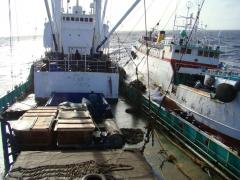
Transshipment is a legitimate practice in the tuna fishing industry. In a typical transshipment operation, a refrigerated carrier vessel collects catch from multiple fishing boats and carries it back to port. This practice enables fishing vessels to continue fishing, which reduces fuel costs for fishing vessels and gets the catch to port quicker.

There are two main types of tuna transshipment in this region. In one type of operation the transshipment occurs in or near a port, normally under the authorisation, control, and inspection of the country where the port is located. In most Pacific Island countries the staff of the fisheries department monitor the volumes and species composition of the catch being transferred.

The other form of transshipment in the region (which is far more problematic) is transshipment at sea, particularly in the high seas – which are ocean areas beyond the exclusive economic zone of any country. In those areas the authorisation and controls over the transshipment are the responsibility of the country of registration of the concerned carrier vessel and fishing vessel. This type of transshipment is particularly common for longline vessels.

Problems with tuna transshipment

It is generally known that the volumes and composition of the catch being transferred in high seas transshipment is not as rigorously monitored as that for in-port transshipment.

High seas transshipment at sea is widely recognised as one of the main ways that illegally caught fish finds its way to market. Poorly monitored high seas transshipments offer opportunities to hide both illegal catches and prohibited fishing activities. The Food and Agriculture Organisation of the United Nations has stated that in the absence of effective monitoring and control, transshipping poses a serious risk to fisheries by allowing the catching and landing of fish to go unregulated and unreported. Within the western and central Pacific Ocean, it has been estimated by a recent study that US$142 million per year of tuna and tuna-like products are involved in illegal, at-sea transshipment.

The Western and Central Pacific Fisheries Commission

Tuna fishing in the central and western Pacific Ocean is regulated by both the countries in the region and the Western and Central Pacific Fisheries Commission (WCPFC). The Commission has a total of 42 member countries (including all independent Pacific Island countries), participating territories, and cooperating non-members. The WCPFC seeks to ensure, through effective management, the long-term conservation and sustainable use of highly migratory fish stocks (i.e. tunas and billfish) in the western and central Pacific Ocean.

The Commission develops conservation and management measures that are binding on vessels that fish in the region. These are enforced in various ways, including by on-board observers, electronic vessel monitoring systems, at-sea boarding and inspection, and aerial surveillance.

The WCPFC has a role in regulating transshipment. Recognising that transshipment on the high seas could cause problems, the international agreement that established the WCPFC states: “In order to support efforts to ensure accurate reporting of catches, the members of the Commission shall encourage their fishing vessels, to the extent practicable, to conduct transshipment in port.” Recognising this point, the Commission made a rule in 2009 stipulating there shall be no transshipment on the high seas except where a member country has determined that it is impractical for a vessel – but the Commission did not define “impractical”, thereby creating a loophole.

The current situation in the central and western Pacific

Contrary to the Commission’s intentions and rules, the number of high seas transshipments in the western and Central Pacific is actually increasing. Reports to the Commission indicate that such transshipments have increased from 544 operations in 2014 to 1,472 in 2019.

It appears that high seas transshipments are becoming the norm, rather than the exception. This situation is not conducive to the long-term conservation and sustainable use of tuna resources in the region – a stated aim of the Commission.

The way ahead

Recognising that poorly monitored high seas transshipments are a major factor in illegal tuna fishing in the region, there is a strong case for reforming such operations. There appear to be two possibilities for this:

•Ban transshipment on the high seas and require any transshipment to take place in a port where it can be easily monitored; or

•Greatly improve the monitoring of high seas transshipment.

The first possibility would certainly result in improved accountability and transparency of the tuna catches – but it would place additional costs on fishing vessels, such as extra distances to travel and port charges. This possibility would likely be opposed by the transshipping vessels and their countries of registration.

The second possibility for reforming high seas transshipment would be to have the observers onboard the carrier vessels produce detailed reports and have those reports sent in a timely manner directly to the Commission for analysis. This possibility is likely to be less of a burden on vessel operators – and hopefully would meet less opposition than simply banning high seas transshipment and forcing a major change in way vessels operate.

What can the governments of Pacific Island countries do to promote the reform of high seas tuna transshipment? Through their voice in the Western and Central Pacific Fisheries Commission, they should point out that poorly monitored high seas transshipment could threaten the benefits they receive from their tuna resources – and insist on closing this loophole that gives opportunities for illegal fishing.

SOURCE: PACNEWS

Pacific Community warns of threat to education retention in the wake of COVID-19

Before the pandemic, many Pacific Island countries grappled with low numbers of students completing secondary education.

Now experts in the region are concerned that the closure of schools to contain the spread of COVID-19, and the economic downturn, will lead to even more students dropping out of education early.

It’s an issue that has consequences for the region’s future development, given its large youth population. The Pacific Islands is home to about 11.9 million people, more than half aged below 23 years. And 90 percent of Pacific Islanders reside in the southwest Melanesian countries of Fiji, Papua New Guinea (PNG) and the Solomon Islands.

“Many factors affect education retention in the Pacific region, and COVID-19-related disruptions to education have added to the list. It is very possible that, in instances where families are responsible for some or all of the fees for secondary education, some students will not be able to continue their education for economic reasons,” Michelle Belisle, Director of the Educational Quality and Assessment Programme (EQAP) at the regional development organisation, Pacific Community, in Fiji told IPS.

“The teenage years are an important time in a young person’s life and, unfortunately, experience has shown that students who leave school before the end of secondary are not likely to return to education until later in their adult life, if at all,” she continued.

Many families, now on lower incomes or affected by unemployment since the COVID-19 virus emerged in early 2020, are struggling to afford the costs of transport, fees, and educational materials for their children to attend schools where they are open.

In the Solomon Islands in the southwest Pacific, a nation of about 721,000 people scattered across more than 900 islands, less than half of all children finish primary school. Josephine Teakeni, President of Vois Blong Mere, a civil society organisation in the capital, Honiara, told IPS that: “Some families have had to delay their children’s education while they find ways to get money to pay school fees…to send their children back to school in 2022. Some families have taken the risk of taking loans from formal and informal financial institutions to pay for school fees or support income-generating initiatives to pay school fees.”

For years, many Pacific Island countries had strived and successfully boosted universal education. But, while net primary enrolment is high across the region, the numbers of students starting school have not been matched by those completing it. In the Cook Islands, 100 percent of youths aged 10-14 years are enrolled in education, but this declines to 57 percent of those aged 15-19 years. Similarly, 93 percent of people aged 10-14 years are in school in the Solomon Islands, in contrast to 68 percent of the older age group.

Now, the closure of schools, as part of national lockdown restrictions, is exacerbating the loss of learning. UNICEF, which is working with Pacific Island governments to retain students in education, advocates that ‘with the COVID-19 pandemic now well into its second year, safely reopening schools has become an urgent priority. School attendance is critical for children’s education and lifetime prospects.’ It claims that extending school closures in the Asia Pacific region could result in losses of up to US$1.25 trillion in future productivity and lifetime earnings for the current generation.

As of 12 August, a total of 93,346 cases of COVID-19 were recorded in the Pacific Islands. The majority were located in Fiji, where there were 38,812 cases and PNG with 17,806.

In both nations, education institutions have shut for periods since the beginning of last year. In PNG, primary and secondary schools closed their doors from March to May 2020, and then again in March 2021, as virus cases rapidly rose. Restrictions were lifted in May, but the Pacific Community reports that many schools have chosen not to reopen because of ongoing fears about infection. Meanwhile, the lockdown in Fiji, which began on 20 April, is into its fourth month, and students are being encouraged to turn to online learning.

However, while about 50 percent of Fiji’s population has access to the internet, this drops to 11 percent in PNG. In the region’s most populous nation of about 9 million people, one-third of women and one-quarter of men aged six years and over never attended school prior to the pandemic. Many students, especially in rural areas, have faced significant barriers to participating in tuition being offered via radio, television, and the internet.

“There are lessons provided on TV and radio. Unfortunately, for most children, these lessons cannot be accessed due to radio stations in the provinces having poor signals and connections. Similarly, with TV. If electricity is not provided, lessons on TV are useless,” Dr Kilala Devette-Chee, Leader of the Universal Basic Education Research Program at PNG’s National Research Institute, told IPS. She added that high rates of illiteracy in rural communities also reduced the ability of many parents to support their children with home-based learning.

A rapid assessment by the PNG Government last year revealed that less than half of students in more than 72 percent of schools across the country had electricity at home. Only 22 percent of schools reported that most of their students had radios.

“The lack of accessible alternate learning pathways for students outside of formal secondary education completion [across the region] leaves school leavers in many areas with no options for continuing and completing their education,” Belisle said. The digital divide could increase inequality in education outcomes, with rural and remotely located students the most vulnerable.

As a development organisation with the capacity to draw from expertise across the region, the Pacific Community plays a vital role during this crisis. It’s providing governments and educational institutions with research, data, and insights into how the pandemic affects educational practices and outcomes, supporting informed decisions and response plans at the national level.

The organisation’s gathering and analysis of student learning data, literacy and numeracy assessments and the performance of students in relation to their curriculum “is a priority to understand how the COVID-19 disruption is impacting learners differently and to assess risk factors for different segments of the population,” Belisle explained.

“In a post-COVID-19 environment, understanding the challenges of adapting teaching and support of students around disruptions to classroom-based learning, and how to support students learning at home for extended periods, will be critical to maintaining equitable access to quality education for all students.”

The work of the Pacific Community’s EQAP programme, which receives major donor funding from Australia and New Zealand, also includes ensuring the quality and recognition of job-related skills training programmes, which lead to micro qualifications, in fields ranging from business management to the sports professions. These initiatives aim to upskill Pacific Islanders to adapt to the changing landscape of work opportunities and build their resilience in times of economic setbacks.

SOURCE: IPS/PACNEWS

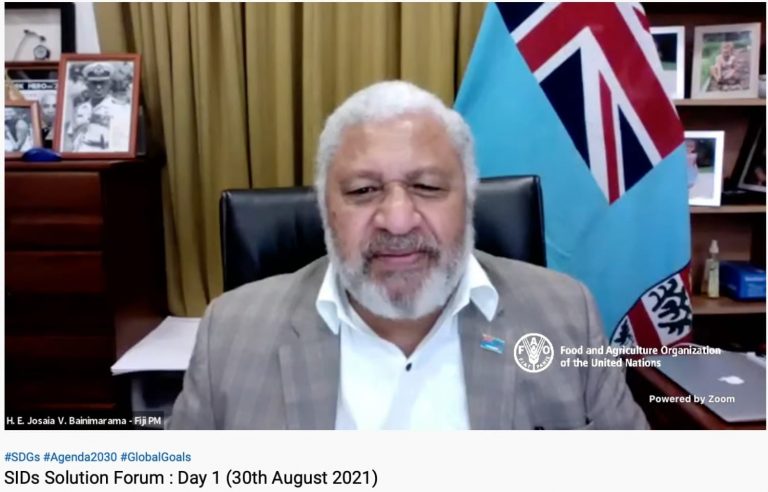
Fiji PM Bainimarama: ‘SIDs’ rallying cry must keep 1.5 alive at COP26′

Nearly two years since the start of the COVID-19 pandemic, its global socioeconomic “headwinds” have blown many countries far off course from the aims of the 2030 Agenda.

But fierce as those winds may be, they are “a whisper” next to the intensifying crisis brought by changing climate.

Fijian Prime Minister Voreqe Bainimarama made these remarks in his official opening address at the Virtual SIDS Solution Forum Monday.

He made reference to the IPCC report saying without drastic cuts to emissions, the report stated “we are on track to blow past the 1.5-degree temperature threshold, confirming our worst fears that our low-lying neighbours in the Pacific, Kiribati and Tuvalu, face an existential threat over the coming decades”.

“And it means all of us must brace for storms and other climate impacts unlike anything we or our ancestors have ever endured,” Bainimarama said.

“That is why, when we go to COP26 together, our rallying cry must be to keep 1.5 alive.

“It remains the only temperature threshold that guarantees the security of all SIDS citizens, and we must leverage every ounce of our power and moral authority to fight for it.”

Bainimarama said the terrifying scale of those global challenges “give us no recourse but collective action”.

“I believe we can meet this moment with innovation – indeed, we already are. Just one week ago, Fiji launched a micro insurance scheme for climate-vulnerable communities.

“We are supporting local farmers with climate-resilient crops and funding adaption efforts through creative financial instruments.”

He said by harnessing the hope that such innovation offered, small island States could recoup the economic losses of the pandemic and reset course towards zero hunger, clean oceans, quality education, sustainable cities, and the other noble aims of the 2030 Agenda, towards more sustainable agri-food systems, and more resilient societies.

SOURCE: PACNEWS

FAO calls for renewed digital push in Small Island Developing States battered by COVID-19

The Director-General of the Food and Agriculture Organisation of the United Nations (FAO), QU Dongyu, Monday called on Small Island Developing States (SIDS) to foster the power of innovation and digitalisation to accelerate the achievement of the Sustainable Development Goals (SDGs), particularly SDG 1 (no poverty), SDG 2 (no hunger) and SDG 10 (reduced inequalities).

Qu spoke at the opening of the two-day virtual SIDS Solutions Forum (30-31 August), co-hosted by FAO and the Government of Fiji. Heads of State and Government from nine Pacific Island countries attended or were represented at the high-level event, as well as government ministers holding key portfolios related to agriculture, food, nutrition, environment, health, and information and communications technology. African and Caribbean nations were also represented.

FAO is committed to building a world free from hunger and malnutrition, “where no one is left behind regardless of land size, population and geographic location,” Qu said in an address to the opening session. Today’s meeting is an “example of how innovation and digitalisation bring opportunities in the face of challenges.”

“Advances in digital innovation have seen the vast oceans that separate us give way to vast possibilities. Alone, we are small islands. Together, we are one connected continent bound by a spirit of innovative resilience,” said Voreqe Bainimarama, Prime Minister of Fiji. “Our 39 states, from the South Pacific, to the Caribbean, to the Indian Ocean, are home to incredible minds, cutting edge innovation and deep traditional knowledge.”

The President of the UN General Assembly, Abdulla Shahid, Minister for Foreign Affairs of Maldives, delivered the Forum’s keynote speech, noting it was the first of its kind and was taking place during challenging times.

“The SIDS Solutions Forum is unique. In the midst of a global pandemic, the virtual nature of the conference benefits SIDS across the globe that have been badly affected by geographical isolation, travel restrictions and border lockdowns,” said Shahid. “The innovations, solutions and ideas to be shared at this forum should help SIDS to leapfrog through expanded digitalisation and innovations to accelerate the achievement of the agriculture, food and nutrition related SDGs.”

Dotted across the globe, small in size and population, more than three-dozen Small Island Developing States have been badly affected by COVID-19 on a number of fronts – health-wise, nutritionally and economically. SIDS in the Pacific have been hit especially hard because of their reliance on tourism, with the closure of borders resulting in the loss of crucial revenue.

Even before COVID-19 battered their economies, Pacific SIDS were already dealing with other challenges such as frequent natural disasters, the effects of climate change, limited arable land, dependence on small-scale agriculture, high-priced imports, and a high prevalence of non-communicable diseases, such as heart disease and Type 2 Diabetes. All of these issues have hampered their progress toward achieving the 2030 SDG targets.

The SIDS Solutions Forum has created a space for government leaders, development partners, farmers, fishers, community development practitioners and leaders, entrepreneurs, women and youth to discuss, share, promote and encourage homegrown and imported solutions to respond to the challenges posed by COVID-19 and several of those that pre-existed the pandemic. The ultimate goal is to accelerate the achievement of agriculture, food and nutrition-related SDGs.

The two-day virtual summit, which took place ahead of the United Nations General Assembly in September in New York, was organised in partnership with the International Telecommunication Union (ITU). It was also attended by representatives from the private sector, civil society, UN organisations, international and regional development agencies, inter-governmental entities and others, making this a truly global event. The objective of the SIDS Solutions Forum was to examine workable and replicable solutions that will lead to better production, better nutrition, a better environment and a better life for the people of SIDS everywhere.

Digital technologies are transforming agri-food systems. While this is an important development everywhere, it is of great importance to remote areas such as SIDS. The expansion of mobile technologies, remote-sensing services and distributed computing are already improving smallholders’ access to information, inputs and markets, increasing production and productivity, streamlining supply chains, reducing operational costs, and consequently enabling farmers to gain more economically.

Robotics and artificial intelligence are examples of how digital innovation supports farmers in the management of herds and crops. While presently SIDS may find themselves distant from these advanced technologies, they may well be interested in learning about such trends. Digital innovation holds the potential to unlock employment opportunities, bridge the rural divide and empower youth and women to access information, technology and markets. Sharing these rapidly evolving digital innovations will also accelerate progress toward achieving the SDGs in SIDS.

To this effect, the FAO Director-General launched the SIDS Solutions Platform during the opening session of the Forum. The platform will allow SIDS to share the many solutions and innovations that are either homegrown or generated from similar situations elsewhere and that have the potential to be scaled up.

Such a tool should help SIDS “enhance the benefits of digital agriculture and leapfrog by learning from their peers, while addressing potential concerns,” Qu said. “We need science, technology and innovation for the transformation to more efficient, inclusive, resilient and sustainable agri-food systems,” he said.

SOURCE: FAO/PACNEWS

Fiji records 184 new cases of COVID-19, 10 new deaths reported

Fiji has recorded 184 new cases of COVID-19 and 10 deaths reported Monday, increasing the total number of cases in the island nation to 46,141 and 487 deaths since the outbreak in April.

Permanent secretary for Health, Dr James Fong said 133 cases are from the Western division, 40 cases are from the Central division in Vitilevu, Fiji’s main island and 11 cases are from the Eastern division on the island of Kadavu.

“There are 11 new COVID-19 positive cases in Kadavu. This means there are now 175 active cases of COVID-19 in Kadavu. All these individuals have been isolated.

“There have been no new recoveries to report since the last update, which means that there are now 19,463 active cases. 9,058 active cases are in the Central Division, 10,225 active cases in the Western Division, 5 active cases in the Northern Division (Nabouwalu and Macuata) and 175 active cases in the Eastern Division (all in Kadavu).

“There have been 46,141 cases during the outbreak that started in April 2021. We have recorded a total of 46,211 cases in Fiji since the first case was reported in March 2020, with 25,951 recoveries,” said Dr Fong.

He said the 10 new COVID-19 deaths reported for the period from 26 – 30 August 2021.

Seven deaths were reported from the Western division and three deaths were reported from the Central division.

“There have now been 489 deaths due to COVID-19 in Fiji, with 487 of these deaths during the outbreak that started in April this year. As of 25 August, the national 7 day rolling average of COVID-19 deaths per day is 6. The 7-day rolling average for COVID-19 deaths per day in the Central division is two and in the Western Division is four.

“We also have recorded 307 COVID-19 positive patients who died from the serious medical conditions that they had before they contracted COVID-19; these are not classified as COVID-19 deaths,” said Dr Fong.

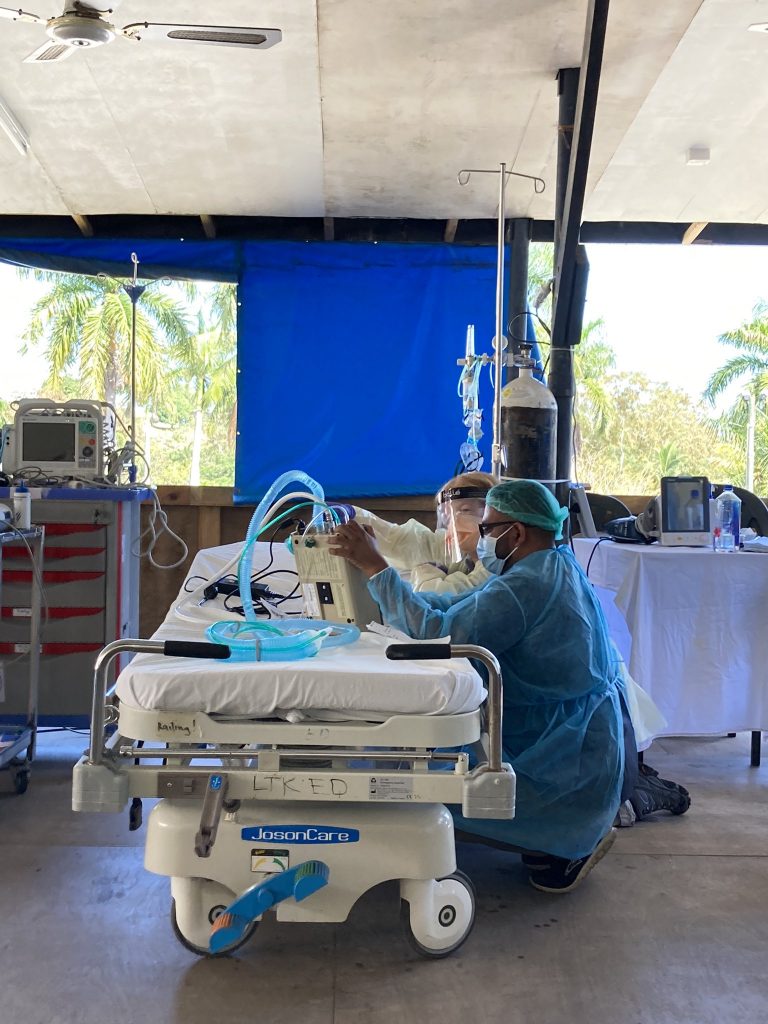
He said there are currently 244 COVID-19 patients admitted to hospitals in Fiji.

“113 patients are admitted at the Lautoka Hospital, 22 patients are admitted at the FEMAT field hospital, and 109 are admitted at CWM hospital, St Giles, and Makoi.

“19 patients are considered to be in severe condition, and 13 are in critical condition,” said Dr Fong.

He said a total of 330,576 samples have been tested since this outbreak started in April 2021, with 373,437 tested since testing began in March 2020.

“The national 7-day average daily test positivity is 20.9 percent, which is on a downward trend but still indicating a high level of community transmission,” said Dr Fong.

As of the 29 August, 558,944 adults in Fiji have received their first dose of the vaccine and 266,608 have received their second doses.

“This means that 95.3 percent of the target population have received at least one dose and 45.4 percent are now fully vaccinated nationwide,” Dr Fong said.

SOURCE: PACNEWS

Tonga renews health State of Emergency, 27,274 fully vaccinated for COVID-19

Tonga’s Health State of Emergency has been renewed for another month to prevent the spread of COVID-19, starting from 8:00pm Monday until 8:00pm 27 September.

This is the 18th month it has been in force, including a curfew.

The Health State of Emergency was first declared by the Prime Minister, Dr Pohiva Tu’i’onetoa on 12 March2, 2020 under the Emergency Management Act.

Since then, it has been renewed on a monthly basis, and enforced by the Ministry of Police and His Majesty’s Armed Forces.

The renewal for the emergency powers was still necessary so as to prevent the loss of human life due to the spread of the covid-19 worldwide.

The National COVID-19 restrictions directions are still applied, including a night-time curfew in Tonga from midnight to 5:00am

Meanwhile, around 27,274 people have been fully vaccinated for COVID-19 in Tonga to date, confirmed the Ministry of Health.

This means around 43 percent of the eligible population aged 18 years and over have received two doses of the Astra-Zeneca COVID-19 vaccine since the second roll out programme started on 24 June in Nuku’alofa.

The goal is to vaccinate 63,128 people with two doses of AstraZeneca of the eligible population.

At least 55 percent of the target population has been fully innoculated on Tongatapu, and 54 percent on ‘Eua.

According to the Ministry of Health, there have been no extreme allergic reactions reported since the start of the second dose vaccinations.

There are currently 1,476 people who are overdue for their second dose, which should have been administered within 12 weeks of the first dose. These people are on Tongatapu and ‘Eua.

More vaccines are scheduled to arrive in Tonga soon, including the Pfizer vaccines.

The Pfizer vaccines are to be administered to children aged 12 – 17 years-old, and pregnant women.

SOURCE: TONGA WIRES/PACNEWS

Stay connected

529FansLike
172FollowersFollow
156SubscribersSubscribe
- Advertisement -